Project 2 Thermal modeling of battery pack
Q. For a 10 cell series lithium ion battery model, simulate the thermal effects and compare life cycle performance at various temperatures, charge & discharge rates using MATLAB.
A.
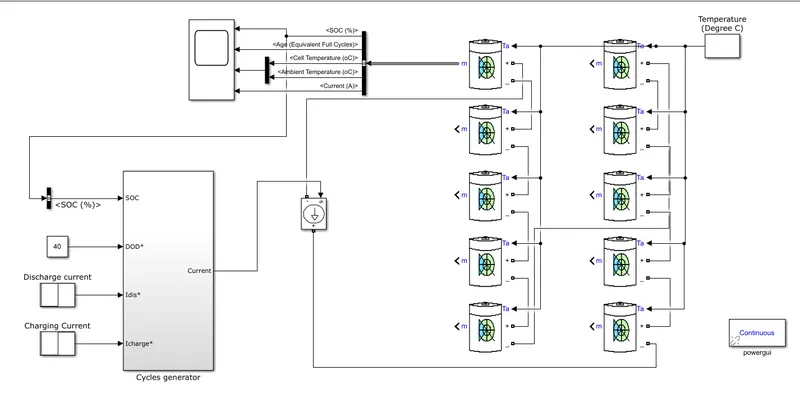
Steps for building the circuit
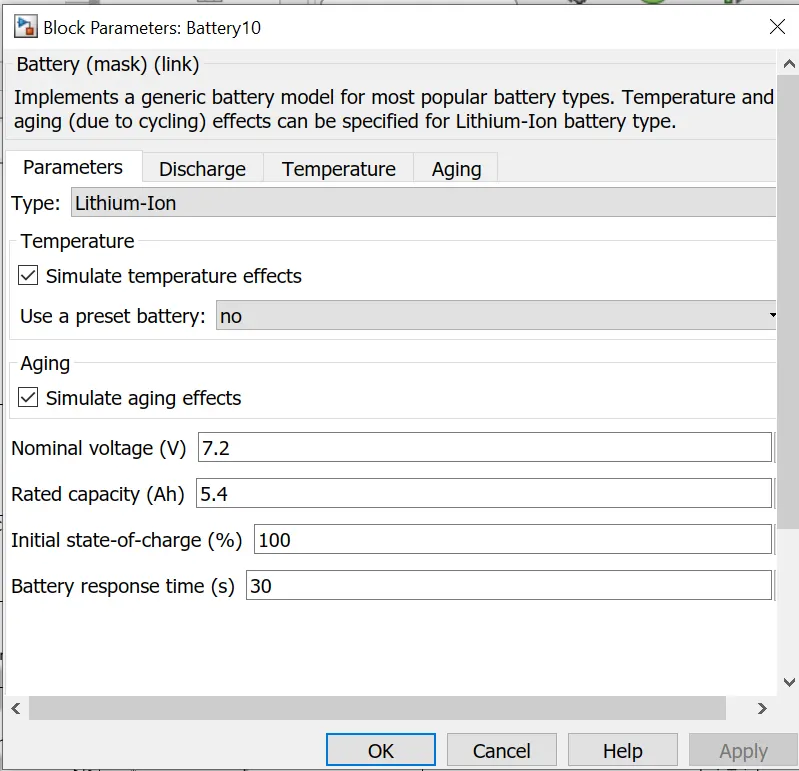
1. 10 generic battery model blocks of the following specifications are arranged and connected in series
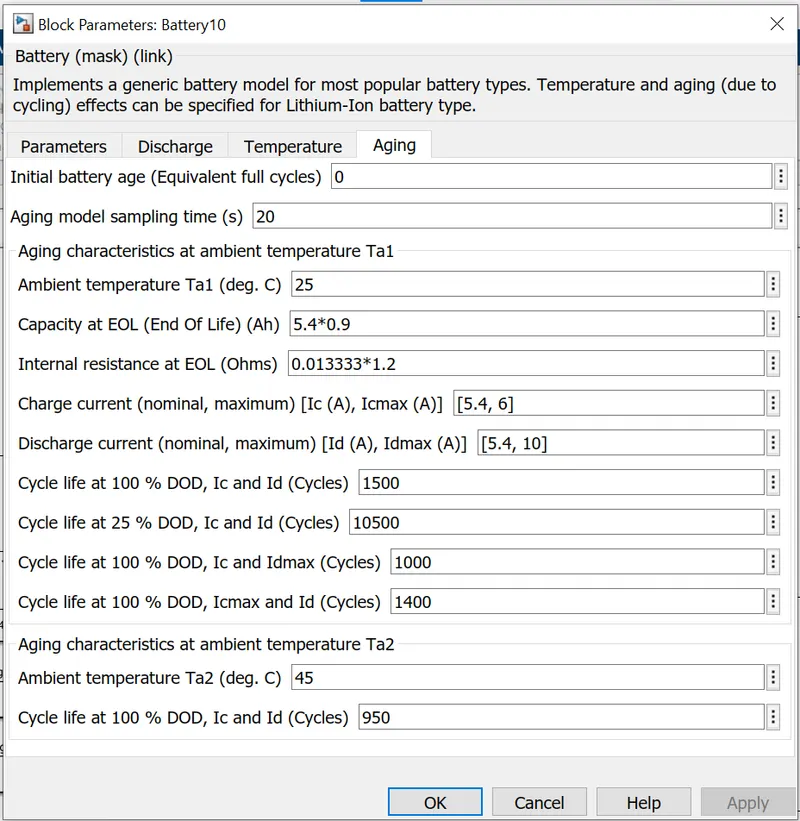
Aging parameters:
2. A cycle generator block is created using MATLAB Function block to generate charge/ discharge cycles based on the different charge/discharge currents
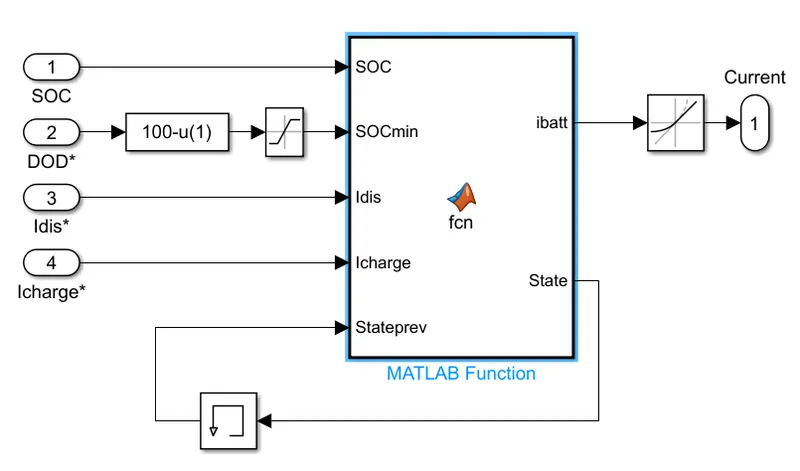
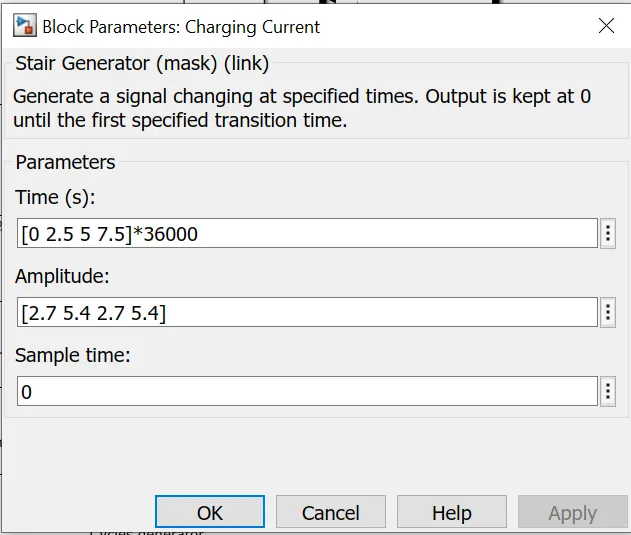
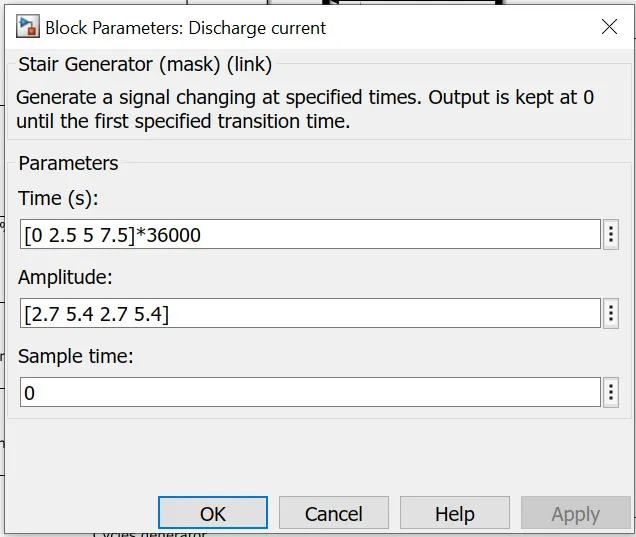
3. Different charge/discharge current values are given through stair generator blocks
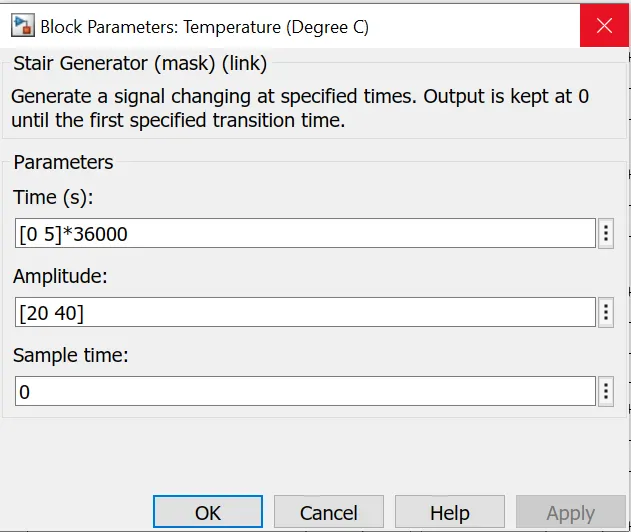
4. Different temperatures are provided through stair generator blocks
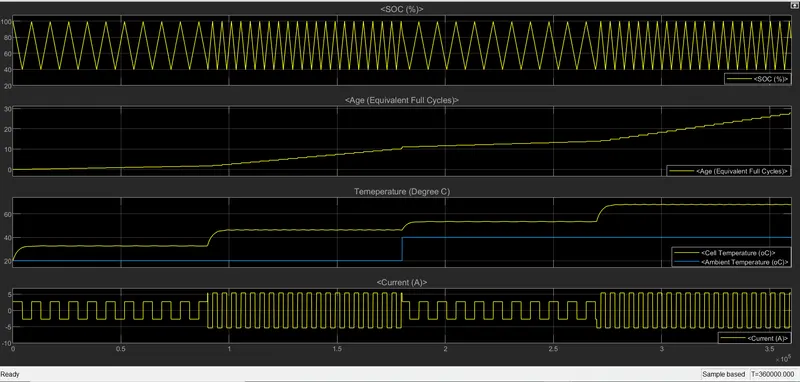
5. SoC, Cell & Ambient temperature, current and age (equivalent full discharge cycles) are ploted from one of the battery models to the scope
RESULTS
- The simulation is run for 36000 seconds.
- The results can be divided into two: One half from 0 – 18000s where ambient temperature is 20 °C and other half from 18001 to 36000 seconds where ambient temperature is increased to 40°C
- The output from the battery is plotted and isshown in the figure below.
- For the first quarter of the simulation, charging and discharging is in 0.5C rate at 20°C. By the end of the quarter-
- The age has increased only by 1.6 equivalent full cycles.
- The cell temperature has increased by 12°C
- For the second quarter of th simulation, charging and discharging is in 1C rate at 20°C. By the end of half of simulatioin
- The age has increased by 8 equivalent full cycles
- The cell temperature increased by 13°C
- Similar pattern as steps 4 and 5 are repeated for the last half of the simulation, but for 40°C ambient temperature. By the end of 3rd quarter,
- The age has increased only by 5 equivalent full cycles.
- The cell temperature has increased by 7°C
- By the end of simulation:
- The age has increased only by 13 equivalent full cycles.
- The cell temperature has increased by 14°C
CONCLUSION
- As the charging/discharging current increass, aging increases
- As the ambient temperature increases, aging increases due to rise internal temperature