Project 2 Thermal modeling of battery pack
Challenge URL:- https://drive.google.com/drive/folders/1HuZ2ZJLa8_rL78tw59xnJte4QWgUsZQs?usp=sharing
Lithium Ion Batteries:-
Pioneer work with the lithium battery began in 1912 under G.N. Lewis but it was not until the early 1970s when the first non-rechargeable lithium batteries became commercially available. lithium is the lightest of all metals, has the greatest electrochemical potential and provides the largest energy density for weight.
Attempts to develop rechargeable lithium batteries failed due to safety problems. Because of the inherent instability of lithium metal, especially during charging, research shifted to a non-metallic lithium battery using lithium ions. Although slightly lower in energy density than lithium metal, lithium-ion is safe, provided certain precautions are met when charging and discharging. In 1991, the Sony Corporation commercialized the first lithium-ion battery.
The energy density of lithium-ion is typically twice that of the standard nickel-cadmium. There is potential for higher energy densities. The load characteristics are reasonably good and behave similarly to nickel-cadmium in terms of discharge. The high cell voltage of 3.6 volts allows battery pack designs with only one cell. Most of today's mobile phones run on a single cell. A nickel-based pack would require three 1.2-volt cells connected in series.
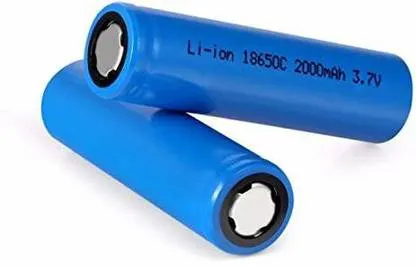
- High energy density: The high energy density is one of the chief advantages of lithium ion battery technology. With electronic equipment such as mobile phones needing to operate longer between charges while still consuming more power, there is always a need to batteries with a much higher energy density.
- Self-discharge: One issue with many rechargeable batteries is the self discharge rate. Lithium ion cells is that their rate of self-discharge is much lower than that of other rechargeable cells such as Ni-Cad and NiMH forms. It is typically around 5% in the first 4 hours after being charged but then falls to a figure of around 1 or 2% per month.
- Low maintenance: One major lithium ion battery advantage is that they do not require and maintenance to ensure their performance.
- Cell voltage: The voltage produced by each lithium ion cell is about 3.6 volts. This has many advantages. Being higher than that of the standard nickel cadmium, nickel metal hydride and even standard alkaline cells at around 1.5 volts and lead acid at around 2 volts per cell, the voltage of each lithium ion cell is higher, requiring less cells in many battery applications. For smartphones a single cell is all that is needed and this simplifies the power management.
- Load characteristics: The load characteristics of a lithium ion cell or battery are reasonably good. They provide a reasonably constant 3.6 volts per cell before falling off as the last charge is used.
Disadvantages of Lithium Based Battery:-
- Protection / battery management system required: Lithium ion cells and batteries are not as robust as some other rechargeable technologies. They require protection from being over charged and discharged too far. In addition to this, they need to have the current maintained within safe limits. Accordingly one lithium ion battery disadvantage is that they require protection circuitry incorporated to ensure they are kept within their safe operating limits.
- Ageing: One of the major lithium ion battery disadvantages for consumer electronics is that lithium ion batteries suffer from ageing. Not only is this time or calendar dependent, but it is also dependent upon the number of charge discharge cycles that the battery has undergone.
- Transportation: This li-ion battery disadvantage has come to the fore in recent years. Many airlines limit the number of lithium ion batteries they take, and this means their transportation is limited to ships.
- Cost: A major lithium ion battery disadvantage is their cost. Typically they are around 40% more costly to manufacture than Nickel cadmium cells. This is a major factor when considering their use in mass produced consumer items where any additional costs are a major issue.
Simulink Model:-
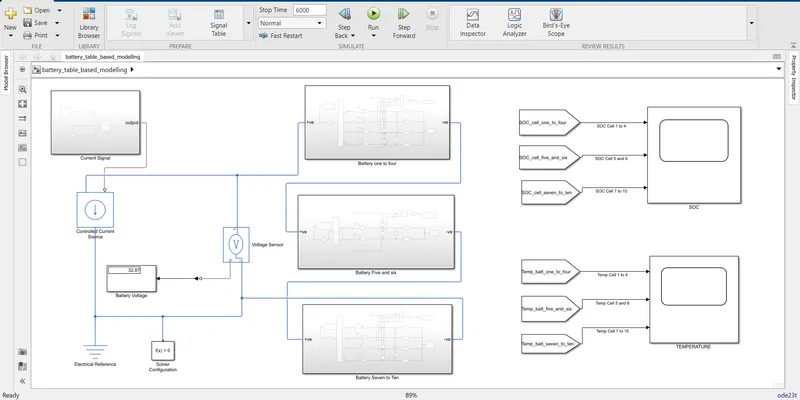
Block Used:- Drive Cycle Source, Gain, Constant, Switch, Controlled Current source, Electrical Reference, Solver Configuration, Voltage Sensor, Display, Goto and From block, Sum, Battery table based, Temperature Source, Convective and Conductive heat Transfer block, Temperature sensor, PS- Simulink converter, Simulink - PS converter, Thermal reference and Scope.
Working :-
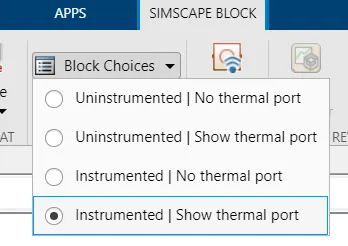
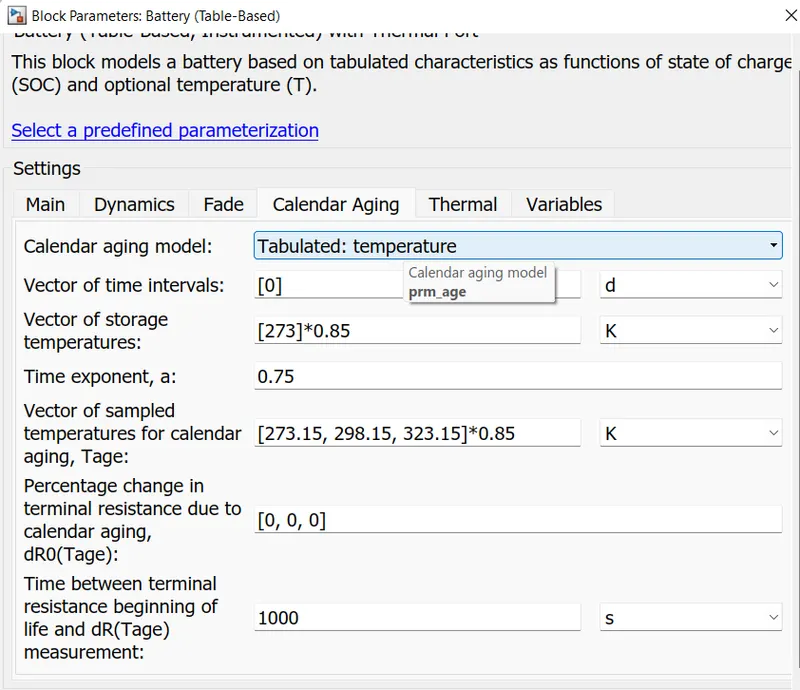
a) Battery Pack:- I have used table based battery for this model and there are 3 battery pack which are connected in series through the different subsystem. The thermal port and SOC of the battery are made enabled by sleecting the Instrumented thermal port like shown beloiw:-
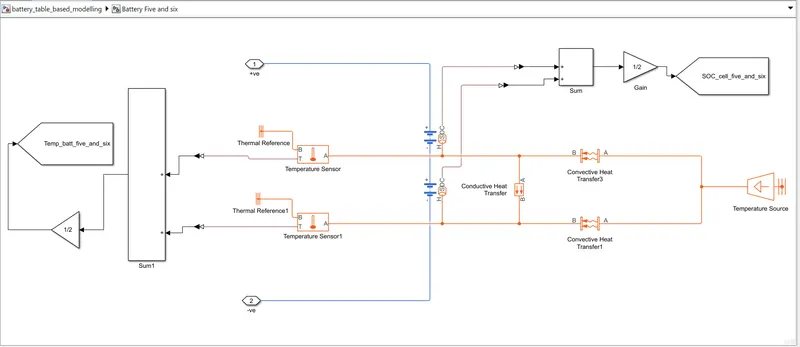
The first battery pack consist of battery from 1 to 4 connected in series and the third battery pack also consist of battery from 7 to 10 connected in series. The second battery pack consist of two batteries which are having slightly different parameter from the first discussed 8 batteries.
The First and Third battery pack subsystem looks like below:-
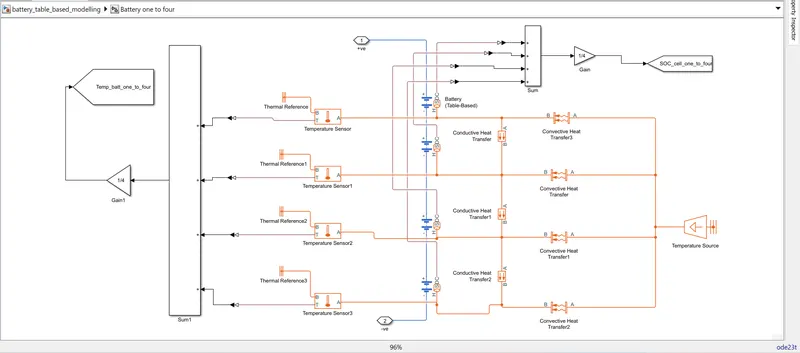
The parameter of the first and third battery pack are as follows:-
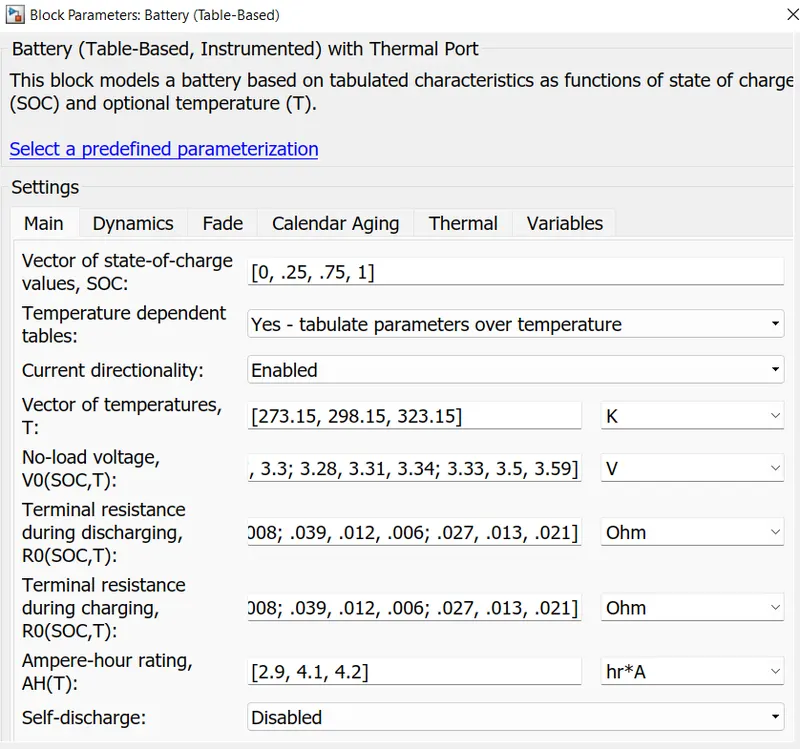
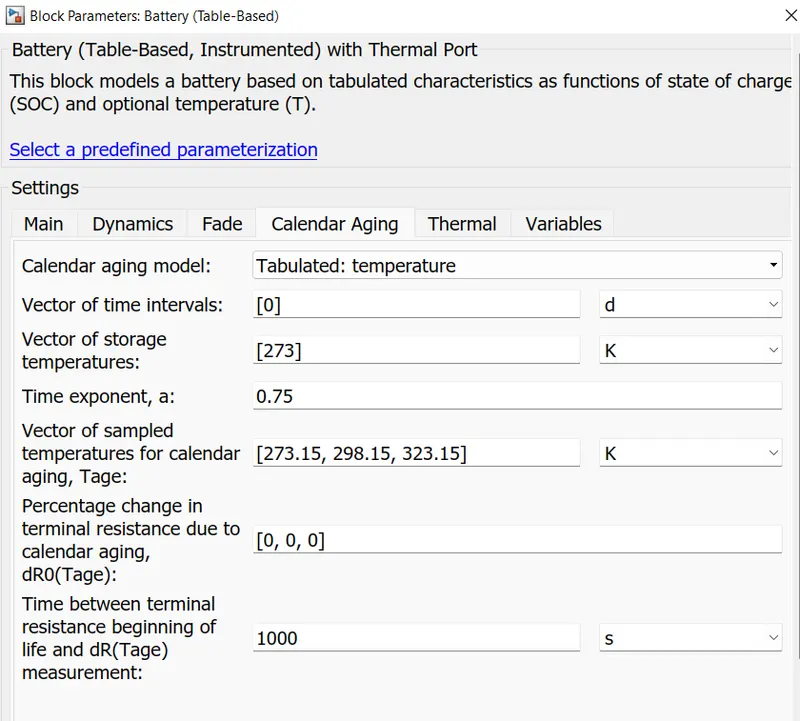
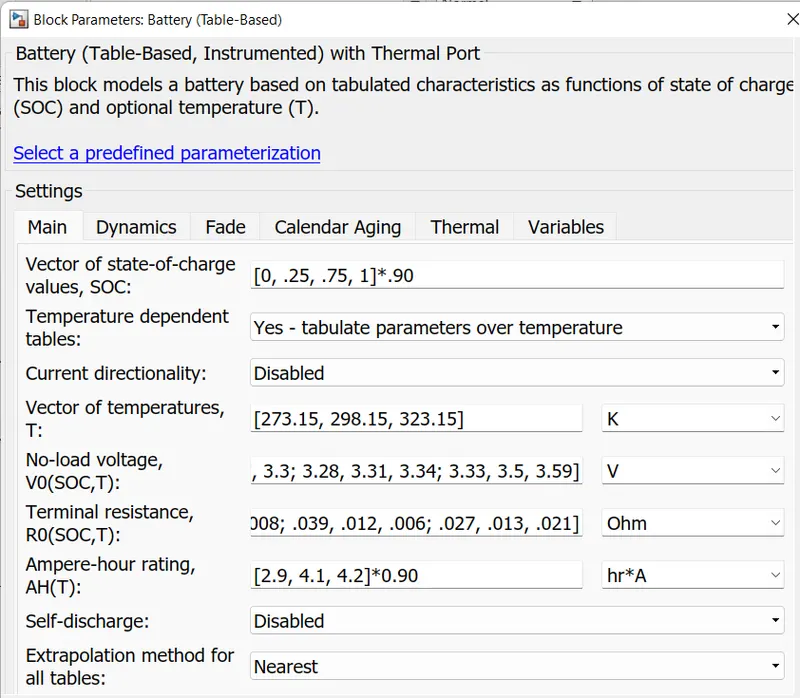
The second battery pack which is under fault consition is having reduced parameter of SOC and Battery capacity.
Parameter of the Second battery pack are as follows:-
Under this subsystem several other block were used which were common for all the three battery pack such as ( Temperature Source,Convection and Conduction Heat transfer, Temperature sensor, Goto and Sum blocks) Lets us discuss them one by one:-
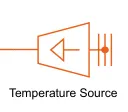
Temperature Source:- These tempertaure source are used to provide the ambient temperature to the battery and also allowed to change the temperaure. It provide the source of temperature to battery through convection and conduction process.
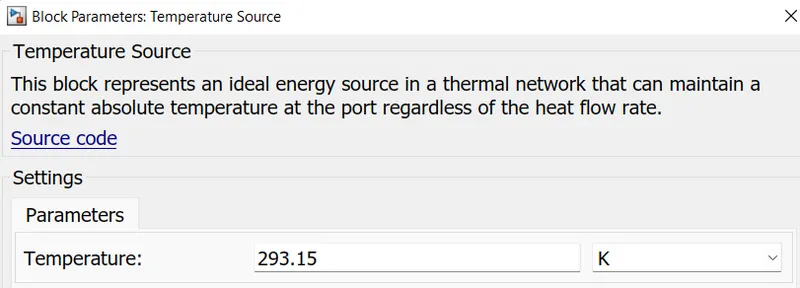
Parameter of this temperature source is as follows and common for all the subsystem:-
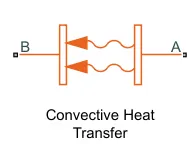
Convection Heat transfer:- This is the convection heat transfer plate which work on the convection principle and transfer the ambient temeprature to the battery pack.
Parameter of convective heat transfer block are as follows:-
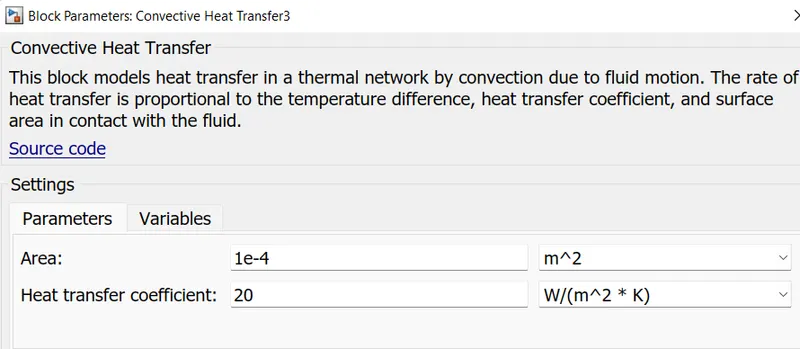
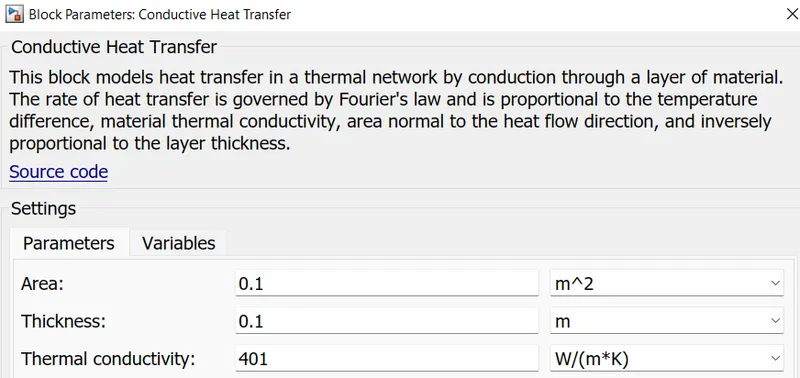
Conductive Heat transfer:- It is also the heat transfer plate which work on the priciple of conduction and it transfer the heat from temperature source to the battery pack.
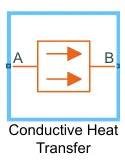
Parameter of the Conductive Heat transfer blcok are:-
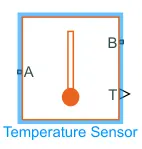
Temperature Sensor:- This block measures temperature in a thermal network. There is no heat flow through the sensor. The physical signal port T reports the temperature difference across the sensor. The measurement is positive when the temperature at port A is greater than the temperature at port B. The Port B is connected to the thermal reference.
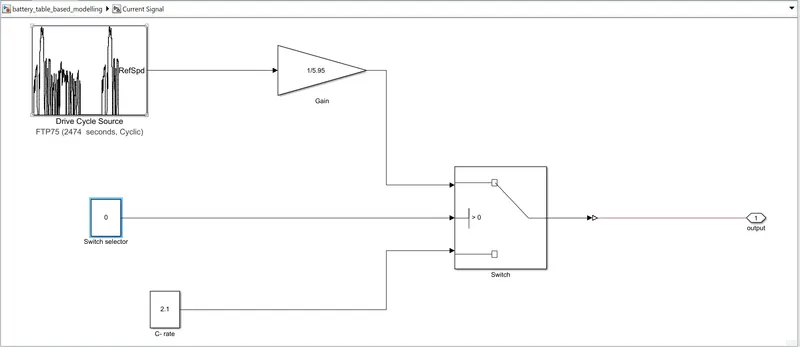
The Subsytem other than the Battery pack is Current profile (signal). It consist of two sources whcih arde feeded to the controlled current source signal port to see the behaviour of battery at different condition.
i) Drive Cycle source (FTP-75) :- This drive cycle source which is Fedral Test Procedure 75 and it is used to estimate the range distance travelled by an Electric Vehicle in a single charge.
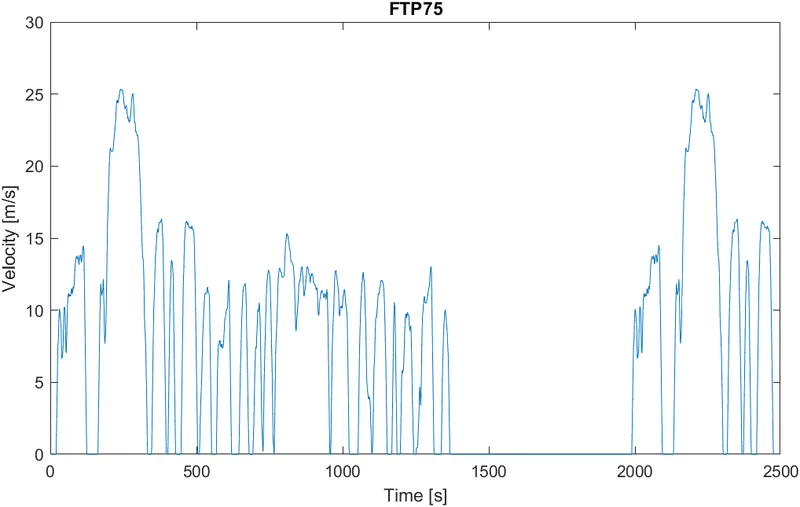
This drive cycle is scaled up to a gain value of (1/5.95) which comes when the maximum speed which is 25 m/s is divided with the C- rate of battery i.e. 4.2 A, we get the value of 5.95 and it is divided with 1 to charge the battery under specified limit of C-rate.
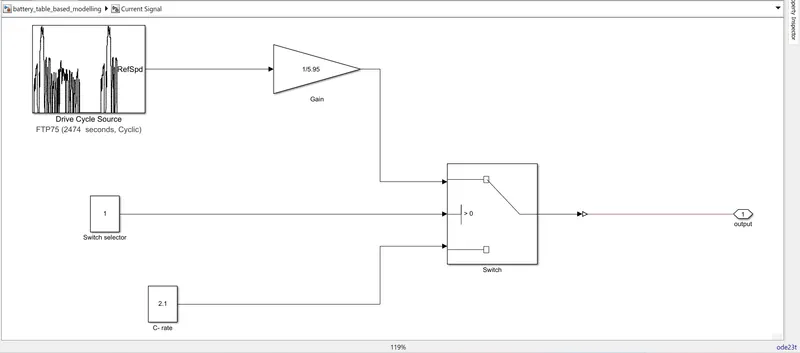
ii) Constant c-rate:- A constant current of 2.1A is applied through the signal port of controlled current source tosee that battery pack behaviour.
With the help of a switch an input is selected one at a time.
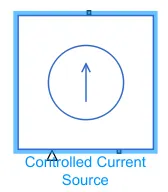
Controlled Current source:- The block represents an ideal current source that is powerful enough to maintain the specified current through it regardless of the voltage across it. The output current is I = Is, where Is is the numerical value presented at the physical signal port. The input to the Signal port is coming from the current signal system output.
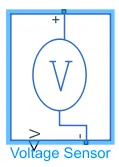
Voltage Sensor:- The block represents an ideal voltage sensor, that is, a device that converts voltage measured between any electrical connections into a physical signal proportional to the voltage.
Connections + and - are conserving electrical ports through which the sensor is connected to the circuit. Connection V is a physical signal port that outputs voltage value.
Results:-
i) We will firstly examine the result of the Battery SOC and temperature of The FTP-75 drive cycle:-
Running the simulation for 6000 sec we get the following result:-
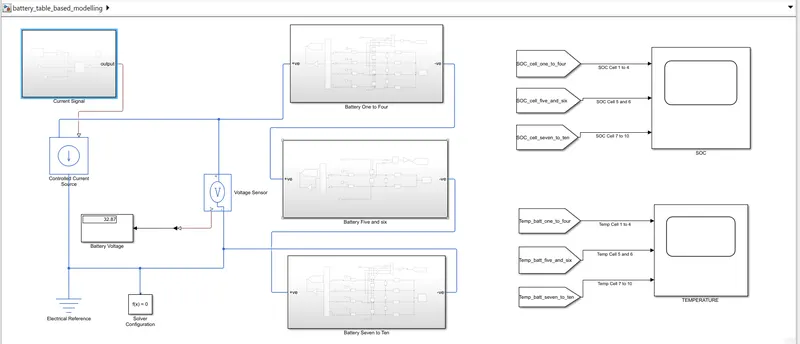
Since the battery pack is of 10S1P combination so the voltage of the single battery pack is 3.3 V and it will get multiply with 10 and will result in 33 V around after completion of the simulation we are getting the battery voltage as 32.87 V.
SOC of the battery pack:-
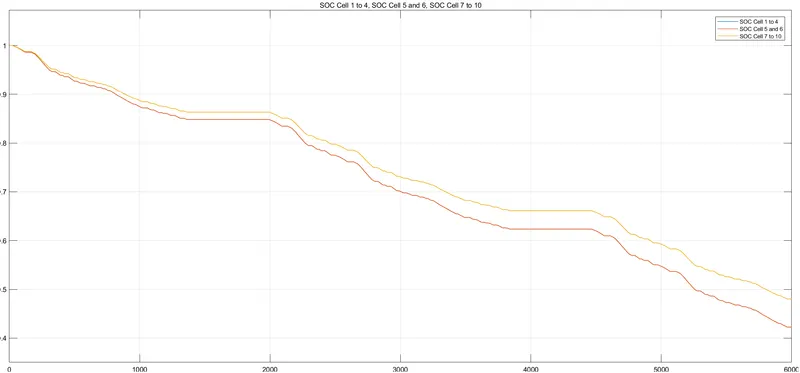
We could easily observe that the SOC of the battery pack whichg is faulty i.e. SOC of cell 5 and 6 is reduced more than the healthy cells one which are under first and third subsystem. The SOC of faulty cell is near about 0.42 and for the healthy cell is about 0.48.
Temperature of the battery pack:-
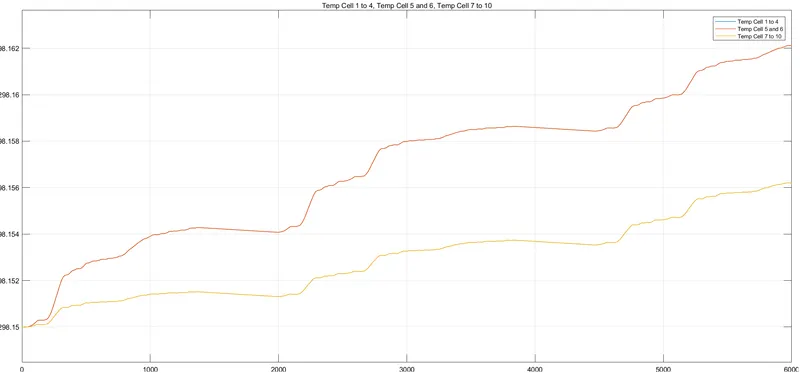
Temperature of the faulty cell is more when compared with the healthy cells. It is around 298.162 K and for the healthy cell it is around 298.156 K.
ii) result for Constant C-rate (2.1A):- Applying the input 0 to the Switch selector we get the output as Constant C rate
Running the simulation for 6000 sec we get the result as:-
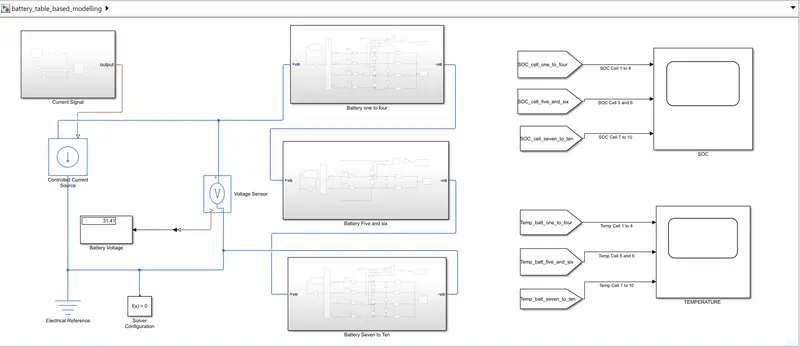
The battery pack voltage around the 10SP1 combination is around 31.41V after the simulation time of 6000 sec.
SOC of the battery pack:-
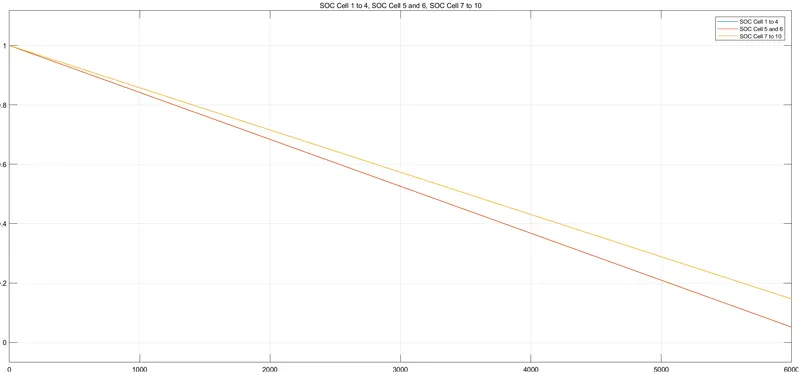
The SOC of the faulty cell falls to near about 0.05 after 6000 sec of run time and the SOC of the healthy cell is in the range of 0.15.
Temperature of the battery pack:-
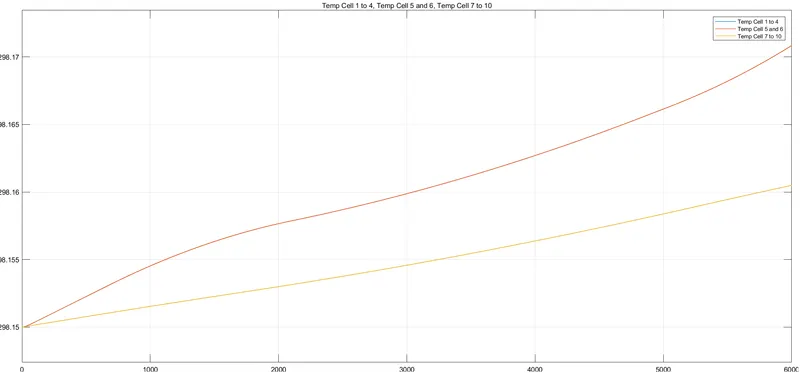
Temperature of the faulty cell increase more with respect to the healthy cells and in is the range of 298.17 K and for the healthy cell it is about 298.16 K.