Project 2 Thermal modeling of battery pack
For a 10 cell series lithium ion battery model, simulate the thermal effects and compare life cycle performance at various temperatures, charge & discharge rates using MATLAB.
Objective:
To model and simulate a 10 cells in series lithium ion battery pack, analyze the thermal effects and compare its life cycle performance at various temperatures, charge & discharge rates using MATLAB.
Theory:
The lithium-ion batteries are widely used as energy sources in different hybrid and electric vehicle. The operation characteristics of the battery in such vehicle are strongly dependent on the operation temperature and therefore, with purpose to improve these characteristics a good thermal control system should be utilized.
The temperature of a lithium battery cell is important for its performance, efficiency, safety, and capacity and is influenced by the environmental temperature and by the charging and discharging process itself. Therefore, a thermal model of the battery is used in order to calculate and estimate the cell temperature.
Lithium-ion battery pack with fault was simulated. A battery pack consisting of multiple series-connected cells in an efficient manner. It also shows how a fault can be introduced into one of the cells to see the impact on battery performance and cell temperatures, For efficiency, identical series-connected cells are not just simply modelled by connecting cell models in series. Instead a single cell is used, and the terminal voltage scaled up by the number of cells. The fault is represented by changing the parameters for the cell 5 fault subsystem, reducing both capacity and open-circuit voltage, and increasing the resistance values.
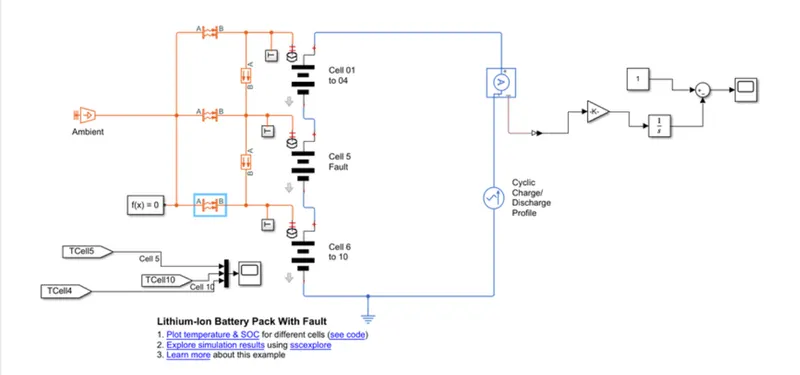
Cell 01 to 04 Subsystem:
Cell subsystem basically consist of a Thermal Model and Lithium Cell IRC block which calculate the temperature and thermal effect for cells and overall calculate for the battery pack.
The block which are inside the cell subsystem are PS Gain block which multiplies the input physical signal by a constant i.e. y = u.* gain. Another block are voltage sensor and current voltage source.
The voltage sensor block represents an ideal voltage sensor, that is, a device that converts voltage measured between any electrical connections into a physical signal proportional to the voltage.
Current voltage source represents an ideal voltage source that is powerful enough to maintain the specified voltage at its output regardless of the current passing through it. The output voltage is V = Vs, where Vs is the numerical value presented at the physical signal port.
circuit construction and working
in this ckt we use li-ion cell 1 to 10, temperature sensors, ambient temp block, state of charge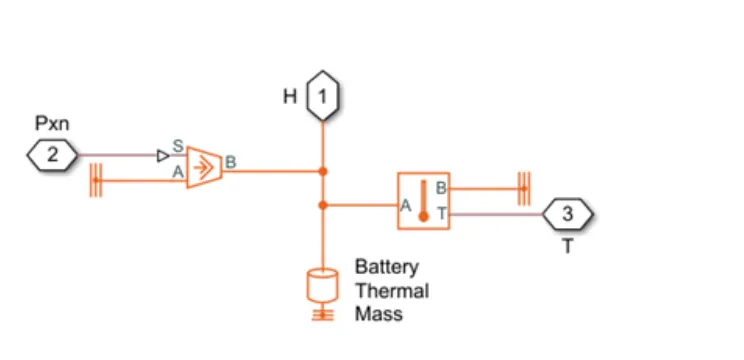
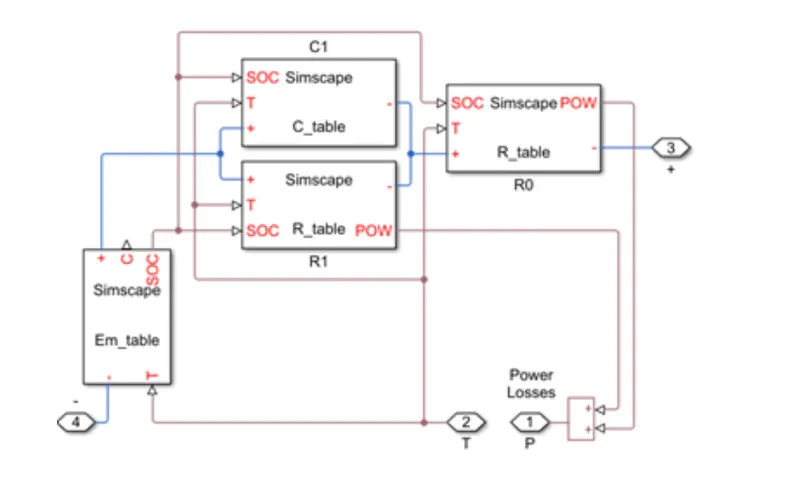
estimation scope, charge discharge profile given to ekt,from & goto block block matlab simulink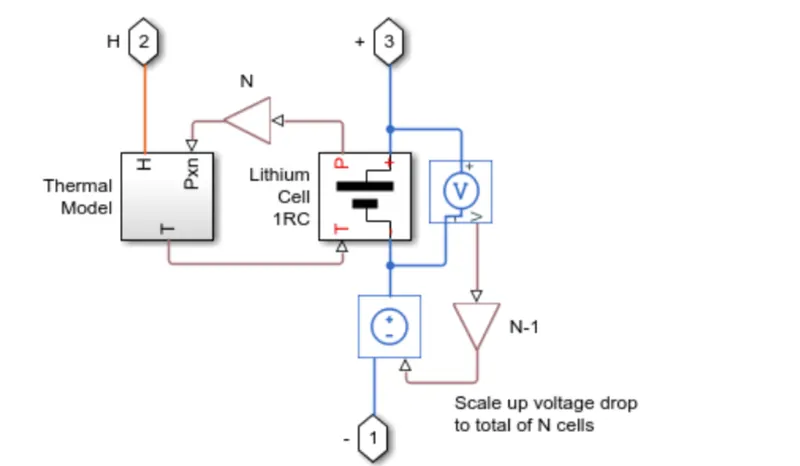
After simulation
result explanation.
For a 10 cell series lithium ion battery model we simulate the thermal effects and compare life cycle performance at various temperatures, charge & discharge rates using MATLAB. results are as follows
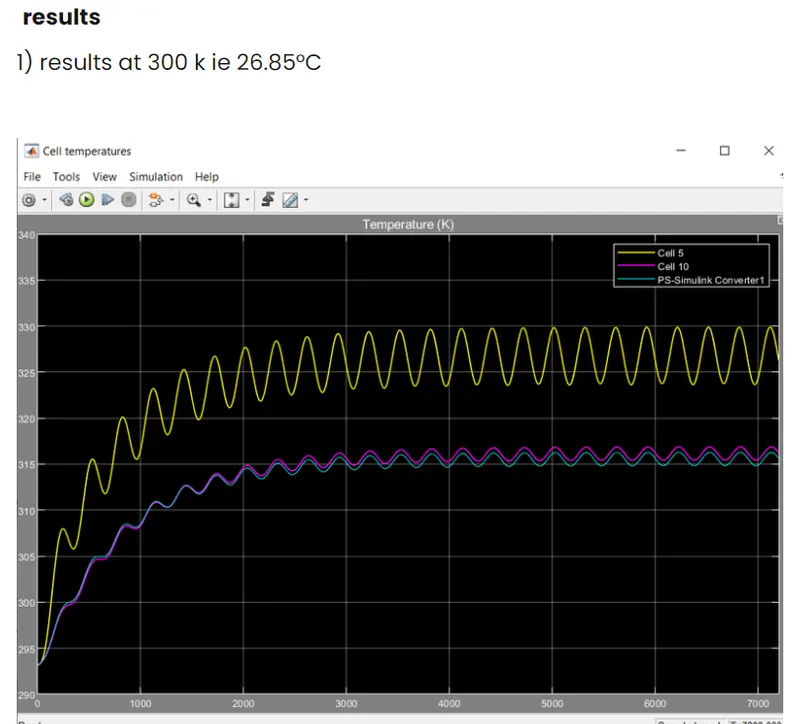
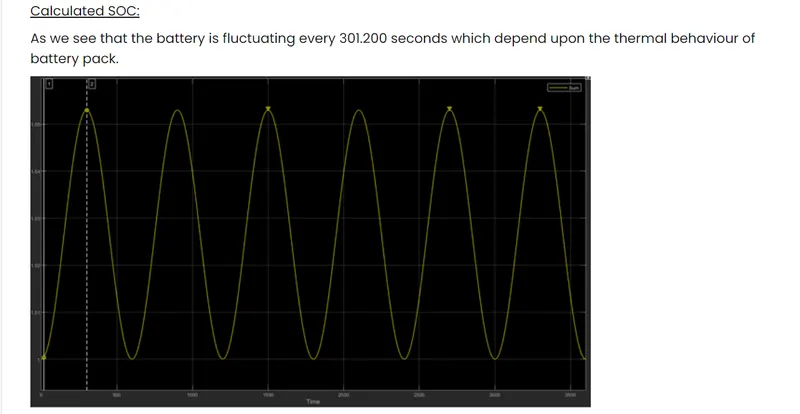
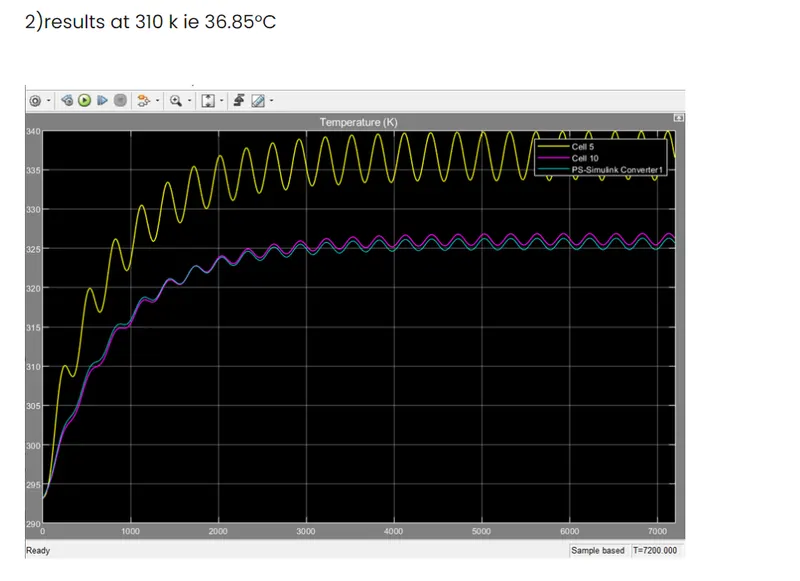
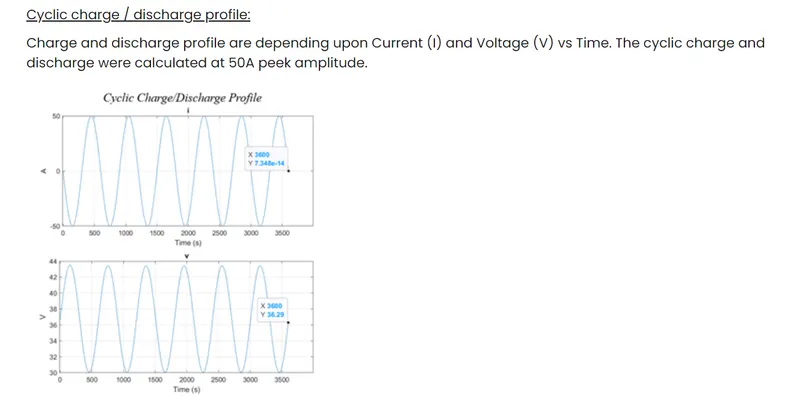
1-4 cells are normal cell 5 th cell is faulty 6-10 cell is normal cell as we are simulating thermal effect on we give Cyclic Charge/ Discharge Profile to circuit the waveform you can see above results all conditions it is same but when ckt is run on this drive cycle profile as 5th cell was faulty it will show temperature rise high than any other cell and the life cycle of cell get reduced and cell even can get damage
so as we give temp of results at 300 k ie 26.85°C the 1-4 and 6-10 cell temp is near to 316k
but 5th faulty cell temp goes to 330k ie 56.85°C and the drive cycle is shown which is Cyclic Charge/ Discharge drive cycle
in condition two we give temp 310 k ie 36.85°C and 1-4 and 6-10 cell temp is near to 326 k but 5th faulty cell temp goes to 340k ie 66.85°C and the drive cycle is shown which is Cyclic Charge/ Discharge drive cycle
in condition two we give temp 324 k ie 50.85°C and 1-4 and 6-10 cell temp is near to 340 k but 5th faulty cell temp goes to 354k ie 80.85°C and the drive cycle is shown which is Cyclic Charge/ Discharge drive cycle
conclusion
we simulated the thermal effect and compared at various temperature,faulty cell temp rise more than normal cell charge and discharge cycle given and due to temp rise it can damage the cell and reduce the performance of the battery.