Project 2 Thermal modeling of battery pack
Project: 10 cell series lithium ion battery model
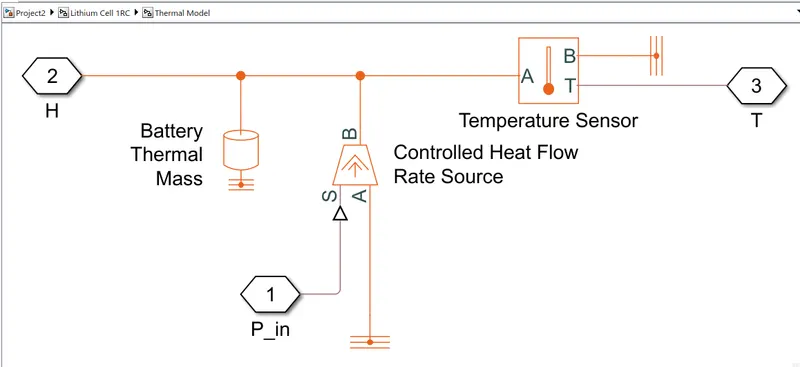
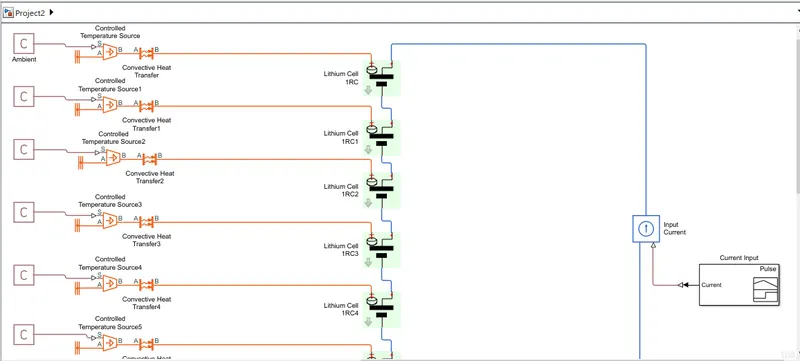
A simple thermal model is used to model battery temperature. It is assumed that cooling is primarily via convection, and that heating is primarily from internal resistance. A battery pack can be modeled by connecting multiple copies of the battery cell block in series.
Equivalent circuit of Li-ion cell:
Where Rp and Cp are polarization Resistance and Capacitance.
Rs is ohmic resistance
Voc is open circuit Voltage
RC lithium cell:
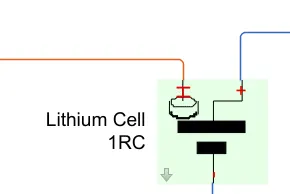
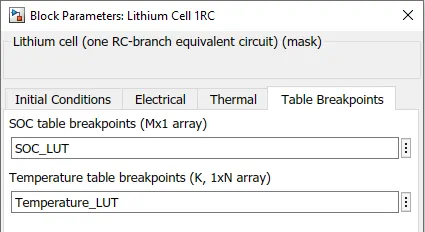
- Block Parameters:
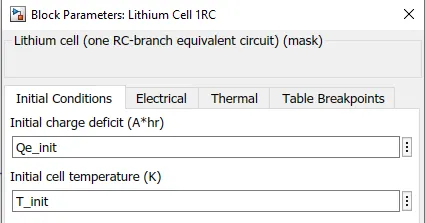
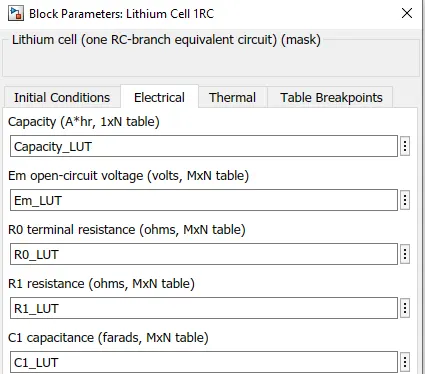
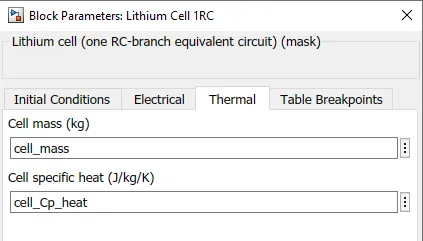
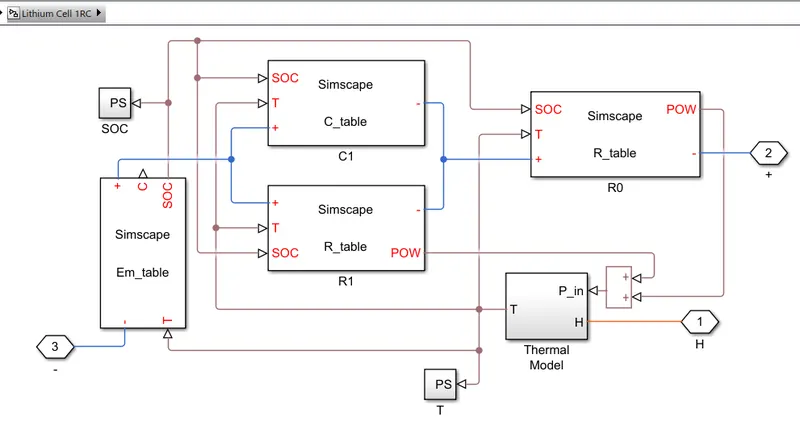
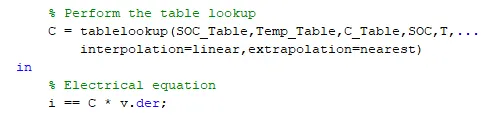
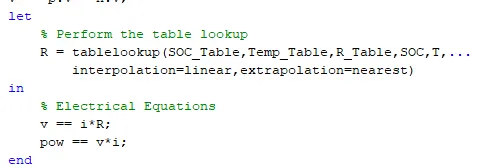
- It consist of Thermal,SOC, R and C models. Where R and C are created using tablelookup() function.
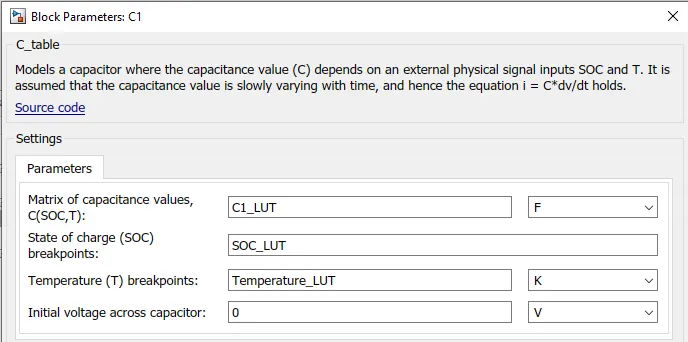
C_table:
- Models a capacitor where the capacitance value (C) depends on an external physical signal inputs SOC and T. It is assumed that the capacitance value is slowly varying with time, and hence the equation i = C*dv/dt holds.
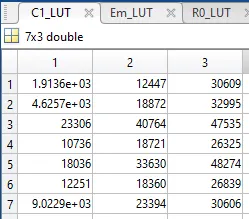
- Values of Capacitance:
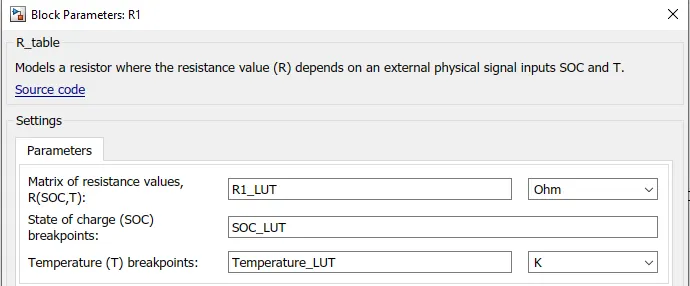
R_table:
- Models a resistor where the resistance value (R) depends on an external physical signal inputs SOC and T.
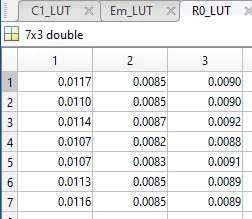
- Values of Resistance values:
Em_table:
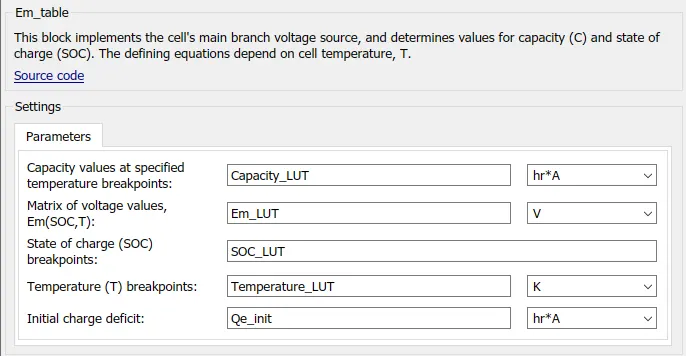
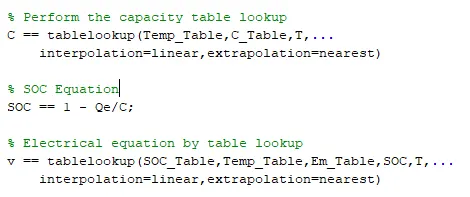
- This block implements the cell's main branch voltage source, and determines values for capacity (C) and state of charge (SOC). The defining equations depend on cell temperature, T.
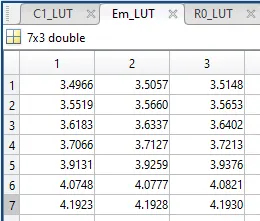
- Values of voltage:
Thermal Model:
- SOC and Temperature is taken as output from SOC and T Subsytems:
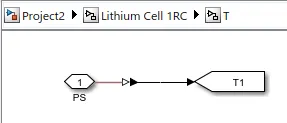
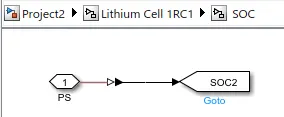
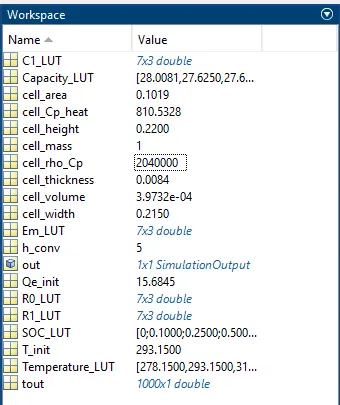
- Workspace Variables:
Model of 10 lithium ion cells in series:
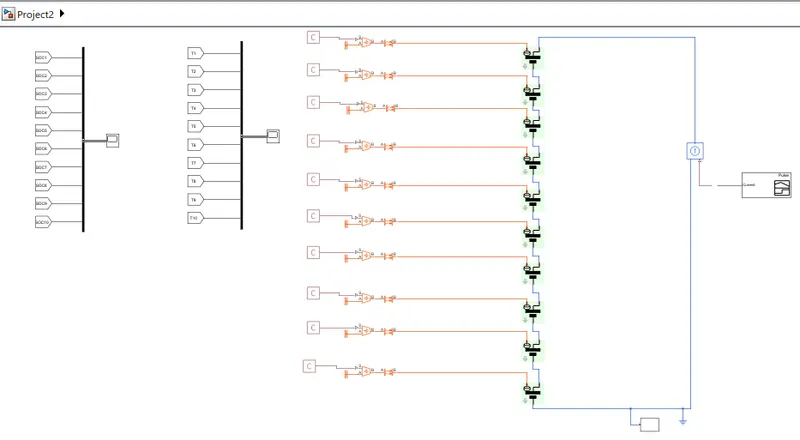
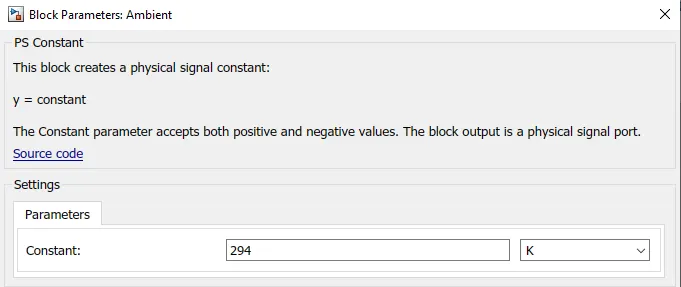
- Ambient Temperature(PS constant) is given to Controlled Temperature Source and convective heat transfer plate to RC lithium-ion cell.
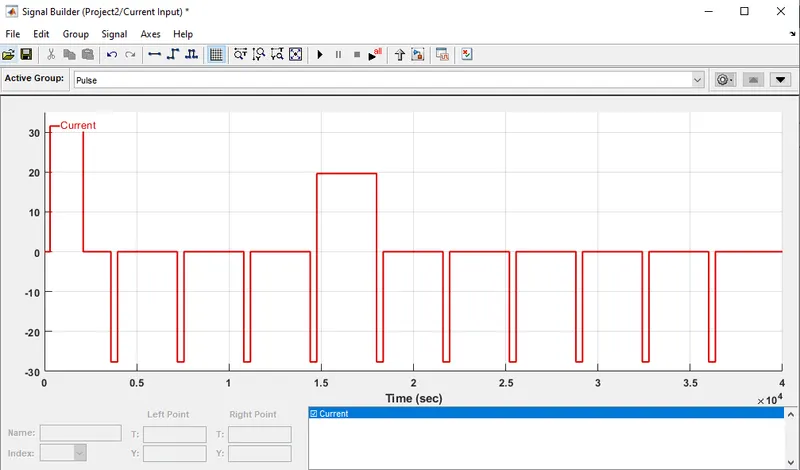
- Current as Input is given to all lithium ion cells by using Controlled Current Source and signal builder block.
- Current signal using Signal Builder:
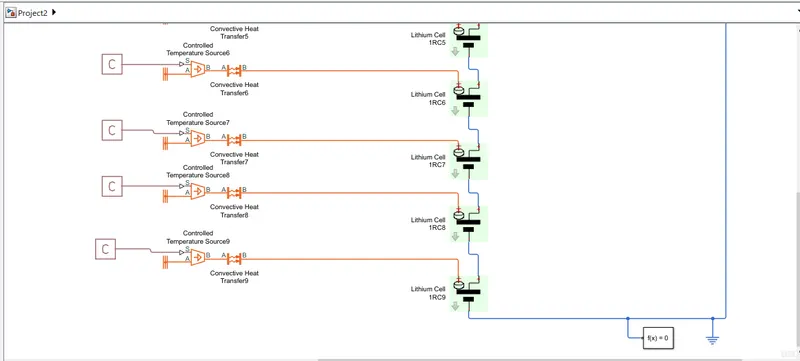
- Other(-ve) end of Controlled current source and lithium ion cells are grounded properly.
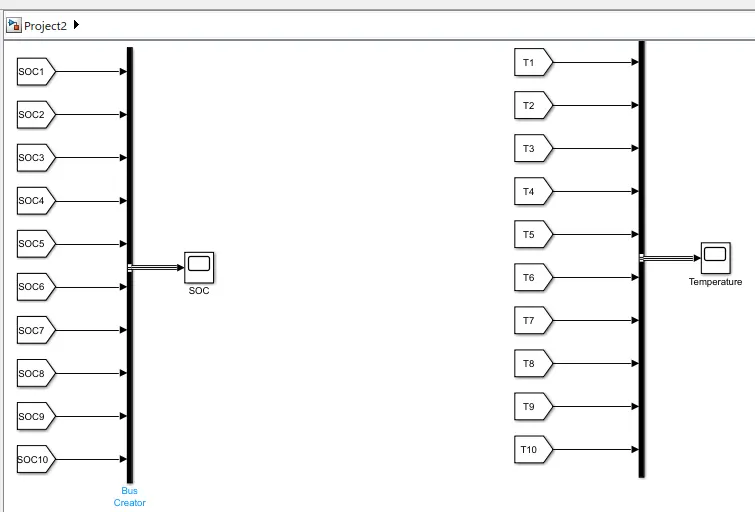
- Output (temperature and SOC) which is taken from Lithium Cells from 1 to 10, is given to Scope as shown below:
- Here, Ambient Temperature varied in PS constant so that temperature of each cell changes.
| Li-ion Cell | Temperature(K) |
| 1 | 294 |
| 2 | 295 |
| 3 | 296 |
| 4 | 297 |
| 5 | 298 |
| 6 | 299 |
| 7 | 300 |
| 8 | 293 |
| 9 | 301 |
| 10 | 302 |
- Temperature output of all Li-ion cells for 40,000 secs.
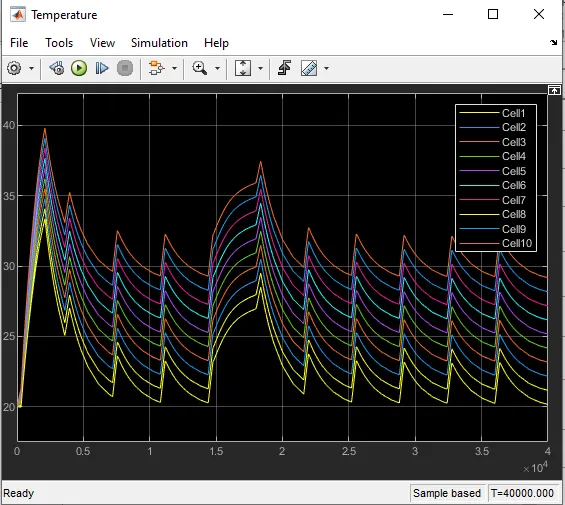
- Cell 10(in Red) has high Temperature and Cell1(in yellow) has low temperature and cell temperature varies according to ambient temperature.
- At starting it shows Highest peak, as the current variation is also high as it is above 30A and them decreases to less than -20A.
- Temperature increases or decreases according to variations in input current(means according to charging and discharging of cells).
- During charging,Temperature of cell increases and decreases during discharging.
- SOC output of all Li-ion cells for 40,000 secs.
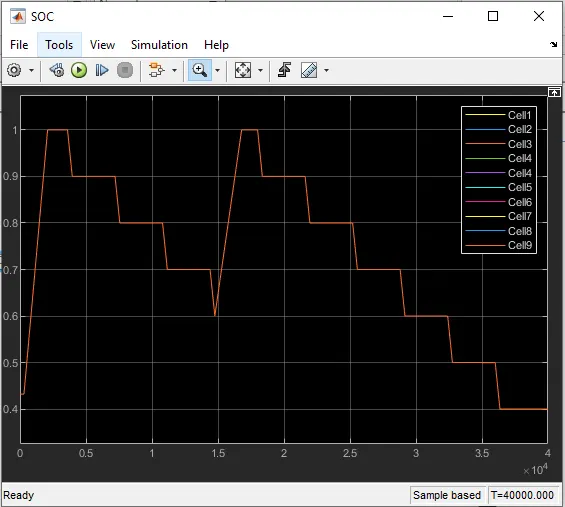
- SOC for all lithium ion cells is almost same.
- Battery is charging, when current is positive.
- Battery is discharging, when current is negative.
- There is difference in SOC, during the peak change as shown below:
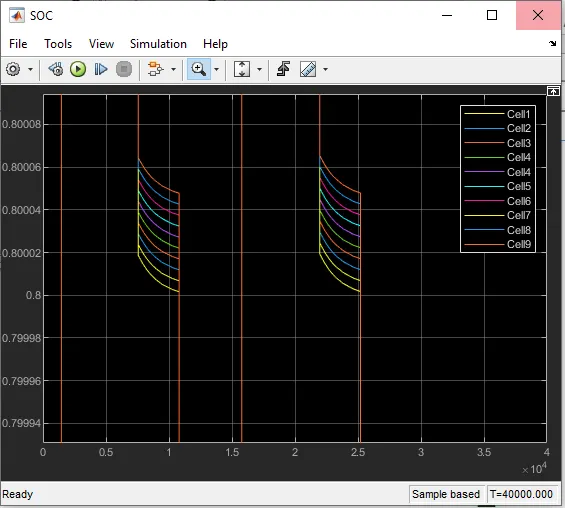
- cell(in Red) with high temperature, discharges fast as compared to cell(in yellow) with low temperature.
Conclusion:
- As the Current is positive, Temperature is increases and cells of battery are in charging stage.
- When the current is negative, Temperature of cells decreases and battery is in discharging stage.
- Cells that have high temperature discharges fast compared to cells with low temperature.
- Life cycle of Battery also depends on charging and discharging cycles. If any battery discharges fast due to high temperature than life span of battery also decreases.