Project 2 Fender
FENDER DESIGN
AIM:
The aim of these project is to design fender and the main design requirements for Drip area, Bumper, A-pillar and Sill mounting areas.
FENDER:
Fender is the american english term for the part of an automobile, motorcycle or other vehicle body that frames a wheel well (the fenter unterside). It's primary purpose is to prevent sand, mud, rocks, liquids, and other road spray from being thrown into the air by the rotating tire. fenders are typically rigid and can be damaged by contact with the road surface.
A fender is the part of a car that protects and frames its wheel and keep mud from splashing it. Most modern vehicle have fenders on their front wheels. When you get into a minor car accident, you can call it a "fender bender" and it's possible that your fenders did get slightlydwnted.
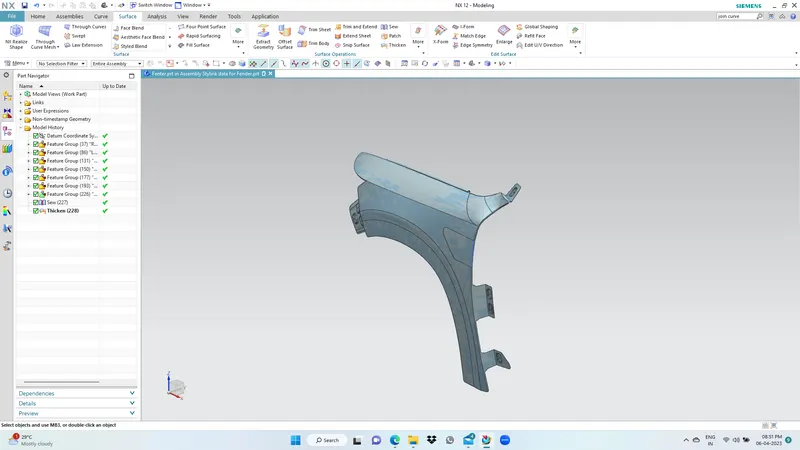
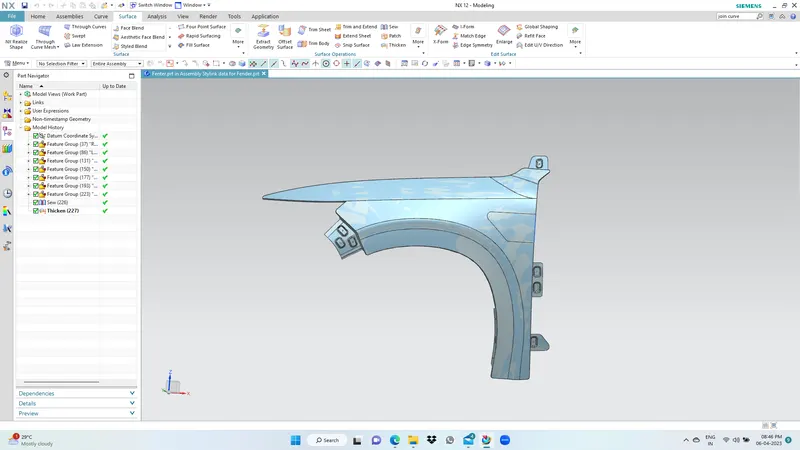
TYPES OF FENDERS:
- Full bumper type.
- Half bumper type.
FULL FENDER TYPE: Full fender type is traditional type of fender where more material consumption is observed. This type is used in old design of automobiles where it increases the overall weight and thus reduces performance. The maintenance also relatively more due to more surface.
HALF FENDER: Half fender type is modern design where less material consumption is observed, so productivity increases by reducing size of blank and thus providing more the maintenance also relatively low compared to full bumber type.
FENDER IS MOUNTED BASICALLY ON 5 IMPORTANT REGIONS:
1. Drip Area
2. A-Pillar Mounting Area
3. Sill Mounting Area
4. Bumper Mounting Area
5. Spalsh/Baffle Mounting Area
DRIP AREA:
The depth of the drip area is maintained at less then 60 mm so as to avoid the spring-back effect. Ribs are provided the fender drip area to increase strength in that area.This region is mounted below the hood inner panel which need to be in flush when the hood is in closed condition and also there should be very less gaps.
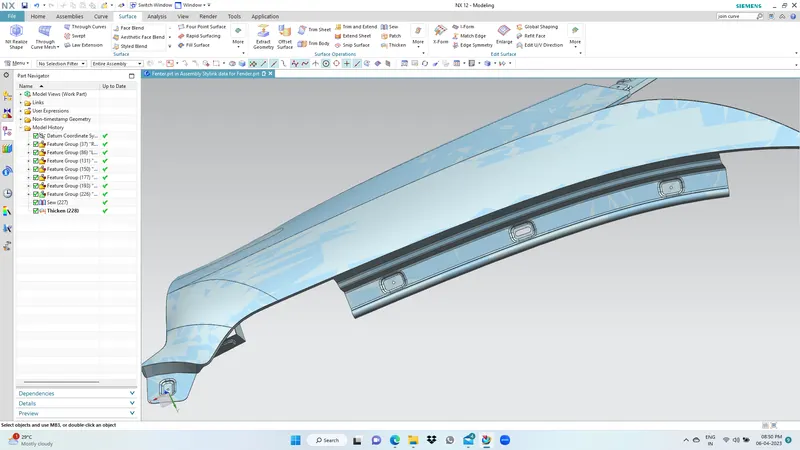
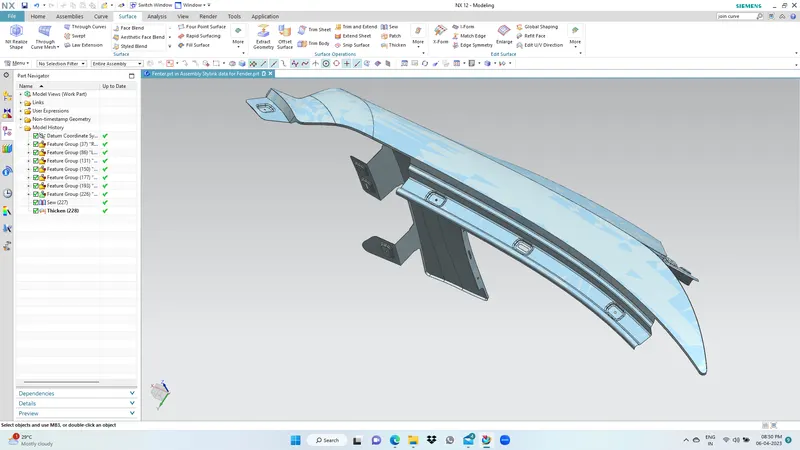
A-PILLAR MOUNTING AREA:
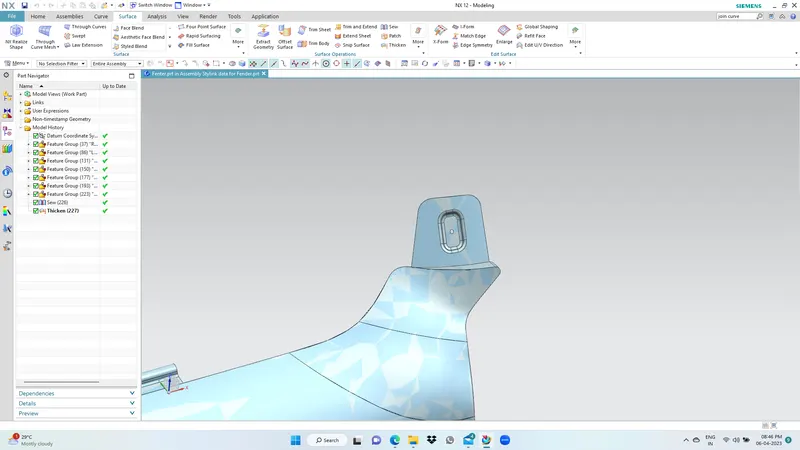
The A-pillar is the structural uprightnthat partially frames the windshield. A-pillar (one on each side of the body) are joined across the top of the windshield by the car headerrail. The base of the windshield where it meets the hood is called the cowl.
SILL MOUNTING AREA:
Sill is panel directly below the bottom of the door supporting the floor and may be used to combine the floor and the body. The sillmounting position is desined with holes and emboss. Fasteners are used to fix the fenders on the sill body.
BUMPER MOUNTING AREA:
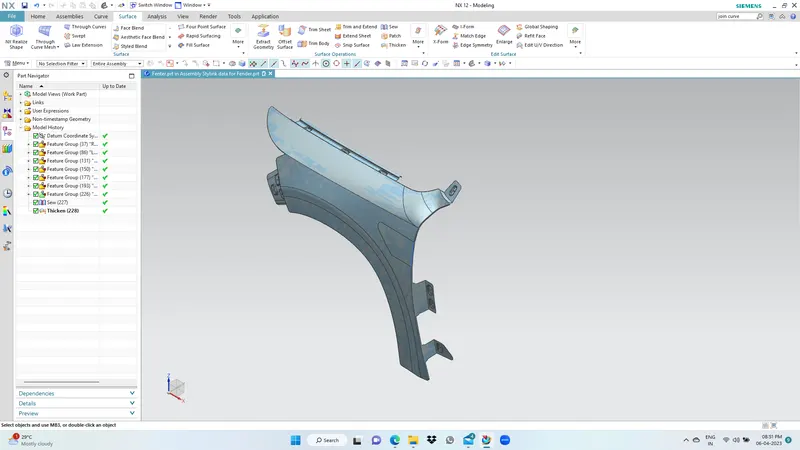
Bumper mounting area is used to fix the plastic bumper to the fender with help of the fasteners. Bumper are located at the very front of the vehicle, below the front grille. They're intended to be the first thing to hit an object in front of them (such as another vehicle) and to minimize the impact and damage to the rest of the vehicle, minimizing repair costs.
SPALSH/BAFFLE MOUNTING AREA:
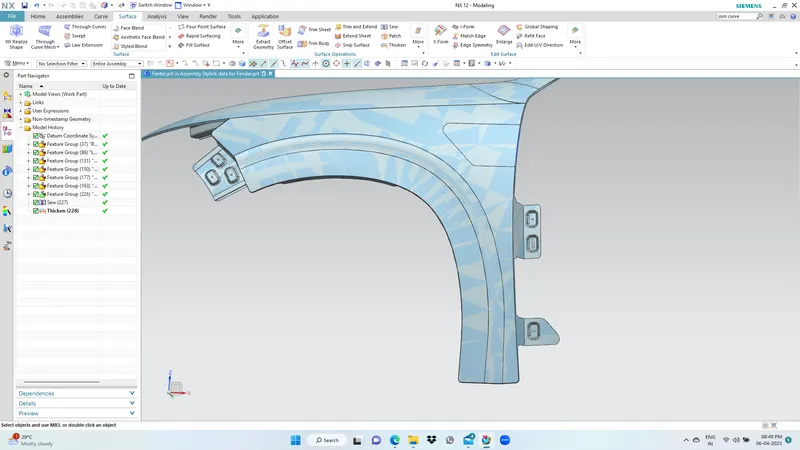
It is located at the wheel arch of the fender area.
MANUFACTURING PROCESS:
The manufacturing of the fender majorly involves these operations.
Stamping process:
Stamping process also called as pressing - involves placing flat sheetmetal, in either coil or blank from, into a stamping press. In the press, a tool and die surface from the metal into the desired shape. Punching, Blanking, Bending, Coining, Embossing, and Flanging are all stamping techniques used to shape the metal.
TOOLS ARE USED:
- Repair sketch
- Trim sheet
- Offset curve
- Bridge curve
- Join curve
- Throu curve mesh
- Law extension
- Extent
- Trim and Extent
- Face bend ( two face bend, three face bend)
- Edge bend
- Sew
- Thickness
CONCLUSION:
As we successfully lern about the feature and purpose of front fender and made it in NX CAD and we have learn the tools involved in it.