Challenge 4-Windshield Modeling
Design of Windshield
AIM:
Design the front windshield from the given styling surface and also provides the headliner and the required thickness.
WINDSHIELD:
The windshield (North American English) or windscreen (Commonwealth English) of an aircraft, car, bus, motorbike, truck, train, boat or streetcar is the front window, which provides visibility while protecting occupants from the elements.
A transparent screen (as of glass) that protects the occupants of a vehicle, especially one in front of the occupants.
There are two types of automotive windshield glass, tempered and laminated. The front windshield is typically made from laminated glass, while the rear window and auto glass are tempered.
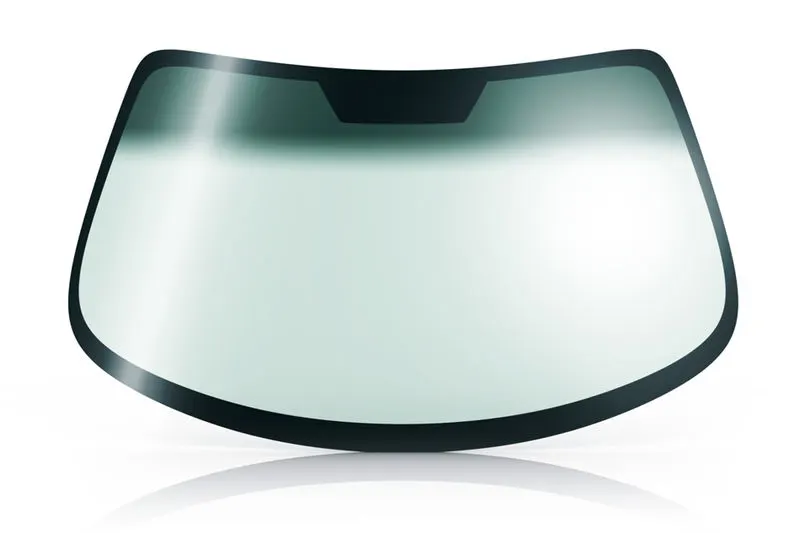
TYPES OF WINDSHIELD:
- Curved Laminated Glass
- Curved Tempered Glass
CUVED LAMINATED GLASS:
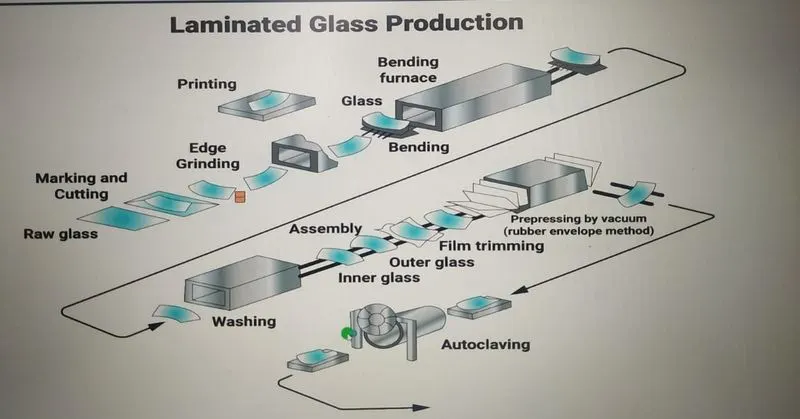
Laminated glass is made with two glass sheets and a polyvinyl film in between. The lamination process involves extreme heat to bind the two glass sheets together. Laminated windshield glass can handle extreme weather conditions and is hard to shatter. The vinyl film in between the two sheets of glass prevents the glass from shattering in the event of a collision, protecting the driver and passengers in the car and preventing serious injuries.
The strength of laminated glass also protects the windshield from road debris. Professional auto glass repair companies can repair small rock chips and cracks on laminated auto glass
MANUFACTURING PROCESS OF LAMINATED GLASS:
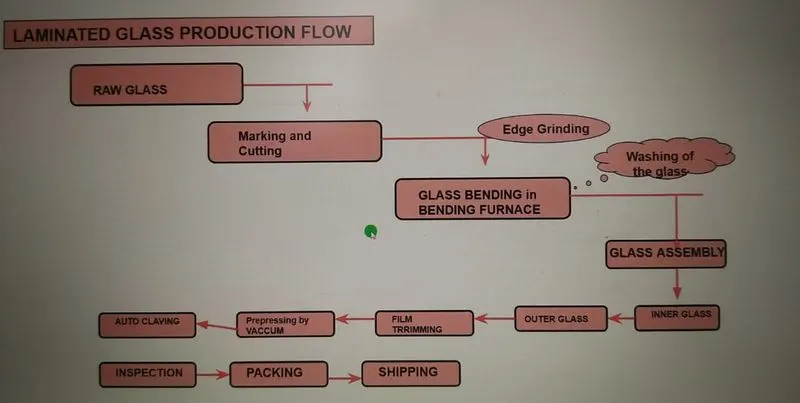
CURVED TEMPERED GLASS:
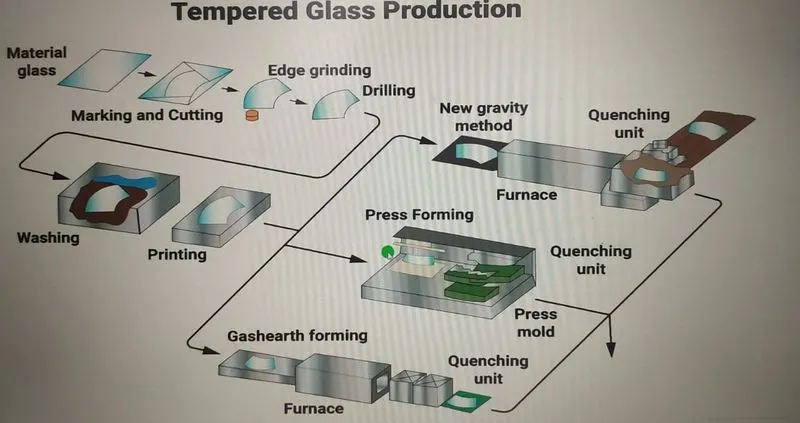
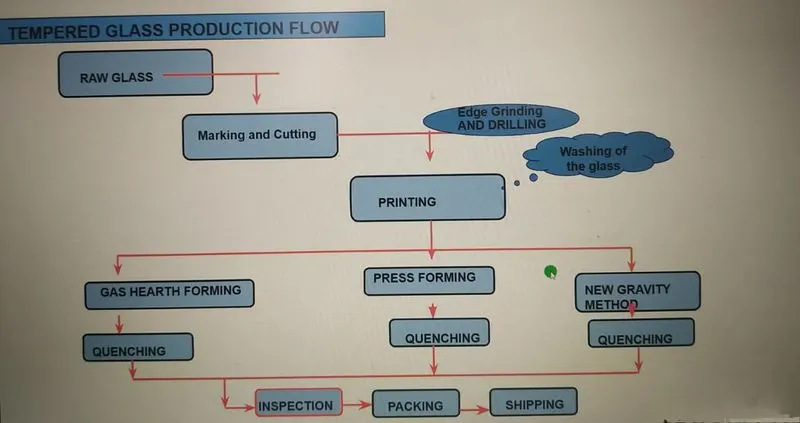
Tempered glass is exposed to extreme heat, followed by a fast cooling process. They are specifically designed to shatter into tiny pieces instead of large ones to prevent harmful injuries from sharp glass edges. Tempered glass is also used for phone screens, some sunglasses, and kitchen appliances. Unlike laminated auto glass, tempered glass needs to be replaced when broken.
MANUFACTURING PROCESS OF TEMPERED GLASS:
DESIGN OF FRONT WINDSHIELD MODELING
PROCEDURE:
- First of all creat the outer gradiant line or headliner for the windshield.
- No sharp edgess inthe headliner.
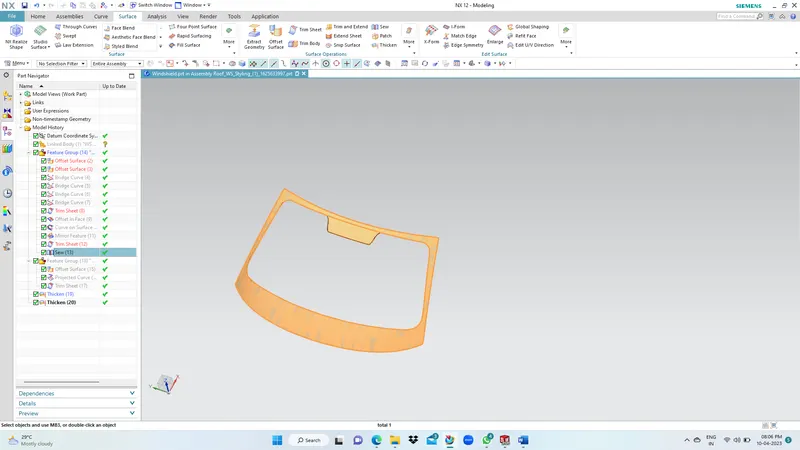
- Then creat the glass with respect to the headliner.
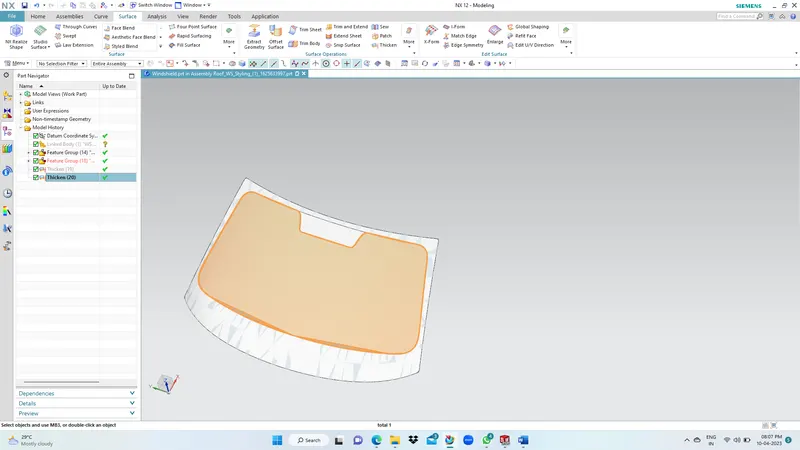
- Finally apply the required thickness to headliner and glass.
- First glass layer 2.3mm
- Second glass layer 2.3mm
- In between the layer 1mm polyvinyl.
- Windshield usual thickness will be 4.7mm.
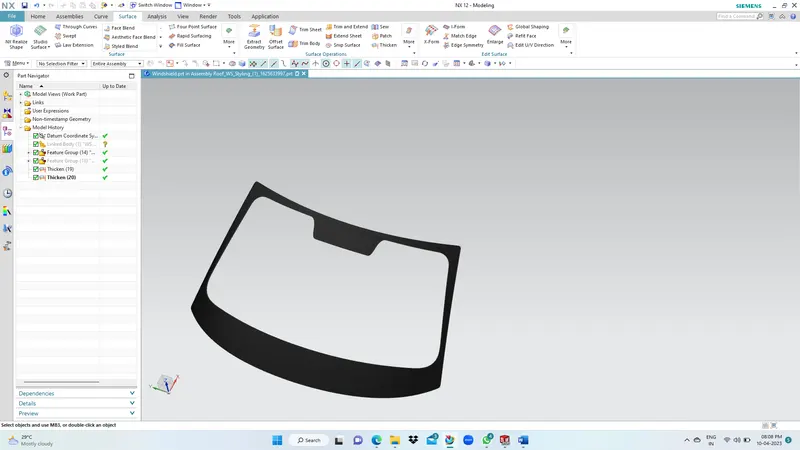
TOOLS ARE USED:
- Offset surface
- Offset in face
- Curve on surface
- Mirror feature
- Projected curve
- Trim sheet
- Sew
- Thicken
SAFETY:
Windshields are made from a lamination process. The windshield glass in your car is made of laminated glass, which is designed to offer highest levels of safety in the event of a crash. The laminated glass is made up of two pieces of glass, with a thin layer of vinyl between them.
CONCLUSION:
Thus the front windshield is designed as per the standards with appropriate headliner and thickness as mentioned in the projects.