Body side Outer
-: BODY SIDE OUTER PANNEL :-
OBJECTIVE: :
Design and development of automotive Body side Outer for an SUV. Design individual components and attach them to the rest of the SUV body. Need to model these parts in such a way that they can be welded together.
BODY SIDE OUTER:
The outside panels provide the shape of the car body where as the inner panels reinforce the shell of the body. The various curved shapes are given to outer panels to provide the strength to panels. Then the car body side outer refers to the exterior surface or panel on the side of a vehicle. It is the outer layer of the car's body that encloses the interior space and protects the vehicle's occupants and components.
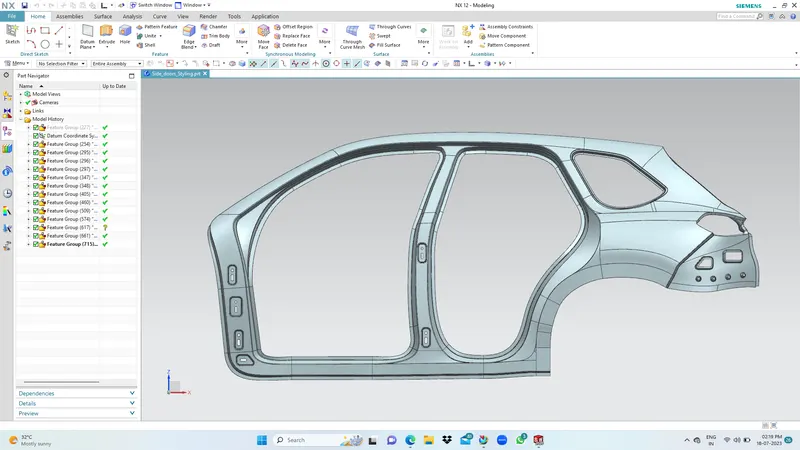
COMPONENTS OF BODY SIDE OUTER PANEL:
The pillars on a car with permanent roof body style (such as four-door sedans) are the vertical or nearly vertical supports of its window area or greenhouse designated respectively as the A, B, C and (in larger cars such as 4-door station wagons and sport utility vehicles) D-pillar.
A Pillar:
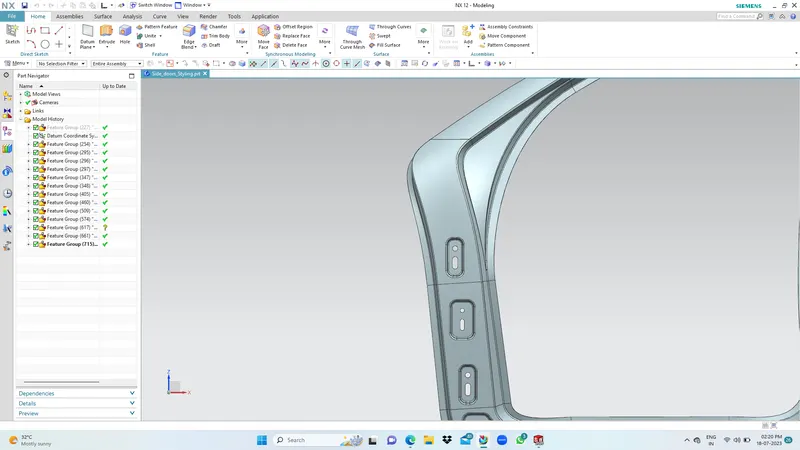
Manufacturers provide the A-pillars on both sides of the vehicle. Manufacturers use strong steel alloys to make the A-pillar. Thus, it is to make it withstand a crash and meet safety standards. However, the vehicle’s roof and doors are the most expensive parts to carry out repairs. In addition, the blind spot occurs due to the blocking of the driver’s vision by the A-pillar. So, some makers make the A-pillar slimmer and chamfered to decrease the blind spots. And, thus it improves the driver’s vision.
B Pillar:
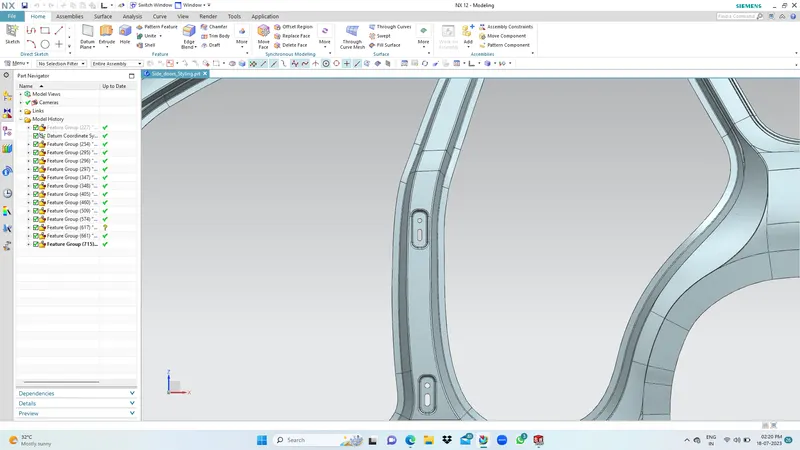
B Pillar is the most complex component/structure of the vehicle body. It is because the front door closes on the B pillar while the rear door hinges on it. Manufacturers make the B pillar or the center pillar of steel in vehicles. Manufacturers weld it to the roof panel on top and the vehicle’s floor pan at the bottom. This pillar provides structural support to the vehicle’s roof.
C Pillar:
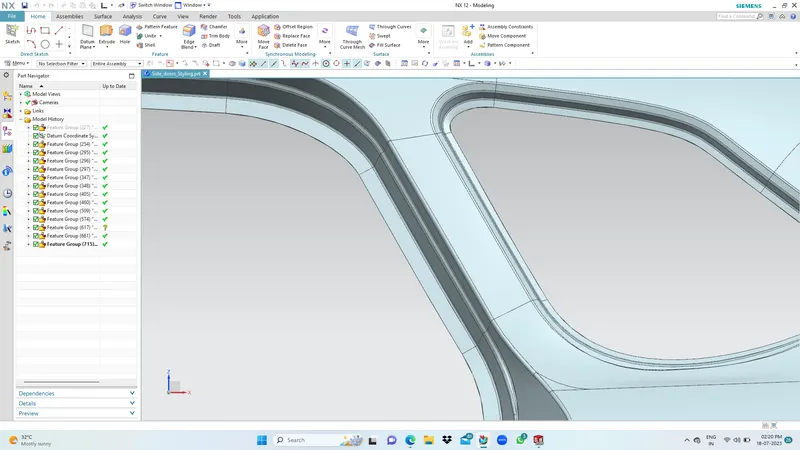
The C pillar sits behind the rear door. However, the C pillar is the rear most pillar in sedans and hatchback. The C pillar often houses feature such as rear side windows and may play a role in the overall aerodynamics of the vehicle.
Sill Body:
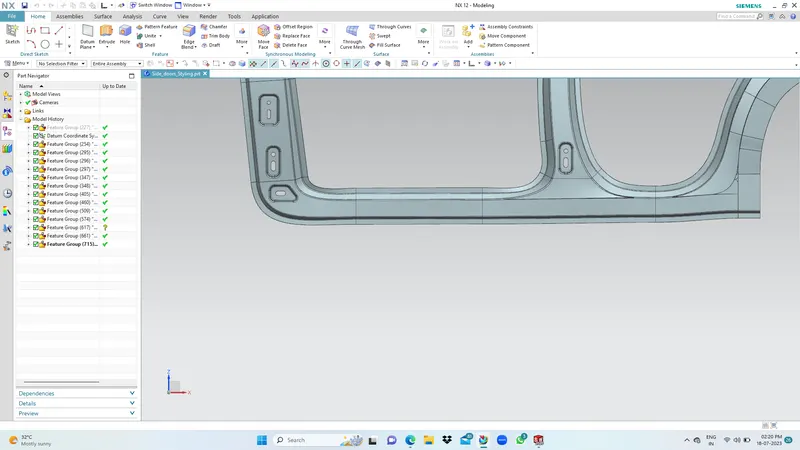
Side sills Position the side sill moulding in place under the door weatherseal. Remove the protective paper from the double-sided tape and press the unit into position. The ends of the sill are secured to the front and rear wheel-arch flanges by drilling and riveting in the same.
Bumper and Tail lamp Mounting:
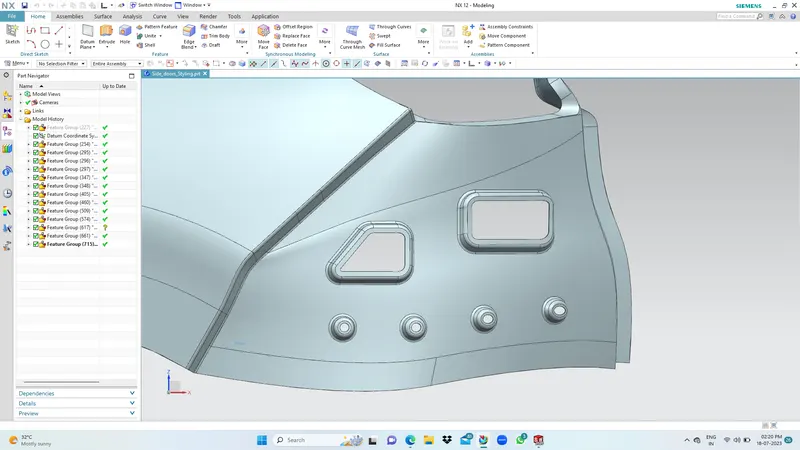
A bumper is a structure attached to or integrated with the front and rear ends of a motor vehicle, to absorb impact in a minor collision, ideally minimizing repair costs.The specific design and composition of the bumper region can vary among different vehicles, but its primary purpose is to enhance safety and protect the vehicle during impacts.So for designing it, we used reference of styling of bumper mount and then created bumper.
DRAFT ANALYSIS:
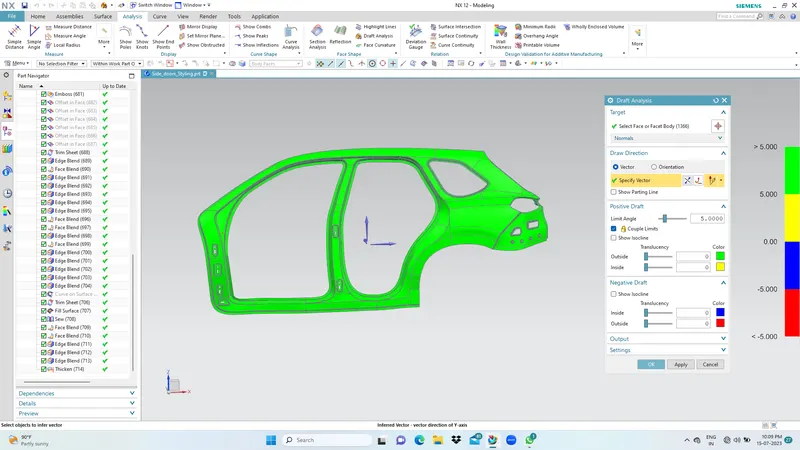
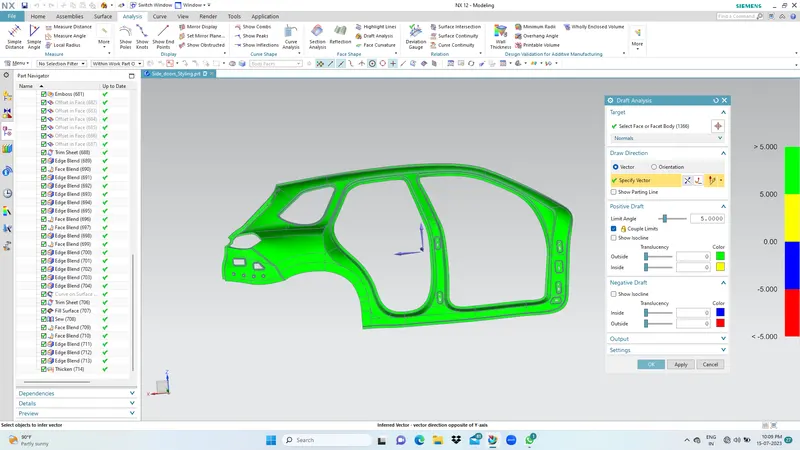
In this project i considered the minimum draft angle 7 degrees.
MANUFACTRING PROCESS:
The stamping process is a metal forming process in which sheet metal is given a desired shape. The stamping process may include different other sheet metal operations like punching, bending, blanking, shearing, piercing, etc.
BLANKING:
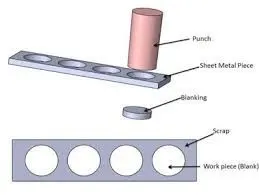
Blanking and piercing are shearing processes in which a punch and die are used to produce parts from coil or sheet stock. Blanking produces the outside features of the component, while piercing produces internal holes or shapes. The web is created after multiple components have been produced and is considered scrap material.
PUNCHING:
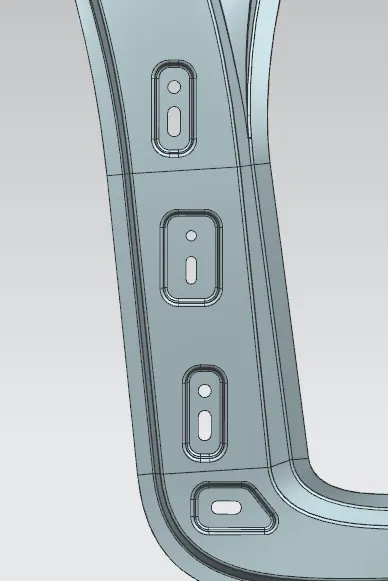
It is a forming process that uses a punch press to force a tool, called a punch, through the work piece to make a hole by shearing. Punching is applicable to a wide range of materials including sheet metal, paper, vulcanized fibre and some kinds of plastic sheet. The punch often passes through the work into a die. Normally, the punching equipment consists of two tool parts, one support for the punches and one for the dies. While the punches enter the dies, the material is being shear cut. Punching is usually the most cost effective method for creating holes in sheet materials.
DEEP DRAWING:
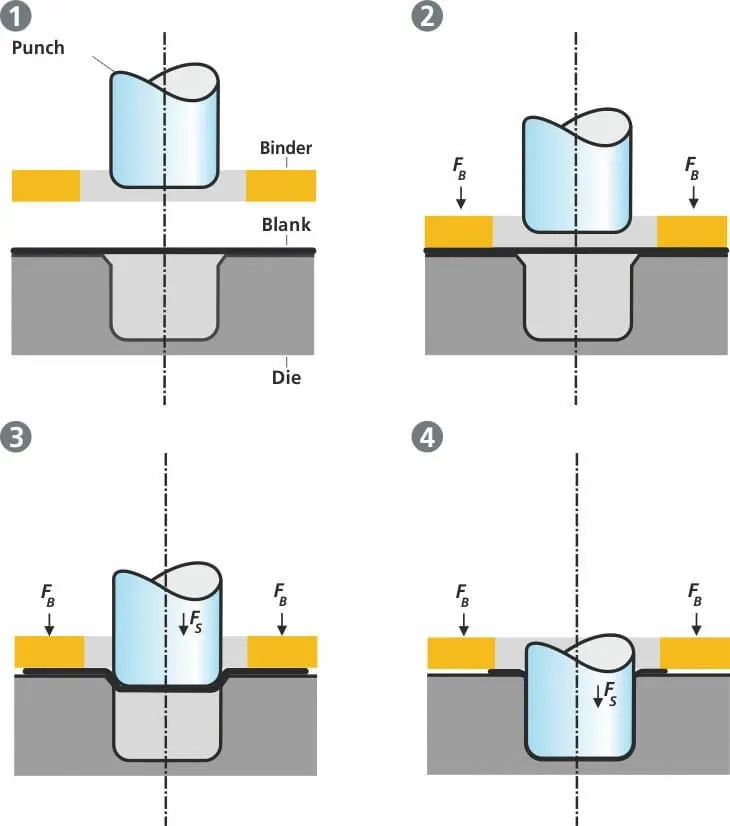
The production process of the outer & inner panel of the hood mainly includes blanking , deep drawing, trimming, turnup, side turnup. Among them, deep drawing is a key process to ensure the quality of parts.
Deep drawing is a sheet metal forming process in which a sheet metal blank is radially drawn into a forming die by the mechanical action of a punch. It is thus a shape transformation process with material retention. The process is called deep drawing process.
EMBOSSING:
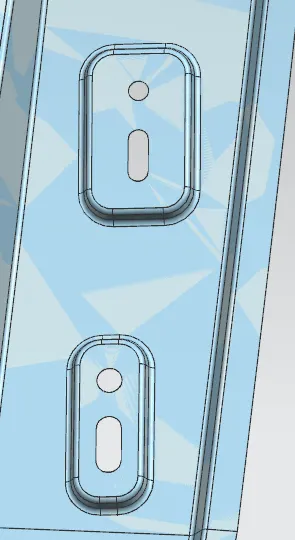
Embossing is a stampingprocess for producing raised or sunken designs or relief in sheet metal.Embossing can help disperse liquid mor effectively, reduce friction and static, bolster metal panel stiffness and rigidity.
CONCLUSION:
The design of the BIW Body side outer for an SUV was completed with the engineering standard and all the reinforcement.