Project 2 - Electric Scooter
Task 1 :
The global electric scooter market size was estimated at USD 20.78 billion in 2021, and the market is expected to expand at a compound annual growth rate (CAGR) of 7.8% from 2022 to 2030. The increasing demand for fuel-efficient vehicles, coupled with growing concerns over greenhouse gas and carbon emissions, is anticipated to drive the adoption of electric scooters (e-scooters) during the forecast period.
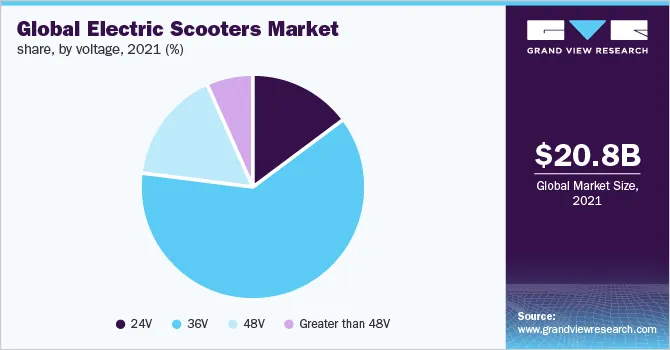
Based on voltage, the 36V segment led the market, accounting for 61.7% of the overall revenue share in 2021. These batteries offer high compatibility with e-scooters and deliver superior power output, which is expected to propel the segment's growth. The demand for batteries used in 36V systems is mainly catered through Li-Ion and NiMH batteries, as they are more compact in design, offer better charging time, and do not release harmful chemicals like sealed lead-acid batteries.
The greater than 48V segment is estimated to witness significant growth over the coming years, registering a CAGR of 11.6% from 2021 to 2030. E-scooters equipped with 60V and 70V batteries are projected to witness significant growth, owing to constant research and development activities to enhance the range and speed of e-scooters. High voltage batteries are being upgraded with recovery and start-stop features to reduce CO2 emissions into the environment.
Some prominent players in the global electric scooters market include:
-
Yadea Technology Group Co., Ltd.
-
Jiangsu Xinri E-vehicle Co. Ltd.
-
Hero Electric
-
Gogoro Inc.
-
Vmoto Limited
-
BMW Motorrad International
-
Mahindra GenZe
-
Terra Motors Corporation
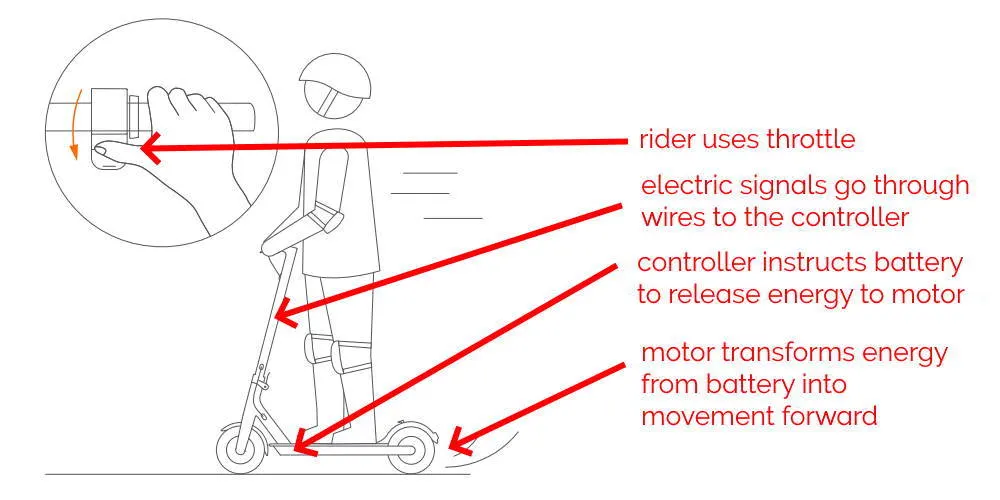
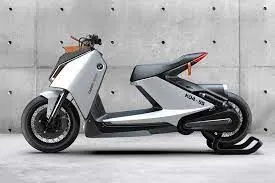
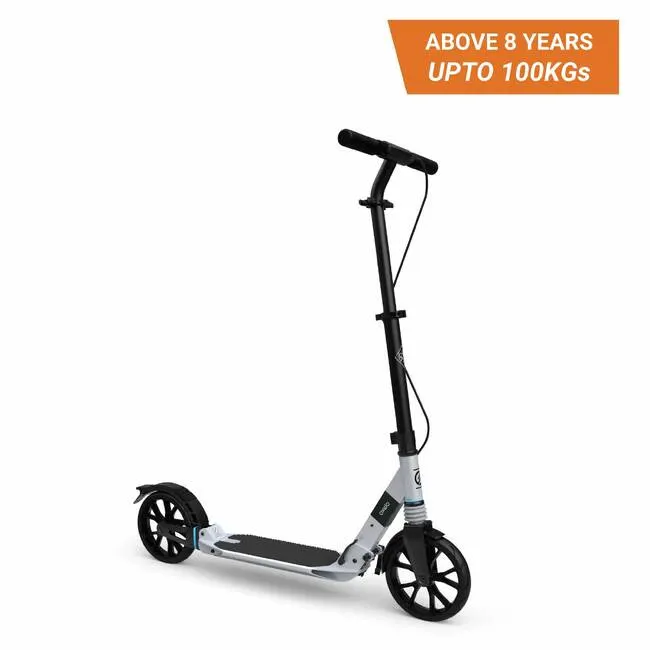
state-of-the-art products of electric scooters:
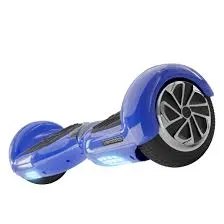
Based on the electric two-wheeler market research conducted by FMI, the market is expected to grow at a CAGR of 9% during the forecast period. The market is expected to be appraised at US$ 22.70 billion by 2032. In 2021, the market valuation was US$ 8.8 billion.
Task 2:
Product name: Karls electric scooter
Mission statement:
we aim to give our customers access to a quality electric vehicle that has an impeccable design. One that also makes the users’ experience the same or better than that of the petrol scooters and for a competitive price.
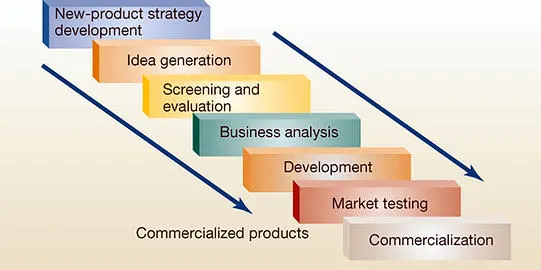
Product development roadmap:
Idea Generation- This is the initial stage where various ideas are generated. The idea generated here is to develop a product to comfort the customers.
Screening of the idea– Once the ideas are generated, the next step involves screening the proposed ideas. The one which consumes less electricity, should the company provide more connectivity options (a consumer can control the product using their mobile phones), hot and cool facility in a single product eliminating the need for a separate heater. These are some of the factors based upon which the company screens the ideas generated.
Developing a concept– Once the less profitable ideas are rejected, the most feasible ideas are focused on.
This step involves research. In this step, various types of research are conducted, like consumers’ demand, SWOT and PEST Analysis of the company, reception of products offered by the company in the past, etc. The market today is customer oriented; therefore every decision is taken to keep the customer in the center. market trends are studied properly.
Customer requirements and product specifications:
1. Price:
One of the most obvious things, about which Indian consumers are sensitive to date is the price of the item they are purchasing.
Product specifications:
Slow-Speed Electric Scooters- Cost around Rs. 50,000 and are preferred for women and kids for small day-to-day tasks.
High-Speed Electric Scooters- Cost around Rs. 1,00,000 and are meant for commuting long distances.
2. Range:
Customer needs: Riding range means how far your vehicle can go in one full charge. All slow-speed e-scooters give you a maximum riding range of 50-70 km. High-speed scooters give a range of 120-200 km.
Product specifications: Karls scooters offer a range of 50 to 200 km on a single battery charge.
3. Battery Life:
customer needs a good battery type and its average life expectancy.
product specifications: 3 years of guarantee/ warranty on the batteries and a normal lithium-ion battery will last for about 6-7 years before it needs replacement.
4. Charging Stations:
customer needs: when traveling far distances, we need electric charging stations to recharge the battery power.
product specifications: You can charge your e-scooter at your home, as companies install a home charging station for you. But when you are traveling far distances, you need electric charging stations to recharge the battery power. Hence, we recommend you go for the brand that has a good network of electric charging stations. This will allow you to charge your device on the go if needed. Also check whether your scooter supports charging via third-party chargers or a standard wall socket, which would make your life much simpler. In India, websites like ChargeList and apps like EV Plugs and Static can help you locate a charging station near your location.
5. Charge Time:
customer needs: When the charging drains out, less time to recharge the in-built battery
product specifications: Karls scooter supports fast charging i.e. 5-6 hours to fully charge. you can get it charged overnight.
6. Performance/Motor Power:
customer needs: motor power should be considered carefully.
product specifications: Our scooters do about 40-100kmph
7. Warranty:
customer needs a warranty on the battery, motor, and overall electric scooter.
product specifications: we offer at least 2-3 years of warranty on both the battery and the motor
resource requirements.:
-
Raw materials
-
Specialty chemicals
-
Battery components
-
Batteries
-
Technology components
-
Auto suppliers
-
Charging infrastructure
Task 3:
work breakdown structure (WBS) of the product
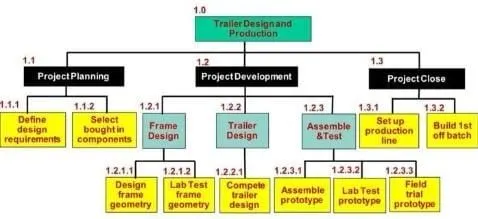
modular scooters offer many possible customizations for different business or travel purposes
We live in a world where the need for lighter, more efficient vehicles is glaringly apparent, and in recent times designers and automotive manufacturers have ramped up their efforts to meet this challenge. Given this climate, it's not surprising to see the enviro-conscious "Motivo" scooter design receive accolades in the Create the Future Design Contest. Engineer/Designer Team Chiem's Motivo is a 2-modular design consisting of an upper scooter chassis and the base which provides the drive via an in-wheel electric motor and hubless front wheel.
The modular design allows a range of possible morphs, including multiple bodies to be connected to the base or two bases to be connected in parallel to form a two-seater
2D engineering drawings of the electric scooter
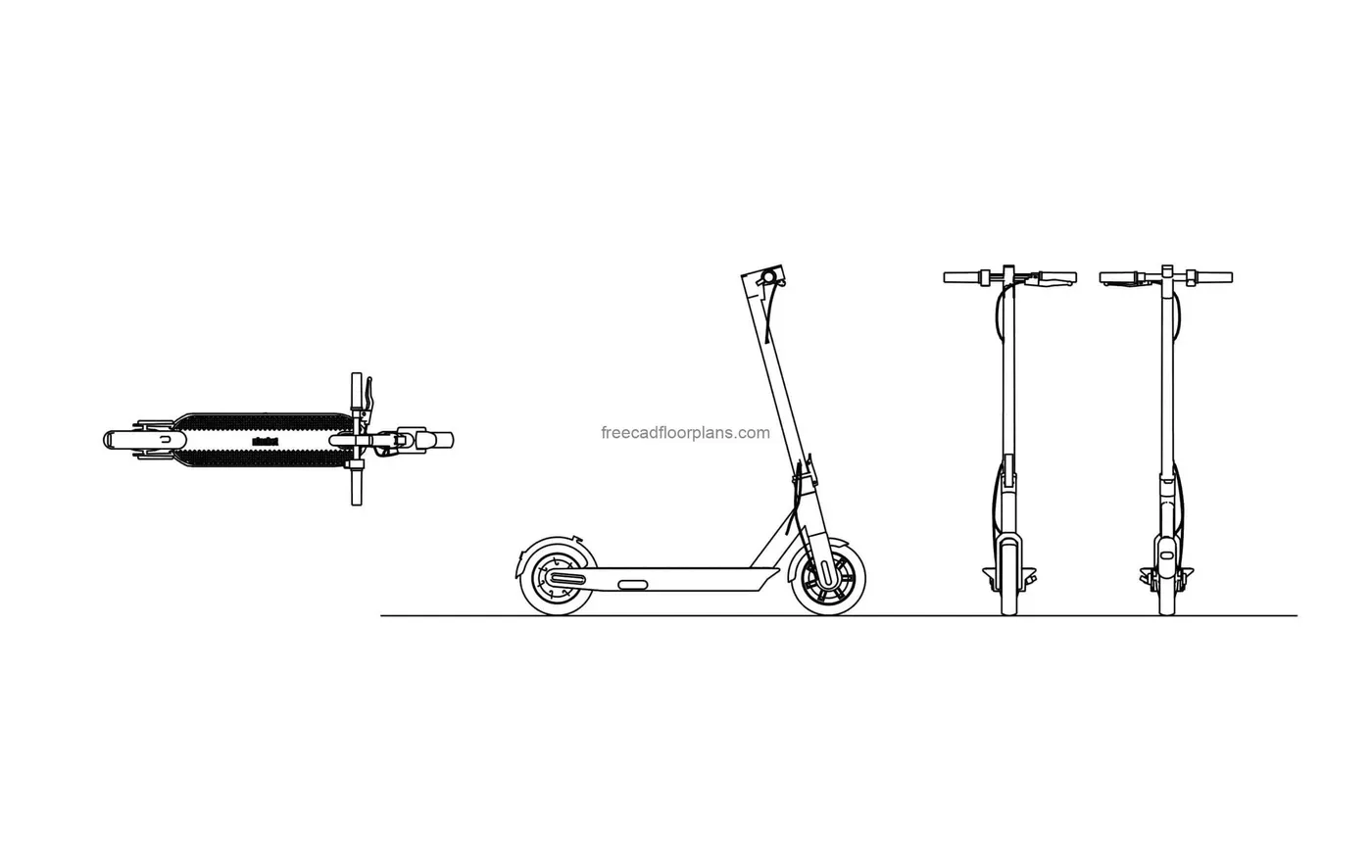
A 3D model of the electric scooter is attached below but the software used was Sketch up
Task 4 :
|
Component/Process |
Failure Mode |
Failure Effect |
SEV |
Potential Cause |
OCC |
Existing Detection Method |
DET |
RPN |
|
1. Battery |
Separator failure, short circuit, electrolyte loss, electrolyte stratification. |
Reduced performance and in some cases not operable at all. |
4 | High temperature, high charging rates, overcharging, improper insulation of wires and their connections, inefficient battery casing. |
5 |
Reduced short circuit |
2 | 40 |
|
2. Bracket |
Bending and breakage. |
Instability of various roll cage members like rear roll hoop & side impact members |
9 | Various excessive loads causing the bending and bearing stresses severely high. |
4 | Bending and breakage |
8 | 288 |
|
3. Brake |
Long pedal travel, poor braking, brake pulling i.e. scooter pulls to one side. |
Inefficient braking, speed of the kart is reduced, driver’s safety compromised. |
8 | Leaking master cylinder/brake pipe line, the air in the a system, low fluid level in master cylinder, badly aligned shoes, bending of brake pedal. |
6 | scooter pulls to one side. |
8 | 384 |
|
4. Steering |
Hard steering, looseness in steering, car wandering, shimmy front wheels, scuffed tires, steering wheel jerking. |
Abnormal response, steering failure, driver’s safety compromised. |
9 | Too tight steering gear, incorrect/insufficient lubrication, incorrect caster, camber, kingpin inclination and toe-in, low tyre pressure, worn tie rod ends, welding cracks. |
7 | scuffed tires, steering wheel jerking. |
6 | 378 |
|
5. Tires |
Side wear and damaged beads, puncture, excessive wear in the center of the tread, cuplike depression on one side of trade. |
Excessive wheel camber, wheel misalignment, under/over inflation, faulty valve or leakage in tube patch, loose steering linkage, Foreign debris. |
9 | Excessive wheel camber, wheel misalignment, under/over inflation, faulty valve or leakage in tube patch, loose steering linkage, Foreign debris. |
5 | puncture, excessive wear in the center of the tread |
7 | 315 |
|
6. Body |
Dents or breakage. | Loss in aesthetics. |
4 | While fabrication inappropriate mixing proportion of resin and hardener, insufficient number of fiberglass sheets to be laminated for a panel. |
3 | Dents or breakage. | 6 | 72 |
|
7. motor |
Winding rupture, short circuit, rotor and stator faults, bearing failure |
Rpm decreases, abnormal starting, overheating that can block bearings and damage it, repair cost increases |
6 | Improper installation, vibrational shocks, overloading, presence of foreign debris, erroneous lubrication of drive gear. | 3 | short circuit, rotor and stator faults, bearing failure |
2 | 36 |
|
Component/Process |
Recommended Actions |
Responsibility |
Target Date |
Action Taken |
SEV |
OCC |
DET |
New RPN |
|
1. Battery |
Always check wire connections and their insulation, battery casing. Don’t overcharge. |
owner | immediate | Selecting the material of high factor of safety and yield strength, keeping the tube thickness of primary members bit more than secondary members, weld properly without leaving any crack |
3 | 3 | 2 | 18 |
|
2. Bracket |
Select material of high factor of safety, weld properly without residual cracks. |
manufacturer | immediate | Select material of high factor of safety, weld properly without residual cracks. |
8 | 2 | 8 | 128 |
|
3. Brake |
Proper lubrication between rack and pinion and a tie rod ends, weld properly, tie rod pins should be fastened correctly. |
manufacturer | immediate | Proper lubrication between rack and pinion and a tie rod ends, weld properly, tie rod pins should be fastened correctly. |
6 | 3 | 8 | 144 |
|
4. steering |
Proper lubrication |
manufacturer | immediate | Proper lubrication | 8 | 5 | 6 | 240 |
|
5. tire |
Frequent bleeding, proper wheel alignment, tire replacement if required |
manufacturer | immediate | Frequent bleeding, proper wheel alignment, tire replacement if required, choose the tire type based on road conditions. |
8 | 3 | 7 | 168 |
|
6. body panels |
Be careful while mixing the resin with hardener. Always use 3-5 glass for lamination for a panel. |
manufacturer | immediate | Always use 3-5 glass for lamination for a panel. |
2 | 2 | 6 | 24 |
|
7. Motor |
Connections are carefully done, inspect motor mount &, bolts and nuts, and check for any misalignment. | owner | immediate | Connections are carefully done, inspect motor mount &, bolts and nuts, and check for any misalignment. | 4 | 2 | 2 | 16 |
- Define the undesired event to study. Definition of the undesired event can be very hard to uncover, although some of the events are very easy and obvious to observe. ...
- Obtain an understanding of the system. ...
- Construct the fault tree. ...
- Evaluate the fault tree. ...
- Control the hazards identified
Fault tree model of BEV powertrain system
Task 5:
(A)
Design for Manufacturing and Assembly is a blend of DFM (Design for Manufacturing) and DFA (Design for Assembly). . It can be defined as, the ease with which a product can be manufactured and assembled. The problems in assembly and manufacturing are analyzed in the early design stage which could affect the final outputs. The extra time spent in the early design stage could help significantly reduce the cost of the product. In DFM, the limitations of the manufacturing process are considered in the early phase of the design. The designer is free to select materials from a huge repository of available materials and forecast the production time and cost quantitatively. All possible designs are prepared and compared. The design team then makes revisions, if needed. All these activities are carried out in the early design phase. In the next step, DFA is applied. DFA is a design methodology where the designer performs analysis, estimation, planning, and simulation of the product which will ease the process of assembly in terms of time and cost. During DFA, the design could be changed several times until the assembly process is satisfied without affecting the functionality of the product
areas of potential design improvements:
- Elimination of finishing process: Some of the parts do not have to use a finishing process.
- Combining processes: Welding the rocker rather than using a bolt will reduce the weight of the scooter
- Use a standard spring coil: For the absorber, use the already available part on the market, a part shock absorber from a second-hand electric scooter.
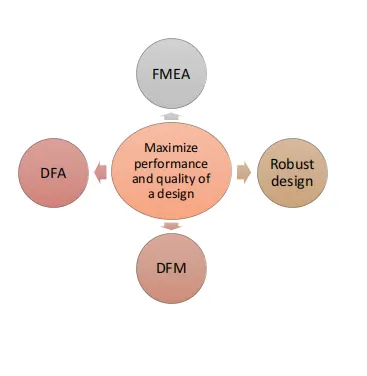
- Robustness is the property of systems that enables them to survive unforeseen or unusual circumstances. In the design, there are some parameters that cannot be controlled which are called uncontrollable parameters. This parameter will cause the design to be a failure if it is totally out of control, therefore the controllable parameter should be ensured to be balanced enough to reduce its effects:
- In designing the electric scooter, the uncontrollable parameter had been identified and so does the way to increase its efficiency. They are,
Connection parts by parts:
- Connections of the handlebar and front fork are a vital role in the whole of the electric scooter.
- The connection is designed to hold the force from the main frame with the help of the absorber and meanwhile, it is easy to assemble and dismantle.
- The connection of the seat and main frame also applies the same concept as it gives more benefits.
Material of parts:
- Suitable material must be applied to the parts to increase their efficiency.
- For the front fork, the hard material is chosen to withstand the force due to turning and bouncing.
- As for the brake, strong material has been chosen to give benefits to the electric scooter and at the same time lightweight material to reduce the load on the electric scooter.
- For rock, the material chosen is ductile to withstand the distribution load.
Electric scooters have a handful of different parts, but the major ones are batteries, brakes, controller, deck, handlebars, lights, motor, stem, suspension, and tires.
| component | cost in rupees | |
| 1. Brakes | ₹ 900 | [1] |
| 2. Batteries |
₹21,000.00
|
[2] |
| 3. Controller | ₹3,710.00 | [3] |
| 4. Deck | ₹19,410 | [4] |
| 5. Handlebars | ₹8,023 | [5] |
| 6. Lights | ₹798 | [6] |
| 7. Motor | ₹15,529 | [7] |
| 8. Stem | ₹9,606 | [8] |
| 9. Tires | ₹4,168 | [9] |
total cost: ₹ 83,144
(B)
E-scooter rental companies often advertise e-scooters as an eco-friendly mode of transport. In particular, as electric-powered vehicles, e-scooters produce no exhaust emissions, unlike internal combustion engine (ICE)-powered modes of transport.
However, taking only exhaust emissions into account can be misleading when assessing the overall environmental impacts of various transport modes, and the full life cycle impacts need to be considered.
According to the scientists who conducted it, electric scooters are not really an eco-friendly means of transportation today. In fact, regarding the carbon footprint, scooters emit about 202 g of CO2 per km and per passenger over their entire life cycle.
As for all means of transport, if we want to measure the environmental impact of electric scooters, it is necessary to analyze the 4 main phases of its life cycle. The first two are the phases of the vehicle’s manufacturing (then the engine and other components are assembled) and the energy production phase of the vehicle (how polluting is the energy that enables the vehicle to be driven). Then comes the use phase of the vehicle (when it is driven) and then the maintenance and end of life of the vehicle (how it is maintained and recycled or destroyed when it no longer works). In each of these phases, there are different environmental impacts.
Electric scooters, it’s a bit like electric vehicles. In the production phase, we must take into account all the energy consumed to extract raw materials, transform them, assemble them… This stage is important for all electronic devices because it is where the battery (that’s very polluting) is considered.
Concerning the production of energy phase, again, electrical scooters have issues similar to the ones of electric cars. If the electricity is produced in an ecological way (renewable or decarbonated energy), then the environmental impact of this phase will be lower. On the other hand, if it is produced from fossil fuels burning (such as coal, oil, or gas), the ecological impact, and especially the amount of released greenhouse gases increases.
Next, the use phase is crucial for electric scooters and electric vehicles in general, because that’s where they have a real advantage. In fact, during the use phase, electric vehicles (including scooters) do not pollute. That’s right, there are no CO2 or other polluting emissions – only particles related to braking. This means that the longer electric scooters (or electric cars) are used, the more ecological advantage they get. However, it is also necessary to count on how they are recharged. Scooters, for example, need to be brought to a charging station and this transportation, usually done by trucks, can have a significant impact on the overall math.
Finally, recycling is also important because electric scooters are made of rare and potentially polluting materials. It is, therefore, necessary to take care of their batteries (and the vehicle cell itself), which makes them accountable for a great slice of pollution they can’t run away from – at least until the battery-recycling industry gets more developed.
(c)
prototyping or large-scale manufacturing technologies used to produce each component of the electric scooter:
Outline of the prototype-making procedure
3D Printing Helps Manufacture Electric Street Scooter
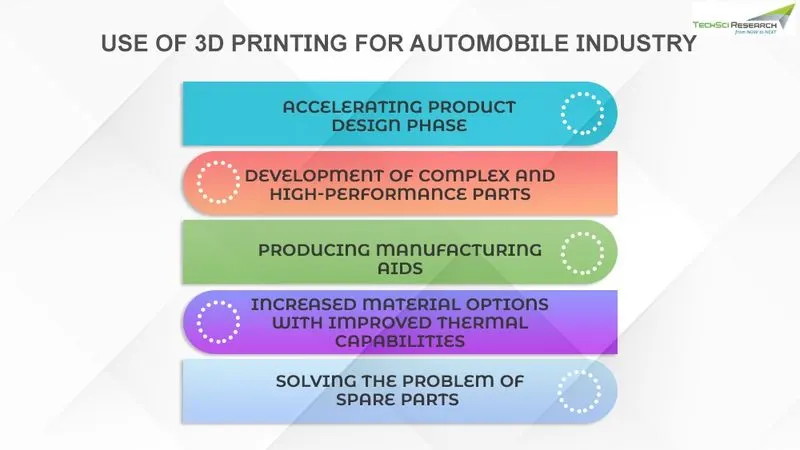
industrial 3D printing technology is emerging as one of the most powerful technologies for automotive OEMs to support electric vehicle production and make cars stronger, lighter, and better performing. Top automobile manufacturers are using 3D printing technology in their workflows for building high-quality auto parts and accessories and gaining a competitive advantage in the automaking game.
Accelerating Product Design Phase
Manufacturing of every new vehicle starts with prototyping, but it can turn out to be a time-consuming and potentially expensive process if done the traditional way. The 3D printing software has revolutionized the product development process, allowing OEMs to fabricate a high-fidelity and representative prototype of a physical part, be it a simple interior element to a dashboard or even a scale made of the entire car within a matter of days. Leveraging 3D printing, auto manufacturers can print highly detailed, accurate, and smooth full-scale parts, which are essential for demonstrating new concepts and designs as well as performance testing and validation. Additionally, desktop 3D printers allow engineering and design teams to increase iteration cycles and strengthen their overall product development flows. Thus, the use of 3D printing in the automotive industry can reduce production time, and manufacturing costs, and create lighter and clean automotive designs.
Development of Complex and High-Performance Parts
3D printers allow manufacturers to produce low-volume and customized production parts on demand without high costs or long waiting times. Besides, the accuracy and reliability of 3D printers enable designers to meet the demands with consistent results without using production tooling. In a way, 3D printing technology empowers manufacturers with vast new capabilities in what they are able to offer to their customers. For small companies that place “custom” at their core, 3D printing of car parts has provided them the opportunity to enhance the creativity of their work and improve quality without worrying about the potential expense and time-intensive manufacturing process that comes with customization.
Large auto manufacturers can combine 3D printing technologies with traditional means to customize parts and provide customers with a unique experience. Luxury car maker Bentley utilizes advanced metal 3D printing technology for creating intricate parts such as side air vents, door handles, exhausts, etc., different from what is available in its current production models. Besides, 3D printing allows the creation of auto parts that simply could not be manufactured by any other means. For example, Bugatti’s eight-person monobloc brake caliper has been developed by 3D printing, which took its performance potential to a higher level and reduced the weight of the component, while making it stronger and stiffer than the traditional production alternative.
Producing Manufacturing Aids
Engineers utilize manufacturing aids for simple and reliable manufacturing and assembly processes, which provides added advantage of reduced cycle times and enhanced worker safety. The optimized product designs created via 3D printing processes perform more efficiently, cut the lead time to a few hours and reduce costs when compared to outsourcing parts from an external vendor. 3D printing also allows for more ergonomic tools for manufacturers, which can help prevent strain on assembly workers.
One of the greatest benefits of using 3D printing in the automotive industry is the production of end parts with lower weight to manufacture vehicles that consume less fuel while improving or maintaining their functioning. Lighter parts of the ELECTRIC VEHICLE help to extend the battery life with improved distribution of weight on the axles. Since 3D printing is not restricted in terms of design freedom, it allows engineers to design end parts conveniently. Additive manufacturing also allows part simplification through the consolidation of multiple parts into a single design, which reduces or eliminates the need for assembling parts.
Increased Material Options with Improved Thermal Capabilities
With rapid advancements in additive manufacturing, the selection of materials for 3D printing has increased significantly over the years and continues to evolve. The increased options of custom materials with specific mechanical properties have opened doors for automotive manufacturers to transition from making components with polymer instead of metal. This has led to a further reduction in the weight of electric cars without sacrificing their strength, quality, or safety. Better thermal capabilities of 3D printing can be a game-changer for electric vehicles since managing the temperature of batteries can sometimes be tricky to keep under optimal conditions. The life of Li-ion batteries can be prolonged if they persistently operate at a mild temperature. Thus, EV batteries must remain at a temperature of around 25 ° Celsius. Producing encasings using 3D printing can further help regulate temperature and provide high performance with a low degree of machine work and a fast development cycle.
Solving the Problem of Spare Parts
Demand for spare parts in the automotive industry is sporadic and unpredictable, making their value a debatable financial decision in some instances. Producing spares in anticipation requires a great expenditure for storage and production. In the absence of readily available parts, the value of spares can become more precarious and make repairs more difficult. With 3D printing, manufacturers can design all parts that can be kept as digital copies, eliminating the need to keep the inventory obsolete. At the customer’s request, a spare part could potentially be produced in-store, thus enabling an easy supply of 3D-printed auto components and spare parts. Besides, 3D printing can help manufacturers better connect the physical supply chain with a digital thread and eliminate the cost of warehousing and inventory when it comes to housing spare parts. Besides, OEMs can optimize part designs for traditional manufacturing during high-demand phases as well as enable a more efficient and sustainable supply chain. Even parts that are no longer available can be produced with the help of 3D printing technology. People who have classic models can avail of spare parts required for any kind of restoration with the available scans of spare parts.
(D)
designingof electrical scooters, considering three phases of the engineering design process, conceptual design, embodiment design, and detail design
In phase 1, the conceptual design, there are 4 processes. These 4 processes are problem definition, gathering information, concept generation, and lastly evaluation of the generated concept. In the process of defining the problem, the electric scooter had gathered and a brainstorming process has been done. The general problem regarding electrical scooters has been voiced out. There are problem statements in designing the electrical scooter, objectives of the team wanted to be achieved, the scope of the project and lastly the significance of the design has been determined. Next, for the gathering information process, there is a lot of readings have been done by each of the team members including books, articles, and also journals. Survey also has been conducted with the supplier of the electrical scooters. In the concept generation and evaluation process, a few designs of the electrical scooter have been made by the design engineers and then will be compared by using the Pugh method and weighted decision matrix in order to choose the best suspension for our car.
References:
1. https://www.indiamart.com/proddetail/drum-brakes-for-electric-scooter-23482372688.html
6. https://www.ebay.com/itm/115366904637
7. https://robocraftstore.com/product/hub-motor-scooter-kit-60v-1000w-12-inch/