Project 2
Risk:
Risk refers to the likelihood of harm or damage occurring as a result of a particular activity, situation, or event. Risk can come from many sources, such as accidents, natural disasters, financial investments, or even daily activities like driving a car. In a business context, risk refers to the potential for financial loss or damage to an organization's reputation, as well as the possibility of physical harm to employees, customers, or the general public. It's important for organizations to assess and manage risks, so that they can minimize the impact of potential harm and maximize the likelihood of success. This is usually done through a risk assessment process, which involves identifying potential risks, evaluating the likelihood and impact of each risk, and developing strategies to manage or mitigate those risks.
Risk Assessment:
It is a systematic evaluation of potential risks and hazards associated with a particular situation or activity. It aims to identify, quantify, and prioritize risks, and to determine the most appropriate measures to reduce or control them. The purpose of risk assessment is to minimize the impact of potential harm, and to ensure that resources are used effectively to mitigate risk. The process of risk assessment typically involves identifying potential sources of risk, assessing the likelihood of these risks occurring, and evaluating the consequences of their occurrence. The results of the risk assessment are used to inform decision-making, guide risk management strategies, and ensure that resources are allocated in a way that maximizes the benefit to the organization.
A risk assessment table is a document or tool used to systematically identify, evaluate, and prioritize potential risks associated with a specific project, product, process, or activity. It includes the following elements:
-
Activity: The task or process being assessed for risk.
-
Risk Description: A detailed description of the risk, including its source, cause, and potential consequences.
-
Risk Rating: A numerical rating of the risk's severity and probability, often using a combination of a severity scale and a probability scale. The product of the two ratings gives a rough estimate of the overall risk level.
-
Proposed Actions/Controls: Strategies or measures to reduce or mitigate the risk, including changes to the process, additional safety precautions, or alternative approaches.
-
Residual Risk Evaluation: An assessment of the risk after implementation of the proposed actions, including a revised risk rating and any remaining concerns or opportunities.
The numerical values for the severity and probability ratings can be assigned based on a predefined scale, with 1 being the lowest risk and 5 being the highest risk. The residual risk evaluation can be calculated by multiplying the severity and probability values.
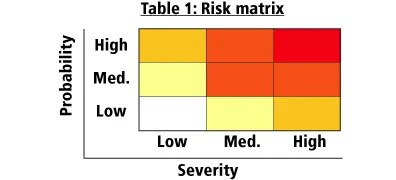
The residual risk evaluation values can then be classified as low (1-4), medium (5-9), or high (10-15) based on the predefined risk scale. The proposed actions to reduce risk can be adjusted based on the residual risk evaluation.
Product: Insulin Pump
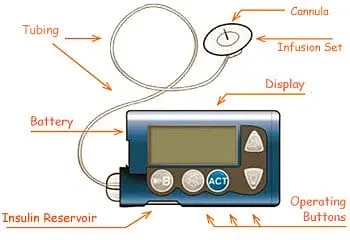
An insulin pump is a medical device used to treat people with diabetes. It's a small, computerized device that delivers insulin through a tiny plastic catheter placed under the skin. The pump helps to regulate blood sugar levels by automatically delivering small amounts of insulin throughout the day and larger amounts at meal times. The goal of insulin pump therapy is to provide better blood sugar control, flexibility in meal planning, and improved quality of life. A risk assessment table for an insulin pump would involve identifying and evaluating the potential risks associated with using the device, such as the risk of infection or device malfunction, and determining the appropriate actions to minimize these risks.
Here's a risk assessment table for an insulin pump:
| Activity | Risk Description | Risk Rating (Severity, Probability, Product) | Proposed Actions/Controls | Residual Risk Evaluation (Severity, Probability, Product) | Opportunities/Remarks |
|---|---|---|---|---|---|
| 1. Design and Development | Usability Issues | (3, 2, 6) |
Conduct user testing to gather feedback and identify usability issues. Implement regular design reviews to address new risks and incorporate user feedback. |
(2, 1, 2) | Improved user experience, increased customer satisfaction |
| Electrical Hazards | (3, 3, 9) |
Conduct electrical safety testing to ensure the insulin pump meets industry standards and regulations. Implement regular safety checks. |
(2, 2, 4) | Reduced electrical hazards, increased product safety | |
| Biocompatibility Concerns | (3, 2, 6) | Select biocompatible materials for the insulin pump. Conduct regular biocompatibility testing. | (2, 1, 2) | Increased patient safety, improved product performance | |
| 2. Marketing and Sales | False or Misleading Advertising | (2, 3, 6) | Develop strict advertising standards and regularly review and approve all marketing materials. | (1, 2, 2) | Improved customer trust, reduced liability risk |
| Product Liability | (3, 3, 9) | Conduct regular product liability audits to ensure the insulin pump meets industry standards and regulations. | (2, 2, 4) | Reduced product liability risk, increased customer satisfaction | |
| Data Privacy Concerns | (2, 3, 6) | Implement data protection measures, such as encryption and secure storage of patient information. | (1, 2, 2) | Improved customer trust, reduced liability risk | |
| 3. Purchase of Raw Material and Services | Quality or compliance issues with raw materials and services | (3, 4, 12) | Establish a vendor qualification process, including supplier audits and regular quality control checks. | (2, 3, 6) | Improved product quality, regulatory compliance |
| 4. Manufacturing | Device malfunction due to manufacturing defects | (4, 4, 16) | Implement regular quality control checks, including inspections and testing. | (3, 3, 9) | Improved product reliability, customer satisfaction |
| 5. Packing and packaging | Package damage during transportation | (3, 4, 12) | Implement proper packaging and labeling procedures, including the use of durable materials. | (2, 3, 6) | Improved product protection |
| 6. Transportation | Loss or theft of the device | (4, 2, 8) | Partner with reputable shipping companies and implement proper handling procedures. | (2, 1, 2) | Reduced risk of loss or theft |
| 7. Installation | Incorrect installation causing device malfunction | (4, 3, 12) | Provide clear and comprehensive user instructions, including visual aids. | (2, 2, 4) | Improved device performance |
| 8. Periodic Maintenance | Improper maintenance causing device malfunction | (3, 4, 12) | Provide clear and comprehensive maintenance instructions, including visual aids. | (1, 3, 3) | Improved device performance, longevity |
| 9. Break Down Maintenance | Delayed break down maintenance causing device downtime | (4, 4, 16) | Provide clear and comprehensive troubleshooting instructions, including visual aids. | (2, 3, 6) | Reduced device downtime |
| 10. Disposal | Improper disposal causing environmental hazard | (3, 4, 12) | Implement proper disposal procedures, including the use of environmentally safe materials. | (1, 2, 2) | Improved environmental protection |
In conclusion, the risk assessment project of an insulin pump involves identifying, evaluating, and mitigating potential hazards and risks associated with its design, development, marketing and sales, procurement, manufacturing, packaging and transportation, installation, maintenance, and disposal. The risk assessment table provides a structured approach to identify and prioritize these risks, based on their severity and likelihood. The proposed actions and controls aim to reduce the risk and improve the safety and performance of the insulin pump. The residual risk evaluation provides an ongoing assessment of the effectiveness of these measures in reducing the risk. The risk assessment project serves as an essential tool for continuous improvement and a safer user experience for patients relying on insulin pumps.