Project - 2
Project 2
Introduction:
Orthopedic implants are medical devices to replace or support damaged bone tissue. Implants are widely used in surgeries to treat fractures, bone defects or joint defects. A few types of orthopedic implants are described below:
· Joint replacements: these implants replace damaged joints including knees, shoulder or hips.
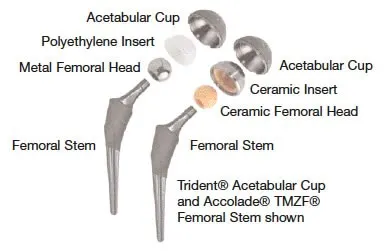
· Bone plates and screws: plates stabilize the fractured bones during healing process while screws are used in conjunction with plates to hold plates in place.
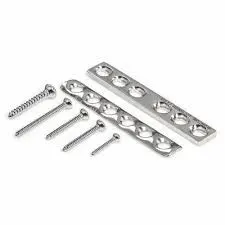
· Spinal implants: these implants are used to stabilize the vertebrae or used in alignment of the spine.
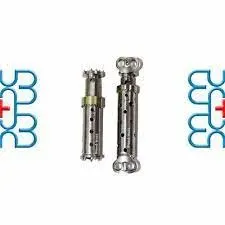
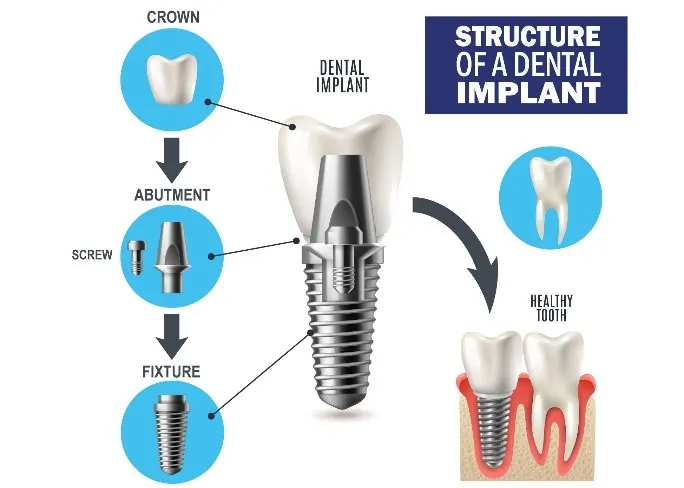
· Dental implants: used to replace damaged or missing teeth. It includes dental screws, crown
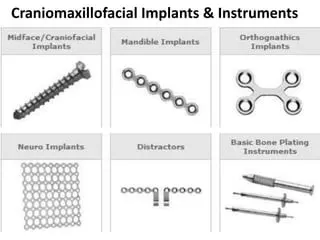
· Craniofacial implants: these implants are used in the reconstruction of skull or facial bones.
Literature survey
Total hip arthroplasty:
It is a hip replacement in which artificial joint or prosthesis is used to replace the diseased or damaged hip. This surgery is usually indicated to relieve pain, improve function and enhance the quality of life.
It is usually indicated in osteoarthritis, rheumatoid arthritis, avascular necrosis and hip fractures.
Recent advances in total hip replacement
Virtual reality and surgical education:
· Surgery simulation requires specialized glasses and a pair of controllers connected to a computer. The simulation provides an opportunity to perform surgery an unlimited number of times without limiting accessibility. This aids doctors in improving their ease and effectiveness.
3D printing and additive manufacturing:
· With the advent of technological advancements like 3D printing and additive manufacturing, layer-by-layer deposition of substances is possible and it can be customized as per patient’s needs.
· 3D printing enables mimicking the extracellular matrix and ability to create scaffolds with complex shape.
Direct 3D printing
Millazo and his colleagues developed palmetto 3D printer to study the viability of creating alginate scaffolds by adding calcium chloride as liquid binder. Currently, solid printed scaffolds using chitosan resulted in products with best mechanical properties.
Reference: https://doi.org/10.1016/j.proeng.2016.11.377
Fused deposition modelling
This a form of 3D printing that uses thermosensitive polymers that melts above the glass transition temperature. This is used to produce ceramic or polymer composites. In this method, a thermoplastic polymer filament is used by unwinding and it is extruded via a hot nozzle onto a substrate. After a series of layer-on-layer deposition, the final CAD structure is produced.
The recent advancement in fused deposition modelling is the inclusion of electrospinning.
Reference: https://doi.org/10.1111/jcpe.12214
selective laser sintering
this form of 3D printing uses powdered medium as surface for scaffold printing. It involves a laser reproducing the object shape on powder and subsequently fuse the material in layer-by-layer pattern. It can be used for a variety of materials like ceramics, metals and polymers.
Reference: https://pubmed.ncbi.nlm.nih.gov/25336867/
Scope of project work
Steps in additive manufacturing:
Additive manufacturing is building objects layer by layer based on computer model. The steps for additive manufacturing
1. Digital model: this is the first step where 3D model is created using computer-aided design software. The digital file defines the specifications and geometry of the original model.
2. File preparation: the digital model is then converted into stl file format.
3. Material selection: the appropriate material is chosen for the application. Materials can be chosen from wide range of materials like polymers, metals, ceramics and composites.
4. Setup: after ensuring the accuracy of device by calibrating, adjust the platform and print head and make the assembly ready to print.
5. Printing: the printing layer is deposited based on fused deposition modelling , stereolithography or selective laser sintering. The print head moves as per the instructions from computer
6. Post-processing includes removing support structures, polishing, and heat treatment.
7. Inspection and quality control: inspect the object to ensure the model meets the design specifications.
AM method and a material to be used in making total hip arthroplasty:
Materials used for total hip arthroplasty
The characteristics of materials used for total hip arthroplasty include-
· Biocompatibility
· Resisting heavy stress
· Low wear rate
· Opposing low frictional forces to sliding
Current materials used for total hip arthroplasty:
The materials used are titanium alloys, stainless steel, high-strength alloys, alumina, and zirconia. Stems and necks are composed of metals while femoral heads can be of both metal and ceramic. Acetabulum can be made of metals, ceramics or polymers.
Polymeric materials: polytetrafluoroethane, polyetheretherketone.
Metals: stainless steels, titanium alloys, cobalt-chromium-molybdenum alloys
Ceramics: alumina, zirconia
The most common types of bearings used for total hip arthroplasty are
· Metal-on-polyethylene
· Metal-on-metal
· Ceramic-on-ceramic
· Ceramic-on-polyethylene
· Ceramic heads and metallic inserts
Let us consider the manufacturing of titanium alloy (Ti-64Al-4V) for total hip arthroplasty.
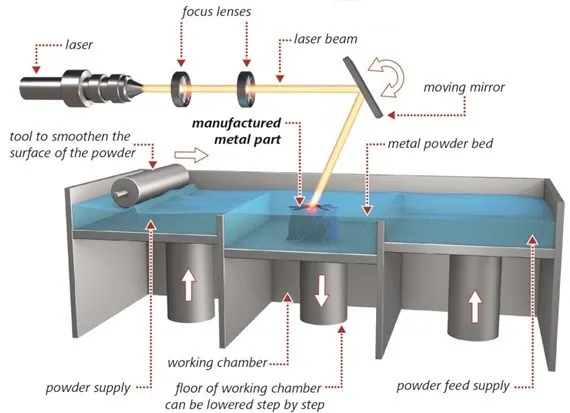
Selective laser melting (SLM) is a type of additive manufacturing used for manufacturing titanium alloy. The steps involve
· 3D model: acquire the product dimensions from imaging modalities like CT/MRI
· Powder bed preparation: A thin layer of metal powder is spread on the build platform evenly.
· Selective melting: a high-powered laser is used to selectively melt the powder as per the 3D computer model
· Layer-by-layer buildup: after melting each layer, the build platform is lowered and a new layer of metal powder is deposited. This is continued until the desired thickness is achieved.
· Cooling and solidification: once a layer is melted, it rapidly solidifies thereby bonding with the previous layer.
· Post-processing: it includes heat treatment, machining, and surface finishing
Powder testing:
Testing of powders used in SLM is essential to ensure the quality and reliability of final manufactured parts. Powder testing includes-
· Particle size distribution: it ensures a consistent and controlled particle size distribution to achieve uniform layering.
· Chemical composition: the chemical composition of the metal powder verification is must as it effects the properties of the printed material
· Morphology: shape of powder particles influences powder flowability and packaging density. It affects the density and mechanical properties of printed parts.
Tests to be conducted on 3D Additive manufactured implant
· Material quality and properties: material has to be tested for chemical composition and mechanical properties.
· Structural analysis: the microstructure of implant ensures proper grain structure and absence of defects.
· Surface finish and roughness: Assess the surface finish to ensure biocompatibility, cytotoxicity and prevention of microbial contamination.