Project 2
Project 2
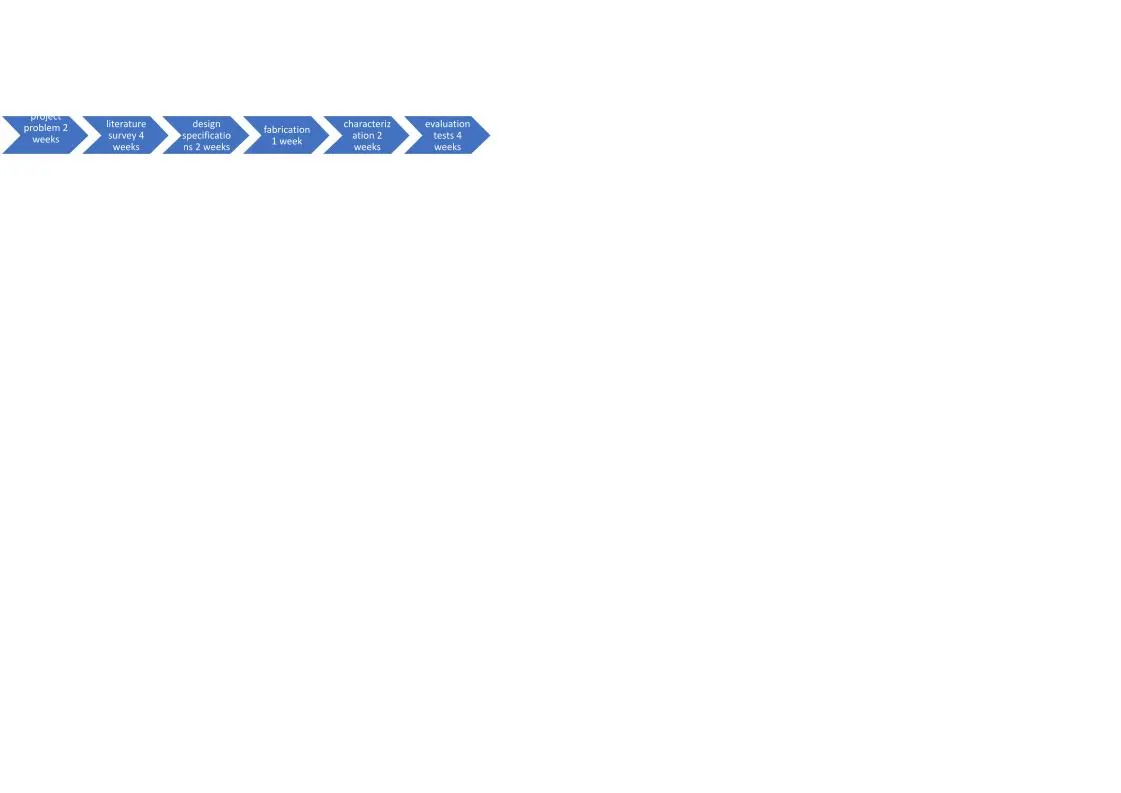
Project timelines with milestone setup
Project timelines are detailed as per the manufacturing chart mentioned below.
-
Project problem description: 2 weeks (it involves market survey and literature study
-
Literature survey: it takes a bit more time around 3-4 weeks
-
Design specifications: this is based on initial problem statement, raw materials and desired outcomes. The thickness of fiber, speed of spinning are determined after a thorough optimization using design software like CAD
-
Fabrication: dual layer fabrication is completed here
-
Characterization and testing: it takes around 4 weeks
roject problem 2 weeks
Current drawbacks of antimicrobial wound dressings
Wound healing is a dynamic process involving four phases namely-
-
Coagulation and hemostasis: this is the initial phase where the body responds by constricting the blood vessels and forming a blood clot to stop bleeding. In this phase, platelets adhere to the injured blood vessels wall and come into contact with them.
-
Inflammation: this phase starts along with the hemostasis phase and lasts about three days. It involves redness, swelling, heat and pain at the wound site. It involves the release of white blood cells to defend against infection and clean the debris.
-
Proliferation: the body starts rebuilding the damaged tissue. Fibroblasts produce collagen, a protein that forms the new tissue. Angiogenesis, formation of new blood vessels takes place in this phase. It helps in formation of granulation tissue and provide the required nutrients.
-
Wound remodeling: it is the final phase where the tissue formed gradually matures and strengthens. This phase lasts for months to years.
Wound dressings help in wound healing process. Anti-microbial wound dressings contain disinfectants, antiseptics or antibiotics that inhibit the growth of microorganisms present in the wound. Although, these dressings help in wound healing process significantly, there are certain drawbacks for these dressings. They include-
Limited spectrum: antimicrobial wound dressings are more effective against bacteria but not against fungi or virus.
Resistance: bacteria develop resistance to antimicrobial agents present in the dressings over time thus reducing their effectiveness in treating wound
Cytotoxicity: some antimicrobial agents are toxic to the cells. Increased exposure to these agents may potentially cause harm to the cells.
Moisture management: some antimicrobial dressings cannot effectively manage moisture content potentially leading to excessive dryness or excessive exudate.
Cost: they are more expensive than traditional wound dressings thereby limiting their use in resource-limited healthcare settings.
Comments and comparison with traditional wound dressing
Antimicrobial dressings and traditional dressings have different features and serve different purposes.
|
Traditional wound dressings |
Anti-microbial wound dressings |
|
Traditional wound dressings like sterilized guaze/ bandages for surgical dressings |
Anti-microbial wound dressings like iodine or silver coated dress woundings are designed to inhibit microbial growth significantly. |
|
They are passive or non-occlusive as they facilitate material transfer between dressings and environment |
These are bioactive wound dressings do not facilitate material transfer |
|
These are dry wound dressings used for wound healing due to hygroscopic nature, high affinity for skin and biocompatibility |
They keep the wound site moist by maintaining the moisture level in the wound environment. |
|
the advantages of traditional wound dressings are
|
The advantages of antimicrobial wound dressings are
|
|
The major limitations of traditional wound dressings include
Cannot provide moist environment |
The major limitations of antimicrobial wound dressings are
|
Description of project hypothesis and novelty
Ideal wound dressing features
-
Moisture management
-
Transmission of gases
-
Eliminate exudates
-
Prevent infections
-
Have mechanical protection
-
Biocompatible, biodegradable
-
Non-toxic
-
Relieve pain
-
Cost efficiency
-
Low adherence to skin
Antimicrobial wound dressings are a type of bioactive modern wound dressings that aid in preventing infection.
In the proposed work, antimicrobial wound dressing is designed with two distinct layers. One layer is composed with plant extracts like chitosan and agrimony that provide antimicrobial activity on an oxidised cotton gauze.
The novelty in the design is in reducing the adhesiveness to the wound bed and improving the healing process by suppressing the wound infection.
Reference: https://doi.org/10.3390/molecules26010083
Discussion on dressing development process with flowchart
The manufacturing process of antimicrobial wound dressing is shown below:
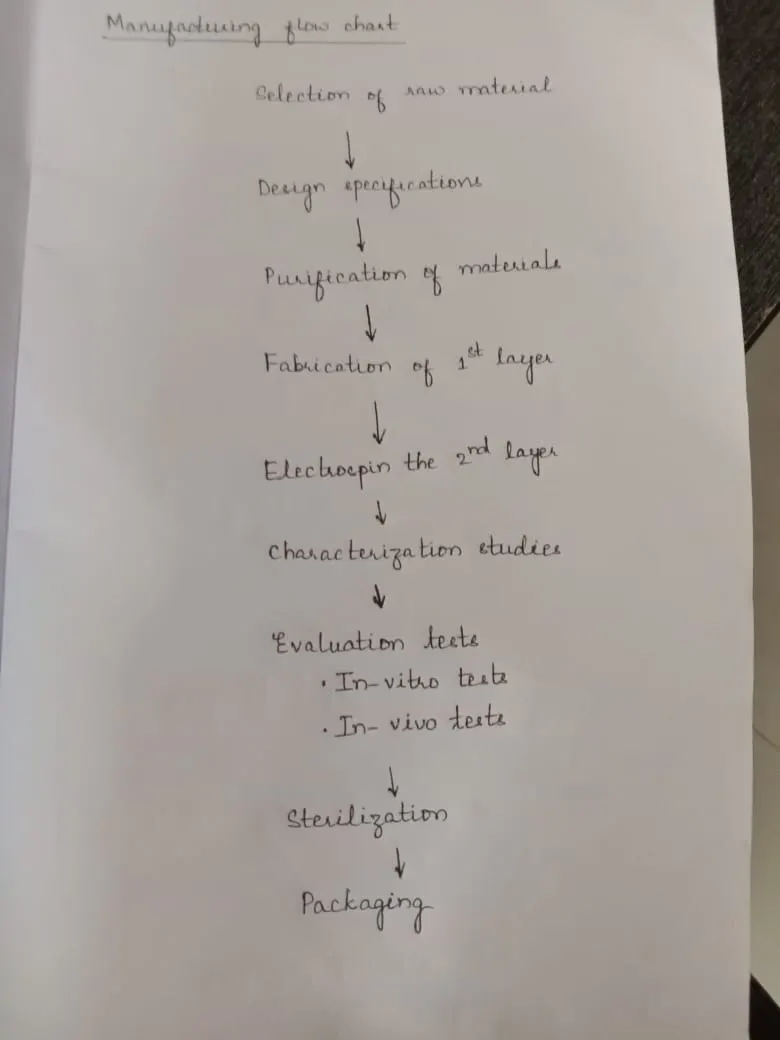
The proposed dual layer dressing is prepared using electrospinning. Briefly,
First layer
The cotton fabric that is pre-activated with TEMPO (tetramethylpiperidine-1-oxyl radical) provides a net negative charge to the material. To acquire this layer, cellulose cotton is immersed in TEMPO solution. After activating this layer, the second layer with bioactive components is directly electrospun onto the first layer.
Second layer
A mixture comprising polyvinylalcohol, chitosan. After obtaining a positive charge, the blend is electrospun on the top of TEMPO-oxidised cotton by electrospinning.
Complete evaluation and characterization of developed wound dressing
Complete evaluation of characterization of wound dressings has two components- characterization and evaluation.
Characterization:
-
Physicochemical characterization
-
Biological characterization
In-vitro methods for characterization of wound dressing
Physicochemical characterization
Various physical and chemical properties can be determined using SEM, X-ray diffraction, thermogravimetric analysis, and FTIR.
Biological characterization
Thickness measurement: the thickness of wound dressing determines the uniformity of drug distribution and its mechanical properties. It is generally measured using digital micrometer, calliper.
Moisture transport studies: water vapour transmission rate helps in regulating the moist environment, assess the moisture transfer and exudate absorption rate.
Swelling/expansion studies: it aids in understanding the absorption capabilities as it determines the absorption of exudates.
Evaluation
In vitro studies
These studies are performed in a laboratory set up using relevant cell lines. Some of the in-vitro studies include-
Biocompatibility: Biocompatibility testing is performed to ensure that the dressing material does not cause any harm when they interact with body. These tests include
-
Cytotoxicity: test evaluates if the material causes harm to cells
-
Irritation: test determines if the material causes irritation at the site of application
Microbial barrier: it is used to evaluate the ability of dressing to prevent bacterial infections.
Sterility testing: this is conducted to ensure that the dressing is free from microbial organisms as they come in contact with the body.
Cell adhesion and proliferation: these studies are conducted to examine how well would the cells adhere to skin and if the dressing promotes or inhibits proliferation of cells.
In-vivo evaluation
In-vivo studies are conducted in animal models to understand the dressing’s interaction with the biological system. These studies include
Wound-healing assessment: this evaluates the influence of dressing in promotion of wound healing like wound closure, tissue regeneration and reduction in inflammation.
Biocompatibility: though, biocompatibility is tested in vitro, it has to be tested in-vivo to evaluate its effect while it is interacting with the body.
Reference: Ahmad N. In Vitro and In Vivo Characterization Methods for Evaluation of Modern WoundDressings. Pharmaceutics.2023;15(1):42.https://doi.org/10.3390/pharmaceutics15010042
Biomaterial selection justification
Polyvinylalcohol: it is a synthetic polymer used to create hydrogel wound dressing. It helps maintain the moisture, biocompatible and transparent.
Chitosan: it is a biopolymer that is biodegradable, biocompatible, promotes healing and exhibits antimicrobial properties.
Agrimony: it has anti-inflammatory and antiseptic properties. It reduces pain and discomfort.
Regulatory class
As per US FDA, absorbable wound dressings can be categorized under class II.