Project 2
Product design and development
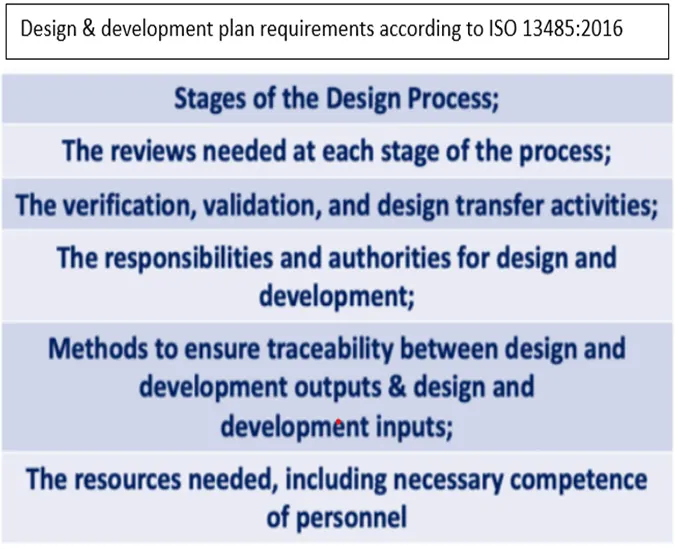
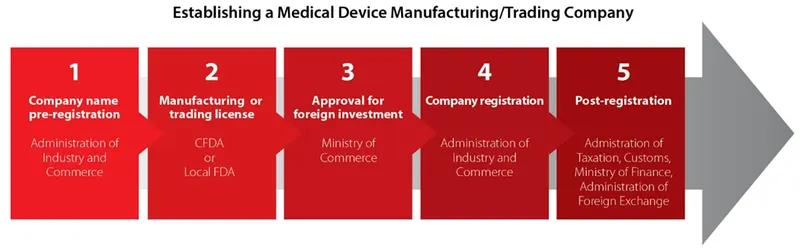
Design and development of a medical device is the most crucial phase for its success. A loosely-defined and designed medical device cannot comply with the regulatory needs and make it to market. It takes a significant amount of effort to deliver the right healthcare solution that meets customer demands. A right healthcare solution demands everybody with strong scope definition from end user’s need, collaborative efforts across the team, adherence to specification and requirements extracted from product definition, simultaneously mitigating risks and sticking to the best possible quality. Medical device design and development is the cyclical process of creating a device for a specific task or set of tasks, and then continuously reevaluating its effectiveness and improving upon it until the device reaches obsolescence. Design and development begin with ideation and the creation of a concept that, if found to be both fiscally and clinically viable, is then designed, engineered, and prototyped. This preclinical period includes bench testing accomplished through simulated use of the product and animal testing, along with any necessary redesign work. Once both the product design and the manufacturing process have been validated and approved by the U.S. Food and Drug Administration (FDA), production and commercialization of a device may begin.
Marketing & sales
- Understand the audience
- Understand & define problems
- Build go-to-market strategy to meet the customer along the buyer’s journey (awareness, consideration, purchase etc.)
- Message around the value to the customer
- Follow B2B research solution from internet sources
- Build trust with consistency
- Understand customer’s focus
For example, The portable image generator would be used for image guided surgery, where a camera tracks instruments during an operation and a processor controls some of the surgical instruments itself. Image-guided surgery aids in operating on hard-to-see areas of the body and for minimally-invasive procedures, increasing accuracy while drastically reducing patient recovery time. Often times, the surgeon is looking at the display screen instead of the patient, so the combination of high-performance computing and high-quality graphics are critical for image guided surgical devices to work. Our customer needed to make their existing image generator portable, durable, and medically-rated in a short period of time. Embed Tek has designed and manufactured many portable image systems like this, for example the Burke BD67, which was originally created for mobile medical imaging and diagnostic applications.
System requirements:
- High performance computing
- High resolution real-time 3D graphics
- Commercial off the shelf (COTS) computing components
- Proprietary control and power systems
- Medically rated far safety and regulatory compliance
- Lightweight, sleek and ergonomic
*Acceptance test: A series of qualitative and quantitative tasks designed to verify the safety and the performance of newly received equipment, as well as the conformity to applicable codes, regulations, and standards.
*Operational check: Visual and operational check of the equipment’s safety and functionality, typically performed at the beginning of the day or work period, or just before using the equipment on a patient. *Safety and performance inspection (SPI): A set of qualitative and quantitative tasks be should designed to verify the safety and the performance of each piece of equipment by detecting potential and hidden failures and taking appropriate actions. After accomplishing the acceptance test for a newly received device, SPIs are scheduled to be performed periodically. If any problem is found at inspection, corrective actions are taken to restore the device or its defective parts to an acceptable level. In addition, a set of failure preventive actions may be taken to prevent future failures and/or restore device function; these include part replacement, calibration, lubrication, etc. to address age-related or usage-related deterioration. When a device fails while it is in use, the problem is reported by the operator, and again appropriate actions (corrective maintenance) are taken. When the repair of a device is no longer technically feasible or cost effective, replacement becomes the best or the only option.
Packaging and transportation
Medical devices undergo rigorous testing and evaluation before allowed to be marketed and sold. The packaging must keep the device sterile, both in storage and transit. It must be able to withstand and physical extremes but be easy for the end user to open. Device packaging is a complex topic with several constraints for materials and design. In case of implanted device, must be kept sterile from the time of manufacture until their use. Even a tiny defect in the packaging can allow the device to become contaminated with pathogens, causing infections and severe postoperative complications for the patient. For this reason, most medical device packaging regulations are concerned with maintaining the sterility of the device.
ISO 11607-1: The medical device packaging standard, published by the ISO, covers the materials used to create packaging and the design of sterile barriers. According to this standard medical device packaging materials must be,
- Non toxic
- Made from known and traceable materials
- Intended specifically for medical device use
- Free of defects such as holes, tears and thinning
Thus, material selection is an important aspect of the device packaging design. The device manufacturer must demonstrate that it is aware of the composition and its acquisition and they must have a quality inspection process to identify and defects before using the material.
ISO 11607-1 also covers testing methods for sterile barrier systems, testing methods include
- Visual inspection
- Bubble leak tests
- Microbe challenge test
It also crucial to conduct tests that examines seal integrity and seal strength and it should be decided which test to conduct for package design & risk.
ISO 11607-2 concerns the validation requirements for forming, sealing and assembly processes for sterile protective packaging.
Risk assessment table
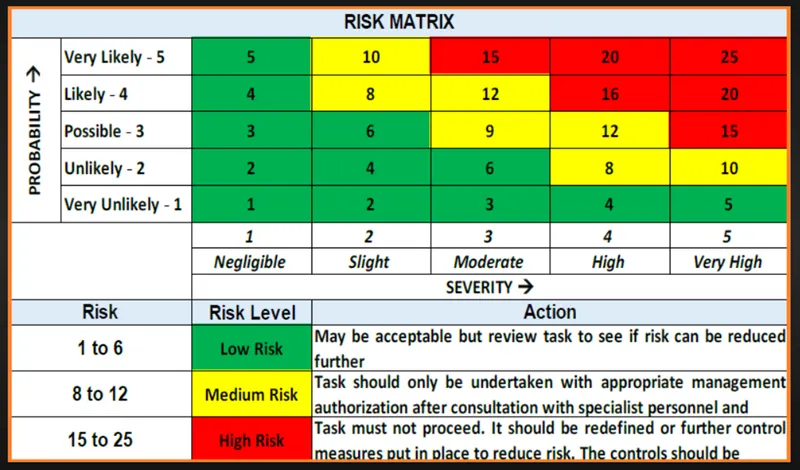
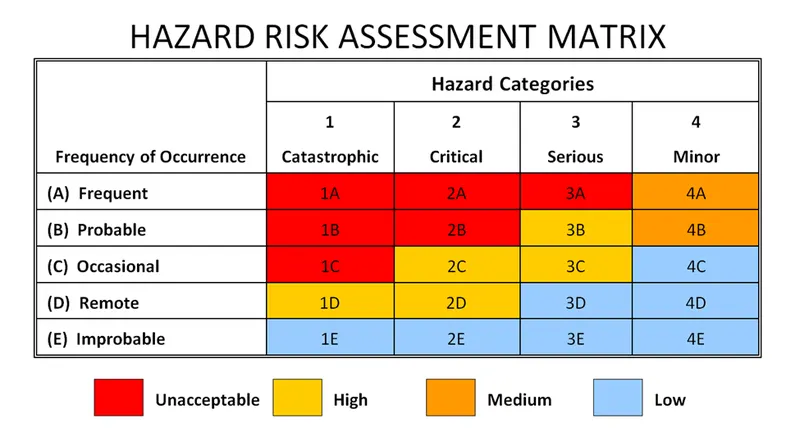
To make sure that the medical device is safe and effective for use the first step to effective risk management is hazard identification. By assessing the potential results of the risks and the probability of their occurrence, the degree of risk can be projected.