Project 1 - Design and Develop an IOT-based Wireless Wearable Health Monitoring System
Design and develop an IOT based wireless wearable health monitoring system to monitor the physiological parameters of ECG, heart rates, pulse oximetry, cuffless blood pressure and body temperature.
Product name: Wristwatch
- A wristwatch-based wireless sensor platform for IoT wearable health monitoring applications is presented, which is light weight and comfortable to wear.
- Weight approximates to 80gms
- Wireless communication range: 868 MHz
Monitoring physiological parameters
ECG
- Frequency: 0.5 – 100 Hz
- Amplitude: 0.25 – 1mV
- Sensor: infrared
Heart rates
- Measured from ECG signals
- 40-220 beats/min
Pulse oximetry
- Frequency: 400-900 Hz
- Sensor: SPO2 sensor
Cuffless blood pressure
- Frequency: 100Hz
- Sensor: arterial blood pressure sensor
Body temperature
- Temperature: 0oC – 40oC
- Thermistor sensor
Schematic block diagram of healthcare IOT device to acquire & transmit physiological parameters
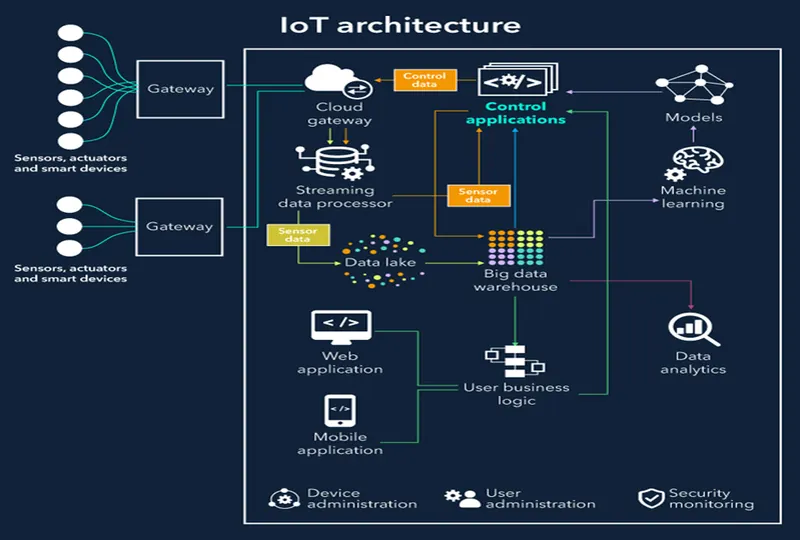
- Things:A “thing” is an object equipped with sensors that gather data that will be transferred over a network and actuators that allow things to act (for example, to switch on or off the light, to open or close a door, to increase or decrease engine rotation speed and more).
- Gateways:Data goes from things to the cloud and vice versa through the gateways. A gateway provides connectivity between things and the cloud part of the IoT solution, enables data preprocessing and filtering before moving it to the cloud (to reduce the volume of data for detailed processing and storing) and transmits control commands going from the cloud to things. Things then execute commands using their actuators.
- Cloud gatewayfacilitates data compression and secure data transmission between field gateways and cloud IoT servers. It also ensures compatibility with various protocols and communicates with field gateways using different protocols depending on what protocol is supported by gateways.
- Streaming data processorensures effective transition of input data to a data lake and control applications. No data can be occasionally lost or corrupted.
- Data analytics: Data analysts can use data from the big data warehouse to find trends and gain actionable insights. When analyzed (and in many cases – visualized in schemes, diagrams, infographics) big data show, for example, the performance of devices, help identify inefficiencies and work out the ways to improve an IoT system (make it more reliable, more customer-oriented). Also, the correlations and patterns found manually can further contribute to creating algorithms for control applications.
- Machine learning and the models ML generates With machine learning, there is an opportunity to create more precise and more efficient models for control applications. Models are regularly updated (for example, once a week or once a month) based on the historical data accumulated in a big data warehouse. When the applicability and efficiency of new models are tested and approved by data analysts, new models are used by control applications.
Design & workflow
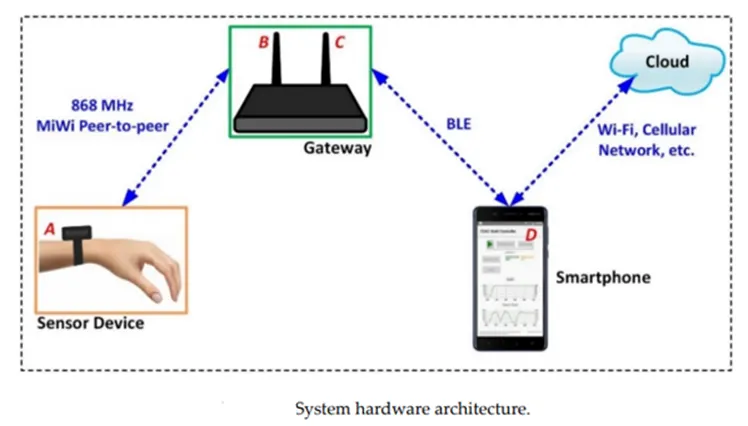
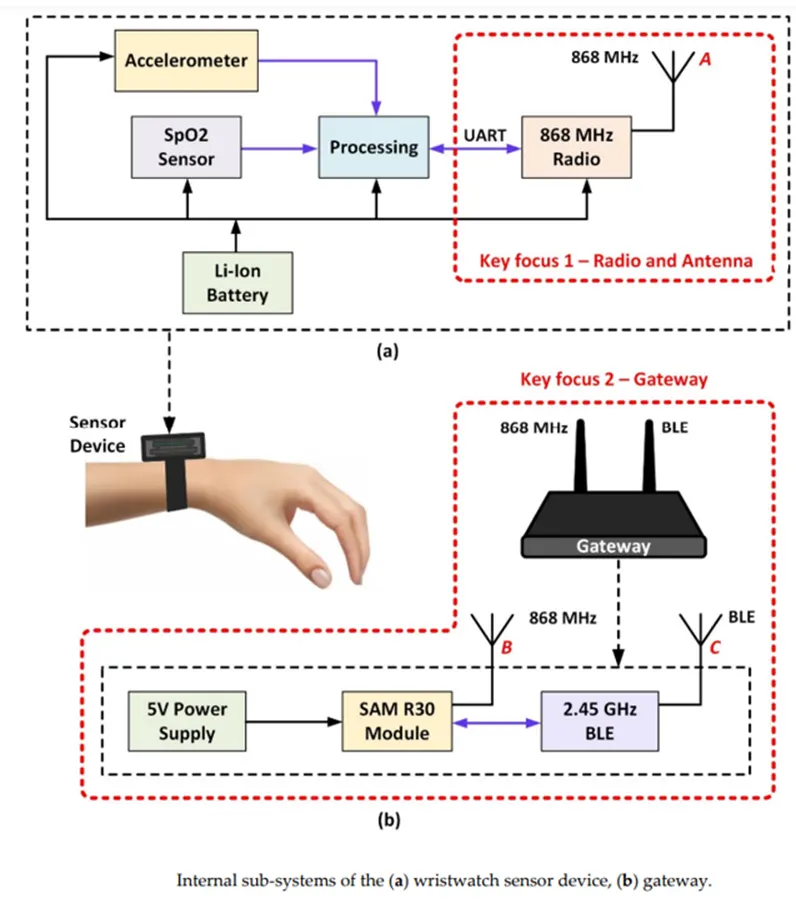
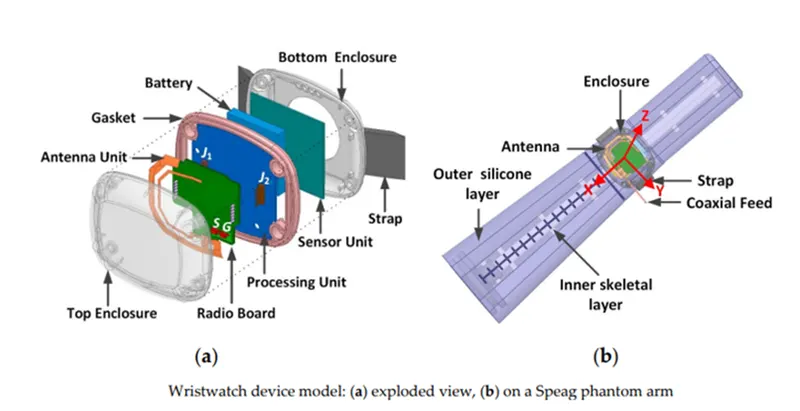
The system hardware architecture broadly consists of four major constituents, denoted as a wristwatch, gateway, smartphone app, and cloud. The sensor device incorporates an SpO2 and an HR sensor and communicates with the gateway using an 868 MHz Mi Wi network protocol. The gateway sends the sensed data to a smartphone over Bluetooth. The use of a smartphone is not a necessary requirement. However, as the smartphone app was already available with the research team, it was decided to use the smartphone application in the first stage instead of developing a new back-end system to handle the data. This decision was taken for some reasons such as the primary objective of the research focuses on the sensor to gateway communications, and for the clinical trial, it was much easier for clinicians to record data directly from the mobile phone device. Further, the data from the smartphone can be forwarded to the IoT cloud using any phone supported cellular network such as Wi-Fi. The internal components of the wristwatch device, including a Li-ion battery, accelerometer, SpO2 sensor, processor, and an 868 MHz radio unit. The radio unit uses an ATSAMR30E18A microcontroller (MCU), which has an integrated ultra-low power Sub-GHz band AT86RF212B transceiver.
Wireless network protocol
In this work, the MiWi network protocol in the Sub-GHz band radio is implemented. MiWi is Microchip’s wireless protocol, which uses a low data rate and low power radio, based on IEEE 802.15.4 networks. The proposed wristwatch sensor platform needs to satisfy the following requirements:
- Bidirectional communication
- Minimum throughput that allows the reliable transfer of sensor data and control commands
- Handle a burst of data of 500 bytes
- Determine sleep/active cycles of the wristwatch to enable power saving.
To satisfy the abovementioned requirements and enable a continuous transmission of raw sensor data, a feasibility test was carried out with different wireless protocol configurations, such as with and without the MiWi protocol stack. For this purpose, two SAM R30 evaluation platforms from Microchip were used.
Disturbances in power consumption: It happens while the battery dies that may hamper to measure the electrical signals generated by our body. It can be overcome by replacing the battery with a high durable battery.
Signal processing: filtering out the noises
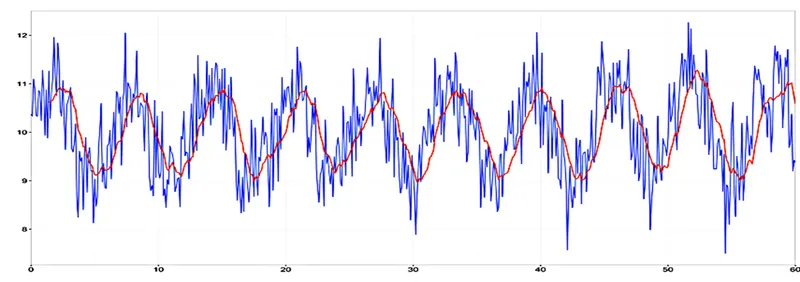
Low pass filter: It passes signals with a frequency lower than a certain cut-off frequency and attenuates signals with frequencies higher than the cut-off frequency. The red line in the plot above is the SMA of the original signal shown in blue. From the plot we note that SMA filters out most of the noise and approximates the underlying signal.
High pass filter: It passes signals with a frequency higher than a certain cut-off frequency and attenuates signals with frequencies lower than the cut-off frequency.
Data storage and retrieval
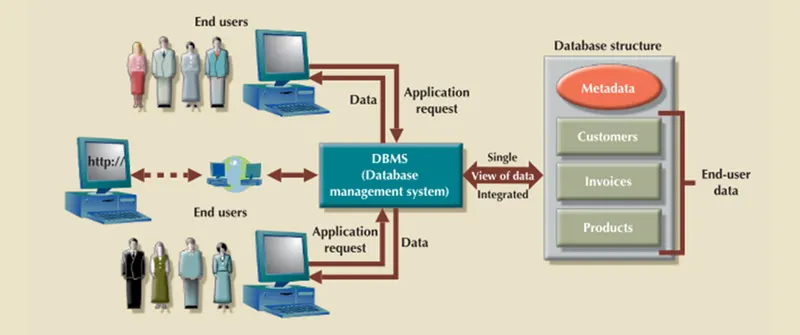
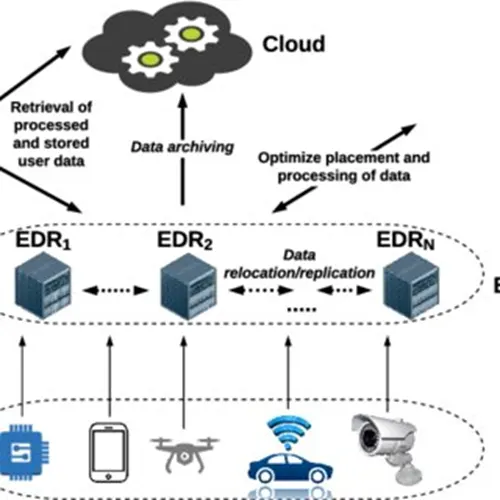
Centralized data storage and sharing scheme Centralized storage and sharing solutions can be divided into two main types, which are data center-based solutions and cloud-based solutions. Data center-based solutions are usually built on the original data center of each organization. Hardware and software required for data storage and retrieval.
IOT security: how to secure IOT devices and networks (techniques)
- Establishing Network Security: One of the most crucial steps in establishing IoT security is securing the network itself. It’s important to remember that network security involves both software and hardware elements. Securing the software elements of the network include using antivirus/anti-malware, network firewalls, bot detection/management solution, blocking traffic based on signatures (i.e., IP addresses) etc.
- Establishing Network Access Control (NAC) Solutions: An NAC software will allow IoT operators to accurately monitor the whole network’s visibility and enforce authorization policies to establish access management. Meaning, you can ensure only the right people have access to specific parts of the network. It would also prevent network access to devices that don’t belong to the IoT network and/or non-compliant devices. This is very important in preventing insecure devices and software/bots from infecting the whole IoT network.
- Ensuring API security: Many IoT deployments rely on APIs and/or websites using APIs. When these APIs are vulnerable, cybercriminals can use them as an entry point to access your whole system. Use this API security checklist to assess whether your APIs are already secure.
- Establishing Public Key Infrastructure (PKI): Establishing PKI is very important in securing multiple client-server connections in an IoT deployment with numerous interconnected devices. The basic idea is to establish end-to-end encryption (and facilitate secure decryption) of data transmissions between devices, especially for devices that transmit confidential and/or sensitive information.
- Network segmentation: Some IoT devices and equipment are required to connect directly to the internet (not through an IoT management solution), and in such cases, it’s best to segment these devices into a separate network with limited/restricted access to the rest of the IoT network. This allows us to better monitor this network segment detect malicious activity and will prevent these issues from affecting the main network.
- Employee Training: A crucial aspect of IoT security is “securing” the element of human resources. For many people, IoT operations and security are new concepts, so it’s important to train your workers about the best practices in using the IoT devices and the IoT network as a whole to ensure secure use. Security staff must also be trained on how to properly secure all potential access points. This may include introducing them to brand-new infrastructures and security challenges. Training should be conducted regularly to keep your team up-to-date on the latest threats and IoT security techniques/measures.
Device certification plan
- Validation
- Prerequisites in device qualification
- Installation qualification
- Operational qualification
- Performance qualification
- Product selling
Kumar S, Buckley JL, Barton J, Pigeon M, Newberry R, Rodencal M, Hajzeraj A, Hannon T, Rogers K, Casey D, O'Sullivan D, O'Flynn B. A Wristwatch-Based Wireless Sensor Platform for IoT Health Monitoring Applications. Sensors (Basel). 2020 Mar 17;20(6):1675. doi: 10.3390/s20061675. PMID: 32192204; PMCID: PMC7147171.
https://www.scnsoft.com/blog/iot-architecture-in-a-nutshell-and-how-it-works#example-of-iot-architecture