Project
1. Carry out a system-level simulation of an all-terrain vehicle.
Prepare a technical report explaining the model properties & comments on the results.
Aim: To analysis a system level simulation of an All-terrain vechicle(ATV) and prepare a technical report of a given system.
Blocks used in this simulation:
- Custome Guage
- Slider
- constant blocks
- Generic Engine
- Speed sensors
- Scopes
- Interia
- Simple Gear
- Vechicle body
- Integrator
- CVT
All-terrain vechicle(ATV)
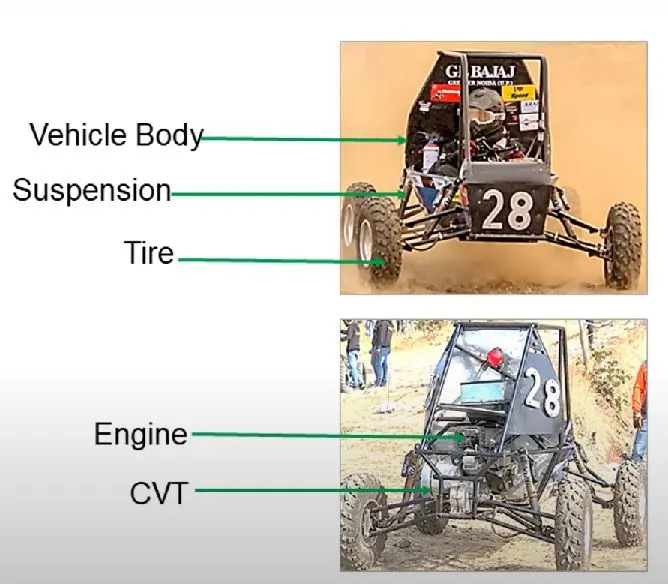
An all-terrain vehicle (ATV) is a quad bike which Travels on low pressure tire, with a seat that is straddled by the operator, along with handlebars for steering control.It is desinged for various terrians compare to other vechicles.
Major Parts of ATV and its simulation components:
1.Engine:
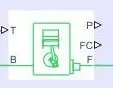
Its is a desile engine with spark Ignition system in it represented by system level model.
Ports: T represent throttle input to the system.
F represents engine crankshaft
B represents engine Block
Fc represents fuel consumption.
2. CVT:
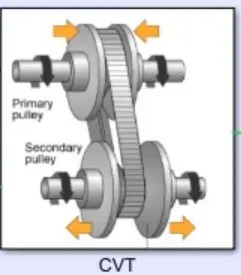
CVT will change gear ratio continuously within a given range, compare to a fixed step in other systems.
Working model of cvt:
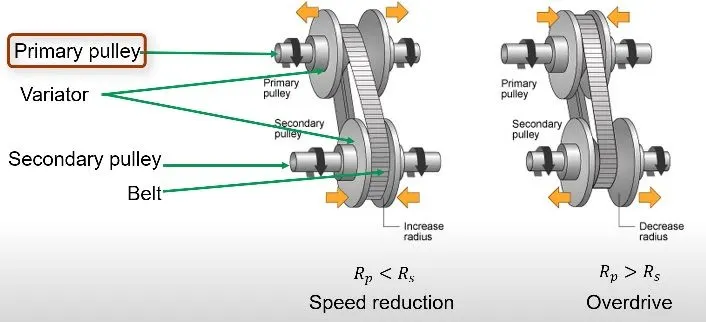
Primary pulley and secondary pulley are connected with a variator. Variator moves primary pulley outwards and secondary pulley inwards. Therfore Radius of primary is less than radius of secondary pulley, so speed will decrease.For increasing speed a vice-versa will be done.Interia is connected to both the pullyes.
Modelling of CVT
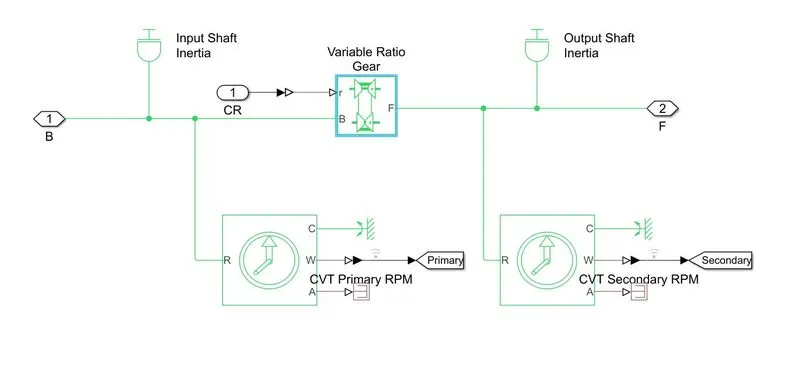
Sensore are connected to both primary pulley and secondary pulley to measure the speed. CT ratio is given as input which is taken from datasheet.
3.Vechicle Body
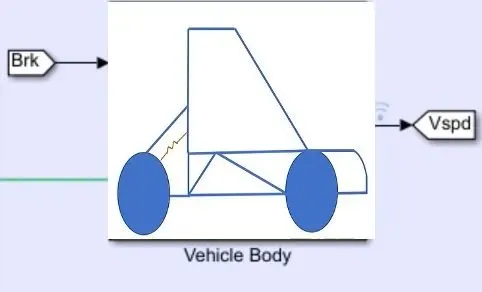
It is a two axle vechicle body in longitudinal motion constisting of mass,aerodynamic drag and road incline.
Modelling a vechicle body:
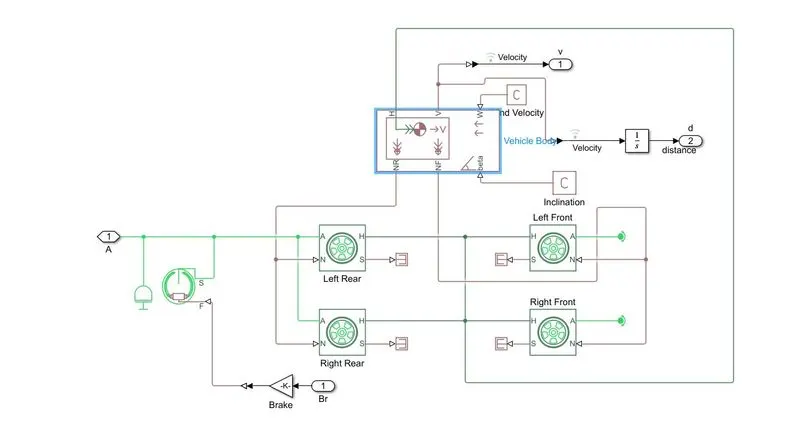
Four wheels and Tyres are connected to a vechcile body as shown in above figure. From engine this wheels takes shaft torque and able to move the body.
It consist of left rear, right rear, left front, Right front and vechicle body.
Explanation:
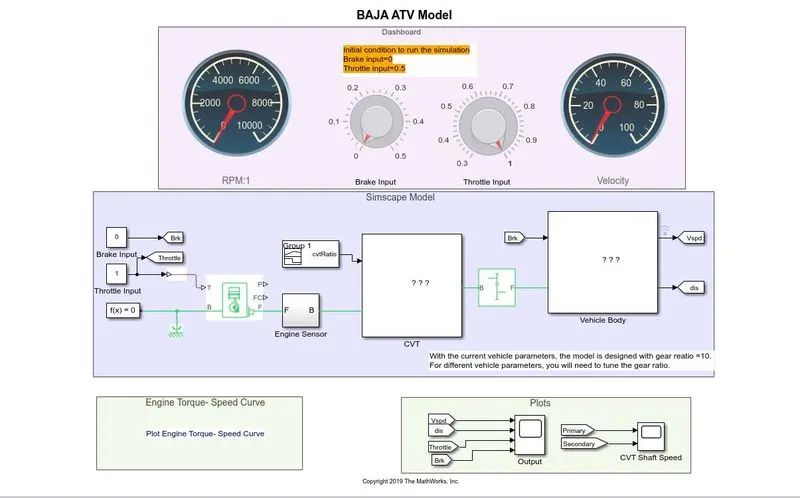
Inputs to the system:
1)Throttle: It will control the engine power and air entering into the engine
2)Brakes: It will help in reducing speed of vechicle.
Steps Involed:
- A throttle is applied to engine, so engine will start. Speed of engine can be measured by speed sensor.
- Engine crankshaft is Transmiited to Vechile body through CVT.
- Cvt helps in reducing or increasing speed as explained in CVT block topic.
- Speed of Primary pulley and secondary pulley can be measured using speed sensor.
- To connect the CVT and Vechicle body,it require speed reduction,so Simple Gear is connected to it.
- From simple Gear it is connected to Vechicle wheels and from it is connected to body of the vechicle.
As throttle is applied to an engine, it will Transfer engine power to the vechicle body thorghh CVT, Simple Gear, wheels.
Case Study 1:
When Model downloaded from Mathwork and simulated with Intial Conditions:
Throttle Value=0.5, Brake Input=0
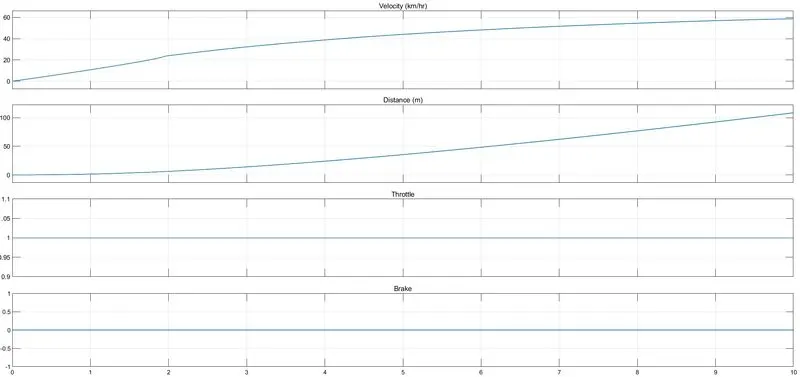
Above Figure Represnts plot ,Velocity, distance Throttle, Brake value of vechcile of with respect to time.
As throttle value is 0.5, Velocity of Vechicle Reaches to 60 rmp having some Pickuptime.
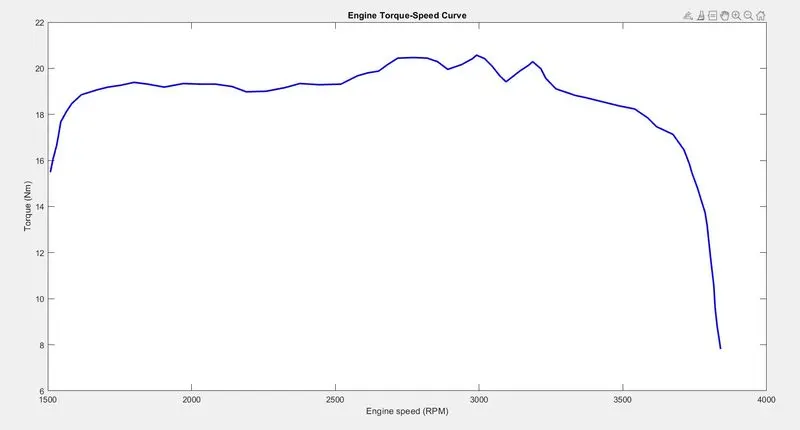
Above Figure Represents Torque vs engine speed.
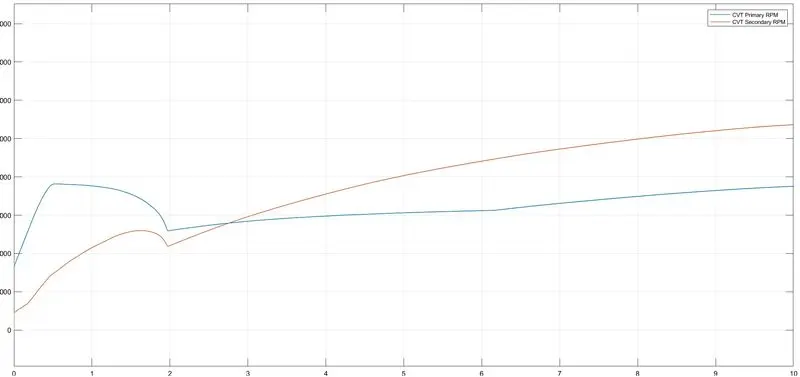
Above Figure shows CVT speed of both primary and secondary pulley.
Case Study 2: By Changing the throttle value keeping barke value Zero while simulation is running.
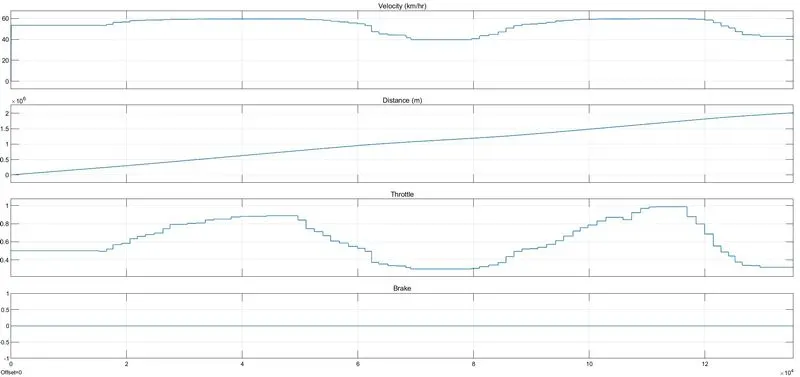
As Throttle value changes, Velocity of Vechicle has changed from above plot.
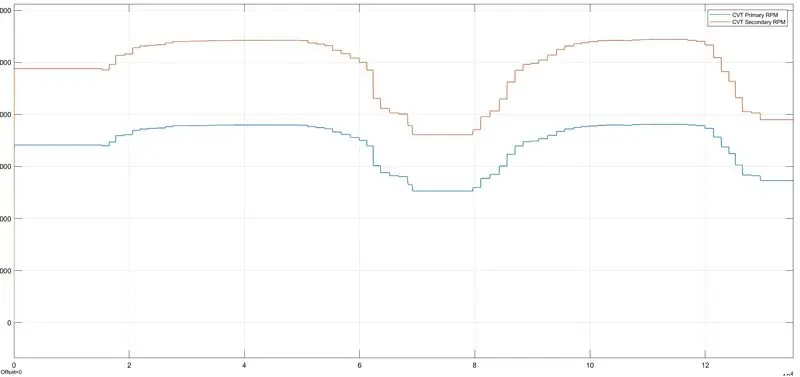
Above plot shows as Throttle value changes ,speed of CVT plot also changes.
Case Study 3:By keeping the throttle value as constant and changing the barke value while simulation is running.
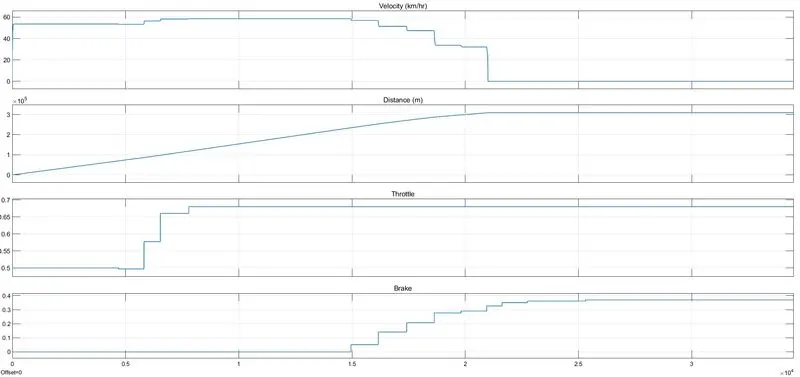
As brakes applied, Velocity of the vechicle becomes zero.
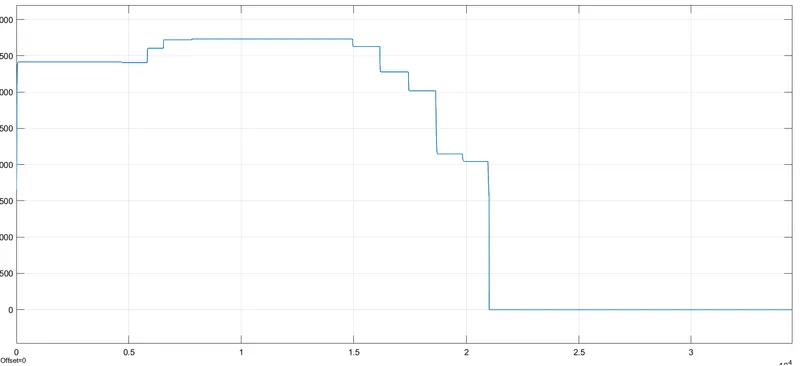
As brakes applied, speed of the vechicle becomes zero.
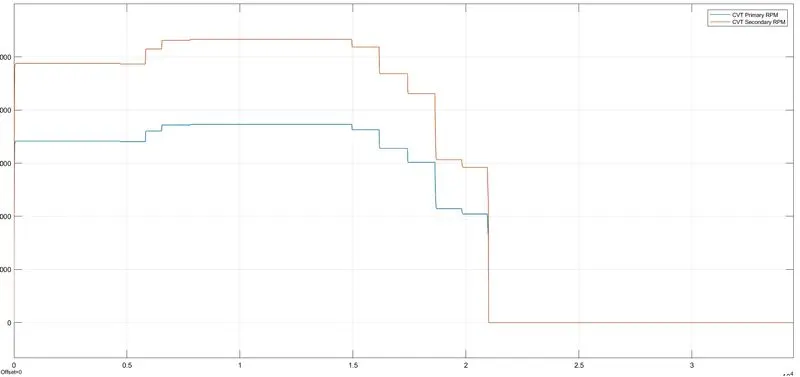
As brakes applied, CVT of primary and secondary of pulleis speed becomes zero.
Case Study 4:By changing both throttle value and change barke value while simulation is running.
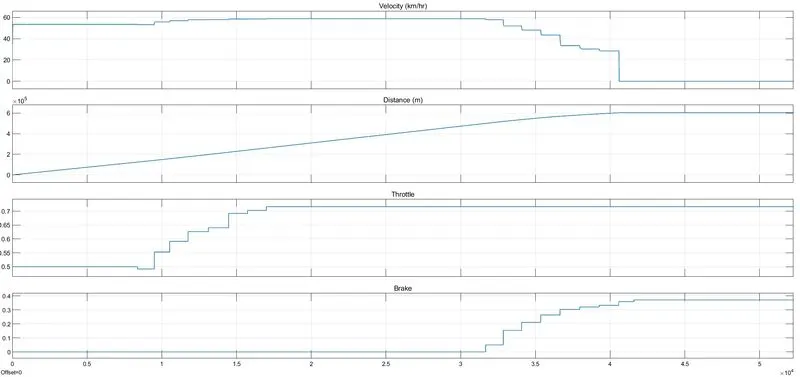
For some time Throttle value is changed and after some time Brake is applied.
Result:Detail anlysis of Baja ATV vechicle has been done and system level simulation has carried out.
Conculsions:
As throttle value increase, engine power increase which inturn increases velocity of vechicle.
As brakes input applies to system , speed of engine decrease and velocity of vechicle becomes zero.