Project-1: Powertrain for aircraft in runways
Part A:
1. Search and list out the total weight of various types of aircrafts.
-
Ultralight aircraft: 254 pounds (115 kg) or less. These are small, lightweight aircraft that are used for recreational flying. They are usually powered by a small engine or by gliding, and are capable of speeds up to 65 mph (105 km/h).
-
Light sport aircraft: 1,320 pounds (600 kg) or less. These are small, single-engine planes used for sport and recreational flying. They are designed to be affordable and easy to fly, and are popular among flying enthusiasts.
-
General aviation aircraft: 12,500 pounds (5,670 kg) or less. These are small to medium-sized planes used for private and business travel. They can range from single-engine planes to larger, multi-engine planes capable of carrying several passengers.
-
Business jets: 10,000-100,000 pounds (4,536-45,359 kg). These are high-performance, luxury aircraft designed for corporate and executive travel. They are equipped with advanced avionics and can fly at high speeds, often reaching Mach 0.85 or higher.
-
Regional airliners: 30,000-90,000 pounds (13,607-40,823 kg). These are small to medium-sized planes used for short-haul flights between regional airports. They are designed to carry up to 100 passengers and are often used by smaller airlines.
-
Narrow-body airliners: 90,000-200,000 pounds (40,823-90,718 kg). These are medium to large-sized planes used for domestic and international flights. They are designed to carry up to 200 passengers and are the backbone of most major airlines' fleets.
-
Wide-body airliners: 200,000-1,000,000 pounds (90,718-453,592 kg). These are large, long-range planes used for international flights. They are designed to carry hundreds of passengers and can fly non-stop for up to 20 hours.
-
Military fighter jets: 10,000-50,000 pounds (4,536-22,680 kg). These are high-performance aircraft used for air-to-air combat and ground attack missions. They are designed for speed and maneuverability, and are equipped with advanced avionics and weapons systems.
-
Military transport planes: 50,000-200,000 pounds (22,680-90,718 kg). These are large, heavy-duty planes used for transporting troops, equipment, and supplies. They are designed to operate from short, unprepared runways and can carry up to 200 passengers or 60,000 pounds (27,215 kg) of cargo.
2. Is there any difference between ground speed and air speed?
Ground speed
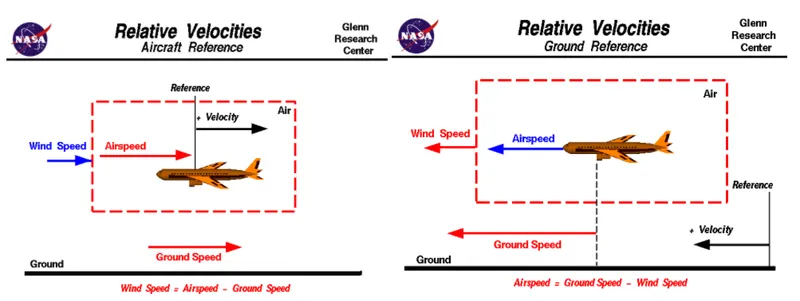
Ground speed is the horizontal speed of an aircraft relative to the ground. An aircraft heading vertically would have a ground speed of zero.
Ground speed can be determined by the vector sum of the aircraft's true airspeed and the current wind speed and direction; a headwind subtracts from the ground speed, while a tailwind adds to it. Winds at other angles to the heading will have components of either headwind or tailwind as well as a crosswind component.
Wind Speed
For a reference point picked on the ground, the air moves relative to the reference point at the wind speed. A positive velocity is defined to be in the direction of the aircraft's motion. We are neglecting cross winds, which occur perpendicular to the flight path but parallel to the ground, and updrafts and downdrafts, which occur perpendicular to the ground.
Airspeed
The important quantity in the generation of lift is the relative velocity between the object and the air, which is called the airspeed. Airspeed cannot be directly measured from a ground position, but must be computed from the ground speed and the wind speed. Airspeed is the vector difference between the ground speed and the wind speed.
Airspeed Ground Speed - Wind Speed
- The aircraft usually operates on land as well as in air and so we need to study their speed differences in-ground and in air
- The ground speed and the airspeed usually change based on the wind component.
- If we consider that there is no wind component then, ground speed = airspeed
- If the wind is blowing in the tail direction of the aircraft then, (airspeed > ground speed) so, airspeed = ground speed+ wind component.
- If the wind is blowing in the head direction of the aircraft then, (airspeed < ground speed)so, airspeed ground speed - wind component.
- Also, gravity plays a major role in increasing the aircraft's speed while it is descending.
- Here wind speed is the vector difference between ground and airspeed. On a particular day, the wind speed may be zero and it is equal to the ground speed.
- If the measured airspeed is greater than the observed ground speed the wind speed becomes positive.
3. Why is it not recommended to use aircraft engine power to move it on the ground at Airport?
It is generally not recommended to use aircraft engine power to move an aircraft on the ground at an airport for a few reasons:
-
Safety: When the aircraft's engine is running, there is a risk of debris being kicked up by the engine and causing damage or injury to personnel or equipment on the ground. In addition, the exhaust gases from the engine can pose a health hazard to ground personnel.
-
Control: Moving an aircraft under its own power on the ground can be difficult to control, especially in windy conditions or on uneven surfaces. The pilot may have limited visibility and may not be able to see obstacles or other hazards on the ground.
-
Fuel consumption: Running an aircraft engine on the ground can consume a significant amount of fuel, which can be expensive and wasteful. This can also lead to increased emissions and environmental impact.
-
Engine wear and tear: Using an aircraft engine to move the aircraft on the ground can put additional stress on the engine and other components, which can lead to increased maintenance costs and downtime.
Instead of using engine power to move the aircraft, airports typically use ground handling equipment such as tow tractors, pushback tugs, and dollies to move the aircraft on the ground. These vehicles are specifically designed for the purpose of moving aircraft and are operated by trained personnel who have the skills and experience to safely maneuver the aircraft in various conditions. By using ground handling equipment, airports can reduce the risk of damage, improve control and efficiency, and minimize the environmental impact of aircraft operations.
4. How an aircraft is pushed to runway when its ready to take off?
When an aircraft is ready to take off, it needs to be moved from its parking position to the runway. This process can be done either by towing the aircraft using a specialized vehicle or by taxiing the aircraft under its own power.
Towing an Aircraft: Towing an aircraft involves using a specialized vehicle called a tow truck or tug to pull the aircraft from its parking position to the runway. Here is a step-by-step process of towing an aircraft:
-
The tow truck operator communicates with the aircraft pilot or ground crew to coordinate the tow. The tow truck is positioned behind the aircraft, and the tow bar is attached to the aircraft's nose gear.
-
The tow truck operator then slowly pulls the aircraft away from its parking position, while the pilot or ground crew guides the aircraft to ensure it stays on course and avoids obstacles.
-
Once the aircraft is clear of its parking spot, it is towed along designated taxiways to the runway. The tow truck operator continues to communicate with the pilot and ground crew to ensure safe navigation.
-
Once the aircraft reaches the runway, the tow truck is disconnected, and the pilot starts up the engines.
-
With the engines running, the pilot can then taxi the aircraft under its own power to the runway for takeoff.
Taxiing an Aircraft: Taxiing an aircraft involves moving it from its parking position to the runway under its own power. Here is a step-by-step process of taxiing an aircraft:
-
The pilot starts up the aircraft's engines and communicates with air traffic control for taxi instructions.
-
The pilot then navigates the aircraft using the aircraft's steering system and follows the designated taxiways to the runway.
-
The pilot must also communicate with ground control and other aircraft to ensure safe navigation and avoid collisions.
-
Once the aircraft reaches the runway, it lines up for takeoff and waits for clearance from air traffic control.
In conclusion, moving an aircraft from its parking position to the runway is an essential process in preparing for takeoff. This process can be done either by towing the aircraft using a specialized vehicle or by taxiing the aircraft under its own power. Towing an aircraft involves attaching a tow bar to the nose gear and pulling the aircraft to the runway, while taxiing an aircraft involves navigating it under its own power. In both cases, the aircraft pilot, ground crew, and tow truck operator must communicate and work together to ensure a safe and efficient operation.
5. Learn about take off power, tyre design, rolling resistance, tyre pressure, brake forces when landing.
Takeoff Power: Takeoff power is the amount of power needed to accelerate an aircraft to takeoff speed and lift off the ground. The takeoff power is determined by the aircraft's weight, wing area, and the air density at the airport. The equation to calculate takeoff power is:
P = (T - D) x V
where P is the takeoff power, T is the thrust produced by the engines, D is the drag force acting on the aircraft, and V is the takeoff speed.
Tyre Design: The design of aircraft tires is critical to ensuring safe takeoff and landing operations. The load-carrying capacity of an aircraft tire is determined by the tire's construction and materials, as well as its size and inflation pressure. The equation for calculating the load-carrying capacity of an aircraft tire is:
W = P x A x F
where W is the load-carrying capacity of the tire, P is the inflation pressure of the tire, A is the contact area of the tire, and F is a factor based on the tire's construction and materials.
Rolling Resistance: Rolling resistance is the force required to move an aircraft tire along the ground. Rolling resistance is affected by the weight of the aircraft, the surface of the runway, and the design of the tire. The coefficient of rolling resistance is a constant that reflects the specific conditions of the runway surface and tire design. The equation for calculating the rolling resistance of an aircraft tire is:
R = CRR x W
where R is the rolling resistance force, CRR is the coefficient of rolling resistance, and W is the weight of the aircraft.
Tyre Pressure: The optimal tire pressure for an aircraft tire is critical to ensuring safe takeoff and landing operations. The optimal tire pressure depends on several factors, including the weight of the aircraft, the distance from the center of gravity to the main landing gear, and the contact area of the tire. The equation for calculating optimal tire pressure is:
P = (W x D)/A x (1 - (d/L))
where P is the optimal tire pressure, W is the weight of the aircraft, D is the distance from the center of gravity to the main landing gear, A is the contact area of the tire, d is the deflection of the tire, and L is the length of the tire.
Brake Forces When Landing: When an aircraft lands, it must be slowed down using its brakes. The amount of braking force required to slow down an aircraft depends on its mass, the desired rate of deceleration, and the coefficient of friction between the runway and the tires. The equation for calculating the braking force required to slow down an aircraft is:
Fb = m x a
where Fb is the braking force, m is the mass of the aircraft, and a is the desired rate of deceleration. The coefficient of friction between the runway and the tires is assumed to be constant.
Part B:
6. A. With necessary assumptions, calculate the force and power required to push / pull an aircraft by a towing vehicle.
B. Develop the model for the calculated force and power using Simulink.
A. With necessary assumptions, calculate the force and power required to push / pull an aircraft by a towing vehicle.
Considering:
Total mass of ther aircraft (including payload) for airbus a380 = 575,000kg.
Mass of the push back: 1000kg (assumed)
Rolling Resistance (Frr):
Coefficient of rolling resistance (Crr) = 0.002 (on tarmac)
Rolling resistance force is given by
`F underset(rr)()= C underset(rr)(). m . g`
For the aircraft:
`F underset(rr)() = (0.002) . (575000) . (9.81)`
`Funderset(rr)()=11281.5N`
`Funderset(rr)()=11.2815 kN`
For the Towing Vehicle:
`Funderset(rrt)()=(0.002)().(1000).(9.81)`
`Funderset(rrt)()=19.62N`
As the towing vehicle resistance is so less compared to the Aircraft because this is a heavy aircraft these can be neglected
Aerodynamic resistnace (Far):
Drag coeffcient(Cd): 0.025
Air Density (ρ) = 1.125kg/m^3
Frontal Area (A): 150m^2.
Velocity (v) = 14.5kmph or 4m/s
`Funderset(ar)()=frac{1}{2}.Cunderset(d)().rho.A.voverset(2)()`
`Funderset(ar)()=frac{1}{2}.(1.125).(150).(4)overset(2)()`
`Funderset(ar)()=33.75N`
As the vehicle and Plane is moving at very low speed Aerodynamic resistance can be neglected
Hill Climb Resistnace:
Runways are constructed flat so Gradient resistance/ hill climb force is neglected.
Total Resistance:
`Funderset(t)()=11.2815kN`
Power Required:
`P=Funderset(t).v``P=(11.2815).(4)`
`P=45.26kW`
The min power required by the tow vehicle is 45.26kW to taxi a heavy air craft at 4m/s.
B. Develop the model for the calculated force and power using Simulink.
Simulink Model:
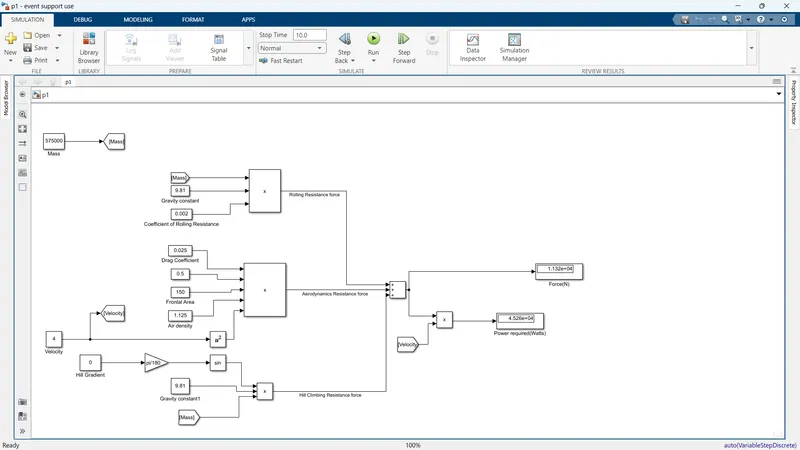
- constant blocks are used to feed the parameters such as mass, coefficients and other parameters
- using product block the resistive forces are calculated.
- using sum block, total resistive forces can be calculated.
- the outputs are visualised using display blocks.
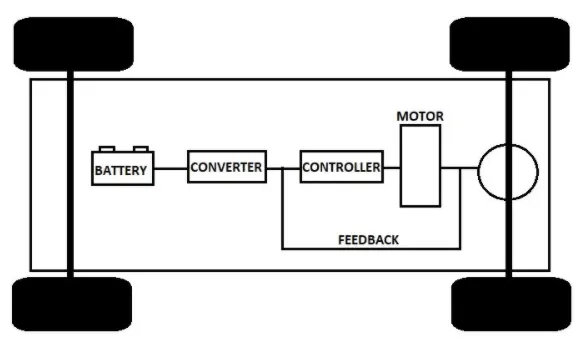
7. A. Design an electric powertrain with type of motor, it’s power rating, and energy requirement to fulfill aircraft towing application in Simulink. Estimate the duty cycle range to control the aircraft speed from zero to highest. Make all required assumptions. Prepare a table of assumed parameters. Draw a block diagram of powertrain.
Estimation of Duty Cycle:
Based on the calculation done in study 6
The Power Required for towing of the aircraft is 45.26kW.
Motor Considred for the drive train is REB 90
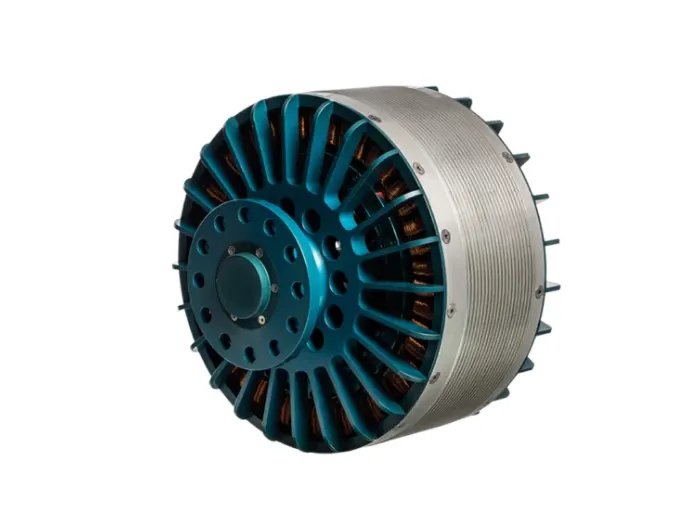
Technical Data:
| Type | Voltage | Continuous / Peak power | Working rotation | Max torque | Weight | Cooling |
| REB 90 | 400–800 V | 60–70 kW / 80 kW | 1 500–4 000 rpm | 300 Nm | 22 000 g |
Air / Hybrid (air + fluid) |
Considering 60kW as continuous power, so the voltage will be 400V
Battery power is considred to be 550v
Duty cycle is given by
`D= frac{Vunderset(o)()}{Vunderset(b)}`
where Vo is motor required voltage
Vb is battery voltage.
`D=frac{400}{550}`
`D=0.7272`
As there will be losses due to the resistance of FET and Inductance.
Correction factor is considred to be 90%
As there is 10% loss, the voltafge demanded by the motor should be 10% more than required
`D=0.7272.(1+0.1)`
`D=0.799approx0.8`
so the voltage demand should be around 440V from the battery.
| Assumed Parameters | ||
| Mass of aircraft | 575000 | kg |
| Mass of the push back truck | 1000 | kg |
| Coefficient of Rolling Resistance | 0.002 | |
| Drag Coefficient | 0.025 | |
| Air density | 1.125 | kg/m^3 |
| Frontal Area | 150 | m^2 |
| Velocity | 4 | m/s |
| Uphill gradient | 0 | deg |
| Battery Voltage | 550 | V |
| Correction Factor | 0.8 | |
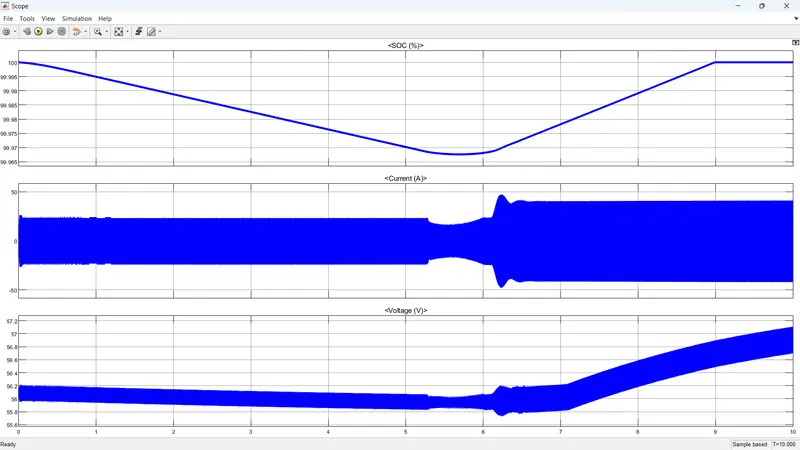
Block Diagram:
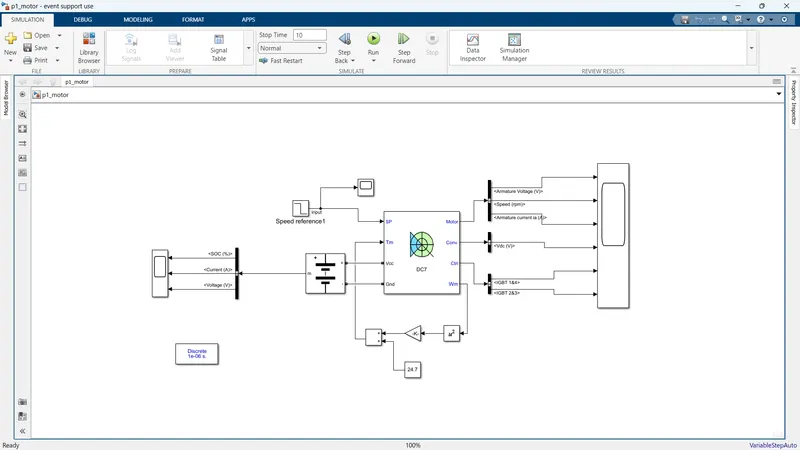
Input:
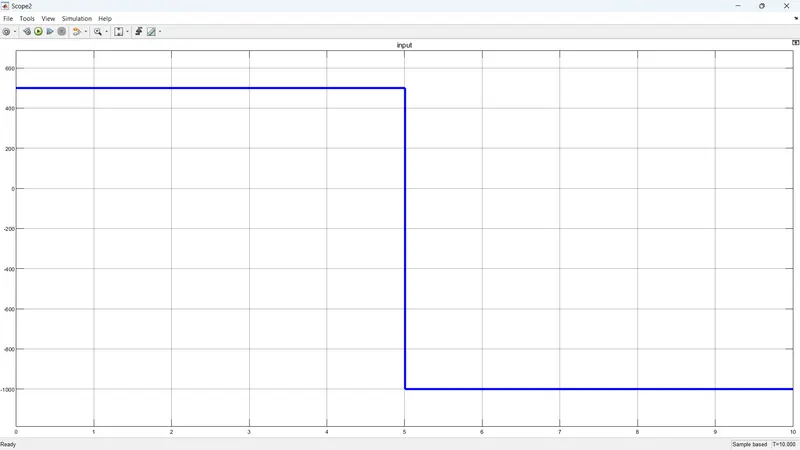
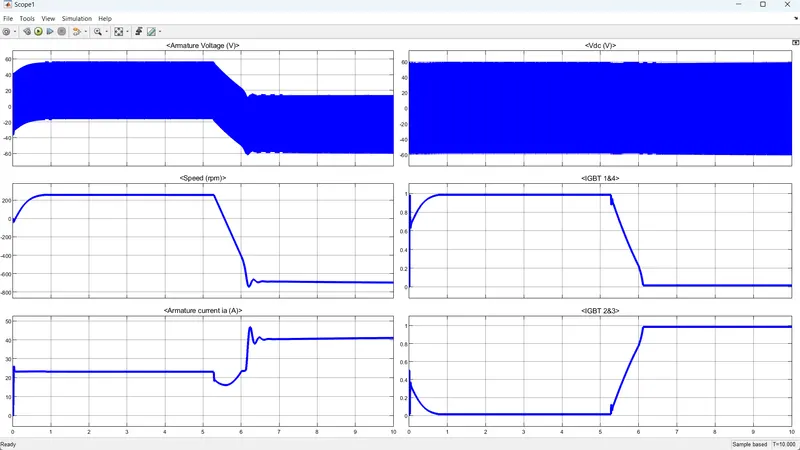
Output:
From the motor:
From the Battery:
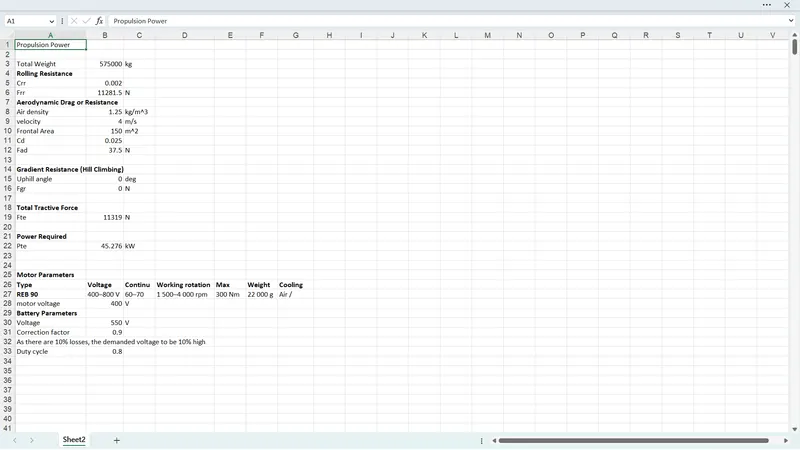
B. Also, Design the parameters in excel sheet.