Project-1: Powertrain for aircraft in runways
QUESTION -
Part A:
1. Search and list out the total weight of various types of aircrafts.
Solution -
The weight of the aircraft is needed to be calculated by the pilot for every flight to ensure the aircraft remains within weight limitations set by the manufacturer. These limitations are to ensure the aircraft is able to perform and recover from all flight maneuvers and withstand structural loading.
| Aircraft | Empty Weight | Max Fuel Weight | Max Cargo Weight | Max Gross Takeoff Weight |
|---|---|---|---|---|
| Antanov AN-225 | 628,000 lbs 285,000 kg |
661,400 lbs 300,000 kg |
417,000 lbs 190,000 kg |
1,411,000 lbs 640,000 kg |
| Airbus A380-800 | 611,000 lbs 277,000 kg |
560,000 lbs 254,000 kg |
185,000 lbs 84,000 kg |
1,268,000 lbs 575,000 kg |
| Boeing 747-800 | 485,300 lbs 220,100 kg |
427,400 lbs 194,000 kg |
295,000 lbs 134,000 kg |
987,000 lbs 447,700 kg |
| Airbus A340-500 | 370,000 lbs 168,000 kg |
386,300 lbs 175,000 kg |
119,000 lbs 54,000 kg |
820,000 lbs 372,000 kg |
| Boeing 777-300ER | 370,000 lbs 168,000 kg | 320,800 lbs 145,500 kg | 148,000 lbs 67,100 kg |
776,000 lbs 352,000 kg |
| Boeing 787-10 | 299,000 lbs 135,500 kg | 223,500 lbs 101,500 kg |
126,300 lbs 57,300 kg | 560,000 lbs 254,000 kg |
| Boeing 737-900 | 98,500 lbs 44,700 kg |
53,100 lbs 24,000 kg |
44,600 lbs 20,200 kg |
187,000 lbs 85,000 kg |
| Airbus A320-100 | 93,900 lbs 42,600 kg |
48,700 lbs 22,100 kg |
44,000 lbs 20,000 kg |
150,000 lbs 68,000 kg |
| Embraer 190 | 63,500 lbs 28,800 kg |
28,600 lbs 13,000 kg |
28,800 lbs 13,100 kg |
106,000 lbs 48,000 kg |
| Gulfstream G650 | 54,000 lbs 24,500 kg | 48,200 lbs 21,900 kg | 6,500 lbs 3,000 kg |
100,000 lbs 45,200 kg |
| Bombardier CRJ900 | 48,160 lbs 21,850 kg | 19,600 lbs 8,900 kg | 6,075 lbs 2,760 kg | 80,500 lbs 36,500 kg |
| Bombardier Q400 | 39,300 lbs 17,800 kg |
11,700 lbs 5,300 kg |
18,700 lbs 8,500 kg |
62,000 lbs 28,000 kg |
| Learjet 75 | 13,900 lbs 6,300 kg | 6,060 lbs 2,750 kg |
2,900 lbs 1,300 kg |
21,500 lbs 9,700 kg |
| Cessna Citation CJ4 | 10,300 lbs 4,700 kg | 5,800 lbs 2,650 kg |
2,200 lbs 1,000 kg | 17,200 lbs 7,800 kg |
| Beechcraft King Air B100 | 7,100 lbs 3,200 kg | 3,200 lbs 1,450 kg |
4,150 lbs 1,900 kg |
12,000 lbs 5,400 kg |
| Diamond DA50 RG | 3,200 lbs 1,450 kg |
340 lbs 155 lbs |
1,250 lbs 560 kg |
4,400 lbs 2,000 kg |
| Beechcraft Bonanza G36 | 2,500 lbs 1,150 kg | 450 lbs 200 kg |
850 lbs 385 kg |
3,660 lbs 1,660 kg |
| Cessna 206H | 2,200 lbs 990 kg |
520 lbs 235 kg |
1,150 lbs 520 kg |
3,600 lbs 1,630 kg |
| Sirrus SR22 | 2,250 lbs 1,000 kg | 485 lbs 220 kg |
950 lbs 430 kg |
3,600 lbs 1,630 kg |
| Cessna 172R | 1,700 lbs 770 kg |
380 lbs 170 kg |
560 lbs 255 kg |
2,425 lbs 1,100 kg |
The maximum design taxi weight or maximum design ramp weight (MDRW) is the maximum certificated design weight for aircraft ground manoeuvres as limited by aircraft strength and airworthiness requirements.
Maximum design take off weight (MDTOW OR MTOW) : The maximum design takeoff weight is the maximum certificated design weight for takeoff run as limited by aircraft strength and airworthiness requirements.
Maximum design landing weight (MDLW OR MLW) :The Maximum design landing weight is the maximum certificated design weight for landing limited by aircraft strength and airworthiness requirements. It generally depends on the landing gear strength or the landing impact loads on certain parts of the wing structure.
MDTW>MDTOW>MDLW
Air-Craft gross weight : It is the total aircraft weight at any moment during the flight or ground operation. This decreases during flight due to fuel and oil consumption.The gross weight of the wehicle is gives in the maximum take off weight of the vehicle.The total weight "W" of the aircraft is simply the sum of the weight of all of the individual components.
W = w(fuselage) + w(wing) + w(engines) + w(payload) + w(fuel)
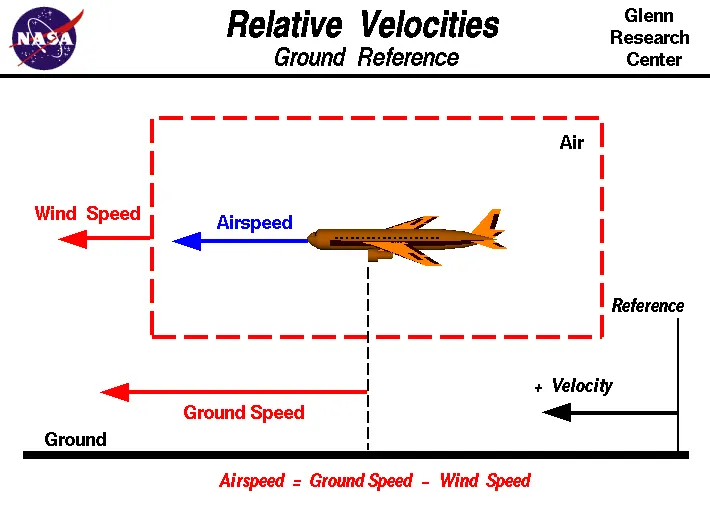
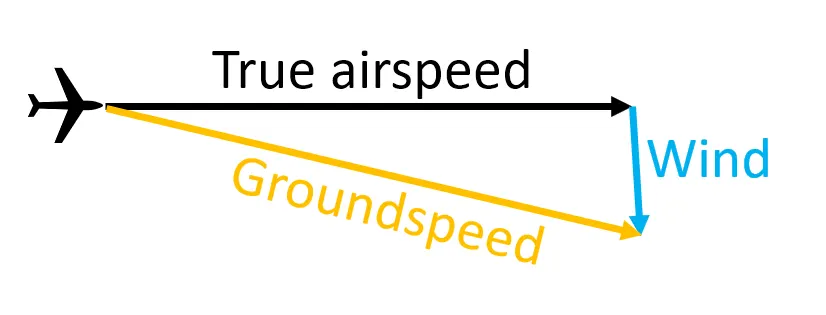
2. Is there any difference between ground speed and air speed?
Solution -
3. Why is it not recommended to use aircraft engine power to move it on the ground at Airport?
Solution -
Taxiing refers to the movement of an airplane while on the runway is the movement of an aircraft on the ground, under its own power, in contrast to towing or pushback where the aircraft is moved by a tug. The aircraft usually moves on wheels.
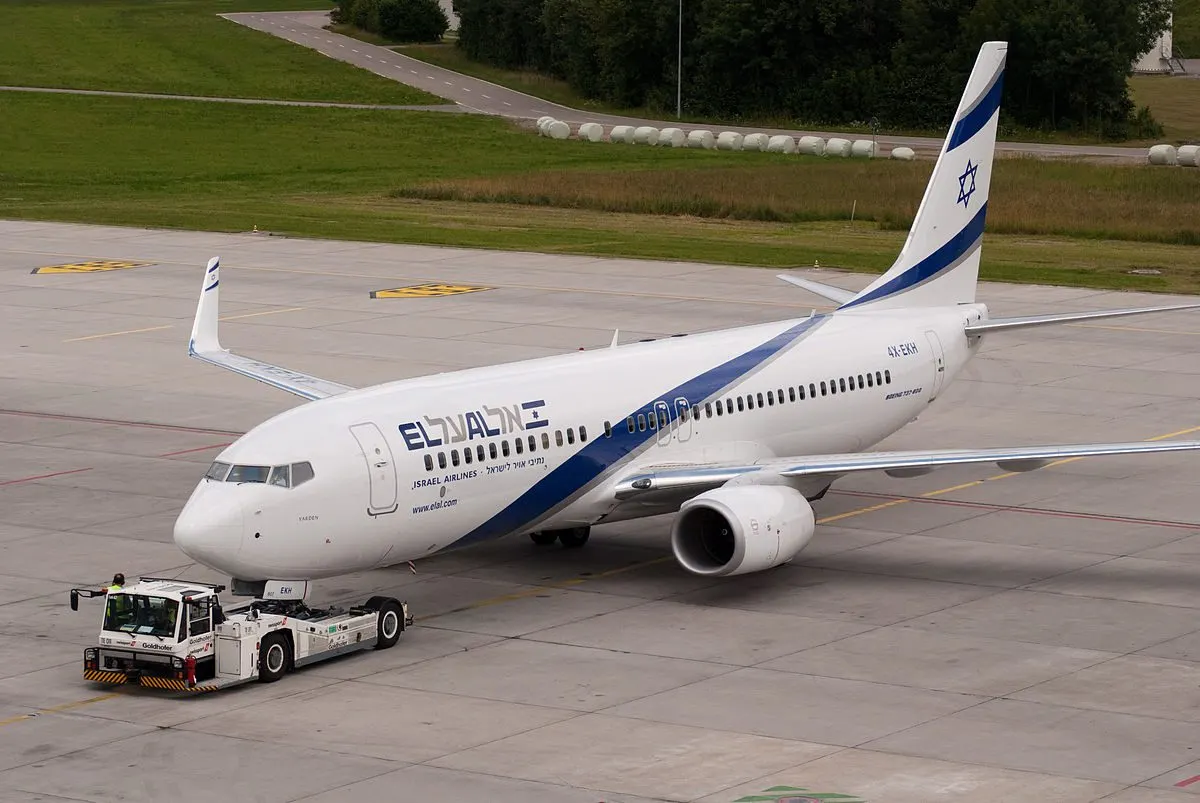
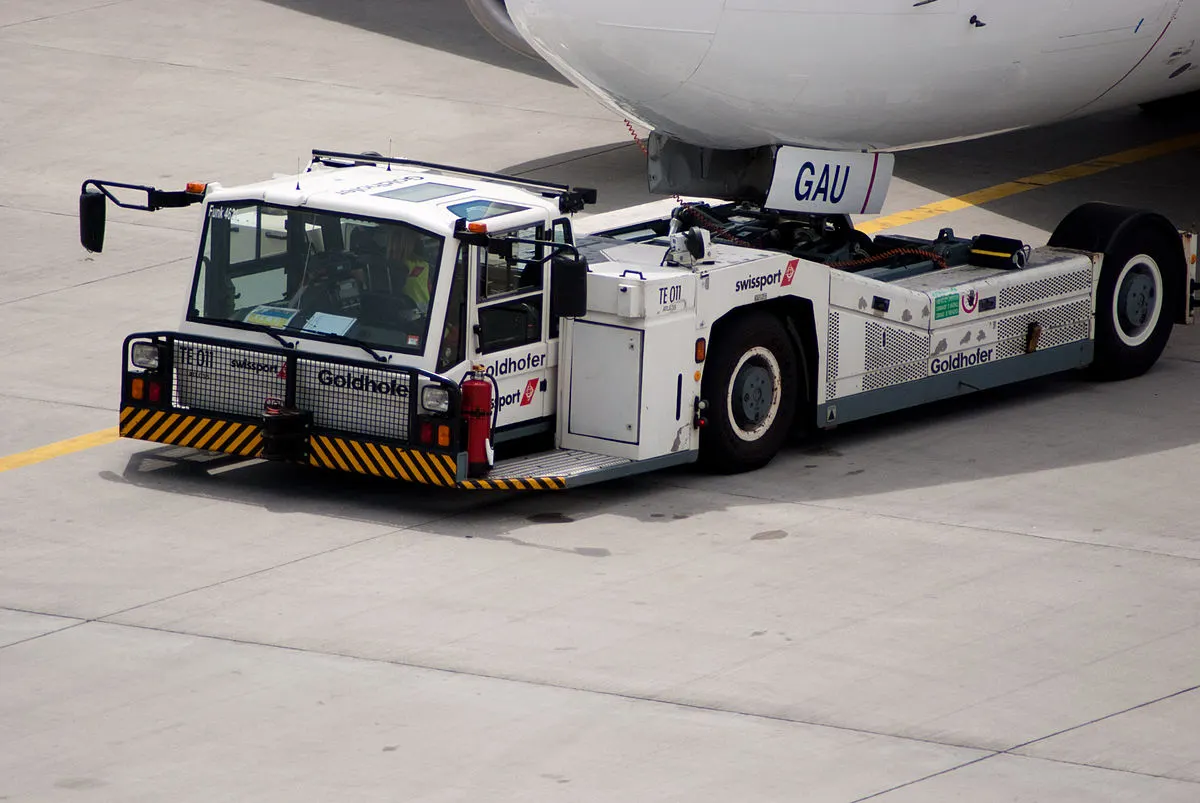
Although many aircrafts moves in back ward using reverse thrust as a result .The jet blast or prop wash might damage the terminal billding and other eqiuipment.Engine close to ground may also damage the engine.This may cause the huge damage to the aircraft.Thats why pushback trucks are provided for the backword movement of crafts in airports.A push back truck lifts the front wheel of the aircraft .Their (push back truck )role is to move the aircraft away from the parking area .
Reasons for not using aircraft engine power to move it on the ground at Airport:-
1) Usage of high power mounted engines have high risk of blasting.
2) Usage of low power mounted engines have a risk of impurities on the ground may enter inside the engine.
3) High fuel cost since areoplanes uses large amount of power.
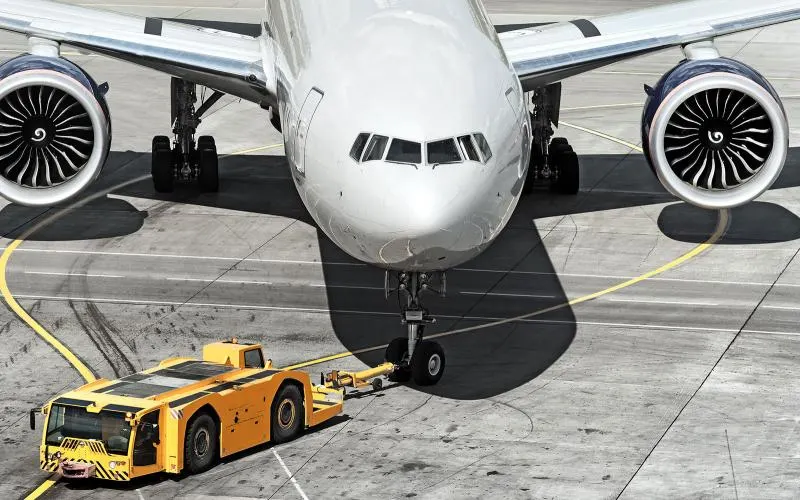
4. How an aircraft is pushed to runway when its ready to take off?
Solution -
5. Learn about take off power, tyre design, rolling resistance, tyre pressure, brake forces when landing.
Solution -
a)Take off power:-
Takeoff is the phase of flight in which an aerospace vehicle leaves the ground and becomes airborne. For aircraft traveling vertically, this is known as liftoff. For aircraft that take off horizontally, this usually involves starting with a transition from moving along the ground on a runway. For light aircraft, usually full power is used during takeoff. Large transport category (airliner) aircraft may use a reduced power for takeoff, where less than full power is applied in order to prolong engine life, reduce maintenance costs and reduce noise emissions.
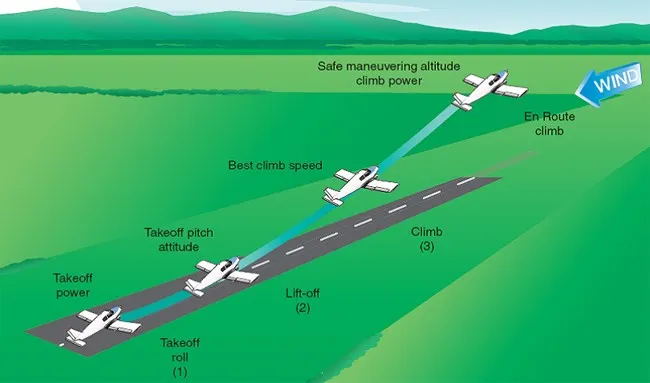
After taxiing onto the runway, the airplane should be carefully aligned with the intended takeoff direction, and the nose wheel positioned straight, or centered. After releasing the brakes, the throttle should be advanced smoothly and continuously to takeoff power. An abrupt application of power may cause the airplane to yaw sharply to the left because of the torque effects of the engine and propeller. This will be most apparent in high horsepower engines. As the airplane starts to roll forward, the pilot should assure both feet are on the rudder pedals so that the toes or balls of the feet are on the rudder portions, not on the brake portions.
Takeoff performance can be predicted by using a simple measure of Acceleration of the aircraft anong the runway based on force equilibrium.
The force involved will be
T- Thrust of propulsion system pushing aircraft along runway
D- Areodynamic Drag of vehicle resisting the aircraft motion.
F- Rolling resistance friction due to the contact of wheels of skids on the ground.
During take –off run the imbalance in these forces will produce an acceleration along the runway
DV/dt = (T-D-F)/m
Where dV/dt is the acceleration along the runway and m is the mass of the vehicle.
b)Tyre design:-
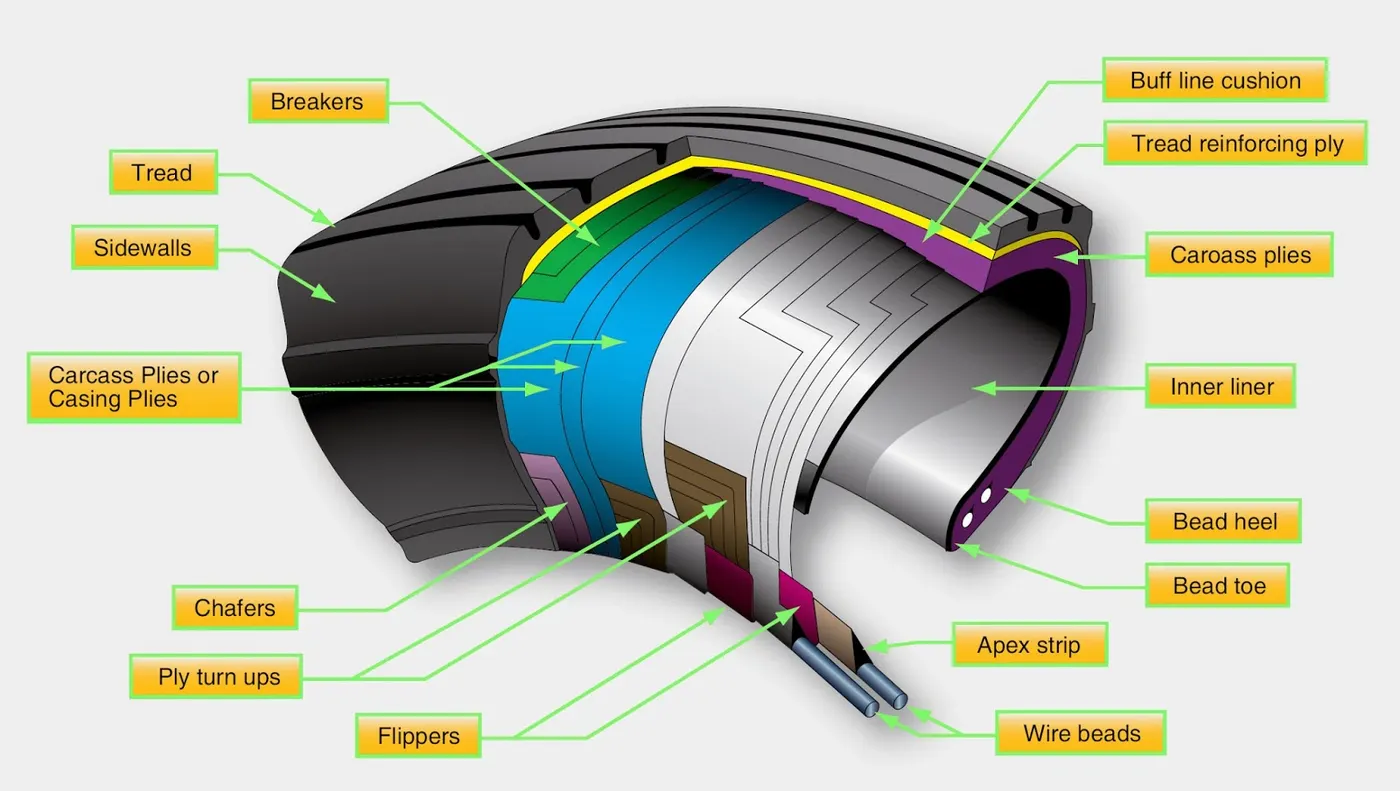
When it comes to safety, Tyres are one of the most important components of aircraft. They help to absorb the shock of landing and provide cushioning. It also provides the necessary traction for braking and stopping of an aircraft. An aircraft Tyre is designed to withstand extremely heavy loads while landing, take off, taxing, and parking. The number of wheels required for aircraft increases with the weight of the aircraft, as the weight of the aero plane needs to be distributed more evenly. Carcass plies are used to form the tire. They are sometimes called casing plies. An aircraft Tyre is constructed for the purpose it serves.
c)Rolling Resistance:-
Rolling resistance is the force resisting the motion when a body (such as ball, tyre or wheel) rolls on a surface.Rolling resistance can be seen in the aircraft when the aircraft takes-off from the runway & while landing at the runway with the help of their wheels.This rolling resistance force depends on many factors like surface of the road, roughness of the road, dry or wet condition of the road, tyre pressure, tyre material, tyre temperature, thread pattern of the tyre etc, which determines the rolling resistance force. The Rolling resistance force is given as below,
Frr=μrr*m*g
Where
Frr the Rolling resistance(N)
μrr coefficient of rolling resistance.
m is mass(kg)
g is acceleration due to gravity= 9.81m/s^2
d)Tyre pressure:-
The typical airliner tire can handle a 38-ton load. It can meet the ground 500 times before needing a re-tread, a refresh it can take on seven times in its life. Aircraft tires generally operate at high pressures, up to 200 psi (14 bar; 1,400 kPa) for airliners, and even higher for business jets. The main landing gear on the Concorde was typically inflated to 232 psi (16.0 bar), whilst its tail bumper gear tires were as high as 294 psi (20.3 bar).
d)Brake forces:-
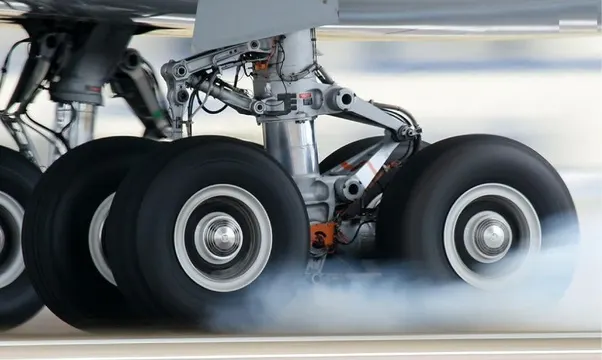
As the aircraft lands with high speed it requires huge amount of force.This speed should be controlled by suitable brakes withot damage or effects.Brakes work by dissipating energy as heat through the action of friction. An aircraft wheel rotating at speed possesses a large amount of kinetic energy. In aircraft types, the brake units are powered by the hydraulics system. An electrical signal is sent from the flight deck to hydraulic actuators near the main landing gear. Here, hydraulic fluid at 3,000 pound per square inch is used to force the brake unit against the wheel, thus slowing it down.
Part B:
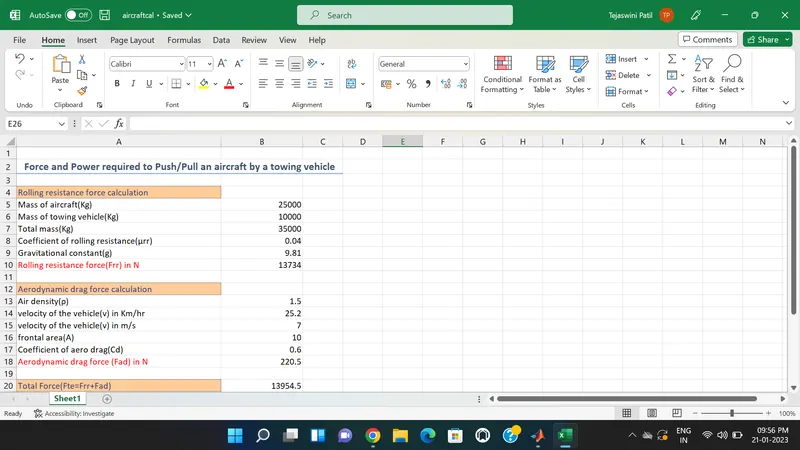
6. A. With necessary assumptions, calculate the force and power required to push / pull an aircraft by a towing vehicle.
B. Develop the model for the calculated force and power using Simulink.
Solution -
To propell any vehicle we need to overcome several opposite forces acting on the same vehicle .The actual forces acting on the vehicle varies from place to place.
Let us consider the regular runway the oposite forces are acting to propel the vehicle are ,
Rolling resistance force (Frr)
and aerodynamic drag force.(Fad)
there is no grade so hill climbing force (Fhc)is neglected.
The sum these forces is actual or total force (Fte) to overcome to propel the vehicle.
Frr=m.g.μrr;
Fad=1/2*ρACdv^2;
where,
m-mass of the vehicle(kg)
g-gravitational constant.(kg/m^2)
μrr-rolling resistance
ρ-air density(kg/m^3)
A-frontal area(m^2)
Cd-aero drag coefficient
v-velocity of the vehicle(m/s)
Fte=Rolling resistance force (Frr)+Aerodynamic drag force.(Fad)
Fte=mgμrr+1/2*ρACdv^2
Assume any vehicle(aircraft ) and some assumptions are as follows,
mass of the aircraft (ma)=25000kg;
mass of the towing vehicle=10000kg;
gravitational constant(g)=9.81m/s^2;
rolling resistance(μrr)=0.04;
air density(ρ)=1.5kg/m^3;
frontal area (A)=10m^2;
Aero drag coefficient(Cd)=0.4+0.2=0.6;
velocity(v)=25.2km/hr=7m/sec
Frr=mgμrr
=(25000+10000)*9.81*0.04
=13734 N
Fad=1/2*ρACdv^2
=0.5*1.5*10*0.6*7^2
=220.5 N
Fte=mgμrr+1/2*ρACdv^2
=13734 + 220.5
=13954.5 N
Total force required to pull or push the vehicle (Fte)= 13954.5 N
torque at the wheels =force *radius
=13954.5*0.2(tire radius=0.2m)
=2790.9 Nm
power required to pull the vehicle;
we know;
power(p) =force *velocity
=Fte*v
=13954.5*7
=97681.5 watts
=97.6815 kw
The power required to propell the vehicle is 97.6815 kw.
Frr=mgμrr;
Fad=1/2*ρACdv^2;
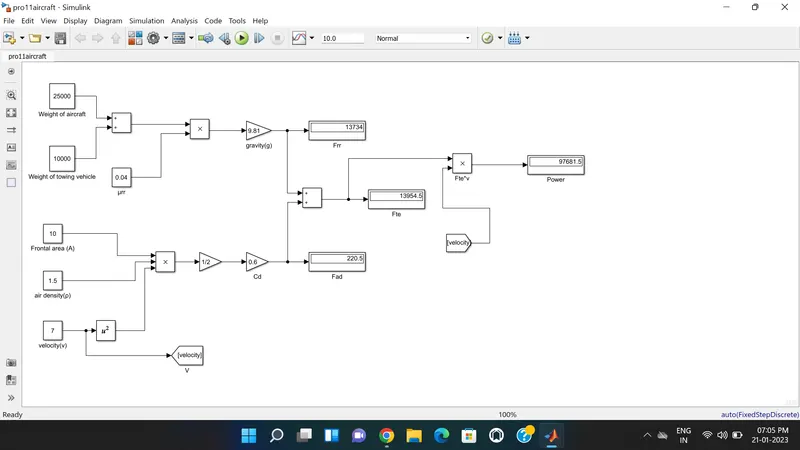
Gain block is multiply the input with the gain value.This block is used for gravitational constant(g) and Cd.
Display block shows the output of the equations ie, forces and power.
Tags block is used to tag the data between the blocks.(goto &from)
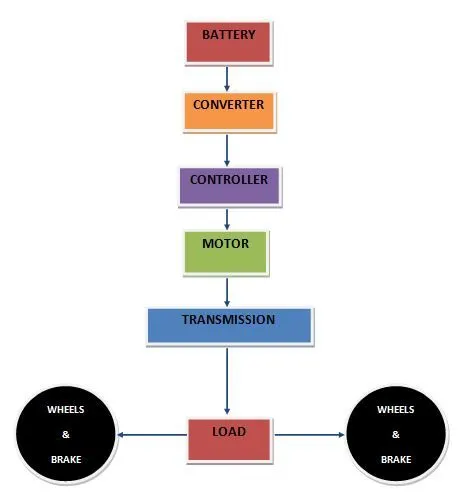
7. A. Design an electric powertrain with type of motor, it’s power rating, and energy requirement to fulfill aircraft towing application in Simulink. Estimate the duty cycle range to control the aircraft speed from zero to highest. Make all required assumptions. Prepare a table of assumed parameters. Draw a block diagram of powertrain.
(Hint :DC7 Block)
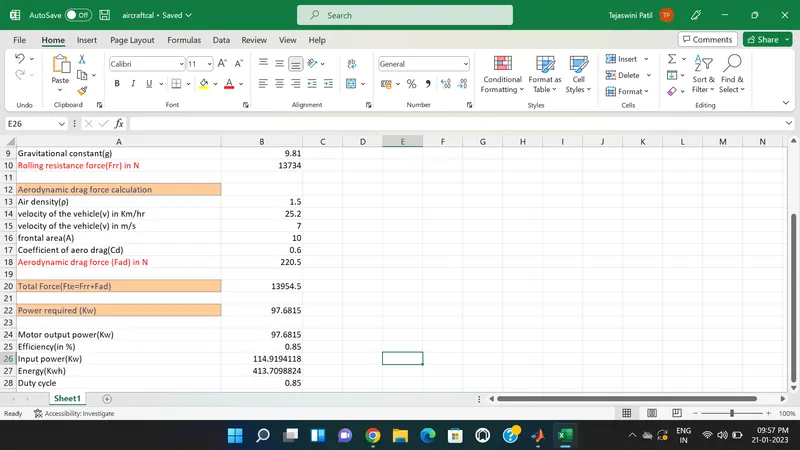
B. Also, Design the parameters in excel sheet.
Solution -
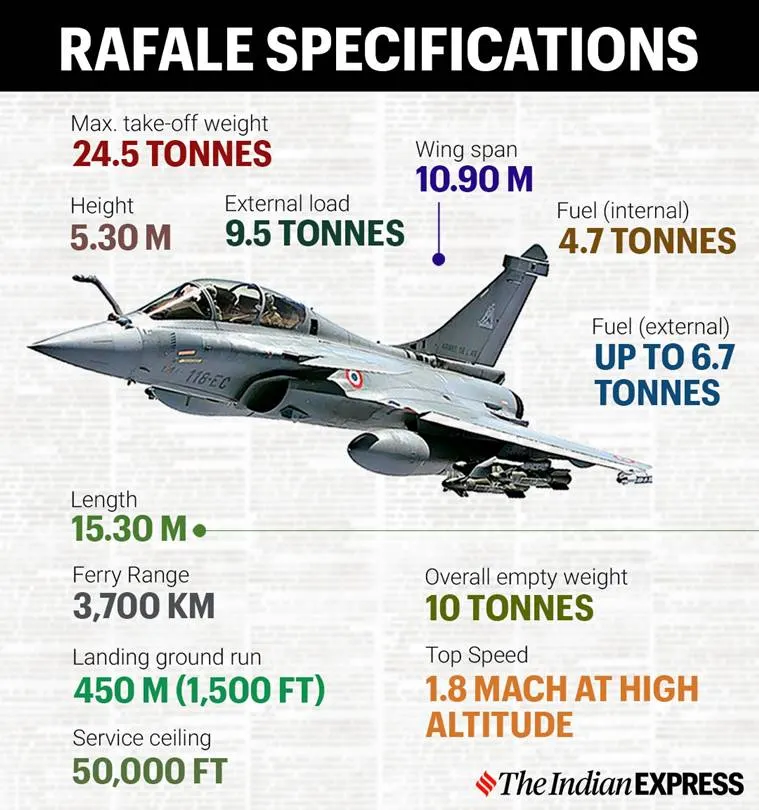
We are considering the Rafale fighter aircraft and its specifications are shown in the below picture,
| Parameter | Assumption |
| mass of the aircraft (ma) | 25000kg |
| mass of the towing vehicle | 10000kg |
| rolling resistance(μrr) | 0.04 |
| air density(ρ) | 1.5kg/m^3 |
| frontal area (A) | 10m^2 |
| aero drag coefficient(Cd) | 0.6 |
| velocity(v) | 25.2km/hr=7m/sec |
| gravitational constant(g) | 9.81m/s^2 |
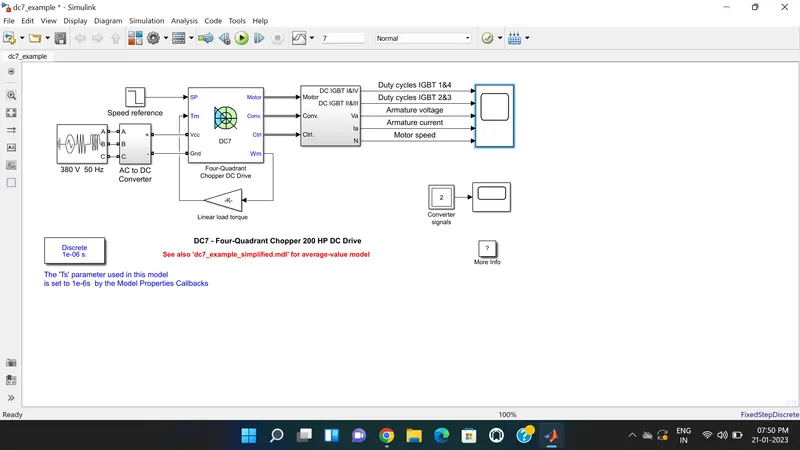
Power train model designed in simulink -
The below model represents the simple powertrain model for aircraft on the run way. In general the power train consists of the battery (source), motor ,motor controller ,
This model consists of battery,four quadrant chopper dc drive (DC) The main purpose of the dc drive is it consists the controller also.
The dc 7 model is reference for the powertrain for the for aircraft on runway.
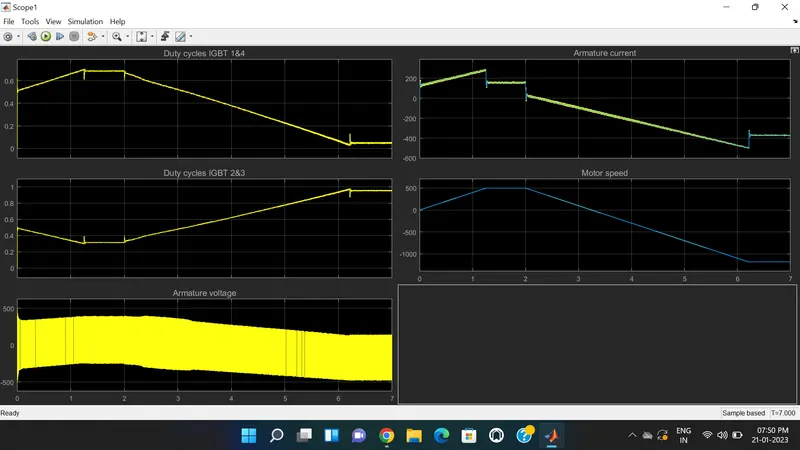
Output -
The below plot shows the nature of Duty cycles of IGBT, Armature voltage ,Armature current and Motor speed.
B.Excel Sheet for calculating force and power for powertrain for aircraft -
Here we are calculating the Force and Power required to Push/Pull an aircraft in the below sheet.The assumptions are considered as discussed above.Rolling resistance force, Aero drag force ,power and Energy are calculated in the below Excel sheet.