Project-1: Powertrain for aircraft in runways
Part A
Question 1:
Search and list out the total weight of various types of aircrafts
ABSRACT:
Firstly the aicrafts are also called as aeroplanes or planes. An airplane’s or aircrafts essential components are the body, a flight-sustaining wing system, stabilizing tail surfaces, altitude-control devices which are rudders, thrust-providing power source, and most important landing support system. These essential components are the pillars of the aircraft for construction of craft and to stable in the air from long heights from ground level. Starting during the 1840s, a few English and French creators delivered plans for motor fueled airplane, yet the first fueled supported and controlled flight was just accomplished by Wilbur and Orville Wright (Wright brothers) in 1903. Later aircraft plan was impacted by the improvement of the fly motor most planes today have a long nose segment, cleared back wings with stream motors set behind the plane's midriff, and a tail balancing out area. Most planes are intended to work from land, seaplanes are adjusted to land on water, and transporter based planes are changed for high velocity and short departure and landing.
PRINCIPLE:
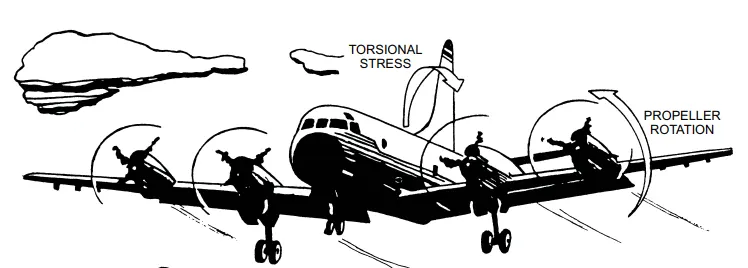
An airplane in straight-and-level unaccelerated flight has four powers following up on it. These powers are lift, a vertical acting power drag, a power of the protection from lift and airplane traveling through the air. The impact that gravity has on the airplane and push, the forward-acting power given by the framework. Drag and weight are components innate in any article, including an airplane. Lift and thrust are artificially created factors devised to enable an aircraft to fly in the air. The propeller actions of the planes or any aircrafts are made to happened to suppress the forces acts acting on the body, the torsional stress results from a twisting force. For example, when you wring out your skin, you are putting it under torsion like wise torsion is produced in an engine crankshaft while the engine is running. Forces that produce torsional stress also produce torque.
But when it comes to supersonic aircrafts which are developed for fighter jets and they can travel in means of sound waves. In simple word these supersonic aircrafts can travel with the speed of sound waves. Supersonic aircraft required even more drastic changes in the shapes of their construction, some losing the roundness formerly associated with a wing and having a double-wedge shape can make that aircraft to travel faster.
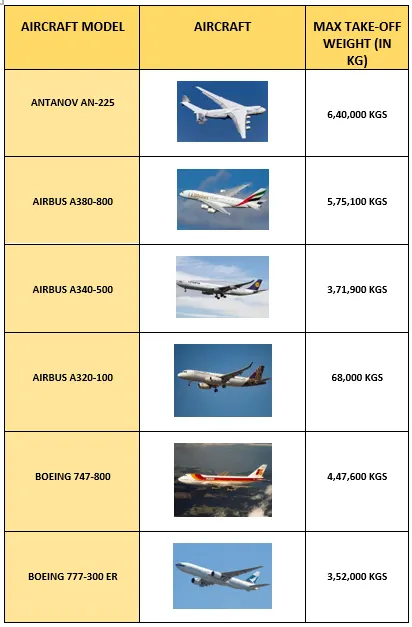
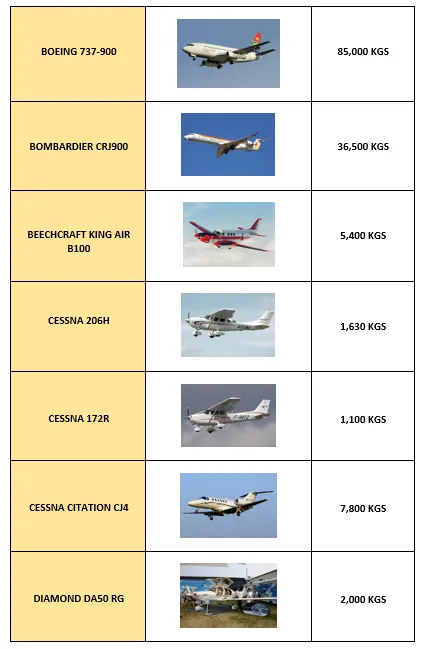
TYPES OF AIRCRAFTS AND THEIR MAXIMUM TAKE-OFF WEIGHTS IN KGS:
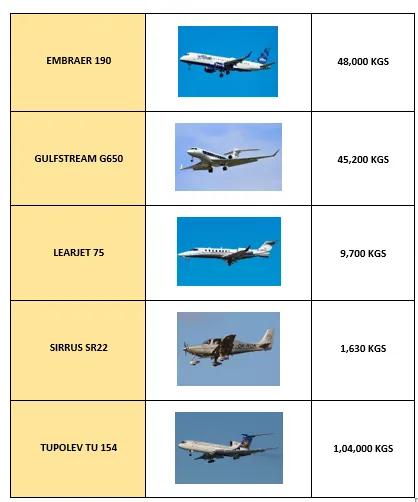
SUMMARY:
An aircrafts fly in the air, long distance from the ground level. To fly any object in the air there are some forces acts on that body, same way there are some forces acts on the aircrafts. Which are Thrust, drag, lift, and weight are forces that act upon all aircraft to fly in the air. There must a factor is to be taken into consideration, which is construction of aircrafts to support and co-ordinate with aerodynamics. An aircraft must be constructed of materials that are both light and strong. Early aircraft were made of wood. Lightweight metal alloys with a strength greater than wood were developed and used on later aircraft. Materials currently used in aircraft construction are made up of metallic materials or nonmetallic materials. The allignment of wings and rotary segments are properly made to suppress the forces acts on it to fly in the air.
Question 2:
Is there any difference between ground speed and air speed?
INTRODUCTION:
Ground speed:
The ground speed can be simply explained like, the speed of aircraft or aeroplane is relative to the ground or earth surface. For better understanding of ground speed, it is the time one takes to cover a certain distance over the ground. For example, at cruise altitude, aeroplanes might have a ground speed of 300–600 knots (555-1,110 kmph). However, the wind can alter the speed at which the aircraft passes over the ground.
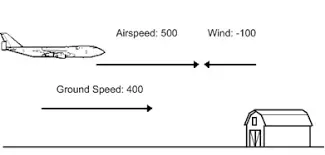
So from above discussion we came to know about the wind speed also. Ground speed is the sum of the wind speed and airspeed.
Air speed:
The airspeed of airplane is defined as speed relative to the air present while the craft is flying. To explain the air speed of the craft, let's consider a seneario, if a plane is flying in the air, then simultaneously the winds will be blown against the direction of the craft which is flying. So now the aircraft experiences head wind.
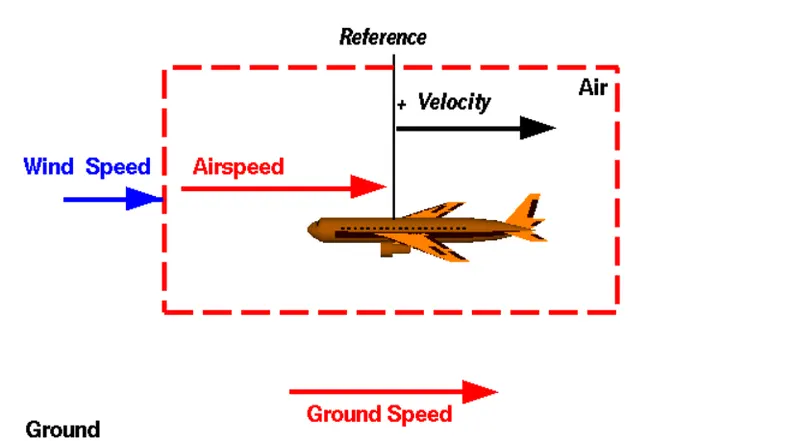
If there is no wind forces acts on the craft then the both aircraft's airspeed and ground speed would be same.
TYPES OF AIR SPEEDS:
Indicated airspeed - It is the type of speed acts on the craft and can be given as difference between total pressure and static pressure acts on the body.
Calibrated airspeed - It is the air speed which identifed as the calibration of errors occurance while indication of airpseed readings.
True airspeed - As the name suggest that the true airspeed, means the actual true speed at which the craft is flying relatively to the air present.
DIFFERENCE BETWEEN GROUND SPEED AND AIR SPEED:
Ground speed is how fast an airplane is traveling with relative to a fixed point on the ground or earth surface. There are seneraios to identify the ground speed on surface where the ground speed is how fast an airplane's or aircraft's shadow would move across the ground. If there's a strong wind pushing an aircraft, that can effect the ground speed.
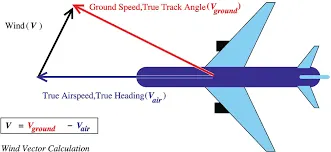
Airspeed is how fast an airplane is really flying strictly under its own power. This power is calculated by subtracting the wind speed from the ground speed. Airspeed doesn't just affect airplanes. It also affects our vehicles on the ground.
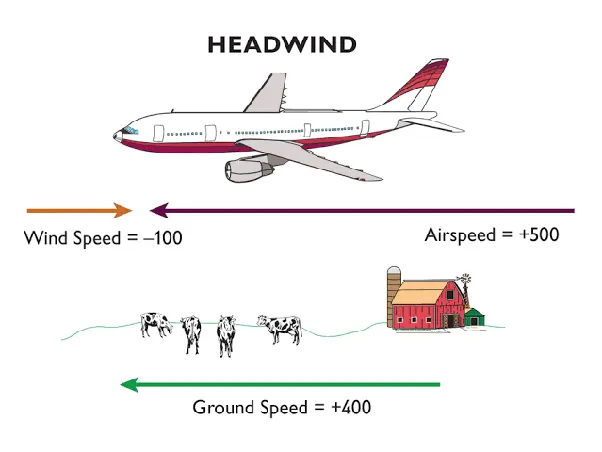
AIRSPEED = GROUND SPEED - WIND SPEED
CONCLUSION:
While considering the aircraft travelling in the air or on the ground, both the ground speed and airspeed are important. While it comes to speed of airplanes, the ground speed is only speed tells the how fast the plane is travelling from start point to destination point.
For better understanding, the difference is that the air is moving. An aircraft with an airspeed of 100mph going the same direction as a flow of air moving 50mph has a ground speed of 150 mph. If the same aircraft makes a 180 degree turn and heads directly into the wind, the airspeed stays at 100mph but the grounspeed drops to 50 mph.
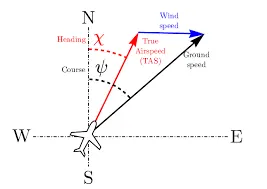
This seneario explains about Air speed is how fast the aircrft is moving thorugh the air and Ground speed is how fast the aircraft is moving over the ground.
Question 3:
Why is it not recommended to use aircraft engine power to move it on the ground at Airport?
DESCRIPTION:
Usually the aircrafts doesnot utilise the engine power to move around the airport. There might be risks involved while doing so.
The dangers which might emerge from motor ground running connect with the potential for loss of control of the airplane or air crafts by those people possessing the pilot. Undesirable outcomes from such static running are primarily connected with those emerging from the accidental development of the airplane during motor running. Harm can happen to the actual airplane, other airplane close by or to airside structures.
TAXIING:
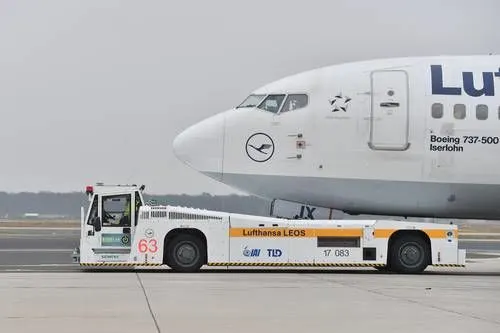
Here comes the factor called "Taxiing" which is defined as mobility of the aircraft over the airport by utilising its own power. The aircraft can also moved by means of "TUGS". The aircrafts or aeroplanes in airports, to park or to place the aircrafts at the respective postions these taxing is used to move from one place to another place in airports. These tugs also helps them to move from one place to another place.
TECHNICAL REASON:
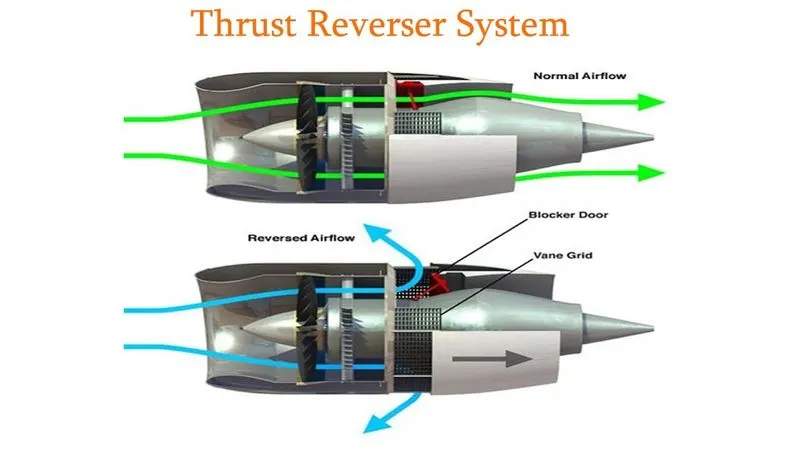
The technical reason for not recommending the aircrafts or aeroplanes to use their engine power to move over the airport, because there are specific reasons for that. Usually the aircraft needs thrust to enable their jet engines and also propellers. There is situation like backing up the reverse thrust generated by "thrust reversers" which are on only some aircrafts which are discussed in above question, which are "BOEING C-17", "LOCKHEED C-130" aircrafts. This procedure is called as "Power back". Most the aircrafts are designed or made for adapting the reverse thrust nor to back up on their own. Due to use of reverse thrust there might be cause of damage in jet blast and other equipment and also creates noise.
So, most aircrafts are pushed back or moved by means of taxing, or by using the tugs which can easily mobile the aircrafts from one place to another.
CONCLUSION:
The aircraft or aeroplanes are not recommended to use their engine power to move over the airport. By means of taxing only they can move over runways. While taxing the drivers make sure that the aircraft is moving slowly because of the risk invlove in wheels of aircrafts damage.
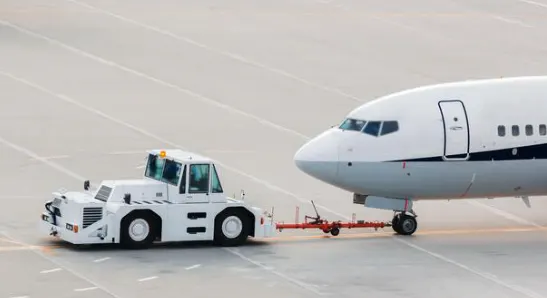
So use of the engine power near airport(terminals) is completely restricted because of the damage and risks involved and can also damage the structual unit of crafts and injury to personnel caused by the jet blast.
Question 4:
How an aircraft is pushed to runway when its ready to take off?
DESCRIPTION:
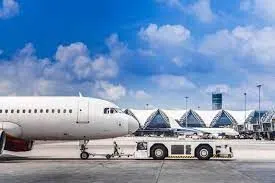
The aircraft cannot move or been pushed to runway to take off by using engine power. The aeroplanes and aircrafts are pushed to runway when the crafts are ready to departure from airports by using the "Taxing" which is discussed earlier. Tugs are the special and low-profile vehicles which enables the planes to pushback and set the planes to runway to take-off. As the pilot can't able to view the proper vision while sitting in their pilot cabin to park the planes in the parking section or to take it to runway of airport, so for mobillity of the planes there are tugs to move them when ever it is required.
WHAT ARE TUGS AND TRACTORS:
In aviation the planes are set right in runway to departure at right time, then the term pushback comes into picture. This pushback is a general procedure where the aircraft is been pushed in a particular direction from parking area or from runway to park the craft. So this pushback are generally happened by "TUGS" or "TRACTORS". Generally these crafts are giant in structure and cannot be moved by man-power. These actions are performed by tractors or tugs. These low-profile vehicles are designed heavy. These tractors can be weigh upto 54 tonnes and pull upto 75000 lbs.
These tractors are identified as two types which are
i) Conventional tugs(towbars) - These Conventional tugs uses tow bar to connect the tug nd the aircrafts to pull back the plane. The tow bar is fixed laterally at the nose landing gear, but may move slightly vertically for height adjustment. At the end that attaches to the tug, the tow bar may pivot freely laterally and vertically. In this manner the tow bar acts as a large lever to rotate the nose landing gear.
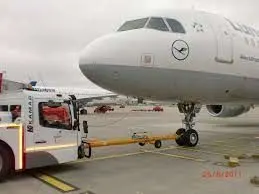
ii) Towbarless tugs - These kind of tugs doesnot use towbars, they are designed to lift up the nose landing gear and lift it off to the ground. TowBarLess(TBL) tug is much shorter and has only a single pivot point instead of one at either end of the towbar.
CONCLUSION:
So the airplanes and crafts over the airport are not meant to mobile over airport using their own engine power. To place the plane over runway to take-off from the airport, the tugs are meant to move them. These tugs will park the planes in right position by lifting up the nose wheel of the crafts as shown below.
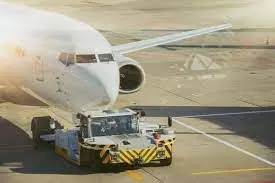
Once the pushback is completed, the towbar is disconnected, and any bypass pin is removed. The ground handler will show the bypass pin to the pilots to make it clear that it has been removed. The pushback is then complete, and the aircraft can taxi forward under its own power. The new emerging tech can adapt these tug technologies by replacing it with electric motors mounted to the plane's landing gear , to save the fuel economy and time and noise also.
Question 5:
Learn about take off power, tyre design, rolling resistance, tyre pressure, brake forces when landing
A. TAKE OFF POWER:
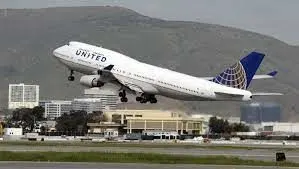
The takeoff power is known as power which is required to takeoff from the runways of airports. When the airplane or aircrafts takes off, the power is provided by the engines, in which aviation fuel is converted into mechanical energy while other propulsion actions take place as well. The mechanical energy provides thrust, and increases the speed of the airplane. In aviation the planes and crafts will leave the runway and uplifted by the pwer of the engine and other propulsion actions by the equipments of them.
Safety measures:
The aircrafts which are vertically uplifted known as 'LIFTOFF'. While take-off of the planes and crafts ensures that the planes are of safe and on healthy height clearance from ground level. Such that the engine thrust is set to take that take-off safely. To make sure the planes take-off safely they must maintain a specific speed.
Fact about power usage while takeoff:
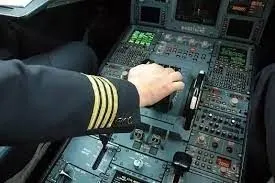
Usually, the pilots do not always use full power while on takeoff because some small crafts usually use full power but when it comes to heavy and huge planes and crafts do not use full power while on takeoff. They set the take off the throttle to achieve safe operation to save fuel as shown below.
B. TYRE DESIGN:
Importance of tyre:
When the aircraft fly in the air there are some most important components like propellers, jet engine, engine,tyres and most important among them is tyre of aircraft. The tyre of the general vehicles are also important for friction role and absorbing the shock conditionally. In the same way the tyres of aircrafts helps to absorb the shock of landing and provide cushioning. It also provides the necessary traction for braking and stopping of an aircraft.
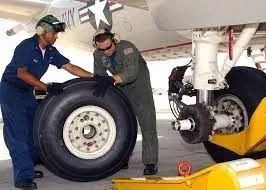
They are designed such way that to withstand the shocks, heavy loads while landing, takeoff, and taxing as well. These tyres of crafts helps the aircrafts help to withstand the weight of planes and ensure the weight is uniformly distributed.
Technical consideration of the tyre:
Ply Rating – Ply Rating is used to identify the maximum recommended load rating and inflation pressure for a specified tyre.
Load Rating – Load rating is the maximum permissible load at a specified inflation pressure for a specified tyre.
Retreading – Retreading is method of restoring a worn tyre by renewing the tread area for a specified tyre.
Skid Depth – Skid depth is the distance between the tread surface and the deepest groove as measured with the mould for a specified tyre.
Design of tyre:
Casing plies are used to form the tire of aircraft. Tire designing are put through rigorous tests that simulate cycles of landings, take-offs, and taxi operations. It is only after the tires pass all mandatory tests and meet the requirements of the aircraft manufacturer then after they are put into production.
For Boeing 737 aircrafts tires measures are "27x7.75 R15" which means they are 27 inches in diameter, 7.75 inches wide and of a 15-inch rim. This is much smaller than a semi-truck tire, which can be over 40 inches in diameter and almost 20 inches wide.
C. ROLLING RESISTANCE:
The frictional force that resists the motion of a crafts rolling on a earth surface usually on runways is called the rolling resistance or the rolling friction. This rolling resisitance can cause the aircrafts slows down. The more rolling resistance, the more power it takes to propel aircraft. Generally between 3 and 11 percent of the gas used in passenger vehicles goes to overcoming this force, so reducing it means saving on fuel and same it implies in aircrafts as well.
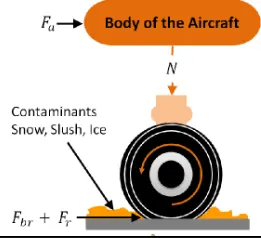
The higher the rolling resistance is, the more energy to overcome it is needed. Hence a considerable impact of tyre rolling resistance on fuel consumption. THe aviation prices in India are very high and shown below.
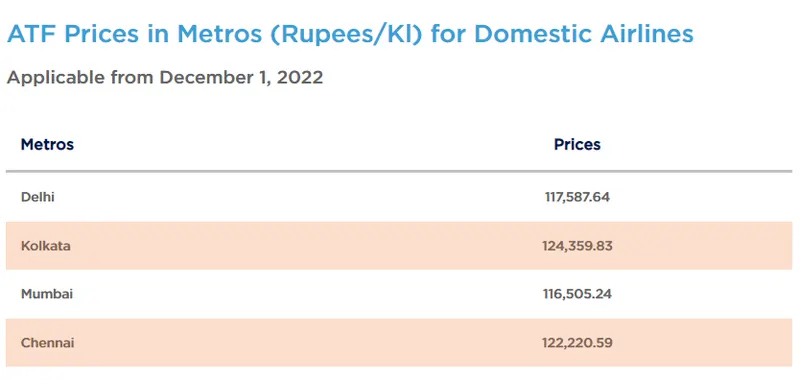
So based upon the prices of fuel used for aviation in India are high, saving of fuel consumption is also important.
D. TYRE PRESSURE:
Tire pressure
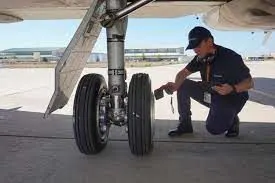
Airplane tires are typically expanded with nitrogen to limit development and compression from outrageous changes in surrounding temperature and strain experienced during flying. Dry nitrogen extends at similar rate as other dry environmental gases and ordinary air is around 80% nitrogen, yet normal packed air sources might contain dampness, which expands the development rate with temperature. Aircrafts tyres are regulary maintained due to its important role plays while flying.
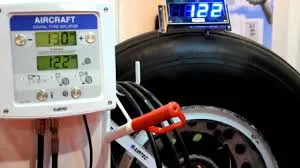
Plane tire are swelled to high tensions (numerous more than 200 psi). Likewise, the tension in the jug or tire-overhauling truck can be just about as high as 3,000 psi. Subsequently, when the high-pressure bottle is associated straightforwardly to the wheel without a controller, the wheel is unexpectedly exposed to the high tension.
Gas used in tires of aircrafts
The gas used in aircrafts tires is nitrogen in order to minimise expansion and contraction during changes in temperature and pressure applied to it
Why the tire pressure is important of a airplane
In avaition, the tire is one piece of a get together which can function as planned when the parts are utilized as characterized by the aircraft and other components producers. Under some conditions blowing up the tire or permitting the tire to work when it is under-swelled will prevent the parts cooperating as planned.
E. BRAKE FORCES WHILE LANDING:
In aviation the airplanes and aircrafts the brake forces are invovled to stop the plane. IN that view the wing spoliers are used by many airplanes to brake when landing. Pilots can raise the spoilers to decelerate the airplane as it approaches the runway. While adding to wing spoilers there are other brakes called disc brakes. Airplane disc brakes are similar to the braking system in automobiles. They consist of a pair of calipers that, when engaged, squeeze pads against the rotors of an airplane’s landing gear. In many jet airplanes the use reverse thrust to assist with braking during landings. The pilots may use the reverse thrust feature in which the Reverse thrust changes the direction of the engines’ thrust, thus to brake the plane while landings.
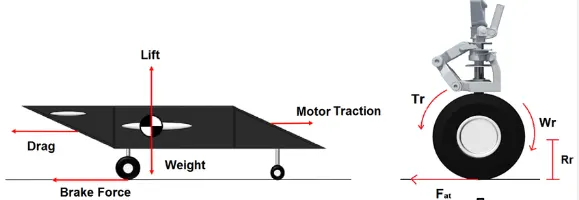
The brake system of some crafts is controlled by the pilots by pressing the tops of the rudder pedals under their feet, proportinally the rate of braking which they require. This sends an electrical pulse to the Left and Right Brake System Control Units, thus the control of brakes are happened.
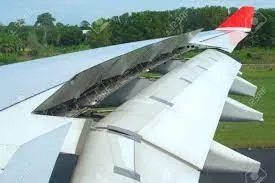
Outrageous forces acts on aircraft:
There are four forces which acts on the aircrafts in any orientation they fly which are
i) Thrust
ii) Drag force
iii) Lift force
iv) Weight of the body
Part B
Question 6:
A. With necessary assumptions, calculate the force and power required to push / pull an aircraft by a towing vehicle.
Answer:
In this study we need to calculate the force and power required to push and pull an aircraft over the airport by means of a towing vehicle. If any data is missing it can be assumpted. Before going to solve the problem and find force and power, giving description of some of important things is necessary.
DESCRIPTION
Towing vehicle:
The vehicle which is usually used in aviation for forward movement of an aircraft when aircrafts engine's are off, using the power of a specialised ground vehicle attached to supporting the nose landing gear of plane and drags them for moving to runway for take-off, parking position etc over the airport.
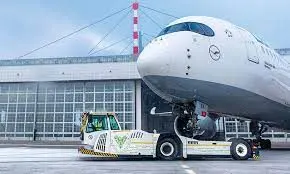
Assumed Aircraft:
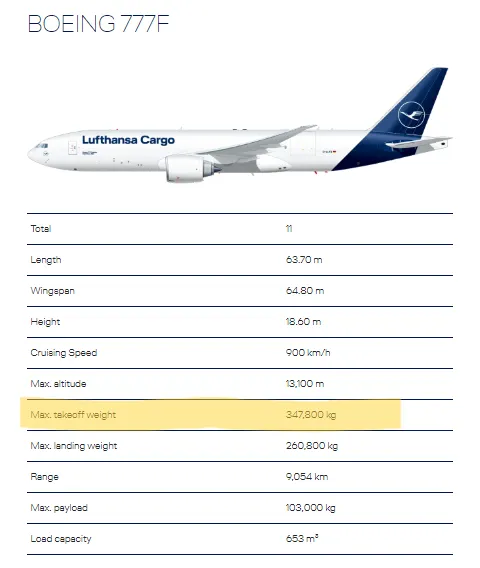
Here I had assumed an aircraft of LUFTHANSA airline which is "Boeing 777F" . This Boeing 777F is been part of Lufthansa airlines company for cargo purposes.

This Boeing 777 F is a cargo plane which is used for transportation of goods. This aircraft can withstand upto 3,47,000 kgs when it comes to takeoff weight and it has 1,00,000 kgs of payload since it build for cargo the specs of the aircraft is suits subsequently.
ASSUMPTIONS AND KNOWN DATA
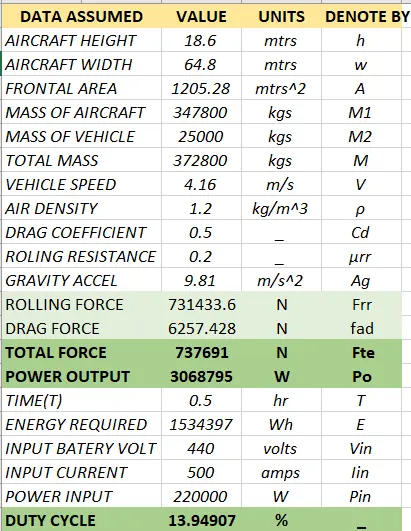
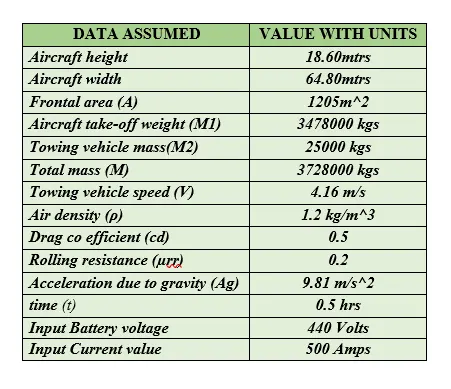
Aircraft height = 18.60 mtrs
Aircraft width includes wingspan = 64.80 mtrs
Aircraft Frontal area (A) = height x width = 18.60 x 64.80 = 1205 m^2
Aircraft takeoff weight is assumed as gross weight (M1) = 3,47,800 kgs
Towing vehicle mass (M2) = 25,000 kgs
Total mass (M) = M1+M2 = 3,47,800 kgs + 25,000 kgs = 3,72,800 kgs
Towing vehicle speed (V) = 15 km/h = 4.16 m/s
Air density (ρ) = 1.2 kg/m^3
Drag coefficient (Cd) = 0.5
Rolling resistance (µrr) = 0.2
Acceleration due to gravity (Ag) = 9.81 m/s^2
FINDING FORCE AND POWER REQUIRED BY VEHICLE
we know that Total force is sum of Rolling resistance force and Drag force, which is described below
Total force (fte) = Rolling resistance force (frr) + Drag force (fad)
Rolling resistance force Frr = µrr x M x Ag
where
µrr = Rolling resistance
M = mass of towing vehicle and aircraft
Ag = Acceleration due to gravity
Frr = 0.2 x 3,72,800 kgs x 9.81 m/s^2
Frr = 731433.6 N
Drag force fad = 0.5 x ρ x V^2 x Cd x A
where
ρ = Air density
V = Speed of vehicle
Cd = drag coefficient
A = Frontal area
here the V is the speed of the vehicle is the velocity of the towing vehicle and here the speed of the aircraft is not consider because the aircraft's engine is off and only move by help of towing vehicle.
Fad = 0.5 x 1.2 x 4.16^2 x 0.5 x 1205
Fad = 6255.97 N
Total force (fte) = Rolling resistance force (frr) + Drag force (fad)
Fte = Frr + Fad
Fte = 731433.6 N + 6255.97 N
Fte = 737689.57 N
Fte = 737.68 K N
we know that power required by towing vehicle to drag and move the aircrafts is been in following
Power required = Total force x Velocity of the towing vehicle
P = 737689.57 N x 4.16
P = 3068788.61 W
P = 3068.78 KW
Conclusion:
Hence the conclusion is that the power required and force required by the towing vehicle is concluded and obtained. Here to obtain the speed of the towing vehicle is taken as 15 km/h. The velocity of the towing vehicle is considered and the speed of the aircraft is not consider because the aircraft's engine is off and only move by help of towing vehicle.
Power required by the towing vehicle to move the aircraft = 3068.78 KW
Force required by the towing vehicle to move the aircraft = 737.68 K N
B. Develop the model for the calculated force and power using Simulink.
Solution:
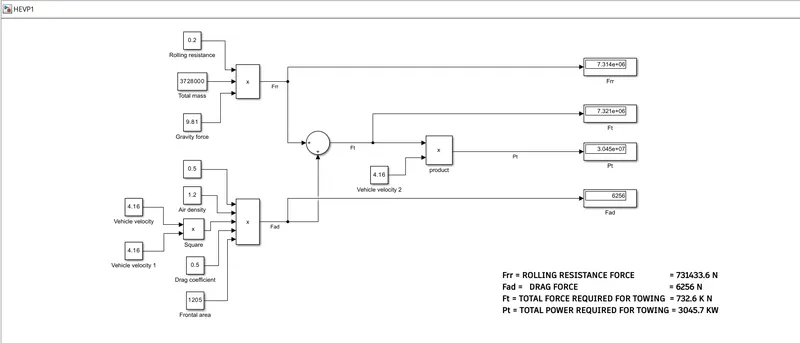
STEPS TO MODEL THE CALCULATION OF FORCE AND POWER REQUIRED BY THE TOWING VEHICLE USING SIMULINK:
STEP 1 ---> First open MATLAB software of any version. After opening click on simulink icon  on top tool bar.
STEP 2 ---> After opening simulink blank model. Double-click on the empty space anywhere over the blank space model to open the library.

STEP 3 ---> After entering the required blocks to be connected in the Simulink model. Organize all the added blocks in a manner.
STEP 4 ---> Now connect the constant blocks and multiply them to obtain Frr using the product block and the same follows with Fad block
STEP 5 ---> After obtaining Frr and Fad values add them using Add block, finally, the total force is obtained.
STEP 6 ---> Now this force block(Ft) is used to obtain the total power block. For that we need a velocity block to get product with it.
STEP 7 ---> To obtain Pt block we need to product both force block and velocity.
STEP 8 ---> After completion of connecting the blocks, we need to observe the theoretical results of model. To view the results we need display block which displays the theoretical results of model
STEP 9 ---> After connecting the display block over the model. We need to save the model  and
and
run the model  and at last we need to observe the theoretical results of model in display blocks.
Simulink model for calculating force and power required for towing vehicle:
Question 7:
A. Design an electric powertrain with type of motor, it’s power rating, and energy requirement to fulfill aircraft towing application in Simulink. Estimate the duty cycle range to control the aircraft speed from zero to highest. Make all required assumptions. Prepare a table of assumed parameters. Draw a block diagram of powertrain.
Solution:
Electric powertrain: It is also called as drive train which is power generator of any automotive. Basically the powertrain is all about the power generation and transmission of that power over the vehicle. It has most components which are discussed in following
i) Engine (Battery in EVs) - Which produces energy to be further transmitted
ii) Transmission - Transmission of the energy generated to the drive shaft and make the wheel to move
iii) Drive shaft - It is the drive shaft which connects wheel of vehicle and propulsion of energy
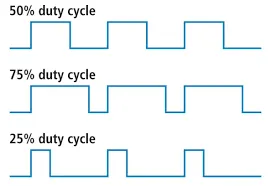
Duty cycle: The duty cycle is defined as the power cycle in which there is period of one signal and continue to prolong with respective to time. A period is the time it takes for a signal to complete an on-and-off signal. Here I had considered the duty cycle as ratio of power input to power output.
Duty cycle = Power input/Power output
TO FIND ENERGY REQUIRED BY THE VEHICLE AND POWER RATING WHILE ESTIMATING DUTY CYCLE
In this study we find the energy require by the vehicle and power rarting parameters while estimating the duty cycle ratio to control the aircrafts and also ensuring the highest and lowest range of that duty cycle as well. As the this particular study is the extansion of the problem number 6, so I had consider some data from problem 6 itself.
Data assumed from problem 6 and other assumed data :-
Total power (P) = 3068.78 KW
Velocity of the towing vehicle (V) = 15km/h
time (t) = 30mins = (1800/3600) = 0.5 hr
Energy required for the vehicle
Energy required by the vehicle (E) = P x t
where t = time taken for towing = 0.5 hr
E = 3068.78 x 0.5
E = 1534.39 KWh
In this case, we want to find the input power to drive the duty cycle of the towing vehicle. The output power is considered from the study-6 that values are based upon certain assumptions and calculations from the towing vehicle model as Douglas Tugmaster type TBL- 280 Mk4 from the website.
we know the formula for duty cycle which is in following
Duty cycle = Power output / Power input
Power output = 3068.78 KW
Power input = Voltage * Current
Now its time to find the power input, for that we need to assume the power train in which the following data taken
Input Battery voltage supply = 440 Volts
Input Current value = 500 Amps
Now substitute the voltage and current value in the power formula to get input power data,
Power input = Voltage * Current
Power Input = 440 * 500 = 220000 W = 220 KW
Power input = 220 KW
Therefore we obtained both power input and power output now substitutes these values in duty cycle,
Duty cycle = Power output/Power input
Duty cycle = 3068.78 KW / 220 KW = 13.9 ≈ 14%
Duty cycle = 14%
Estimate the duty cycle range to control the aircraft speed from zero to highest?
Zero range of duty cycle = 0%
Highest range of duty cycle = 14%
Conclusion:
Energy required for the vehicle (E) = 1534.39 KWh
Power output (P) = 3068.78 KW
Duty cycle = 14%
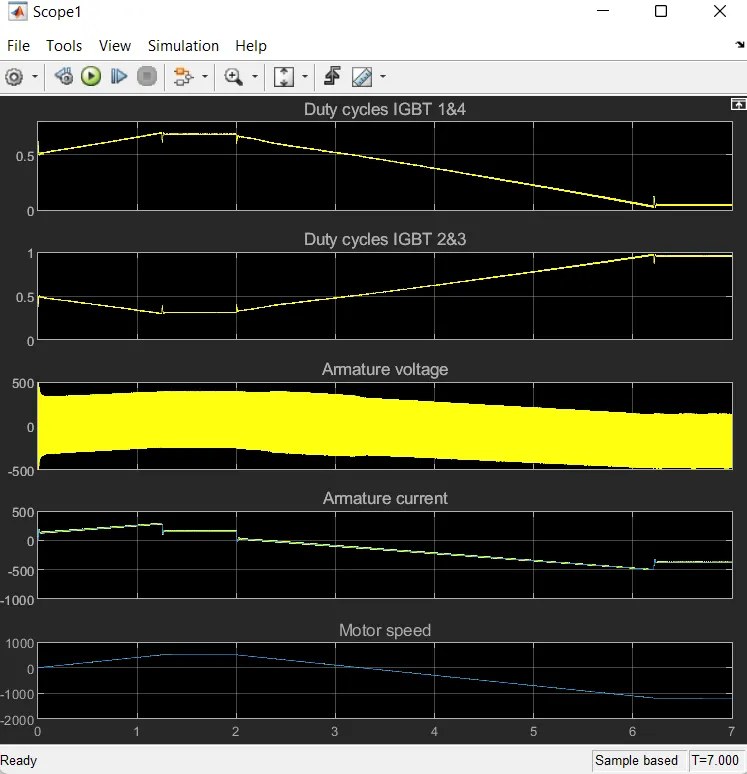
Simulink model for aircraft towing vehicle application using DC7 block set of MATLAB simulink:
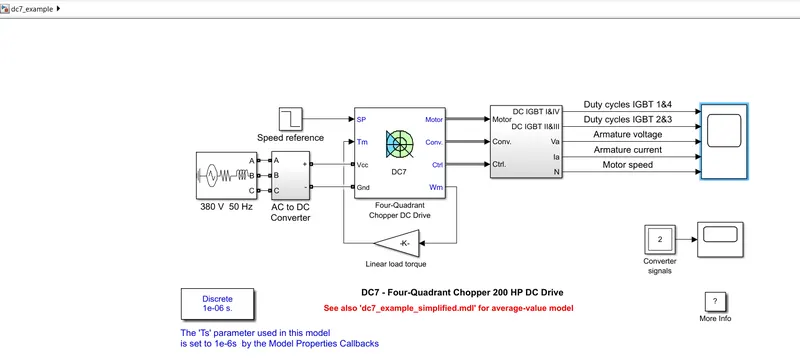
This model of Simulink model explains about DC7 four-quadrant chopper DC drive. This model can be useful for a powertrain for the suitable motor used. This model can be used for specific motor and can be utilised for aircraft towing vehicle. The speed regulator (reference) outputs the armature current reference used by the current controller to obtain the electromagnetic torque needed to reach the desired speed.
The speed reference can be made change rate following acceleration and deceleration to control the motor speed. To limit the amplitude of the current oscillations, an inductance can be placed with the armature circuit.
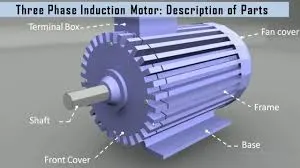
The suitable motor would be an Induction motor of 3-phase voltage motor.
Prepare a table of assumed parameters
Block diagram of powertrain
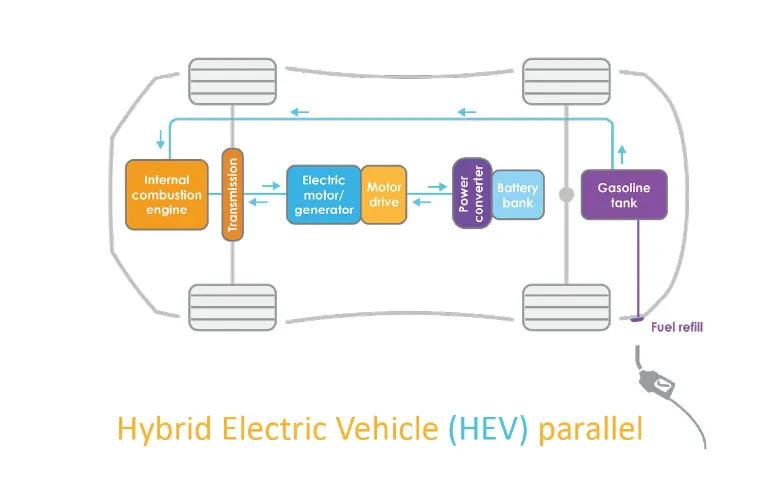
This is the power train of HEV vehicle which are hybrid electric vehicles where it consists of internal combustion engines, motor drive, battery pack, etc components which whole makes power train system.
i) Internal combustion Engine - Which produces energy to be further transmitted
ii) Transmission - Transmission of the energy generated to the drive shaft and make the wheel to move
iii) Electric motor - this is the electrical machine which is used in EVs to mobile and it the system which generates power by using electricity
iv) Motor drive - This is main component for motor in the vehicle. The main duty of this drive is to control the motor and regulate it.
v) Power converter - It is the converter used for electric motor to use electricity and generates power
vi) Battery pack - It is the source of electricity in the vehicle. This power is stored in DC signal and further converted into AC signal use converter only
vii) Gasoline tank - It is the source of mechanical power in the vehicle. It supply the fuel to the engine to generate power
iii) Drive shaft - It is the drive shaft which connects wheel of vehicle and propulsion of energy
B. Also, Design the parameters in excel sheet.
Here i had assumed a 3 phase induction motor for towing the aircraft in order to design a towing electric vehicle. There are specific reaons for selecting the Induction motor because of following reasons
- It requires less maintenance.
- It has high efficiency and good power factor.
- It is less expensive.
- It has self-starting torque.
MOTOR DESIGN PARAMETERS IN ORDER TO TOW THE AIRCRAFT:
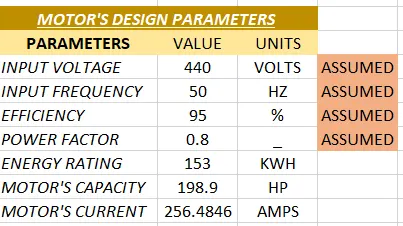
TOWING VEHICLE DESIGN PARAMETERS FOR TOWING THE AIRCRAFT: