Project-1: Powertrain for aircraft in runways
PART (A)-
1-The aircraft gross weight (also known as the all-up weight and abbreviated AUW) is the total aircraft weight at any moment during the flight or ground operation.
An aircraft's gross weight will decrease during a flight due to fuel and oil consumption. An aircraft's gross weight may also vary during a flight due to payload dropping or in-flight refuelling.
At the moment of releasing its brakes, the gross weight of an aircraft is equal to its takeoff weight. During flight, an aircraft's gross weight is referred to as the en-route weight or in-flight weight.
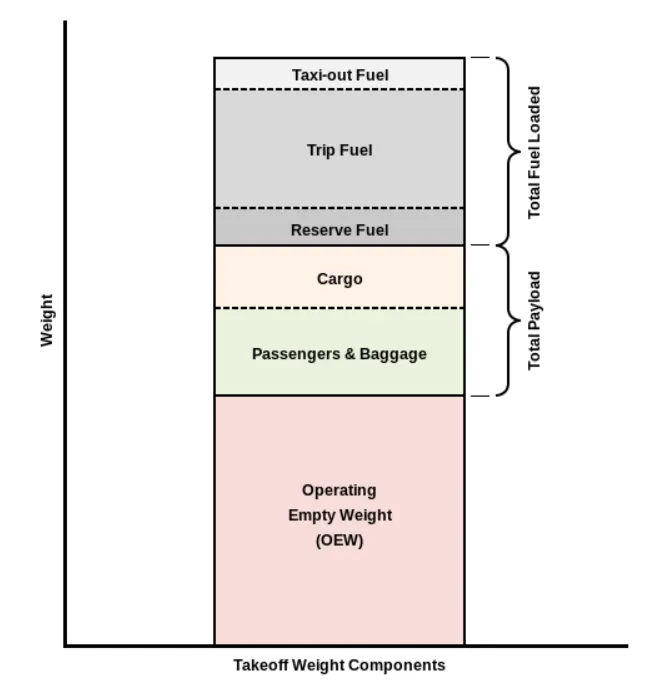
The following image depicts takeoff weight components.
MTOW-Maximum Take off weight
MLW-Maximum Landing Weight
|
Type |
MTOW [kg] |
MLW [tons] |
|
640,000 |
591.7 |
|
|
589,670 |
||
|
575,000 |
394 |
|
|
447,700 |
346.091 |
|
|
443,613 |
306.175 |
|
|
412,770 |
295.742 |
|
|
Antonov An-124-100M |
405,060 |
330 |
|
396,900 |
295.742 |
|
|
381,000 |
288.417 |
|
|
377,840 |
285.700 |
|
|
377,840 |
260.320 |
|
|
371,950 |
240 |
|
|
367,400 |
256 |
|
|
347,800 |
260.816 |
|
|
351,800 |
251.29 |
|
|
347,450 |
223.168 |
|
|
340,200 |
265.300 |
|
|
308,000 |
233.5 |
|
|
299,370 |
237.683 |
|
|
297,550 |
213.00 |
|
|
276,700 |
190 |
|
|
273,300 |
185 |
|
|
270,000 |
175 |
|
|
270,000 |
195.04 |
|
|
256,280 |
183 |
|
|
254,000 |
192.777 |
|
|
254,000 |
201.849 |
|
|
253,500 |
181 |
|
|
250,000 |
175 |
|
|
242,000 |
185 |
|
|
242,000 |
180 |
|
|
231,300 |
166.92 |
|
|
228,000 |
172.365 |
|
|
211,400 |
||
|
208,000 |
175 |
|
|
204,000 |
158.758 |
|
|
192,000 |
140 |
|
|
187,000 |
136.08 |
|
|
185,000 |
111.1 |
|
|
163,000 |
138 |
|
|
159,000 |
136.078 |
|
|
157,000 |
124 |
|
|
152,000 |
151.9 |
|
|
151,000 |
97.5 |
|
|
151,000 |
112.1 |
|
|
147,000 |
||
|
142,000 |
123 |
|
|
141,000 |
122 |
|
|
140,000 |
||
|
125,000 |
||
|
124,000 |
101.6 |
|
|
117,000 |
86.3 |
|
|
116,000 |
89.9 |
|
|
106,000 |
79.5 |
|
|
104,000 |
79.5 |
|
|
104,000 |
80 |
|
|
104,000 |
87.5 |
|
|
87,500 |
||
|
85,000 |
66.36 |
|
|
85,000 |
71.35 |
|
|
84,000 |
70.1 |
|
|
Airbus A321-100 |
83,000 |
77.8 |
|
79,000 |
65.32 |
|
|
78,000 |
68.1 |
|
|
73,000 |
63.28 |
|
|
72,500 |
62.4 |
|
|
72,500 |
62.4 |
|
|
71,000 |
64.41 |
|
|
70,700 |
||
|
70,000 |
58.06 |
|
|
Airbus A320-100 |
68,000 |
66 |
|
68,000 |
54.9 |
|
|
68,000 |
||
|
67,000 |
||
|
66,000 |
54.66 |
|
|
65,000 |
57.61 |
|
|
65,000 |
||
|
64,000 |
62.5 |
|
|
63,000 |
51.7 |
|
|
60,000 |
49.9 |
|
|
59,000 |
50.80 |
|
|
59,000 |
57.5 |
|
|
55,000 |
47.174 |
|
|
55,000 |
||
|
54,000 |
||
|
50,000 |
46.265 |
|
|
50,000 |
||
|
48,600 |
||
|
48,500 |
||
|
48,000 |
43 |
|
|
46,000 |
||
|
46,000 |
39.95 |
|
|
44,000 |
||
|
42,000 |
36.74 |
|
|
39,000 |
||
|
37,500 |
32.8 |
|
|
36,500 |
33.345 |
|
|
36,000 |
32.8 |
|
|
33,000 |
30.39 |
|
|
33,000 |
||
|
30,400 |
||
|
28,000 |
28.01 |
|
|
23,000 |
21.319 |
|
|
22,800 |
22.35 |
|
|
22,800 |
21.5 |
|
|
22,000 |
19.3 |
|
|
18,600 |
18.3 |
|
|
13,150 |
12.930 |
|
|
11,500 |
11.25 |
|
|
10,890 |
10.570 |
|
|
9,752 |
8.709 |
|
|
8,300 |
7.665 |
|
|
8,150 |
7.65 |
|
|
7,765 |
7.605 |
|
|
7,761 |
7.103 |
|
|
7,000 |
||
|
4,800 |
4.43 |
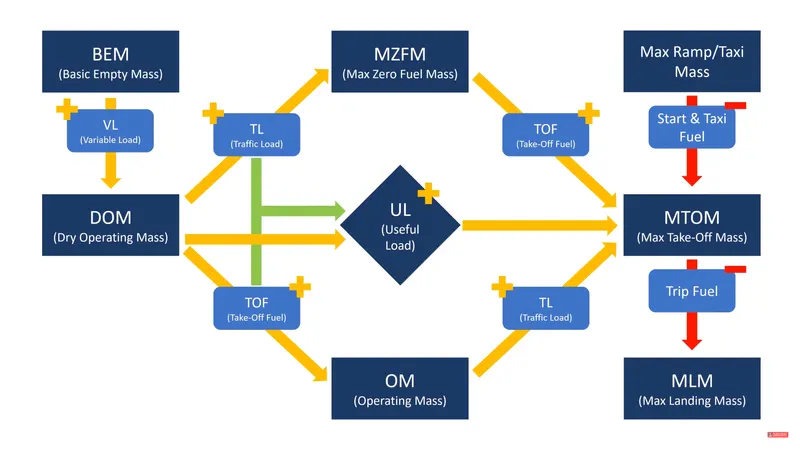
Maximum taxi weight (MTW)
The maximum taxi weight (MTW) (also known as the Maximum Ramp Weight (MRW) is the maximum weight authorized for manoeuvring (taxiing or towing) an aircraft on the ground as limited by aircraft strength and airworthiness requirements. It includes the weight of taxi and run-up fuel for the engines and the APU (Auxillary Power Unit).
It is greater than the maximum takeoff weight due to the fuel that will be burned during the taxi and runup operations.
The difference between the maximum taxi/ramp weight and the maximum take-off weight (maximum taxi fuel allowance) depends on the size of the aircraft, the number of engines, APU operation, and engines/APU fuel consumption, and is typically assumed for 10 to 15 minutes allowance of taxi and run-up operations.
Maximum takeoff weight (MTOW)
The maximum takeoff weight (also known as the maximum brake-release weight) is the maximum weight authorised at brake release for takeoff, or at the start of the takeoff roll.
The maximum takeoff weight is always less than the maximum taxi/ramp weight to allow for fuel burned during taxi by the engines and the APU.
In operation, the maximum weight for takeoff may be limited to values less than the maximum takeoff weight due to aircraft performance, environmental conditions, airfield characteristics (takeoff field length, altitude), maximum tire speed and brake energy, obstacle clearances, and/or en route and landing weight requirements.
Maximum landing weight (MLW)
The maximum weight authorised for normal landing of an aircraft.The MLW must not exceed the MTOW.
The operation landing weight may be limited to a weight lower than the Maximum Landing Weight by the most restrictive of the following requirements:
- Aircraft performance requirements for a given altitude and temperature:landing field length requirements, approach and landing climb requirements
- Noise requirements
If the flight has been of short duration, fuel may have to be jettisoned to reduce the landing weight.
Overweight landings require a structural inspection or evaluation of the touch-down loads before the next aircraft operation.
Maximum zero-fuel weight (MZFW)
The maximum permissible weight of the aircraft less all usable fuel and other specified usable agents (engine injection fluid, and other consumable propulsion agents). It is the maximum weight permitted before usable fuel and other specified usable fluids are loaded in specified sections of the airplane.
2-There is a difference between ground speed and air speed to understand this we should take in to account wind speed too.
Wind Speed
For a reference point picked on the ground, the air moves relative to the reference point at the wind speed. Notice that the wind speed is a vector quantity and has both a magnitude and a direction. Direction is important. A 20 mph wind from the west is different from a 20 mph wind from the east. The wind has components in all three primary directions (north-south, east-west, and up-down). In this figure, we are considering only velocities along the aircraft's flight path. A positive velocity is defined to be in the direction of the aircraft's motion. We are neglecting cross winds, which occur perpendicular to the flight path but parallel to the ground, and updrafts and downdrafts, which occur perpendicular to the ground.
Ground Speed
For a reference point picked on the ground, the aircraft moves relative to the reference point at the ground speed. Ground speed is also a vector quantity so a comparison of the ground speed to the wind speed must be done according to rules for vector comparisons.
Airspeed
The important quantity in the generation of lift is the relative velocity between the object and the air, which is called the airspeed. Airspeed cannot be directly measured from a ground position, but must be computed from the ground speed and the wind speed. Airspeed is the vector difference between the ground speed and the wind speed.
Airspeed = Ground Speed - Wind Speed
On a perfectly still day, the airspeed is equal to the ground speed. But if the wind is blowing in the same direction that the aircraft is moving, the airspeed will be less than the ground speed.
For example taking wind speed as 20 km/hr and runway is east-west runway the wind blowing towards west and the flight runs at 80 km/hr the wind speed acting in the west and the flight takes off east then the
Airspeed=Groundspeed(80)- Wind Speed(-20) =100 km/hr
If the planes runs towards west along the wind blowing direction then
the Airspeed=Groundspeed(80) - Wind Speed(20)=60km/hr
Hence there is a difference between ground speed and air speed.
3-The risks which may arise from engine ground running relate to the potential for loss of control of the aircraft by those persons occupying the pilot seats in the flight deck. Unwanted consequences from such static running are mainly related to those arising from the unintended movement of the aircraft during engine running - effectively a loss of control - especially during high power engine running. Damage can occur to the aircraft itself, other aircraft nearby or to airside structures. In addition, there is a risk of injury to ground support personnel who may be in relatively close proximity to the aircraft.
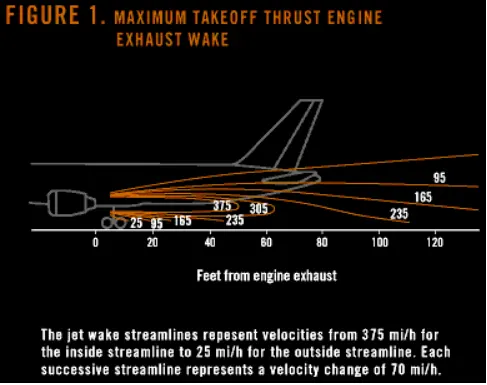
When modern jet engines are operated at rated thrust levels, the exhaust wake can exceed 375 mi/h (325 kn or 603 km/h) immediately aft of the engine exhaust nozzle. This exhaust flow field extends aft in a rapidly expanding cone, with portions of the flow field contacting and extending aft along the pavement surface (fig. 1). Exhaust velocity components are attenuated with increasing distance from the engine exhaust nozzle. However, an airflow of 300 mi/h (260 kn or 483 km/h) can still be present at the empennage, and significant people and equipment hazards will persist hundreds of feet beyond this area. At full power, the exhaust wake speed can typically be 150 mi/h (130 kn or 240 km/h) at 200 ft (61 m) beyond the airplane and 50 to 100 mi/h (43 to 88 kn or 80 to 161 km/h) well beyond this point.
The extensive noise arises from the engine power also dangerous for humans and other living things around the vicinity.
Hence for the above reasons it is not recommended to use engine power to move on the ground.
4-In aviation, pushback is an airport procedure during which an aircraftis pushed backwards away from an airport gate by external power. Pushbacks are carried out by special, low-profile vehicles called pushback tractors or tugs.
Although many aircraft are capable of moving themselves backwards on the ground using reverese thrust (a procedure referred to as a powerback), the resulting jetblast or propwash might cause damage to the terminal building or equipment. Engines close to the ground may also blow sand and debris forward and then suck them into the engine, causing damage to the engine. A pushback is therefore the preferred method to move the aircraft away from the gate.
Pushbacks at busy aerodromes are usually subject to ground control clearance to facilitate ground movement on taxiways. Once clearance is obtained, the pilot will communicate with the tractor driver (or a ground handler walking alongside the aircraft in some cases) to start the pushback. To communicate, a headset may be connected near the nose gear.
Since the pilots cannot see what is behind the aircraft, steering is done by the pushback tractor driver and not by the pilots. Depending on the aircraft type and airline procedure, a bypass pin may be temporarily installed into the nose gear to disconnect it from the aircraft's normal steering mechanism.
Once the pushback is completed, the towbar is disconnected, and any bypass pin removed. The ground handler will show the bypass pin to the pilots to make it clear that it has been removed. The pushback is then complete, and the aircraft can taxi forward under its own power.
5-Take-Off Power:
For light aircraft, usually full power is used during takeoff. Large transport category (airliner) aircraft may use a reduced power for takeoff, where less than full power is applied in order to prolong engine life, reduce maintenance costs and reduce noise emissions. In some emergency cases, the power used can then be increased to increase the aircraft's performance. Before takeoff, the engines, particularly piston engines, are routinely run up at high power to check for engine-related problems. The aircraft is permitted to accelerate to rotation speed (often referred to as Vr). The term rotation is used because the aircraft pivots around the axis of its main landing gear while still on the ground, usually because of gentle manipulation of the flight controls to make or facilitate this change in aircraft attitude (once proper air displacement occurs under / over the wings, an aircraft will lift off on its own; controls are to ease that in).
The nose is raised to a nominal 5°–15° nose up pitch attitude to increase lift from the wings and effect liftoff. For most aircraft, attempting a takeoff without a pitch-up would require cruise speeds while still on the runway.
Takeoff performance can be predicted by using a simple measure of Acceleration of the aircraft anong the runway based on force equilibrium.
The force involved will be
T- Thrust of propulsion system pushing aircraft along runway
D- Areodynamic Drag of vehicle resisting the aircraft motion.
F- Rolling resistance friction due to the contact of wheels of skids on the ground.
During take –off run the imbalance in these forces will produce an acceleration along the runway
DV/dt = (T-D-F)/m
Where dV/dt is the acceleration along the runway and m is the mass of the vehicle.
Tyre Design:
Based on the type of plies used the tyres can be:
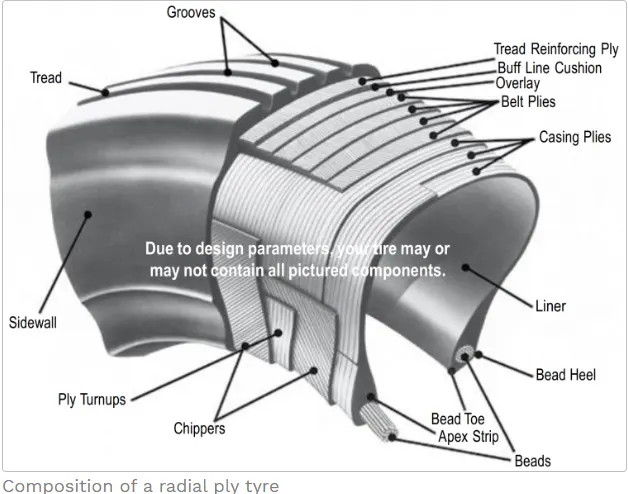
Radial ply tires - these tyres feature a flexible casing which is constructed of rubber-coated ply cords which extend around the beads and are substantially at 90° to the centerline of the tread. The casing is stabilized by an essentially inextensible circumferential belt.
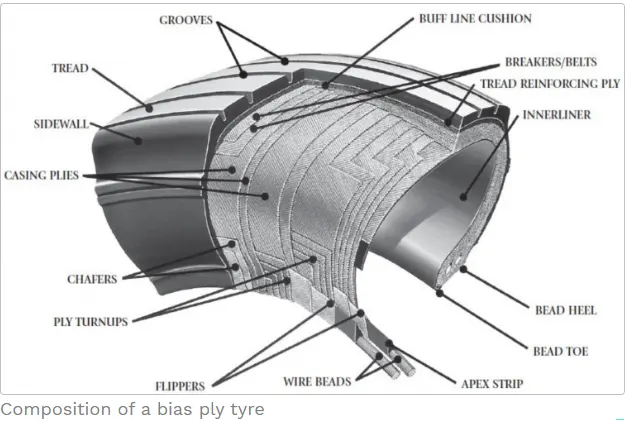
Bias ply tires - these tyres feature a casing which is constructed of alternate layers of rubber-coated ply cords which extend around the beads and are at alternate angles substantially less than 90° to the center line of the tread.
Based on the method for containing the inflation gas the tyres can be:
- Tube-type tyres - these require tubes for inflation retention.
- Tubeless tyres - these do not require tubes. They are constructed with an innerliner (integral rubber lining that is engineered to prevent the diffusion of the inflation gas into the casing.).
Rolling Resistance:
The resistance offered by the tyres against motion of vehicle/aircraft is called as rolling resistance, the rolling resistance is produced during take off/landing in the runway.
Tyre Pressure:
Aircraft tires are usually inflated with nitrogen to minimize expansion and contraction from extreme changes in ambient temperature and pressure experienced during flight. Dry nitrogen expands at the same rate as other dry atmospheric gases (normal air is about 80% nitrogen), but common compressed air sources may contain moisture, which increases the expansion rate with temperature.
Tests of airliner aircraft tires have shown that they are able to sustain pressures of maximum 800 psi (55 bar; 5,500 kPa) before bursting. During the tests the tires have to be filled with water, to prevent the test room being blown apart by the energy that would be released by a gas when the tire bursts.
The main landing gear on the Concorde was typically inflated to 232 psi (16.0 bar), whilst its tail bumper gear tires were as high as 294 psi (20.3 bar). The high pressure and weight load on the Concorde tyres were a significant factor in the loss of Air France flight 4590
Brakes Forces When Landing:
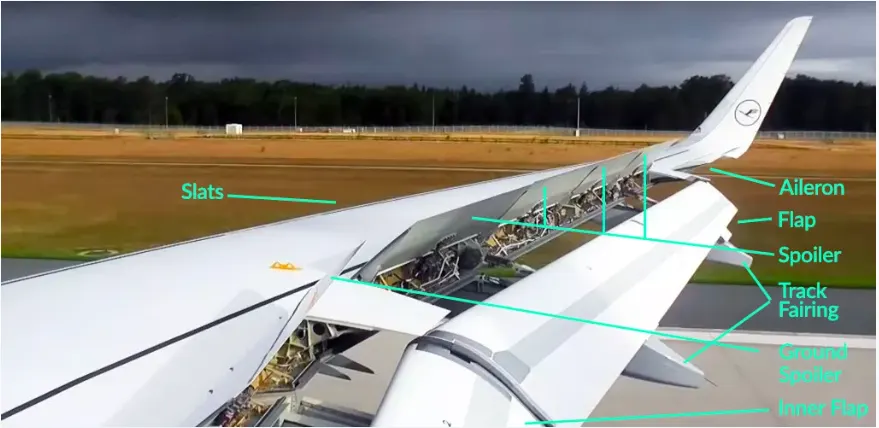
In general, when the wheels touch the ground, a set of spoilers raise up quickly, which kills the lift provided by the wings. (There are two sets seen in the image below: ground spoilers that only deploy on landing, and spoilers that are used in flight as speed brakes as well as on landing.) While the spoilers provide some drag, their primary purpose is to stop the plane from actually flying, putting all of the weight on the landing gear and in turn making the brakes that much more effective.
Aircraft have highly-engineered, multi-disc brakes made of a carbon-steel material. Manufacturers include Honeywell and Goodrich, part of Collins Aerospace. In general, the brakes are composed of discs that rotate with the wheel and separate discs that are fixed. When pressure is applied—and below you see pressure applied from the right fixed disc on all of the discs—the entire assembly compresses to create the braking action. Carbon brakes are standard today; they cool faster than steel brakes (their predecessor) and can weigh up to 700 pounds less. That represents a significant weight saving for airlines.
Auto Brakes:
Wheel brakes are usually selected to engage automatically after landing. These are called “autobrakes”.that all airliners have several levels of autobrake “severity”. The crew will decide which is the most appropriate to use for every landing depending upon factors like the length of runway, if it is wet or dry, or if the pilots want to exit the runway at a particular point. “For a short wet runway you might select autobrake 3, or MED on the Airbus. For a long dry runway you might select autobrake 1 or LOW on the Airbus".
PART(B)
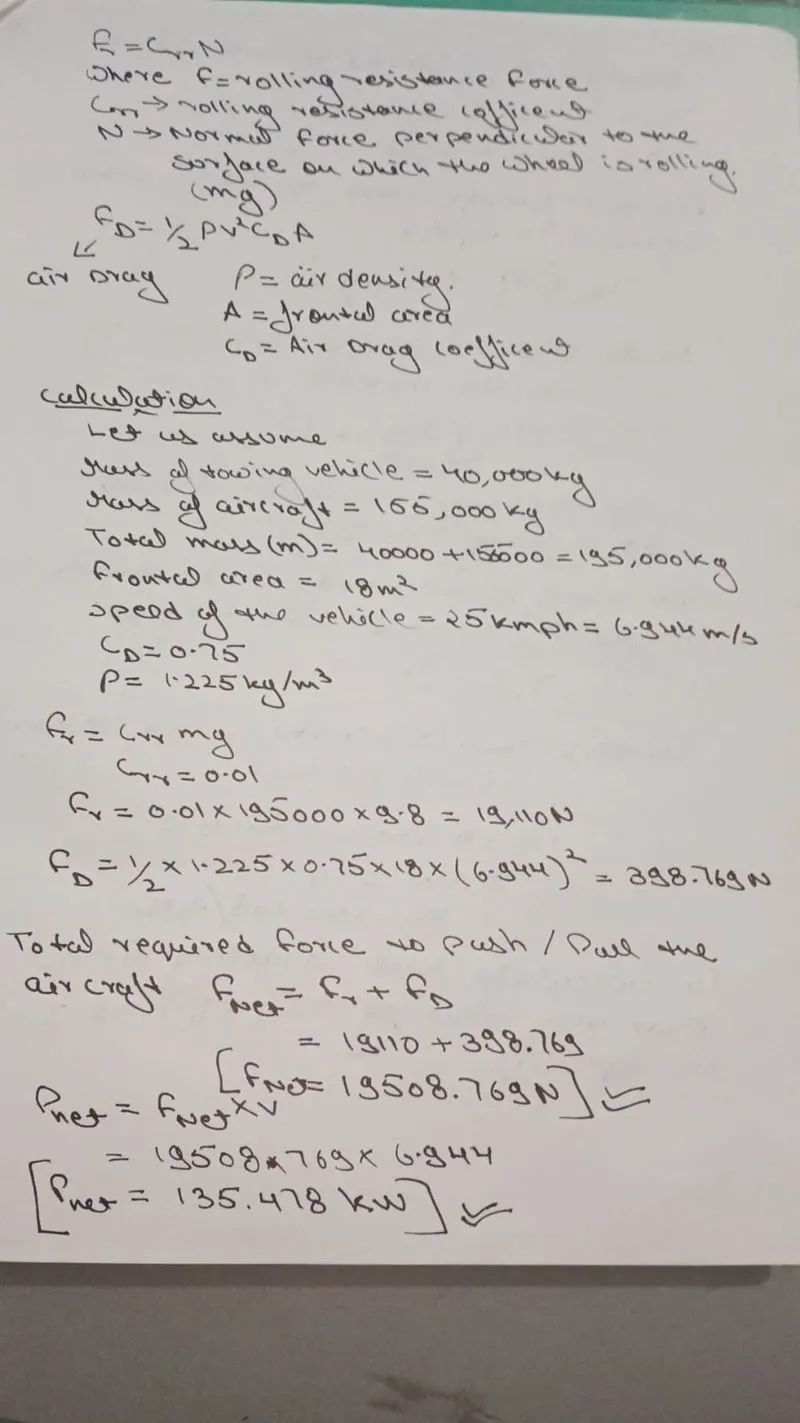
6- (A)-The forces required to push/ pull an aircraft by a towing are rolling resistance force and areodynamic drag force.
1)Rolling resistance force:- As we have discussed in part-A 5c. It is the force resisting the motion when a body (such as a ball, tire, or wheel) rolls on a surface. Its governing equation is given as
2)Aerodynamic Drag Force:-
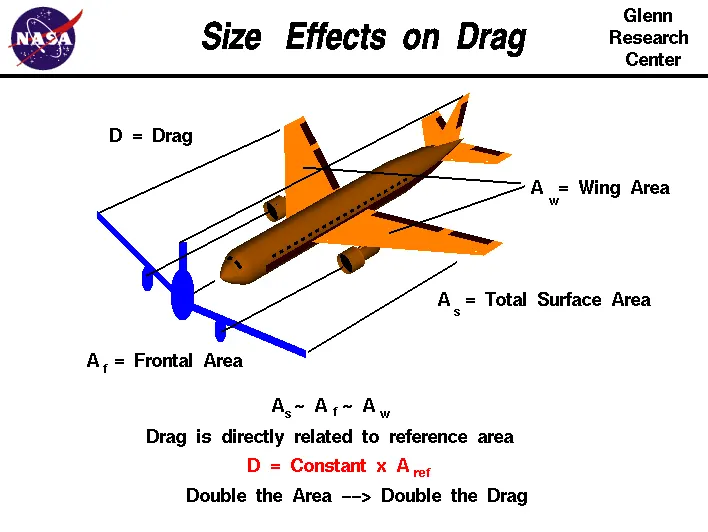
It is the force opposing the motion of the body. The drag coefficient is a common measure in automotive design as it pertains to aerodynamics. Drag is a force that acts parallel to and in the same direction as the airflow. The drag coefficient of an automobile measures the way the automobile passes through the surrounding air. When automobile companies design a new vehicle, they take into consideration the automobile drag coefficient in addition to the other performance characteristics. Aerodynamic drag increases with the square of speed; therefore, it becomes critically important at higher speeds. Reducing the drag coefficient in an automobile improves the performance of the vehicle as it pertains to speed and fuel efficiency.
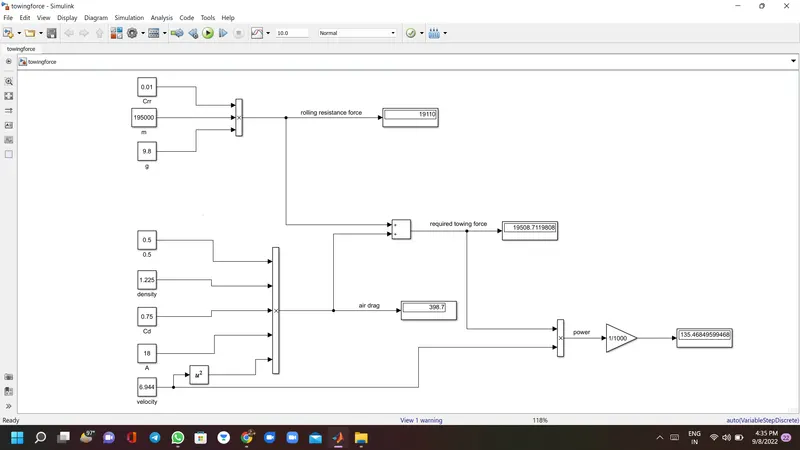
(B)model
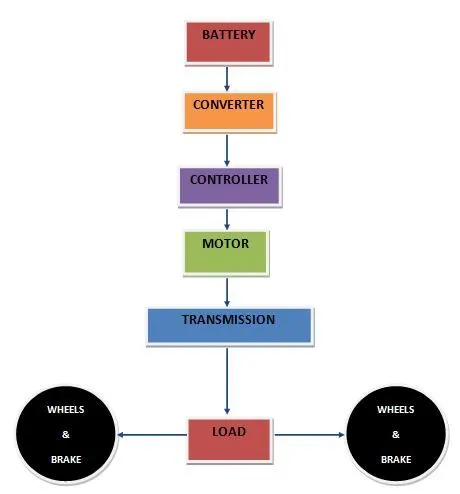
7-BLOCK DIAGRAM
Based on the calculations done in 6A.
Force required to push/pull the aircraft =19.508 KN
Power required =135.478 kw
Let us assume,
The Radius of the Tyre for the Tug = 25inches =0.635m
Gear ratio = 8
Transmission Effeciency (ηt) =87%
Motor Efficiency (ηm)=95%
then,
Torque required for the wheels (Tw)=Total Force *Radius in meters
=19.508*0.635
= 12.387KNm
Motor Torque= Wheel torque/(Gear ratio*ηt)
= 12.387 / (8*0.87)
= 1.778KNm
For ηm =95%, The required motor Torque (Tm)= 1.778/0.95 =1.871 kNm
Similarly, The total power required by the motor considering all the efficiencies(Pt) = 135.478/(0.87*0.95)=163.917Kw
Let us assume the towing operation was done for a 15 minutes (0.25Hrs) duration.
Then, Total Energy consumed = 163.917*0.25 = 40.98 KWh
If we consider the battery capacity =220 kw is used by the towing vehicle then, The duty cycle range to control the speed from 0 to max speed (3m/s) is given as
Duty Cycle (d) = (Required Power)/ (Rated power)= 163.917/220 =0.75
Therefore the controller will be able to provide a duty cycle ranging from 0 to 75% in order to control the towing speed.
7-model
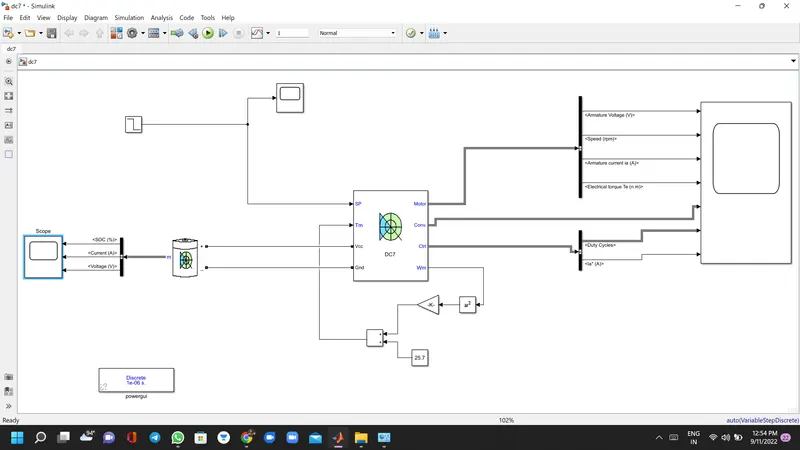
scope battery
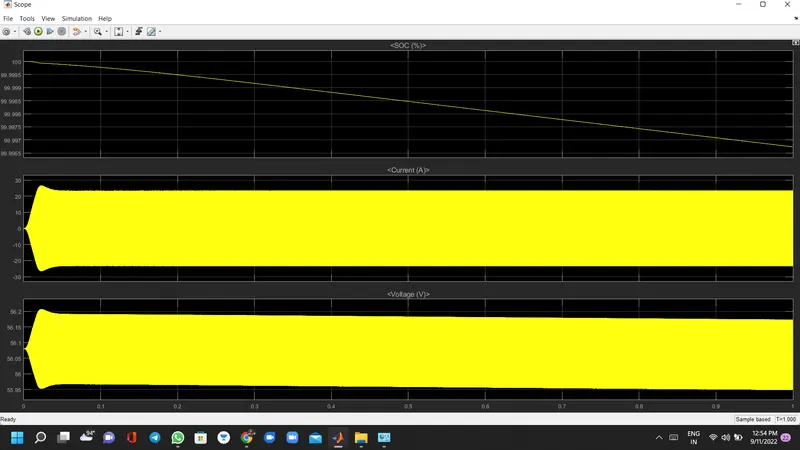
scope DC7