Week-4 Challenge WOT Condition Part-2
QUESTION 1: Mapped engine
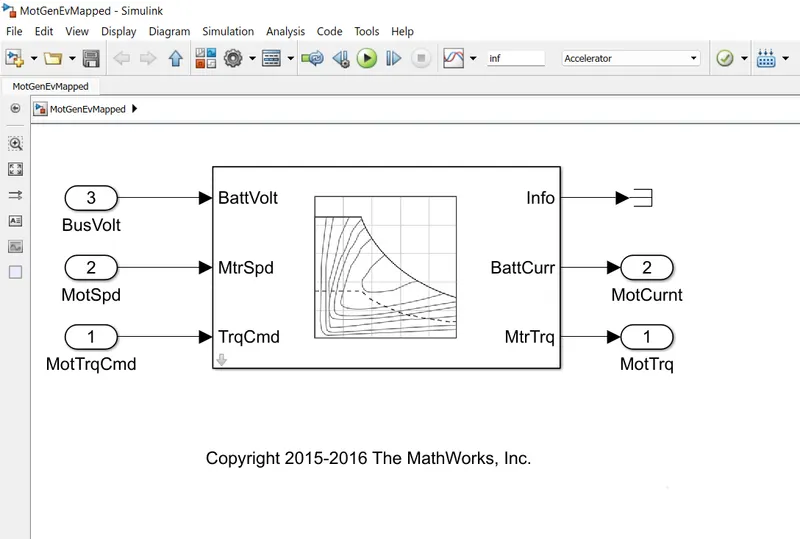
1-The model uses a set of steady-state lookup tables to characterize engine performance.
2-The tables provide overall engine characteristics, including actual torque, fuel flow rate, BSFC, and engine-out exhaust emissions.
3-Most of the components are modelled by steady state maps and charts in backward-facing modelling approach, therefore energy consumption and performance of different components during transient periods of drive are not calculated correctly. It is also known as backward facing approach.
4-it is used For quasi-steady-state engine simulations.
Dynamic engine
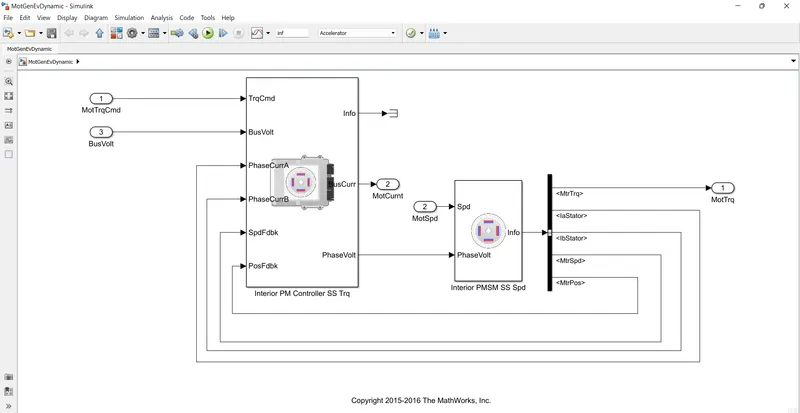
1-Model decomposes the engine behavior into engine characteristics that are separated into lower-level components. By combining components in this way, the models capture the dynamic effects.
2-If you need a more detailed dynamic model and have component-level data then it comes in use.
3-To analyze the impact of individual engine components on the overall performance.
QUESTION 2:
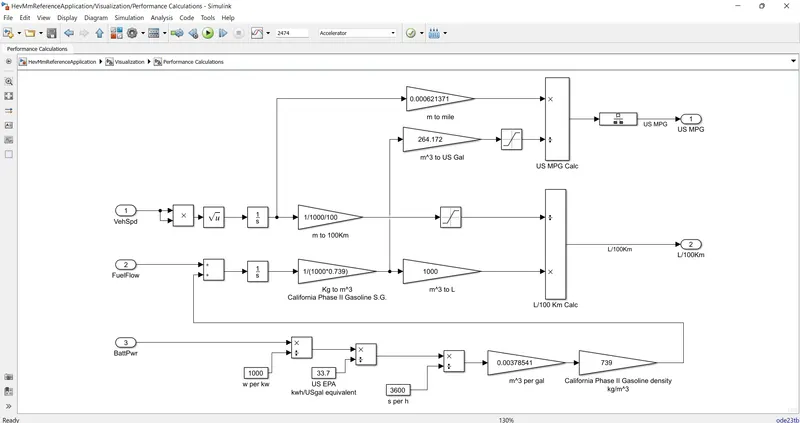
as we can see batt power is divided by 1000 to change it into kw which is a standard unit, then this power is further divided by US EPA which is defined as kWh per US gallon equivalent which is 33.7. then change is into sec per hour by dividing by 3600 which gives m^3 per gallon which is 1000*m^3 per gallon =lit per gallon.
QUESTION 3: wot condition without changing any parameters
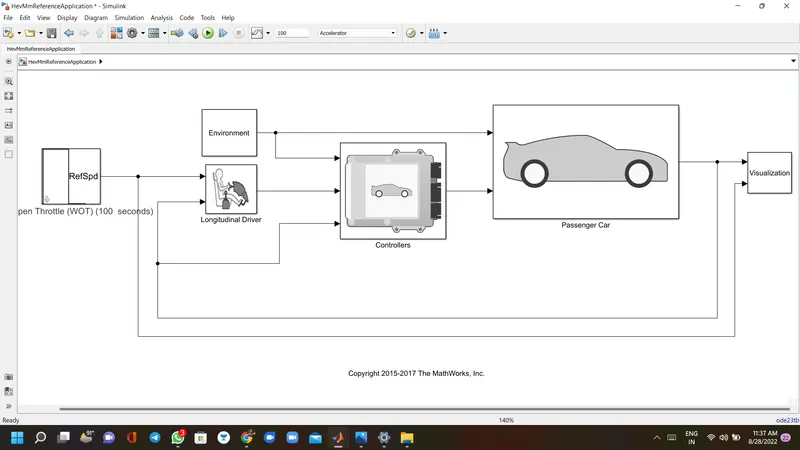
run this model for 30 sec
results
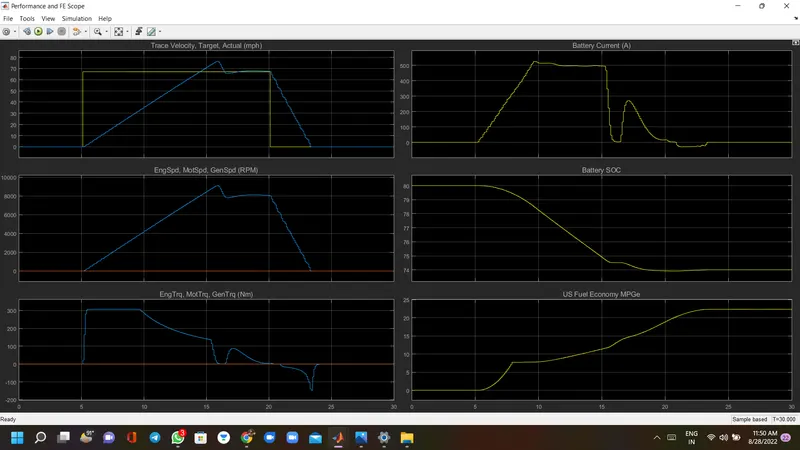
by changing the parameters
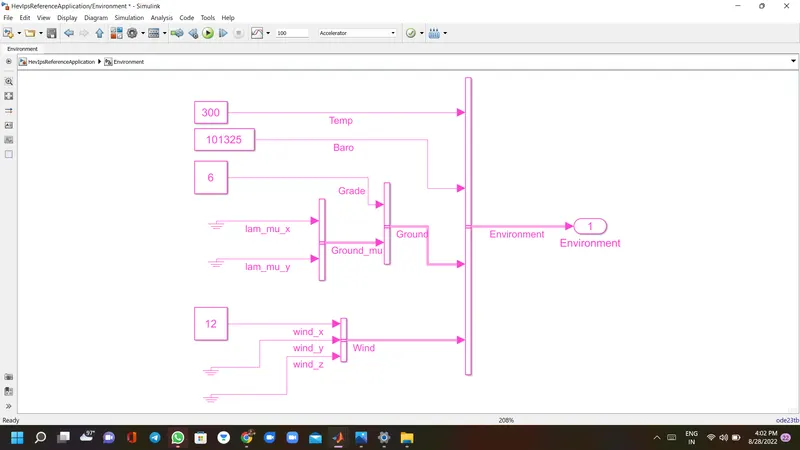
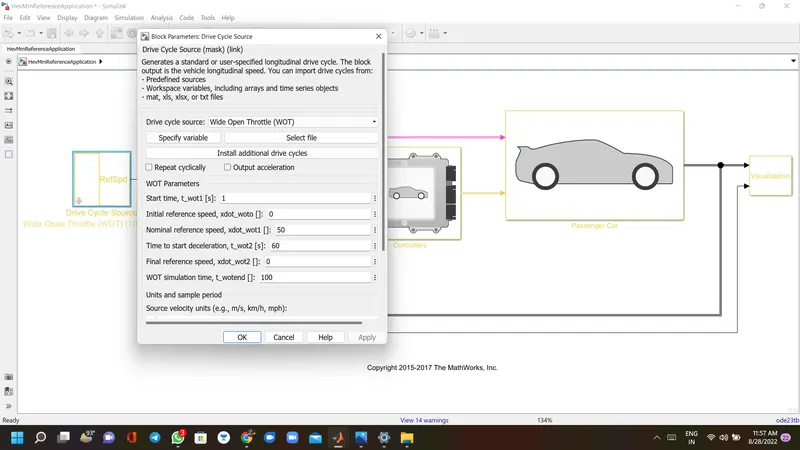
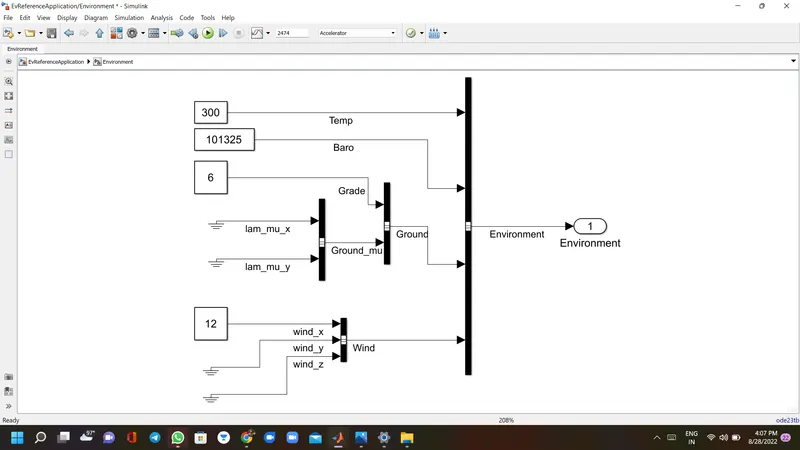
set grade at 6 and set wind velocity at 12,simulation time set at 100sec and other drive cycle parameters are changed as shown
results
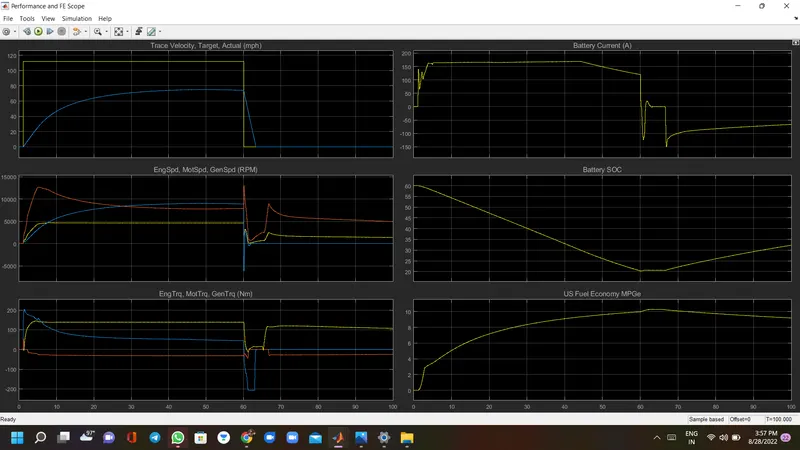
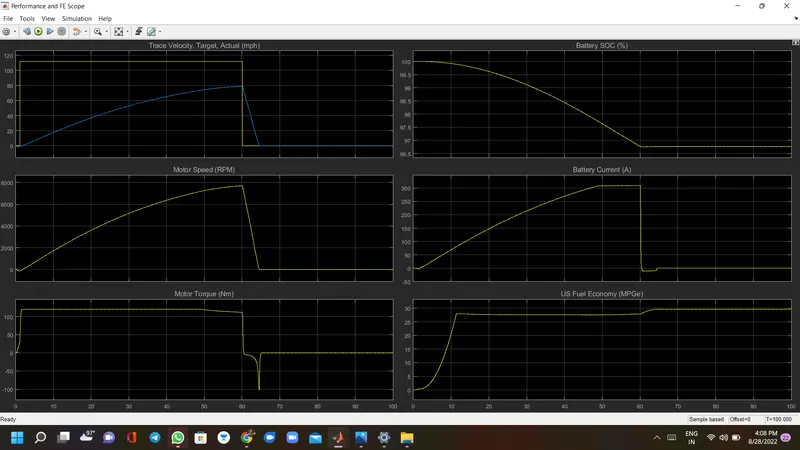
on increasing the grade and wind velocity vehicle unable to trace the wot condition of drive cycle.
QUESTION 4:
RESULTS