Project-1: Powertrain for aircraft in runways
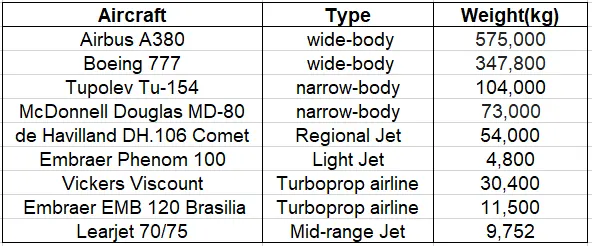
1. Search and list out the total weight of various types of aircraft.
Types of Aircraft includes
- Helicopter
- Turboprop Aircraft
- Piston Aircraft
- Light Jet
- Mid Size Jet
- Heavy Jet
- Regional Jet
- Narrow Body Aircraft
- Wide-Body Aircraft
1.Helicoptor
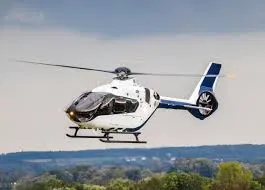
A helicopter is a type of rotorcraft in which lift and thrust are supplied by horizontally-spinning rotors. This allows the helicopter to take off and land vertically, to hover, and to fly forward, backward, and laterally. These attributes allow helicopters to be used in congested or isolated areas where fixed-wing aircraft and many forms of VTOL (Vertical Takeoff and Landing) aircraft cannot perform.
2.Turboprop Aircraft
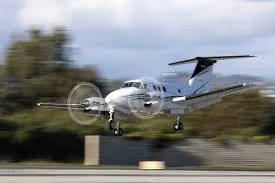
Turboprop aircraft have one or more gas-turbine engines connected to a gearbox that turns the propeller(s), to move the aircraft on the ground and through the air. Turboprop aircraft burn Jet-A fuel, are frequently larger than piston-powered aircraft, can carry more payload and passengers than their piston-powered counterparts, and can typically fly higher than pistons, at altitudes up to 35,000 feet. Turboprop aircraft have lower operating costs than jets because they burn less fuel, but they are also slower than jets.
3.Piston Aircraft
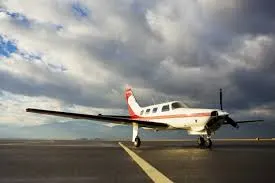
Piston airplanes have one or more piston-powered engines connected to the propeller(s), which provide thrust to move the aircraft on the ground and through the air. Piston-powered aircraft most commonly use 100 octanes low-leaded fuel and fly at altitudes below 15,000 feet. The inside of a typical piston aircraft seats 1-6 passengers is configured similar to the interior of a small car.
4.Light Jet
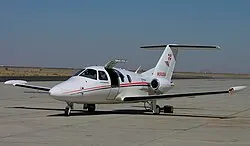
A very light jet (VLJ), entry-level jet, or personal jet, previously known as a microjet, is a category of small business jets seating four to eight people and often with a maximum takeoff weight (MTOW) of or under 10,000 pounds (4,540 kg), although the Embraer Phenom 100, HondaJet and Cessna Citation M2 are all slightly over. VLJs are considered the lightest business jets and are approved for single-pilot operation.
5.Mid Size Jet
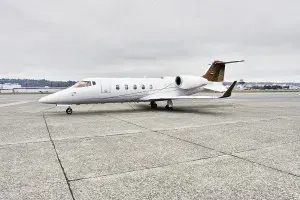
Mid-size jets offer a range of about four to five hours of flight time with a range of about 2,800 nautical miles. Some mid-size jets feature non-stop coast to coast flights and others may need to make one quick stop for fuel along the way. These features make the mid-size jet ideal for relaxed coast-to-coast flying. The cabin height of a mid-sized jet is approximately five feet eight inches, which gives some passengers room to stand up inside the plane. It has a width of about five feet nine inches, the length varies between styles of jets but is typically between 17’ – 21’.
6.Heavy Jet
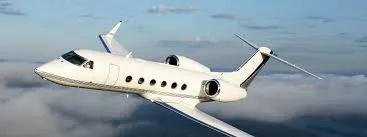
Heavy jets are private jets in the "kingsize" category and have seating for 12 to 14 passengers. They have a range of 10 - 12 flight hours. This allows intercontinental flights without fuel stops. The cabins have a standing height of up to 1.9 meters and VIP appointments at least comparable with the first-class section on scheduled flights. Cabin staff serves gourmet catering. Needless to say, there is also a spacious washroom with WC as well as more than sufficient luggage capacities. All planes have the necessary legal approvals from the aviation authorities. Please see our online price calculator for timetables and guide prices.
7.Regional Jet
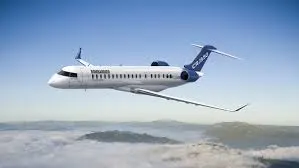
A regional airliner or a feeder liner is a small airliner that is designed to fly up to 100 passengers on short-haul flights, usually feeding larger carriers' airline hubs from small markets. This class of airliners is typically flown by the regional airlines that are either contracted by or subsidiaries of the larger airlines. Regional airliners are used for short trips between smaller towns or from a larger city to a smaller city. Feederliner, commuter, and local service are all alternative terms for the same class of flight operations.
8.Narrow Body Aircraft
A narrow-body aircraft or single-aisle aircraft is an airliner arranged along a single aisle permitting up to 6-abreast seating in a cabin below 4 meters (13 ft) of width. In contrast, a wide-body aircraft is a larger airliner usually configured with multiple aisles and a fuselage diameter of more than 5 meters (16 ft) allowing at least seven-abreast seating and often more travel classes.
9.Wide-Body Aircraft
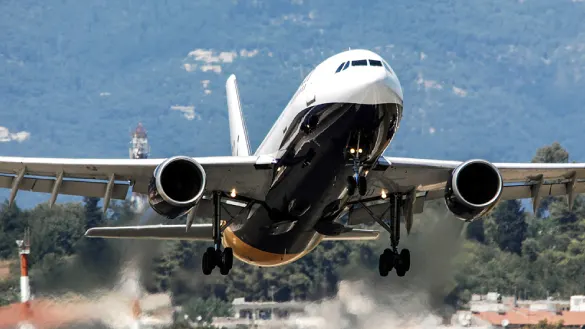
A wide-body aircraft, also known as a twin-aisle aircraft, is a jet airliner with a fuselage wide enough to accommodate two passenger aisles with seven or more seats abreast. The typical fuselage diameter is 5 to 6 m (16 to 20 ft). In the typical wide-body economy cabin, passengers have seated seven to ten abreast, allowing a total capacity of 200 to 850[4] passengers. The largest wide-body aircraft are over 6m (20 ft) wide and can accommodate up to eleven passengers abreast in high-density configurations.
Weights of Various Aircrafts
2.Is there any difference between ground speed and airspeed?
Yes, there is a difference between ground speed and airspeed.
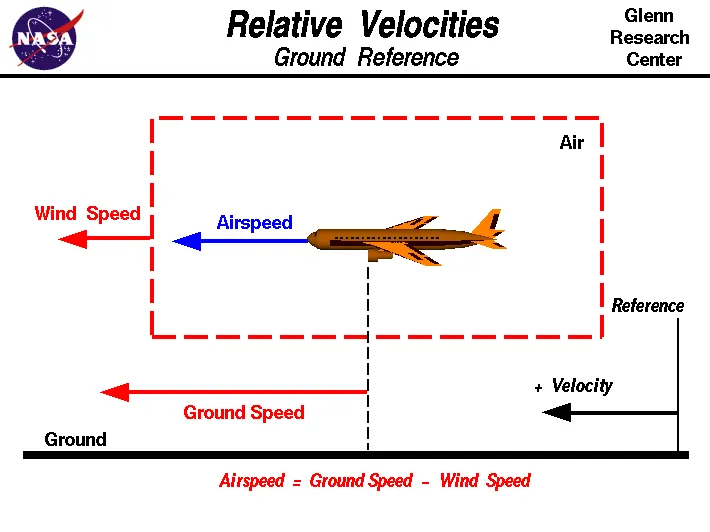
In an article by NASA, it says that Airspeed is the difference between Ground Speed and Wind Speed.
Ground Speed
For a reference point picked on the ground, the aircraft moves relative to the reference point at the ground speed. Ground speed is also a vector quantity so a comparison of the ground speed to the wind speed must be done according to rules for vector comparisons.
Airspeed
The important quantity in the generation of lift is the relative velocity between the object and the air, which is called the airspeed. Airspeed cannot be directly measured from a ground position 1 but must be computed from the ground speed and the wind speed. Airspeed is the vector difference between ground speed and wind speed.
Airspeed = Ground Speed - Wind Speed
On a perfectly still day, the airspeed is equal to the ground speed. But if the wind is blowing in the same direction that the aircraft is moving, the airspeed will be less than the ground speed.
3.Why is it not recommended to use aircraft engine power to move it on the ground at the Airport?
Even though aircraft can move on the ground, it is recommended not to do so. It is done using a towing truck and the procedure is called Towing.
The reasons for this are
It is easier, for the truck driver to see the surroundings better than the pilot sitting in the cockpit.
The aircraft engines are very loud. This noise can add up if there are other aircraft at the same time. This will disturb the passengers and other people around them.
The aircraft engine can suck in the sand and other particles which can cause damage to the engine.
4.How an aircraft is pushed to the runway when it is ready to take off?
Movement of large aircraft about the airport, flight line, and hangar is usually accomplished by towing with a tow tractor (sometimes called a “tug”). In the case of small aircraft, some moving is accomplished by hand pushing on the correct areas of the aircraft. Aircraft may also be taxied about the flight line but usually only by certain qualified personnel.
Towing aircraft can be a hazardous operation, causing damage to the aircraft and injury to personnel, if done recklessly or carelessly. However, specific instructions for each model of aircraft are detailed in the manufacturer’s maintenance instructions and are to be followed in all instances.
5.Learn about take-off power, tyre design, rolling resistance, tyre pressure, brake forces when landing.
Take-Off Power
Take-off performance can be predicted using a simple measure of the acceleration of the aircraft along the runway based on force equilibrium.
The forces involved will be,
T – Thrust of propulsion system pushing aircraft along the runway.
D – Aerodynamic Drag of vehicle resisting the aircraft motion.
F – Rolling resistance friction due to the contact of wheels or skids on the ground.
During the take-off run, the imbalance in these forces will produce an acceleration along the runway.
`(dV)/ dt = (T−D−F)/m`
On take-off, in order to position the aircraft to a safe height away from terrain and obstacles (i.e. a flight path of maximum height and minimum ground distance desired), the engine thrust is set to a high ‘take-off power’ setting (although this is not necessarily full power) and the aircraft attitude is pitched up to maintain a specific speed (usually in the region of V2 + 15kts). Once the ‘safe height’ is reached the engine thrust can therefore be reduced to a more appropriate (i.e. efficient) setting and the aircraft flight path can be changed to a more appropriate (i.e. efficient) flight path.
Tyre design
Aircraft tires can easily be taken for granted. Their simplistic appearance may lead some to a false feeling of complacency. Many technicians are not aware of the critical design factors that go into every aircraft tire in use today. Seemingly minor flaws can lead to disastrous results, and inadequate maintenance practices can cause shortened tire life and even cause unsafe operating conditions.
Designing aircraft tires is a very intense undertaking. Once an aircraft manufacturer goes to the tire manufacturer with the size and weight requirements, the tire manufacturer begins the process of designing a tire that meets the needs of the aircraft manufacturer as well as all regulatory requirements including foreign regulations in many cases.
Carcass plies are used to form the tire. They are sometimes called casing plies. An aircraft tyre is constructed for the purpose it serves.
- They support the weight of an aircraft while it is on the ground.
- It also provides the necessary traction for braking and stopping of an airplane.
- Tyre also helps to absorb the shock of landing and provide cushioning for the roughness of takeoff, roll-out, and taxi operations.
Unlike an automobile or truck tyre, it does not have to carry a load for a long period of continuous operation. However, an aircraft tyre absorbs the high impact loads of landing, and also it’s operating at high speeds for a short time when required.
Aircraft tyres may be Tube-type or Tubeless
Tubeless tyres are more advantageous over tube-type. There is no longer the use of tube-type tyre in recent aviation. Nowadays all airliners are using tubeless tyres. Tubeless that are meant to be used without a tube has the word TUBELESS on the sidewall of the tyre.
Aircraft tyres may be Radial or Bias
Almost all airliners are using Radial tyre. Bias is an older design, and it’s mainly used for road vehicles. Radial tyres have the word RADIAL on the sidewall. Radial tires are more expensive than bias-ply tyres. Radial tires are in demand because of their lower life cycle cost and long term value.
Rolling Resistance
The force that resists the motion of a body rolling on a surface is called the rolling resistance or the rolling friction.
`Frr=murr*(mg)`
`Frr=`Rolling Resistance Force
`murr=`Coefficient of Rolling resistance
m = Total mass of Aircraft
g= acceleration due to gravity
The coefficient of Rolling resistance depends on many factors such as tyre pressure,tyre temperature,Material of the tyre, thread pattern of tyre and roughness of road and liquids on road.
Tyre Pressure
Airplane wheel/tire assemblies are inflated to high pressures (many in excess of 200 psi). In addition, the pressure in the bottle or tire-servicing cart can be as high as 3,000 psi. As a result, when the high-pressure bottle is connected directly to the wheel without a regulator, the wheel is suddenly subjected to the high pressure, which can exceed the design limits for the wheel and the wheel tie bolts. Consequently, the wheel, the wheel tie bolts, or both experience an explosive fracture and become projectiles.
Brake forces when landing.
The length of the landing run depends on the way in which the braking is applied. When the braking force is low the stopping distance is long, and stronger braking gives a shorter landing run. The maximum brake force sustainable is dependent on the frictional force between the wheel and the track.
Stopping a 200-tonne aircraft landing at 180 mph requires a lot of braking force. To do this, the 787 has one brake unit on each of the eight wheels on the main gear assembly. On other aircraft types, the brake units are powered by the hydraulics system. An electrical signal is sent from the flight deck to hydraulic actuators near the main landing gear. Here, hydraulic fluid at 3,000 pounds per square inch is used to force the brake unit against the wheel, thus slowing it down.
This system works fine, but the pipes and actuators that form this part of the hydraulic system come at a considerable weight cost. Extra weight means more fuel burn, which in turn increases costs and carbon emissions.
Electric Brakes Actuator
The brake system on the 787 Dreamliner is controlled by the pilots pressing the tops of the rudder pedals under their feet, demanding the rate of braking which they require. This sends an electronic signal to the Left and Right Brake System Control Units (BSCUs).
These then send signals to the four Electronic Brake Actuator Controllers (EBAC) which control the rate of braking on the wheels. Each wheel has four Electric Brake Actuators (EBA), a kind of piston which presses against the carbon brake discs.
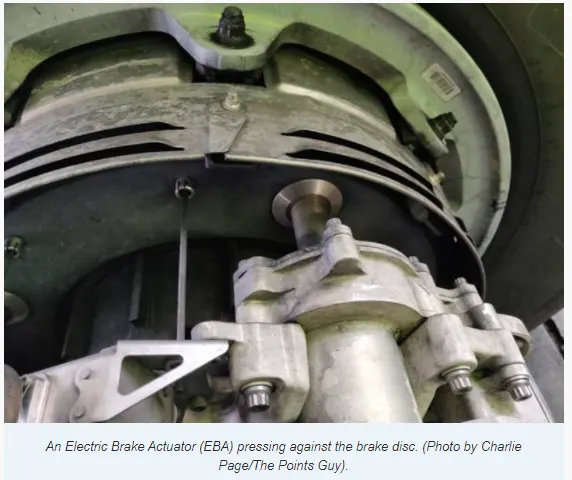
The brake disks themselves are made up of two parts. Firstly, there are the rotors. These are connected to the wheel by drive tabs (in the video below they are the black rectangles on the rotor disks). As these drive tabs are in contact with the inside of the wheel, they spin at the same speed. Depending on the brake manufacturer, there are either four or five of these rotors on each brake assembly.
The second part of the disks is the stators. These sit around each rotor and are fixed in place and thus don’t move. As the wheel turns, the rotors spin round inside the stators. When the brakes are applied, the four EBAs apply pressure to the first stator. This, in turn, squeezes the stationary stators up against the spinning rotors and it’s this friction which slows the wheel down.
6.With necessary assumptions, calculate the force and power required to push/pull an aircraft by a towing vehicle.
Rolling Resistance Force
Rolling Resistance Force = Urr*mg
Weight of the Aircraft(Refer to the data in Answer 1 for Airbus A-380)= 575000kg
Rolling Resistance coefficient of Aircraft =0.005
Rolling Resistance Force = 0.005*575000*9.8=28175=28.175 kN
Weight of the towing vehicle = 54000kg
Rolling Resistance coefficient of towing vehicle =0.001
Rolling Resistance Force = 0.001*54000*9.8=529.2=0.5292 kN
Total Rolling Resistance Force = 0.5292+28.175=28.7042 kN
Aerodynamic Drag Force
`Fad=0.5*Rho*A*V^2*Cd`
`Rho=`Air Density = 1.1839
`Cd=` Drag Coeffient=0.027
V= Velocity = 20km/hr = 5.55m/sec
`A=` Frontal Area = 15m^2
`Fad=0.5**1.1839**0.027**(5.55^2)**15=7.384`=0.007384 kN
Total Reaction Forces = 28.7042+0.007384 = 28.7116 kN
Speed while push/pull = 20kmph = 5.55 m/sec
Power Required for a towing vehicle to push/pull an aircraft = 28.7116kN*5.55=159.349kW
7. Design an electric powertrain with a type of motor, it’s power rating, and energy requirement to fulfill aircraft towing application. Estimate the duty cycle range to control the aircraft speed from zero to highest. Make all required assumptions. Prepare a table of assumed parameters. Draw a block diagram of the powertrain.
Power Required is considered from the previous solution = 159.349kW
Torque required = 28.7116kN*0.5=14356 Nm
Assumptions
Gear Ratio =8
Operation Time = 15min = 0.25Hr
Transmission Loss = 15%
Motor Losses = 13%
Wheel Diameter of Towing Vehicle = 0.5 m
Energy required = 159.349 * 0.25 = 39.837 Kwh
The torque required considering the gear ratio = 14356/8=1794.5 Nm
The torque required after considering the losses = 1794.5+1794.5(0.15+0.13)=2296.96 Nm
Motor Power Requirement = 159.349kW*0.87=138.63kW = 185.90 HP
Motor Parameters
Type : BLDC
Power = 200HP
Torque = 2500Nm
Rated Input Voltage = 220 V
Rated Current = 720 A
Battery Pack Used: 48V, 1000Ah
A Boost converter is used to 48V to 72V with a duty ratio of 0.5.
BLDC Motor controller is also used
Controller Duty Ratio for the maximum speed of operation = Pout/Pin = 138.63/150.14 = 0.92
Duty Ratio range is from 0 to 0.92.
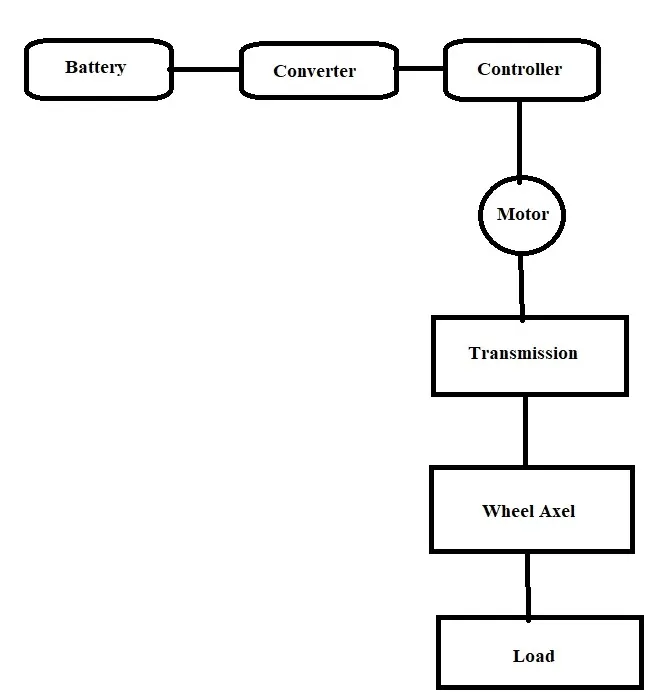
Block Diagram of power train connected to the vehicle is given below
CONCLUSION
- Listed and studied the weights of various types of aircraft
- The difference between ground speed and airspeed is discussed.
- The necessity of towing is defined.
- The process of towing is explained.
- The terms take-off power, tyre design, rolling resistance, tyre pressure and brake forces when landing is defined.
- The force and power requirement for towing is calculated
7. A power train for towing aircraft is designed. The energy required and duty ratio for the speed range is also calculated.