Project-1: Powertrain for aircraft in runways
Part A:
1. Search and list out the total weight of various types of aircrafts.
Types of aircraft:
There are a number of ways to identify aircraft by type. The primary distinction is between those that are lighter than air and those that are heavier than air.
Lighter-than-air:
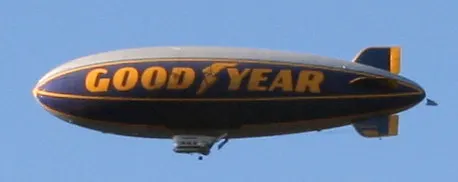
Aircraft such as balloons, nonrigid airships (blimps), and dirigibles are designed to contain within their structure a sufficient volume that, when filled with a gas lighter than air (heated air, hydrogen, or helium), displaces the surrounding ambient air and floats, just as a cork does on the water. Balloons are not steerable and drift with the wind. Nonrigid airships, which have enjoyed a rebirth of use and interest, do not have a rigid structure but have a defined aerodynamic shape, which contains cells filled with the lifting agent. They have a source of propulsion and can be controlled in all three axes of flight.
Heavier-than-air:
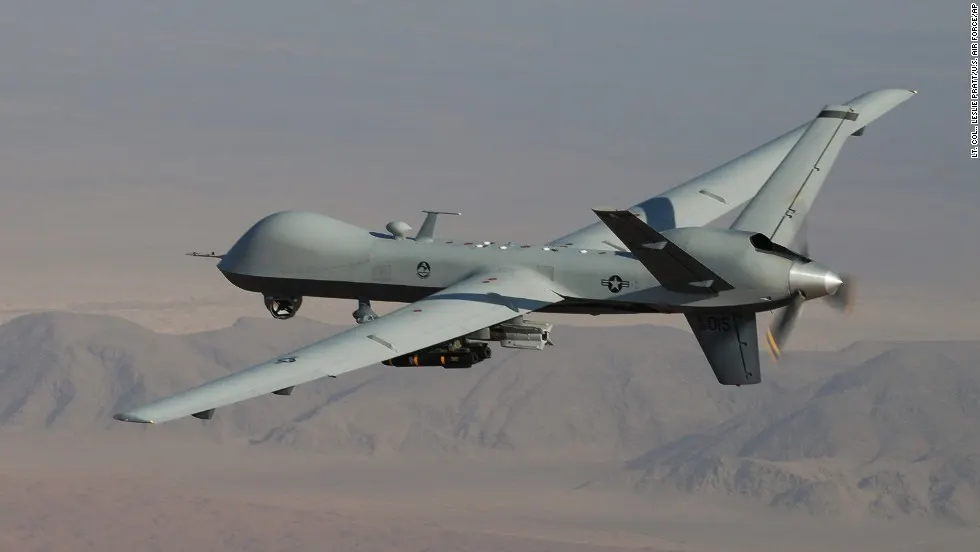
This type of aircraft must have a power source to provide the thrust necessary to obtain lift. Simple heavier-than-air craft include kites. These are usually a flat-surfaced structure, often with a stabilizing “tail,” attached by a bridle to a string that is held in place on the ground. Lift is provided by the reaction of the string-restrained surface to the wind. Another type of unmanned aircraft is the unmanned aerial vehicle (UAV), commonly called drones or sometimes remotely piloted vehicles (RPVs). These aircraft are radio-controlled from the air or the ground and are used for scientific and military purposes.
Weight of UAV's:
Civil aircraft:
All nonmilitary planes are civil aircraft. These include private and business planes and commercial airliners. Private aircraft are personal planes used for pleasure flying, often single-engine monoplanes with nonretractable landing gear.
Business aircraft are used to generate revenues for their owners and include everything from small single-engine aircraft used for pilot training or to transport small packages over short distances to four-engine executive jets that can span continents and oceans. Business planes are used by salespeople, prospectors, farmers, doctors, missionaries, and many others. Their primary purpose is to make the best use of top executives’ time by freeing them from airline schedules and airport operations. They also serve as an executive perquisite and as a sophisticated inducement for potential customers. Other business aircraft include those used for agricultural operations, traffic reporting, forest-fire fighting, medical evacuation, pipeline surveillance, freight hauling, and many other applications.
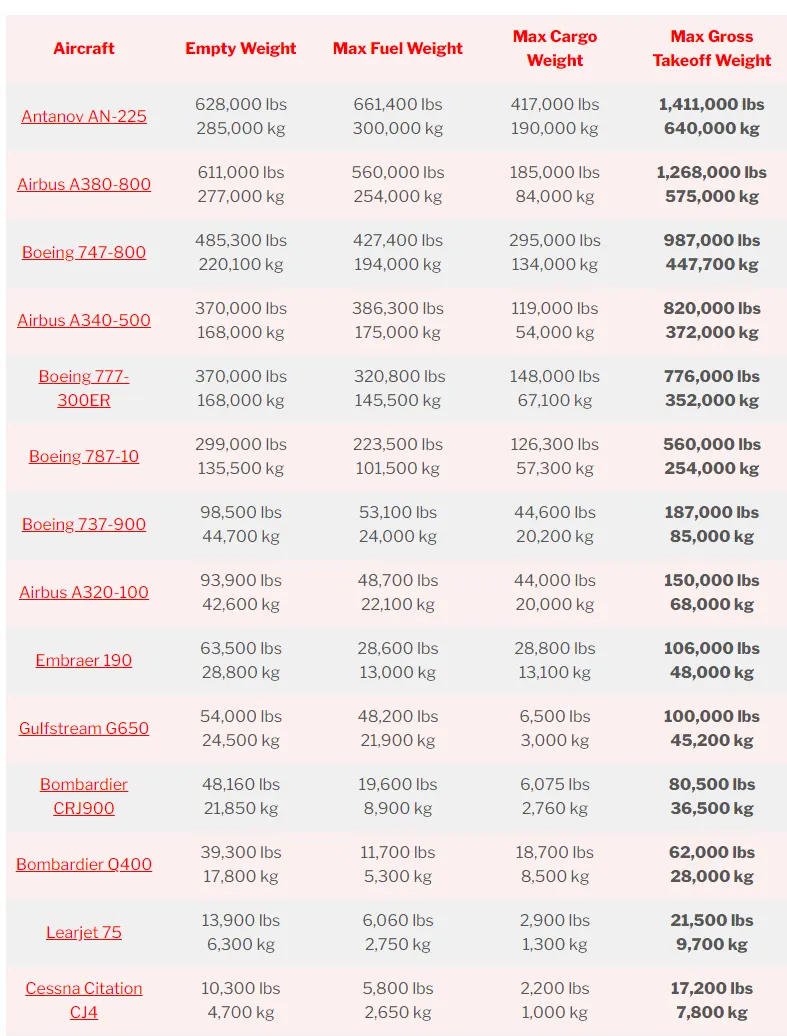
Weight of Civil aircrafts:
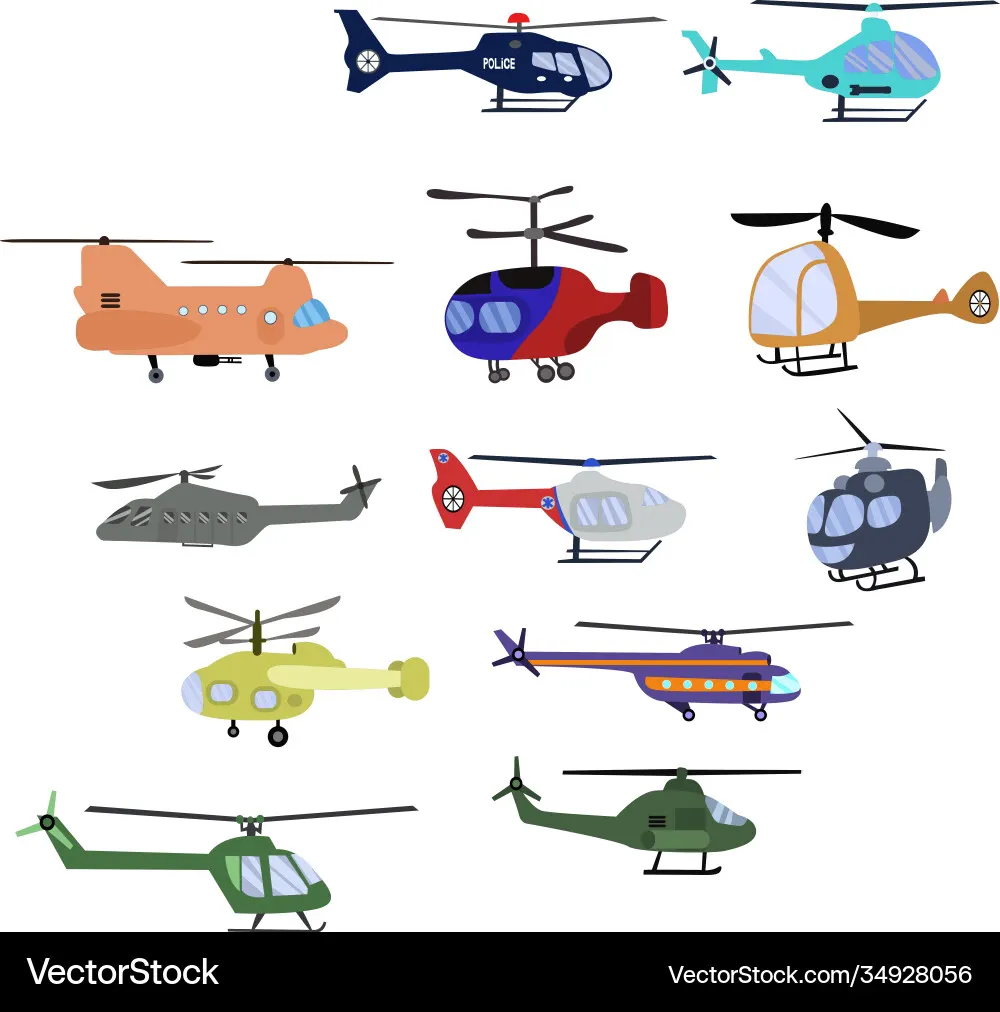
Helicopter:
The helicopter is probably the most versatile of all the flying machines that man has invented. Since the early days of the invention of the helicopter, it has progressed to the point that it has become an indispensable vehicle in our modern society.
The helicopter has revolutionized aircraft and brought versatility to what aircraft can be used for. The ability of the helicopter to hover, take off, and land in a small space, lift heavy loads, and fly at low altitudes has made it a useful aircraft that has been modified for specific needs.
A helicopter is a common sight in most parts of the world, whether it is to monitor traffic, police a community, or transport cargo. These aircraft have become an important part of our modern society’s infrastructure and provide a valuable service in many different roles.
2. Is there any difference between ground speed and air speed?
Air Speed vs Ground Speed:
- As mentioned above, true airspeed is simply the speed at which an aircraft is moving relative to the air it is flying in. As such, it’s also the speed at which the air is flowing around the aircraft’s wings.
- Ground speed, on the other hand, is the aircraft’s speed relative to the ground. One thing that should be noted here is that it’s its horizontal rather than vertical speed – an aircraft climbing completely vertically would have a ground speed of zero.
- In other words, while airspeed is what determines whether there is enough airflow around an aircraft to make it fly, ground speed is what determines how fast an aircraft will get to its destination.
3. Why is it not recommended to use aircraft engine power to move it on the ground at Airport?
For movement on the ground the aircraft uses it own engine power, which is called taxing. Although many aircrafts are capable of moving in backward using reverse thrust, as result the jet blast or prop wash might cause damage to the terminal building or equipment. Engine close to ground may also blow sand and debris forward and then suck them into the engine, causing damage to the engine. Therefore there are pushback tugs in the airport. A pushback tug lifts the front weel of the aircraft, their role in most airports is to move the aircraft away from the parking spot on to the taxiways, which is called towing.
4. How an aircraft is pushed to runway when its ready to take off?
TOWING:
In the parking areas, where taxing the aircraft is not practical or is unsafe, such as moving aircraft in and out of mainteance hangars, or moving aircraft that are not under their own power or moving backward, then towing of aircraft is performed using the power of a specialized ground vehicle attached to or supporting the nose landing gear. The traditional method of allowing the ground vehicle to move an aircraft is to attach it to the aircraft nose landing gear by means of towbar.
As the pilot can't see what is behind the aircraft, steering is done by pushback tractor driver and depending on the aircraft type and airline procedure, a bypass pin may be temporarily installed into the nose gear to disconnect it from the aircraft's normal steering mechanism. Once the towing is completed, the towbar is disconnected and the aircraft can taxiing forward under its own power.
TAXIING:
Taxiing is the movement of an aircraft on the ground under its own power while on the suface. The aircraft always moves following the yellow lines, to avoid collision with the surrounding buildings, vehicle or other aircrafts. The taxiing motion has a speed limit. Before making turn the pilot reduces speed further to prevent tire skids just like other vehicles. The reason for taxing is to reach the vehicle into runway or from runway to terminal.
5. Learn about take off power, tyre design, rolling resistance, tyre pressure, brake forces when landing.
Take Off Power:
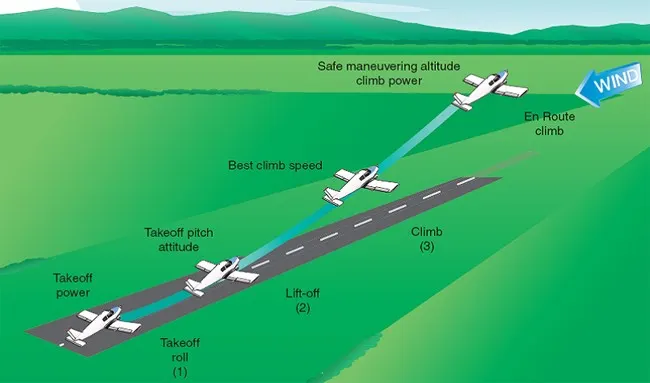
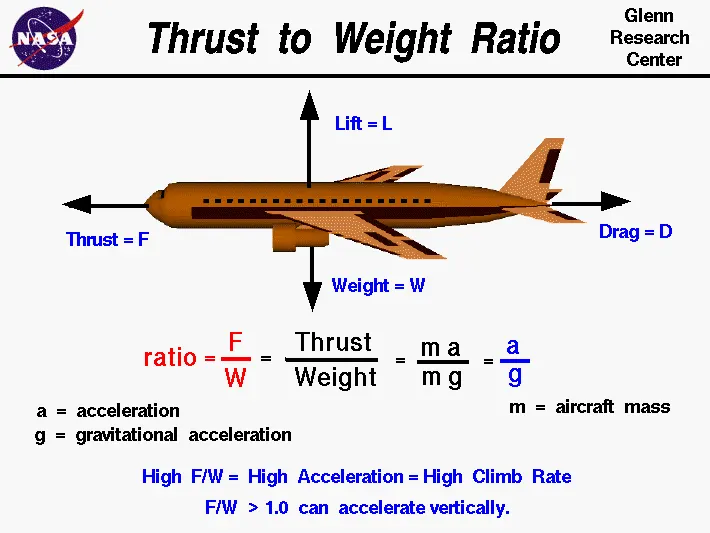
Takeoff is the phase of flight in which an aircraft leaves the ground and becomes airborne. For aircraft that take off horizontally, this usually involves starting with a transition and moving along the ground on a runway. For light weight aircraft, usually full power is used during takeoff. Large transport catagory (airliner) aircraft may use a reduced power for takeoff, where less than full power is applied in order to prolong engine life, reduce maintenance costs and reduce noise emissions. In some cases, the power used can then be increased to increase the performance. Before takeoff, the engines, particularly piston engines are routinely run up at high power to check for engine-related problems.
Tyre design:
Carcass plies are used to form the tire. They are sometimes called casing plies. An aircraft tyre is constructed for the purpose it serves.
- They support the weight of an aircraft while it is on the ground.
- It also provides the necessary traction for braking and stopping of an aeroplane.
- Tyre also helps to absorb the shock of landing and provide cushioning the roughness of takeoff, roll-out, and taxi operations.
Unlike an automobile or truck tyre, it does not have to carry a load for a long period of continuous operation. However, an aircraft tyre absorbs the high impact loads of landing, and also it’s operating at high speeds for a short time when required.
Rolling resistance:
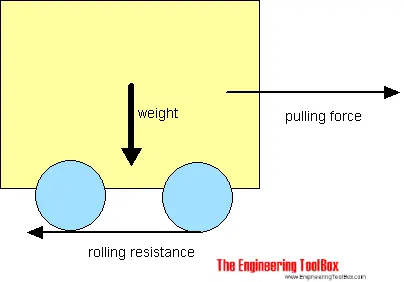
Rolling resistance, sometimes called rolling friction or rolling drag, is the force resisting the motion when a body (such as a ball, tire, or wheel) rolls on a surface. It is mainly caused by non-elastic effects; that is, not all the energy needed for deformation (or movement) of the wheel, roadbed, etc., is recovered when the pressure is removed. This rolling resistance force depends on many factors like surface of the road, roughness of the road, dry or wet condition of the road, tyre pressure, tyre material, tyre temperature, thread pattern of the tyre etc, which determines the rolling resistance force.
Rolling resistance force = `F_rr` in Newton
Rolling resistance co-efficient = `C_rr`
Tyre Pressure:
Aircraft tyres are designed to withstand heavy loads and shocks durong landing and take off and also needs to distribute weight evenly. As per research and testing it is found that aircraft tyres are able to sustain pressure upto 800 psi.Generally to note the tyre pressure of an aircraft a special type of sensors are used,its daigram is given below,
There are 2 primary parameters which is hazardous to the aircraft tires,
Deflation:
Here the tire deflates in a controlled ma-nner with minimum dierect consequence to other system.
Explosive breakup:
In this case the tire deflates or bursts in an uncontrolled manner with a probablity of causing damage to other secondary system,which further can cause a major crash landing incidents.
Brake forces:
Braking an aircraft is a challenging job for most of the pilots especially during landing in a rainy and cross wind environment. Inorder to encounter this kinds of problem pilots usually make use of spoilers and reverse thust method inorder to have a safe landing so that the energy required to apply brakes on tires can be reduced and henceforth they do not skid. Now there is method which determines the brake force for aircrafts and they are as follows:
`k=12mv2k=12mv2`
where m= mass of aircraft
v=velocity of aircraft.
A typical commercial landing speed will range between 150 to 165 MPH.And for passenger flight it is about 166 to 172mph.
Part B:
6.
A. With necessary assumptions, calculate the force and power required to push / pull an aircraft by a towing vehicle.
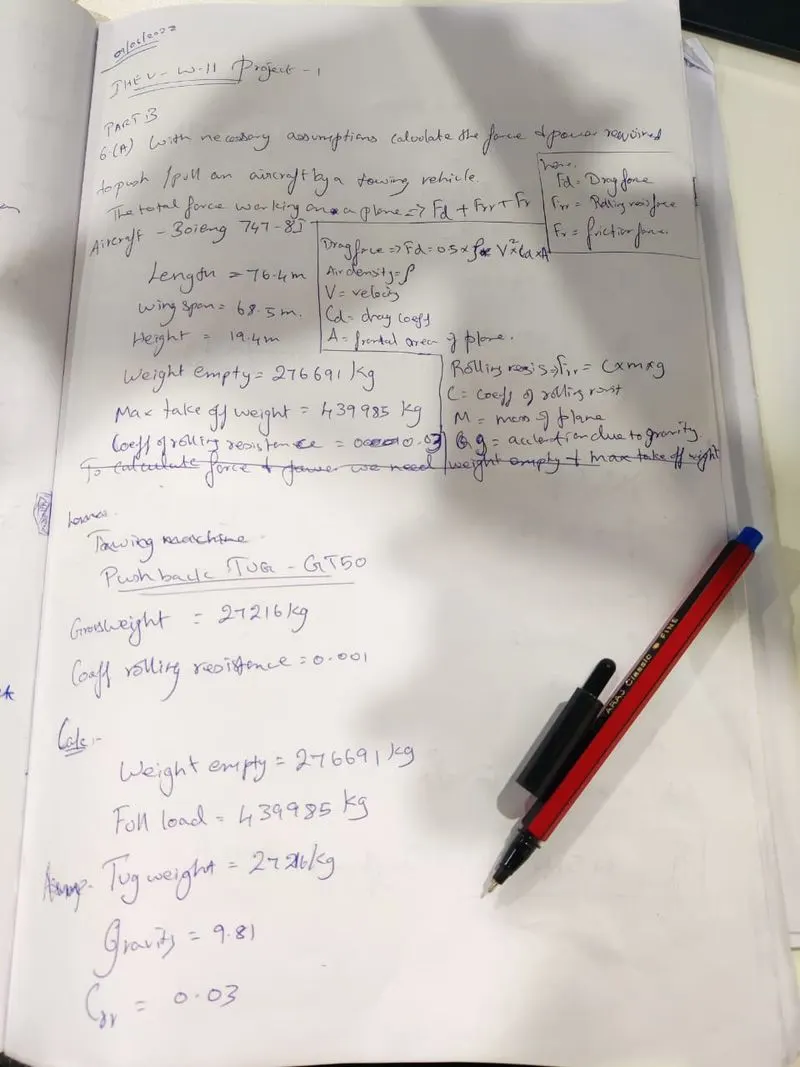
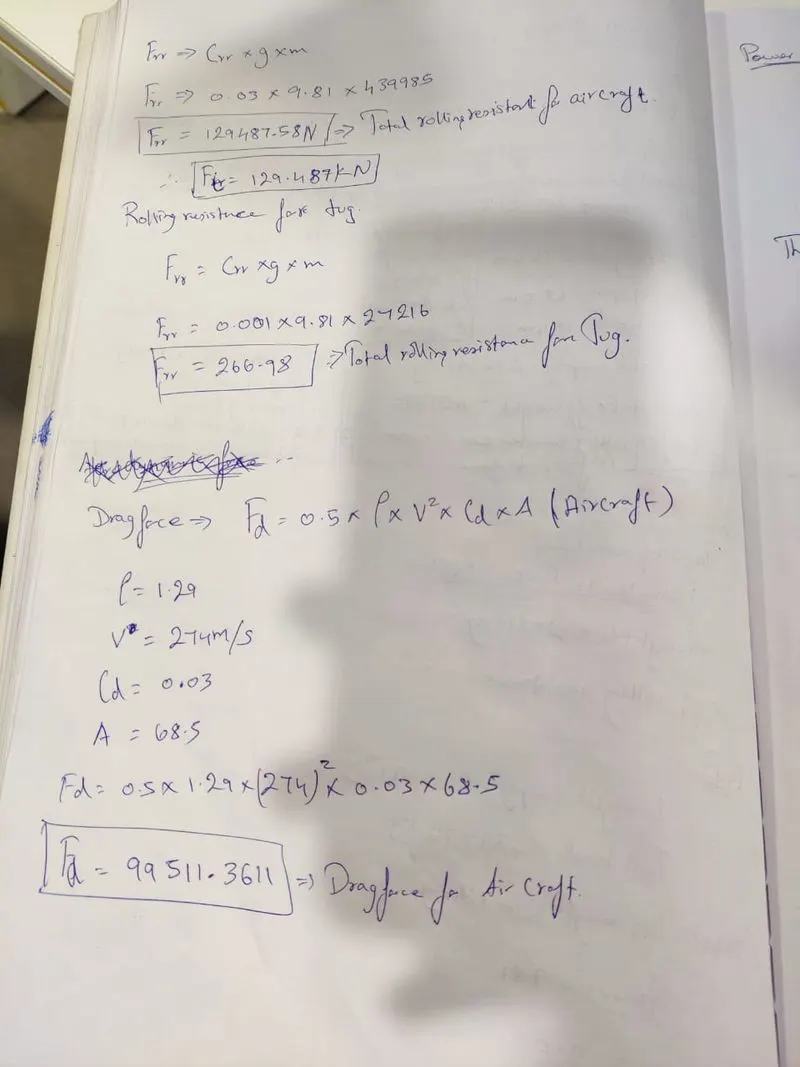
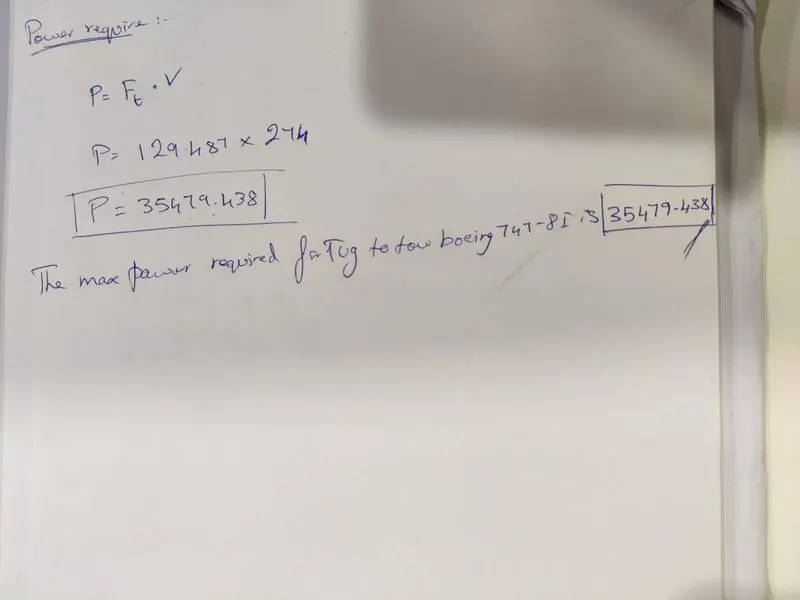
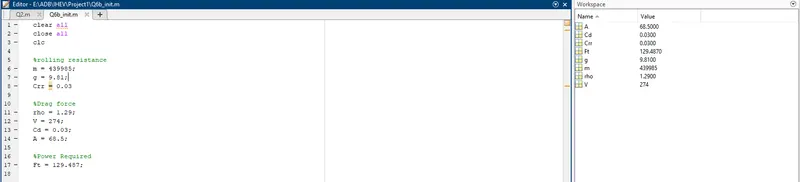
B. Develop the model for the calculated force and power using Simulink.
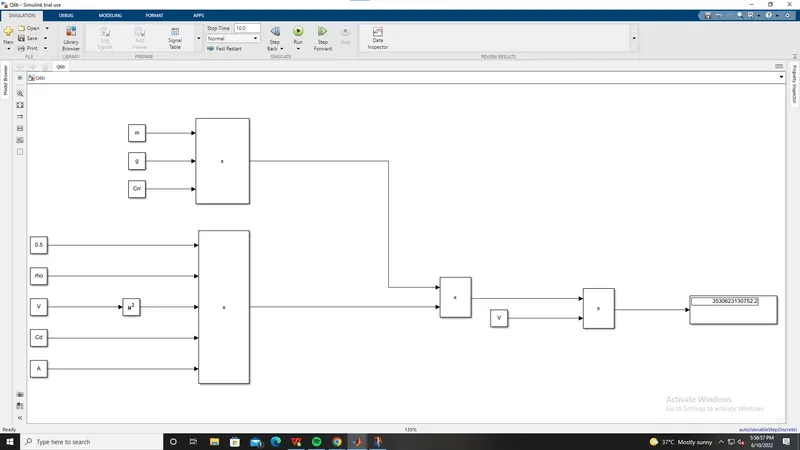
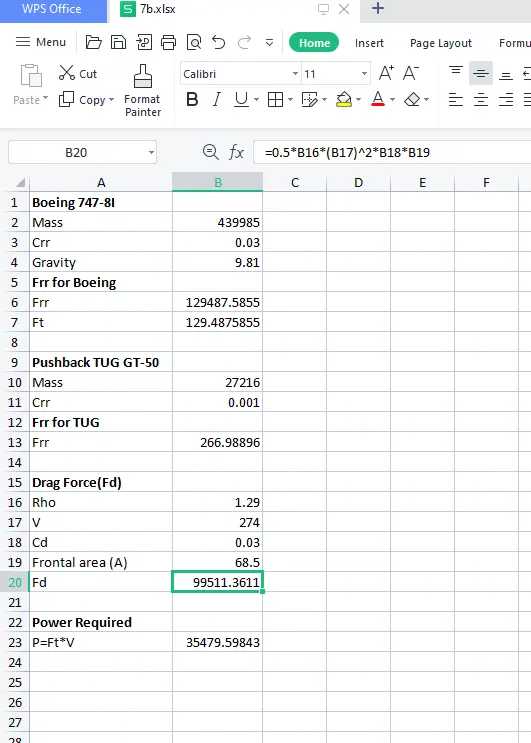
7. A. Design an electric powertrain with type of motor, it’s power rating, and energy requirement to fulfill aircraft towing application in Simulink. Estimate the duty cycle range to control the aircraft speed from zero to highest. Make all required assumptions. Prepare a table of assumed parameters. Draw a block diagram of powertrain.
(Hint :DC7 Block)
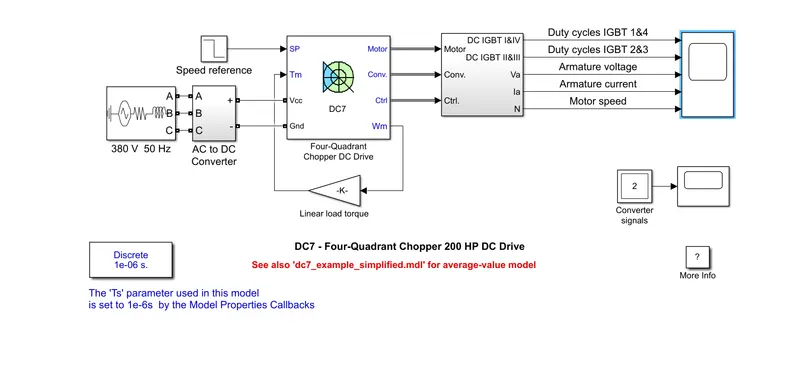
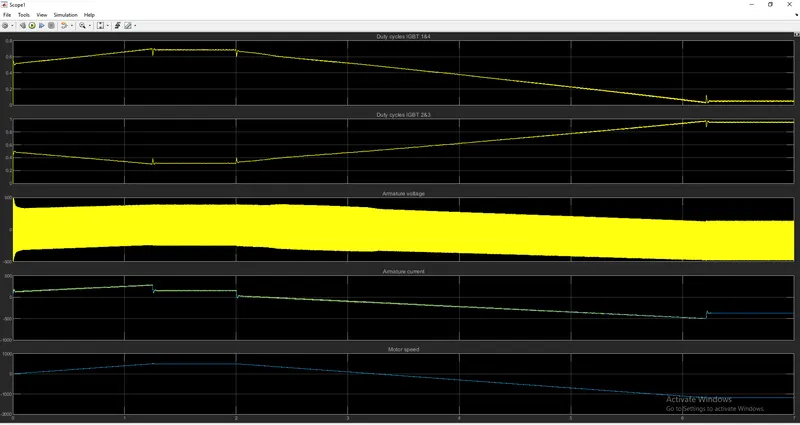
B. Also, Design the parameters in excel sheet.