Project-1: Powertrain for aircraft in runways
Student Of Online Ev BAtch 16:
PART-A
1.List out the total weight of various types of aircrafts:
There are many factors that lead to efficient and safe operation of aircraft. Among these vital factors are proper weights and balance control
The maximum allowable weight for an aircraft is determined by design considerations. The manufacturer provides the aircraft operator with the empty weight of the aircraft and the location of its empty weight center of gravity (EWCG) at the time the certified aircraft leaves the factory.
The maximum design taxi weight or maximum design ramp weight (MDRW) is the maximum as limited by aircraft strength and airworthiness requirements.
Maximum Taxi Weight (MDTW or MTW):
The difference between the maximum taxi/ramp weight and the maximum take-off weight (maximum taxi fuel allowance) depends upon the size of the aircraft, the number of engines, APU operation, and engines?APU fuel consumption, and is typically assumed for 10 to 15 minutes allowance taxi and run-up operations.
Maximum Design Take Off Weight(MDTOW or MTOW):
The maximum design takeoff weight is the maximum certificated design weight for takeoff run as limited by aircraft strength and airworthiness requirements.
Maximum Design Loading Weight(MDLW or MLW):
The maximum design laoding weight is the maximum certificated design weight for landing limited by aircraft strength and airworthiness requirements. It generally depends upon the landing gear strength or the landing impact loads on certain parts of the wing structure.
MDTW>MDTOW>MDLW
Aircraft Gross weight:
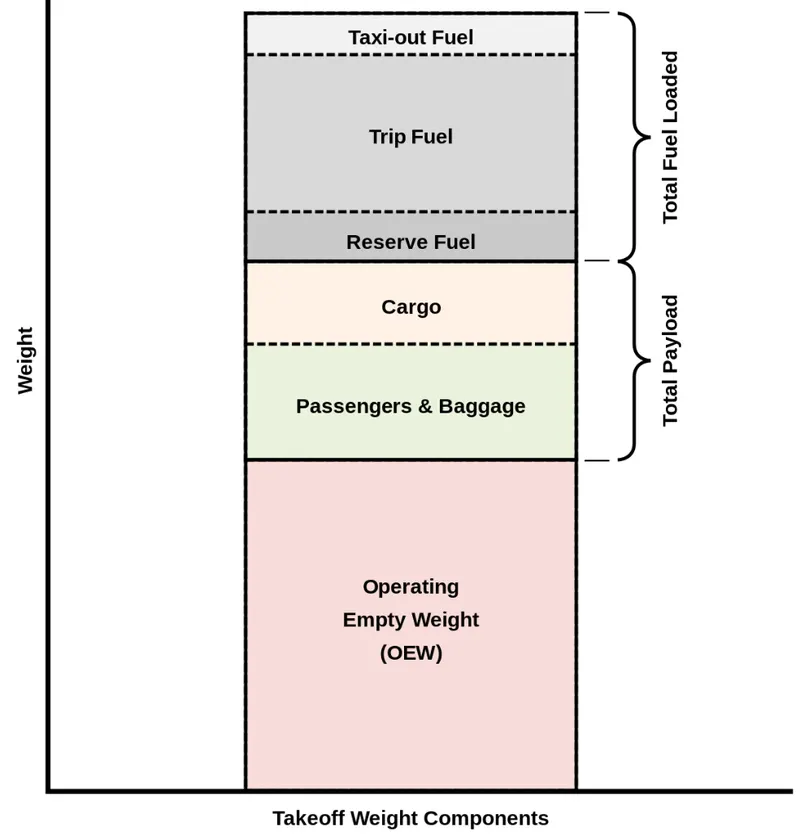
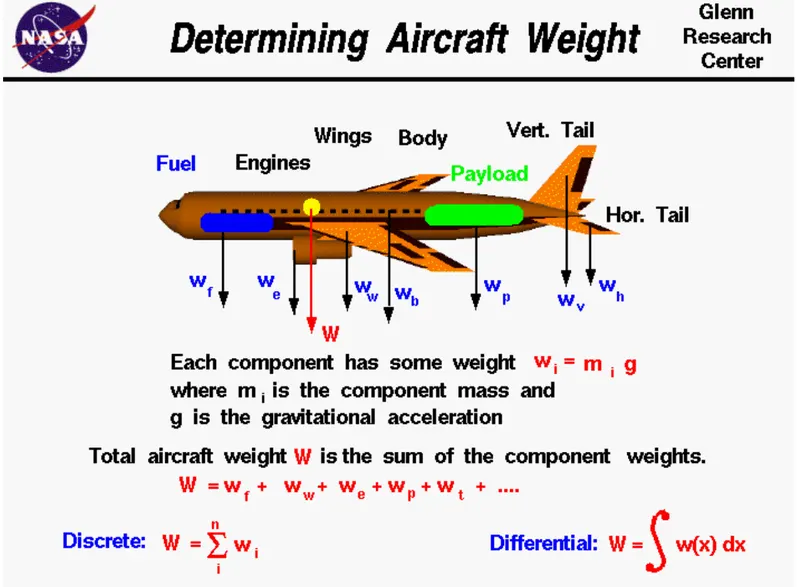
It is the total aircraft weight at any moment during the flight or ground operation. This decreases during the flight due to fuel and oil consumption. The gross weight of the vehicle gives the maximum take off weight of the vehicle. The total weight W of the aircraft is simplpy the sum of the weight of all of the indiviual components.
W=w(fuselage)+w(wing)+w(engines)+w(payload)+w(fuel).
Various Types Of Aircrafts:
There are a number of ways to identify aircraft by type. The primary distinction is between those that are lighter than air and these that are heavier than air.
Lighter Than Air:
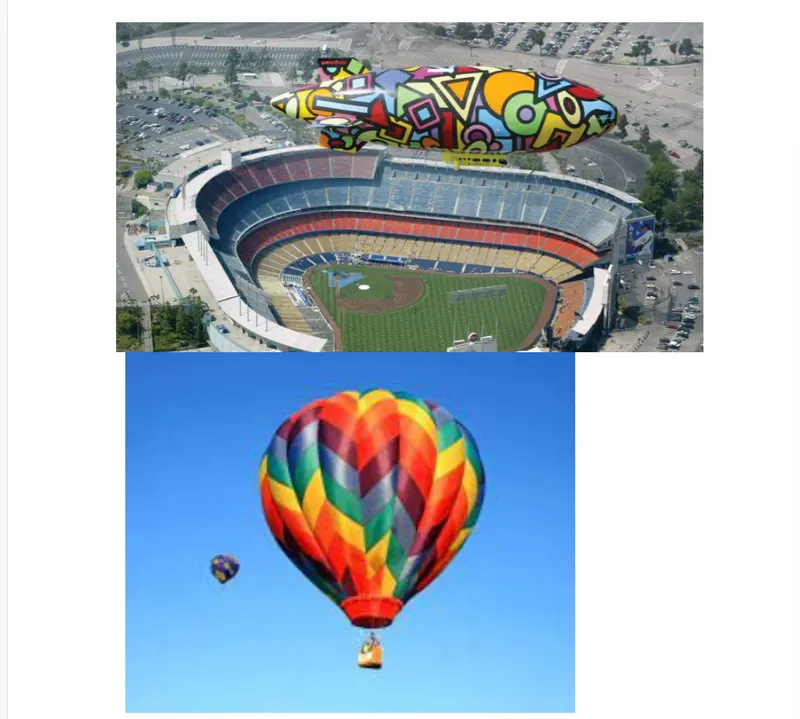
Aircraft such as ballons, nonrigid and dirigibles are designed to contain within their structure a sufficient volume that, when filled with a gas lighter than air(heavier air, hydrogen, or helium), displaces the surrounding ambient air and floats, just as a cork does on the water. Ballons are not steerable and drift with the wind.
Hot air ballons are most around 70kg of weight without psssengers.
Heavier Than Air:
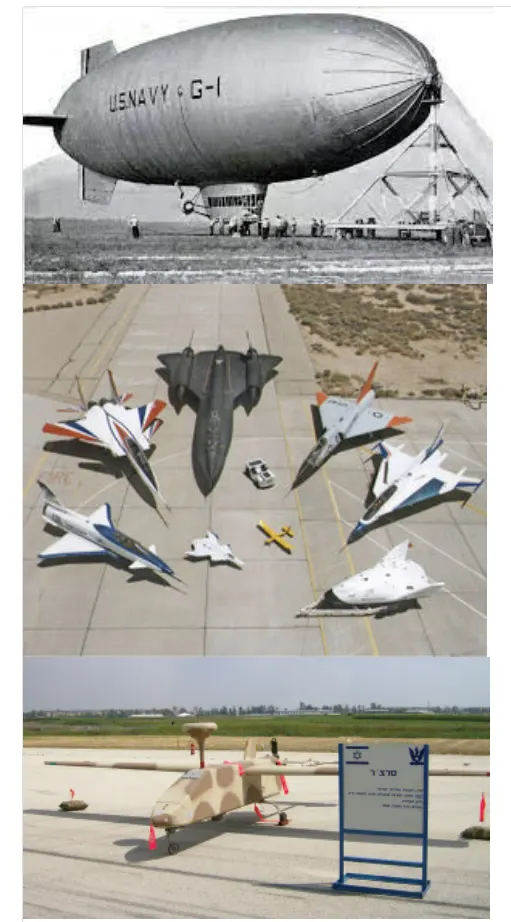
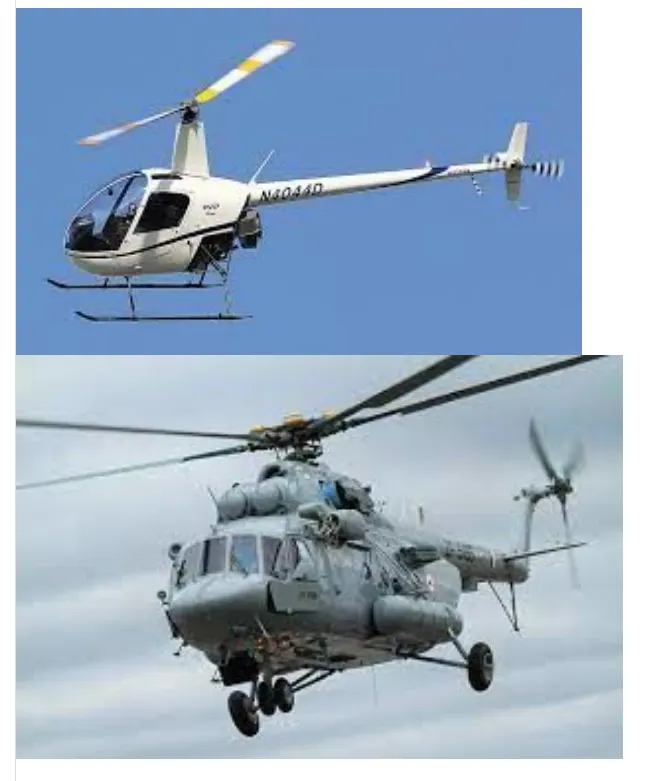
This type of aircraft must have a power source to provide the trust neccassry to obtain lift. These are usually a flat-surfaced structure, often with a stabilizing "tai", attaches by a bridle to a string that is held in place on the ground. Lift is provided by the reaction of the string-restrained surface to the wind.
Typically helicopters weights vary from 270 to 50000 kgs.
Civil Aircrafts:
All Nonmilitary planes are civil aircrafts. These include private and buisness planes and commercial airliners. Private aircraft are personal planes used for pleasure flying, often single-engine monoplanes with nonretracable landing gear. They can be very sophisticated, however, and may include such variants as:"warbirds", ex-military planes flown for reasons of nostalgia, ranging from primary trainers to large bombers.
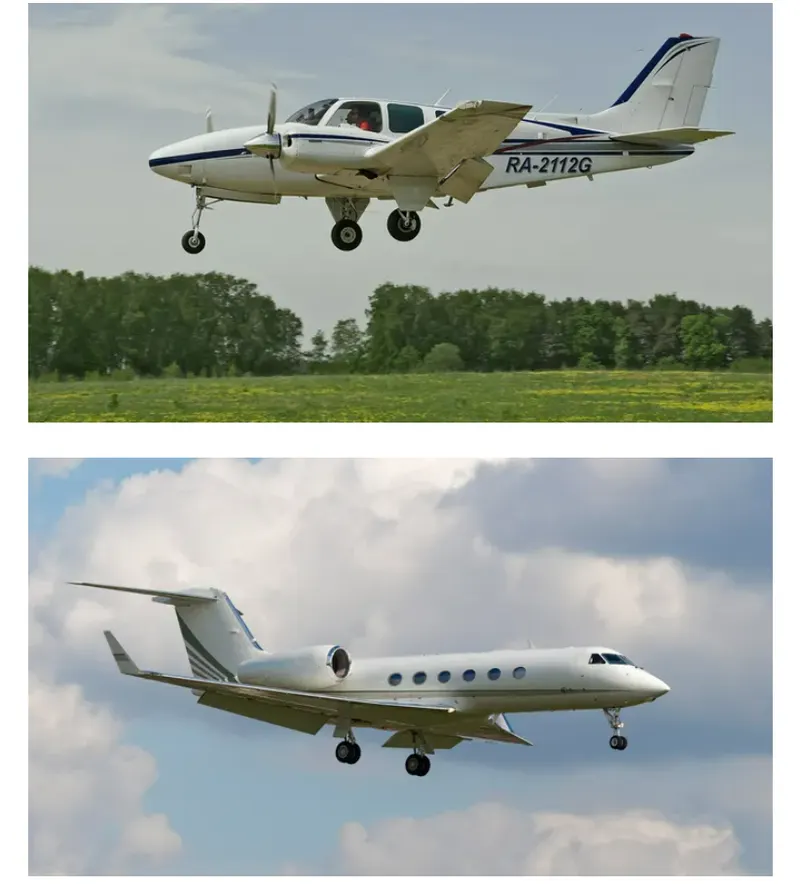
Below is a table of some of the most common aircraft flying around our skies today:
|
Aircraft |
Empty Weight | Max Fuel Weight | Max Cargo Weight | Max Gross Takeoff Weight |
|---|---|---|---|---|
| Antanov AN-225 | 628,000 lbs 285,000 kg |
661,400 lbs 300,000 kg |
417,000 lbs 190,000 kg |
1,411,000 lbs 640,000 kg |
| Airbus A380-800 | 611,000 lbs 277,000 kg |
560,000 lbs 254,000 kg |
185,000 lbs 84,000 kg |
1,268,000 lbs 575,000 kg |
| Boeing 747-800 | 485,300 lbs 220,100 kg |
427,400 lbs 194,000 kg |
295,000 lbs 134,000 kg |
987,000 lbs 447,700 kg |
| Airbus A340-500 | 370,000 lbs 168,000 kg |
386,300 lbs 175,000 kg |
119,000 lbs 54,000 kg |
820,000 lbs 372,000 kg |
| Boeing 777-300ER | 370,000 lbs 168,000 kg | 320,800 lbs 145,500 kg | 148,000 lbs 67,100 kg |
776,000 lbs 352,000 kg |
| Boeing 787-10 | 299,000 lbs 135,500 kg | 223,500 lbs 101,500 kg |
126,300 lbs 57,300 kg | 560,000 lbs 254,000 kg |
| Boeing 737-900 | 98,500 lbs 44,700 kg |
53,100 lbs 24,000 kg |
44,600 lbs 20,200 kg |
187,000 lbs 85,000 kg |
| Airbus A320-100 | 93,900 lbs 42,600 kg |
48,700 lbs 22,100 kg |
44,000 lbs 20,000 kg |
150,000 lbs 68,000 kg |
| Embraer 190 | 63,500 lbs 28,800 kg |
28,600 lbs 13,000 kg |
28,800 lbs 13,100 kg |
106,000 lbs 48,000 kg |
| Gulfstream G650 | 54,000 lbs 24,500 kg | 48,200 lbs 21,900 kg | 6,500 lbs 3,000 kg |
100,000 lbs 45,200 kg |
| Bombardier CRJ900 | 48,160 lbs 21,850 kg | 19,600 lbs 8,900 kg | 6,075 lbs 2,760 kg | 80,500 lbs 36,500 kg |
| Bombardier Q400 | 39,300 lbs 17,800 kg |
11,700 lbs 5,300 kg |
18,700 lbs 8,500 kg |
62,000 lbs 28,000 kg |
| Learjet 75 | 13,900 lbs 6,300 kg | 6,060 lbs 2,750 kg |
2,900 lbs 1,300 kg |
21,500 lbs 9,700 kg |
| Cessna Citation CJ4 | 10,300 lbs 4,700 kg | 5,800 lbs 2,650 kg |
2,200 lbs 1,000 kg | 17,200 lbs 7,800 kg |
| Beechcraft King Air B100 | 7,100 lbs 3,200 kg | 3,200 lbs 1,450 kg |
4,150 lbs 1,900 kg |
12,000 lbs 5,400 kg |
| Diamond DA50 RG | 3,200 lbs 1,450 kg |
340 lbs 155 lbs |
1,250 lbs 560 kg |
4,400 lbs 2,000 kg |
| Beechcraft Bonanza G36 | 2,500 lbs 1,150 kg | 450 lbs 200 kg |
850 lbs 385 kg |
3,660 lbs 1,660 kg |
| Cessna 206H | 2,200 lbs 990 kg |
520 lbs 235 kg |
1,150 lbs 520 kg |
3,600 lbs 1,630 kg |
| Sirrus SR22 | 2,250 lbs 1,000 kg | 485 lbs 220 kg |
950 lbs 430 kg |
3,600 lbs 1,630 kg |
| Cessna 172R | 1,700 lbs 770 kg |
380 lbs 170 kg |
560 lbs 255 kg |
2,425 lbs 1,100 kg |
2. Difference Between Ground Speed and Air Speed
Ground Speed:
Ground speed is how fast an airplane is travelling, relative to a fixed point on the ground. Think of it this way:
Ground speed is how dfast an airplane's shadow would move across the land. If there's a strong wind pushing an aircraft, that's reflected in the ground speed.
Air Speed:
Airspeed is the vector difference between the ground speed and the wind speed. On a perfectly still day, the airspeed is equal to the ground speed. But if the wind is blowing in the same direction that the aircraft is moving, the airspeed will be less than the ground speed.
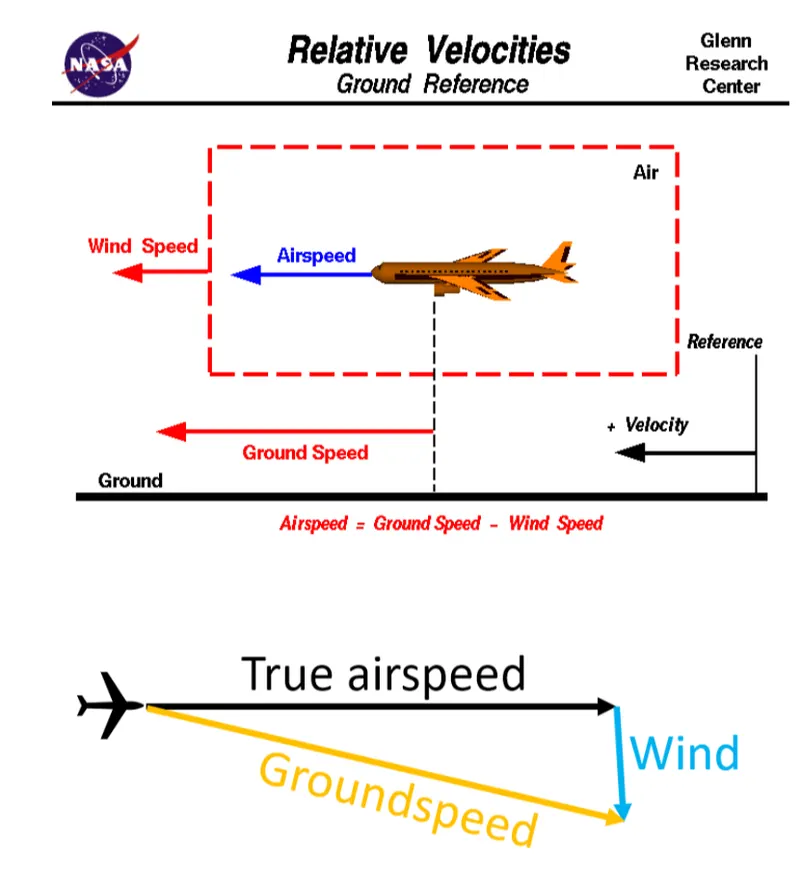
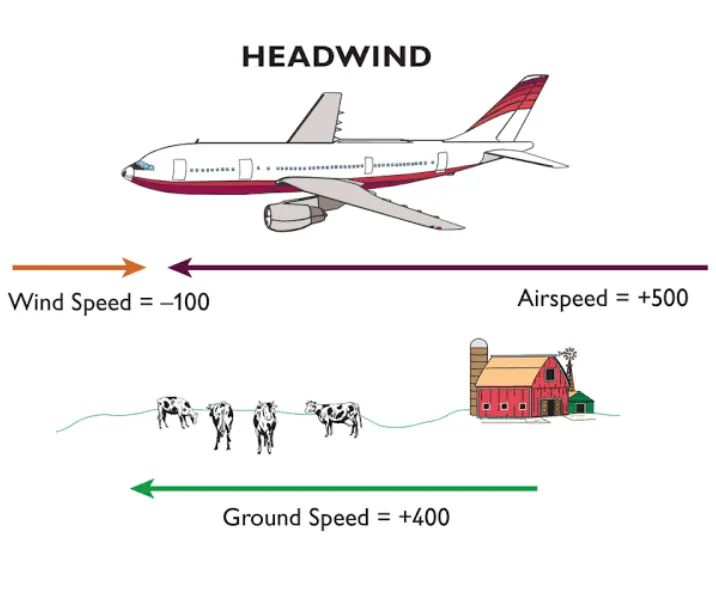
The aircraft operates on both ground as well as in the air so we need to observe how these speeds are related. The ground speed and air speed are usually depend upon the wind wind speed. If the wind speed changes these speeds may change. If consider there is no wind speed thaen the air speed is equal to the grounds speed.
If the wind is flowing in the smae dire tion of the flight then (air speed < ground speed) so air speed=ground speed-wind speed.
If the wind is flowing in the opposite to direction of the flight then (air speed >ground speed) so air speed=ground speed + wind speed.
3. Why is it not recommended to use aircraft engine power to move it on ground at airport:
Taxiing:
It occurs after an airplane has landed, and it occurs before an airplane takes off. Airplanes don't actually fly while on the ground. As a result, the process by which they move on the runway isn't known as flying; it's known as taxiing.
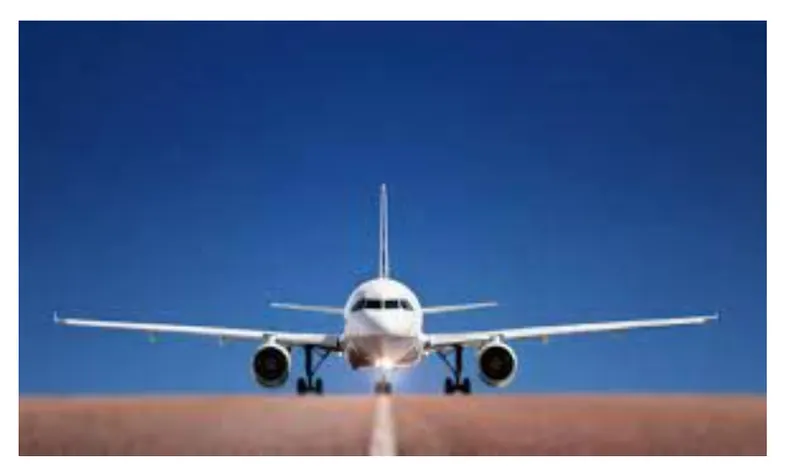
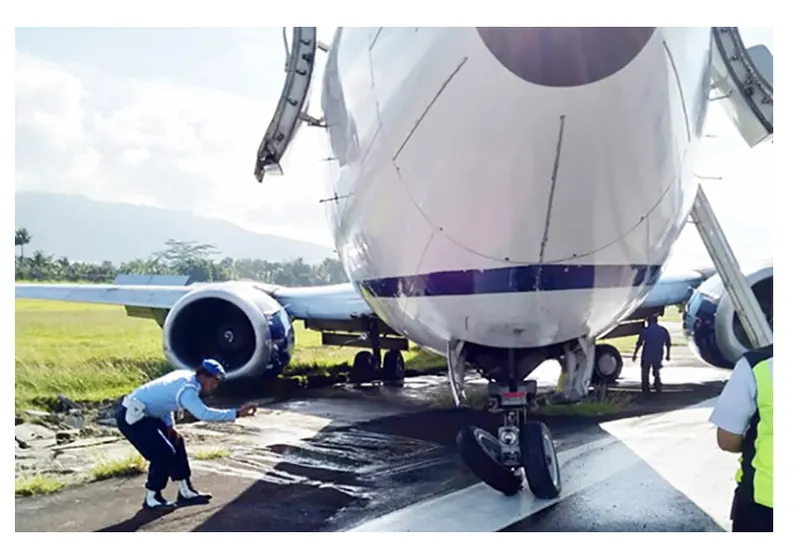
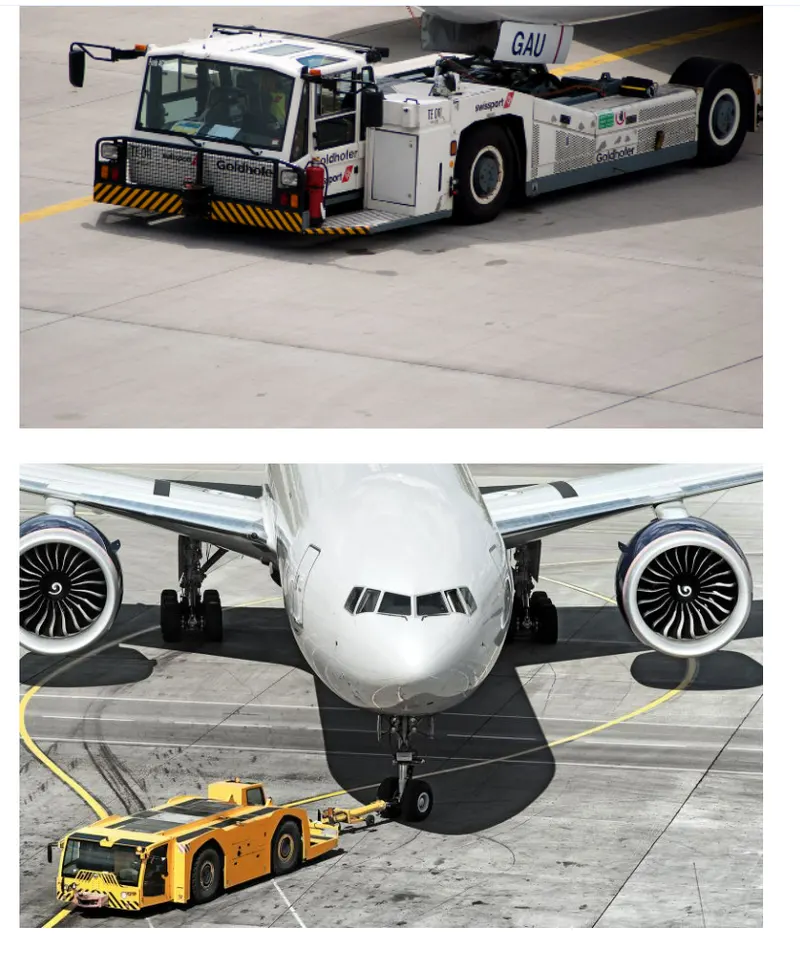
Although many aircrafts moves in backward using reverse thrust as a reuslt, the jet blast or prop wash might damage the terimibnal bilding and other equivpment. Engine close to ground may also damage the engine. This may cause the huge damage to the aircraft. Thats why pushback trucks are provided for the backward movement of crafts in airports. A push back truck lifts the front wheel of the aircraft. Their(push back truck) role is to move the aircraft away from the parking area.
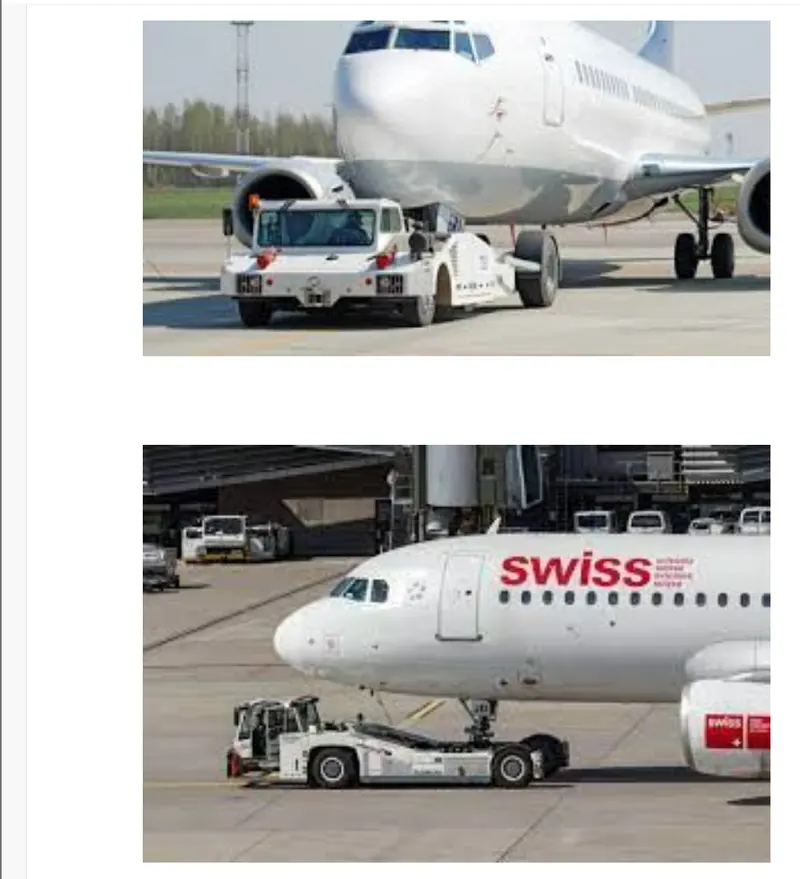
During high power engine runing damage can occur itself to the aircraft. It is easier to the truck driver to see the outside and drive the vehicle co pared to the pilot. The push back driver knows well about the airport compared to the pilot. The another main thing is it saves the huge fuel for such a small thjing. These may damage the aicrafts which are next to it in reversing by itself. Huge risk of jet blast and surrounding buildings,
4.How an aircraft is pushed to runway when it's ready to take off:
The aicraft is in parking place before it goes to the runway the thing is when it needs to fly to come back to the runway to fly.
The aircraft can itself move backwards although it is risky for the aircraft and the surroundings it uses the towing system.
Towing:
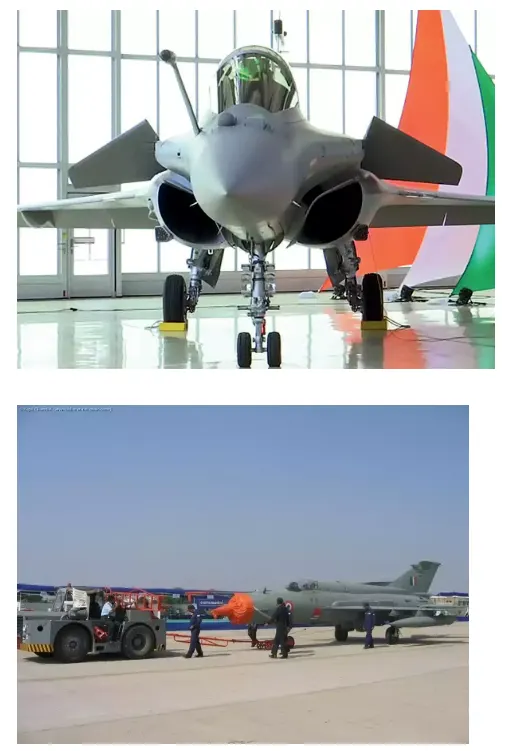
We have all been sat on a plane and had the plane pushed back from the gate before the pilots start the engines. There must be a reason for this as some airports always push planes back, but yet others just seem to let the aircraft turn away from the gate. I’ve also seen airplanes being towed around an airport so why not just move them using their own engines?
Airplanes get towed or pushed by tractors and tugs when jet blast from their engines or prop wash from their propellers will create a hazard to nearby buildings, ground crew, other aircraft & ground handling equipment. Moving aircraft from hangers to aprons does not require pilots if being towed.
Depending on the airport, some aircraft movements have to be made with assistance to ensure the safety of all those working in the area or when the need to start the engines is overkill for the maintenance task required.
5,Take off power, tyre design, rolling resistance, tyre pressure, brake forces when landing:
Take Off Power:
Takeoff is the phase of flight in which an aerospace vehicle leaves the ground and becomes airborne. For aircraft traveling vertically, this is known as liftoff.
For aircraft that take off horizontally, this usually involves starting with a transition from moving along the ground on a runway. For balloons, helicopters and some specialized fixed-wing aircraft (VTOL aircraft such as the Harrier and the Bell Boeing V22 Osprey), no runway is needed.
Once the 'safe height' is reached the engine thrust can therefore be reduced to a more appropriate (i.e. efficient) setting and the aircraft flight path can be changed to a more appo=ropriate flight path.
In order to achieve that described above and also to provide minimum noise disturbance to the area surrounding the airport, regulatory procedures require aircraft to fly one of the two profiles given below during departure.
 Tyre Design:
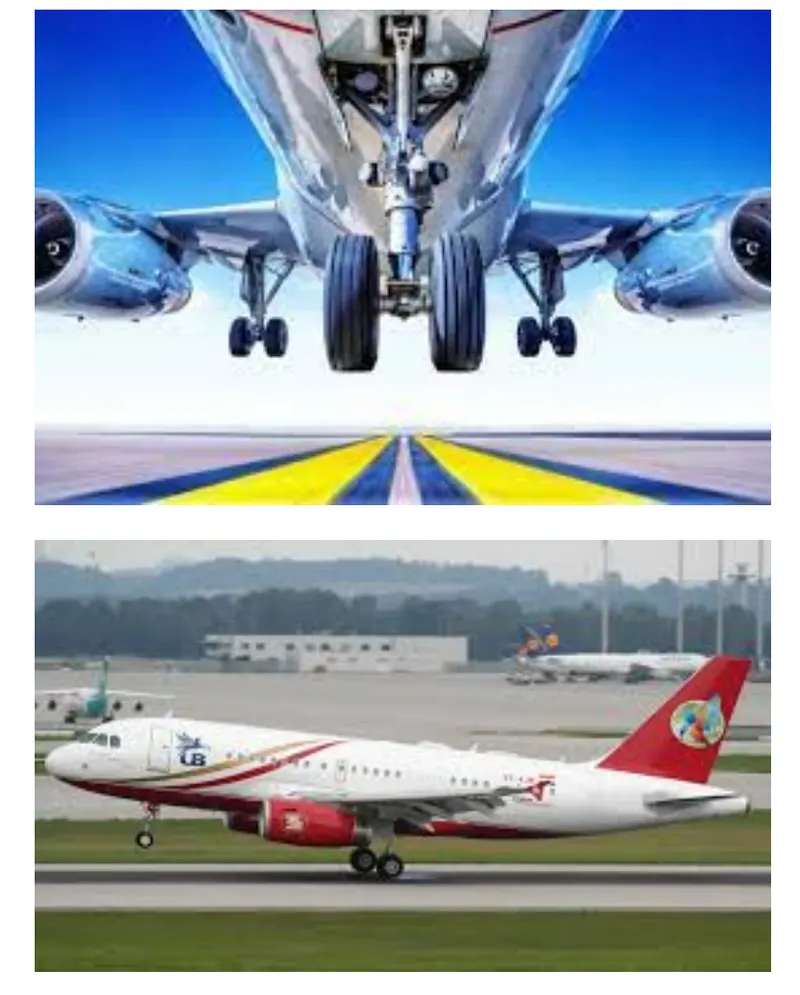
When it comes to safety, tyres are one of the most important components of aircraft. They help to absorb the shock of landing and provide cushioning. It also provides the necessary traction for braking and stopping of an aircraft.
An aircraft tyre is designed to withstand extremely heavy loads while landing, take off, taxing, and parking. The number of wheels required for aircraft increases with the weight of the aircraft, as the weight of the aeroplane needs to be distributed more evenly.
A Boeing 737NG & 737MAX uses 6 wheels, Boeing 787 uses 10 wheels, Boeing 777 uses 14 wheels and Airbus A380 uses 22 wheels. Aircraft tyres work under extreme conditions, carrying up to 340 tons and accelerating at over 250 km/hour at takeoff, in addition to enduring varied environmental stress when in flight and taxiing.
Design and Construction of Aircraft tyre
Carcass plies are used to form the tire. They are sometimes called casing plies. An aircraft tyre is constructed for the purpose it serves.
- They support the weight of an aircraft while it is on the ground.
- It also provides the necessary traction for braking and stopping of an aeroplane.
- Tyre also helps to absorb the shock of landing and provide cushioning the roughness of takeoff, roll-out, and taxi operations.
Unlike an automobile or truck tyre, it does not have to carry a load for a long period of continuous operation. However, an aircraft tyre absorbs the high impact loads of landing, and also it’s operating at high speeds for a short time when required.
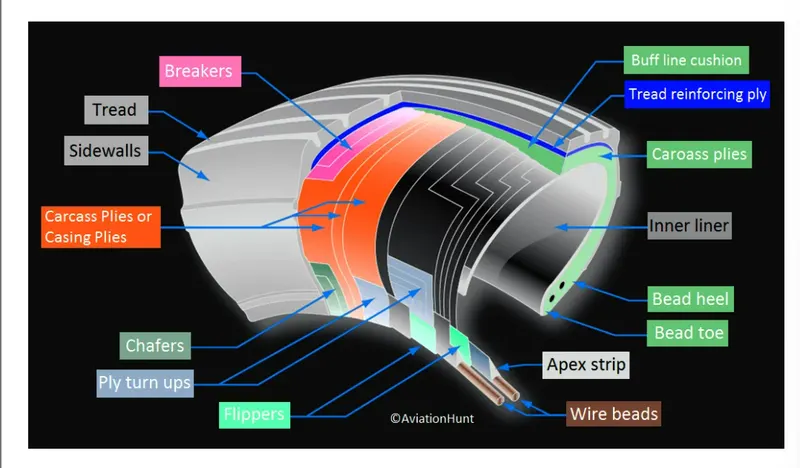
Let’s go through some technical aspects of the tyre.
Retreading – Retreading is methods of restoring a worn tyre by renewing the tread area or by renewing the tread area plus one or both sidewalls. Repairs are included in the tyre retreading process.
Load Rating – Load rating is the maximum permissible load at a specified inflation pressure.
Ply Rating – Ply Rating is used to identify the maximum recommended load rating and inflation pressure for a specified tyre. It is an index of tyre strength.
Speed Rating – The speed rating is the maximum takeoff speed to which the tyre has been tested.
Skid Depth – Skid depth is the distance between the tread surface and the deepest groove as measured in the mould.
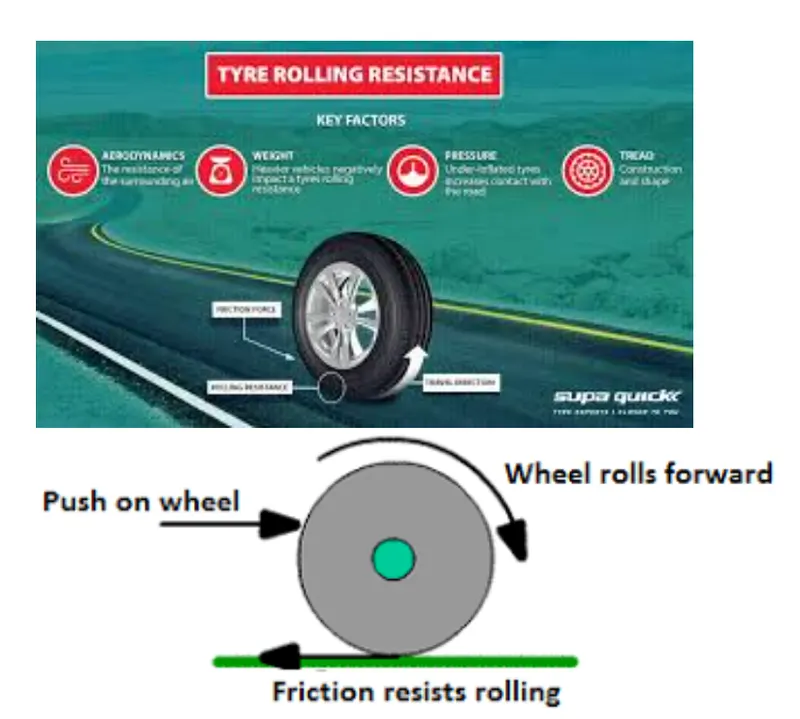
Rolling Resistance:
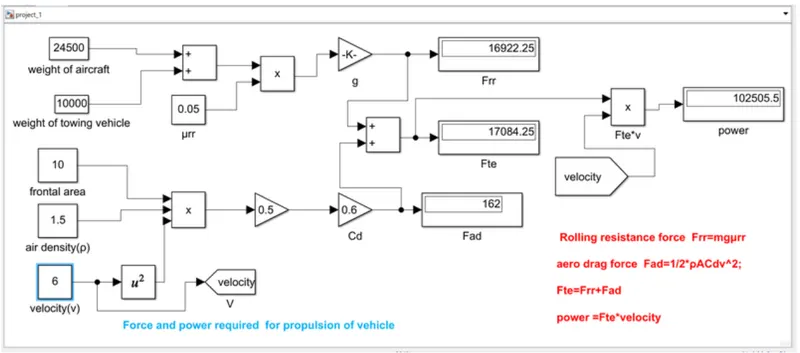
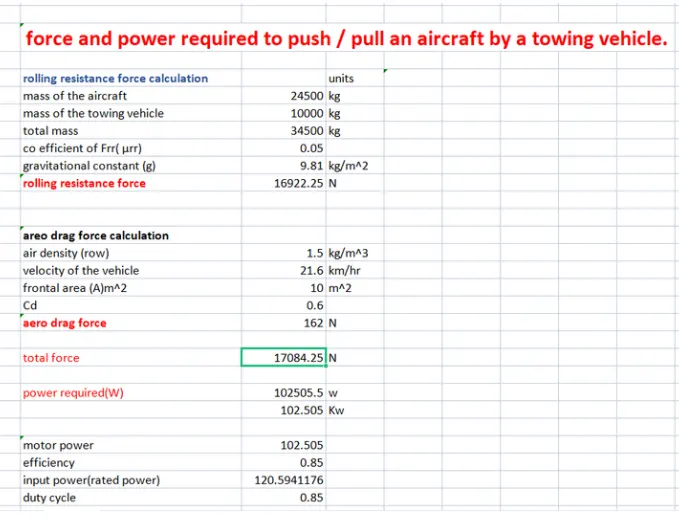
The force offered to the tore of the aircfraft is this type of force. It depends upon the tire pressure, tire material, temprature around the tyres, structure of the tyre. We have that the force required to overcome the rolling resistance is given by,
Frr=μrr*m*g where,
μrr=co-efficient of rolling reistance,
m=mass of the tire + The payload + Kerb Weight,
g=Gravitational Force.
Tire Pressure:
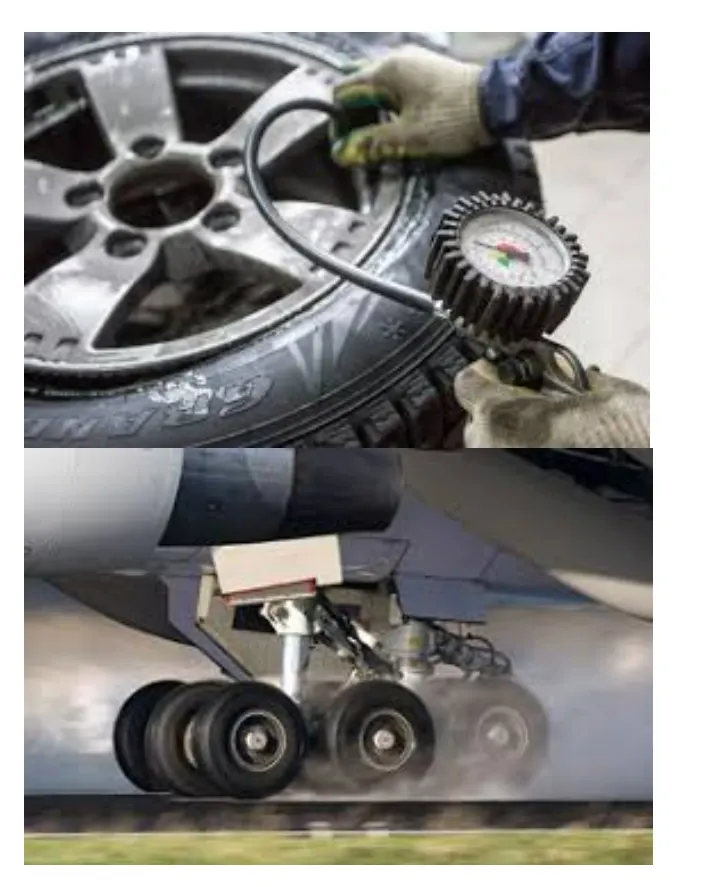
The amount of air inside the tyre is known as tire pressure. Tyre pressure plays a major role in vehicle dynamics. If the tyre pressure is less the rolling resistance force applied on the automobile will be more.
The typical airliner tire can handle a 38-ton load. It can meer the ground 500 times before needing a re-tread, a refresh it can take on seven time in its life.
Brakes provide this critical stopping function during landings to enable airplanes to stop within the length of the runway. They also stop aircraft during rejected takeoff events, in which an attempted takeoff is canceled as the airplane is rolling down the runway before it lifts off from the ground due to engine failure, tire blowout, other system failure or direction from air traffic control.
Aircraft brakes also prevent motion of the aircraft when it is parked, limit its speed during taxiing and can even help steer the aircraft on the ground by applying different levels of braking force to the left- and right-side brakes.
Aircraft brakes work in conjunction with other brake mechanisms such as thrust reversers,air breaks and spoilers. Thrust reversers are surfaces that are deployed into the path of the jet blast from the engines to redirect propulsive thrust in a direction that opposes the motion of the aircraft. Air brakes and spoilers are flight control surfaces that create additional aerodynamic drag when deployed into the path of air flowing around the aircraft.
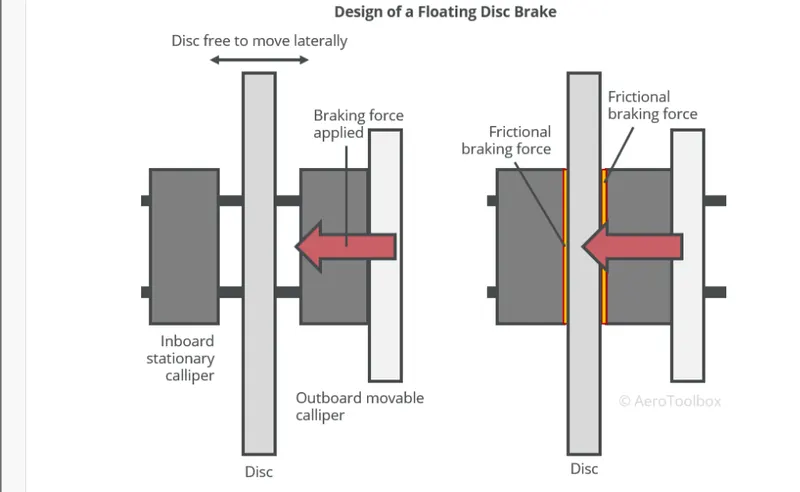
(A) Disc Brakes:
The most common type of brake used on aircraft is the disc brake. Disc brakes function by exploiting friction between rotating and stationary discs inside the brake.
Upon receiving a command signal to brake — from the pilot depressing a foot pedal or from the autobrake system — actuators in the brake move a piston to squeeze the discs together, generating a frictional force that slows the rotation of the wheel. The friction between the discs generates heat as the aircraft’s kinetic energy is converted to heat energy. In this function, the brakes act as a heat sink, absorbing tremendous amounts of heat as the aircraft sheds kinetic energy. During RTO stops, the temperature of carbon disc brakes can exceed 1,800° C.