Project-1: Powertrain for aircraft in runways
1.List of total weight of various types of aircrafts.
- Aerostat:The aircraft lighter than the air. Which means it uses Helium, hydrogen and hot air as fuel. These gases density is lesser than the surrounding air density. they just float in air like ships in water.
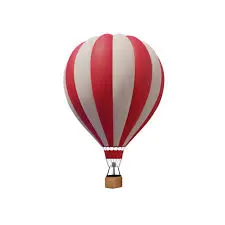
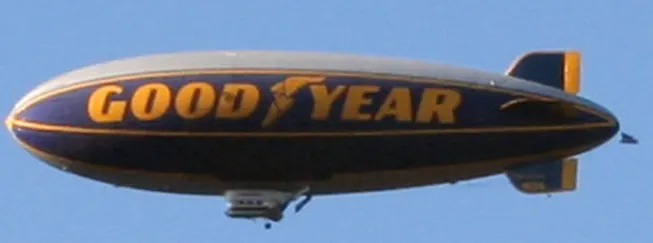
example:Hot air Balloons,Air ships and hybrid aerostats.
- Maximum Weight of Aerostats=1600 Kgs.
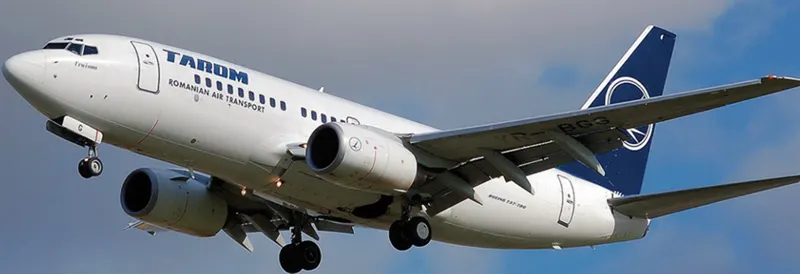
Aerodyne: The Aircrafts which are Heavier than the Air. By Pushing Air downwards so that by Newton's third law aircraft move upwards. It uses Diesel for Propulsion to fly.
Example:Aeroplane:This is a engine driven aerodyne that achieves lift from the dynamic action of air against fixed wings. used for carrying passengers and goods
Weight: 6,40,000 Kgs
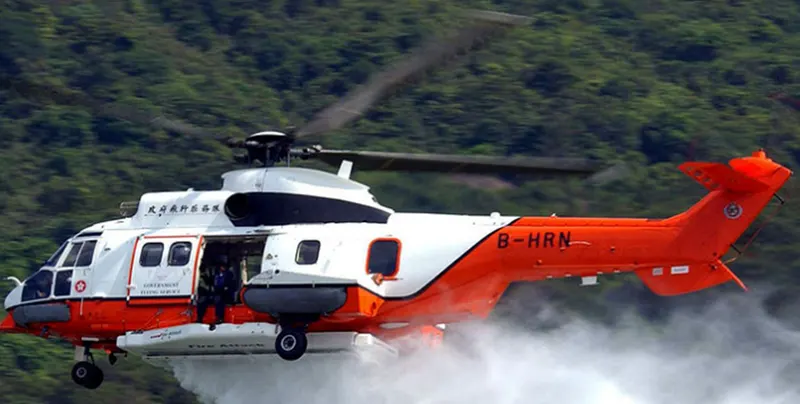
Rotary wing aircraft: It is also engine driven aerodyne with rotary wings. Used for military and rescue operations as it fly nearer ground level.
Take off Weight: 700Kgs for VSR700 Rotary wing.
Empty Weight: 400kgs
Unpowered Air craft: Does not use any fuel for propulsion.
Gliders/sailplane: A glider is a fixed wing aircraft that is supported in flight by the dynamic reaction of the air against its lifting surfaces, and does not depend on an engine. It contains a small engine for starting purpose and fly in air by manpower.used for safe landing from hill mountains to land.
Weight:Maximum weight is around 200Kgs
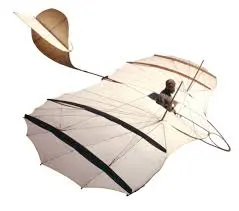
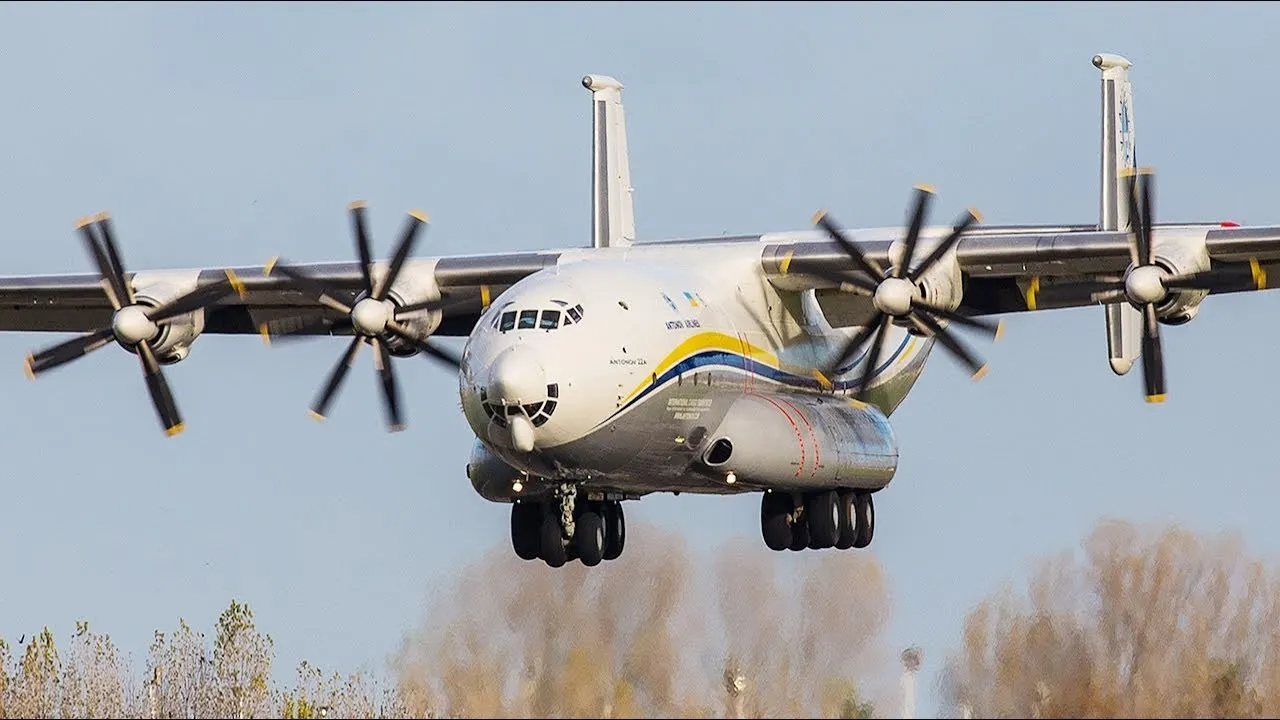
Propeller aircraft:
A propellor or comprises a set of small, wing-like aerofoil blades set around a central hub which spins on an axis aligned in the direction of travel. The blades are set at a pitch angle to the airflow, which may be fixed or variable, such that spinning the propeller creates aerodynamic lift, or thrust, in a forward direction.
Weight: empty weight:124000Kgs
Take off weight: 182000 Kgs
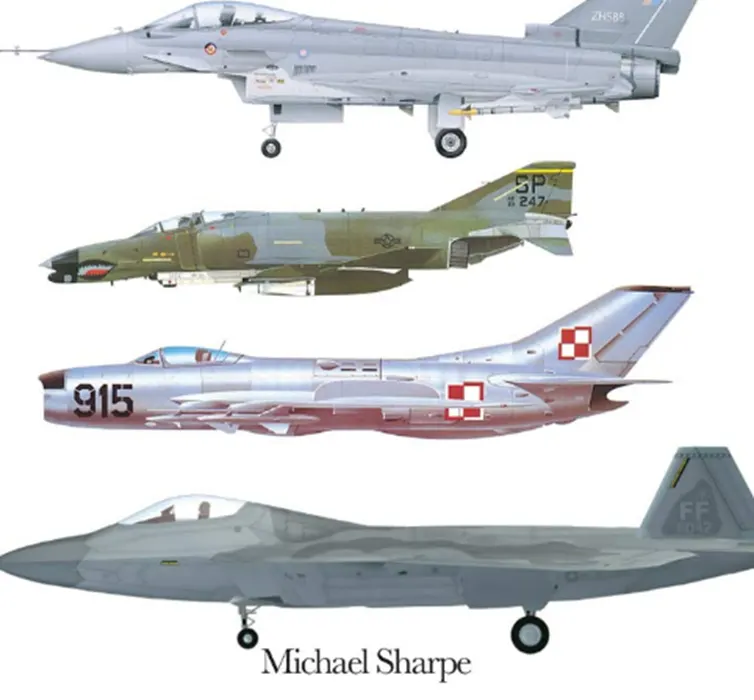
Jet Aircraft:
uses airbreathing jet engines which take in air, burn fuel with it in a combustion chamber, and accelerate the exhaust to provide thrust.
Compared to engines using propellers, jet engines can provide much higher thrust, higher speeds and, above about 40,000 ft, greater efficiency.
They are also much more fuel-efficient than rockets. As a consequence nearly all large, high-speed or high-altitude aircraft use jet engines.
Weight : 24.5 Tonnes
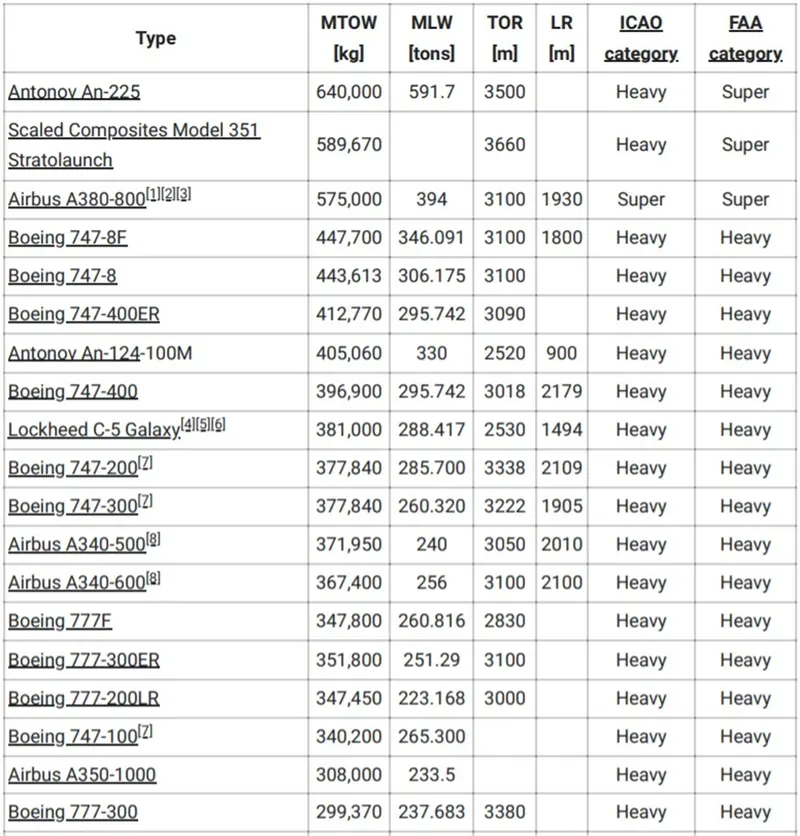
Different weights for AirCrafts:
MTOW: Maximum Take off weight.
MLW: Maximum Landing weight
TOR: Take off run
LR: Landing run
2. Is there any difference between ground speed and air speed?
|
Ground Speed |
Air Speed |
|
|
|
In most of the vehicles speed determination air speed is considered as ground speed. As at ground level mostly wind speed is Zero.
But in Aircrafts Wind speed is considered as it always fly above the ground level.
3. Why is it not recommended to use aircraft engine power to move it on the ground at Airport?
In Most of the cases Aircraft uses its own engine Power at airport but due to below following reasons Aircraft needs of external source.
- The only time they use external assistance is to pushback from the gate. Large turbofan aircraft need help to reverse via a pushback tractor. The engines are turned on after the pushback is complete and the aircraft can move forward under It’s own power.
- Blasting jet reversers blows debris In the crowded gate area creating foreign object damage hazard for adjacent aircraft, gate equipment or terminal waiting area glass windows.
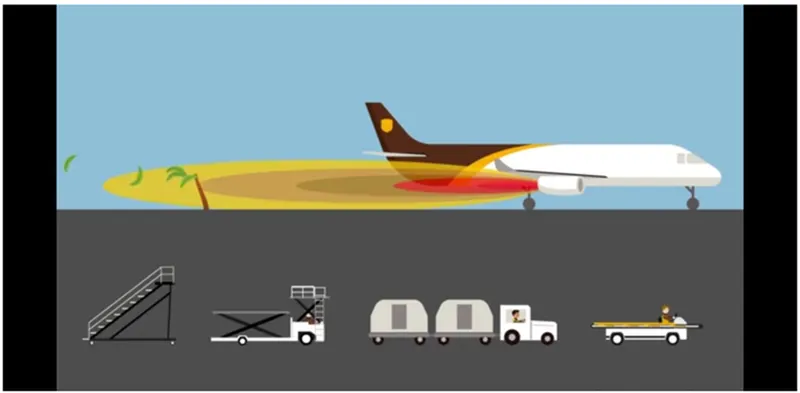
- Due to the noise and fumes plus they burn a lot of fuel. Sometimes they are towed into a spot due to it being a small parking space for safety.
4.How an aircraft is pushed to runway when its ready to take off?
- Mostly Aircraft uses its own engine power thrust to take off from the runway.
- Rotation of Aircraft, When Aircraft is deviated from runway by a certain angle then it is corrected by a pushback tractor.
- To bring the aircraft From a parking lot to runway point when place is conjested and pilot cannot ssen nearby objects then external source is used.
Pushback Procedure
The pushback is an airport procedure during which an aircraft is pushed backwards away from an airport gate by external power.
Although many aircraft can also move backwards on the ground using reverse thrust , the resulting jet blast or prop wash may cause damage to the terminal building or equipment. Engines close to the ground may also blow sand and debris forward and then suck it in to the engine, causing damage to the engine.
A pushback using a tractor or tug is therefore the preferred method to move the aircraft away from the gate. All of the operations must be equipped with pushback tractors tugs which are completely reliable.
5. Learn about take off power, tyre design, rolling resistance, tyre pressure, brake forces when landing.
a.Take-Off Power:
- Take off is a phase of the aircraft which starts from leaving the ground and sustained in the air.
- For light aircraft, usually full power is used during takeoff.
- Large aircraft may use a reduced power for takeoff,
- where less than full power is applied in order to prolong engine life,
- reduce maintenance costs and reduce noise emissions.
- In some emergency cases, the power used can then be increased to increase the aircraft's performance.
b.Tyre Design:
- Tyre design is a important safety factor while take off and landing.They help to absorb the shock of landing and provide cushioning.
- It also provides the necessary traction for braking and stopping of an aircraft.
- Carcass plies are used to form the tire. They are sometimes called casing plies.
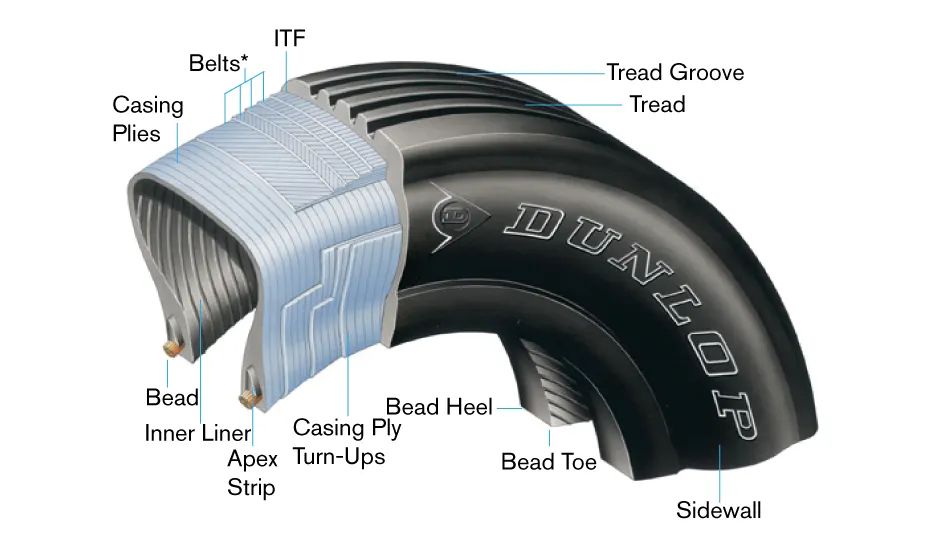
- They support the weight of an aircraft while it is on the ground.
- It also provides the necessary traction, braking and stopping of an aeroplane.
c.Rolling Resistance of Tyre:
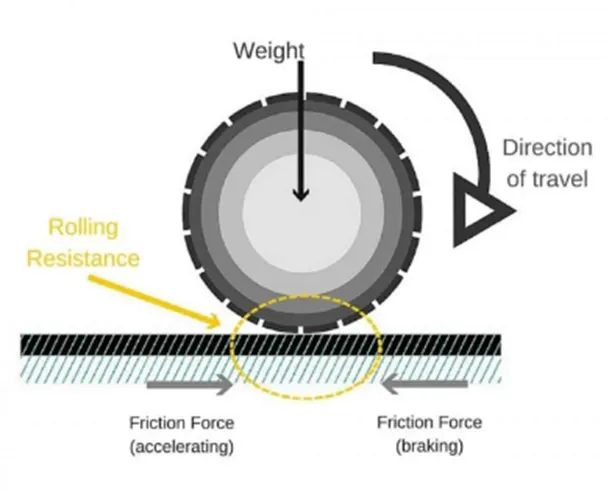
Tire rolling resistance is the force resisting the motion when a body rolls on a surface. Due to this force two loses are produced.
d.Tyre Pressure:
The only part which maintains contact with ground is Tyres. So, It is important to maintain tyre pressure which effects the overall vehicle efficiency
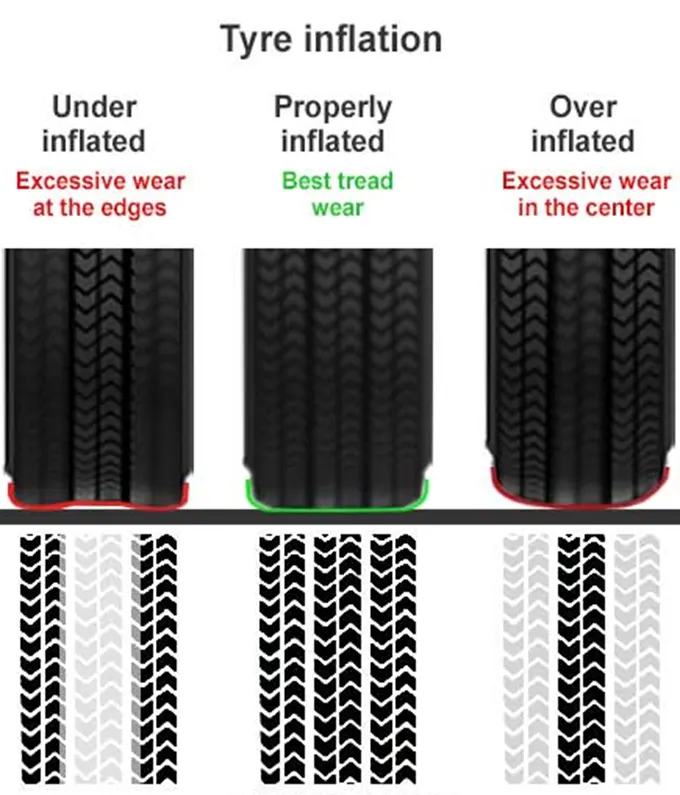
Substantial deviations from the recommended tyre pressure negatively affects tyre's physical properties. These weaknesses are manifested by:
- Excessive tyre wear
- Tyre damages
Tyre Pressure Impacts on Vehicle:Maintaining the proper tire inflation pressure is crucial because it affects numerous vehicle and tyre performances, safety and environment:
- Handling
- Braking
- Tyre wear
- Tyre durability
- Tyre rolling resistance
- Fuel consumption
- Greenhouse gas emission
- Ride comfort
- Possible tyre blowouts
- Potential hydroplaning
e.Braking forces while landing Aircraft:Aircraft Disc Brake in the landing gear used to brake the wheels while touching the ground In todays modern aircraft they are activated by the top section of the rudder pedals (toe brakes)and Levers are used in a few aircraft.
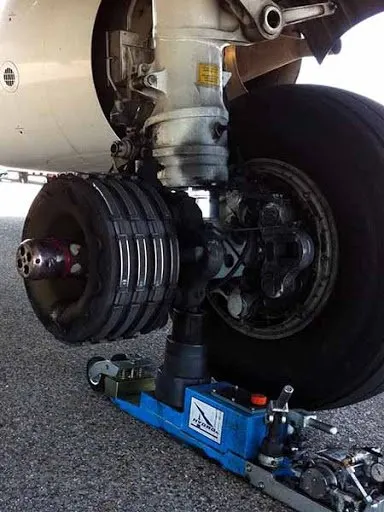
- A disc brake is a type of brake that uses the calipers to squeeze pairs of pads against a disc to create frictin
- This action slows the rotation of a shaft, such as a vehicle axle either to reduce its rotational speed or to hold it stationary.
- The energy of motion is converted into waste heat which must be dispersed.
Part B:
- A. With necessary assumptions, calculate the force and power required to push / pull an aircraft by a towing vehicle.
The force required to push/pull an aircraft by towing vehicle are rolling resistance and aerodynamic drag force. the data from towing truck TMX-150-9 and aircraft airbus A319
Mass of truck(kg)=8300
Mass of aircraft(kg)=75500
Length of aircraft(m)=33.84
Height of aircraft(m)=11.76
Air density(ρ)(kg/m^3)=1.225
Velocity(V)=25
Gravitational constant(g)=9.8
Drag coefficient(Cd)=0.75
Rolling resistance coefficient=0.013
Rolling resistance force(FRR)=Urr*m*g
So,
m=8300+75500=83800kg
Aero dynamic Force (Fad)=0.5*ρ*Cd*A*v^2
V=25*5/18
6.95M/S
Area=a=Length of aircraft(m)=33.84*Height of aircraft(m)=11.76=397.95
Fad=0.5*ρ*Cd*A*v^2=8830N
Total Force reqd to Push/Pull an aircraft by towing vehicle is =FRR+fad
=19508.12N
Power Required to pull/push the aircraft = Force * Velocity=19508.12*6.95=135.581KW
B. Develop the model for the calculated force and power using Simulink.
The simulink model for the above calculated force and power is
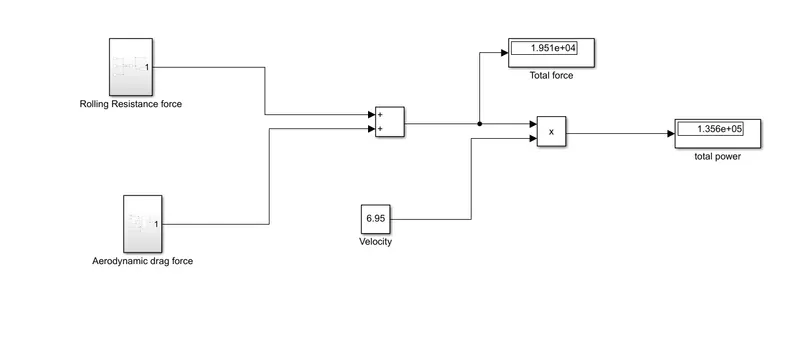
Total Force reqd to Push/Pull an aircraft by towing vehicle is =FRR+fad
Power Required to pull/push the aircraft = Force * Velocity
The simulink model for Rolling resistance force(FRR)=Urr*m*g is
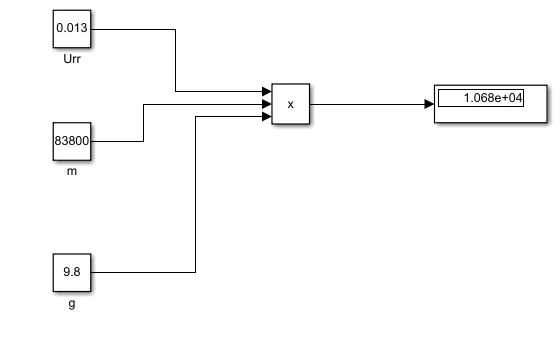
The simulink model for
Aero dynamic Force (Fad)=0.5*ρ*Cd*A*v^2
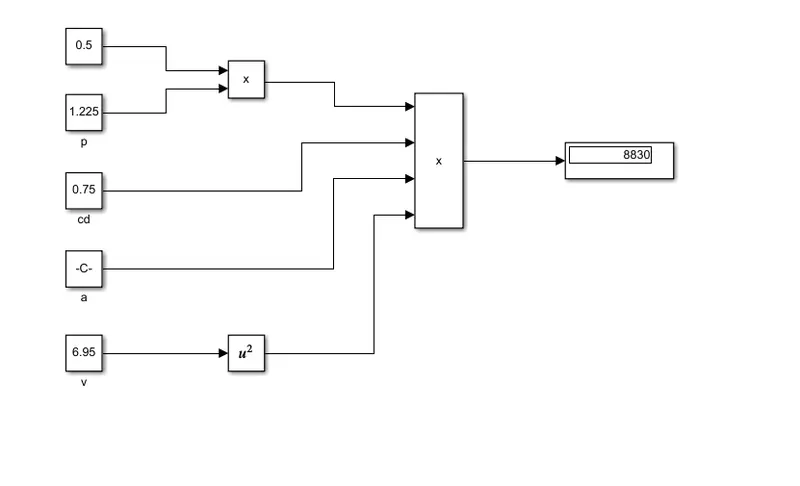
Thus simulink model for total power and force has been calculated using simulink block
7. A. Design an electric powertrain with type of motor, it’s power rating, and energy requirement to fulfill aircraft towing application in Simulink. Estimate the duty cycle range to control the aircraft speed from zero to highest. Make all required assumptions. Prepare a table of assumed parameters. Draw a block diagram of powertrain.
(Hint :DC7 Block)
Block diagram of Power Train Blockset is given below
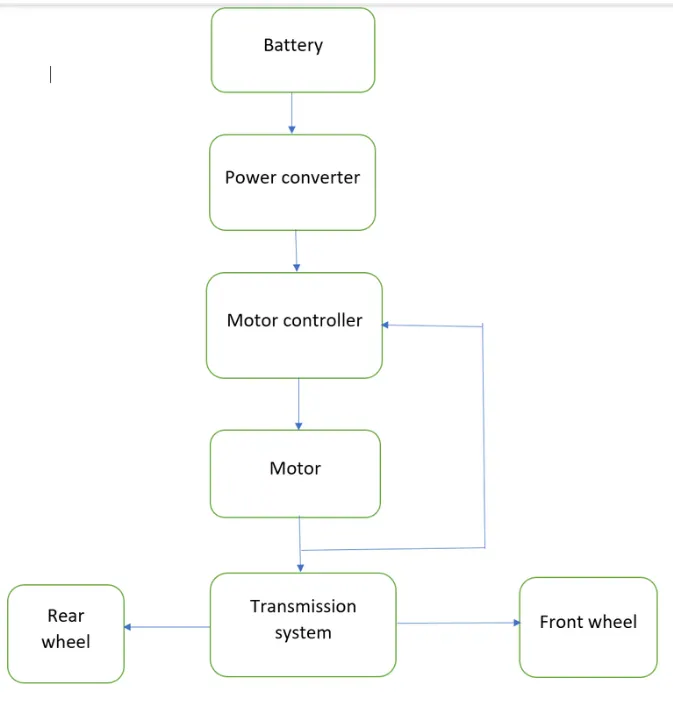
Design an electric power train with type of motor, it’s power rating, and energy requirement to fulfill aircraft towing application in Simulink
Designing a electric power train aircraft towing application
The tyre specification of TMX-150-9 is 315/70 R15
Datas:
Force required to tow the aircraft - 19508.12N
Power required for towing the aircraft = 135.581KW
Tyre radius = Aspect ratio x section width + (Rim diameter/2) = 0.41m
Gear ratio - 7
Transmission efficiency(nt) - 80%
Motor efficiency (nm) = 92%
Calculations Torque required at the wheels(TW) - Total force xTyre radius = 19508.12*0.41 =8017.83Nm
Actual power required (Pac) - Power required/nt*nm) - 135.581/(0.8*0.92) = 184.21kW
Motor power rating should be close to 190kW
Motor Torque Tm=TW/(gear ratio*nt) - 8017.83/(0.8*7) = 1431.75Nm
Actual motor torque (Tmac) - Tm/nm =1.431/0.92 = 1,555kNm
Battery capacity
Towing time = 15 mins = 0.25hours
Battery capacity = Pac*hours = 184.21*25= 46.05kWh
Should use 210kW battery for running tow truck easily
Duty Cycle = (Pac/input power) =184.21/210=0.87
Simulink model of towing truck
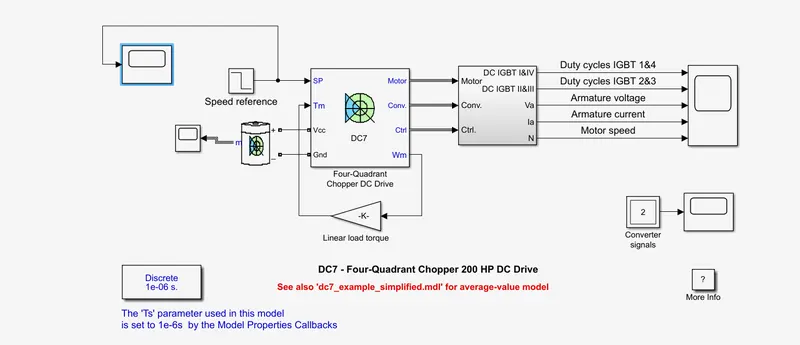
Here DC7 4quadrant chopper is used
ac supply is displayed by a battery source that is dc
The soc , current and voltage are monitored by using the scope
At the end of duty cycle IGBT 1 and 4, IGBT 2 and 3 armature voltage and armature current and motor speed have been monitored with the help of scope
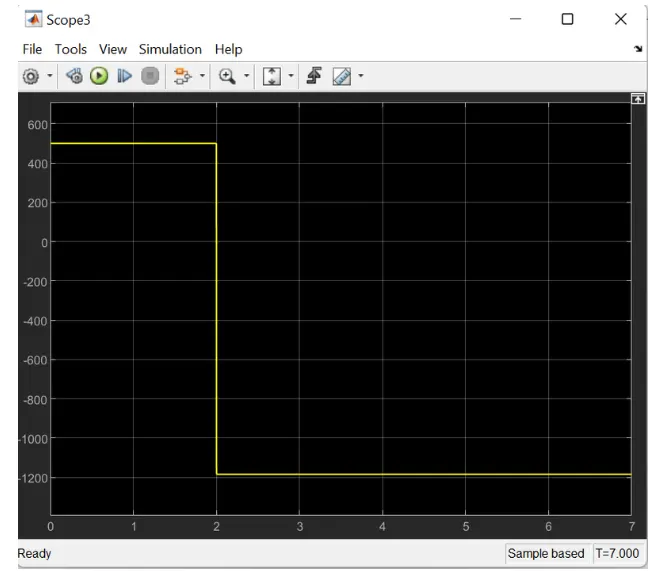
the i/p waveform for speed refference is
The battery SOC,Current and voltage waveform
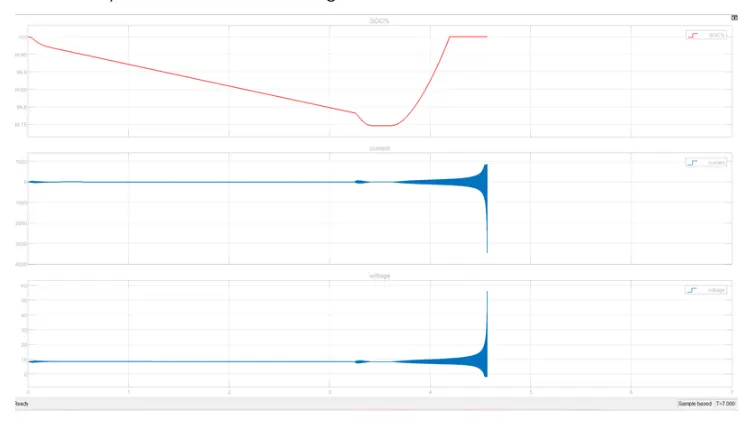
The output obtained is
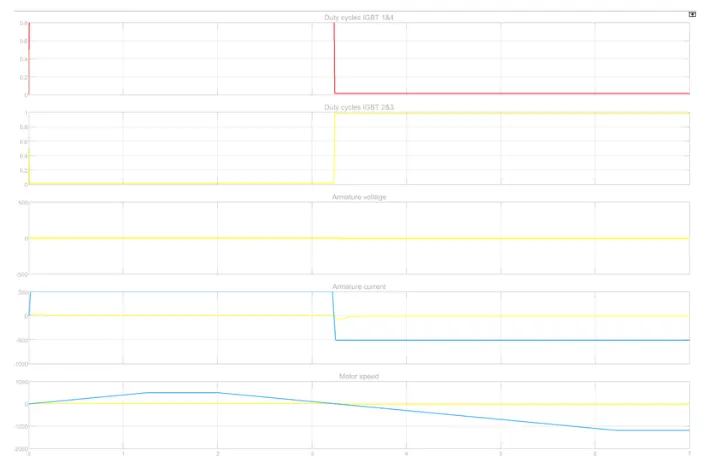
The above results are for simulation of DC7 BLOCK which is run for 7Sec
B. Also, Design the parameters in excel sheet.
Note: Attached the file towing truck.xlsx for the above