Project-1: Powertrain for aircraft in runways
1. Search and list out the total weight of various types of aircraft.
Answer:
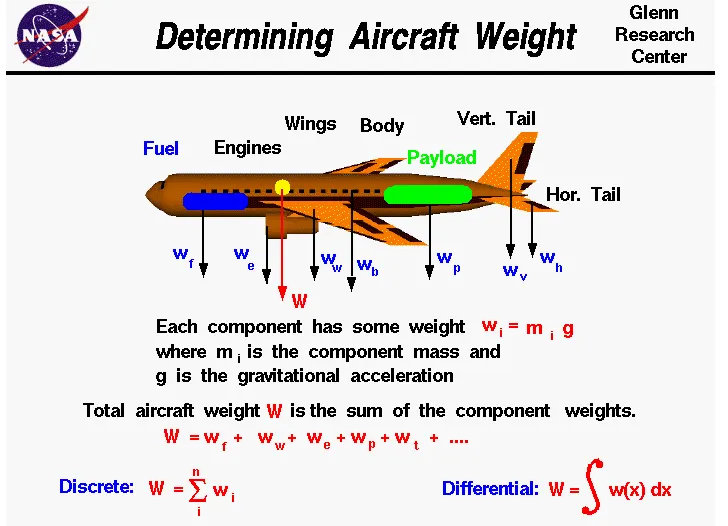
Each weight term is defined by a different type of weight variable acting on the aircraft as shown in the above image.
Manufacture's empty weight(MEW):
It's also called manufacturer's weight empty(MWE) or Licensed empty weight. It's the weight of the aircraft as built by the manufacturer and includes the weight of the aircraft body, engine, furnishing installations, systems, and other equipment that are included as an integral part of an aircraft. This does not include any baggage, passengers, and usable fuel weight.
Zero fuel weight(ZFW):
This is the total weight of the aircraft and all its content(including unusable fuel) but does not include the total weight of the usable fuel on board. As a flight progresses the fuel gets consumed, and the total weight of the aircraft reduces but the ZFW remains constant. Maximum zero fuel weight(MZFW) is the maximum weight allowed before usable fuel and other specified usable agents(engine injection fluid, consumable propulsion agents) are loaded.
Operating empty weight(OEM):
The basic weight of an aircraft includes the crew, all necessary fluids required for operation such as engine oil, engine coolant, unusable fuel & all operator items. Does not include the usable fuel & payload.
Payload :
It is the carrying capacity of an aircraft including the cargo, passengers, and extra fuel. In the case of commercial airlines, it may refer only to revenue-generating cargo & paying passengers.
Maximum take-off weight(MTOW):
It is the maximum weight at which the pilot of the aircraft is allowed to attempt take-off.
Regulated take-off weight(RTOW):
It depends on different factors like flap setting, altitude, ambient temperature, runway length, etc. Its maximumly permissible take-off weight varies for each take-off. Always it will be less than the MTOW.
Maximum landing weight(MLW):
It is the maximum weight at which the aircraft is allowed to land.
Maximum ramp weight(MRW):
Its also known as maximum taxi weight(MTW). It is the maximum weight allowed for maneuvering an aircraft on the ground.
Aircraft gross weight(AGW):
It is the total aircraft weight at any moment during the flight or ground operation. This decreases during the flight due to the consumption of fuel.
The below image depicts the take-off weight components.
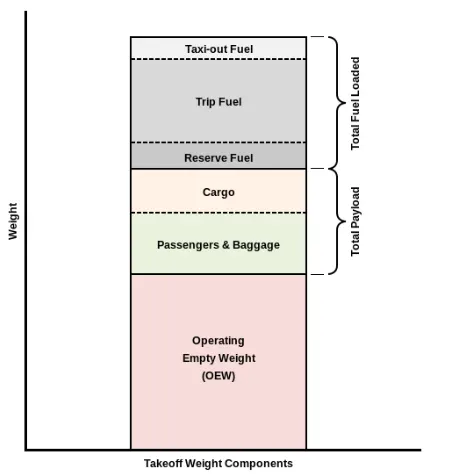
Here is some of the aircraft's weight.
| Aircraft | Empty Weight(kg) | Max Fuel Weight(kg) | Max Cargo Weight(kg) | Max Gross Takeoff Weight(kg) |
| Antanov AN-225 | 285000 | 300000 | 190000 | 640000 |
| Airbus A380-800 | 277,000 | 254000 | 84000 | 575000 |
| Boeing 747-800 | 220100 | 194000 | 134000 | 447700 |
| Airbus A340-500 | 168000 | 175000 | 54000 | 372000 |
| Boeing 777-300ER | 168000 | 145500 | 67,100 | 352000 |
| Boeing 787-10 | 135500 | 101500 | 57300 | 254000 |
| Boeing 737-900 | 44700 | 24,000 | 20200 | 85000 |
| Airbus A320-100 | 42600 | 22100 | 20000 | 68000 |
| Embraer 190 | 28800 | 13000 | 13100 | 48000 |
| Gulfstream G650 | 24500 | 21900 | 3000 | 45200 |
| Bombardier CRJ900 | 21850 | 8900 | 2,760 | 36500 |
| Bombardier Q400 | 17800 | 5300 | 8500 | 28000 |
| Learjet 75 | 6300 | 2750 | 1300 | 9700 |
| Cessna Citation CJ4 | 4700 | 2650 | 1000 | 7800 |
| Beechcraft King Air B100 | 3200 | 1450 | 1900 | 5400 |
| Diamond DA50 RG | 1,450 | 155 | 560 | 2000 |
| Beechcraft Bonanza G36 | 1150 | 200 | 385 | 1660 |
| Cessna 206H | 990 | 235 | 520 | 1630 |
| Sirrus SR22 | 1000 | 220 | 430 | 1630 |
| Cessna 172R | 770 | 170 | 255 | 1100 |
2. Is there any difference between ground speed and airspeed?
Answer:
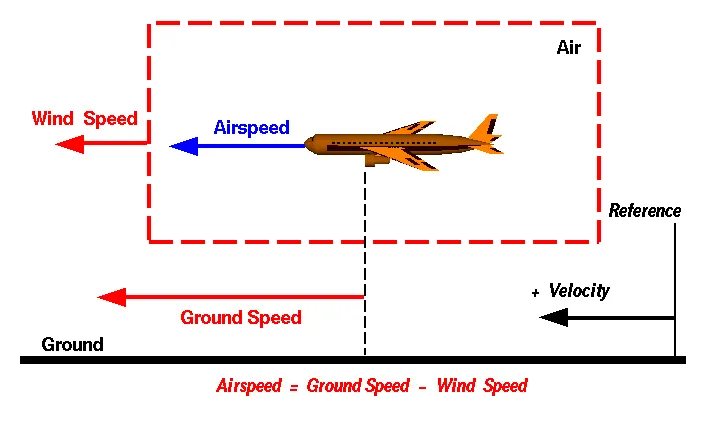
Aerodynamic forces are produced by an object traveling through a fluid (liquid or gas). To produce lift, an object should travel through the air, or air should move past the object. Aerodynamic lift relies upon the square of the velocity between the object and the air. not only can the object is traveled through the air, but the air itself can move. To appropriately define the relative velocity, it is important to pick a proper reference point and measure velocities compared with the fixed point. Here the reference point is fixed to the ground, yet it could just as easily be fixed to the aircraft itself.
Wind speed:
For a reference point picked on the ground, the air moves relative to the reference point at the wind speed. The wind speed is a vector quantity and has both a magnitude and a direction. Direction is significant. The wind has components in each of the three primary directions (north-south, east-west, and up-down). Here, we are considering just velocities along the aircraft's flight way. A positive velocity is characterized to be in the direction of the aircraft's movement. Neglecting crosswinds, which occur perpendicular to the flight way but parallel to the ground, and updrafts and downdrafts, which occur perpendicular to the ground.
Ground speed:
For a reference point picked on the ground, the aircraft moves relative to the reference point at the ground speed. Ground speed is also a vector quantity so a correlation of the ground speed to the wind speed should be calculated by rules for vector comparisons.
Airspeed:
The significant quantity in the generation of lift is the relative velocity between the object and the air, which is known as the airspeed. Airspeed can't be straightforwardly estimated from a ground position, yet should be figured from the ground speed and the wind speed. Airspeed is the vector difference between the ground speed and the wind speed.
Airspeed = Ground Speed - Wind Speed
On a totally still day, the airspeed is equivalent to the ground speed. But if the wind is blowing in the same direction that the aircraft is moving, the airspeed will be less than the ground speed.
3. Why is it not recommended to use aircraft engine power to move it on the ground at the Airport?
Answer:
Although aircraft are capable of moving themselves on the ground, it is not recommended to use aircraft engine power due to the following reasons.
- On moving the aircraft, the pilot needs to steer it. The pilot sitting in the cockpit has his eye level at around 5-6 m starting from the ground, which creates a big blind spot for the pilot. So for moving the aircraft engine power isn't utilized and depends on the tow tractor.
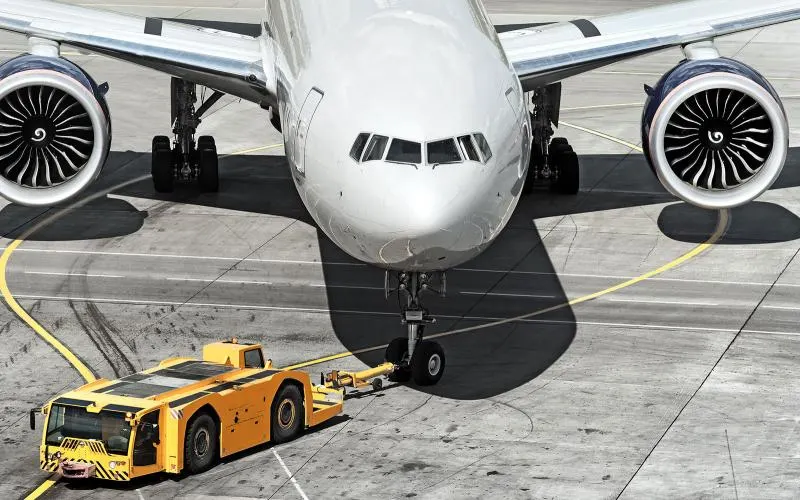
- Unlike ordinary vehicles on the ground, the airplane doesn't have reverse gear. Thus, to carry it to the runway from the airport apron they need the help of tow tractors.
- Despite the fact that aircraft can utilize engine thrust move in airports, it has a few serious disadvantages. The thrust of the engine has a high capacity to harm the airport structures and is also very loud. They can also suck soil or any little items around into the engine that might possibly damage the engine.
- Aircraft engines consume a large amount of fuel for propulsion and are liable for a huge amount of pollution. The fuel used in airplanes is not cheap. So to save fuel utilizing the tow tractors is suggested.
4. How an aircraft is pushed to the runway when it's ready to take off?
Answer:
These tow trucks will just assist with moving the aircraft to a region where the pilots can turn on the engines, not the runway. Tow trucks are rarely permitted to drive on the runway (just during the crisis) and aircraft should run supposed to run by itself to the runway. These vehicles are powerful & low profile. The below shown image of the tow truck.
These days most aircraft are going in reverse by applying the forward thrust however, it should avoid. Since reverse thrust is unsafe when aircraft is halted or at low speed. While the airplane is going in reverse, its nose might lift or drop the tail onto the landing area. This occurs because the engines are at some significant height from the ground and the aircraft's gravity is just ahead of the rear(main) wheelset. The aircraft's own brakes are utilized once going in reverse this can lead to sitting on its tail.
One more reason to push back the aircraft is for safety. The engine produces a huge thrust from the exit and a gigantic vacuum from the front might suck little ground objects. So it is a common procedure to turn over the engine once its way is cleared.
5. Learn about take-off power, tire design, rolling resistance, tire pressure, and brake forces when landing.
Answer:
Take-off power:
Take-off is the phase of flight wherein an aircraft departs the ground and becomes airborne. Take-off power is how much power an engine is permitted to create for a restricted period for take-off. For light aircraft normally, full power is utilized during take-off. Large aircraft might use a reduced power for take-off, where less than full power is applied to prolong engine life, reduce maintenance costs and lessen noise emission. In some emergency cases, the power utilized can then be increased to build the aircraft's performance. Before take-off, the engines especially piston engines, are regularly run up to high power to check for engine-related issues. The aircraft is allowed to speed up to rotation speed. The term rotation is used because the aircraft pivots around the axis of its primary landing gear while still on the ground, typically on account of gentle manipulation of the flight controls to make or work with this adjustment of aircraft attitude.
Tire design:
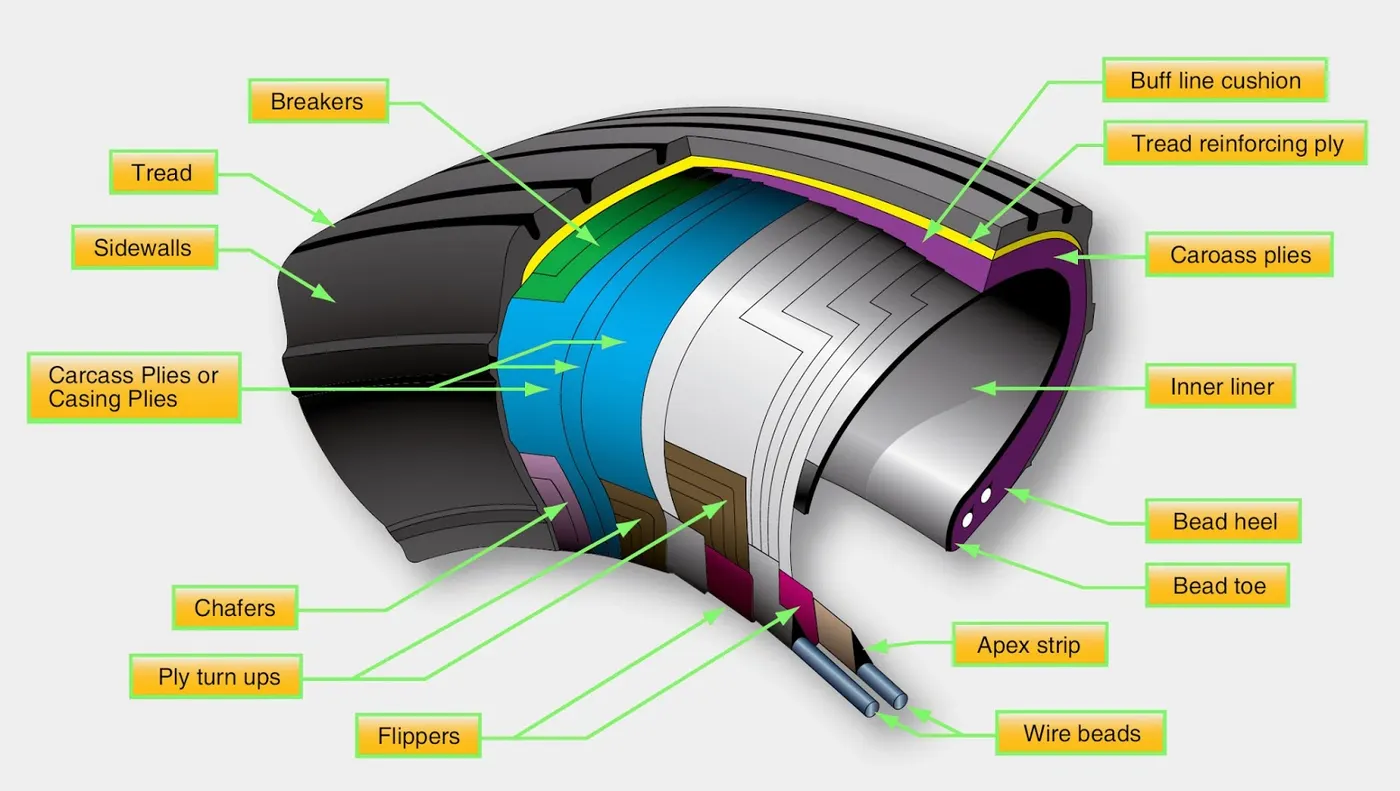
The aircraft tires are intended to withstand extremely heavy loads while take-off, landing, taxing, and parking. With the increase in the weight of the airplane, more tires are expected to distribute the weight uniformly.
Design and development of aircraft tires:-
Carcass plies also known as casing piles are used to form the tire. An aircraft tire is built for the purpose it serves.
- They support a load of an aircraft while it is on the ground.
- It also gives the important traction to slowing down and stopping an airplane.
- Tire likewise assists with retaining the shock of landing and gives cushioning to the harshness of take-off, roll-out, and taxi operations.
Dissimilar to a car or truck tire, it doesn't need to carry a heap for an extensive stretch of persistent activity. However, an airplane tire retains the high load impact, and furthermore, it's working at high speeds for a short time frame when required.
- Retreading: Retreading is a strategy for restoring a well-used tire by renewing the tread region or by restoring the tread region in addition to one or the two sidewalls. Repairs are included in the tire retreading process.
- Load rating: Load rating is the maximum permissible weight at a predefined inflation pressure.
- Ply rating: Ply rating is used to recognize the maximum recommended load rating and inflation pressure for a predefined tire. It is an index of tire strength.
- Speed rating: The speed rating is defined as the maximum take-off speed to which the tire has been tested.
- Skid depth: Skid depth is defined as the distance between the tread surface and the deepest groove as measured in the mold.
- Aircraft tires should have an approved speed, and load rating, and have sufficient clearance when retraced through the landing gear to allow for tire growth. Tire growth is the expansion in the size of the tire because of centrifugal forces at high speed.
Rolling resistance:
Rolling resistance is the force that opposes the movement of a body when it rolls on a surface. It is generally caused by the nonelastic effects. i.e, not all energy is needed for the deformation of the wheel, roadbed, etc. when the pressure is taken out.
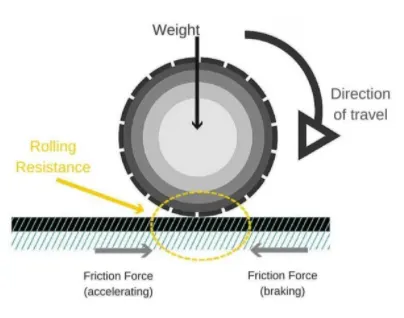
The rolling resistance force is given as:
Frr = μrr * m * g
Where;
μrr = rolling resistance coefficient
m = mass of an object
g = gravitational constant
Tyre pressure:
Aircraft tires are typically operated at high pressure, for airliners up to 200 psi(14 bar; 1400kpa) and higher for business jets. The main landing gear on the Concorde was inflated to 232 psi(16 bar), while its tail bumper gear tires were inflated at high pressure of 294 psi.
Aircraft tires are normally inflated at high pressure to sustain the heavy loads during take-off, landing, taxing & parking. The tires are inflated with nitrogen to minimize the expansion & contraction from outrageous changes in ambient temperature and pressure experienced during flight. They are normally made of nylon, and more recently a variety is known as aramid.
Brake forces when landing:
Stopping the aircraft from landing at over 150 mph speed is an extremely dangerous task. Aircraft depend on the braking systems for a safe landing on runways. For instance, an Airbus 320 weighing around 75 tonnes, has a landing speed of 150 mph to 160 mph. After touching the ground the aircraft must push its brakes cautiously to bring it to halt.
Aircraft braking is achieved by the following methods:
- Wing spoilers: Most aircraft use their wing spoilers to help slow down while landing. The spoilers are extendable folds at the ends of the wings. Pilots raise the spoilers to decelerate after arriving at the runway and kept raised till the plane comes to stop. The raised spoiler increases drag that slows down the plane.
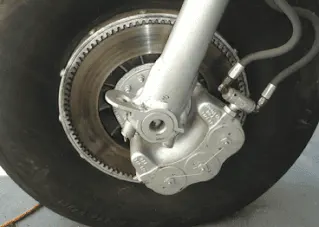
- Disc brakes: These are fundamental components of aircraft. Aircraft also have disc braking mechanisms just like vehicles on the ground. By design, disc brakes are static and they do not rotate with the rotor of the landing gear. The disc braking system consists of a pair of calipers that engaged squeeze the pads against the rotor of the landing gear. It slows down wheels, which in turn decreases the speed of the aircraft to arrive at a stop.
- Reverse Thrust: Many aircraft use reverse thrust for braking during landing. It switches the direction of engine trust. Generally, thrust projects air out of the back to push the plane forward. So in order to stop, thrust is projected out in front. This is very effective in slowing down the aircraft after landing.
6. A. With necessary assumptions, calculate the force and power required to push/pull an aircraft by a towing vehicle.
B. Develop the model for the calculated force and power using Simulink.
Answer:
A. Some of the assumptions for the calculation are as follows.
- Gross weight(Boeing 787-10) = 254000 kg
- Kerb weight(Tow truck) = 35000 kg
- Rolling resistance coefficient(μrr) = 0.012
- Drag coefficient for Aircraft + tow truck(Cd) = 0.55
- width = 6 m
- Height = 19m
- Air density(ρ) = 1.25(kg/m3)
- Velocity(V) = 8 kmph = 2.22 m/s
Rolling resistance force(N)
Frr = μrr * m * g
Frr = 0.012 * (254000 + 35000) * 9.81
Frr = 34021.08 N
Aerodynamic drag force(N)
Fad = 0.5 * ρ * A * Cd * V2
Fad = 0.5 * 1.25 * (6*19) * 0.55 * (2.22)2
Fad = 193.13 N
Fte = Frr + Fad (assuming all other forces are 0)
Fte = 34021.08 + 193.13
Fte = 34214.21 N
Power required:
P = Fte * V
P = 34214.21 * 2.222
P = 76.03 KW
Therefore the tractive power of the towing vehicle = 76.03 KW
B . Simulink model is as shown below. Assumed all data as same in 6(A)
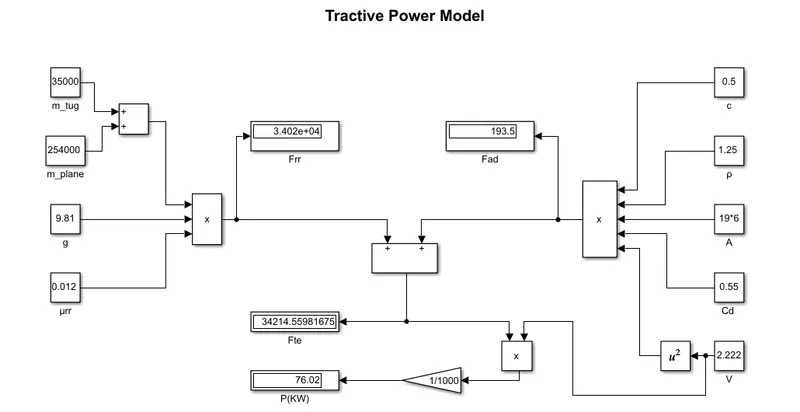
Therefore the tractive power of the towing vehicle = 76.03 KW.
7. A. Design an electric powertrain with type of motor, it’s power rating, and energy requirement to fulfill aircraft towing application in Simulink. Estimate the duty cycle range to control the aircraft speed from zero to highest. Make all required assumptions. Prepare a table of assumed parameters. Draw a block diagram of powertrain.
(Hint :DC7 Block)
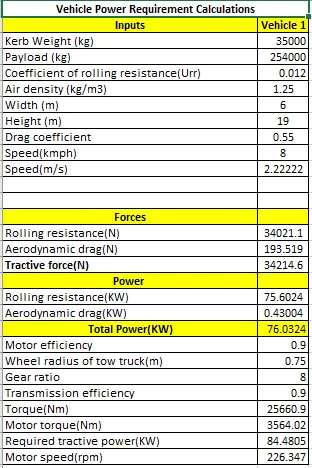
B. Also, Design the parameters in an excel sheet.
Answer:
A.
Considering the same parameters from the previous question.
Total tractive force = 34214.21 N
Total tractive power = 76.03 KW
Assuming the wheel radius of tow truck(r) = 0.75m
Gear ratio(g) = 8
Transmission efficiency(Et) = 90%
Motor efficiency(Em) = 90%
So, total torque at wheels = Fte * r = 25660.65 Nm
Motor torque = wheel torque/(g * Et) = 3563.92 Nm
Power required = Pte/Em = 84.47 KW
Speed of the motor = Power required/Motor torque = 23.70 rad/s = 226.3 rpm
Assuming, towing done for 30 min(0.5 hr), Energy consumption = (84.47 * 1000) * 0.5 = 42.235 kWh
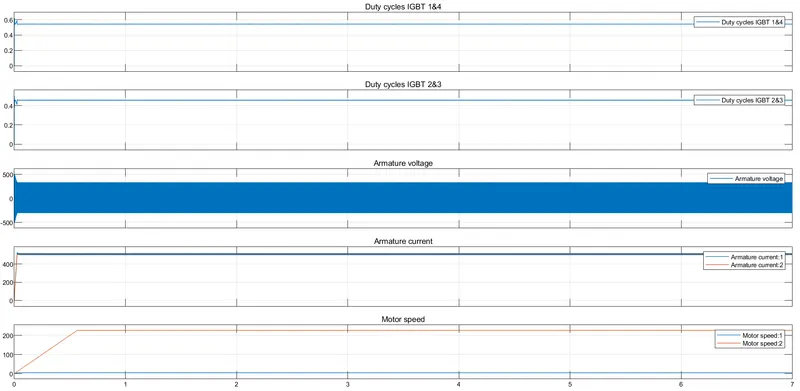
The simulink model shown below. Considered 3 phase induction motor of 200 KW rating.
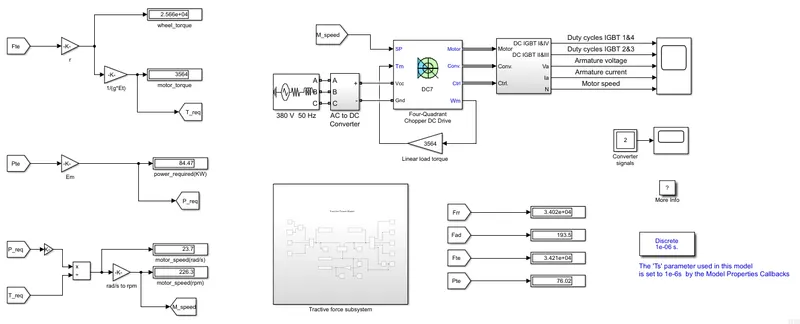
Result:
The output of the above model is as shown in the graph.
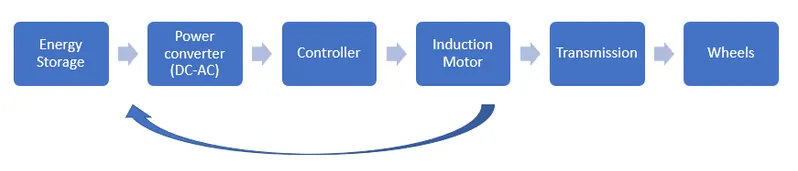
Powertrain block diagram:
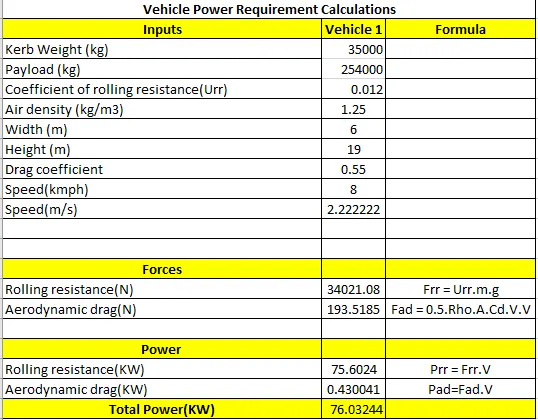
B. Design the parameters in an excel sheet as shown below.