Project-1: Powertrain for aircraft in runways
Q1)
| Type | MLOW(kg) | MLW(tons) |
| Airbus A380-800 | 575,000 | 394 |
| McDonnell Doulgas MD-11 | 273,300 | 185 |
| Concorde | 185,000 | 111.1 |
| Vickers VC10 | 152,000 | 151.9 |
| Lockheed L-1011-500 | 231,300 | 166.92 |
| Airbus A300-600 | 163,000 | 138 |
| Boeing 707-320B | 151,000 | 97.5 |
| Airbus A400M | 141,000 | 122 |
| Beachcraft 1900D | 7,765 | 7.103 |
| Bombardier CRJ900 | 36,500 | 33.345 |
Q2)
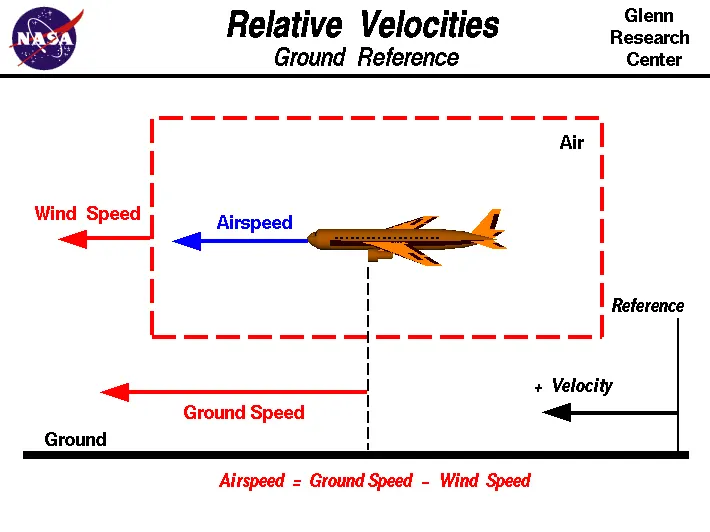
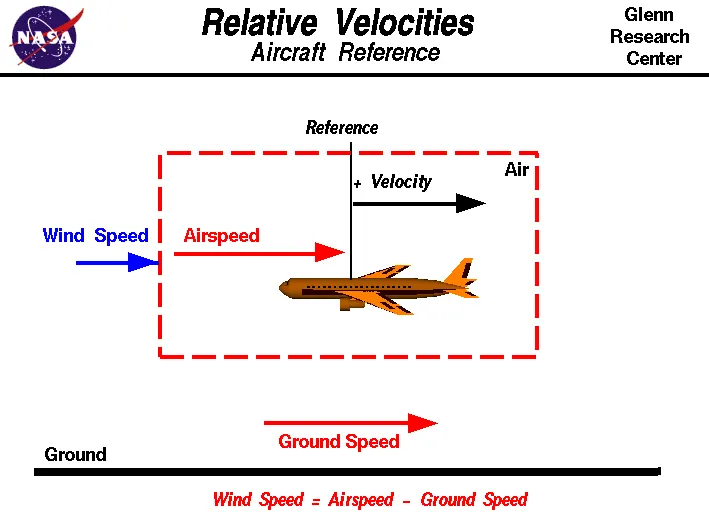
| Ground speed | Airspeed |
| Ground speed is the speed of an airplane with respect to the ground. | Airspeed is the speed of an airplane relative to the air in which it is flying in. |
| This speed determines how quick the airplane reaches the destination | This speed determines whether there is enough airflow around the aircraft to make it lift. |
| It is calculated by summing airspeed and wind speed | It is independent of ground speed |
Q3) The aircraft engine works with the reverse thrust principle. When we operate this engine on land, it uses a lot of gasoline and makes a lot of noise, which is dangerous to individuals who work nearby. There is another reason to not use this engine i.e, the jet blast can cause damage to the terminal buildings, and since the turbine is close to the ground the sand and dust may go into the turbine and may result in blasting off the aircraft.
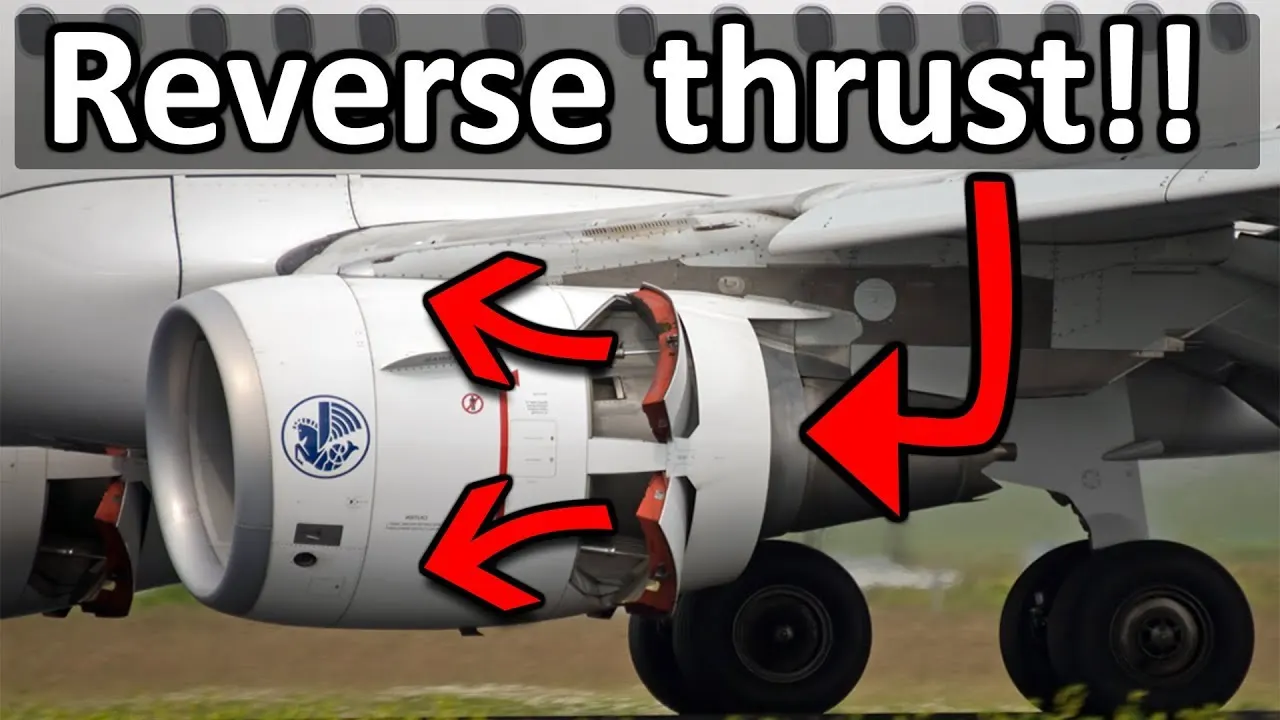
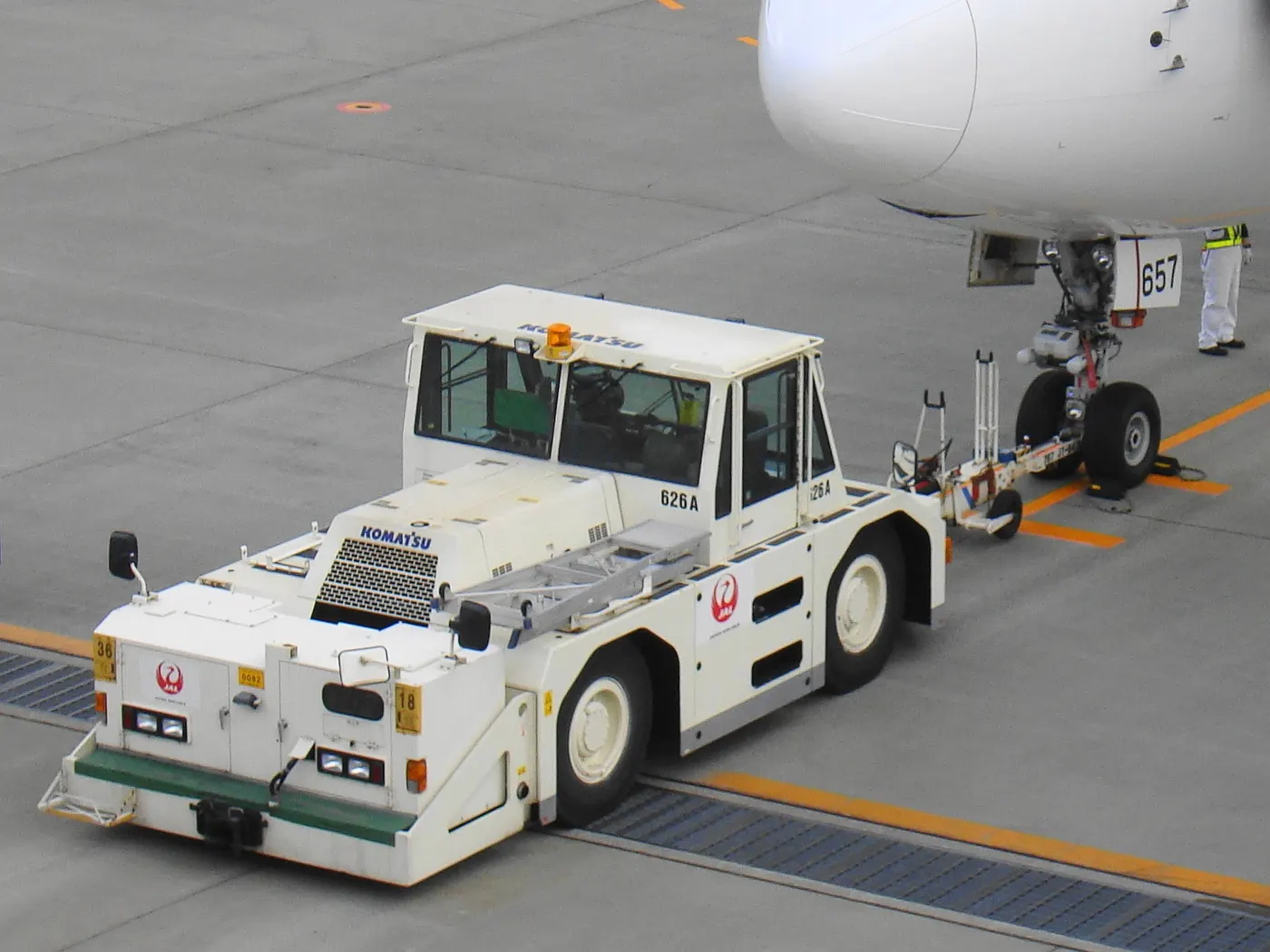
To avoid this, workers or engineers use a specifically designed vehicle to move aircraft from a place to the desired place.
Q4)
The aircraft is pushed into the taxiing position by a pushback vehicle, which uses a towbar attached to the nose-wheel strut. Alternatively, in the most contemporary variants, by physically elevating the steering wheel. This facilitates coupling and decoupling.
The plane taxis to the runway, ready to take off at the scheduled time.
The pilot waits for authorization from air traffic control to take off. Once the departure route is apparent, this is conceivable. The plane takes to the air at full power as soon as the go-ahead is given.
Q5)
Takeoff power is the phase of flight in which an aircraft transitions from taxiing (moving along the ground) to flying in the air, usually starting on a runway. During takeoff, the engines are usually run at maximum power. The plane comes to a halt near the runway's starting line, following the taxi motion.
Tyre design-
The tyre is made up of carcass plies. Casing plies is another name for them. The objective of an aircraft tyre is to serve that purpose.
1. They support an aircraft's weight when it is on the ground.
2. It also provides the necessary traction for the braking and stopping of an airplane.
3. Tyre also helps to absorb the shock of landing and provides cushioning for the roughness of takeoff, roll-out, and taxi operations.
Rolling resistance- When a body rolls on a surface, rolling resistance, also known as rolling friction or rolling drag, is the force that resists the motion.
`F=C_{rr}N`
F= Force
`C_{rr}`= dimensionless rolling coefficient
N = normal force
Landing brake force - Airplanes need a braking mechanism to safely land on runways. Most commercial airplanes cruise at a speed of 500 to 600 mph at cruising altitude. They must, however, moderate their speed when landing. A normal 747, for example, has a landing speed of 160 to 170 miles per hour. Airplanes must also quickly brake when they hit the runway until they come to a complete halt.
Q6)
Assumptions:
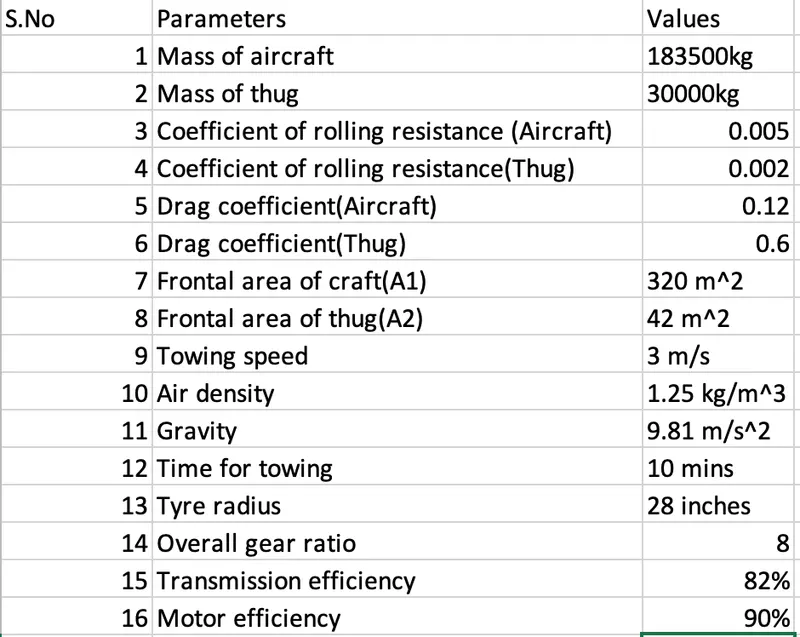
Mass of the aircraft (`m_1`) = 183,500kg (Boeing 747)
Mass of the towing machine (`m_2`) = 30,000kg
Coefficient of rolling resistance of aircraft (`mu_1`) = 0.005
Coefficient of rolling resistance of Towing vehicle (`mu_2`) = 0.002
Drag coefficient of aircraft (`Cd_1`) = 0.12
Drag coefficient of Thug (`Cd_2`) = 0.6
The frontal area of aircraft (`A_1`) = 320`m^2`
The frontal area of a thug (`A_2`) = 42 `m^2`
Towing speed (`v`) = 3m/s
Air density (`delta`) = 1.25 `(kg)/m^3`
Gravity (`g`) = 9.8 `m/s^2`
Calculation:
WKT,
Rolling Resistance force `F_r = mu *m*g`
Rolling Resistance of aircraft = `0.005 * 183,500 *9.81`
``F_(r1) = 9000N
Rolling Resistance of Thug = `0.002 *30,000*9.81`
`F_(r2) = 589N`
Drag force, `F_d = 1/2*delta * A*C_d * v^2`
`F_(d1) = 1/2*1.25*320*0.12*3^2`
`F_(d1)= 216N`
`F_(d2)=1/2*1.25*42*0.6*3^2`
`F_(d2)=141.75N`
From the above results, we can see that drag force is less than rolling resistance force, which makes it clear that rolling resistance plays a vital role while towing an aircraft.
Total force (F)=`F_(r1)+F_(r2)+F_(d1)+F_(d2)`
F=9000+589+216+141.75
F=9,946.75N = 9.95kN
Power required to push/pull the aircraft
Power= (total force) x (Velocity)
= (9,946.75) * (3)
Power= 29.84kw
Q7)
Assuming tyre radius of tug to be 28 inches = 0.7112m
Torque required at wheels = total force x radius
= 9.95*0.7112
= 7.076 kNm
Motor Torque =Wheel torque/gear ratio*`eta`
Here, we assume the gear ratio to be 8(for delivery high torque)
Assumed transmission efficiency = 82%
Motor Torque = `7.076/(8*0.82)`
Motor Torque = 1.079kNm
In case, if the motor was 90% efficient, then motor Torque = 1.079/0.9 = 1.198kNm
Similarly,
The power required by the motor will be`= 29.84/(0.82*0.9)`= 40.43 kw
And total energy consumed = 40.43 * 0.1667(10 min)
= 6.77kwh
Here we select a battery wise power rating is around 60kw.
Therefore the duty cycle rang to control the speed from zero to high speed is,
d = required power/rated power
= 40.43/60
d = 0.67
So, the controller should provide a duty cycle ranging from 0 to 67% control towing speed.
Excel sheet screenshot