Project-1: Powertrain for aircraft in runways
1.Search and list out the total weight of various types of aircrafts.
SOLUCTION:
AIRCRAFTS:
1.Any vehicle that is manufactured and made to fly in the air is called an aircraft. While the airplane is the most known, familiar, and popular kind of aircraft we know, other vessels that fly through the air also come in this category. All of them have propellers and wings or machinery to run through the air; however, they may vary according to sizes, types, usage, and more.
2.air crafts and which are types of aircrafts, you know? Most of us will only answer the common ones – airplanes and helicopters. Well, yes, you are not wrong. Airplanes and helicopters are the most common types of aircrafts we may know. But what you may miss out on are different and several other categories in aircraft that you may not know.
3.From helicopters to gliders to cargo planes, fighter jets, balloons, and more, there are numerous other aircraft types and categories we must all know. Let’s find and learn all about them todaY.
TYPES OF AIRCRAFTS:
Now that we know the most common classification, categories, and subcategories under the aircrafts, let us see different types of aircrafts and a list of all aircraft with pictures.
1.AMPHIBIOUS:
Amphibious aircraft, otherwise also popularly known as amphibian is a multipurpose aircraft which can work, take off and land both water and ground. They are used as both seaplanes or flying boats, or also airplanes. In this aircraft, the engine is either placed in front, or even above the wing, that is most commonly found in floatplanes, On the other hand, the modern and other amphibious aircraft have engine and propeller placed above the wings. The size of amphibians differs as per the purpose; there are military amphibians, leisure purpose seaplanes, and civil amphibious aircraft.
3.MULTI-ENGINE PISTON:As the name suggests, Multiple or Multi-engine piston aircraft has more than one single-engine, unlike the other categories and types of aircraft. These multi-engine pistons are known to have a second power source, which is greatly helpful during another engine’s failure. Due to this multiple power and engine facility, the aircraft-quality, capacity, speed, and climb rate is much higher than the usual air crafts. In most cases, this kind of aircraft is used by air service for their services and duties.
6.SINGLE ENGINE AIRCROFT:
Like the multi-engine piston plane, we have seen earlier. This aircraft uses only one engine. These aircraft are used for shorter distance works and not for heavy works. They can access smaller runways, takes less space, and has lesser climb and speed. Most single-engine pistons can fit only four to six people, depending on the plane and size.
he relationship between airspeed and ground speed is fairly simple. Ground speed is simply the sum of airspeed and wind speed.
If the aircraft is flying in the same direction as the wind is blowing, the aircraft experiences tailwind, and its ground speed is higher than its airspeed. On the other hand, if the wind is blowing against the direction the aircraft is traveling in, the aircraft experiences headwind, and its ground speed is lower than its airspeed.
AIR SPEED:
When I talked about airspeed earlier in this article, I was talking about true airspeed. However, pilots commonly use three different types of airspeed: indicated airspeed, calibrated airspeed, and true airspeed.
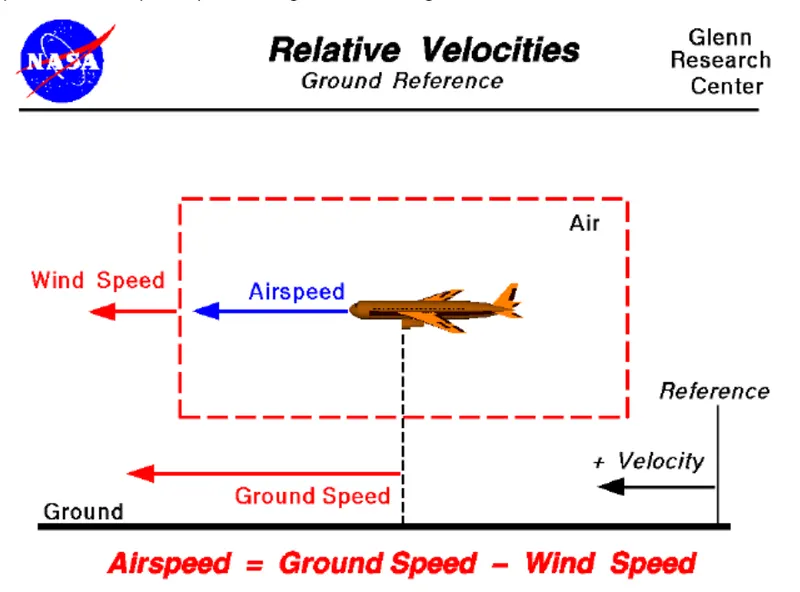
As mentioned above, true airspeed is simply the speed at which an aircraft is moving relative to the air it is flying in. As such, it’s also the speed at which the air is flowing around the aircraft’s wings.
Ground speed, on the other hand, is the aircraft’s speed relative to the ground. One thing that should be noted here is that it’s its horizontal rather than vertical speed – an aircraft climbing completely vertically would have a ground speed of zero.
In other words, while airspeed is what determines whether there is enough airflow around an aircraft to make it fly, ground speed is what determines how fast an aircraft will get to its destination.
3.Why is it not recommended to use aircraft engine power to move it on the ground at Airport?
SOLUCTION:
Whilst there are many relevant regulatory aspects of which there must be awareness by persons controlling such operations, there are no general regulatory requirements which apply to the supervision and control of this specific task. Therefore, this article seeks to provide guidance which can inform about risk mitigation.
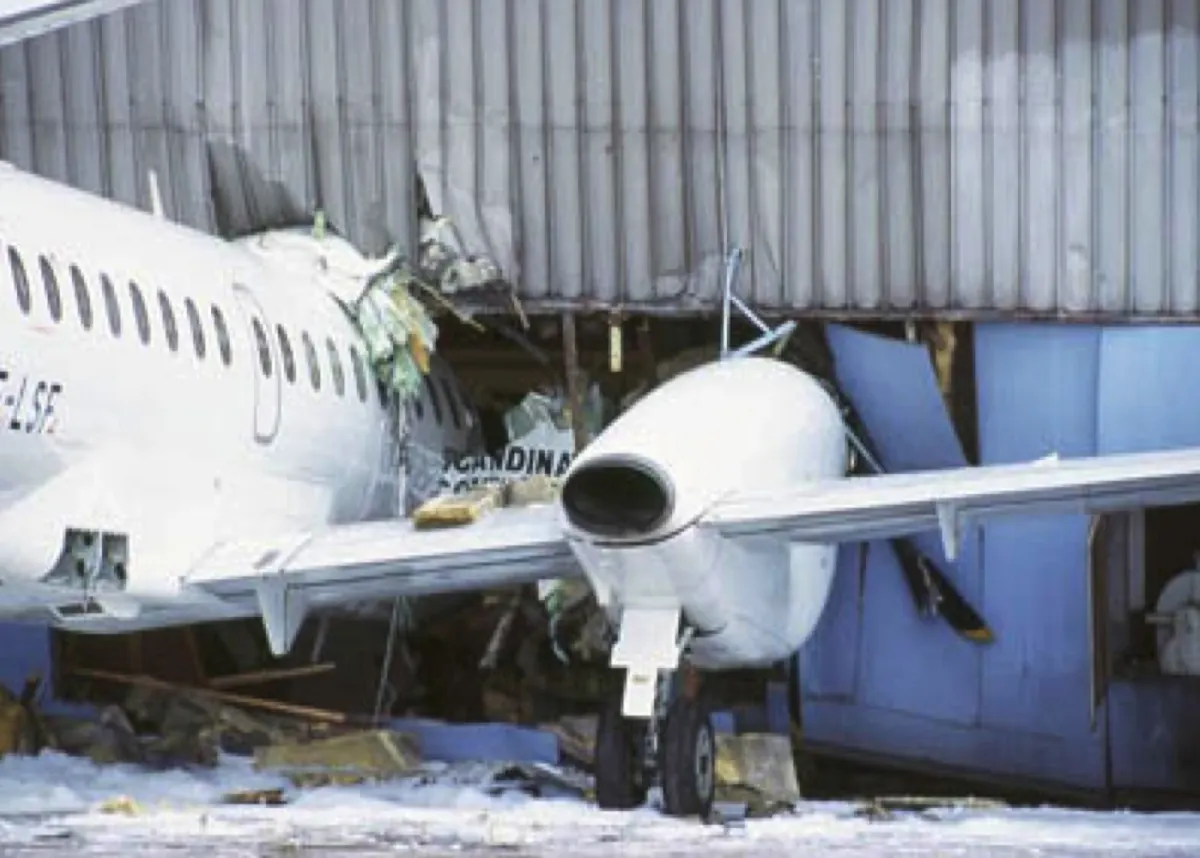
The risks which may arise from engine ground running relate to the potential for of the aircraft by those persons occupying the pilot seats in the flight deck. In most cases, such persons will be maintenance personnel holding specific company-issued approval for the required tasks. The consequences of loss of control during taxi or towing are the same as apply to these operations generally and this article is concerned only with the risks arising from the static running of one or more aircraft engines. Unwanted consequences from such static running are mainly related to those arising from the unintended movement of the aircraft during engine running - effectively a loss of control - especially during high power engine running. Damage can occur to the aircraft itself, other aircraft nearby or to airside structures. In addition, there is a risk of injury to ground support personnel who may be in relatively close proximity to the aircraft.
he best form of overall mitigation is to ensure that all persons authorised to supervise or directly participate in engine ground running from the flight deck, who are not pilots or flight engineers currently rated on the specific aircraft type, are in receipt of suitable initial training and that there is a proper system for both initial and recurrent qualification for engine ground running duties. Both initial and recurrent qualification must include practical training and assessment of task competence using either a full flight simulator or an aircraft.
4.How an aircraft is pushed to runway when its ready to take off?
SOLUCTION:
- THE reverses the aircraft into taxiing position, pushing it with a towbar attached to the nose-wheel strut. Or, in the most modern versions, by actually lifting the wheel. The aircraft taxis to the runway to depart at the agreed time.
- The pilot parks the aircraft in exactly the right place. Usually with the help of an automatic system, but occasionally guided by a marshaller waving two paddles or wands. Dozens of handling personnel are already standing by to perform a whole range of tasks simultaneously.
- As soon as the aircraft is stationary and the engines are switched off, the first priority is to disembark the passengers as quickly as possible. The apron handler places chocks in front of the wheels and connects the ground power. Meanwhile, the passenger bridge manoeuvres up to the door and a belt loader rolls up to the cargo hold. Luggage is unloaded and transferred to the terminal on baggage carts.
- Refuelling begins, usually from a hydrant at the stand. A hose is attached to this from a special vehicle called a dispenser, with the other side connected to the fuel tank in the wing. Read more about refuelling
- Now it is time to service the aircraft. The caterer loads new meals and takes away the food waste and used cutlery and crockery. Other activities include draining the lavatories, replacing the headrest covers, removing rubbish and distributing fresh blankets and in-flight magazine.
- A specialist team – or sometimes the crew themselves – cleans the cabin so that the new passengers board a pristine aircraft.
- Meanwhile, specialists from the airline conduct a technical check to make sure that the engines, wings, control surfaces, landing gear, instruments, doors and other equipment are in full working order.
- The aircraft is now ready for baggage to be loaded for the next flight. This is a quick process, on average taking only 10-15 minutes. A little later the passengers start boarding. As soon as they are all in their seats, the door is closed and the pilot informs air-traffic control that the flight is ready for departure.
- The apron handler removes the chocks. A so-called pushback truck reverses the aircraft into taxiing position, pushing it with a towbar attached to the nose-wheel strut. Or, in the most modern versions, by actually lifting the wheel. That speeds up coupling and decoupling.
- The aircraft taxis to the runway to depart at the agreed time.
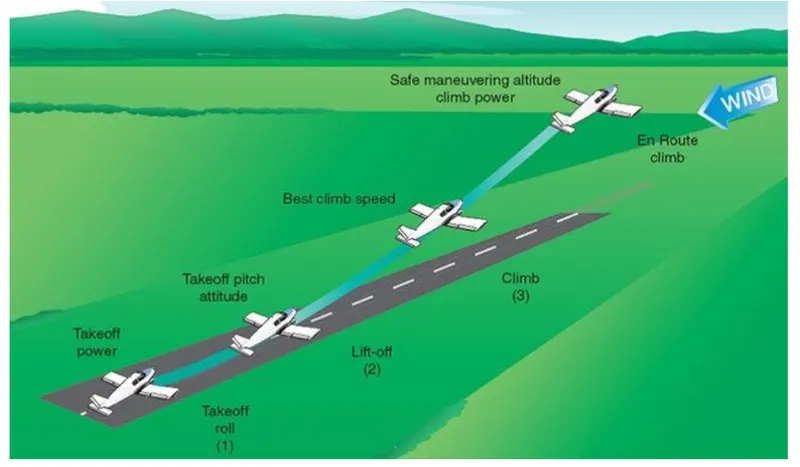
- The pilot waits for permission to take off from air-traffic control. This is possible once the departure route is clear. As soon as the go-ahead is received, the plane takes to the air at full power.
5.Learn about take off power, tyre design, rolling resistance, tyre pressure, brake forces when landing.
SOLUCTION:
TAKE-OFF POWER:
-
Power take-off (PTO) transfers the mechanical power of the engine over to another piece of the equipment. This allows for the power to move throughout the equipment to transmit energy even if it doesn’t have a motor or engine itself. The Types of PTO’s.
- is any of several methods for taking power from a power source, such as a running and it to an application such as an attached implement or separate machine.
TYRE DEIGEN:Tyre (or tire) is a circular and ring-like part of a vehicle which comes in contact with ground. Tyres are fitted on rims and are filled with compressed air. Since their invention, natural rubber is the most widely used material in manufacturing of tyres. However, modern tyres also employ materials like synthetic rubber, fabric, steel wires, carbon black and some more compounds. Tyres find place in wide range of locomotives, from bicycles to aeroplanes.
CLASSIFICATION TYPES:
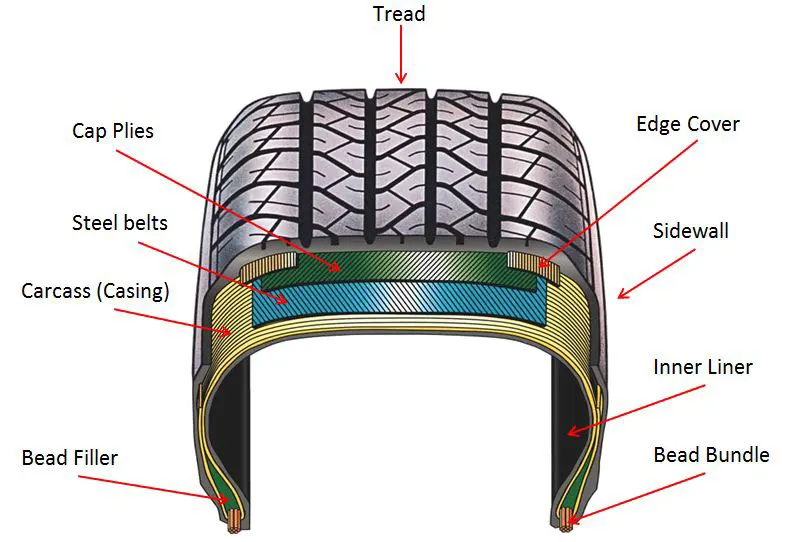
In general, there are two major classes of tyres, according to the presence or absence of tubes in them. Thus, they are called ‘tubed tyres’ and ‘tubeless tyres’ respectively. Furthermore, based on the construction or skeleton of tyres known as carcass, tyres are classified into the following main types:
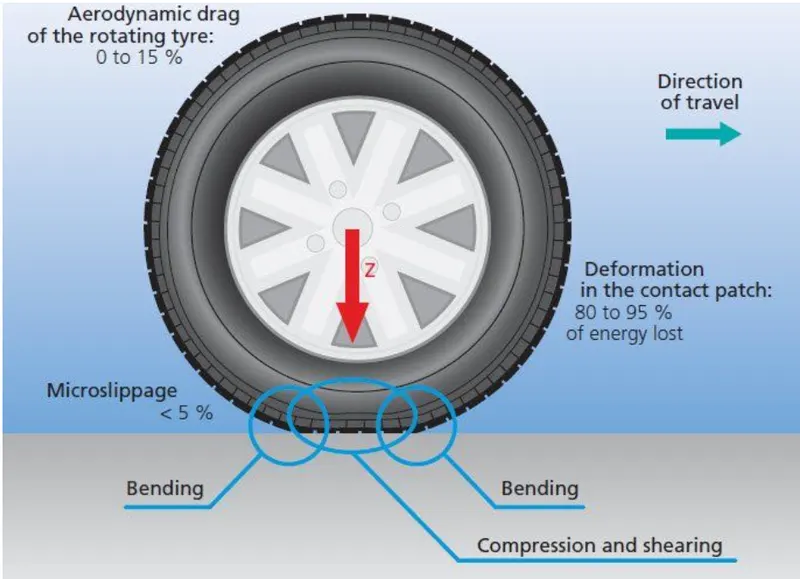
ROLLING RESISTANCE:
Rolling resistance, sometimes called rolling friction or rolling drag, is the force resisting the when a body (such as a ROLLS on a surface. It is mainly caused by NON ELESTICK effects; that is, not all the energy needed for deformation (or movement) of the wheel, roadbed, etc., is recovered when the pressure is removed. Two forms of this are HYSTERISIS losses ( and permanentDEFORMATION of the object or the surface (e.g. soil). Note that the SLIPAGE between the wheel and the surface also results in energy dissipation. Although some researchers have included this term in rolling resistance, some suggest that this dissipation term should be treated separately from rolling resistance because it is due to the applied torque to the wheel and the resultant slip between the wheel and ground, which is called slip loss or slip resistance. In addition, only the so-called slip resistance involves FRICTION therefore the name "rolling friction" is to an extent a misnomer.
In analogy withrolling resistance is often expressed as a coefficient times the normal force. This coefficient of rolling resistance is generally much smaller than the coefficient of sliding friction
Any coasting wheeled will gradually slow down due to rolling resistance including that of the bearings, but a car with steel wheels running on steel will roll farther than a of the same mass with rubber tires running on . Factors that contribute to rolling resistance are the (amount of) deformation of the wheels, the deformation of the roadbed surface, and movement below the surface. Additional contributing factors include , surface adhesion, sliding, and relative micro-sliding between the surfaces of contact. The losses due to also depend strongly on the material properties of the wheel or tire and the surface. For example, aRUBBER TIRE will have higher rolling resistance on a paved road than a l on a steel rail. Also, on the ground will give more rolling resistance than Sole rolling resistance factor is not dependent on speed.
THE MAIN THREE CASES IN ROLLING RESISTANCES:
TYRE PRESSURE:
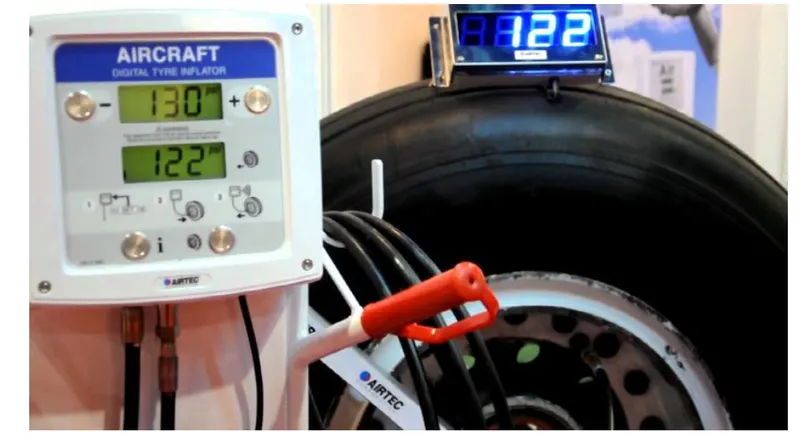
Every aviator has their soapbox issues, and when it comes to maintenance, my top two are constant-speed propellers and aircraft tires. I may touch on the former in a future article, but for now let’s focus on the latter.
Tires are one of the most vitally important — yet frequently ignored — parts of an aircraft. It’s easy to see why: they’re relatively simple elements which work day in and day out without problem, and as such are taken for granted. In addition, some of the typical pilot’s attitude toward tires is transferred from the way they treat their automotive counterparts. Be honest, how often do you inspect your car’s tires? When was the last time you checked the pressure on all four wheels? I’m about as anal as a person gets when it comes to car maintenance and upkeep, and I might check the tires once every couple of months at best.
LOADING BREAK FORCE:

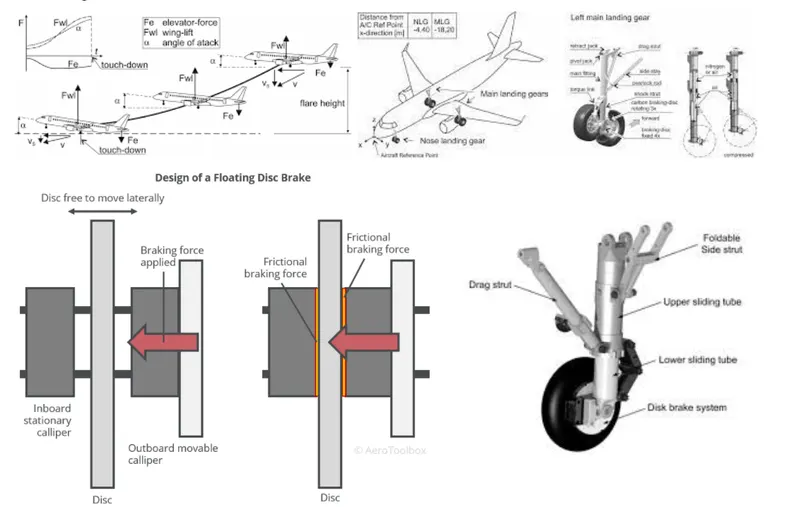
6. A. With necessary assumptions, calculate the force and power required to push / pull an aircraft by a towing vehicle.
soluction:
THE FORCE ACTING ON A AIRCAFT WITH THE TOWING TRACTOR IS STUDIED AND THERE ARE MAINLY TWO FORCES ACTING IN THIS CONDITION.
1.ROLLING RESISTANCS FORCE:
THE ROLLING RESISTANCES FORCE IS MAINLY EXPERIENCED BY THE TYRE WHEN THE VEHICLE MOVES VOVER ANY SURFACE
THE ROLLING RESISTANCE FORCE EXPRESSION IS
Frr=urr*(m.G)
WHERE M.G=WEIGHT IN NEWTON.
urr=COFFICIENT OF ROLLING RESISTANCE
CALCULATION:
LETS ASSUME
WEIGHT OF AIRCRAFT (AIRBUS A-380)=57500KG
ROLLING RESISTANCE COEFFICIENT OF AN AIRCRAFT TIRE(urr)=0.004
weight of the towing factor=5000kg
rolling resistancecoefficient of towing vehicle(urr)=0.001
then
rolling resistance force of tow tractor=urr*(mg)=0.001*(50000*9.81)
rolling resistance force of tow tractor=0.43kn
rolling resistance force of aircraft=urr*(mg)=0.044*(57500*9.84)
rolling resistance force of aircraft=22.56kn
the total rolling resistance force=rolling resistance force of aircraft+towing tractor =0.49+22.5
the total rolling resistance =23.05
2. AIR DRAG FORCE
THE AIR DRAG FORCE IS THE FORCE THET OCCURS DUE TO THE AIR STRIKING EFFECT ON THE VEHICLE WHEN IT MOVES THE VEHICLE MOVES THROUGH A AIR MEDIUM OF PARTICULAR DENSITY VALUE WITH CERTAIN SPEED.
THE AERODYNAMIC DRAG IS EXPRESSION:
FAD=1/2*rho*A*V^2*C_D
RHO=DENSITY OF AIR MEDIUM
A=FRONTAL AREA OF THE VEHICLE WHICH STRIKES THE AIR
V=VELOCITY WITH THE VEHICLE MOVES
C_D=COEFFICIENT OF DRAG WHICH VARIES FOR DIFFERENT SHAPES OF THE FRONTAL AIRA
CALCULATION:
LET US ASSUME
THE VELOCITY VOF THE AIRCRAFT WHILE TOWING=30KMPH=8.33M/S
DENSITYVOF AIR MEDIUM(rho)=1.225
the frontal area of the aircraft=20m^2
the coefficient of drag of the aircraft=0.026
air drge force=0.5*a*v^2c_d=0.5*1.225*20*8.33^2*0.026=0.022kn
the air drag force acting =0..22kn
total force acting=23.05+0.022=23.072
3.the power requried:
the average speed of push/pull=20kmph=5.5m/s
power requried by the motor =total force*velocity=23.07kn*55
power requried by motor =126.8kw
the torque output of the towing tractorcan be calculateed by the below steps
fte=T.G/r
fte=the total tractive force
T-torque output
r-radious of tire
g-gear ratio
the heavy duty towing tractor we assumer,
G=11(for delivering high torque)
r-25inches=0.635m
t=fte*r/g=23000*0.0635/11
the torque requried to pudsh/pull for above stated condition=1.327knm.
7. A. Design an electric powertrain with type of motor, it’s power rating, and energy requirement to fulfill aircraft towing application in Simulink. Estimate the duty cycle range to control the aircraft speed from zero to highest. Make all required assumptions. Prepare a table of assumed parameters. Draw a block diagram of powertrain.
(Hint :DC7 Block)
soluction:
the parameters assumed for designing this vehicle is taken from online references
s.no assumed parameteters assumed values
1 weight of aircraft 575000kg
2 weight of the towingtractor 50000kg
3 rolling resistance coefficient of aircraft 0.004
4. rolling resistance coefficient of towing tractor 0.001
5. velocity of the aircraft while towing 8.33m/s
6. density of air medium(rho) 1.225kg/m^3
7 the frontal area of the aircraft 20m^2
8 the cofficient of drag of the aircraft 0.026
9 towing tractor gear tatio 'g' 11
10 towing tractor tyre radius "r" 0.635m
11 operational time of the towwing for one cycle 0.33hour
12 the battery armature voltage 350v
13 the battery aramature current 350a
14 the motor terminal voltages for full power output 630v motor terminals
15 power converters used bidirectional dc-dc boost converter
16 the maximum duty ratio for achieving full power 70%
the operactional time of the towing truck is around 20 minutes for one cycle
20 minutes=0.33hour
energy (kwh)=power (kw)*time(h)=126.8*0.33
energy(kwh)=41.8kwh
THE battery must be able to store the energy of 41.8kwh and should deliver the energy through the run time in order for the motor to produced the 1.32knm of torque instantaneously.the requried power delivery.
MOTOR SELECTION:
HERE WEHAVE SELECTED A BRUSHLESS DC MOTOR TYPE THAT HAS A POWER RATING OF 126.8KW AND WITH THE GEAR RATIO AND TRANSMISSION IT SHOULD BE ABLE TO DELIVER 1.32KN.M OF TORQUE INSTANTANEOUSLY.
THE BATTERY ARMATURE VOLTAGE(V)=350V
THE BATTERY ARMATURE CURRENT(A)=350A
FOR GETTING THE MAXIMUM POWER OUTPUT FROM THE MOTOR (126.8KW),THE VOLTAGE APPLIED TO THE MOTOR TERMINALS MUST BE 700V AT THE MOTOR POSITIVE AND NRGATIVE TERMINALS.
POWER CONVERTERS:
A.C input given to converter 1 for rectification in this process positive cycle of input is given to first set of forward biased thyristors which gives a rectified D.C on positive cycle, as well negative cycle is given to set of reverse biased thyristors which gives a D.C on negative cycle completing full wave rectified output can be given to load. During this process converter 2 is blocked using an inductor. As thyristor only start conducting when current pulse is given to gate and continuous conducting until supply of current is stopped. Output of Thyristor Bridge can be as follows when it is given to different loads.
- Power electronic converters can be found wherever there is a need to modify the electrical energy form with classical electronics in which electrical currents and voltage are used to carry information, whereas with power electronics, they carry power.
-
As its name implies, a DC-DC converter converts one DC voltage to another.
The operating voltage of different electronic devices such as ICs can vary over a wide range, making it necessary to provide a voltage for each device.
A Buck Converter outputs a lower voltage than the original voltage, while a Boost Converter supplies a higher voltage.
SPEED CONTROL OF VEHICLE:

MOTOR TERMINAL VOLTAGE=ARMACTER VOLTAGE*DUTY CYCLE=900*0.7
BLOCK DIGRAM OF POWER TRAIN:
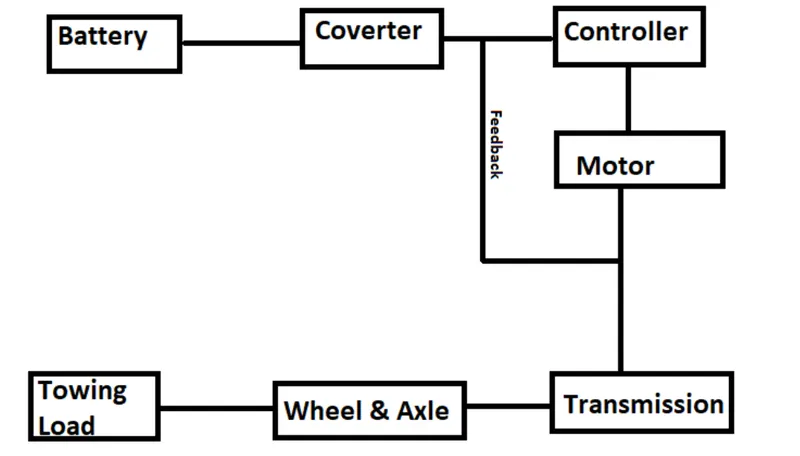
RESULT:
1.THE reference aircraft taken here is the heavy aircraft build and so our designed towing tractor is a heavy duty operational vehicle.
2.the power reqirements are calculated for the particular load to be pushed/pulled and to achive at the motor output.the motor type and its voltage at the terminals are discussed.
3.finally the speed control of the vehicle is done with switching technique where duty cycle adjustment can be changed the motor speed from minim um to maximum.
THE---END