Project-1: Powertrain for aircraft in runways
#ANSWER 1:
- Air craft gross weight is abbreviated as AUW ( all up weight ) which means the total aircraft weight under flying and on ground also.
- The maximum weight capacity of an aircraft is mentioned as the structural weight limits. These are based on aircraft maximum structural capability.
1.Maximum design taxi weight (MDTW):
it is also known as the maximum design ramp weight (MDRW).which is the maximum weight certified for aircraft moving to different position using skill on the ground based on aircraft strength h& airworthiness requirements.
2. Maximum design landing weight (MDLW):
The maximum certificated design weight at which the aircraft meets the good landing certification requirements. It depends on landing gear strength or landing impact loads on some parts of the wingstructure.
The maximum landing weight is designed for 10ft/sec.
3. Maximum design takeoff weight (MDTOW):
Max. design takeoff weight is the maximum certificated design weight when the brakes are released and is the maximum weight for which with the relevant structural and engineering requirements has been given by the manufacturing company.
4.Maximum design zero-fuel weight (MDZFW):
The maximum certified design weight of t aircraft less all usable fuel and other certain usable things. It is the maximum weight permissable before usable fuel and other specified usable fluids are pumped in specified regions of the aircraft.
5.Minimum flight weight (MFW):
Minimum certificated weight for aircraft as limited by aircraft strength and airworthiness requirements.
The weights of different air crafts:
Antanov an225 has an empty weight of 285000kg and take off weight is 640000kg.
Boeing 747 800 : has an empty weight of 220100kg and takeoff weight is 447700kg.
GulfStream G650 : has an empty weight of 24,500 kg only while its take off weight is 45,200kg.
various air crafts weights are tabulated here.
| Antanov AN-225 | 285,000 kg |
300,000 kg |
190,000 kg |
640,000 kg |
| Airbus A380-800 | 277,000 kg |
254,000 kg |
84,000 kg |
575,000 kg |
| Boeing 747-800 | 220,100 kg |
194,000 kg |
134,000 kg |
447,700 kg |
| Airbus A340-500 | 168,000 kg |
175,000 kg |
54,000 kg |
372,000 kg |
| Boeing 777-300ER | 168,000 kg | 145,500 kg | 67,100 kg |
352,000 kg |
| Boeing 787-10 | 135,500 kg | 101,500 kg |
57,300 kg | 254,000 kg |
| Boeing 737-900 | 44,700 kg |
24,000 kg |
20,200 kg |
85,000 kg |
| Airbus A320-100 | 42,600 kg | 22,100 kg |
20,000 kg |
68,000 kg |
| Embraer 190 | 28,800 kg |
13,000 kg |
13,100 kg |
48,000 kg |
| Gulfstream G650 | 24,500 kg | 21,900 kg | 3,000 kg |
45,200 kg |
| Bombardier CRJ900 | 21,850 kg | 8,900 kg | 2,760 kg | 36,500 kg |
| Bombardier Q400 | 17,800 kg |
5,300 kg |
8,500 kg |
28,000 kg |
| Learjet 75 | 6,300 kg | 2,750 kg |
1,300 kg |
9,700 kg |
source:pilotteacher.com
# ANSWER 2:
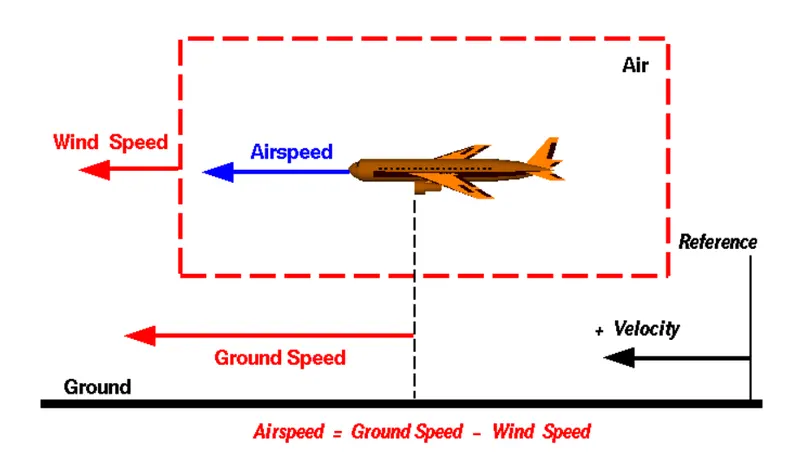
Ground speed: ground speed is the speed of aircraft in the horizontal direction relative to the surface of the earth.
It gives accurate navigation so that the pilot can estimate the speed of the aircraft.
An Aircraft moving vertically will have zero ground speed. since the horizontal component of the velocity of the aircraft is zero.
AirSpeed: AirSpeed is the speed of the aircraft measured relative to the Air. there are some conventions used in qualifying the air are
above image shows the pilot tubes which measures the air speed.
1.Indicated Airspeed
2. calibrated Airspeed
3.Equivalent Airspeed
4.True Airspeed
source: NATIONAL AERONAUTICS AND SPACE ADMINISTRATION.
#ANSWER 3:
Taxiing: is the moment of aircraft on ground on its own engine power.

There are many aircrafts which are capable of moving in reverse direction using the reverse thrust if it happens there might be a damage for the jet blast or the terminal equipment. if the engine is nearer to the ground then there is possibility to suck the sand inside the engine. in airports, Pushback trucks are employed, which lifts the front wheel of the aircraft and used for moving from the parking spot to taxiways. called towing.
possible consequences if engine is used movement on ground are:
1. To save fuel, Virgin Atlantic has implemented a new system where the pushback trucks will take the aircraft to the runway.
2. During the running of a high-power engine, there may be a loss of control can happen.
3. ground support staff are prone during the engine run at high power.
4. the noise produced by the aircraft is very high and it causes disturbance to the passengers.
#ANSWER 4:
Towing: If the taxing of the aircraft is not possible in parking areas such as moving the aircraft in and out from the maintenance hangers. then towing is preferred, we allow the ground vehicle to move an aircraft by attaching the nose landing gear with towbar.
the steering operation is done by the pushback truck driver it self, and depending on the type of aircraft, a bypass pin is installed temporarily to disconnect it from the normal steering operation.
by following the taxiiway aircraft moves to the runway.Take-off is the transition from moving along the surface to flying into the air.
when the pilot releases the breaks the aircraft reaches the required speed. and the speed is varied based on the air density and weight of the aircraft.

#ANSWER 5:
(a) takeoff power:
When an aircraft takes off, one or more engines may fail suddenly & it may encounter
a variety of situations.
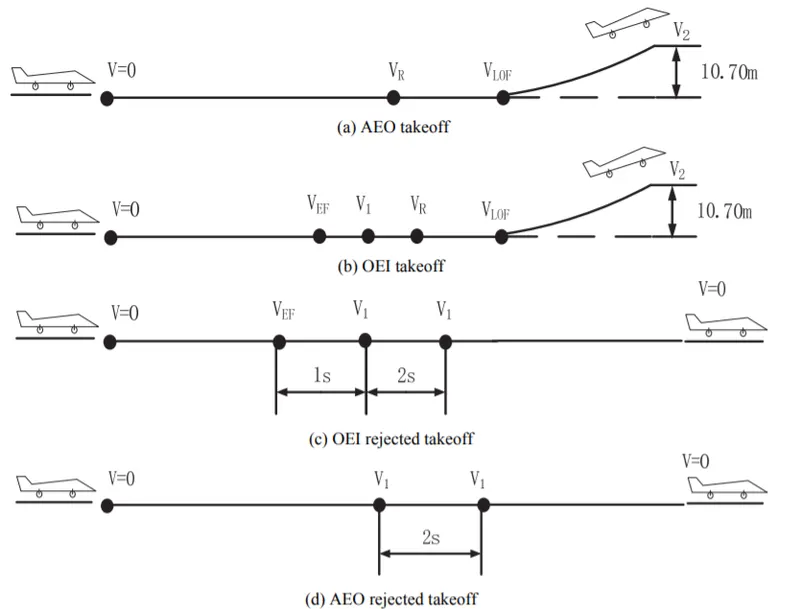
There are four situations which can be for research in
calculating the takeoff performance of an aircraft
(i) takeoff with all engines operating (AEO),
(ii) take off with one engine inoperative (OEI),
(iii) rejected takeoff with all engines operating,
(iv) rejected takeoff with one engine inoperative.
for low weight aircraft, the total energy is used for the takeoff . Large transportation aircraft may use a lower power for takeoff. where lessthan fullpower is is applied in order to prolong engine life,reduce the noise production and cost of maintenance. the engines consisting pistons are runs at high power to check for the problems in the engine.
At the initial phase of the runway the aircraft is motionless. which is denoted by the location O. when pilot increases the power to maximum takeoff power, and the aircraft starts accelerates on the runway. After some distance before it lifts into the air, it is in contact with the ground that is called ground roll. The total takeoff length covered also includes the airborne.
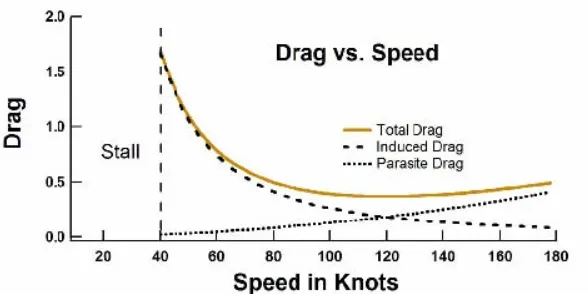
the above image gives the power curve for parasite drag and induced drag ,
parasite drag consists the drags of skin friction and form drag and interference drag .
And the induced drag is function of lift and which is perpendicular to chord line.
Tyre Design:
The tyre of an aeroplane have to withstand heavy weights even for short duration of time , keeping these things in note , manufacturers designs the aeroplane tyres. As the weight of the aircraft increases the number of tyres also increases.so that the weight of the aircraft distributes only.
the tyres of aircraft includes fusible plugs which are assembled inside of the wheels, which are going to melt at particular temperature. it is also often possible that tyres may get overheated when maximum breaking is applied. inorder to provide safe mode to stop the explosions of tyres.
carcass plies are used to form the tyres.
design consideration of tires:
1. to support the weight of the aircraft on ground.
2.should provide necessary traction for braking.
3.To absorb the shock of landing and provide cushioning the roughness of takeoff .
RollingResistance:
The rolling resistance caused by the friction between the ground and tire of the aircraft. whenever the aeroplane taxiing or towing to move on to the runway then the rolling resistance force comes into the subject. which opposes the motion of aircraft.
The rolling resistance force mainly depends on roughness of the road , surface type , condition of the road (wet or dry).
and also several factors of the tire like dimensions and temperature and pressure of the tire also will effect the rolling resistance force.
Rolling resistance force Frr= Umg;
U = coefficient of rolling resistance;
m = mass of the load on the tire,
g = acceleration due to gravity.
typical values of U are:
| Surface | BrakesOff | Brakes On |
| Dry concrete | 0.03-0.05 | 0.3-0.5 |
| Wet concrete | 0.05 | 0.15-0.3 |
| Icy concrete | 0.02 | 0.06-0.1 |
| Hard turf | 0.05 | 0.4 |
| Firm durt | 0.04 | 0.3 |
| Soft turf | 0.07 | 0.2 |
| Wet grass | 0.08 | 0.2 |
Tire pressure:
To reduce the Rolling resistance, generally A high pressure is maintained in the aircraft tire.
so that it can with stand high weights. The normal pressure in the tires is around 190 to 320 psi. the value can be different based on the type of the aircraft.To minimize the expansion and contraction from extreme changes in temperature tires are usually inflated with the nitrogen gas.
Here we have a chart that correlates our tire pressures with the maximum grossweight expected before the next servicing.
Brake Forces during landing:
A lot of breaking force is required to stop an aircraft which is moving at high speeds. to have such operation smoother, the aircraft has break unit on each of the wheels on the main gear assembly. On landing,pilots should use aerodynamic braking by the application of extra back pressure on the stick .
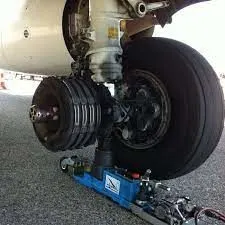
Extreme scares should be used when applying brakes at any significant speed of the aircraft. and only when the end of the runway is quickly approaching .
Never step on the brakes to make a runway exit. Applying the brakes at too high speed could burn the tires , wear out the breaks.
#ANSWER 6A &6B:
Considering the parameters for airbus A-380.Assuming pushback truck is having a weight of 1000kg.
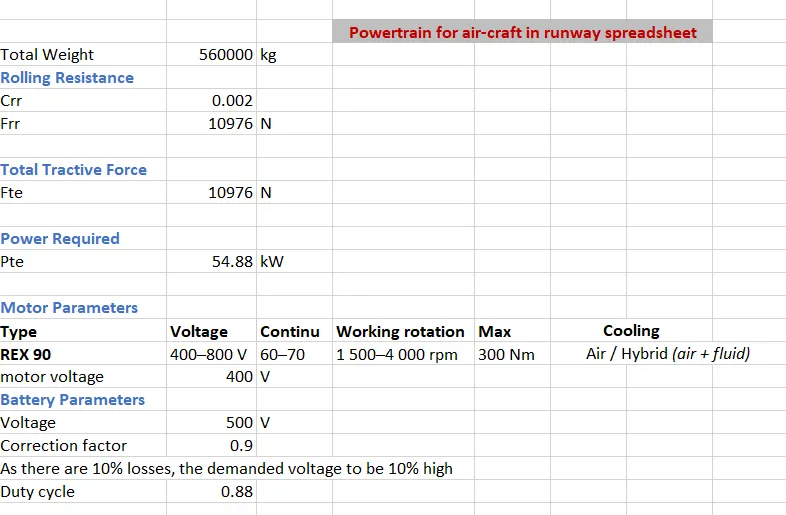
The total weight of aircraft including payload is 5,59,000kg.
and coefficient of rolling resistance Crr= 0.002
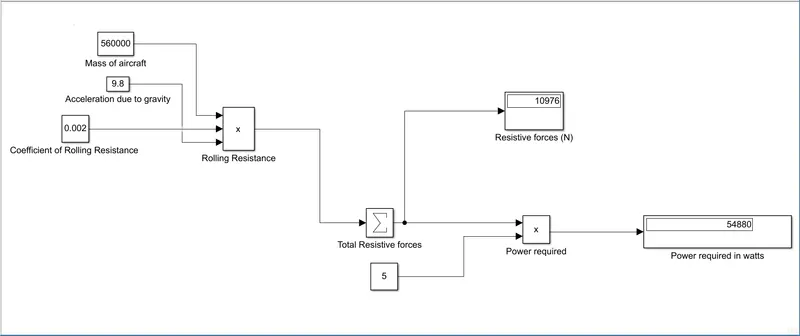
Rolling Resistance Force (Frr) = Crr*m*g
Crr= coefficient of rolling resistance;
m = mass of the load on the tire,
g = acceleration due to gravity.
Frr= 0.002*(5,59,000+1000)*9.8
Frr= 10,976N-m.
here the towing vehicle moving with low velocity (assuming 5m/sec) . at such low speeds the aero dynamic force is very much less and hillclimbing force is also zero for flat surfaces, so we are not considering their effects in the total tractive force.
The Power required for towing truck is P= Force* velocity
P= 10,976*5=54,880w=54.8Kw
the minimum power required by the vehicle is P=55Kw(nearly)
#ANSWER 7A&7B:
The simulink model of powertrain is
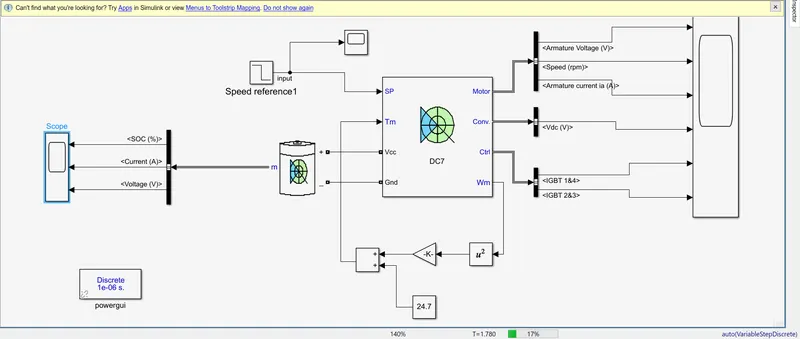
in the above problem we found that towing truck requires approximately 55Kw of power .
here we are powering the truck with REX 90 motor.
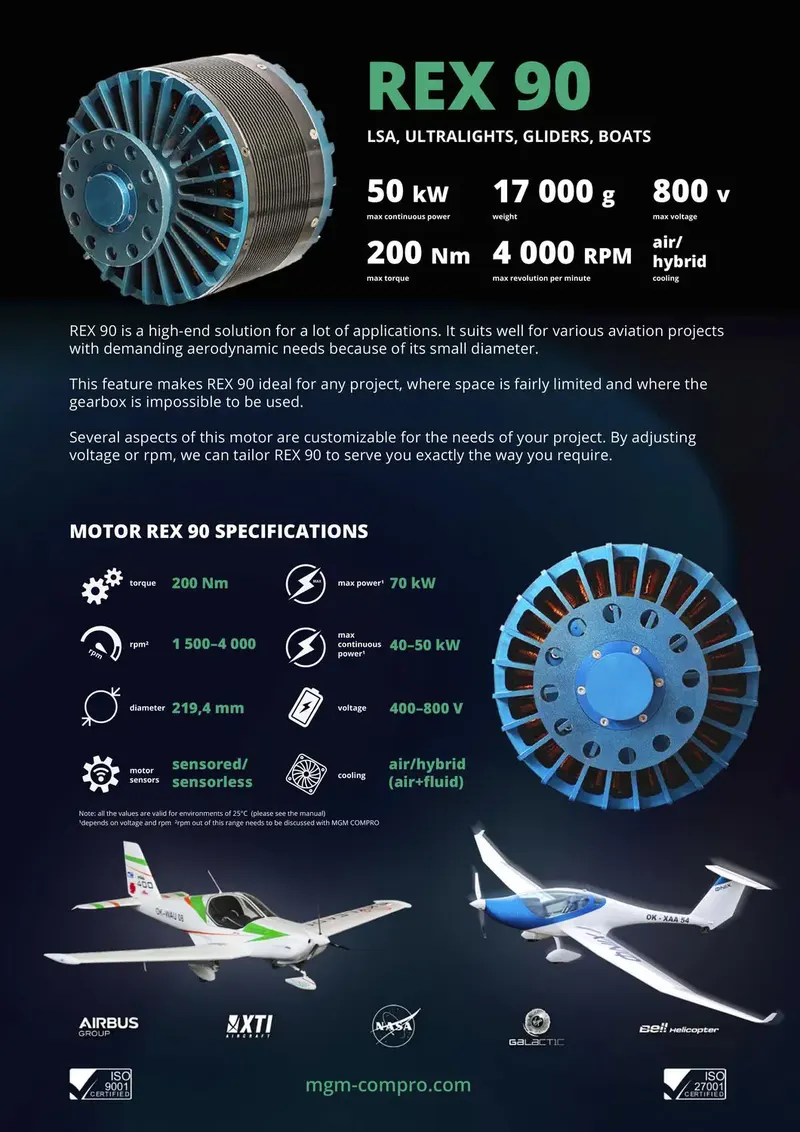
This motor is having 50Kw of continuous power and 70Kw of peak power . and produces torque 200Nm. and runs at a rated speed of 4000RPM. the supply voltage varies from 400 to 800 volts.
Duty cycle : ratio of output voltage to input voltage in stepdown chopper.
here we considered a battery of 500v and motor is operating at 400 v
the duty ratio is d=Vout/Vin
d=400/500=0.8
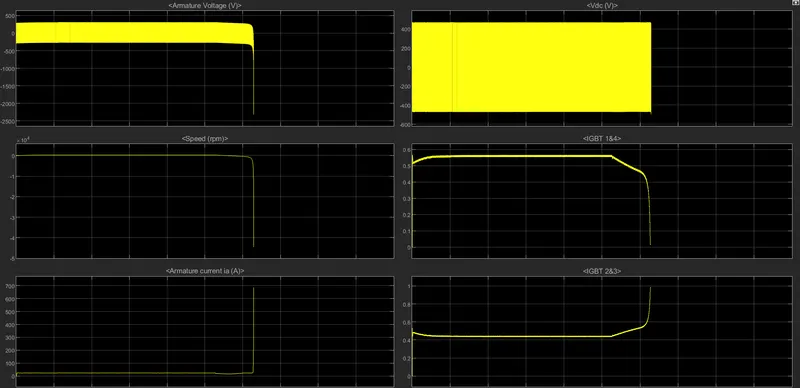
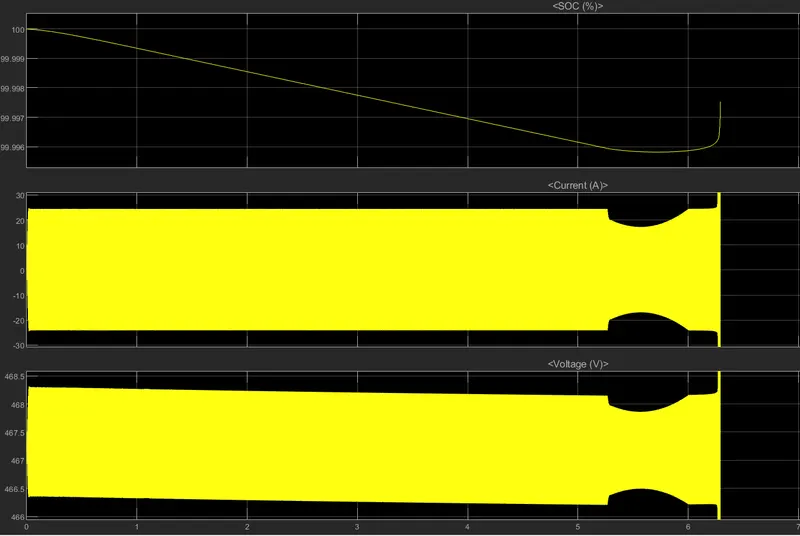
there are some losses dut to the FET resistance and inductance. here 90% of correction factor is considered. It means there is 10% loss .
Mass of the Aircraft is 5.6L kgs.(including towing vehicle1000kg),
coefficient of rolling resistance 0.002
velocity 5m/s