Project-1: Powertrain for aircraft in runways
1. Search and list out the total weight of various types of aircrafts.
-------------------------------------------------------------------------------------------------------------------------------------------
ANS:(1)
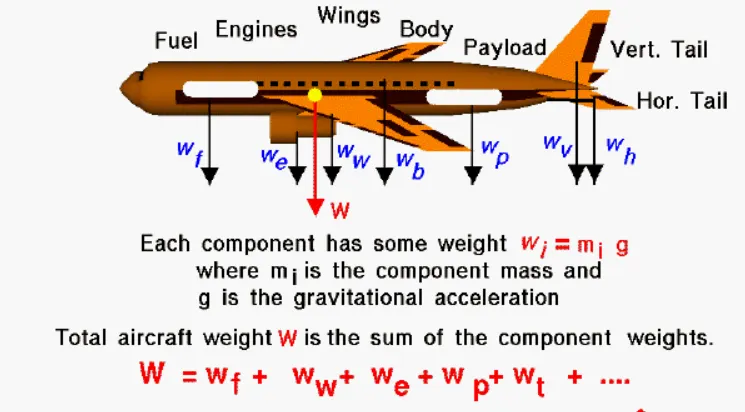
For the calculation of Aircraft the paramiters are,
W=Total Waight
Wf=Fuel Waight We=Enginee Waight
Ww=Wings Waight Wb=Body Waight
Wp=Pay load Waight Wv=Vert Tail Waight
Wh=Hor Tail Waight
Total Waight=
(Fuel Waight + Enginee Waight+ Wings Waight+ Body Waight+ Pay load Waight + Vert Tail Waight+ Hor Tail Waight)
W=(Wf+We+Ww+Wb+Wp+Wv+Wh)............................................(1)
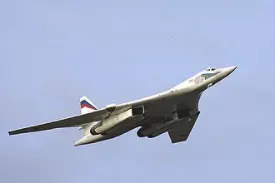
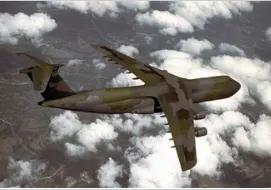
- Tupolev Tu-160 – 109996.1 Kg 2.Lockheed C-5 Galaxy – 172365.1kg
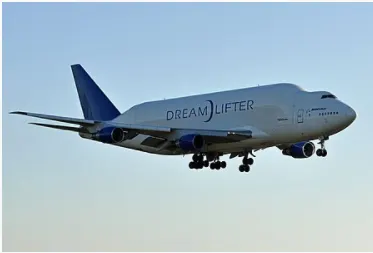
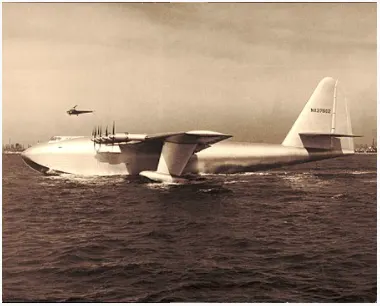
3.Boeing Dreamlifter – 180529.8kg 4.Hughes Hercules H-4 — 181436.9kg
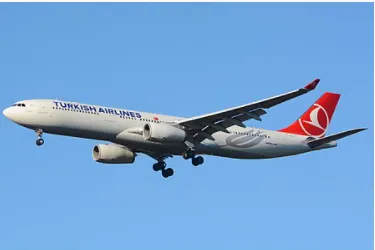
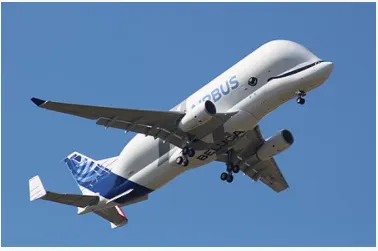
5.Airbus A330-300 –240404kg 6. Airbus Beluga XL – 227022.5kg
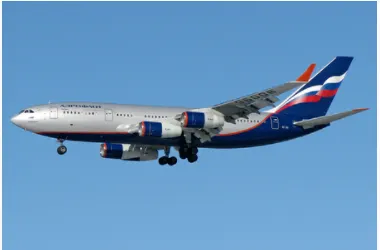
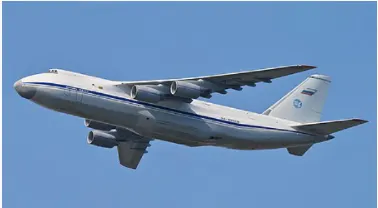
7.Airbus A350-900 –243125.5kg 8.Ilyushin IL-96 – 269887.5kg
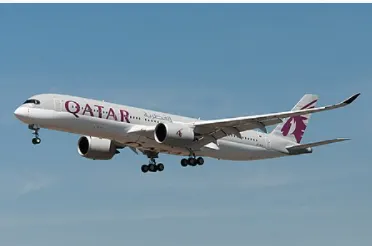
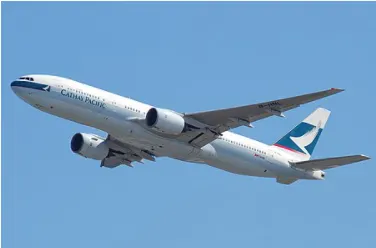
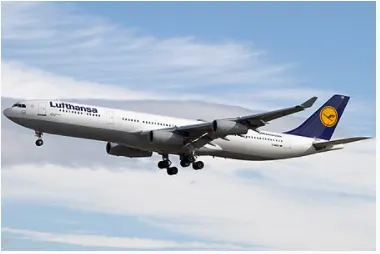
9.Boeing 777-300 – 299371kg 10.Airbus A340-600 – 381017.6kg
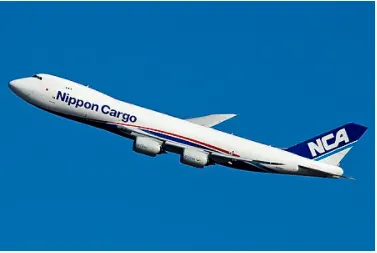
11.Antonov AN-124 Ruslan – 401999.9kg 12.Boeing 747-8 – 442252.6kg
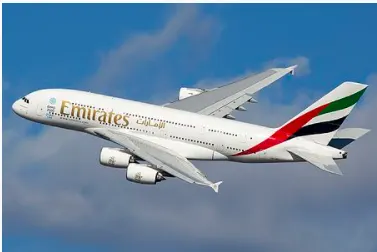
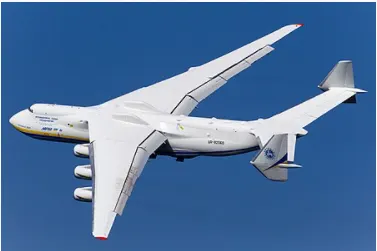
13.Airbus A380 – 560005.1kg (S) 14.Antonov AN-225 – 644101.2kg
LOW WAight:
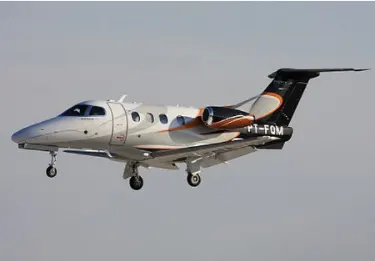
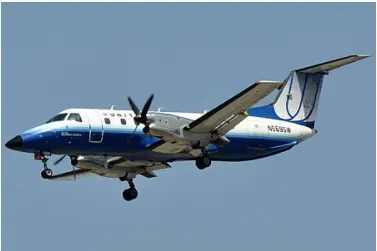
15.Embraer EMB-500 -4,800 kg 16.Embraer EMB 120 Brasilia-11,250 kg
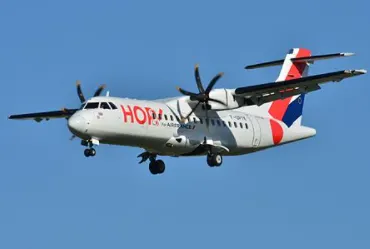
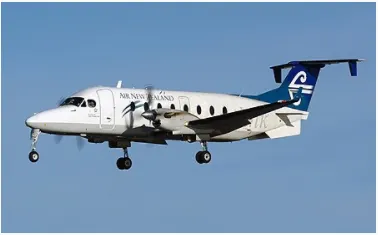
17.ATR 42-500-5450 kg 18.Beechcraft 1900D-7,814 kg
-----------------------------------------------------------------------------------------------------------------------------
2. Is there any difference between ground speed and air speed?
-----------------------------------------------------------------------------------------------------------------------------
ANS:
A Ground speed and Air speed is very simple concept the Ground speed equal Air speed sum wind speed.
Ground Speed=Air Speed + Wind Speed
Ground Speed=Air Speed-Wind Speed
Ground speed < Air speed (wind speed air and speed oposit direction)
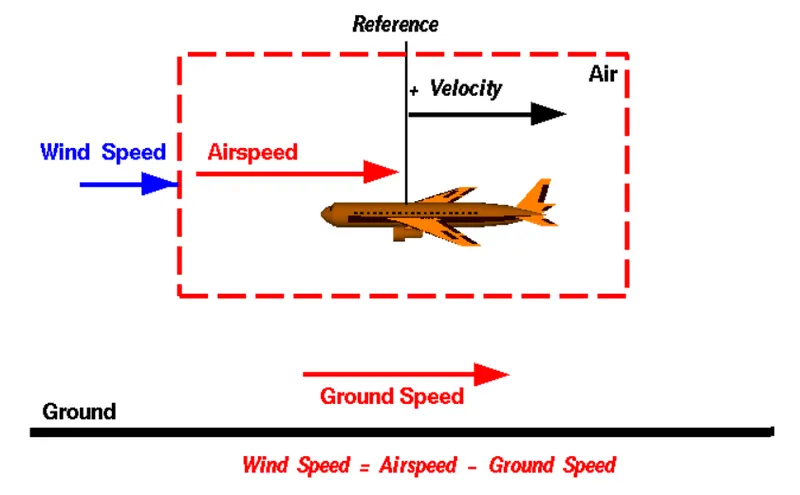
Ground Speed=Air speed +Wind speed
Ground speed > Air speed (wind speed air and speed same direction)
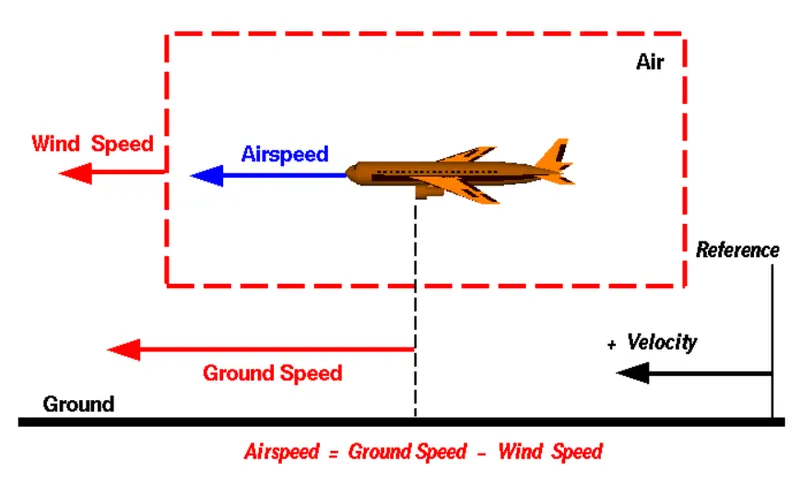
At the condition when the Aircraft flying towards wind then the Ground speed is grater than air speed and when the Aircraft flying against Wind the Air speed less than Ground speed .
So we can told that the Air speed and Ground speed is not equal.
-------------------------------------------------------------------------------------------------------------------------------------------
3. Why is it not recommended to use aircraft engine power to move it on the ground at Airport?
-------------------------------------------------------------------------------------------------------------------------------------------
ANS:
For the Air craft enginee the enginees are design for high amount of force production enginee.In the run way for landing and lifting the Aircraft enginees are use but in case parking and positining the aircraft are use othe vehicals, if the engine power use at perking situation it's can damage nearby Aircraft or Airport or after landing the plan need to exact posting for adjust the Exit or entry door ,and this time the Aircraft need very accurate and very low power for control thats why in Air port the aircraft engine power is not recommended.
-------------------------------------------------------------------------------------------------------------------------------------------
4. How an aircraft is pushed to runway when its ready to take off?
-------------------------------------------------------------------------------------------------------------------------------------------
ANS:
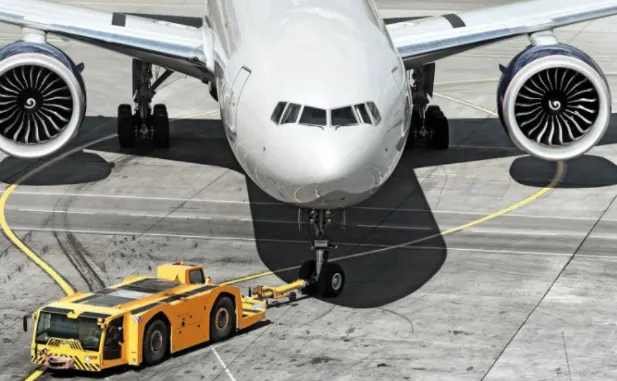
In case the smoll vehical we can move reverce and go back to street but in case of Aircraft the backward movement is not posible thats why the airport autority use Tug enginee for puss the Aircraft to runway for flying. In that time the Aircrafts are connected to tow bar with tug .Tugs are push the Aircraft at revarce direction .The Tugs are very waighty thats why Low waight Aircrafts are no need Tugs but for High waighted Aircraft need to tug for push the Aircraft.
-------------------------------------------------------------------------------------------------------------------------------------------
5. Learn about take off power, tyre design, rolling resistance, tyre pressure, brake forces when landing.
-------------------------------------------------------------------------------------------------------------------------------------------
ANS:
Take of power:
Takeoff is a part of Aircraft leaves the ground for the lifting the aircrft body the aircraft thruttle make full power .For a smol size of aircraft there is high amount of thruttle power but in case heavy aircraft the thruttle power as much as need to fly the aircraft for maitain the heating and damage probability.
The force involve at the time of lifting,
T=thust force during lifting from runway
D=Drag force
R=Rolling resistance fdorce
During take off on the runway the imbalance force will cause an acceleration along the runway and it is given by the formula,
F=T-D-R/m
at her Ready for lifting the piklot accelerate the aircraft to the speed which give by the controlling department.
AirCraft tyre design:
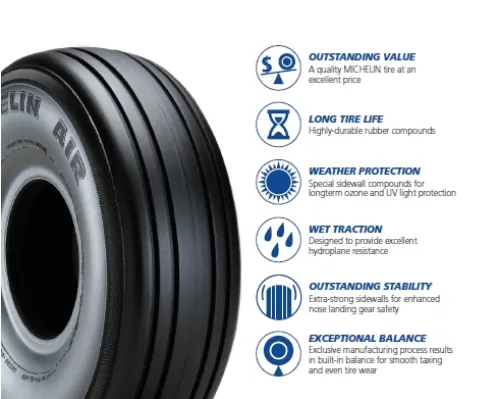
1.AirCraft tyres are design mainly the how much waight Aircraft takes.
Depends on the waight the aircraft the amount of tyres are designed.
2.Each tyre are highly heat resistive.At the landing time the friction between tyre and run way the tyres are heated that heat can damage or make tyre blust thats the reson the tyres are highly heat resistive.
3.Tyre are enaph resistive becouse at landing time friction between tyre and runway the friction must be enaph to keep the aircraft to run way other wise aircraft move wrong direction and make accident.
4.Aircraft tyre are design set into an aircraft based on its aplication and also suffecient clearance with the ground for allowing tyre growth which happens when centrifugal force is at high speed.
5.Aircraft tyres are inflated by nitrogen for reduce expansion at the contraction time
Rolling Resistance:
In the broad sense, specific "rolling resistance" (for vehicles) is the force per unit vehicle weight required to move the vehicle on level ground at a constant slow speed where aerodynamic drag (air resistance) is insignificant and also where there are no traction (motor) forces or brakes applied.
 where
where
 is the rolling resistance force (shown as R in figure 1),
 is the dimensionless rolling resistance coefficient or coefficient of rolling friction (CRF), and
 is the Normal force, the force perpendicular to the surface on which the wheel is rolling.
-
Crr Description 0.0003 to 0.0004 "Pure rolling resistance"Railroad steel wheel on steel rail 0.0010 to 0.0015 Hardened steel ball bearings on steel 0.0010 to 0.0024 Railroad steel wheel on steel rail. Passenger rail car about 0.0020 0.0019 to 0.0065 Mine car cast iron wheels on steel rail 0.0022 to 0.0050 Production bicycle tires at 120 psi (8.3 bar) and 50 km/h (31 mph), measured on rollers 0.0025 Special Michelin solar car/eco-marathon tires 0.0050 Dirty tram rails (standard) with straights and curves 0.0045 to 0.0080 Large truck (Semi) tires 0.005 Typical BMX bicycle tires used for solar cars 0.0062 to 0.0150 Car tire measurements 0.0100 to 0.0150 Ordinary car tires on concrete 0.0385 to 0.0730 Stage coach (19th century) on dirt road. Soft snow on road for worst case. 0.3000 Ordinary car tires on sand brake forces:
Braking is most chalanging part of aircraft landing many forces are aplying for make bake the aircraft the actual power to over come the laning force is F=0.5*m*v^2for overcome this force we aplying wing movement to make the air resistance to slowdown the aircraft ,the wheel friction to reduce the speed at landing time and at last the mechanical force to the landing wheel for make the aircraft slow and permanently stop at position.
PART:
-------------------------------------------------------------------------------------------------------------------------------------
6. A. With necessary assumptions, calculate the force and power required to push / pull an aircraft by a towing vehicle.
B. Develop the model for the calculated force and power using Simulink.
------------------------------------------------------------------------------------------------------------------------------------
ANS:
TUG MODEL: EAGLE TT-8 AWD
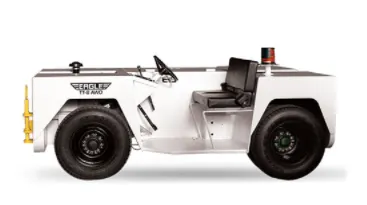
waight: 52,163kg (Dry condition)
Width: 1,372 mm
Height: 1,016 mm
Speed=6.9 kph=1.91m/s
Aircraft: Airbus A380
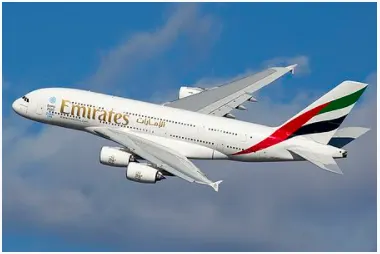
waight: 83914.58kg
Width: 7.14 m
Height: 24.09 m
Drag coefficient: 0.04
Cd=0.04
p=1.223
A=(7.14*24.09)=172m^2
g=9.8 N.m
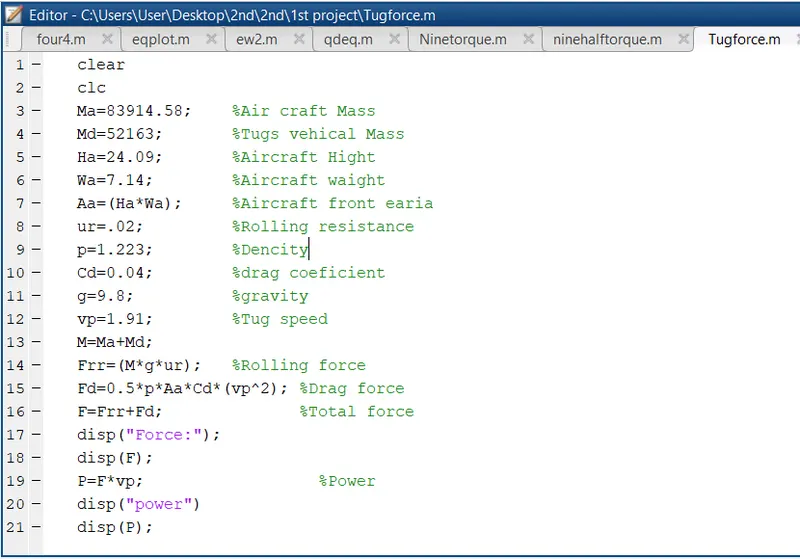
For calculation the push pull force and power equation is :
F=Frr+Fd [Frr=Rolling force, Fd=Drag force]
Frr=u*M*g [u=rolling resistance, M=Mass(Tugs Mass +Aircraft Mass),g= gravity]
Fd=(1/2)*p*A*Cd*(v^2) [p=Air dencity,A=Aircraft Area,Cd=Drag Coefficint,v=Velocity]
For Power calculation
P=F*v
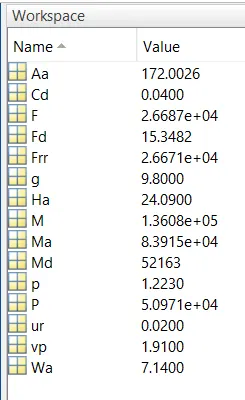
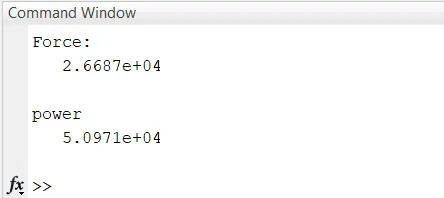
From the calculation we get calculated force F=2687 N
From the calculation we get calculated power P=50971 W
ANS:(B)
Simulink Model for Power and Force calculation:
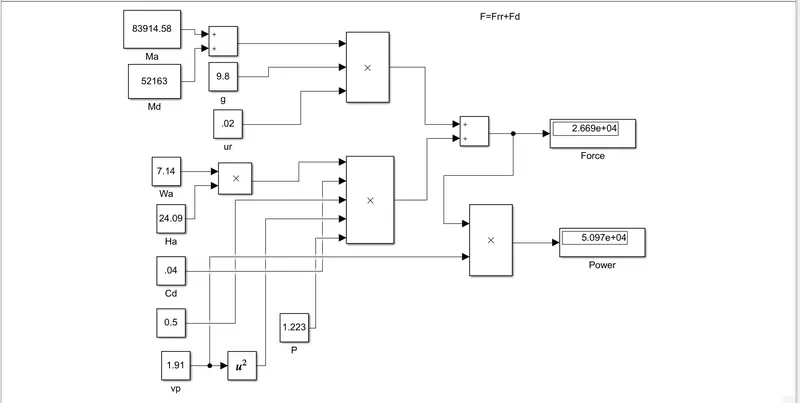
so the power for tugs and aircraft pull is power=5097 watt force=2669N
------------------------------------------------------------------------------------------------------------------------------------
7. A. Design an electric powertrain with type of motor, it’s power rating, and energy requirement to fulfill aircraft towing application in Simulink. Estimate the duty cycle range to control the aircraft speed from zero to highest. Make all required assumptions. Prepare a table of assumed parameters. Draw a block diagram of powertrain.
(Hint :DC7 Block)
B. Also, Design the parameters in excel sheet.
-------------------------------------------------------------------------------------------------------------------------------------
ANS:
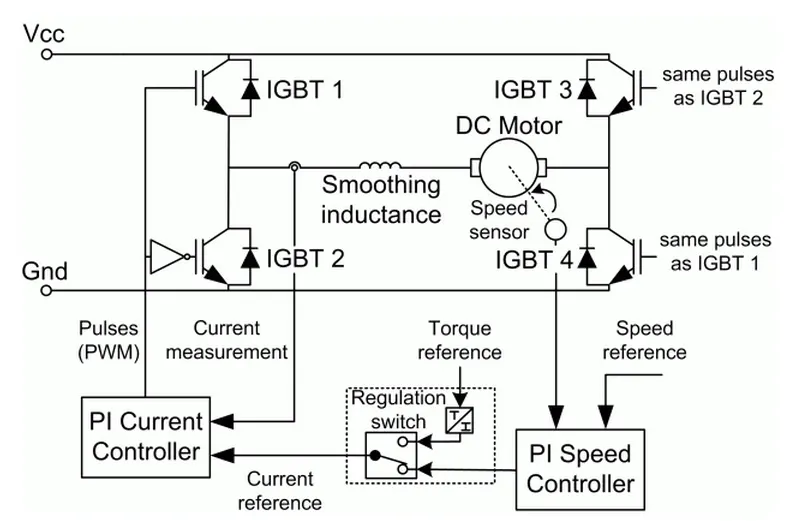
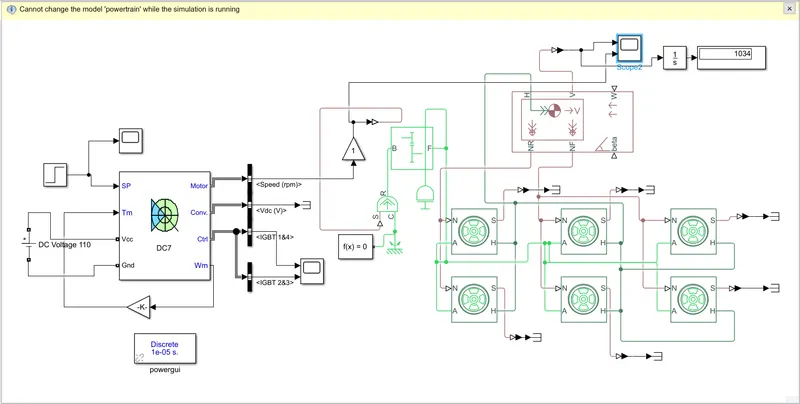
Let the powertrain system are made byDC7 block 4qd chopper and circuit are given below,
For make a pull tug powertrain model we use a DC power sorce ,a DC7 4 th quardent motor drive and feedback support blocks a vehical body block for make aircraft body design ,also use wheels and innertia block for make the system stable and realistics.
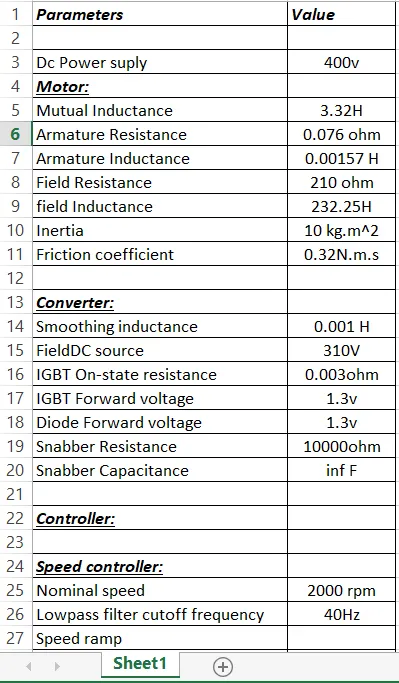
Assume parameters are,
Dc Power suply=400V
Motor:
Mutual Inductance(Motor)=3.320H
Armature Resistance=0.076ohm
Armature Inductance=0.00157H
Field Resistance=210ohm
field Inductance=232.25H
Inertia=10 kg.m^2
Friction coefficient=0.32N.m.s
Converter:
Smoothing inductance=.001 H
FieldDC source=310V
IGBT On-state resistance=.003ohm
IGBT Forward voltage=1.3v
Diode Forward voltage=1.3v
Snabber Resistance=10000ohm
Snabber Capacitance=inf F
Controller:
Speed controller:
Nominal speed=2000 rpm
Lowpass filter cutoff frequency=40Hz
Speed ramp
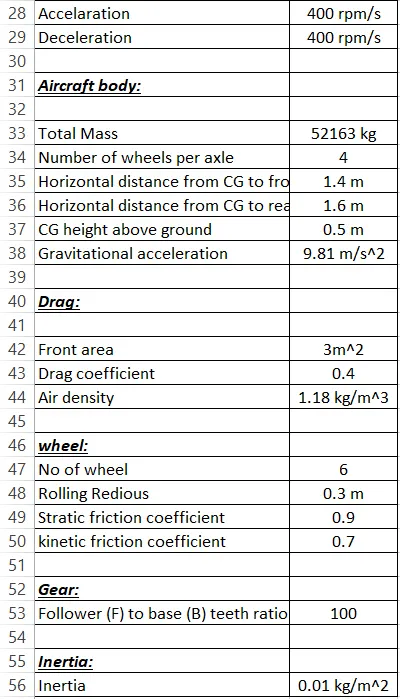
Accelaration=400 rpm/s
Deceleration=-400 rpm/s
Aircraft body:
Total Mass=52163 kg
Number of wheels per axle=4
Horizontal distance from CG to front axle=1.4 m
Horizontal distance from CG to rear axle=1.6 m
CG height above ground=0.5 m
Gravitational acceleration=9.81 m/s^2
Drag:
Front area=3m^2
Drag coefficient=0.4
Air density=1.18 kg/m^3
wheel:
No of wheel=6
Rolling Redious=0.3 m
Stratic friction coefficient=0.90
kinetic friction coefficient=0.70
Gear:
Follower (F) to base (B) teeth ratio (NF/NB)=100
Inertia:
Inertia=0.01 kg/m^2
Thrattle power or referance:
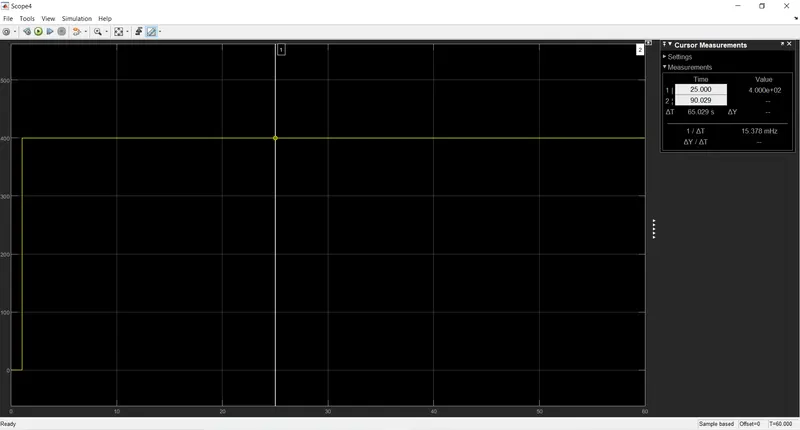
Out put Velocioty for pull the aircraft by tug:
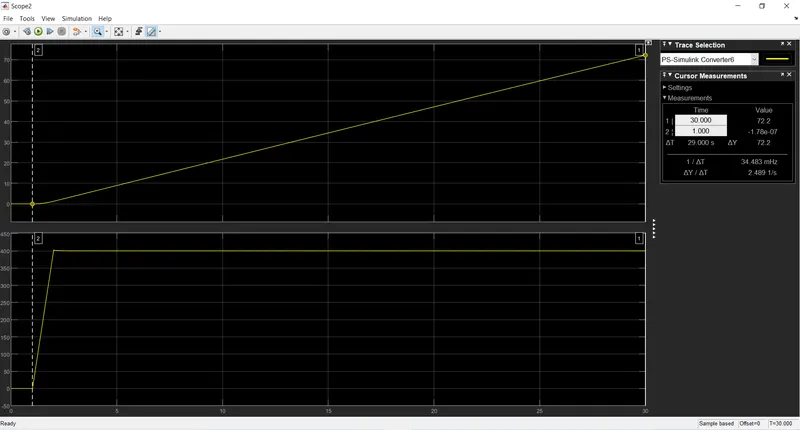
From the last graph we shee that the reach the saturation speed the tugs need more time for pull the aircraft 0m/s to 72 m/s speed need 29 sec.
and reach the speed 72 m/s the power requare 1034 w.So if we conduct this oparation we need greater 1034 w battary sorce tug for design the vehical.
Exel sheet parameter list:
Block diogram: