Project-1: Powertrain for aircraft in runways
1. Search and list out the total weight of various types of aircrafts.
What Is The Aircraft?
Any vehicle that is manufactured and made to fly in the air is called an aircraft. While the airplane is the most known, familiar, and popular kind of aircraft we know, other vessels that fly through the air also come in this category. All of them have propellers and wings or machinery to run through the air; however, they may vary according to sizes, types, usage, and more.
Classifications Of Aircraft:
Before we get into knowing and studying different types of aircrafts, let us understand how are these aircrafts classified. In most common terms, there are two types of classifications for aircrafts. One is lighter than air aircrafts, known as aerostats, and the other is heavier than air aircrafts, called aerodynes.
Aerostats (Lighter Than Air): Aerostats or lighter than air aircrafts are very more lightweight in weight. These types of light aircraft generally use buoyancy like ships, which help them float in the air. Low-density gas such as hydrogen, helium, or hot air balloons is used to fill in the aircraft. This low-density gas is lighter than air, and hence the name. The most common types of aerostats known to us are hot air balloons and sky lanterns.
Aerodynes (Heavier Than Air): Alternatively, the other aircraft, heavier than air or aerodynes, as we understand, is much higher in weight and size. They push the gas or air downwards; which reaction helps to make aircraft upwards. Since these are dynamic through movements in the air, they are called aerodynes. This dynamic lift through the air can be caused mostly through mechanisms, as you must have already known.
- One is the fixed-wing classification, just like planes. In this category of fixed-wing aircraft, the entire mechanism is relied upon forward speed to create airflow all over wings.
- Another mechanism is rotorcraft, which uses spinning rotors that are like wings. The helicopter is the most commonly known aircraft under this classification.
Types Of Aircrafts In The World:
Now that we know the most common classification, categories, and subcategories under the aircrafts, let us see different types of aircrafts and a list of all aircraft with pictures.
1. Amphibious:
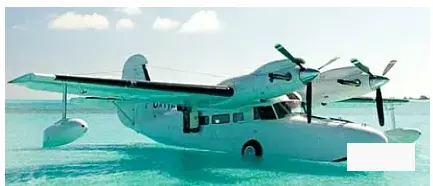
Amphibious aircraft, otherwise also popularly known as amphibian is a multipurpose aircraft which can work, take off and land both water and ground. They are used as both seaplanes or flying boats, or also airplanes. In this aircraft, the engine is either placed in front, or even above the wing, that is most commonly found in floatplanes, On the other hand, the modern and other amphibious aircraft have engine and propeller placed above the wings. The size of amphibians differs as per the purpose; there are military amphibians, leisure purpose seaplanes, and civil amphibious aircraft.
2. Helicopters:
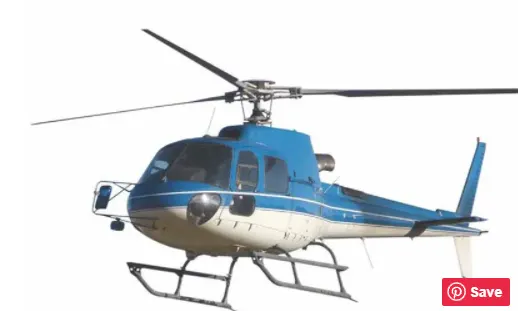
Helicopter aircraft, also known as a chopper, is commonly known to most of us and belongs to rotorcrafts. Horizontally spinning rotors help and aid the helicopter to lift and thrust. These aircraft have the advantage of taking vertically, horizontally, and fly both backward and forward or laterally. Unlike the other fixed-wing aircraft, these benefit from taking off and land at several places and flying even in congested areas. The engine depends on the size, purpose, and function of the chopper. Today, the helicopter is mostly used for military purposes, cargo, construction, rescue, tourism, aerial observation, and the government. The size of the chopper hence mostly depends on the usage.
3. Multi-Engine Piston:
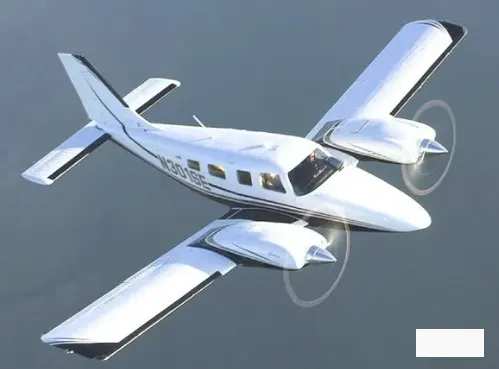
As the name suggests, Multiple or Multi-engine piston aircraft has more than one single-engine, unlike the other categories and types of aircraft. These multi-engine pistons are known to have a second power source, which is greatly helpful during another engine’s failure. Due to this multiple power and engine facility, the aircraft-quality, capacity, speed, and climb rate is much higher than the usual air crafts. In most cases, this kind of aircraft is used by air service for their services and duties.
4. Biplanes:
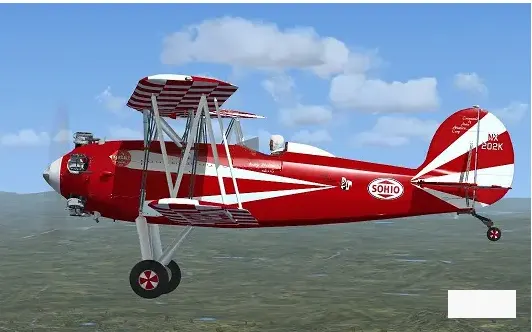
Biplanes come under the category of fixed-wing aircraft. In this category, two wings come one above each other on both sides. This kind of plane is among the first aircraft to discover fixed-wing planes. The biplanes have lower weight but with excellent stiffness and efficiency. The biplanes are fitted with reciprocating engines. Only two adults, in most cases, can do these. In most cases, biplanes are spotted and used for army and military purposes of specific countries. These aircraft were among the most commonly used ones during world war times.
5. Gliders:
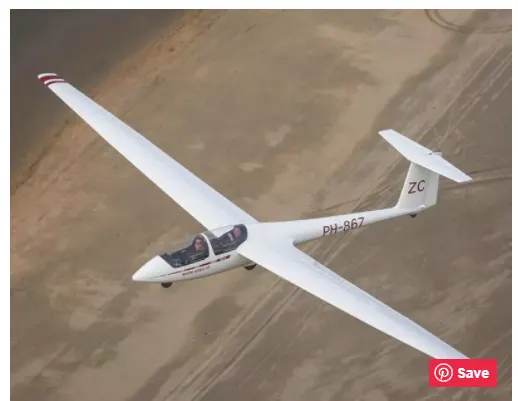
Gliders come again under the category of fixed-wing aircraft. The types of gliders aircraft are used through air reaction against lifting surfaces and mostly do not use any engine. Although small engines may be used as required (in cases like a motor glider), most glider aircraft are efficient for self-take without engines. A wheeled undercarriage helps in take-off or landing. In the past, gliders are used for military purposes and wars; however, nowadays, we even see them in tourist activities and entertainment or leisure. The most common types in this category include hand gliders and paragliders. Most gliders are small in size and can fit a maximum of two people.
6. Tricycle Gear Aircraft:
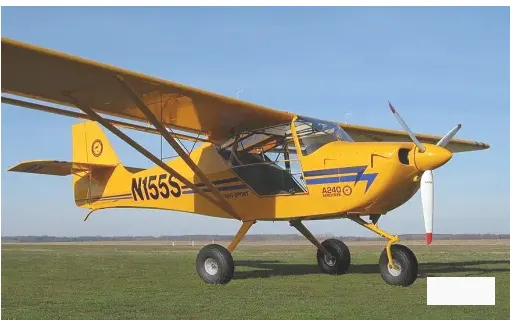
The tricycle gear aircraft is a kind of plane that has tricycle fashion fixed landing gear. The arrangement has a nose wheel in the front and two more in the main wheels. These are lightweight and are known to have better visibility of the ground, and is very easy to take off and land. The aircraft also has significantly less drag and allows the application of a full brake. They are used for lighter and quick uses, given the advantages of easy runs.
7. Business Jets:
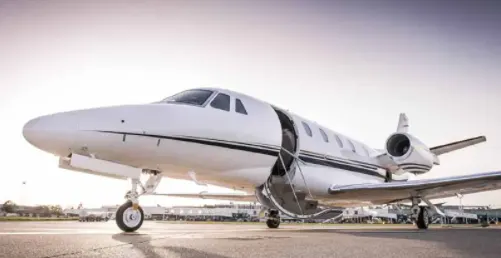
Business or private jet aircraft are known to be among the luxurious or unique aircraft to transport and fly a small group of people, even individuals. While they are costly due to their design, plush appearance, and very sophisticated looks, the business jets are used by different classes of people – from government officials to armed forces for special operations to companies and private ownership. While the speed, engine, and other manufacturing are similar to airplanes, the size differs from lightweight or small jets to mid-sized ones to long business jets. The heavy and long jets can accommodate 16 to 18 people, whereas the mid-size (depending on the capacity) can accommodate up to 12 or 10 people. The smaller types of business aircraft are only for four to six individuals.
Different types of weight are
Manufacturer Empty weight
It is the weight of the aircraft "as built" and includes the weight of the structure, power plant, furnishings, installations, systems and other equipment that are considered an integral part of an aircraft.
Zero fuel weight
This is the total weight of the airplane and all its contents (including unusable fuel), but excluding the total weight of the usable fuel on board.
As a flight progresses and fuel is consumed, the total weight of the airplane reduces, but the ZFW remains constant.
Operating Empty weight
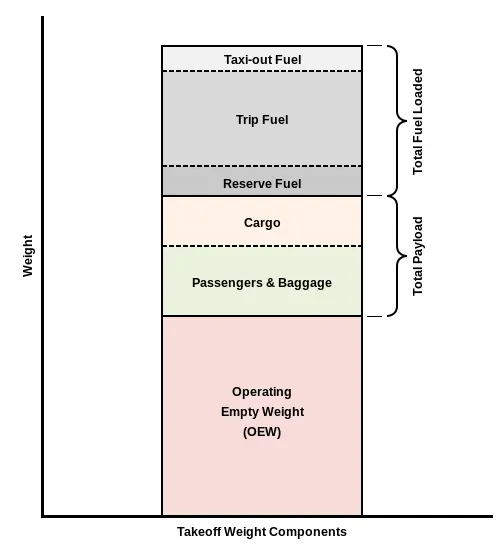
It is the basic weight of an aircraft including the crew, all fluids necessary for operation such as engine oil, engine coolant, water, unusable fuel and all operator items and equipment required for flight but excluding usable fuel and the payload.
Payload
It is the carrying capacity of an aircraft. It includes cargo, people, extra fuel. In the case of a commercial airliner, it may refer only to revenue-generating cargo or paying passengers.
Maximum Takeoff Weight
This is the maximum weight at which the pilot of the aircraft is allowed to attempt to take off.
Maximum landing weight
This maximum weight at which an aircraft is permitted to land
The following image depicts takeoff weight components
Maximum Ramp Weight
It is the maximum weight authorized for maneuvering (taxiing or towing) an aircraft on the ground.
Aircraft gross weight
It is the total aircraft weight at any moment during the flight or ground operation. This decreases during flight due to fuel and oil consumption.
2. Is there any difference between ground speed and air speed?

Airspeed
Airspeed is simply the speed at which an aircraft is moving relative to the air it is flying in. As such, it’s also the speed at which the air is flowing around the aircraft’s wings.
Ground speed, on the other hand, is the aircraft’s speed relative to the ground. One thing that should be noted here is that it’s its horizontal rather than vertical speed – an aircraft climbing completely vertically would have a ground speed of zero.
In other words, while airspeed is what determines whether there is enough airflow around an aircraft to make it fly, ground speed is what determines how fast an aircraft will get to its destination.
The relationship between airspeed and ground speed is fairly simple. Ground speed is simply the sum of airspeed and wind speed.
If the aircraft is flying in the same direction as the wind is blowing, the aircraft experiences tailwind, and its ground speed is higher than its airspeed. On the other hand, if the wind is blowing against the direction the aircraft is traveling in, the aircraft experiences headwind, and its ground speed is lower than its airspeed.
The Three Types of Airspeed
When I talked about airspeed earlier in this article, I was talking about true airspeed. However, pilots commonly use three different types of airspeed: indicated airspeed, calibrated airspeed, and true airspeed.
Indicated airspeed is an airspeed that is calculated directly off an aircraft’s pitot-static system. It’s the calculated off the aircraft’s dynamic pressure – the difference between its total pressure and static pressure.
The dynamic pressure depends not only on the aircraft’s speed, but also on the density of the air it is flying in. As such, the higher the aircraft flies – and the lower the air density as a result – the bigger the difference between indicated and true airspeed is.
Calibrated airspeed is indicated airspeed adjusted for a variety of errors.
Just as an example, one of the things it’s adjusted for is the flap position. The reason for that is that at different flap positions, air flows differently around the pitot-static system and affects the indicated airspeed readings.
True airspeed is, as has been mentioned numerous times in this article, the actual speed at which an aircraft is moving relative to the air it is traveling in. It’s calibrated airspeed adjusted for the the exact conditions (altitude, air temperature, etc.) that the aircraft is flying in.
For pilots, both airspeed and ground speed are very important. While the first of those helps them make sure they are flying fast enough to take off, not to stall, and so on, the second one helps them figure out how long it will take them to get from one place to another.
On the other hand, if you are a passenger, you will only need to be concerned about the ground speed as that will tell you how fast are you flying from your origin to your destination – how fast you will be able to get to your meeting, meet your relatives, or do whatever else the reason for your travel might be.
3. Why is it not recommended to use aircraft engine power to move it on the ground at Airport?
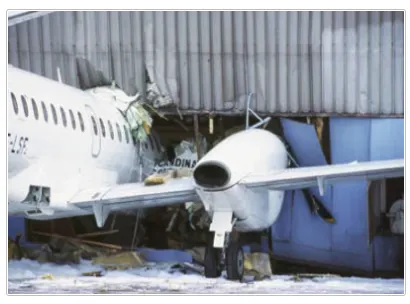
The risks which may arise from engine ground running relate to the potential forloss of control of the aircraft by those persons occupying the pilot seats in the flight deck. In most cases, such persons will be maintenance personnel holding specific company-issued approval for the required tasks. The consequences of loss of control during taxi or towing are the same as apply to these operations generally and this article is concerned only with the risks arising from the static running of one or more aircraft engines. Unwanted consequences from such static running are mainly related to those arising from the unintended movement of the aircraft during engine running - effectively a loss of control - especially during high power engine running. Damage can occur to the aircraft itself, other aircraft nearby or to airside structures. In addition, there is a risk of injury to ground support personnel who may be in relatively close proximity to the aircraft.
4. How an aircraft is pushed to runway when its ready to take off?
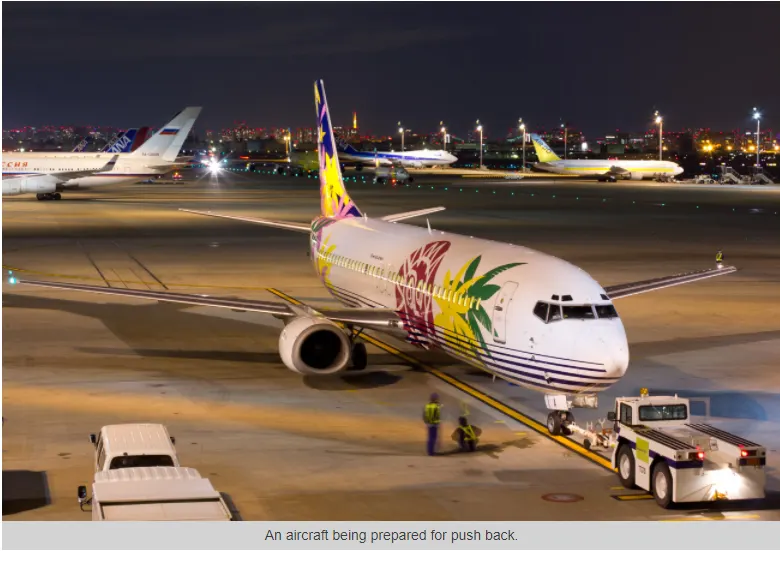
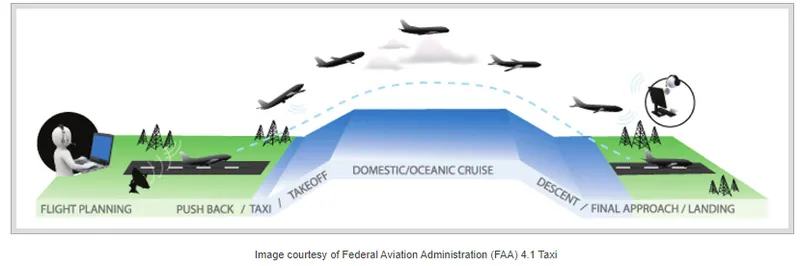
pushback is an airport procedure during which an aircraft is pushed backward away from its parking position, usually at an airport gate by an external power. These are steps to ready the aircraft for take-off: The pilot parks the aircraft in exactly the right place.
Why are tyres important in Aircraft?
When it comes to safety, tyres are one of the most important components of aircraft. They help to absorb the shock of landing and provide cushioning. It also provides the necessary traction for braking and stopping of an aircraft.
An aircraft tyre is designed to withstand extremely heavy loads while landing, take off, taxing, and parking. The number of wheels required for aircraft increases with the weight of the aircraft, as the weight of the aeroplane needs to be distributed more evenly.
Takeoff power
Takeoff is the phase of flight in which an aerospace vehicle leaves the ground and becomes airborne. For aircraft traveling vertically, this is known as liftoff.
For aircraft that take off horizontally, this usually involves starting with a transition from moving along the ground on a runway. For balloons ,helicopters and some specialized fixed-wing aircraft (VTOL aircraft such as the Harrier and the Bell Boeing V22 osprey), no runway is needed.
Takeoff is the phase of flight in which an aircraft goes through a transition from moving along the ground (taxiing) to flying in the air, usually starting on a runway. Usually the engines are run at full power during takeoff. Following the taxi motion, the aircraft stops at the starting line of the runway. Before takeoff, the engines, particularly piston engines, are routinely run up at high power to check for engine-related problems. This makes a considerable noise. When the pilot releases the brakes, the aircraft starts accelerating rapidly until the necessary speed for take-off is achieved.
The takeoff speed required varies with air density, aircraft weight, and aircraft configuration (flap and/or slat position, as applicable). Air density is affected by factors such as field elevation and air temperature.
Design and Construction of Aircraft tyre
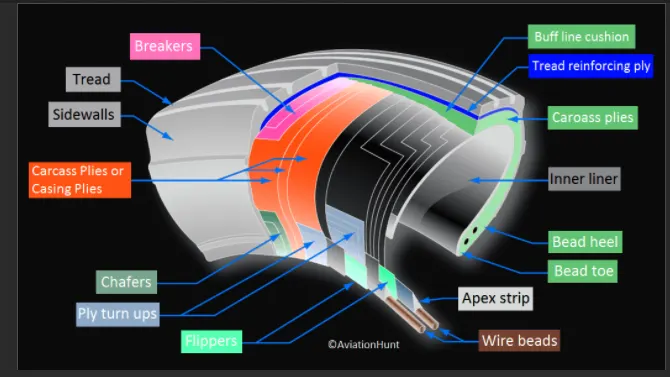
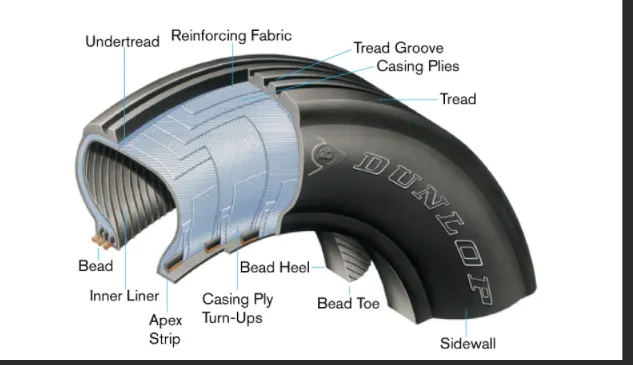
Carcass plies are used to form the tire. They are sometimes called casing plies. An aircraft tyre is constructed for the purpose it serves.
- They support the weight of an aircraft while it is on the ground.
- It also provides the necessary traction for braking and stopping of an aeroplane.
- Tyre also helps to absorb the shock of landing and provide cushioning the roughness of takeoff, roll-out, and taxi operations.
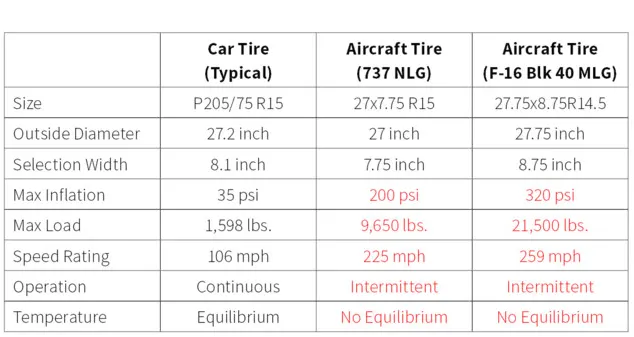
Unlike an automobile or truck tyre, it does not have to carry a load for a long period of continuous operation. However, an aircraft tyre absorbs the high impact loads of landing, and also it’s operating at high speeds for a short time when required.
Rolling Resistance
The force that resists the motion of a body rolling on a surface is called the rolling
resistance or the rolling friction.
The rolling resistance can be expressed as
Fr = c W (1)
where
Fr = rolling resistance or rolling friction (N, lbf)
c = rolling resistance coefficient - dimensionless (coefficient of rolling friction - CRF)
W = mag= normal force - or weight - of the body (N, lbf)
m = mass of body (kg, lb)
ag = acceleration of gravity (9.81 m/s2, 32.174 ft/s2)
The rolling resistance can alternatively be expressed as
Fr = cl W / r (2)
where cl = rolling resistance coefficient - dimension length (coefficient of rolling friction)(mm, in)
r = radius of wheel (mm, in)
Tire Pressure
Aircraft tires generally operate at high pressures, up to 200 psi (14 bar; 1,400 kPa) for airliners, and even higher for business jets. The main landing gear on the Concorde was typically inflated to 232 psi (16.0 bar), whilst its tail bumper gear tires were as high as 294 psi (20.3 bar).
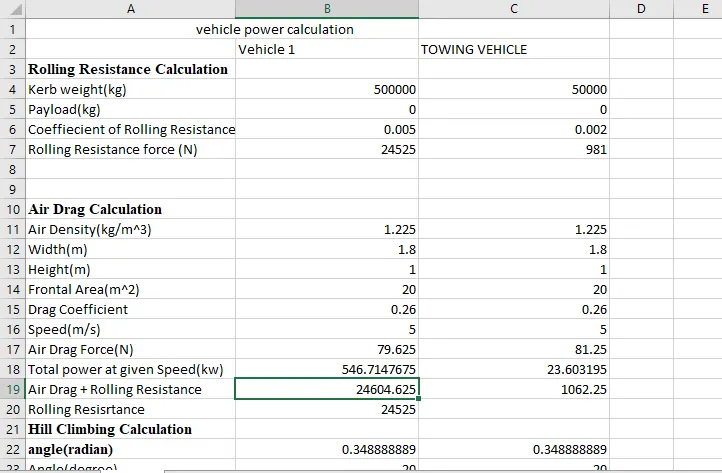
6. A. With necessary assumptions, calculate the force and power required to push / pull an aircraft by a towing vehicle.
weight of vehicle = 500000kg
Coefficient of rolling resistance = 0.005
weight of towing tractor= 50000kg
coefficient of rolling resistance of towing tower= 0.002
Aircraft velocity while towing=18kmph= 5m/s
Density of air= 1.225kg/m^3
The frontal area of aircraft= 20m^2
Drag coeffient of aircraft= 0.26
Towing tractor gear ration= 11
Towing tractor tire radius= 0.5m
Forces acting on the aircraft are
1. Rolling Resistance
2. Drag force
1. Rolling Resistance
Rolling Resistance is given by
F(r)= c.mr.a(g)
F(r)= rolling resistance force
c= coeffint of rolling resistance
mr= rolling mass
a(g)= acceleration due to gravity
after substitution
F(r)= 0.005x(500000kg)x(9.81m/s)
F(r)= 24.525KN
The Rolling Resistance of aircraft = 24.525KN
Now for Towing vehicle
F(r)= c.mr.a(g)
F(r)= 0.002x(50000kg)x(9.81m/s^2)
= 0.981KN
The Rolling resistance of towing vehicle= 0.981KN
2. Drag force
D= 1/2xC(p).A.V^2
D= Drag force
C= Drag coeffocient
V= Velocity of Towing Vehicle
A= Frontal area
After sustitution
Drag force= 0.5x(0.26 x1.225x20x5x5)= 0.079625KN
Now thw total force is given by= rolling resistance of aircraft + rolling resistance of towing vehicle + Drag force
= 24.525KN+0.981KN+0.79625KN= 25585.625N
Power required for the Towing vehivle to pull the aircraft is
Power= Force x velocity
25.5855625x5.0= 127.928125KW
B. Develop the model for the calculated force and power using Simulink
Simulink model
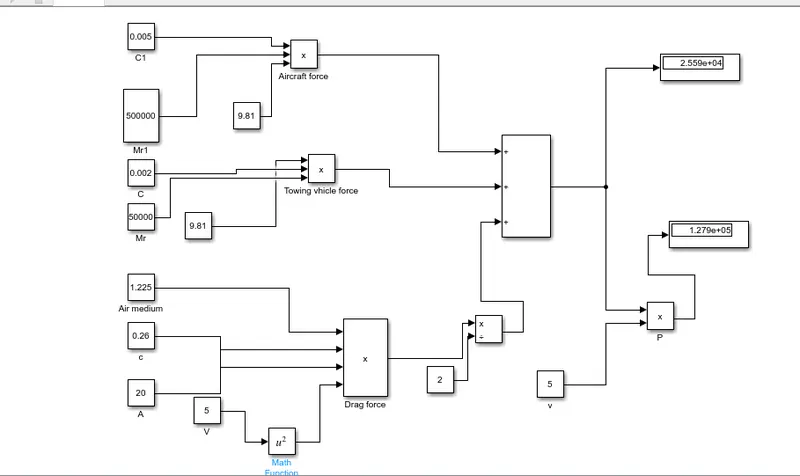
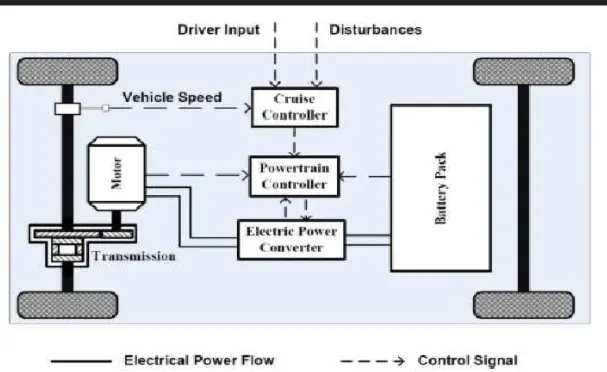
7. A. Design an electric powertrain with type of motor, it’s power rating, and energy requirement to fulfill aircraft towing application in Simulink. Estimate the duty cycle range to control the aircraft speed from zero to highest. Make all required assumptions. Prepare a table of assumed parameters. Draw a block diagram of powertrain.
weight of aircraft= 500000kg
Rolling Resistance Coefficient of an aircraft tire= 0.005
Weight of the Towing vehicle = 50000kg
Coefficient of rolling resistance of towing vehicle= 0.002
Aircraft velocity while towing= 18kmph= 5m/s
Air density= 1.225kg/m^3
frontal area od air craft= 20m^2
Drag coefficient of Aircraft= = 11
Radius of towing vehicle= 0.5m
towing vehicle operational time for 1 sec= 0.25hr(15 min)
DC DC bidirectional power converter used
Toatal force from above equation= 25585.625 N
Power required for towing to pull the aircraft= 127.92KW
Torque required for pushing aircraft=
Torque= force . (radius/ gear ratio)
25.585 *(0.5/11)
Torque= 1.1629KNm
1. Energy require for EV is similar to towing vehicle for puss/ pull the aircraft and calculated asEnergy= Power x Time taken by towing vehicle
= Energy= 127.928x0.25= 31.982KWh
As the power required by towing vehicle for single towing is 31.982KWh. So battery deployed here must be able to store the energy of 31.982 KWh And should deliver the energy through out the running period so that motor is able to produce the torque of 1.1629 Nm throughout.
Motor selection
Type of Motor= Permanent Magnet synchronous Motor(PMSM)
Model no = APEV80-12(16)
3 phase
Used in Electric buses, Truck, Passenger car
Ac Voltage= 200-750 Rated torque= 868
12 pole Peak Torque= 3000
DC voltage= 540 volts BEMF(VAC)/rpm= 66/2401
Insulation grade = H Protection glass = IP67
Cooling = Water Weight(kg)= 260
Rated current= 255amp
Peak current= 650 amp
Rated Power = 150 Kw
Peak power = 220 Kw
Rated speed (rpm)= 3300
Duty cycle= Output power /Input power
given output power= 127.92kW
Input power = Rated motor power/ Motor efficiency
= 150/0.9= 166.66kW
Duty cycle = 127.92/166.66= 0.76= 76%
Therefore efficiency of Electric power train= 76%