Project-1: Powertrain for aircraft in runways
1) Search and list out the total weight of various types of aircrafts.
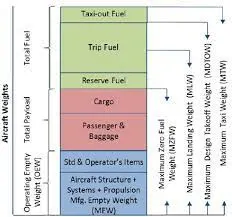
The total weight of aircraft is found by summing up of different type of weight in airplane. The different types of weight in aircraft are
1) Standard Empty Weight
2) Zero Fuel Weight
3) Operating Empty weight
4) Payload
5) maximum take off weight
6) maximum landing weight
7) maximum ramp weight
Standard Empty Weight:
It is standard weight of aircraft when it is completley built. It consists of all the weight of body of plane, sturcture member, internal parts and other application also. It doesnot consider wieght of passenger, baggade etc.
Zero Fuel Weight:
It the weight of aircraft which consider all weights including unusable fuel weight but it does not consider usable fuel weight because when aircraft starts operating the usable fuel is consumed and its weight its reduced. The zeero fuel weight remains constant even when aircraft is operating.
Operating Empty weight:
Its weight which is equivalent to empty weight of aircraft but it will includes some of the addition equipment needed for aircraft and all other stuff too, but it aslo does not inculde usable fuel weight.
Payload:
This is the weight of the aircraft which includes weight of passenger, baggages, cargo, etc. From this we can find how much weight that the aircraft can carry.
Maximum take off weight
It is the maximum limit weight for take off of aircraft. So if weight of aircraft goes beyond this weight then it is not advisable to take off aircraft.
Maximum landing weight
This is the maximum weight of the aircraft which is permitted while landing in airport. If aircraft land beyond this weight then it may cause some damage in body or structure of aircraft.
Maximum ramp weight
This is the maximum weight of the aircraft permitted while taxiing the aircraft this includes all weight of aircraft and taxi too.
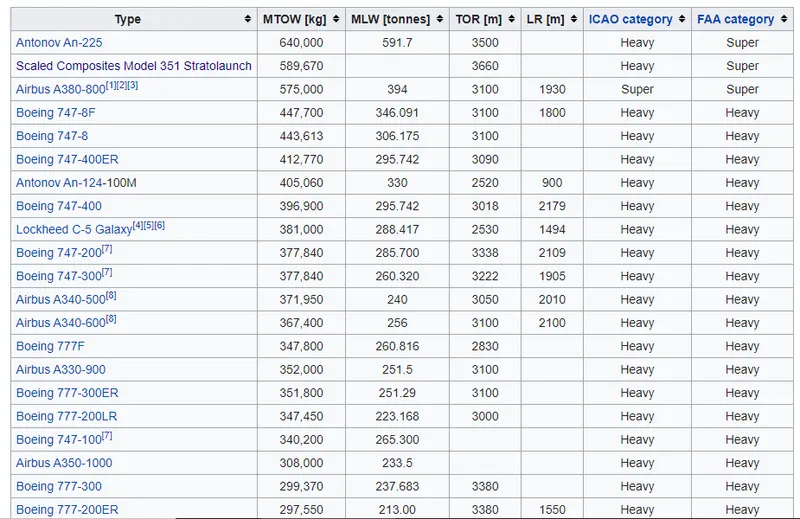
The above image is the list of some different types of aircraft with list of weight like Maximum take off weight, maximum landing weight.
2) Is there any difference between ground speed and air speed?
Yes there is difference between air speed and ground speed
Ground speed: It is the speed which is measured relatively with ground when air craft is flying
Air speed: This is the speed which is measured in aircraft while its flying in air
For exapmle we can use the above image to know about this concept
In case 1: when air speed of aircraft is 120knots which is same as the ground speed which is measures relatively with ground so it will reach same distance while travelling in ground also.
In case 2: We can see that aircraft experiencing tail wing condition which makes aircraft to fly few more ditance so the airspeed of the aircraft is higher than ground speed and the distance travelled in air will be higher than ground.
In Case 3 : We can see that aircraft is experiencing head wind condition which reduces the distance travelled by aircraft so the speed ground speed will also be less and is requires les speed to reach same distance while travelling in ground
GS - ground speed
TAS - True air speed
during tail wind condition:
GS = TAS + wind condition
During head wind condition:
GS =TAS - wind condition.
3) Why is it not recommended to use aircraft engine power to move it on the ground at Airport?
It is recommended to use aircraft engine power to move it on the ground at Airport beacuse it may cause some of damage and to reduce the fuel consuption and power loss during moving in ground. Aircraft might have capability to move on ground but it is not advisoble, even the aircraft can move backwards by itself on engine power and reverse thrust but it may result in some damage in aircraft or airport terminal. So in such cases pushback trucks is used. The main work of pushback truck is to carry the front wheel of aircraft and it will help to move aircraft forward reverse. The reason why its is used is the driver of towing truck or pushback truck have better vision of airport terminal than pilot of aircraft and also power consumption is reduces, and damage occurs due to collidal of aircraft is reduced. This is used to tow the airplane to taxiing path or to pushback the aircraft from the passenger terminal and guide it to runway.
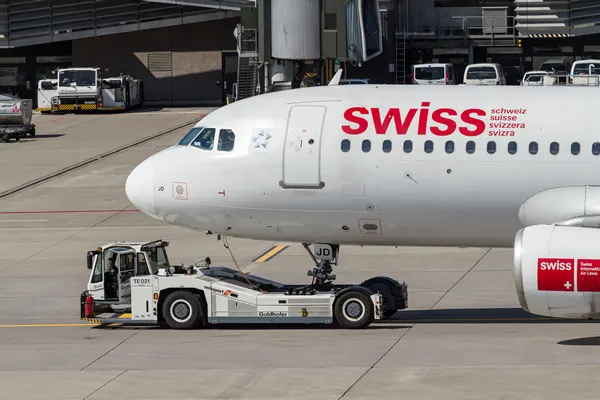
In the above picture we can see the how pushback or towing truck is used.
4) How an aircraft is pushed to runway when its ready to take off
There are three majot steps that aircraft follow before its take off
1) Pushback from terminal
2) Towing
3) Taxiing
Pushback from teminal:
As we discussed earlier even though the aircraft can move backwards by itself on engine power and reverse thrust but it may result in some damage in aircraft or airport terminal. So in such cases pushback trucks is used. The main work of pushback truck is to carry the front wheel of aircraft and it will help to move aircraft forward reverse.
Towing:
Towing is direct opposite to pushback of truck. Towing is used for forward movement of aircraft without its engine power. So after pushback form aiport teminal aircraft need to be towed for some distance so in such cases the front wheels of aircraft is carried by towing truck and it pulls the aircraft in forward motion.
The reason why towing and pushback is used is the driver of towing truck or pushback truck have better vision of airport terminal than pilot of aircraft and also power consumption is reduces, and damage occurs due to collidal of aircraft is reduced
Taxiing:
Taxiing is the phase were aircraft moves in ground but it own engine power without any other equipment like towing trucks. So in the case were aircraft want to reach the runway its follows the certain path so in that path trucks cannot be used so in those places taxiing is done. So aircraft undergoes taxxing for certain path to reach runway or after landing its also used to get away from runway and reach the terminal.
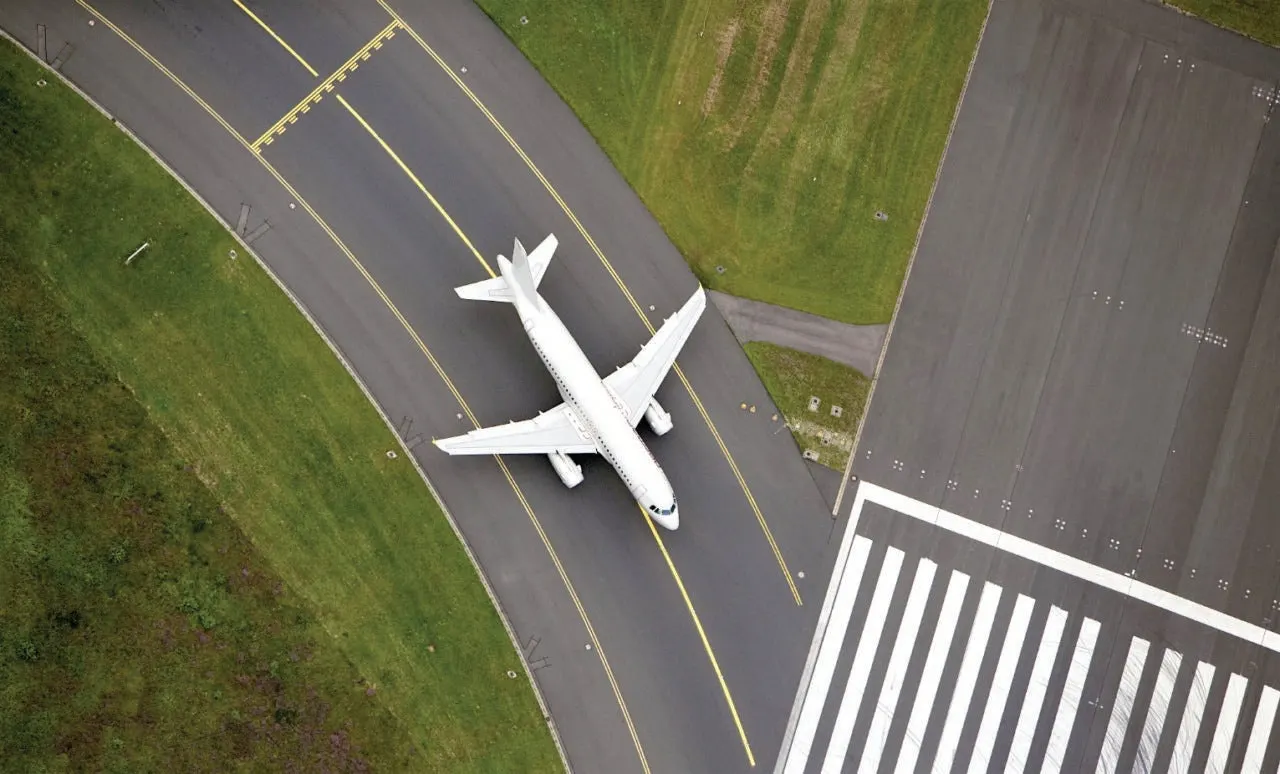
After taxiing is done the aircraft reaches runway and takeoff roll it done. It means it aircraft uses engine power and generate power and runs in runway and its takes off.
5) Learn about take off power, tyre design, rolling resistance, tyre pressure, brake forces when landing
Take off power:
It is the power required by aircraft to take off from runway and start to fly. This power is obtained from the engine of aircraft. This take off power has three factors they are Aerodynamic drag, rolling resistance, thrust force. Drag is force which acts opposites to the direction of motion of aircraft, so if the drag is less we required less power to fly and if its is more then more power will be required. Rolling resistance is type of friction force which acts on the wheel when it rolling in runway. Thrust force is the force obtained form the propulsion system of aircraft which moves aircraft against all opposing forces. By summing of all these forces and factors we can get the power required for take off of aircraft.
Tyre Design:
Aircraft types plays a important role in abrsorbing od the shock which is experienced while landing and it provides cushining effect while landing, it provides the required traction for braking and to stop aircraft, and it is designed in such a way that to support the weight of aircraft for short periord of time.
Types of tyre used in aircraft are:
1) Radial tyre
2) Bias ply tyre
3) Tubetype tyre
4) tubeless tyre
Radial tyre: These tyres are made with casing material of rubber coated ply cords which is extend around the beads and are at 90degrees to the centerline of the thread.
Bias ply tyre: These tyres are made with casing material of alternate rubber coated ply cords which is extend around the beads and are at less than 90degrees to the centerline of the thread.
Rolling resistance:
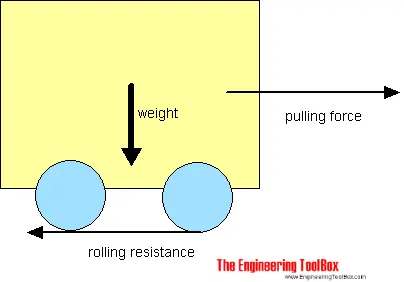
Rolling resistance is the resistance acts on the rolling body when it is rolling in the surface, It is the type of friction force that vehicle should overcome.
Rolling Resistance force `F_(rr)=μ_(rr)mg`
m - total mass of vehicle
`μ_(rr)` - coefficient of rolling resistance
g- gravitational force
The coefficient of rolling resistance depends on tire material, tire pressure, road roughness, road tempurature ect. In aircraft rolling resistance happens in two cases one is during take off aircraft and other is during landing of aircraft.
Tyre pressure:
Aircraft tyres are manufactured to operater under high pressure of 14bar or 200psi. The airliners tires are able to sustain pressure of maximum of 800psi or 55 bar this data is obtained from testing which is done in tyres of airplane. Aircraft are usually infalted with nitrogen to minimize expansion and contrcation from extreme changes in tempurature and pressure experience during flight. In aircraft tyre pressure acts in two cases one is during take off aircraft and other is during landing of aircraft.
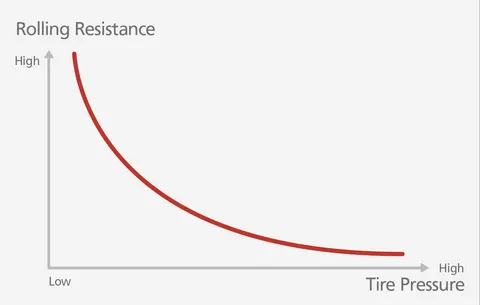
In the above image we can see the relation between rolling resistance and tyre pressure. As we mentioned earlier the value of coefficient of rolling resistance is related to tyre pressure in the graph we can see that they are inversly propotional. If value of tire pressure increases the value of rolling resistance decreases. If the value of rolling resistance increases the value of tire pressure decreases.
Brake forces when landing:
Brake system used in aircraft to deceleration of aircraft while landing in runway are
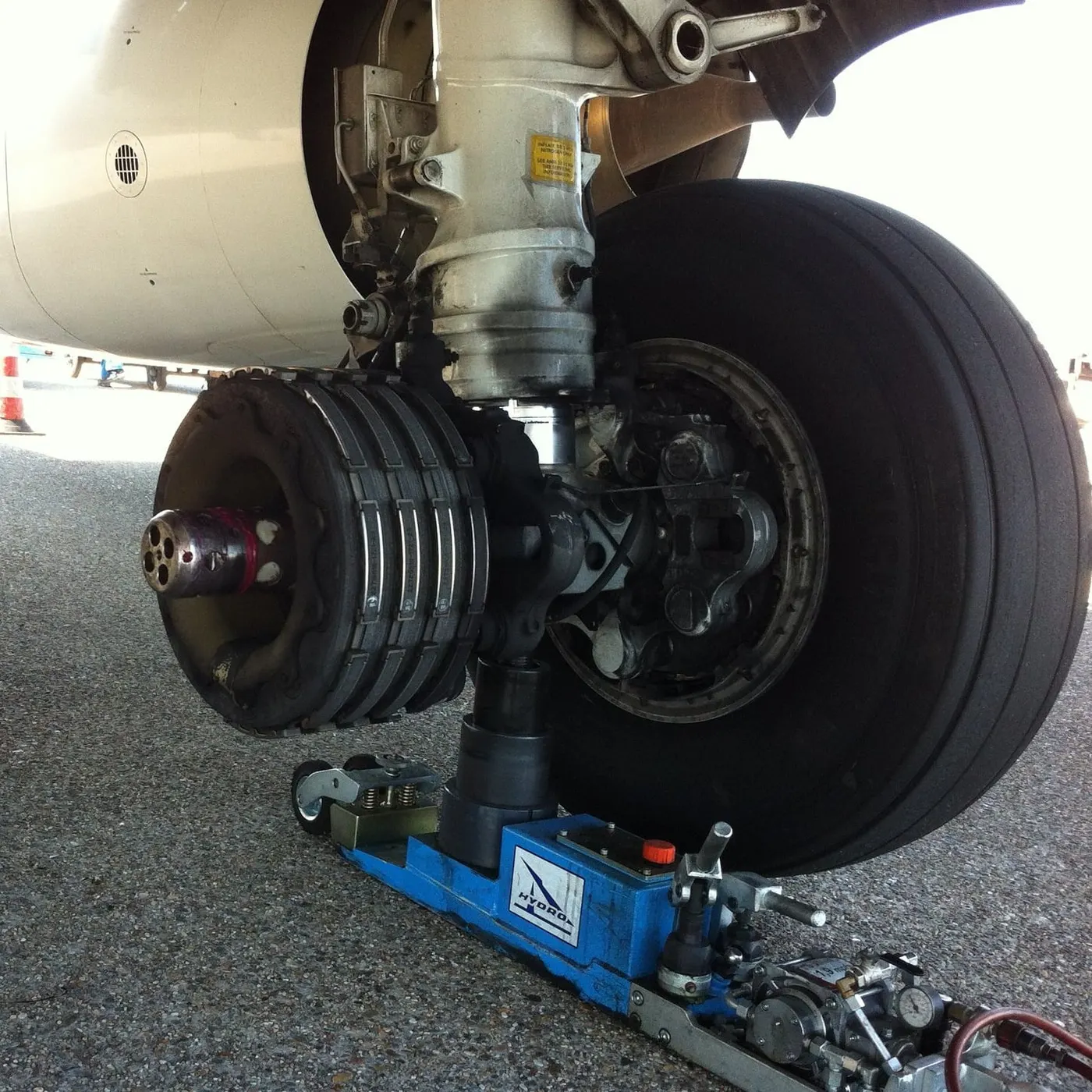
Aircraft disc brake: This brakes are used when landing gear is applied and that provied brakes in wheel of aircraft. Normally, this system is operated by either hydraullic or pneumatic.
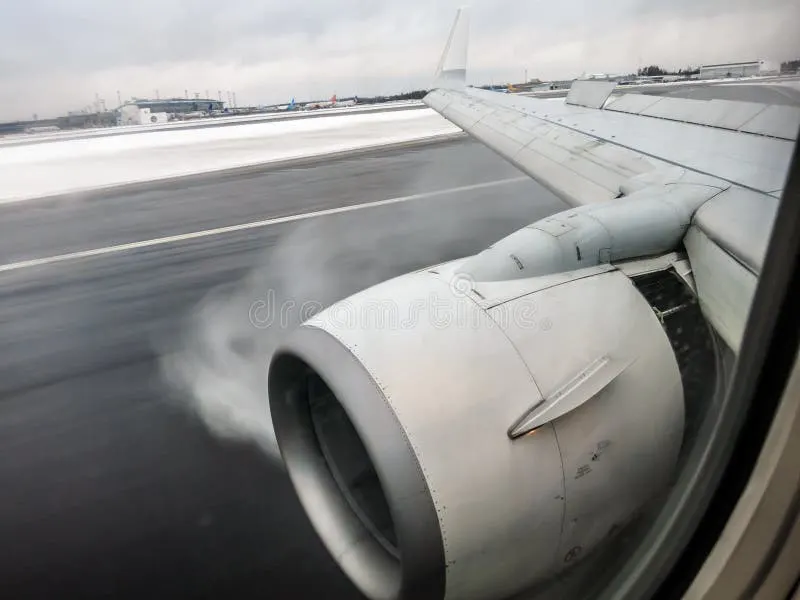
Thrust reversal: In this method the reverse thrust is provided by propulsion system in opposite direction of motion of aircraft while its landing, so then aircraft starts to decelerate. This is also called as thrust reversal.
Spoilers: spoilers are the plates which is hinged with the top portion of wings of aircraft. So when aircraft landed in ground these plates are opened and this will provide drag force against the direction of motion of aircraft. So it will result in deceleration.
6)(i) With necessary assumptions, calculate the force and power required to push / pull an aircraft by a towing vehicle.
For so lets us take the Airbus A380-800 for assumption,
Here hill climbing force is not considered becasue it is not travelling in slope and gradiant value is 0.
Rolling Resistance force `F_(rr)=μ_(rr)mg`
Air Drag force `F_(ad)=1/2 ρAv^2 C_d`
Total tractive force`F_(te)=F_(rr)+F_(ad)`
Total tractive power `P_(te) = F_(te) ×v`
m - total mass of vehicle
`μ_(rr)` - coefficient of rolling resistance
A - Frontal area of vehicle
Cd - Drag coefficient
`ρ` - air density
v - velocity of vehicle
The mass of the Airbus A380-800 is - 575000kg
Lets us consider the mass of truck is - 1000kg
So total mass - 575000 + 1000 = 576000kg
coefficient of rolling reistance - 0.005
drag coefficent - 0.6
frontal area - 20 `m^2`
Rolling Resistance force `F_(rr)=μ_(rr)mg`
`F_(rr)= 0.005*576000*9.81`
`F_(rr)= 28252.8 N`
Air Drag force `F_(ad)=1/2 ρAv^2 C_d`
`F_(ad)= (1/2) * 1.225*20*(7^2)*0.6`
`F_(ad)=360.15`N
Total tractive force`F_(te)=F_(rr)+F_(ad)`
`F_(te)= 28252.8 + 360.15`N
`F_(te)= 28612.95`N
Total tractive power `P_(te) = F_(te) ×v`
`P_(te) = 28612.95 * 7`
`P_(te) = 200290.65`w
Total tractive power`P_(te) =200.29 KW`
(ii) Develop the model for the calculated force and power using Simulink.
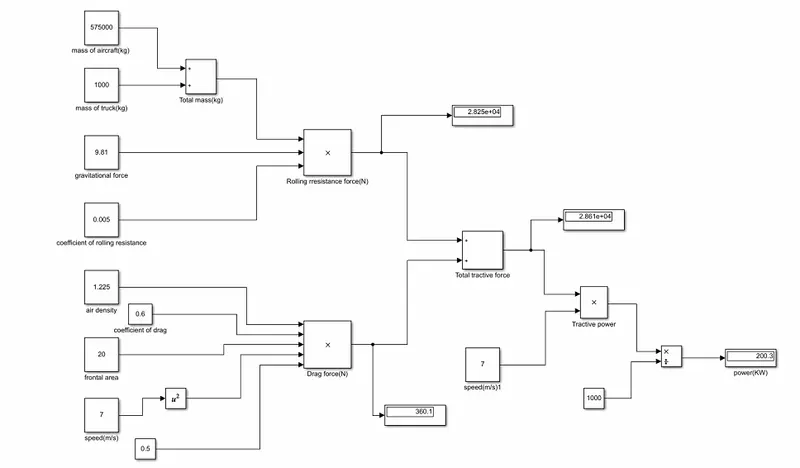
Total mass is found using add blocl. All the input assumed parameters are included in constant block. Then rolling resisatance force and air drag force is founded using product block based on formula. Then the forces are viewed in display block. Total tractive force is found using add block it is also viewd using display block. Then power is found by using product block and divide block based on known formula then it is also viewed using display block.
7)(i) Design an electric powertrain with type of motor, it’s power rating, and energy requirement to fulfill aircraft towing application in Simulink. Estimate the duty cycle range to control the aircraft speed from zero to highest. Make all required assumptions. Prepare a table of assumed parameters. Draw a block diagram of powertrain.
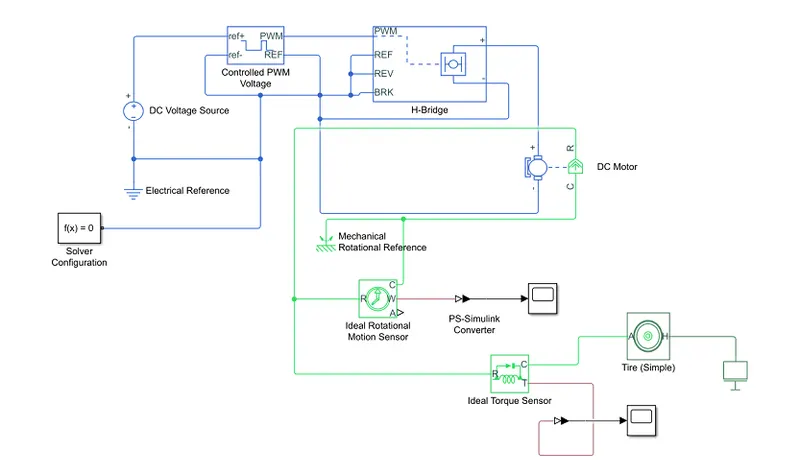
The above image is the simulink model of electric powertrain from which we get speed and torque graph
The model consists of solver configuraation block, scope, PS-simulink converter, electrical and mechanical reference, tire and mass block, DC voltage sorce, DC motor, PWM block and H- bridge block and it has two sensor block they are rotaional motion sensor block and torque sensor block.
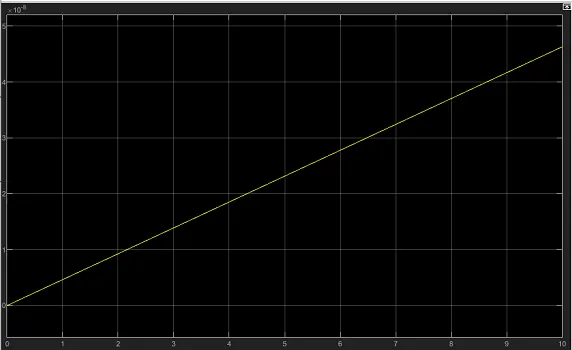
The above is the result of speed with respective time
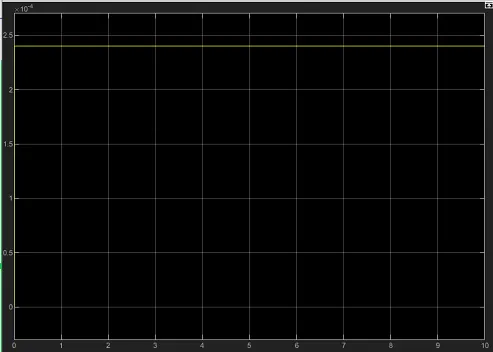
The above block is the resul of torque with respective time
Duty cycle calculation:
The required power is 200KW
lets us assume motor with input power of 230KW
Duty cycle = output power/ input power = 200/230
Duty cycle (%) = 0.87
Block diagram:
B) Also, Design the parameters in excel sheet.
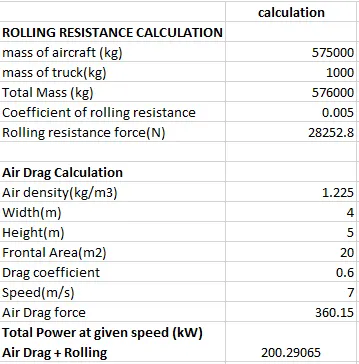
These are the parameters founded in excel sheet