Project 1 - Parsing NASA thermodynamic data
AIM: To write a code in Matlab to parse the NASA thermodynamic data file and then calculate the thermodynamic properties of various gas species.
Objective:
- Calculate the molecular weight of each species and display it in the command window.
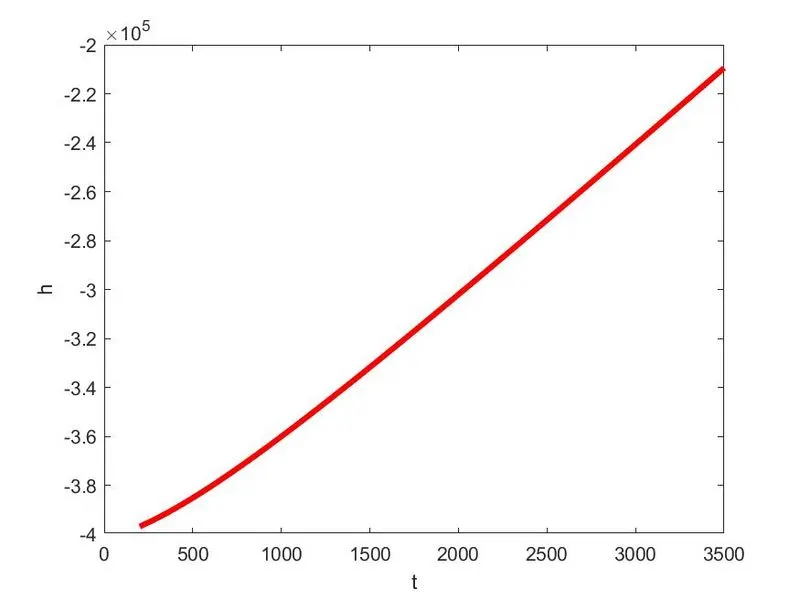
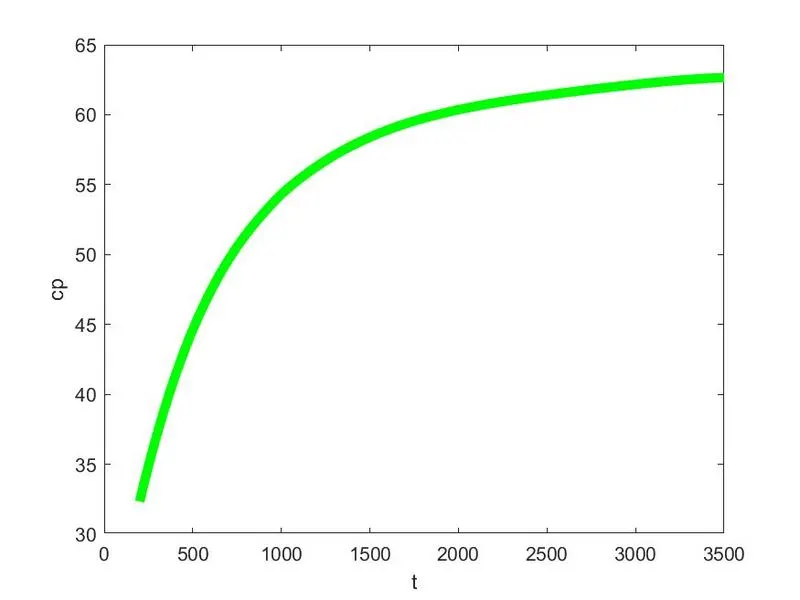
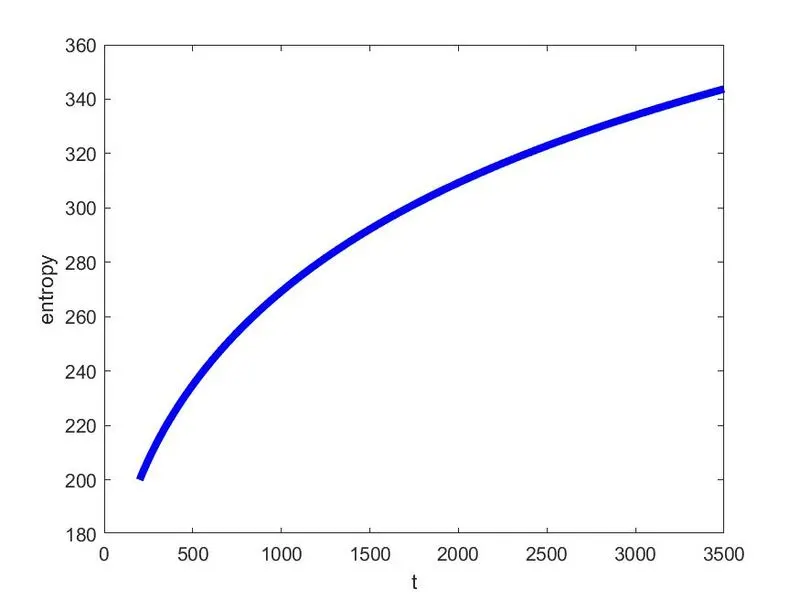
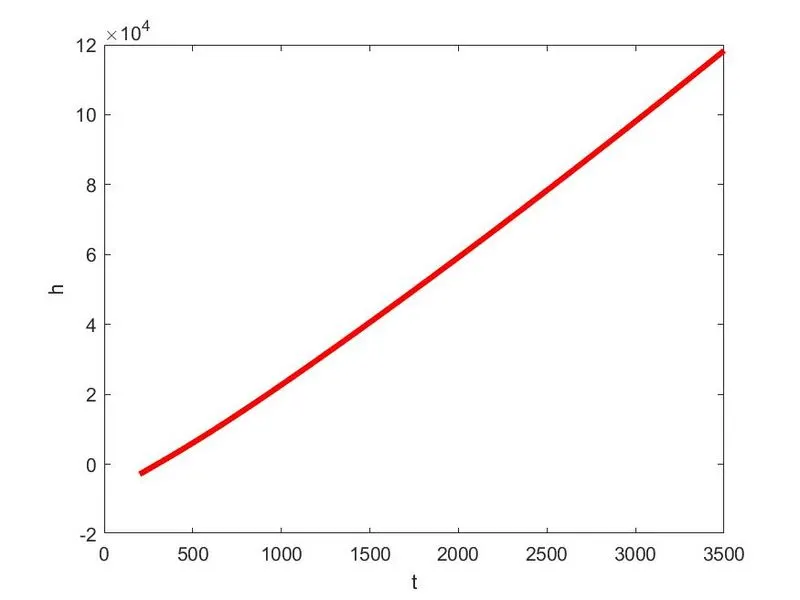
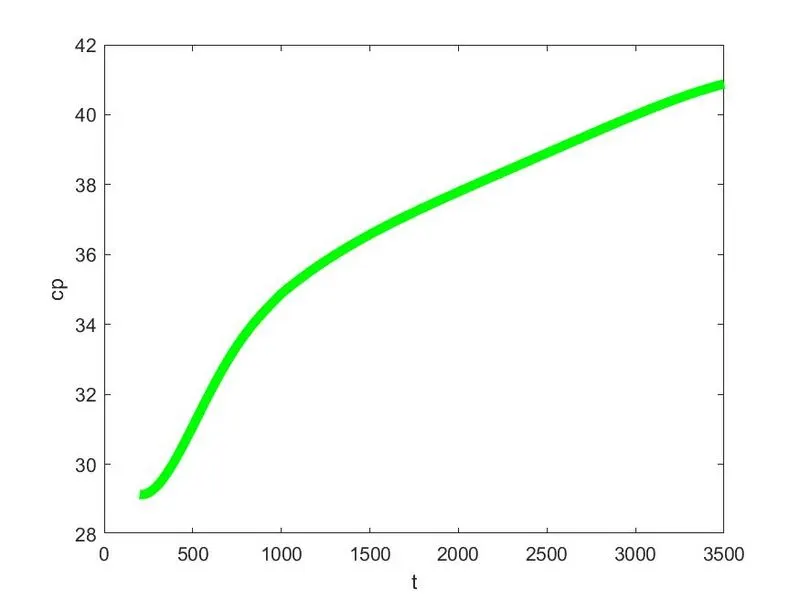
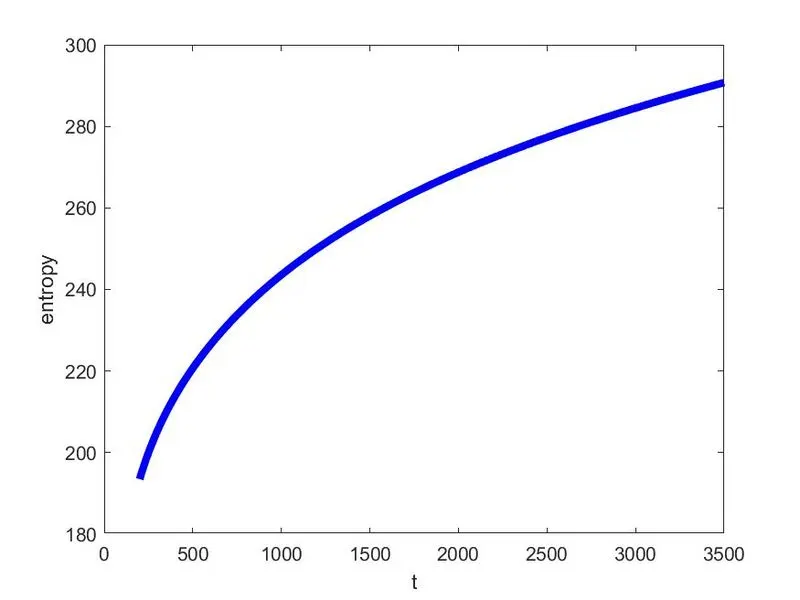
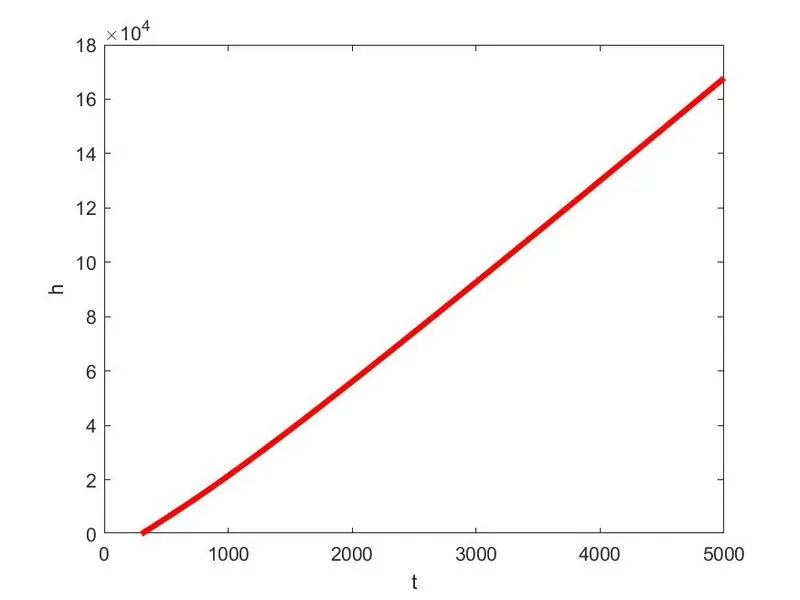
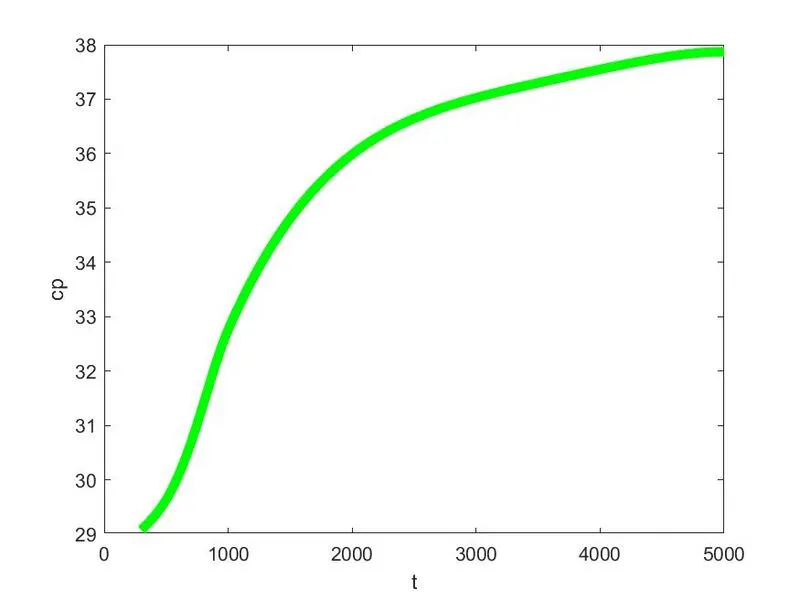
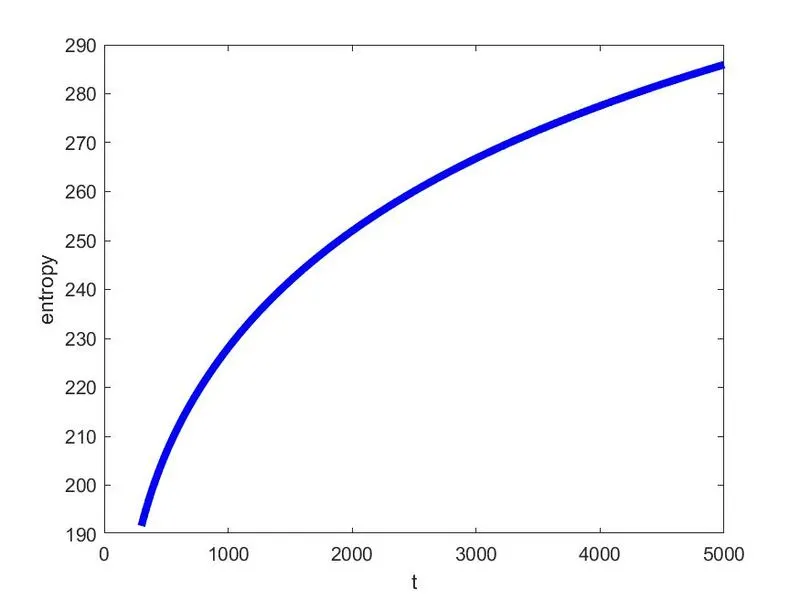
- Plot the Cp, Enthalpy, and Entropy for the local temperature range (low temperature: high temperature) specific for each species.
- Save the plots as images with appropriate names and dump them in separate folders for each species with a suitable name. All of these should be generated automatically.
- The main program that you will submit will just take the "THERMO.dat" file as an input and generate Cp, H, and S plots.
Write a function that extracts the 14 coefficients and calculates the enthalpy, entropy, and specific heats for all the species in the 'THERMO.dat' file. The formulae are shown below.

Here R is the universal gas constant, T is the temperature.
THEORY AND EXPLANATION:
Data parsing: It is a method where one string of data gets converted into a different type of data. So let's say you receive your data in raw HTML, a parser will take the said HTML and transform it into a more readable data format that can be easily read and understood.
THERMO.dat: This data file containing 14 coefficients for 53 different elements given by NASA. These coefficients are utilized to calculate the specific heat, enthalpy, and entropy for a particular element. Each element has its own range of local temperature.
Steps INVOLVED IN MAIN CODE:
1) Start the program with 'clear all','close all', and 'clc' commands.
2) The only value for input is the value of universal gas constant i.e. 8.314 J/mol-k.
3) NASA's data file 'THERMO.dat' is opened using 'fopen()'.
4) Using 'fgetl()' we move to the next line.
5) For loop is used as the process needs to be repeated for all the 53 elements.
6) Data required like species name, global and local temperatures are collected using commands like 'strsplit()' which is used to split the line into an array, and using indexing of the line we can get the required data.
7) 'str2num()' is used to convert string data into numeric data. It is used in extraction a1 to a14 values and also for finding the number of atoms in the elements like N2. The number of atoms of N is 2.
8) The functions are created for molecular weight and properties (enthalpy, entropy, and specific heat where based on the lowtemperature range the coefficients to be used for calculation of the properties are determined).
9) The functions return the values to the main program and the result is printed in the command window.
10) Plots are plotted for temperature vs (enthalpy, entropy, and specific heat) respectively for each and every element and they are saved in separate folders using save as command by changing the directory before saving and switching back to the original directory after saving so that, the process is repeated for all species.
MATLAB CODE:
Main code:
% Program to Parse NASA's thermodynamic data
clear all
close all
clc
% Universal Gas constant(R)
R = 8.314;
% loading data file
File = fopen('THERMO.dat','r');
% reads 1st line
fgetl(File);
% collect Global temprature
tline = fgetl(File);
Global_Temp = strsplit(tline,' ');
Gobal_low_temp = str2num(Global_Temp{2});
Gobal_mid_temp = str2num(Global_Temp{3});
Gobal_high_temp = str2num(Global_Temp{4});
% skip comments
fgetl(File);
fgetl(File);
fgetl(File);
for i = 1 : 53
 % to iterate through all 53 elements
 % reads species
 line1 = fgetl(File);
 species = get_species(line1);

 % calculate molecular weight and print it
 molecular_weight = get_molecular_weight(species);
 fprintf('nMolecular Weight of %s is : %d',species,molecular_weight)

 % Collect local temprature range
 local_temp_range = get_local_temp_range(line1);
 % collect Coefficient data
 a(1:5) = get_coeff(fgetl(File));
 a(6:10) = get_coeff(fgetl(File));
 a(11:14) = get_coeff(fgetl(File));
 % Temprature
 T = linspace(local_temp_range(1),local_temp_range(3),500);
 % Specific Heat
 Cp = Specific_heat(a, local_temp_range, T, R);
 % Enthalpy
 H = Enthalpy(a, local_temp_range, T, R);
 % Entropy
 S = Entropy(a, local_temp_range, T, R);
 % Plotting and saving in folder
 current_dir = pwd;
 mkdir(species);
 % creates new folder with species name
 cd(species);
 % open that folder
 % plotting temprature vs specific heat
 figure(1)
 plot(T, Cp ,'linewidth', 2 ,'color', 'b')
 xlabel('Temprature[K]');
 ylabel('Specific Heat[KJ/Kg-K]');
 title(sprintf('Temprature vs Specific Heat plot for %s',species))
 grid on
 % Save jpg of figure(1)
 saveas(figure(1), 'Specific Heat.jpg')
 % plotting temprature vs enthalpy
 figure(2)
 plot(T,H,'linewidth',2,'color','b')
 xlabel('Temprature[K]');
 ylabel('Enthalpy[KJ/Kg]');
 title(sprintf('Temprature vs Enthalpy plot for %s',species))
 grid on
 % Save jpg of figure(2)
 saveas(figure(2), 'Enthalpy.jpg')
 % plotting temprature vs entropy
 figure(3)
 plot(T,S,'linewidth',2,'color','b')
 xlabel('Temprature[K]');
 ylabel('Entropy[KJ/Kg-K]');
 title(sprintf('Temprature vs Entropy plot for %s',species))
 grid on
 % Save jpg of figure(3)
 saveas(figure(3), 'Entropy.jpg')
 cd(current_dir)
 % goes back to parent folder
end
FUNCTION FOR CALCULATING MOLECULAR WEIGHT:
Molecular weight is a measure of the sum of the atomic weight values of the atoms in a molecule. Molecular weight is used in chemistry to determine stoichiometry in chemical reactions and equations.
- Writing function for the molecular weight we have to specify a specific atomic number.
- The atomic number should match the atomic name.
- For this calculation:
- Hydrogen = 1.008
- Carbon = 12.011
- Oxygen = 15.999
- Nitrogen = 14.007
- Argon = 39.948
- Now provide an initial starting range of molecular weight by 0.
- By using for loop add atomic number with each species to get particular molecular weight.
function molecular_weight = get_molecular_weight(species)
molecular_weight = 0;
Atoms = ['O', 'H', 'N', 'C', 'S', 'A'];
Atomic_weights = [16, 1, 14, 12, 32, 40];
for i = 1 : length(species)
 for j = 1 : length(Atoms)
 if strcmpi(species(i), Atoms(j))
 molecular_weight = molecular_weight + Atomic_weights(j);
 mark = j;
 end
 end
 k = str2num(species(i));
 if k>1
 molecular_weight = molecular_weight + Atomic_weights(mark)*(k-1);
 end


end
FUNCTION FOR CALCULATING ENTHALPY:
A thermodynamic quantity is equivalent to the total heat content of a system. It is equal to the internal energy of the system plus the product of pressure and volume. Enthalpy is similar to energy, but not the same.
H=(a8+(a9.*t./2)+(a10.*(t.^2)./3)+(a11.*(t.^3)./4)+(a12.*(t.^4)./5)+ (a13./t)).*R.*t
function H = Enthalpy(a, local_temp_range, T, R)
for i = 1 : length(T)
 if T(i) <= local_temp_range(2)
 H(i) = R*T(i)*(a(8) + a(9)*T(i)/2 + a(10)*(T(i)^2)/3 + a(11)*(T(i)^3)/4 + a(12)*(T(i)^4)/5 + a(13)/T(i));
 else
 H(i) = R*T(i)*(a(1) + a(2)*T(i)/2 + a(3)*(T(i)^2)/3 + a(4)*(T(i)^3)/4 + a(5)*(T(i)^4)/5 + a(6)/T(i));
 end
end
FUNCTION FOR CALCULATING ENTROPY:
A thermodynamic quantity representing the unavailability of a system's thermal energy for conversion into mechanical work often interpreted as the degree of disorder or randomness in the system. Entropy is also a measure of the number of possible arrangements the atoms in a system can have.
s=(a8*log(t)+a9.*t+(a10.*(t.^2)./2)+(a11.*(t.^3)./3)+(a12.*(t.^4)./4)+a14).*R
function S = Entropy(a, local_temp_range, T, R)
for i = 1 : length(T)
 if T(i) <= local_temp_range(2)
 S(i) = R*(a(8)*log(T(i)) + a(9)*T(i) + a(10)*(T(i)^2)/2 + a(11)*(T(i)^3)/3 + a(12)*(T(i)^4)/4 + a(14));
 else
 S(i) = R*(a(1)*log(T(i)) + a(2)*T(i) + a(3)*(T(i)^2)/2 + a(4)*(T(i)^3)/3 + a(5)*(T(i)^4)/4 + a(7));
 end
end
FUNCTION FOR CALCULATING SPECIFIC HEAT:
The specific heat is the amount of heat per unit mass required to raise the temperature by one degree Celsius.
CP=(a1+a2.*t+(a3.*t.^2)+(a4.*t.^3)+(a5.*t.^4)).*R
function Cp = Specific_heat(a, local_temp_range, T, R)
for i = 1 : length(T)
 if T(i) <= local_temp_range(2)
 Cp(i) = R*(a(8) + a(9)*T(i) + a(10)*T(i)^2 + a(11)*T(i)^3 + a(12)*T(i)^4);
 else
 Cp(i) = R*(a(1) + a(2)*T(i) + a(3)*T(i)^2 + a(4)*T(i)^3 + a(5)*T(i)^4);
 end
end
FUNCTION FOR CALCULATING COEFFICIENTS:
Cfunction [a] = get_coeff(line)
E = findstr(line,'E');
a(1) = str2num(line(1:E(1)+3));
for i = 1 : length(E)-1
 temp = str2num(line(E(i)+4:E(i+1)+3));
 a(i+1) = temp;
end
end
FUNCTION FOR CALCULATING LOCAL TEMPERATURE RANGE:
function [temp] = get_local_temp_range(line)
split = strsplit(line, ' ');
l = length(split);
mid_temp = str2num(split{l-1});
high_temp = str2num(split{l-2});
low_temp = str2num(split{l-3});
temp = [low_temp mid_temp high_temp];
end
FUNCTION FOR CALCULATING SPECIES:
This code is basically to create a text file for molecular weight.
function species = get_species(line)
temp = strsplit(line, ' ');
species = (temp{1});
end
RESULTS:
COMMAND WINDOW OUTPUT:
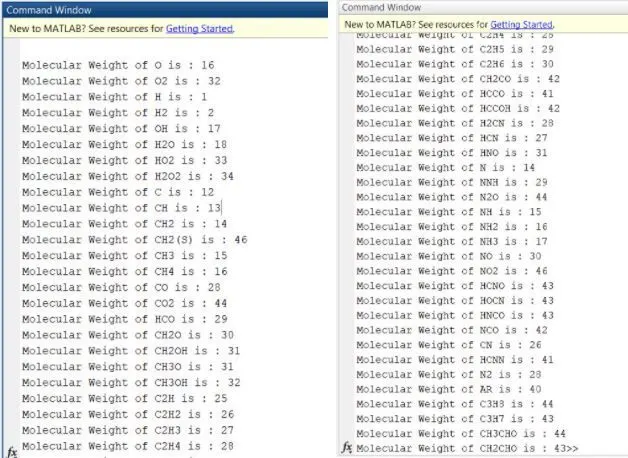
FOLDERS THAT WERE CREATED:

PLOTS:
O2:
N2:
CO2: