Project-1: Modelling an electric Car with Li-ion battery
Create a MATLAB model of electric car which uses lithium ion battery and suitable motor. Choose suitable blocks from Simscape or Powertrain block set. Implement the vehicle speed control using PI controller and generate brake and accelerator commands. Avoid using readymade driver block for speed control.
Prepare a report about your model including following:
Objectives, System level configurations, Model parameters, Results, Conclusion.
An electric vehicle, such as an electric car, uses one or more electric motors powered by a battery pack to accelerate and drive.
Depending on the type of EV, the electric motor(s) either assist a conventional internal combustion engine (ICE) or power the car
completely.
When talking about EVs, we generally refer to three main types of electric vehicles: hybrid electric vehicles (HEV), plug-in hybrid
electric vehicles (PHEV) and battery electric vehicles (BEV).
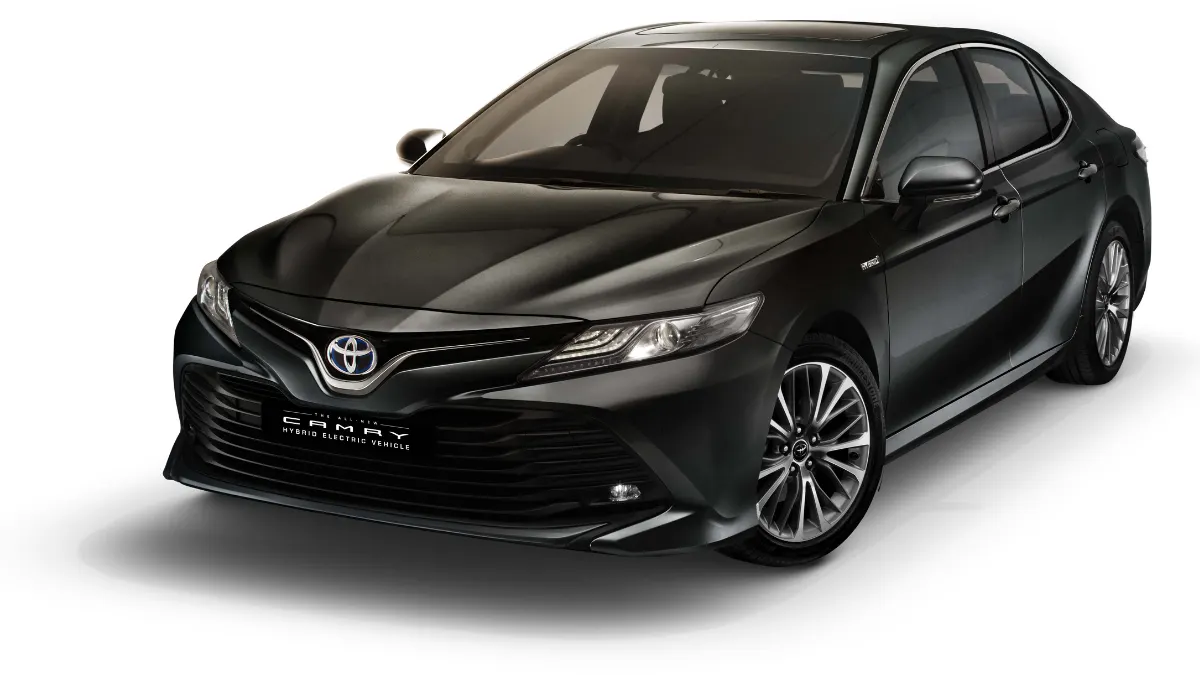
Hybrid Electric Vehicle:- A hybrid electric vehicle (HEV) combines a conventional internal combustion engine (ICE) with an electric motor and battery pack to reduce fuel consumption. HEVs achieve this by using an electric motor to drive the car during conditions when an ICE is especially inefficient, like when accelerating from a stop. Hybrids can also favour the ICE unit when it is more efficient to do so, such as cruising at highway speeds.
Hybrid vehicles are most similar to drive to normal ICE vehicles, as owners can only top them up with traditional fuels (usually
petrol). HEV technology automatically charges the battery through what’s known as ‘regenerative braking’ and activates the electric motor system when conditions are suitable, meaning drivers do not have to monitor charge or plug the cars into power outlets.
Plug In Hybrid Electric Vehicle (PHEV):- A plug-in hybrid electric vehicle (PHEV) combines an ICE with an electric motor and battery pack similarly to a hybrid, however comes with distinct differences. PHEVs generally have larger battery packs and more powerful electric motors than hybrids, as the electric system does a lot of the heavy lifting while driving. This means PHEVs can be driven in electric-only mode, switching the ICE off entirely.
Driving a plug-in hybrid is similar to driving a hybrid, as the car will automatically recharge the battery and switch between ICE and electric power based on conditions. However, drivers have the choice of topping up PHEVs with both fuel and electricity. A PHEV can run on just petrol if all battery charge is used up, and battery charge alone if all fuel is used up.
Battery Electric Vehicle (BEV):- A battery electric vehicle (BEV) is considered to be an ‘all-electric’ or ‘full-electric’ car. BEVs are powered exclusively by electricity, with their electric motors drawing current from onboard battery packs. BEVs do not have any form of ICE.
Given that BEVs rely solely on electricity, they tend to have much larger capacity batteries and kilowatt-hour (kWh) outputs than comparable hybrid and plug-in hybrid electric vehicles. This extra battery tech typically results in BEVs costing more than other types of EVs. BEVs need charge to be driven. This can be done through either a home charger or fast charging station, or energy recouped by regenerative braking.
Electric Vehicle Model:-
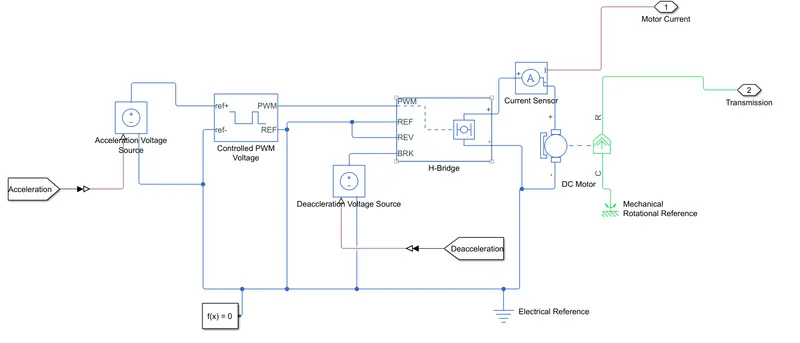
Blocks used:- Drive Cycle Source, Switch, Goto, From, Integrator, PowerGui, Sum, Product, Derivative, Delay, Saturation block, Controlled Voltage Source, Controlled PWM source, H Bridge, DC Motor, Solver Configuration, Electrical Reference, Current Sensor, Mechanical Rotational Reference, Controlled Current Source, Battery, Simple Gear, Inertia, Vehicle Body, Tire (Magic Formula), PS constant, PS Terminator, Gain, Display and constant.
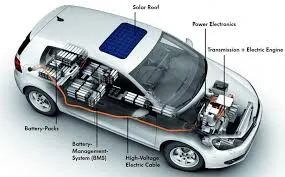
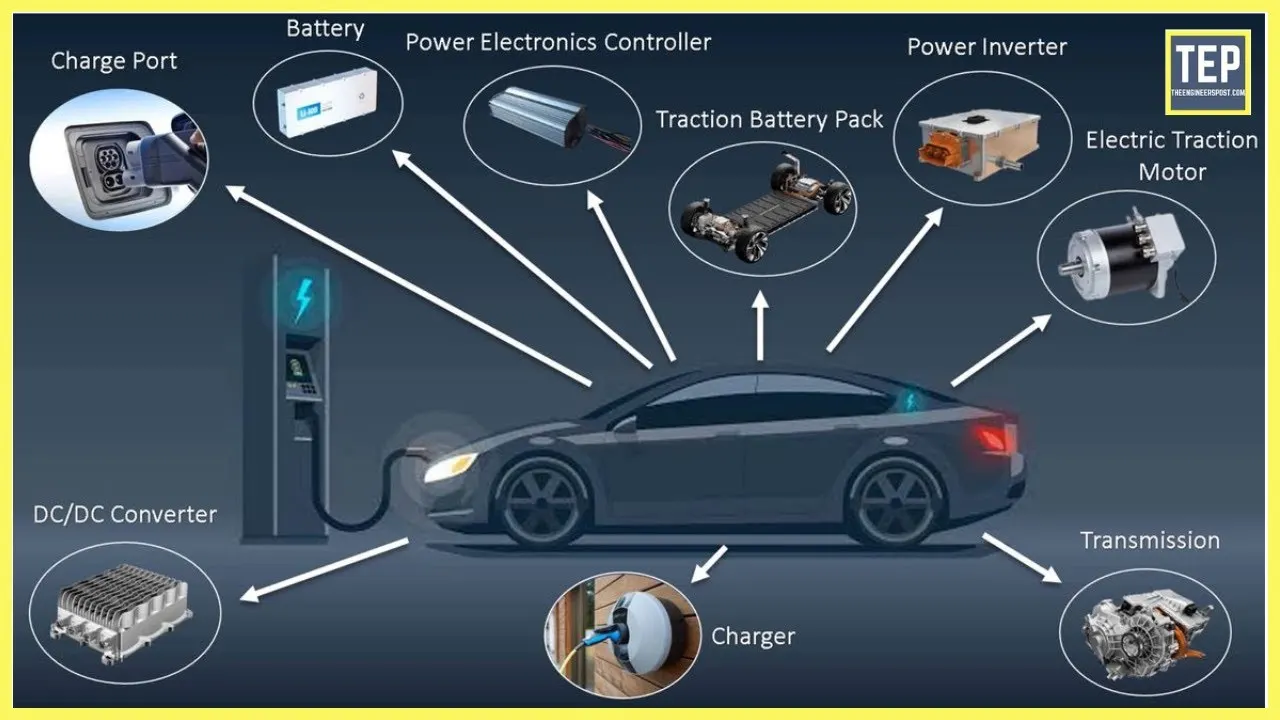
The main components of an electric vehicle are:
Battery (auxiliary)
Electric traction motor
Onboard charger
Thermal system (cooling)
Power electronics controller
Inverter
Charge port
Transmission
DC to DC converter
Drive Cycle Source:-
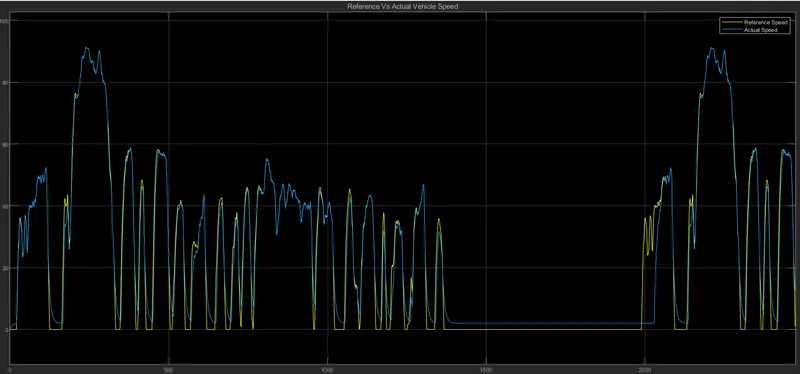
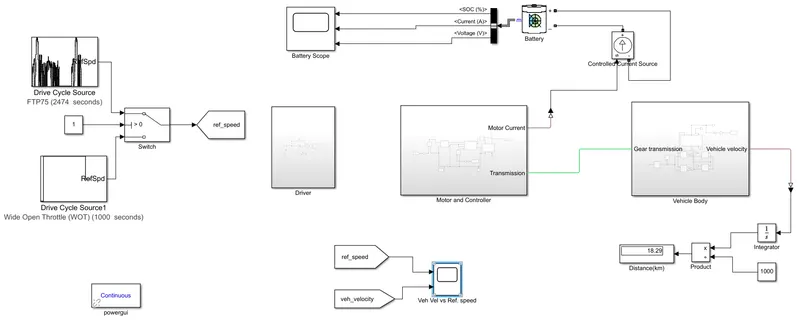
Here in this project i have used two Drive cycle source which are FTP-75 and Wide Open throttle (WOT). Also i have used switch in between the two drive cycle source so that at one time only one source is applicable to the model. Constant value 0 and 1 is used to change over between the Drive cycle source. With constant value 1 FTP 75 drive cycle is selected and with 0 WOT.
Vehicle body Subsystem Model :
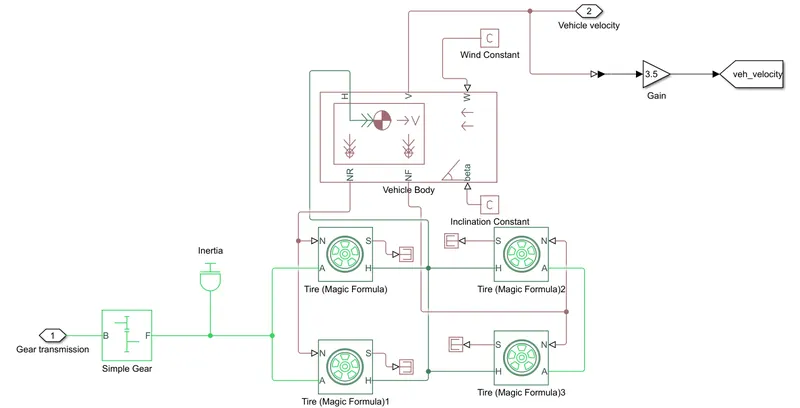
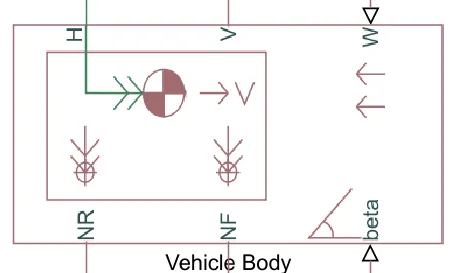
1.This subsystem made of tyres,vehicle body. in this subsystem the motor will transfer the power to the simple gear block for
Smooth and constant speed throughout the trasmission without any loss in speed from motor to tires.
2.Here we will give motor output to the rear two wheel of the Electric Vehicle and front tire is rotate freely.
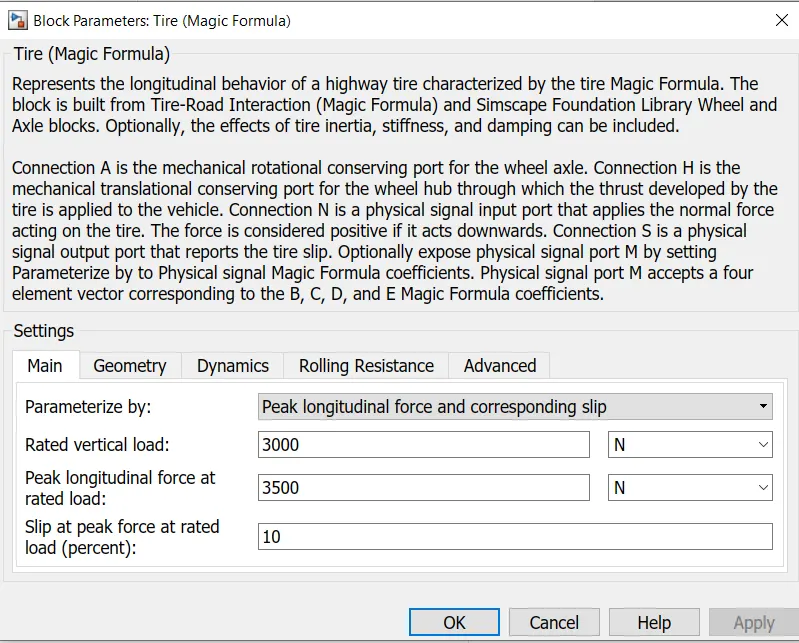
3.N is the normal force cause by the tires given to the vehicle body normal force port.
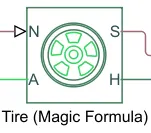
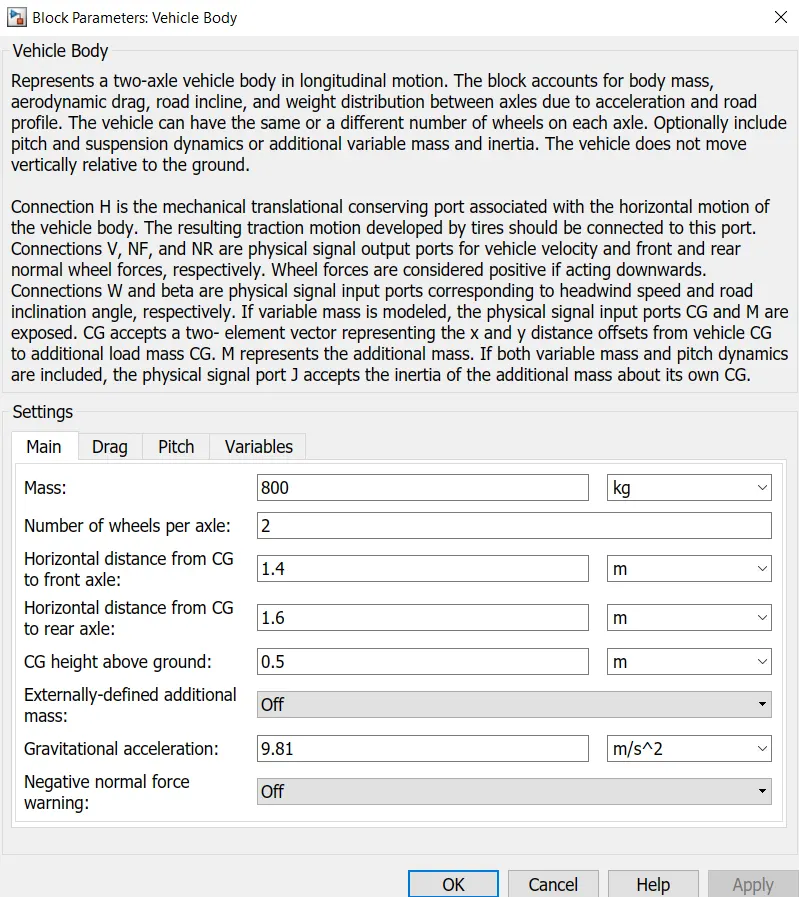
4.The vehicle body has an H-hub,S-tire slip, N - normal force, A - axel connenction,wind velocity, inclination angle.
5.The tire hub is connected as a common node to the vehicle body.The wind velocity and inclination angle is connected to PS
Constant block.velocity is the output port where we can get at which speed the vehicle is moving and also usefull for the find distance
Tire :
Vehicle body :
Motor and Controller:
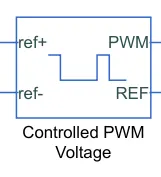
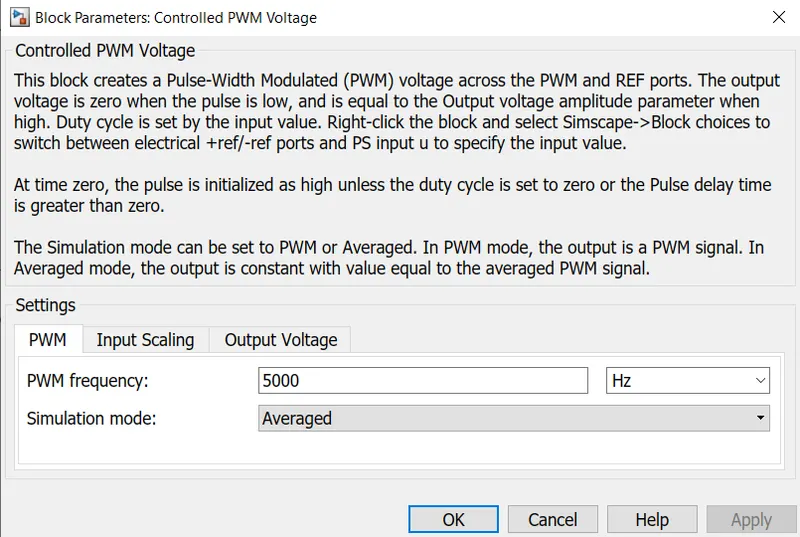
Controlled PWM Voltage:
H Bridge:
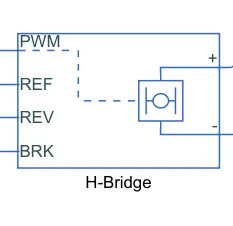
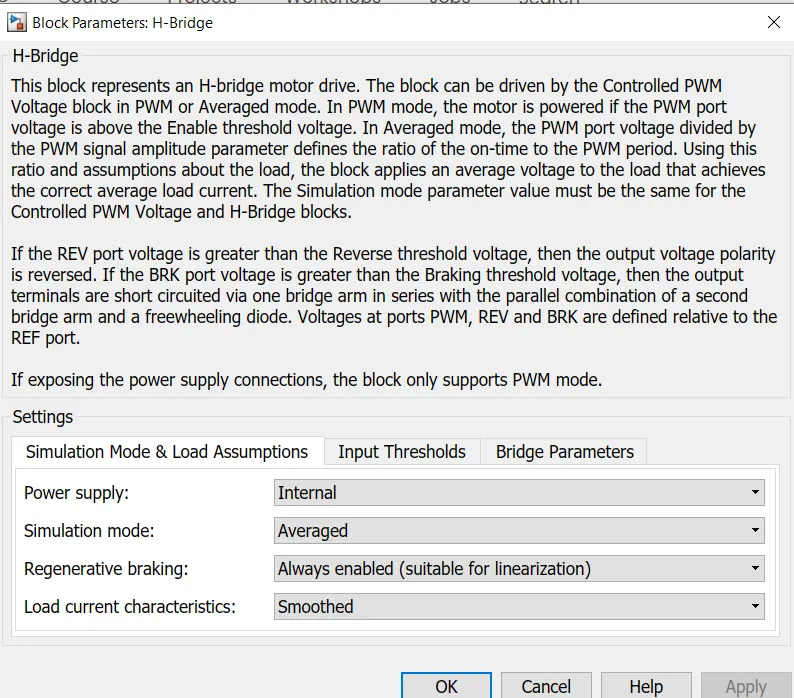
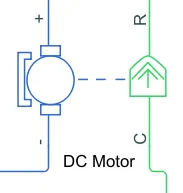
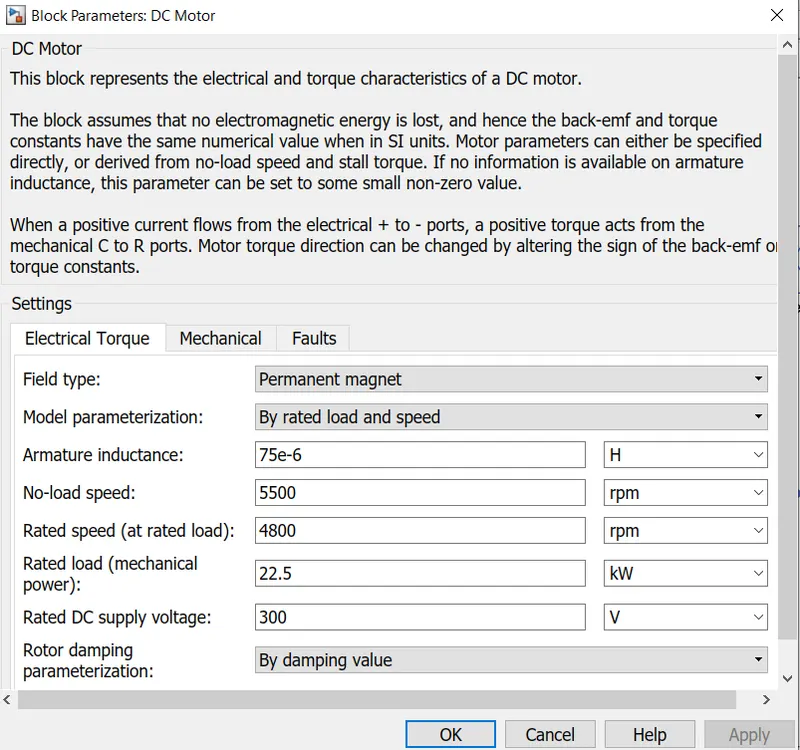
DC Motor:
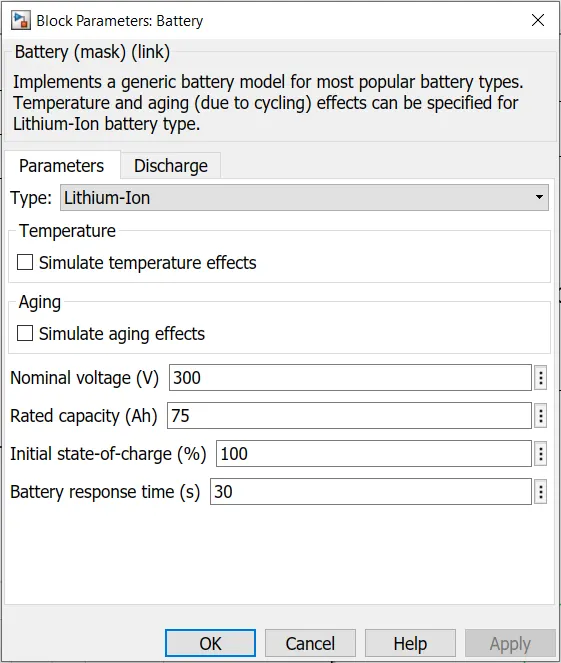
Battery and SOC Subsystem:
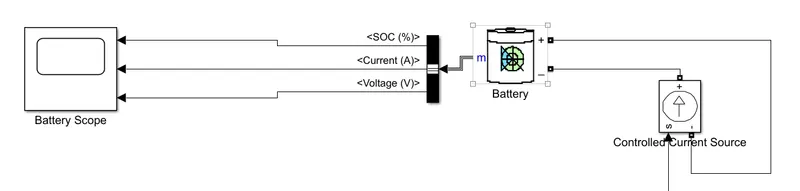
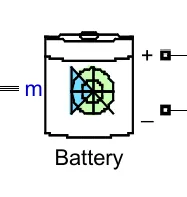
Battery :
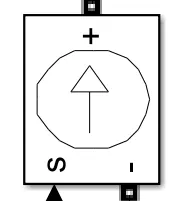
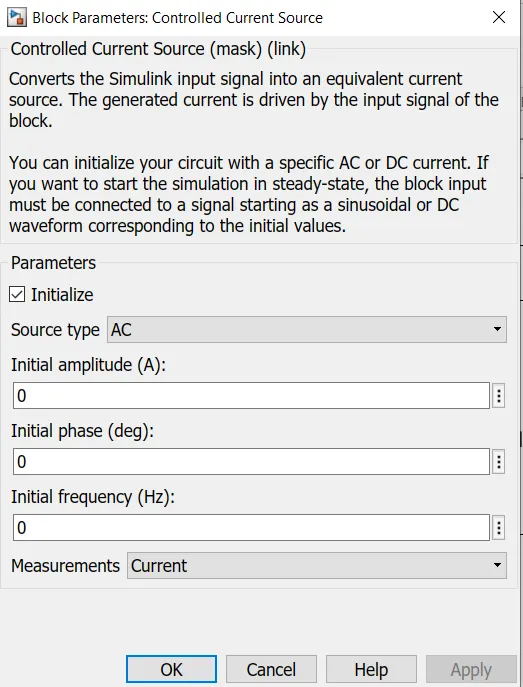
Controlled Current Source:
Results: