Project 1 Mechanical design of battery pack
A123’s high-performance Nanophosphate lithium iron phosphate (LiFePO4) battery technology delivers high power and energy density combined with excellent safety performance and extensive life cycling in a lighter weight, more compact package. These cells have low capacity loss and impedance growth over time as well as high usable energy over a wide state of charge (SOC) range, allowing the systems to meet end-of-life power and energy requirements with minimal pack oversizing.
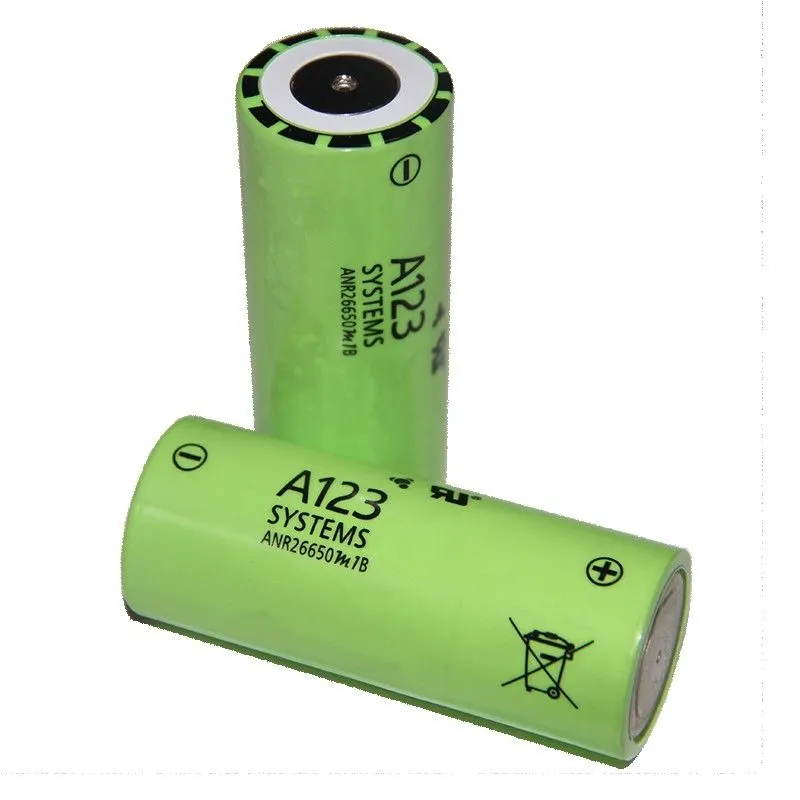
Cell Specifications:
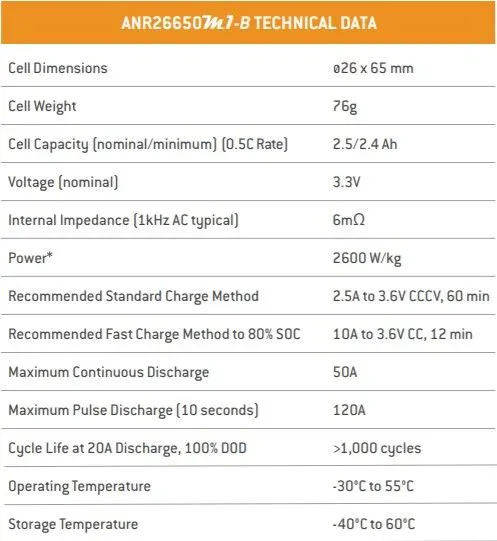
Calculations for 18kWh battery pack construction:
Let us assume using a 144 V motor for the case.
Then to drive this motor the number of 26650 cells required in series are,
number of cells in series = (voltage required by motor)/(voltage of each cell)
`n_s = 144/3.3~~ 44`cells`
Now to achieve the 18 kWh capacity, the battery pack capacity in Ah is found as,
Total battery pack capacity required = (total energy required)/(voltage required)
`Capacity = 18000/144 = 125 Ah`
To achieve this Ah rating the number of cells to be used in parallel are found by,
number of cells in parallel = (battery pack capacity required)/(capacity of each cell)
`n_p = 125/2.5 = 50cells`
Hence the configuration to be used in this case is 44s50p which result in 2200 cells to be used for the required battery pack. This results in the total capacity of the battery pack being,
`Total Capacity = (44*3.3)*125 = 18150Wh`
Construction and installation of battery packs:
Now this pack can be divided into smaller modules for easy construction and installation into EV. The module can be of any configuration. Let say we take a module of 44 cells in series and 50 such modules which can be connected in parallel or say 50 parallel cells in a module and 44 such modules connected in an EV or some combination of series and parallel connections module and many such modules connected as per the requirements.

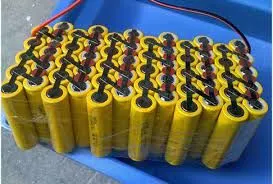
These cell holders are used to make the modules. Each module is also connected with a BTMS system to ensure the proper working of the battery as per the demand and its optimum working conditions. The cells are connected by connecting strips made of nickel or copper which connect the cells and these come in the form of long strips and are usually welded at the connection.
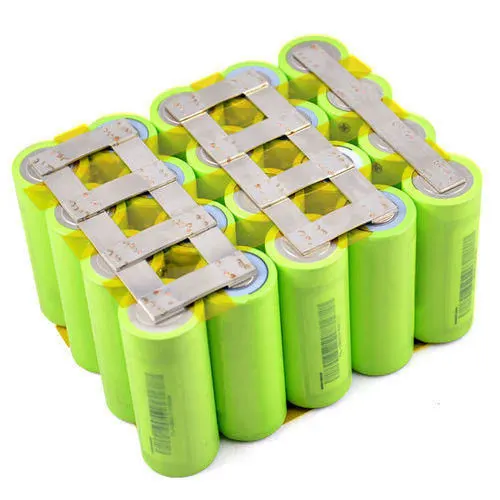
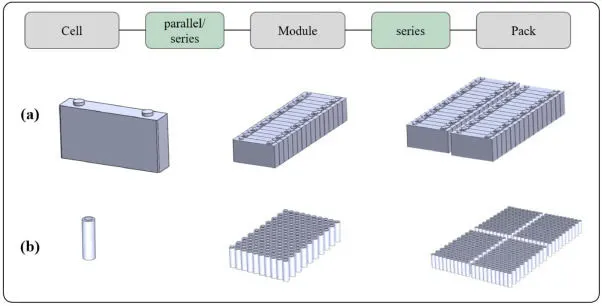
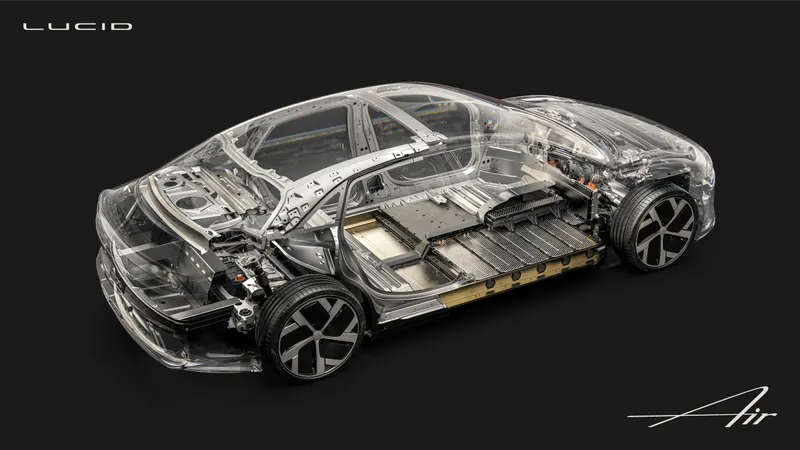
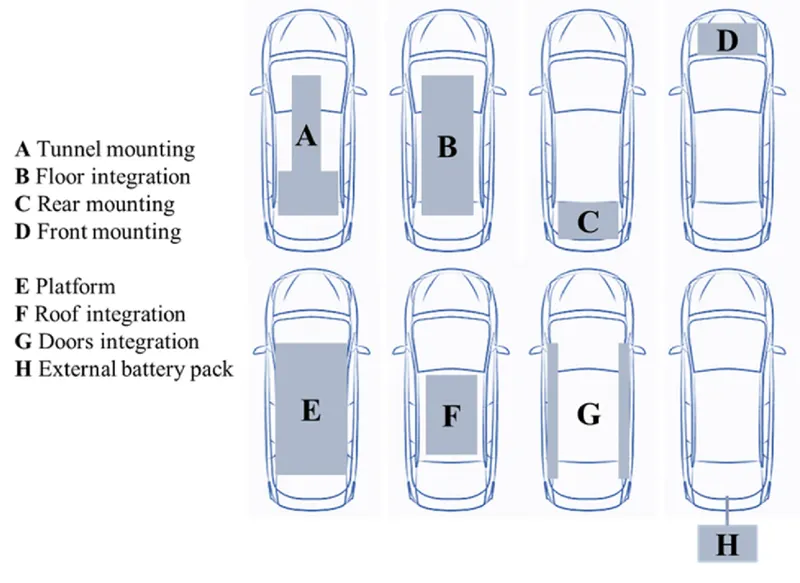
Now these battery modules are installed in the EV in the base along the length of the car so as to keep the centre of gravity of the whole car at a lower point and hence ensure better handling capabilities. The below shown are some configurations as in how the batteries are arranged in the EV.
The modules are connected as required and the whole battery pack along with other necessary systems can be enclosed as shown below.
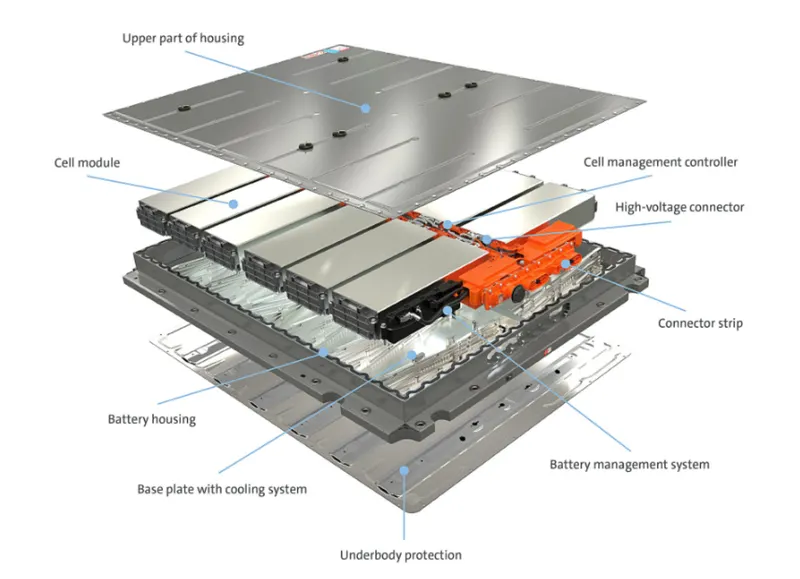
Below is an battery arrangement used for the new Lucid air pure EV.