Project 1 Mechanical design of battery pack
To pepare a battery pack we should have a clear understanding of the number of cells in series and parallel
Let us assume that the battery capacity of 18KW is fully utilised by the motor and not by other secondary components. We select a motor to fix our voltage requirements. So as seen below we have set the battery pack voltage as 96V to run the motor
IPM 200-66 BJ01 IP67-80V Low-Voltage Motor
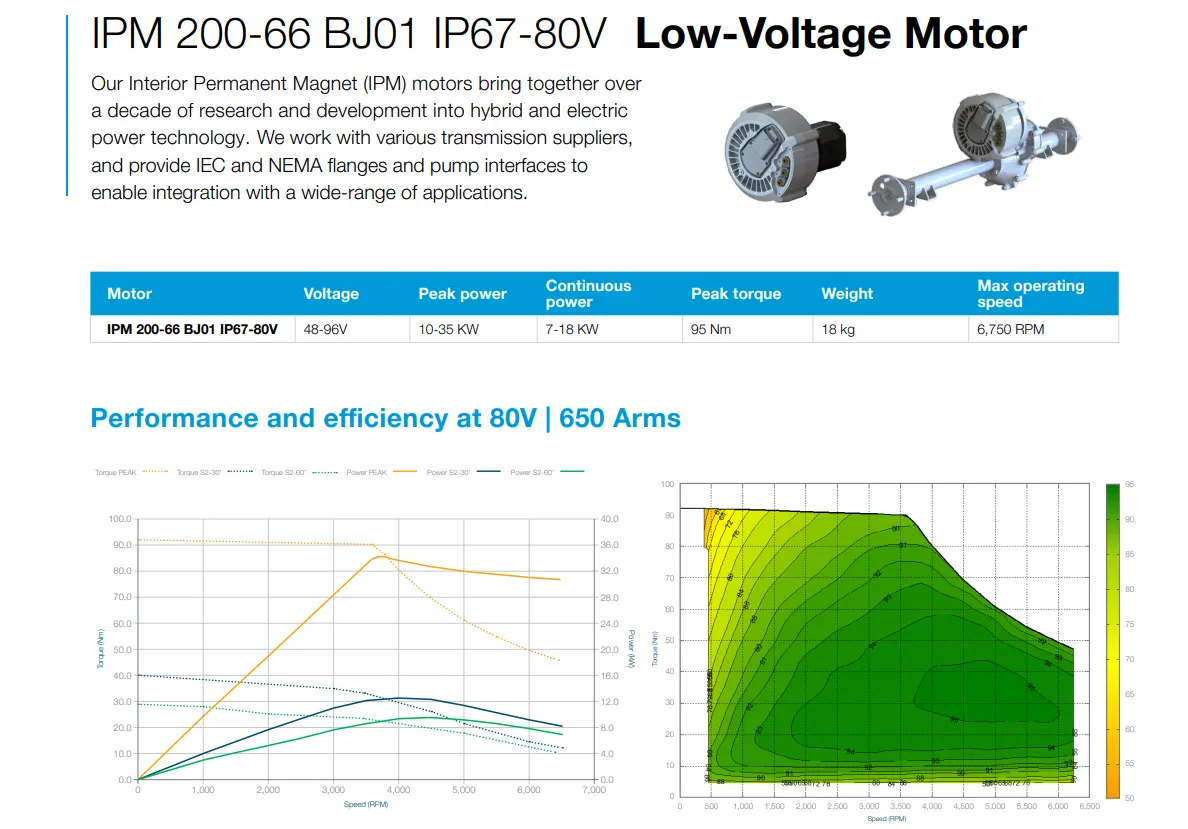
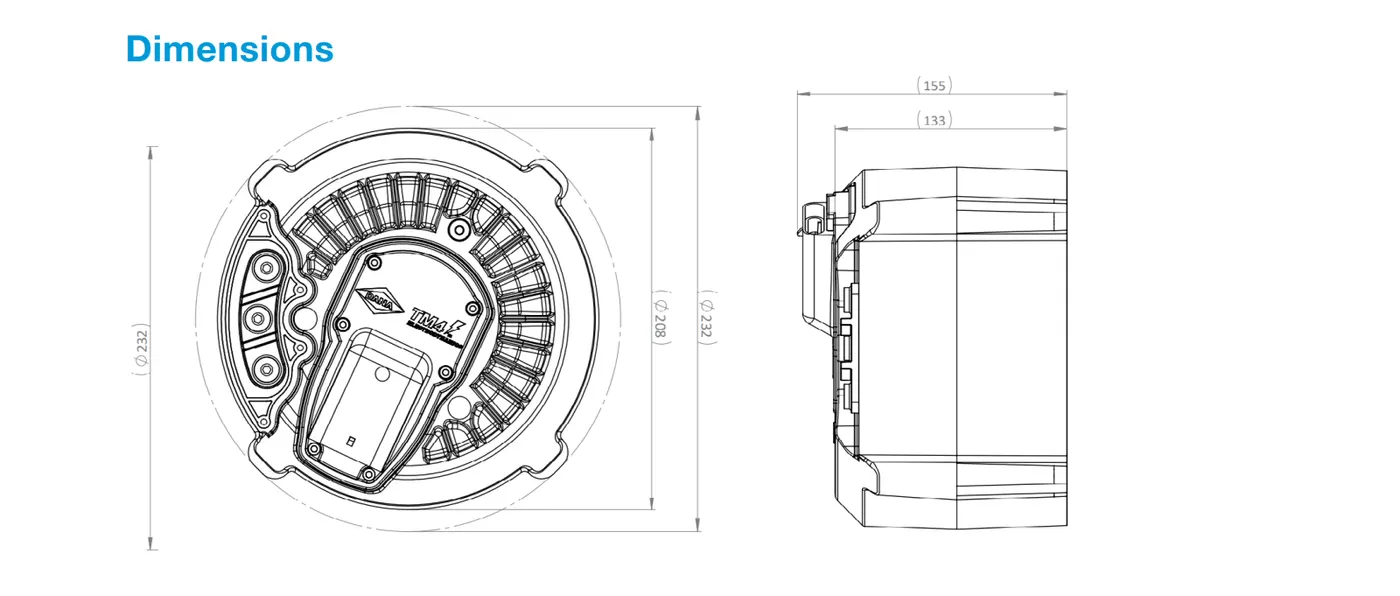
Battery pack voltage requirement= 96V
Cell: ANR26650M1-B Characteristics
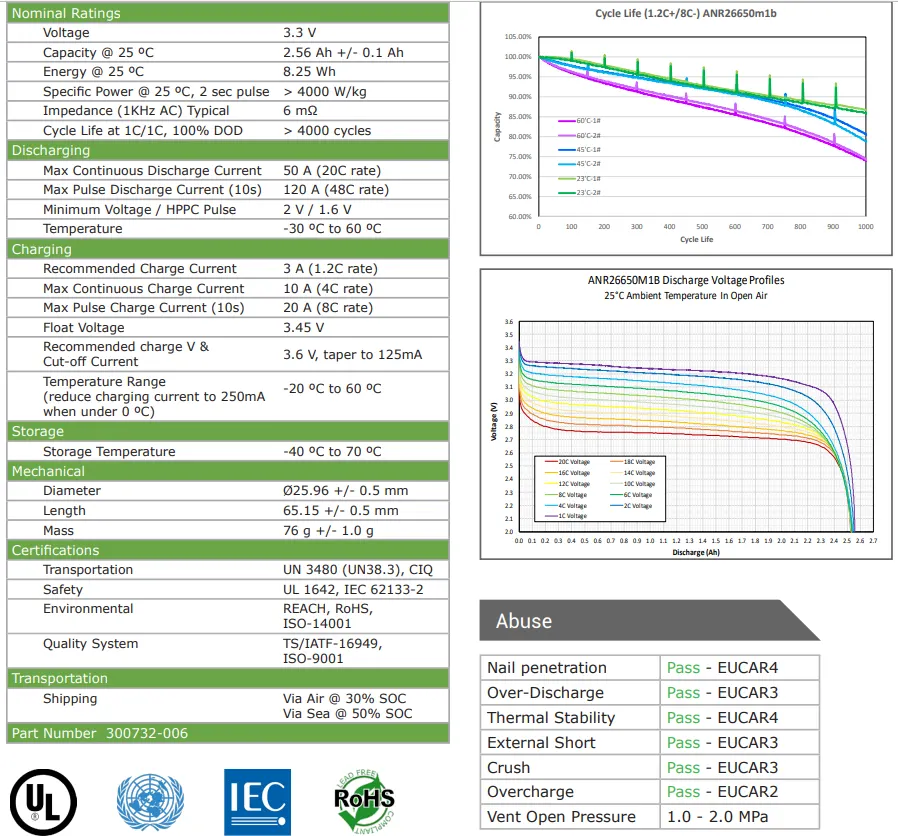
Cell voltage = 3.3V
Cell capacity= 2.56Ah
Number of cells in series= 96/3.3=29 nos
The power requirement of motor is 18KW
calculating the peak current requrement, I=P/V= 18000/96=187.5Ah
number of cells requried in series= 187.5/2.56=74 nos
If we run the motor at a peak power of 18KW we can run our battery pack for 1 hour as the battery capacity is 18KWh
Battery Pack Area Calculation
Top area
dia=25.96mm
top area =25.96*no of series* no of parallel
=25.96*29*74=55710.16mm2= 51.71m2
(this area is useful for packing area calculation as well as for cooling)
type of enclosure used
Injection Molded Plastic Enclosures: These are the most commonly used for battery packs. Two or more plastic parts are molded and then assembled with the pack and accompanied circuitry. They can be sealed using glue, mechanical fasteners (Screws) or ultrasonic welding1.
Shrink Wrap or Vacuum Formed Plastic: This is the simplest and least expensive packaging for small batteries. It is only possible if the battery is intended to be completely enclosed by the finished product123.
Metal-Reinforced Composite Tray: This type of enclosure is used in electric vehicles (EV). The tray, reinforced with aluminum and steel, has advantages such as being able to mold in attachments and sealing grooves and do unique design geometries to make it a leak-proof, sealed system
how Heat dissipation is done
The diffrenet Heat dissipation
Air Cooling: This method generates cold and hot airflow through ambient air, self-provided equipment, or external auxiliary equipment, such as fans, to achieve convective heat transfer from the battery pack.
Liquid Cooling: In this method, a liquid coolant is circulated around the battery pack to absorb and dissipate heat.
Phase Change Material Cooling: This involves using materials that absorb and release thermal energy during the process of melting and freezing.
Heat Pipe Cooling: Heat pipes are used to transfer heat from one part of the system to another.
Material used to connect terminals
In battery packs, different materials are used to connect terminals based on the power requirements. For low-power cells, nickel strips are often used for internal interconnections, and gold-plated contacts are used for external circuits. If pouch cells are used, metal tabs are used for interconnections. For high-power cells, ultrasonic welding is commonly used with bondable surfaces made from electrolytic nickel, aluminium and ENIG or ENEPIG.