Project 1 Mechanical design of battery pack
MECHANICAL DESIGN OF BATTERY PACK
A PROJECT
Aim
Prepare a thorough battery pack with an 18-kWh capacity, and each cell's enclosure and ANR26650M1-B drawing should be included.
Objective of this Project
By utilising two key categories in this project—ANR26650M1-B cells and Permanent Magnet Synchronous Motor (PMSM) entirely covered with Lightweight battery enclosure in the 18Kwh battery pack—it aims to develop an electric car that is more efficient than preceding electric vehicles.
Nanophosphate technology
Nanophosphate is a lithium-ion battery technology that ensures stable chemistry, faster charging, consistent output, and excellent cycle life. The result is a lithium-ion battery that is more cost efficient and of a much higher build quality. This enables us to build battery packs to a much higher specifications, while delivering an exceptional product time and time again. Nanophosphate technology employs multiple layers of protection within the chemistry, cell, and system level of the battery, which provides an energy storage solution that is much safer and less likely to be damaged, particularly when compared to the likes of metal oxide lithium-ion chemistries.
An overview of Nanophosphate Lithium-Ion
Enhanced safety
- Extremely chemical stable
- Enhanced safety and abuse tolerance when compared to other lithium-ion solutions
- Independently validated in terms of its safety
- Strong protection at the chemistry, cell, and system levels
Improved power
- Capable of much faster charging than other lithium-ion technologies
- Facilitates lighter battery packs
- Achieves consistency over wide state of charge
- Better life cycle
- Less pack oversizing and optimal performance achieved over a longer period of time
- Thousands of cycles delivered at 100% depth of discharge
- Deep cycling capabilities = greater battery utilisation
High usable energy
- The technology is equipped with high-usable energy which reduces the likelihood of pack oversizing
- Deeper cycling makes the battery more stable
- More of the battery’s energy can be used within the application
At AceON, we’re always looking for opportunities to develop and enhance the latest technologies in lithium-ion battery technology. Our partnership with LithiumWerks is incredibly exciting as we continue to pioneer the latest in battery technology and continue to provide our clients with high-quality and energy efficient battery packs and other lithium-ion solutions.
Nanophosphate Lithium-ion Cell ANR26650M1-B
A123 Systems’ Nanophosphate lithium-ion products have low-capacity loss and impedance growth over time, allowing systems to meet end-of-life power and energy requirements with minimal pack oversizing. Mid-Continent Instruments and Avionics is proud to be the exclusive worldwide distributor of A123’s Nanophosphate lithium-ion cells for the aviation industry. The technology provides significant weight savings and cost of ownership advantages over legacy lead-acid designs.
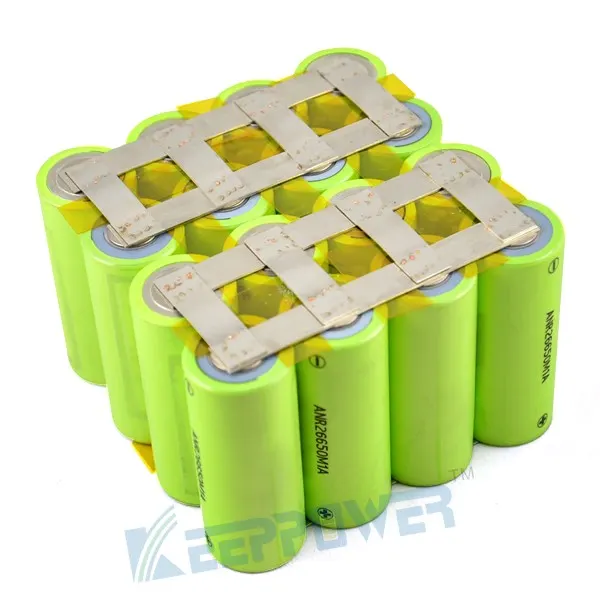
Specifications of ANR26650M1-BCell
|
DIMENSIONS |
26 x 65mm |
|
WEIGHT |
76g |
|
POWER |
>2,600 W/kg and 5,800 W/L |
|
CAPACITY |
2.5Ah (nominal) / 2.3Ah (minimum) |
|
VOLTAGE |
3.3V (nominal) |
|
INTERNAL IMPEDANCE |
6 (1kHz AC typical, mΩ) |
|
RECOMMENDED STANDARD CHARGE METHOD |
2.5V to 3.6V CCCV, 60 min |
|
RECOMMENDED FAST CHARGE CURRENT TO 80% SOC |
4C to 3.6V CC, 12 min |
|
MAX. CONTINUOUS DISCHARGE
|
50A. |
|
MAX PULSE DISCHARGE |
120A (10 seconds) |
|
RECOMMENDED FAST CHARGE CURRENT TO 80% SOC
|
4C to 3.6V CC, 12 min |
|
TEMPERATURE |
-22° F to 158° F (-30° C to 65° C) Operating |
Safety begins with chemistry. A123 Systems’ Nanophosphate® is stable chemically, which provides the foundation for safe systems while meeting the most demanding customer requirements. Multiple layers of protection are employed at the chemistry, cell and system level to achieve an energy storage solution with superior safety and abuse tolerance.
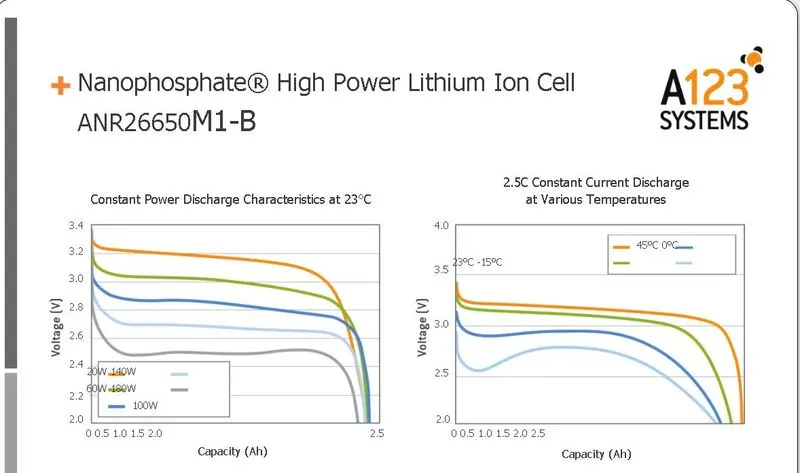
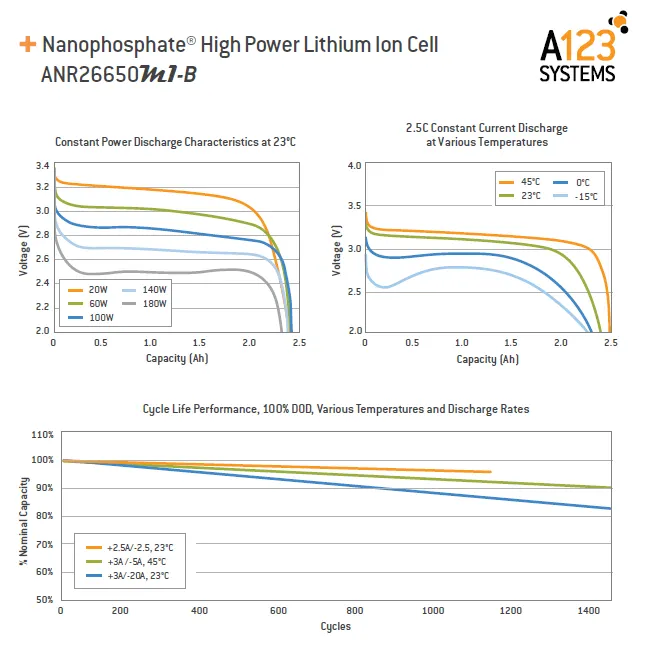
LiFePO4 (lithium iron phophate cell) flow characteristics
Mechanical Design
|
Diameter |
Ø25.96 +/- 0.5 mm (1.0") |
|
|
65.15 +/- 0.5 mm (2.6") |
|
|
76 g |
Permanent Magnet Synchronous Motor (PMSM)
A permanent magnet provides field excitation for the permanent magnet synchronous motor (PMSM), an AC synchronous motor. The permanent magnet synchronous motors have a high dynamic performance, are extremely efficient, brushless, quick, and safe. Permanent synchronous motors are used in many different industries and have a wide range of applications because of their benefits. A synchronous electric motor that uses permanent magnets as the inductor is known as a permanent magnet synchronous motor (PMSM). The Permanent Magnet Synchronous Motor is a crucial product for industrial uses. There are many different manufacturers, suppliers, and corporations that offer permanent magnet synchronous motors.
Best example of Permanent Magnet Synchronous Motor (PMSM) is Tiago EV
The Tiago EV is available with two lithium-ion battery pack sizes: 18kWh and 24kWh. Both the battery and the motor have an IP67 grade for dust and water protection. The 24 kWh battery provides a stated MIDC range of 315km, compared to the 18 kWh battery's claimed range of 250km. It is propelled by Tata's Ziptron high-voltage design, which employs a permanent magnet synchronous electric motor that generates 74 horsepower and 114 pound-feet of torque with the bigger 24 kWh battery and 74 hp and 114 ft of torque with the smaller. A Tiago with a 24kWh battery can accelerate from 0 to 60 km/h in 5.7 seconds, compared to 6.2 seconds for a Tiago with a lesser battery. According to Tata, the Tiago EV is also capable of fast charging, and both battery packs can be filled from 10 to 80 percent using a 50kW DC fast charger in just 57 minutes. According to the manufacturer, the 18 kWh battery can be fully charged using a typical 3.3 kW home charger in 5 hours and 5 minutes, compared to 6 hours and 20 minutes for the 24 kWh battery. Similar to how the former takes 2 hours 35 minutes and the later 3 hours 35 minutes with the 7.2kW AC fast charger.
Specifications of Permanent Magnet Synchronous Motor (PMSM) in Tiago EV
|
Engine |
Battery Type |
18kWh and 24kWh liquid-cooled lithium-ion battery |
|
Capacity |
216Ah |
|
|
Voltage |
72 Voltage |
|
|
Engine |
Motor Type |
3-Phase AC Induction |
|
Max Motor Performance |
40 bhp @ 4,500 rpm 105 Nm @ 2,500 rpm |
Parameters Used in 18Kwh battery pack
Given Data:
ANR26650M1-BCell Voltage = 3.3V
ANR26650M1-BCell Capacity = 2.6Ah
PMSM Voltage = 72V
PMSM Capacity = 216Ah
Solution
Step 1
Find number of cells in series in battery pack = PMSM Voltage / ANR26650M1-BCell Voltage
= 72/3.3
= 21.818
No of cells in series in battery pack = 22 cells
Step 2
Find number of cells in parallel in battery pack = PMSM Capacity / ANR26650M1-BCell Capacity
= 216 / 2.6
= 83.076
No of cells in parallel in battery pack = 83 cells
Step 3
Total number of cells in 18Kwh battery back = No of cells in series in battery pack * No of cells in parallel in battery pack
= 22* 83
= 1826 cells used in battery pack
Total number of cells in 18Kwh battery back = 1826 cells used in battery pack
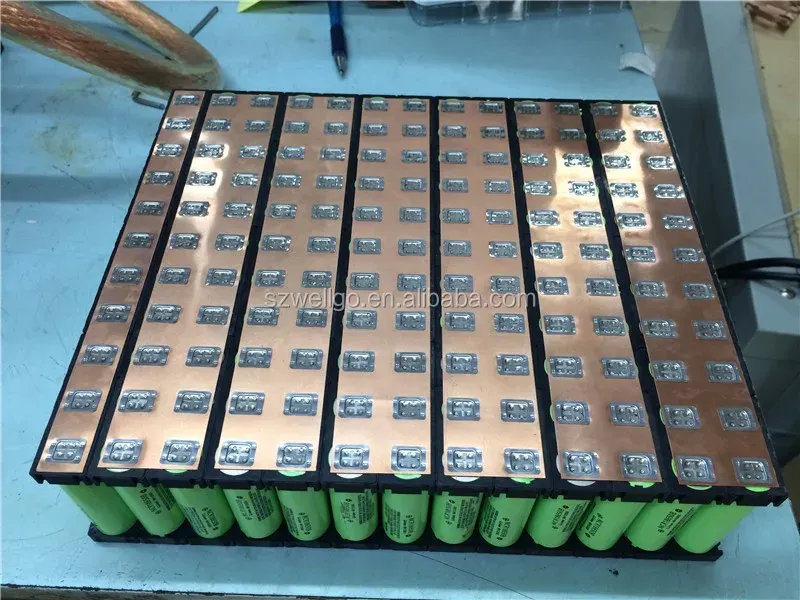
Assume that parallel and series modules are each four in series and four in parallel (4S4P) = 4*4 = 16 cells used in module
Step 4
Find number of modules = Total number of cells in 18Kwh battery back / Series and parallel in module
= 1826/16
= 114 modules used in battery pack
This is the example of 4S4P battery pack
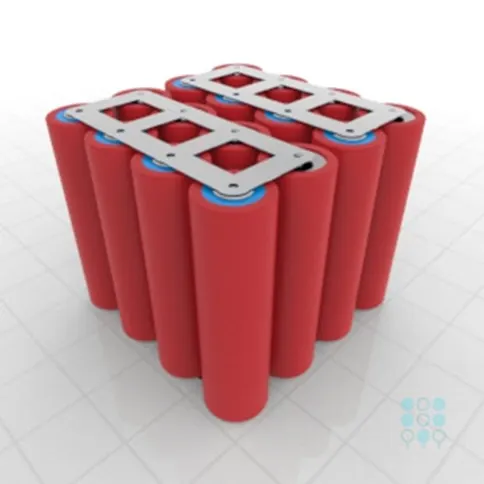

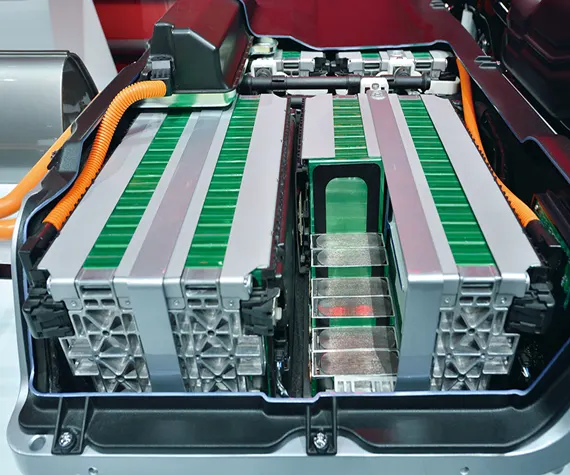
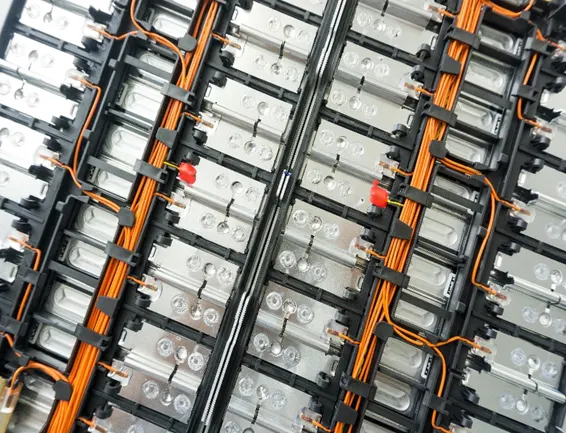
This is the example of battery pack in EV vehicle
Lightweight battery enclosure
Battery enclosures are a common component of electrified powertrains and are one of the main building elements of battery electric cars. Their role in sheltering the battery cell from internal thermal runaway events, external fire events, electromagnetic interference, and vehicle crash & crush events becomes more and more crucial as battery technology advances. To address these objectives, Solvay's portfolio of high-performance materials offers a wide variety of cutting-edge features.
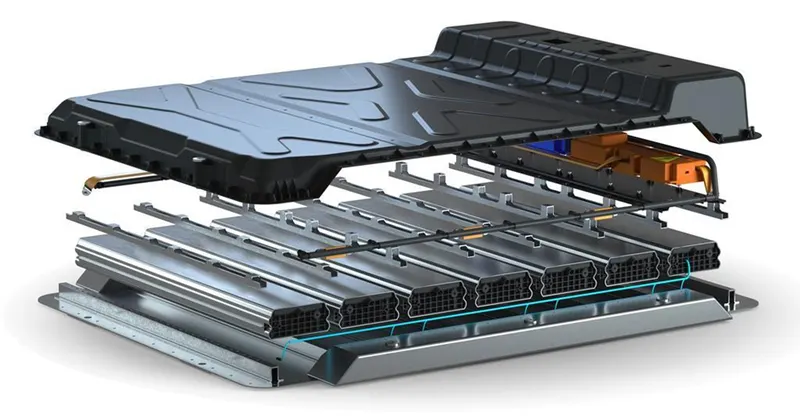
In contrast to current metallic solutions, composite and polymer materials offer design freedom and part integration possibilities, which may greatly increase energy and power density and reach more than 50% lighter weights than metallic systems.
Conclusion
The key component of an EV drive system is a Permanent Magnet Synchronous Motor (PMSM) that controls battery pack voltage and capacity. The variation in current density and the voltage changing range around a single 18KW battery pack requires a larger number of cells connected in series, and the cost of power electronics is higher. In comparison to the battery pack with lower voltage and higher capacity, the battery cell equalisation system is more complicated and expensive. ANR26650M1-B Cells are arranged in an 18Kwh battery pack as four series and four parallel cells in one module of this project. The battery pack's 1826 cells and 114 modules were then generated to get the 18Kwh battery equation.