Project 1 Mechanical design of battery pack
1
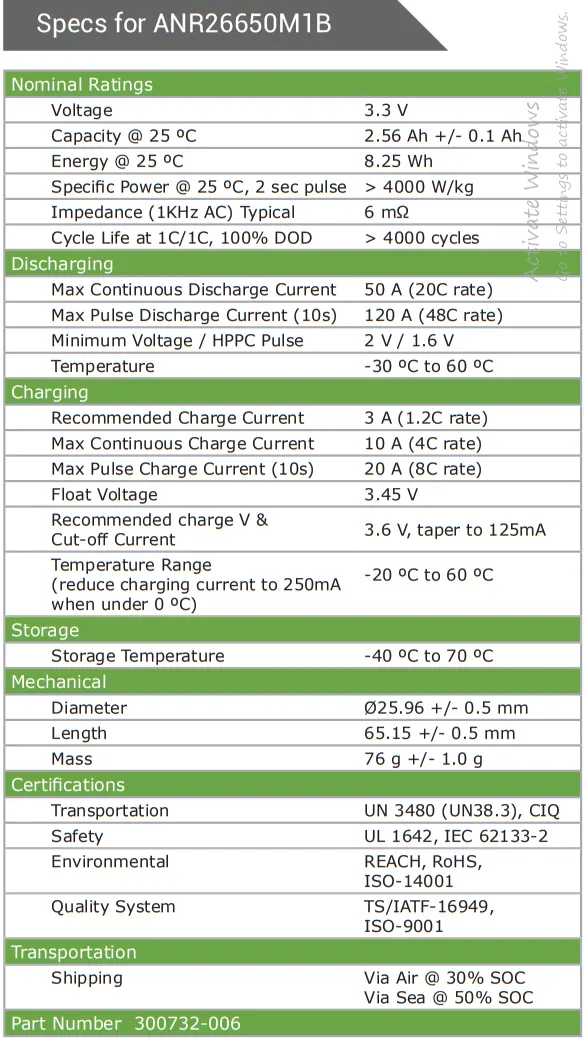
AIM:- Prepare a detailed battery pack drawing which have an battery pack capacity of 18 kWh using data sheet of ANR26650M1-B
ANR26650M1-B
ABOUT THE BATTERY TYPE
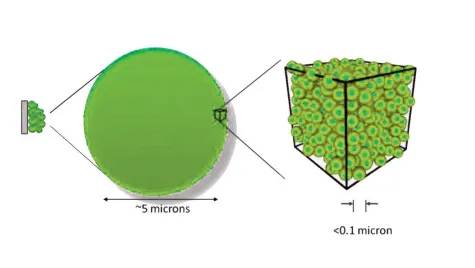
Lithium Werks’ 26650 cells are best for Power.Safety.Life.™ applications. They deliver very high power due to their use of patented Nanophosphate® battery technology. Based on lithium iron phosphate chemistry (LiFePO4), the cells are inherently safe over a wide range of temperatures and conditions. Whether the application requires outstanding cycle life or stable float reliability, the Lithium Werks’ 26650 cells are suitable for a wide variety of power, pulse, or stand-by applications. Nanophosphate® battery technology offers thermal-stable chemistry, faster charging, consistent output, low capacity loss over time, and superior total cost of ownership (TCO).It provides the foundation for safe systems while meeting the most demanding customer requirements. Multiple layers of protection are employed at the chemistry, cell and system level to achieve an energy storage solution with superior safety and abuse tolerance compared to metal oxide lithium-ion chemistries.
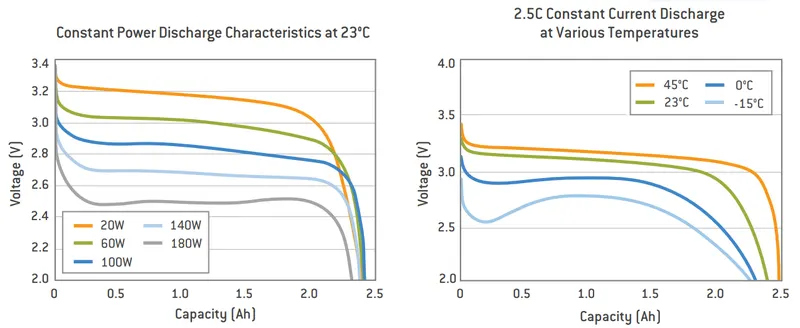
constant power and current discharge graph
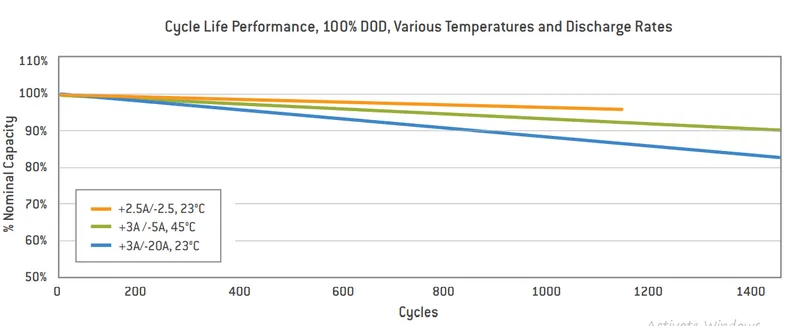
Cycle Life at 20A Discharge, 100% DOD
CALCULATION
i am assuming that a motor which is to be run need 100V to operate.
cell in series
number of cell in series will be = motor voltage / single cell voltage
= 100/3.3
= 30.30 wihich is to be considered as 31
so we need 31 cells in series.
total capicity = energy / voltage
= 18000/100
= 180Ah
cell in parallel
number of cell in series will be = total capicity /singel cell capicity
= 180/2.5
= 72
so we need 72 cells in parallel.
so total no f cell required will be= number of cell in series * no of cell in parallel
= 31*72 =2232 number of cell.
so 2232 cell *8.25 (singel cell power)=18414wh
so to built an battery pack of 18kwh with (100V,180Ah capicity) we need 31series and 72 parallel cell .
so now i am assuming 6 cell in series and 6 cell in parallel for forming an module
6*6= 36 cell in 1 module
so 2232/36=62
62 moduls will be required.
total weight of the battery will be= total cell * singel cell weight
= 2232 * 76g
= 169632g or 170kg
so the total weight of the cell will be 170kg.
range
i am asuming energy consumption is 50wh/km
range= capicity/ energy consumption
=18000wh/50
=360 km
so from above calculation of 18kwh of battery with (100v of motor 180Ah capicity) will required total 2232 no of cell out of which 31 will be conected in series and 72 will be in parallel if made a module will required 62 modules with total battery weight of 170kg which will give 360km of range.
grouping battery together
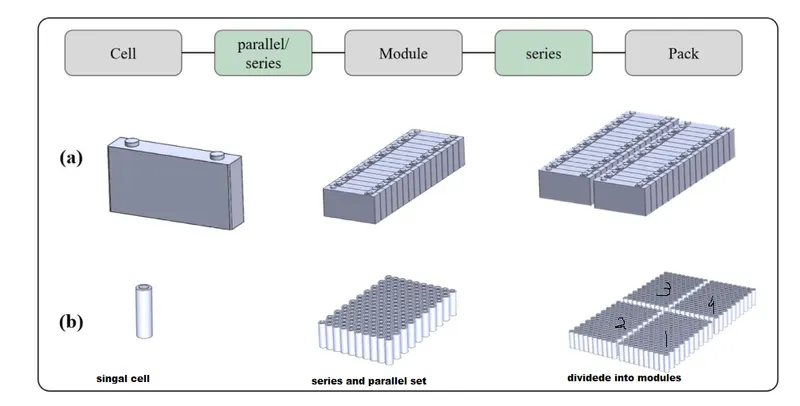
in above figure (b) shows how cylinderical cells are combined together and made a set of it .
now after make the group we need to weld the terminal of each cell so that we can create.
welding of the cell terminal
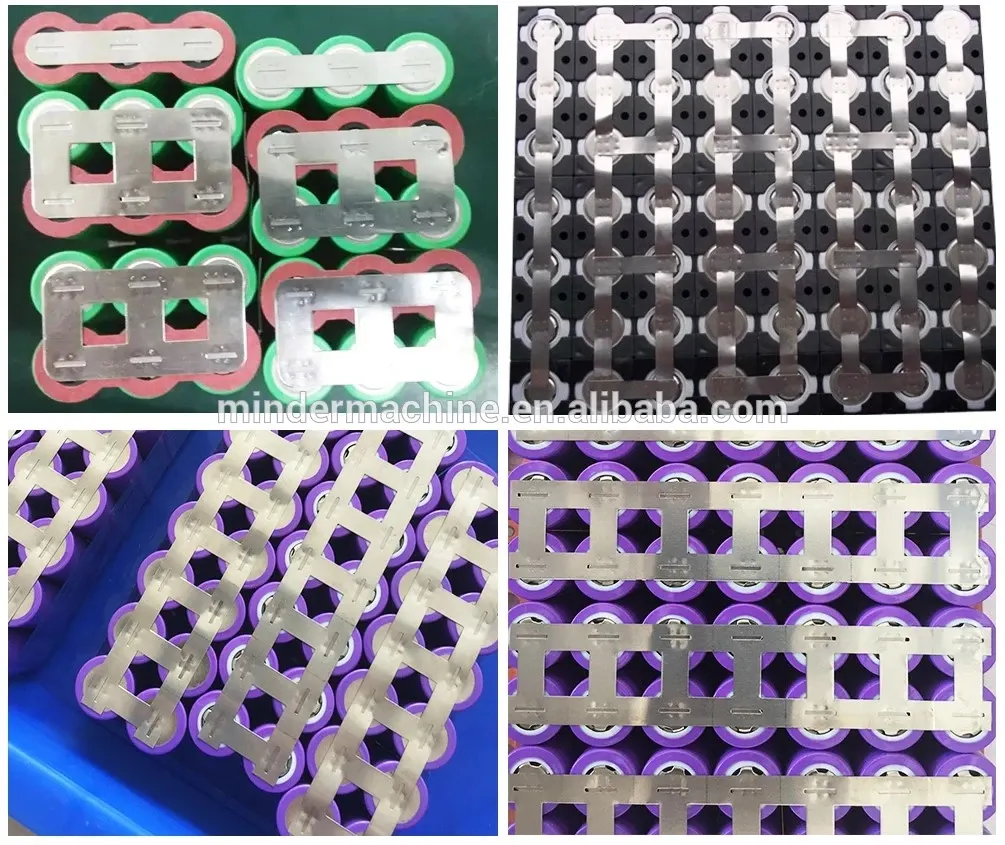
the above figure shows how cell are weld together to form an battery it is very important that the cell should not heat too much while welding and the weld should no be deep enough so that it will distroy the battery.
mainly cells are welded with spot welding or laser welding
generally Nickel strip is used for weld in battery building because it do not affect the current transfer between batteries.
cooling system in battery
cooling system is also important for keeping battery at normal temperature so that we can get best performance from the battery.
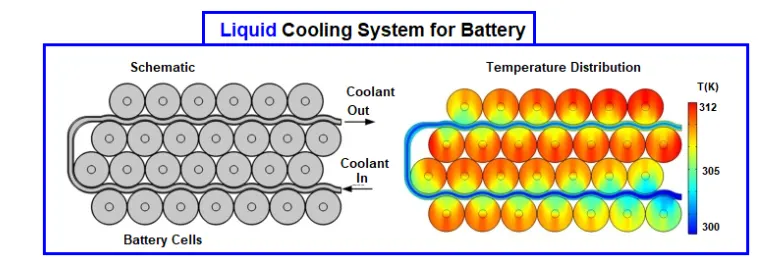
this above figure shows the cooling system in battery in one end warer or liquid refrigerent is send aand itflows through all battery area from which it absorbes heat and heated liqued gets out from other end this is how battey are kept cool.
connecting of battery management system (BMS) in battery.
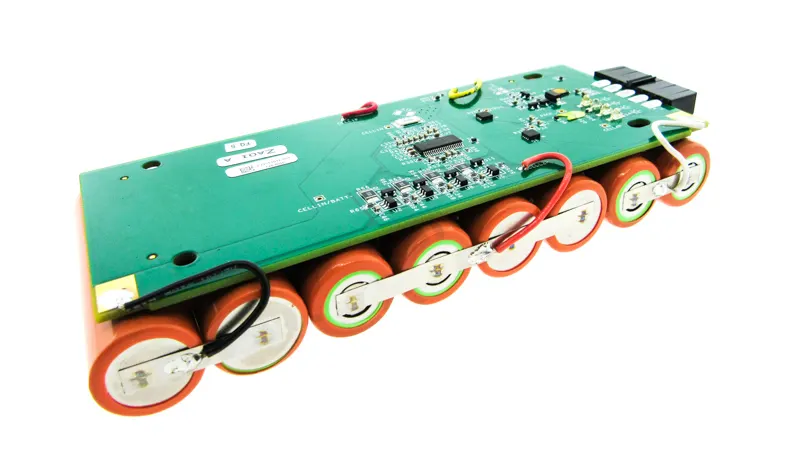
Battery management systems (BMS) mean different things to different people. At Epec BMS is simply constant monitoring of key operational parameters during charging and discharging using outputs from sensors which give the actual status of voltages, currents, and temperatures within the battery as well as the state of charge.
battery encloser
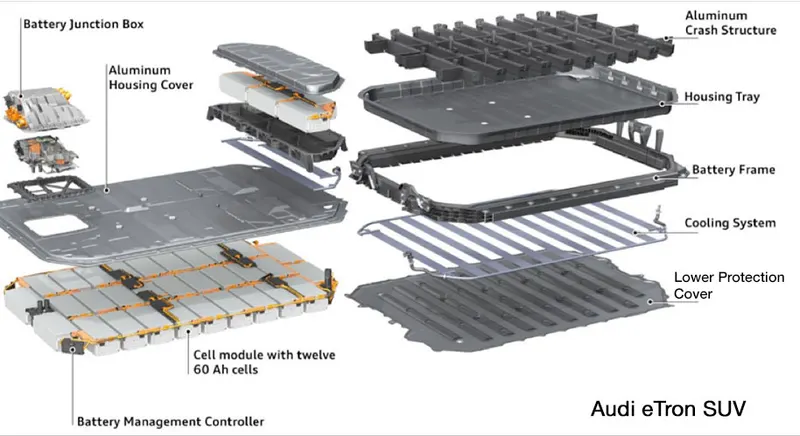
Battery enclosure assemblies safeguard the batteries in electric and hybrid vehicles from puncture or intrusion, thereby protecting passengers and others, as well as the environment,
from potentially hazardous conditions.Structural battery enclosures must meet lightweight targets to achieve overall vehicle dynamics.
safety testing on the encloser
in the above figure is shwing of how the encloser of the battery pack helps to protect the battery form getting damage and explosion.
THANK YOU