Project 1 Mechanical design of battery pack
MECHANICAL DESIGN OF BATTERY PACK
Cell: ANR26650M1-B
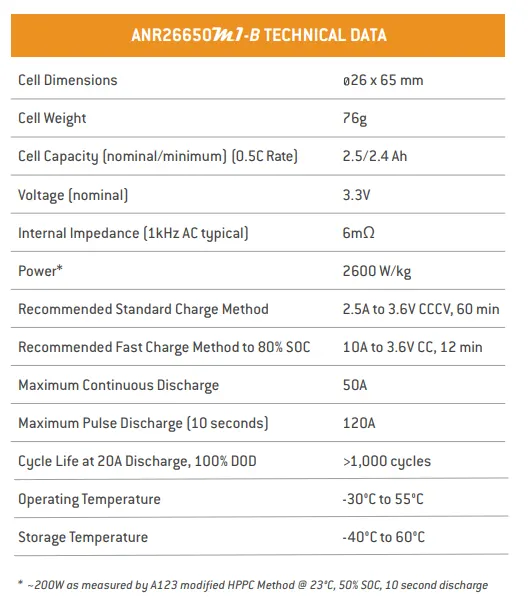
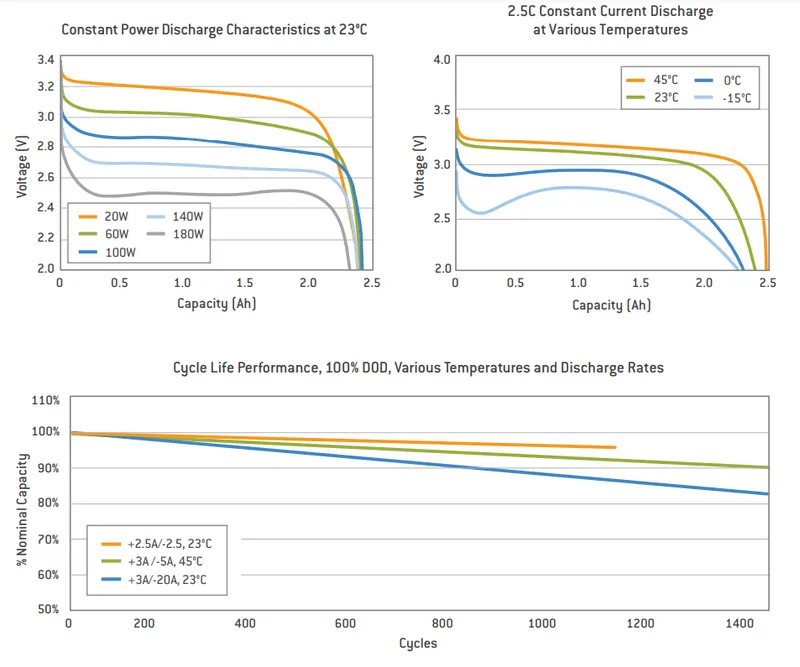
From datasheet individual cell have a voltage of 3.3V and Current capacity of 2.5Ah.
- cell voltage = 3.3 V
- cell capacity = 2.5 Ah
we need to create a battery pack of 18 KWh .
- Energy capacity = 18000 Wh
let us assume voltage of battery pack is 400V
- pack voltage = 400 V
now , cells in series = pack voltage / cell voltage
- cell in series = 400/3.3
- cell in series = 121.21 ~ approximately 122 cells in series
now cells in parallel ,
- pack capacity = ( Energy capacity )/ ( pack voltage ) = 18000/400
- pack capacity = 45 Ah
- cells in parallel = ( pack capacity ) / ( cell capacity ) = 45/2.5
- cells in parallel = 18
so for 18 KWh Battery pack we need 122 cells in series and 18 cells in parallel (122S18P )
Total number of cells in battery pack = cells in series * cells in parallel
Total number of cells in battery pack = 122 * 18
Total number of cells in battery pack = 2196
weight of battery pack ,
- weight of single cell = 76 grams
- number of cells = 2196
- weight of battery pack = 2196 * 76
- weight of battery pack = 1,66,896 grams = 166.9 kg
Length of battery pack = (No. of cells in series) * (Cell Diameter)
Length of battery pack = 122 * 0.026 = 3.172 m
Width of battery pack = (No. of cells in parallel) * (Cell Diameter)
Width of battery pack = 18 * 0.026 = 0.468 m
Area of battery pack = (Length of battery pack) * (Width of battery pack)
Area of battery pack = 3.172 * 0.468 = 1.4845 m^2
Volume of battery pack = (Area of battery pack) * (Cell Height)
Volume of battery pack = 1.4845 * 0.065 = 0.0965 m = 96.5 litres
BATTERY PACK
A battery pack is a device that stores electrical energy to provide power to an electrical system, such as an electric vehicle (EV) or an energy storage system (ESS). The energy is stored in cells that are all connected to one another in the battery pack.
To provide sufficient power, battery packs require a minimum voltage level which a single cell cannot achieve. Multiple cells are therefore connected in series to boost voltage. Some designs use small-capacity cells. To achieve the desired battery energy, cells are connected in parallel to boost capacity. Cells connected in parallel provide power as if they were a single, larger cell.
Battery packs are made of multiple, smaller sections called battery modules (or sub packs). These modules include a smaller number of cells connected in series and parallel. They are usually at a lower voltage, which is safe for handling. Modules facilitate servicing when only a few cells are defective and if they can be replaced without replacing the entire battery. EV batteries are typically made of 4 to 40 modules connected in series to one another.
Components :-
A battery pack is the most expensive part in an electric vehicle. It is a complex system made of a wide range of components. Here are some of the important components.
- Cells are the most important components of a battery pack. The mixture of materials comprising the cell is known as its chemistry. Different battery chemistries can achieve different performances and specifications. There are two common types of cells: energy cells and power cells. There are also many variants to provide the perfect trade-off depending on the application. In the EV industry, the lithium-ion cell (li-ion cell) is the most common chemistry. Alternative chemistries are sometimes used, such as Nickel-Metal Hydride (NiMH), which offers a slightly better lifecycle.
- Electrical connectors such as busbars, wires, or other distribution conductors are used to make series or parallel connections between cells and groups of cells. These connections are typically done using ultrasonic bonding or laser welding. Busbar connections between modules can also be done mechanically using fasteners.
- Thermal interface materials (TIMs) such as pastes, adhesives and gap fillers are inserted between battery components to join them mechanically while improving thermal properties between surfaces. With the rise of the structural battery pack, TIMs are becoming essential components.
- The Battery Management System (BMS) protects cells by monitoring key parameters such as voltages, currents, and temperatures. It is responsible for cell balancing (to maintain the optimal performance of the cells at the right voltage) and communicates with several systems such as engine management and temperature control. It also includes protection devices that can shut down the battery if needed.
- The Battery Thermal Management System (BTMS) controls the thermal energy in the electric vehicle’s powertrain and cabin, providing cooling or heating as needed to meet the battery’s thermal needs and protect the cells. The BTMS includes several components such as a heat exchanger, tubes, hoses, cold plates, pumps, valves, and temperature sensors.
- The Contactor System is a switch controlled by the battery management system. It can cut off the electrical connection between the main battery and the high voltage bus, which delivers current to the traction motor and other high-voltage components.
- The Housing is a rigid enclosure that protects the battery from environmental factors such as water, dust, and salt. It helps maintain a precise temperature and electrical insulation in the battery, and it prevents damages like rust and slow shorts.
- The Communications System ensures communication with other components in the electric vehicle. The most used protocol is CAN bus.
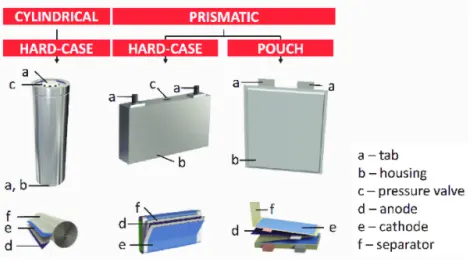
Ev uses mainly 3 types of cells : Cylindrical , prismatic and pouch
Construction :-
Step 1 : Holding
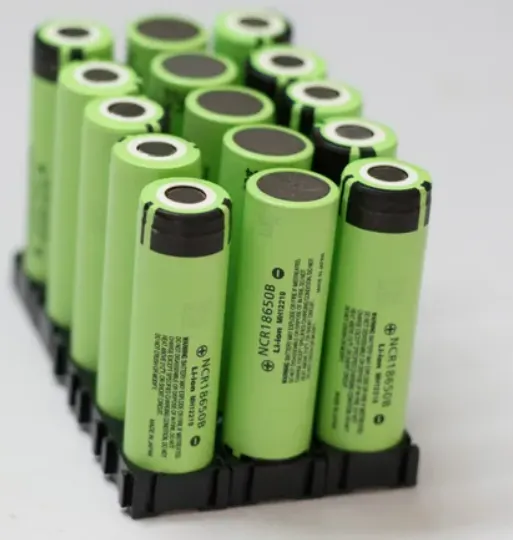

- Each of the cells are now need to be connected so that it could form a big battery module.
- So this holdes are very importatnt to provide the gapping between the battery and holding the battries in the correct manner.
- The cells has a vent at the end cap of the cell.and should not be covered by any mechinical means.Blocking the cell vent and then sufficiently abusing the cell so as to built the pressure in cell.There must be minimum of 1mm spacing between each cells to allow the vent to open under the fault condition.
- Holders will make it easy to palcethe contact plate between the cells.
- You have to connect the cells in parallel to reach the desired capacity (mAh ) and connect such parallel group in series to achieve the nominal voltage (Volt ).
Step 2 : Connecting cells
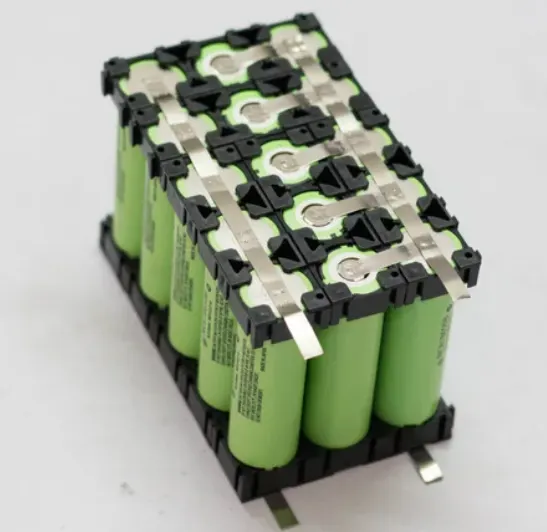
- nickle strip is used between the cells to make the conatct.
- laser welding , spot welding and other methods are there to make the contact with nickel strips .
Step 3 : Adding BMS
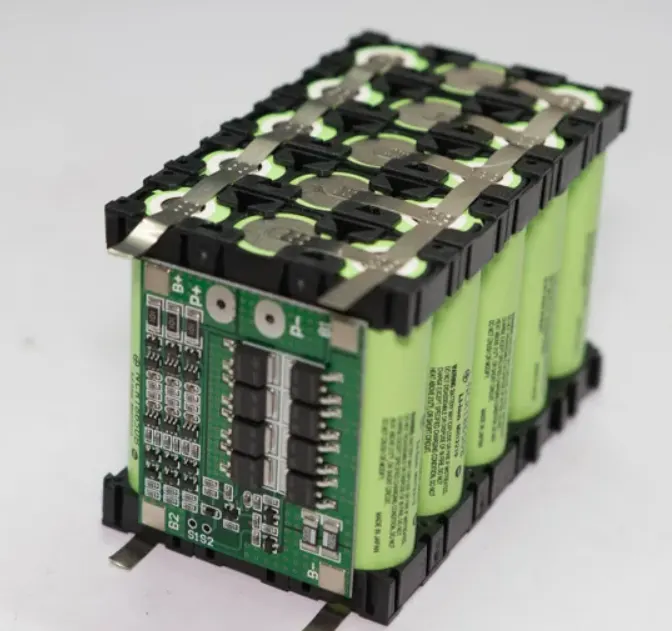
A battery management system (BMS) is an electronic system that manages a lithium battery pack and the main functionalities are
1. Monitors all of the parallel groups in the battery pack and disconnect it from the input power source when fully charged
2. Balance all the cells voltage equally
3. Doesn't allow the pack from over-discharged
Step 4 : thermal management
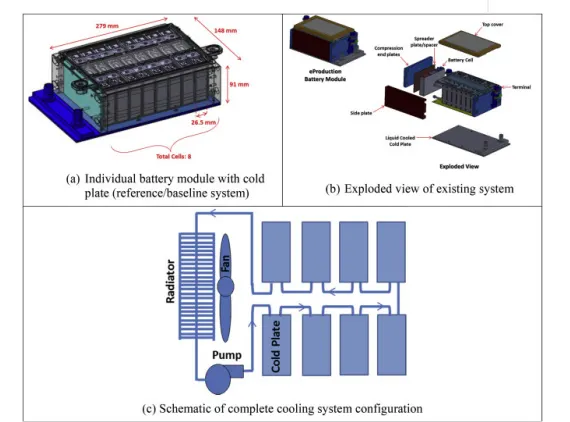
- Thermal management is a major issue in high power designs, particularly for automotive applications.
- As part of the battery system, it may be necessary to provide air or water cooling ducts, pumps or fans and heat exchangers for high temperature working or heaters for operating in low-temperature environments.
- The layout of the cells should be conducive to managing heat flows within the pack.
Step 5 : Enclosure
- The battery encolsure is the final protection of the battery.
- So the battery enclose must be very strong and light in weight.
- In the case of any accident the batteries has the tendentcy of catch fire if it get leaked during the car crash , so the battery module is enclosed in a very strong encolsure due to the safety.
- The weight should be less so we can get the best pssible range.
- In this metal housing there is a temperature managment system provided to cool and heat the battries when there is a need to
get the best performace of the battries.
Assembly line Process :
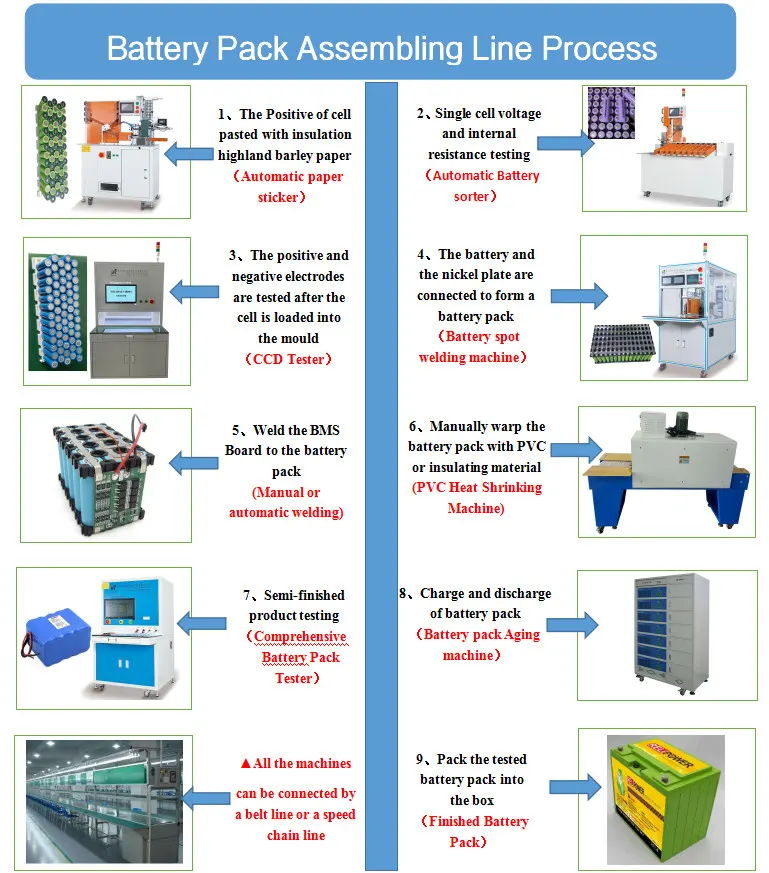
processes and test carried out for battery pack is depicted in the below figure .