Project 1 Mechanical design of battery pack
Project 1
Mechanical design of battery pack
Abhishek Anil Patil | Introduction to Battery Technology| 30/04/2022
Objective
Battery pack capacity: 18 kWh
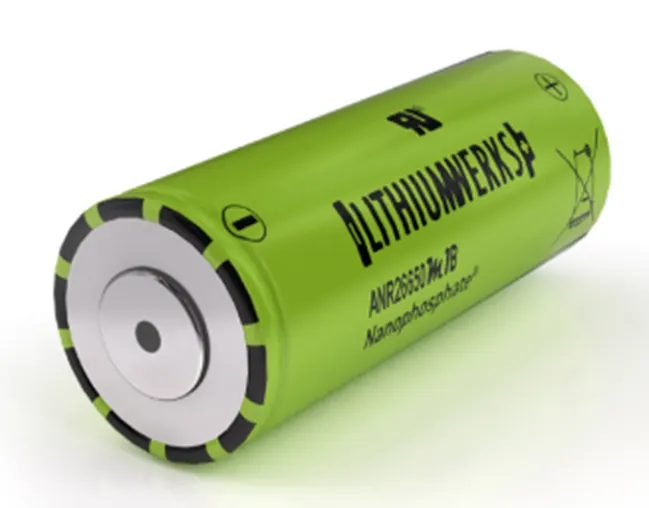
Cell: ANR26650M1-B
Prepare a detailed battery pack drawing along with its enclosure. State your assumptions.
26650 Lithium-Ion Power Cell
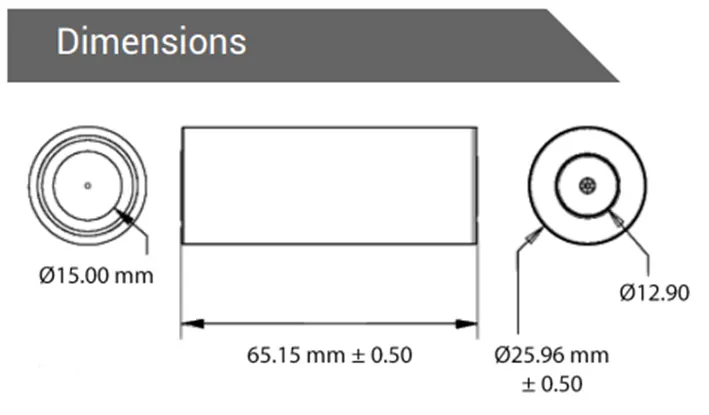
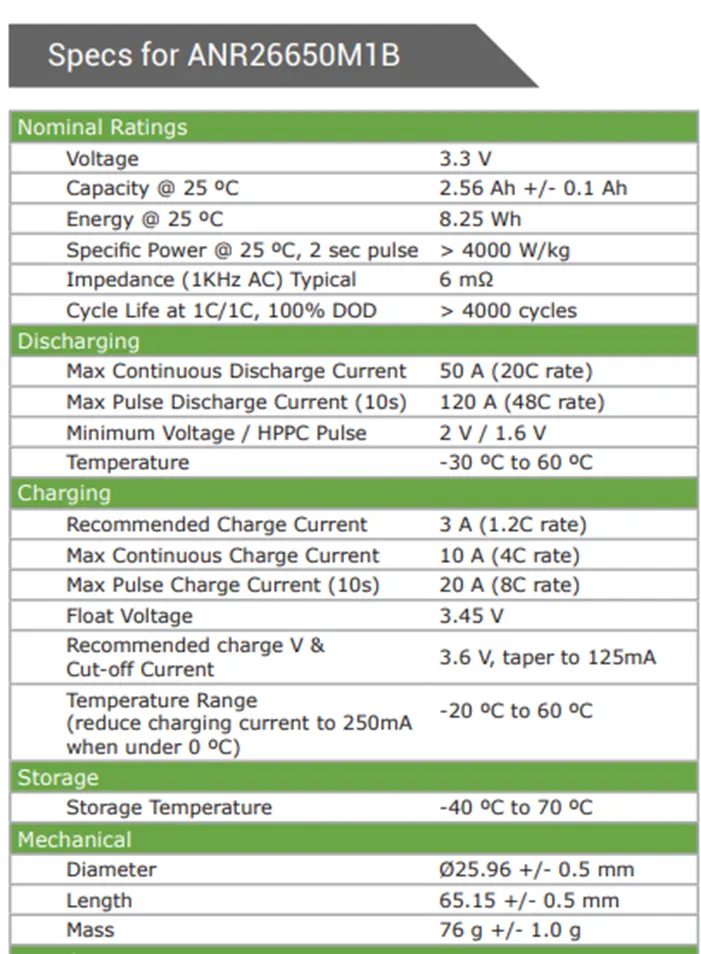
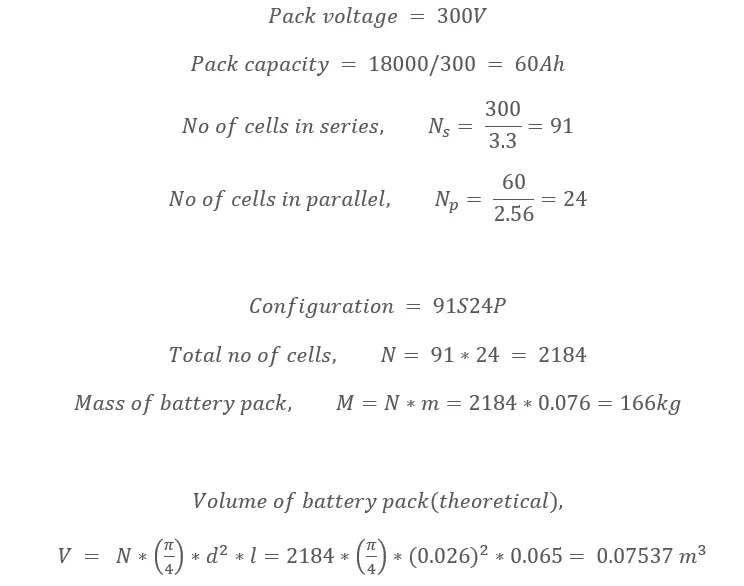
Battery pack calculations
Voltage is assumed,
Battery Assembly
Geometry and Topology Considerations for Assembling Batteries
Case 1: Ladder, linear, F type, or radial

Note that the straps will both come off the top when there are an even number of cells, and one off the top, the other off the bottom when there is an odd number of cells. With a connector and heat shrink wrap they look like this:

The size of a ladder pack is D x nD x H where D is the diameter of the cell, n is the number of cells, and H is the height of the cells.
Case 2: Multi-row cells
There are two ways to start packing them. One could be called the cubic, and the other face centered cubic, or nested.

Cubic packing is in neat rows. The size of such a pack is nD x mD x H, where n is the number of cells in a row, m is the number of rows, D is the cell diameter, and H is the cell height.
Case 3: Face centered "cubic"

Face centered cubic packing is nested to take up less room. Calculating the size takes a little geometry, which follows:
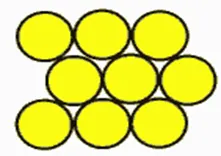
The size is L x W x H where
L = (n +½)D
W = [0.866(p-1)+1] D
H=H
p is the number of rows wide.
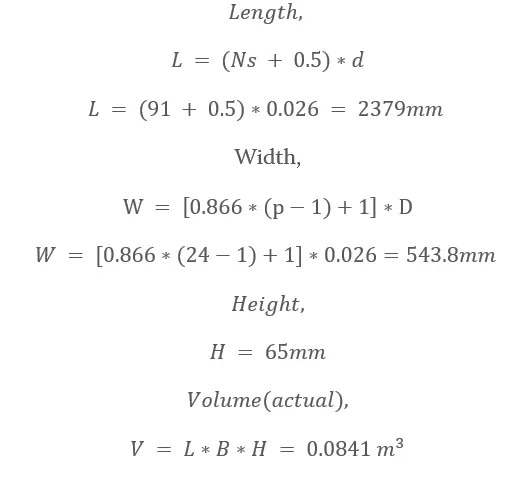
Since FCC structure takes least space, the battery pack is assembled in this configuration
For FCC calculations,
Solder versus Weld
Most battery packs are spot welded together using nickel strip for contacts. Soldering directly to the cells is dangerous for the cells. It is easy to melt or disturb the safety vent, thwack the seals, or cause internal shorting if the heat is too high. This damage might not be noticeable until later.
Heat Shrink Tubing
The most common way to hold the pack together is to use heat-shrink tubing. This has sufficient strength for small packs, but as the weight increases more structural strength is necessary. This is done by adding a sheet of structural material, usually plastic or fish paper, to the top and the bottom of the pack. If the battery is to be put into another structure, either a plastic case, or the system box, it is still important to tie it together with heat shrink or tape for ease of handling.
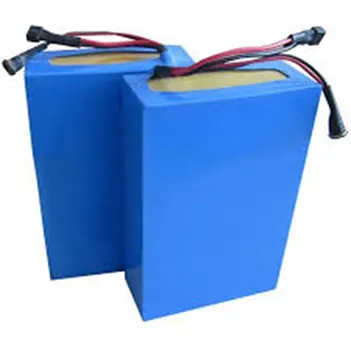
When building and using battery packs be careful not to inadvertently short the cells. A pack of cells wired in series will become shorted if the cases of adjacent batteries touch, since the outer case is a terminal. This can happen if the cells are shrink wrapped, film wrapped or painted and the batteries rub against each other. Brittle shrink wrap is known to shred under stress, leaving the bare cell walls to touch. If there is danger of this happening cardboard sleeves are used instead of just the heat-shrink tubing.
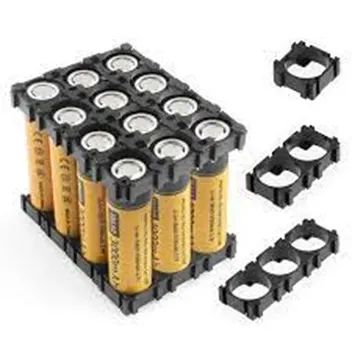
Battery Holders
When using or designing battery holders make sure there is adequate provision for short cells, long cells, or wide cells. Keep sharp clip edges from touching the cell where they could cut the film or paint, causing a short between cells held by the same clip.
Potting Batteries
Batteries expand and contract during charge and discharge. Potting a battery is not a good idea, unless there is some provision made for this dimension change. This can be compensated for by including a foam pad to absorb the stress of expansion. There is also a problem with venting unless the potting is such that the seals are not covered. You don't want the pressure to build up to the point it blows the potting material apart.

Cases and Cabinets
Over the course of life most batteries release hydrogen, and sometimes oxygen. Take this into account if you are designing a closed system, such as waterproof lights, weatherproof installations, etc. Some method of releasing or absorbing the hydrogen, flooding with air or inert gas should be used. In closed cabinets some provision for ventilation is necessary to prevent hydrogen gas from accumulating.