Project 1 Mechanical design of battery pack
This is a high-performance Nanophosphate, Lithium Iron Phosphate(LiFePO4) battery that delivers high power and energy density combined with excellent safety performance and extensive life cycling in a lighter and compact pack. These cells have low capacity loss and impedance growth over time as well as high usable energy over a wide state of charge (SOC) with minimal packs.
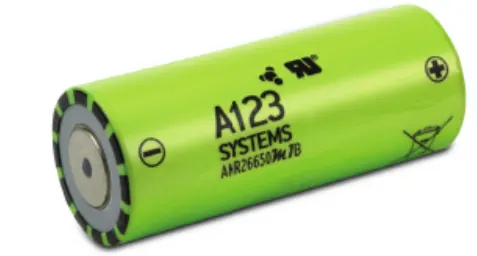
Inside the Cell:
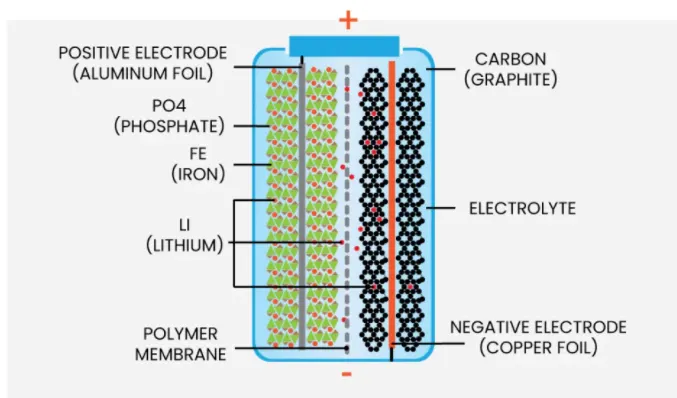
What is a battery:
- Batteries are a collection of one or more cells whose chemical reactions will create a flow of electrons in a circuit.
- All batteries are made up of three basic components: an anode (the '-' side), a cathode (the '+' side), and some kind of electrolyte (a substance that chemically reacts with the anode and cathode).
- When the anode & cathode of a battery are connected to a circuit, chemical reaction takes place between the anode and the electrolyte. This reaction causes electrons to flow through the circuit and back into the cathode where another chemical reaction takes place.
- When the material in the cathode or anode is consumed or no longer able to be used in the reaction, then battery will not be able to produce the electricity.
Battery pack:
- A battery pack is a set of any number of (preferably) identical batteries or individual battery cells. They may be configured in series, parallel, or a mixture of both to deliver the desired voltage, capacity, or power density.
- The term battery pack is often used for radio-controlled toys and battery electric vehicles. Components of battery packs include the individual batteries or cells, and the interconnects will
- provide electrical conductivity between them.
- Rechargeable battery packs often contain a temperature sensor, which the battery charger uses to detect the end of charging.
- Interconnects are also found in batteries as they are the part that connects each cell, though batteries are most often only arranged in series strings.
- An advantage of a battery pack is the ease with which it can be swapped into or out of a device. This allows multiple packs to deliver extended runtimes, freeing up the device for continued use while charging the removed pack separately.
There are various applications in which these cells are used, some of them are:
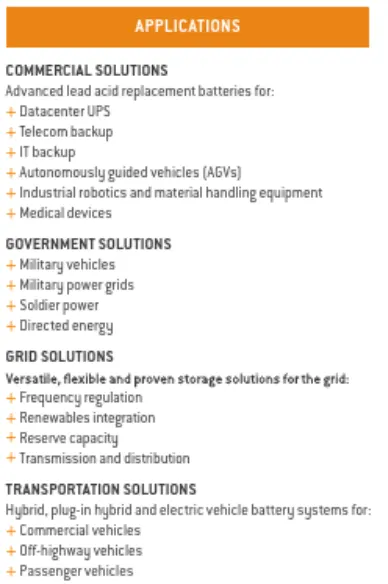
Data Sheet:
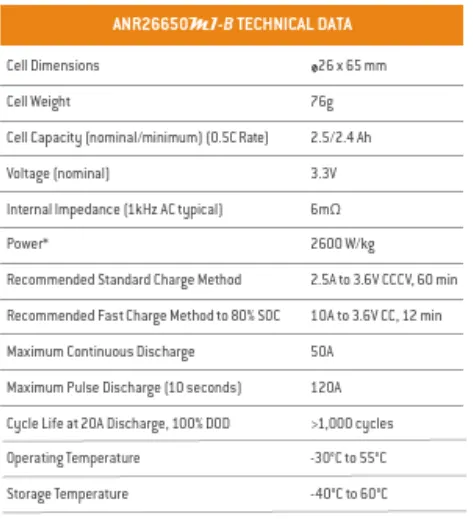
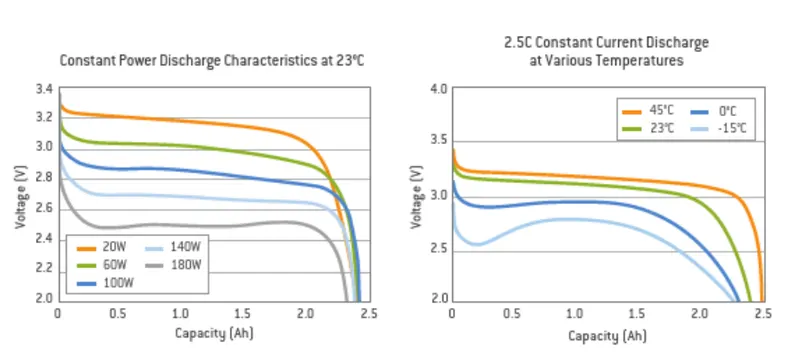
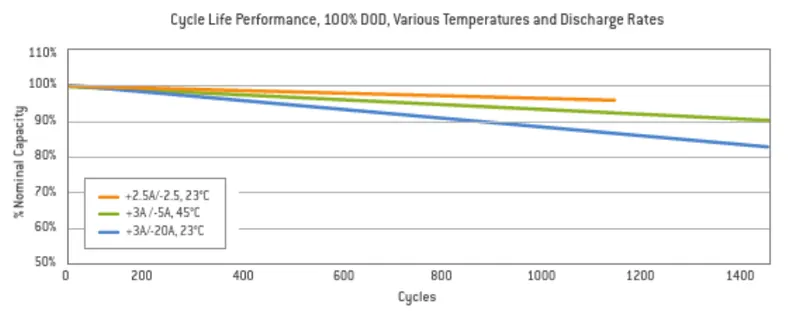
Characteristics of the Cell:
Advantages:
- More Abundant Constituents with lower human and environmental impact
- Price
- Batter Ageing and Cycle-life Characteristics
- Viable Alternative to Lead-Acd Batteries
- Safety
Disadvantages:
- Low nominal voltage that reduces energy.
- High self-discharging rate compared to other batteries.
- Low energy density, so more protection is required.
- Low performance at low temperatures.
- Transportation and aging effects.
- Deep discharge and low density.
These flaws make these batteries unfit for small devices such as smartphones. Therefore mainly, these LFP batteries are used in LEV (low emission vehicles) and electric bikes.
Calculations:
1. Total energy needed = 18kwh (or) 18000wh
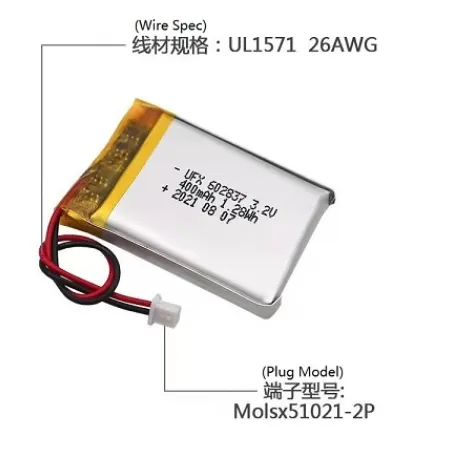
2. Cell voltage = 3.3V
3. Cell capacity = 2.5Ah
- A module is designed in the configuration of 55s 40p(accurate is 38.14p cells but for easy cell module configuration it's taken for 40)
- Series connection of a module = No. Of cells x single cell voltage
= 5 x 3.3 = 16.5V
- Parallel connection of a module = No. Of cells x single cell capacity
= 4 x 2.5 = 10Ah
- Energy capacity for a single module = 16.5 x 10
- Energy capacity for a single module = 165wh
Let us consider the pack voltage is 99V
- NSM = Pack Voltage/Series connection of a module
= 99/6
Hence,6 Modules in the series placement of the battery pack
- Pack energy = Total energy/pack voltage
= 18000/99
= 181.818Ah
- NPM = Pack energy/ Parallel connection of module
= 181.818/10
Hence, 18 modules in the parallel placement of the battery pack
Cell:
- Total no. of cells in the module = 6*18 = 108 Modules
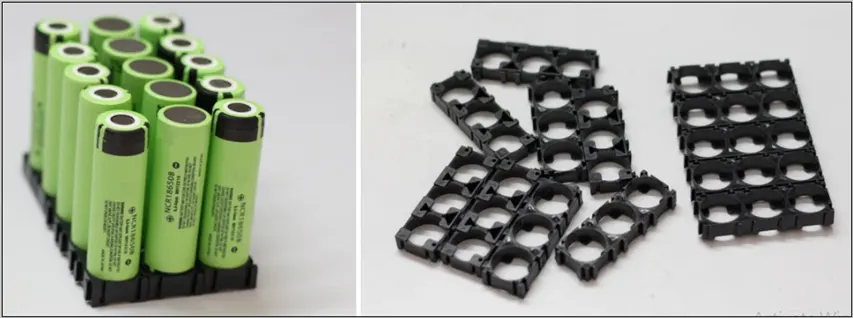
- No.of cells in module = 4*3 = 12 Cells
- Total no. of cells in battery pack = 108*12
= 1296 Cells
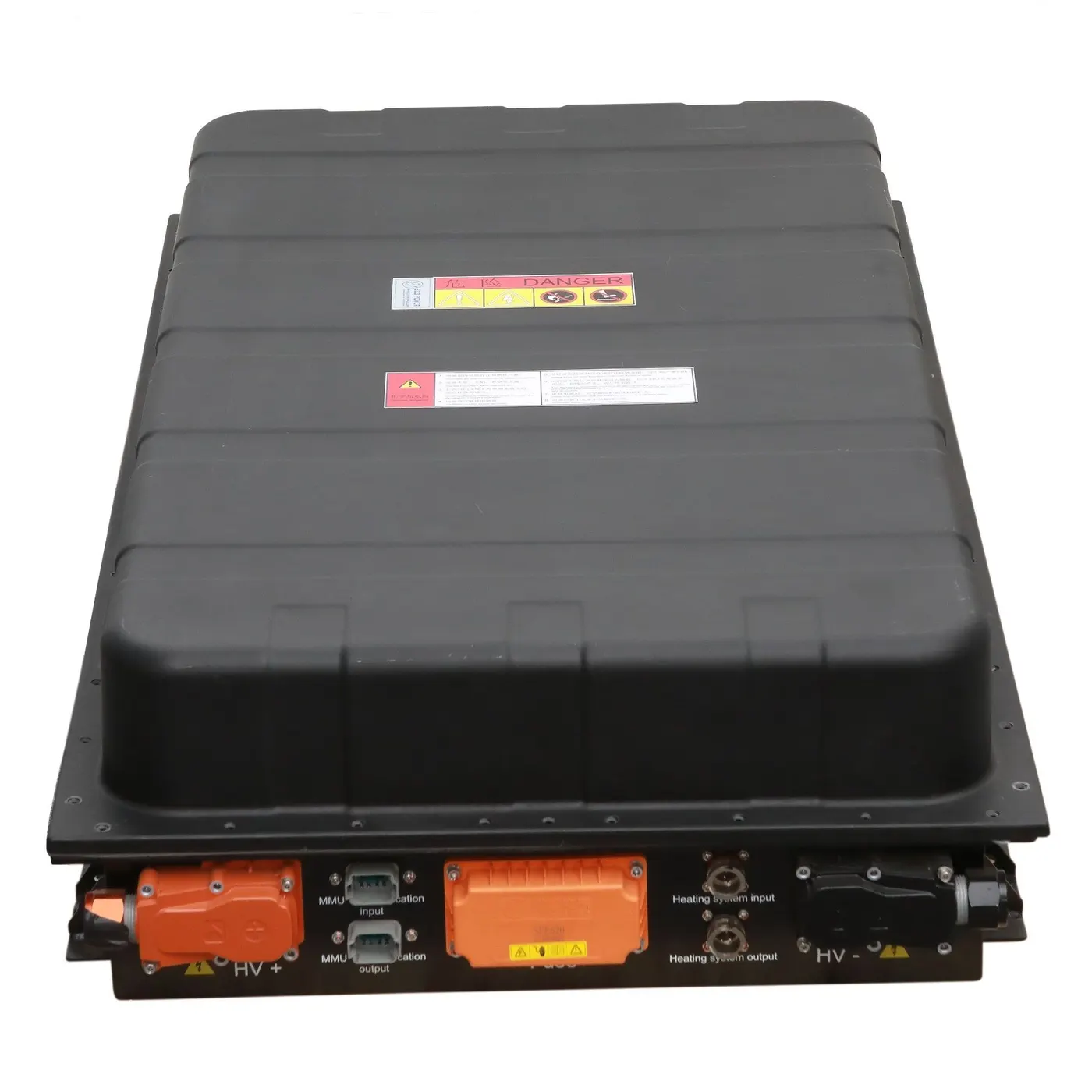
The final battery pack look like above figure.