Week-4 Challenge WOT Condition Part-2
1.
Mapped Model: It basically contains the lookup tables rather than the actual components which makes us simulate easily.
Advantage:
- Mapped Models use data for the operation and simulation which are entered in form of a Look-up table which will be configured with the operational parts and the analysis would be obtained.
- It is also known as the Global Based Model. And the detailed specifications/Lookup Table data is available with us which makes the simulation easier and it gives the results based on data interpreted in the model.
Disadvantage:
- As it is completely based on the assumptions it takes huge data for simulation, some of them may be unnecessary.
Dynamic Model: It basically contains the actual components which make the simulation process complex.
Advantage:
- In the Dynamic Model, it understands the behavior of the part/element and then it behaves accordingly. It gives a detailed analysis of the variations entered by us in the Specifications whereas it simulates according to real and dynamic operations.
- It operates dynamically depending on the situation of operation detailed data and specifications are not required and the simulation gives the detailed analysis of the components simulated.
Disadvantage:
- As it contains an actual model there will be no modifications as per our wish.
- And it may not be an idle model because of real-time parameters.
Mapped Generator:
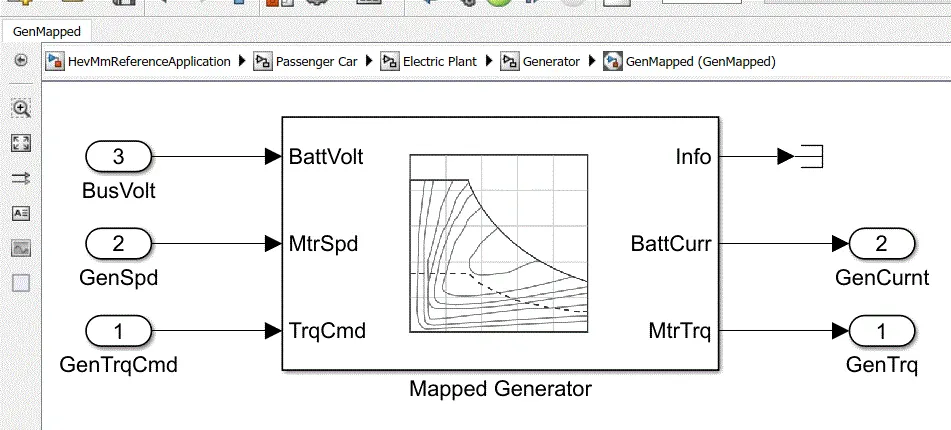
- Here we had less no. of input signals which makes it simple to simulate.
- There are no losses in the system.
- There will be a lack of accuracy in the system because it can't analyze many inputs for better analysis in parameter change.
Dynamic Generator:
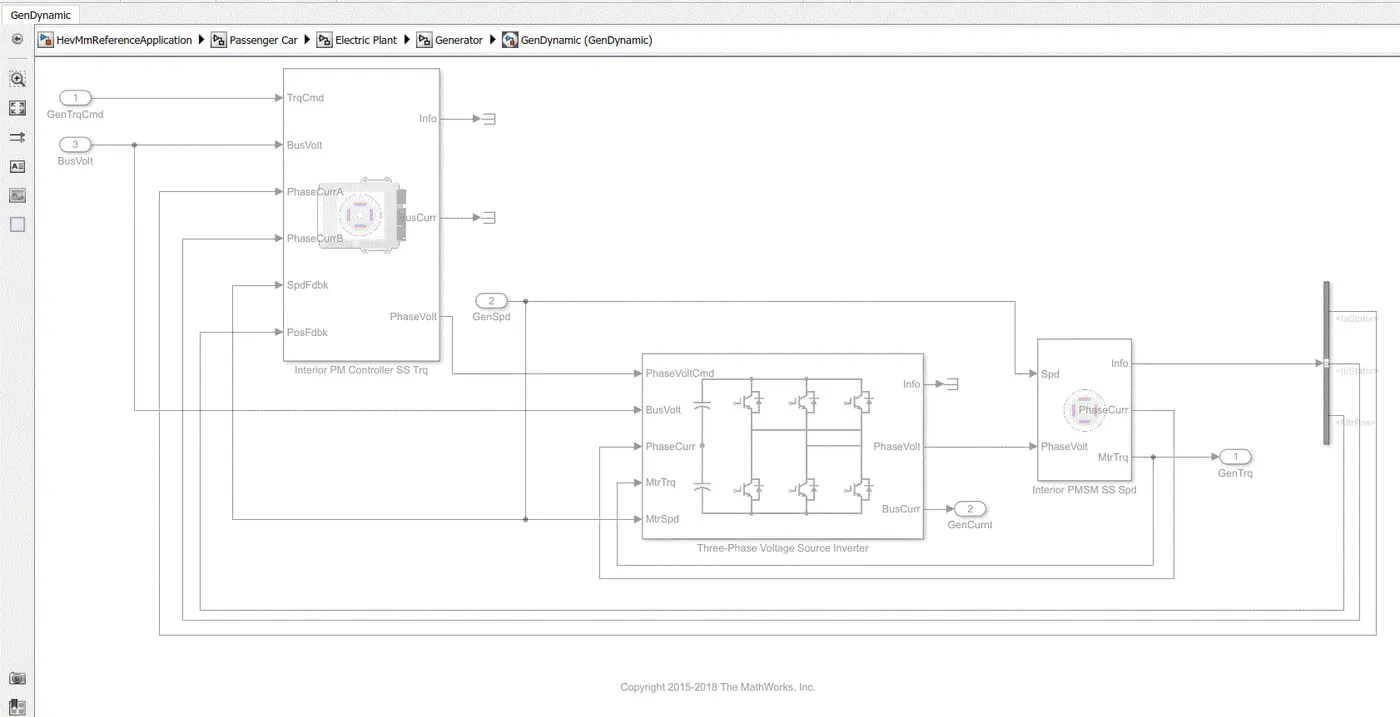
- Much accuracy in the system because it can analyze many inputs for the applied parameter change.
- There is a feedback path, which makes the model more efficient.
- Here we can have real-time components which make us compare the simulation analysis to the real one.
- Here we had more no. of input signals which makes it complex to simulate and also takes much time.
Mapped Motor:
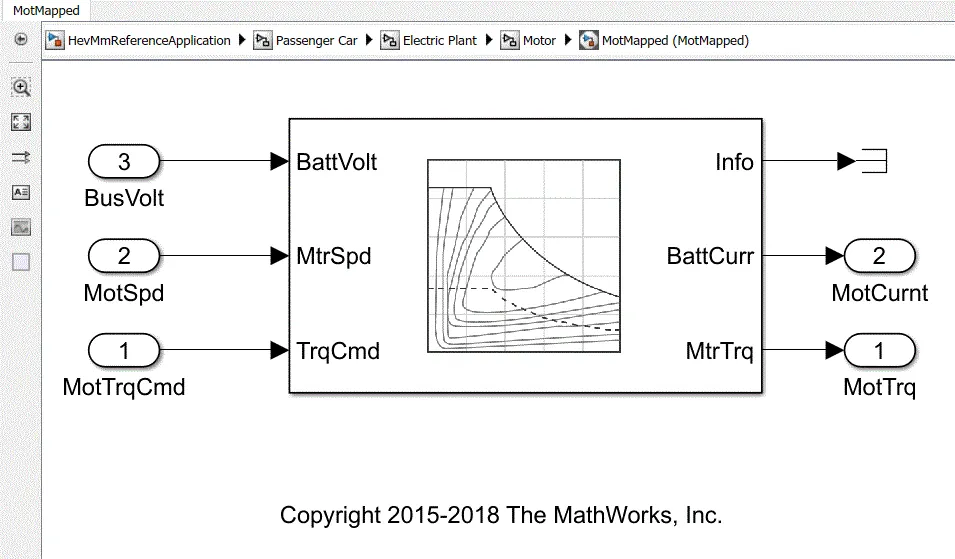
- It's also just like the mapped generator, but the principle of operation changes in this block data.
- There will be a lack of accuracy in the system because it can't analyze many inputs for better analysis in parameter change.
Dynamic Motor:
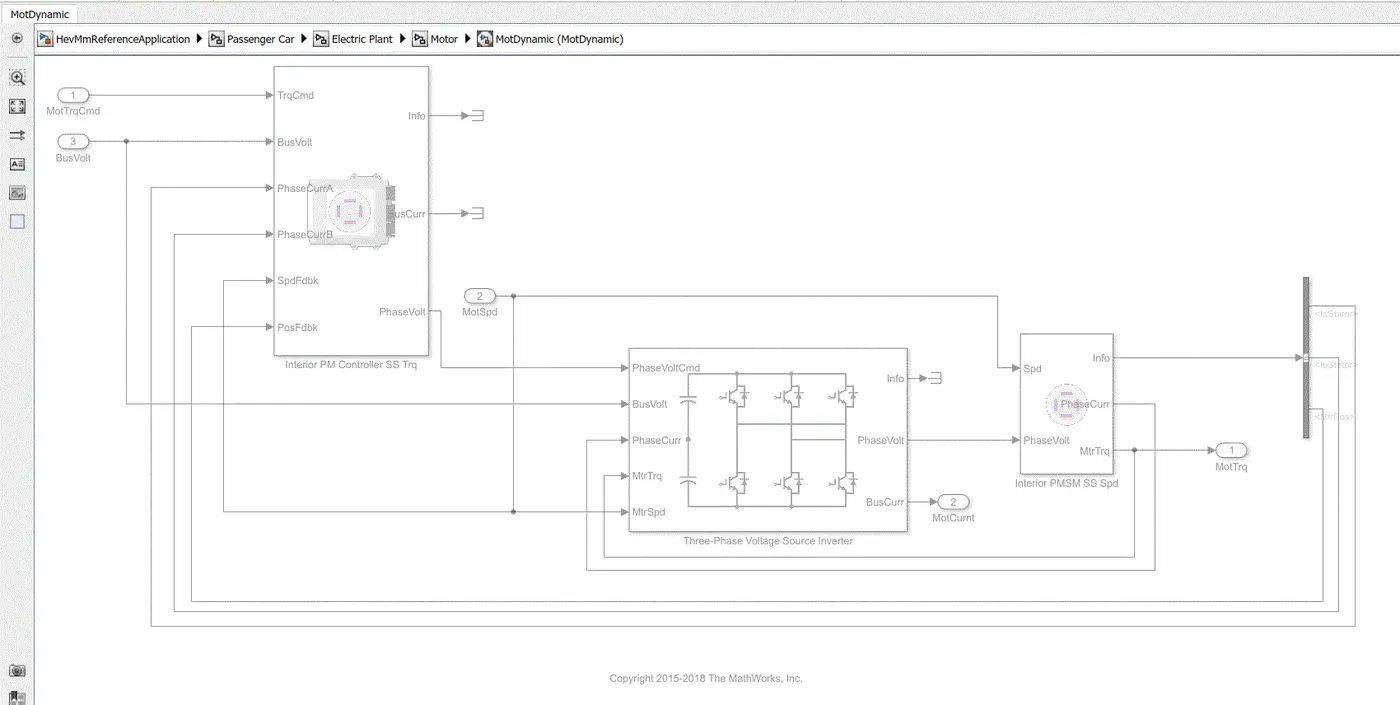
- It is very similar to the dynamic generator, with the same input signals, and same feedback system but only the machine operation changes according to the applied inputs.
Mapped Engine:
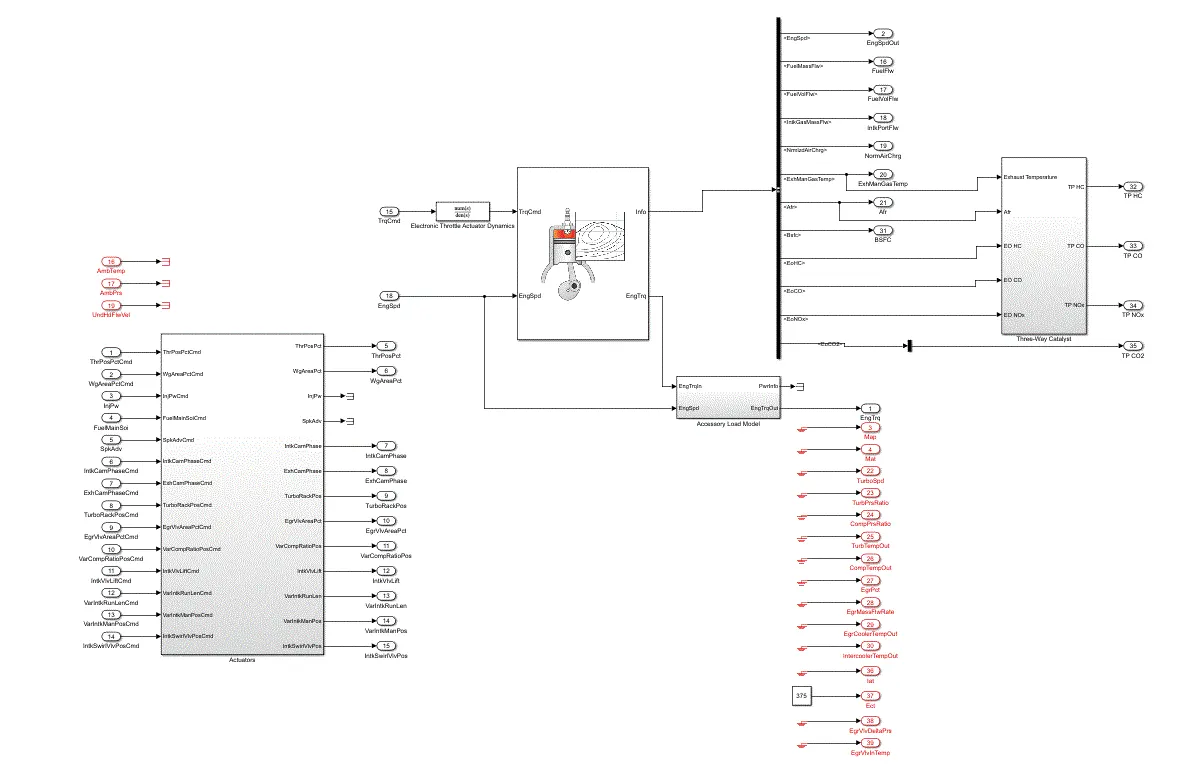
We can say it is the most complex sub-system with many inputs and outputs which are required to run an engine.
- As it is a mapped block, we will require less time to simulate when compared to a dynamic block.
- It doesn't have any dynamic block but contains a real-time turbo engine for analysis.
Here we have two types of engines Ci(compressed ignition) engine & Si(spark ignition) engine with turbo.
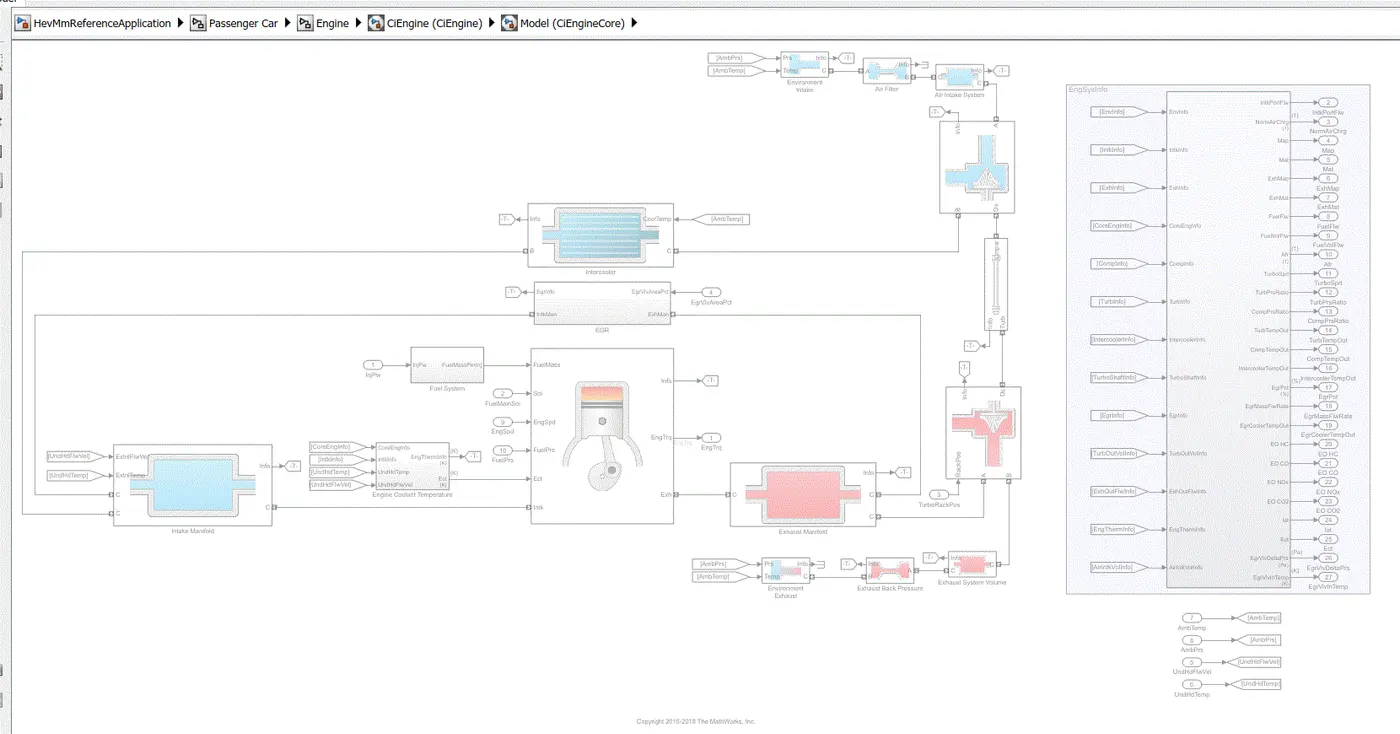
We can even observe the actuators for the engine to operate which helps it to run. Actuators in the machines are to convert the control unit's signal into a mechanical control movement to regulate fuel intake.
For changing the model type from mapped to dynamic or vice versa
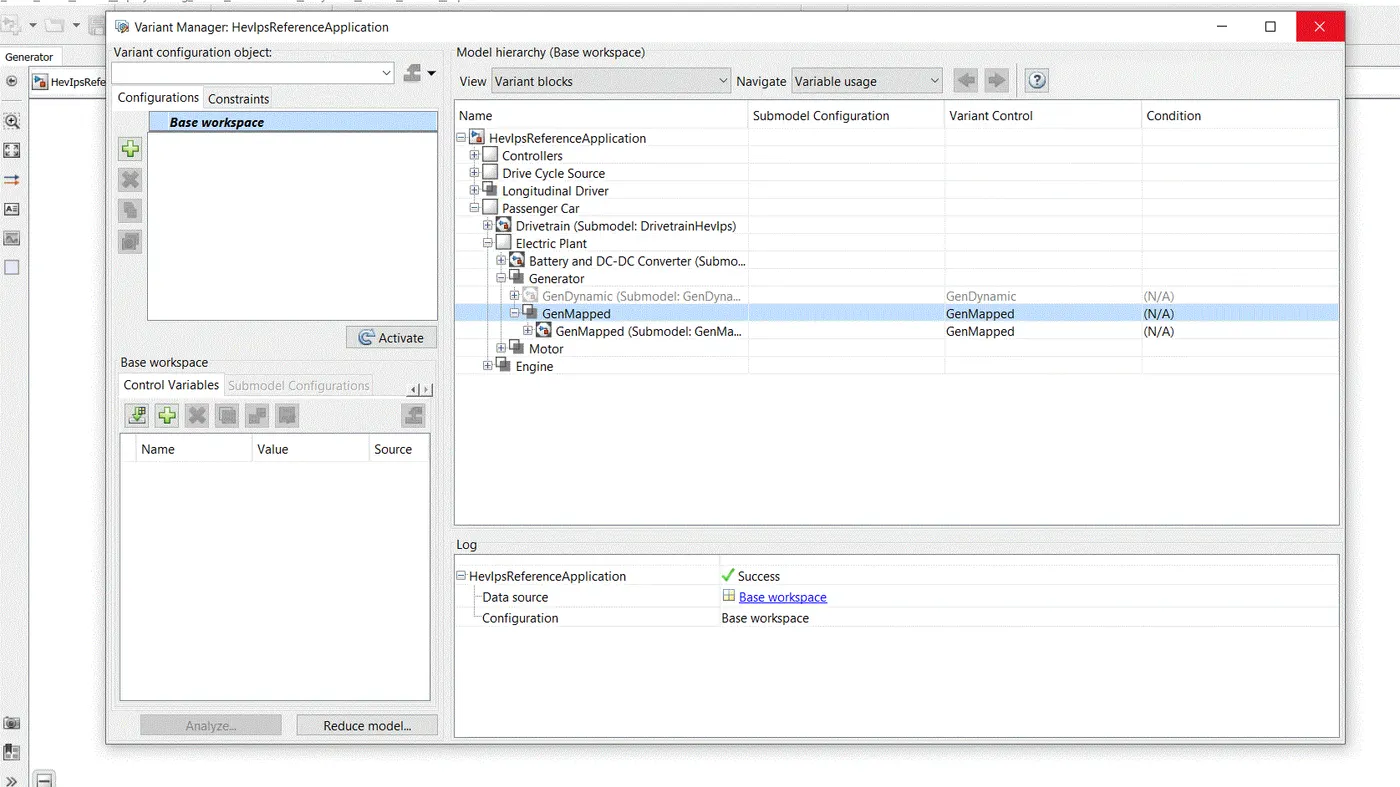
click on Passenger car-->Electric Plant-->Generator--> right-click on Genmapped -->variant-->Open in variant manager.
By following the above we can view this dialogue box:
2.
Here in HEV vehicles, the fuel intake is calculated into miles per gallon by using some of the blocks connected in visualization-->Performance calculations.
- At the start, there is a gain of 0.00621371 which makes meters to a mile (input from vehicle speed), and a gain of 264.172 which makes metre^3 to US gallon(input from fuel flow & battery power).
- The above 2 inputs are sent to a summing block where multiplication and division are applied to veh.spd & fuel flow & battery power inputs respectively.
- From this, we are able to convert the miles per gallon for a hybrid vehicle.
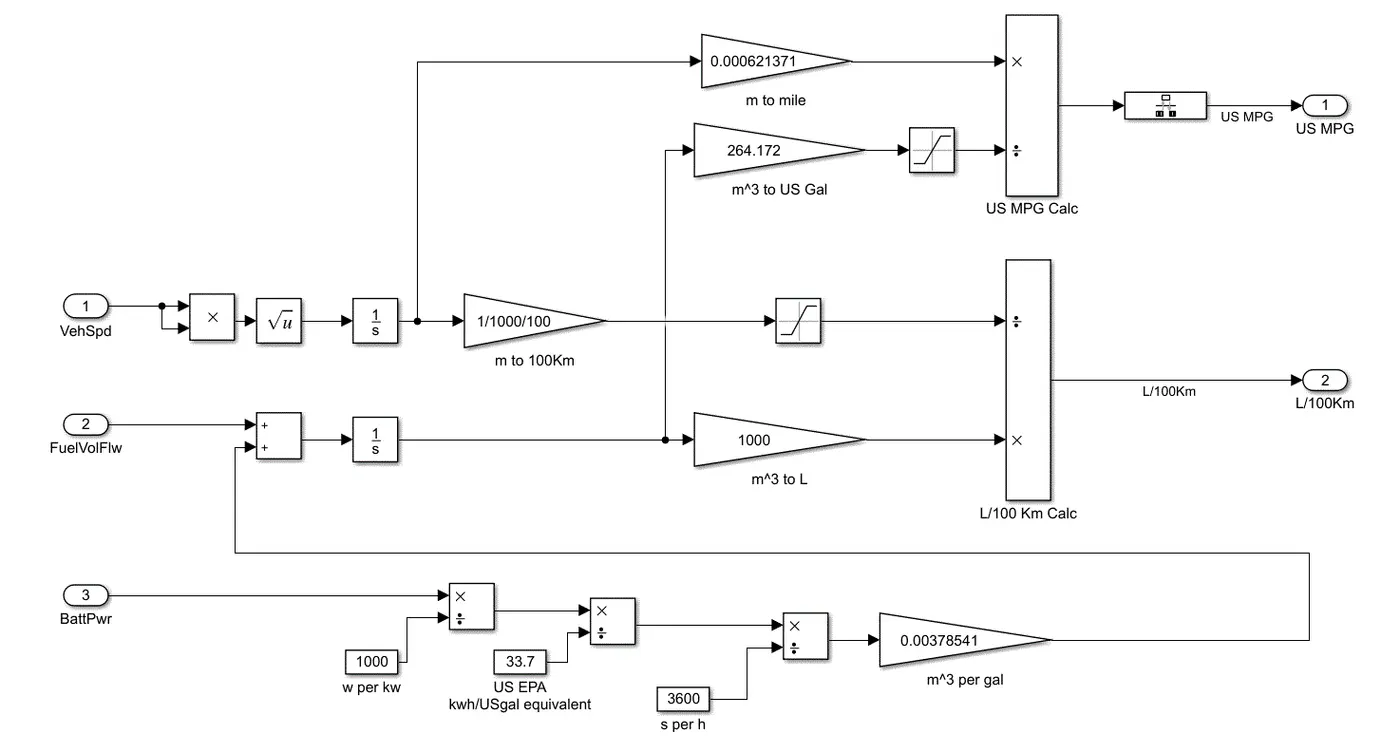
- As we talk about miles per gallon we need to consider both fossil fuel & battery power of the vehicle because both sum up to drive the vehicle as a whole(at different time instincts).
3.
Here we compared and analyzed both FTP & WOT cycle for HEV vehicles.
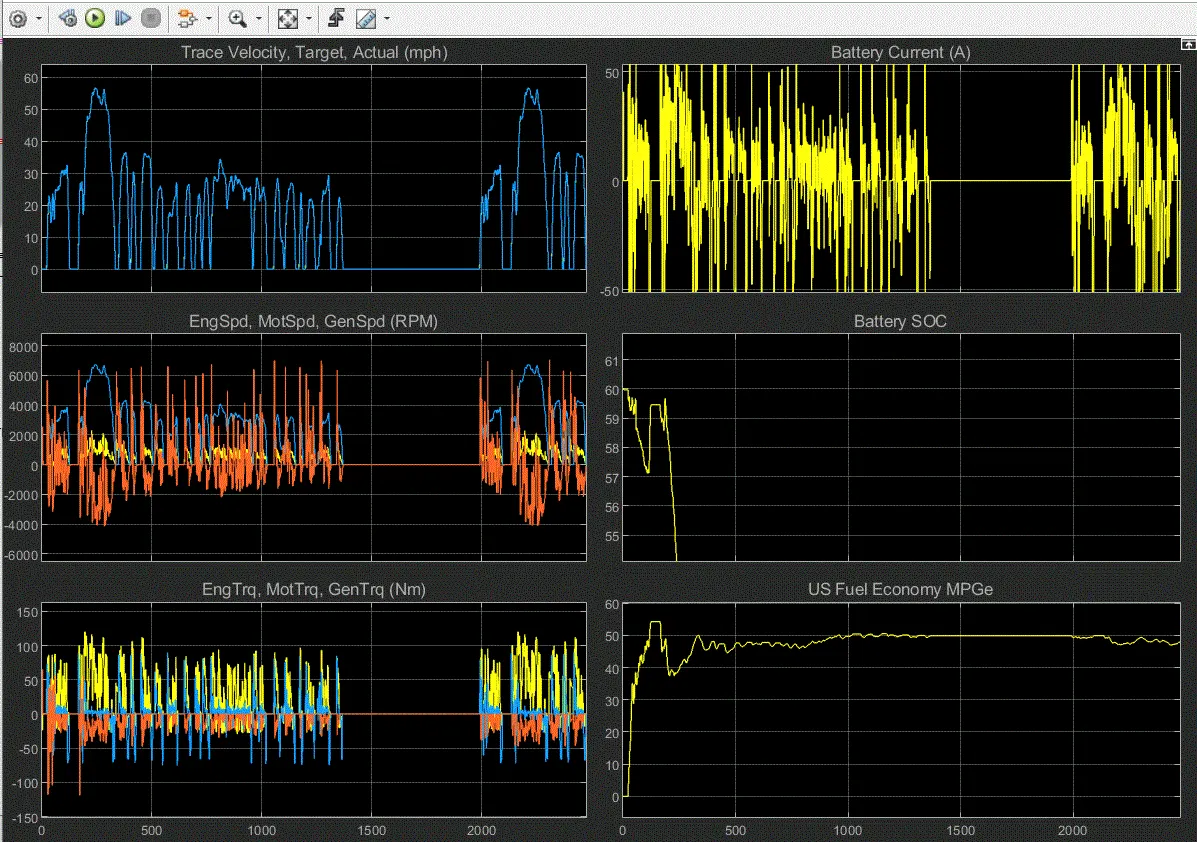
- The above-simulated output is an FTP cycle for the HEV vehicle where we can observe that battery current spiking and drowning throughout the cycle.
- When coming to the state of charge, the battery time-lapse is less i.e., nearly 245sec for the entire 2474sec.
- Here we can observe the economy of the vehicle with this driving cycle was very impressive when compared to the remaining cycles.
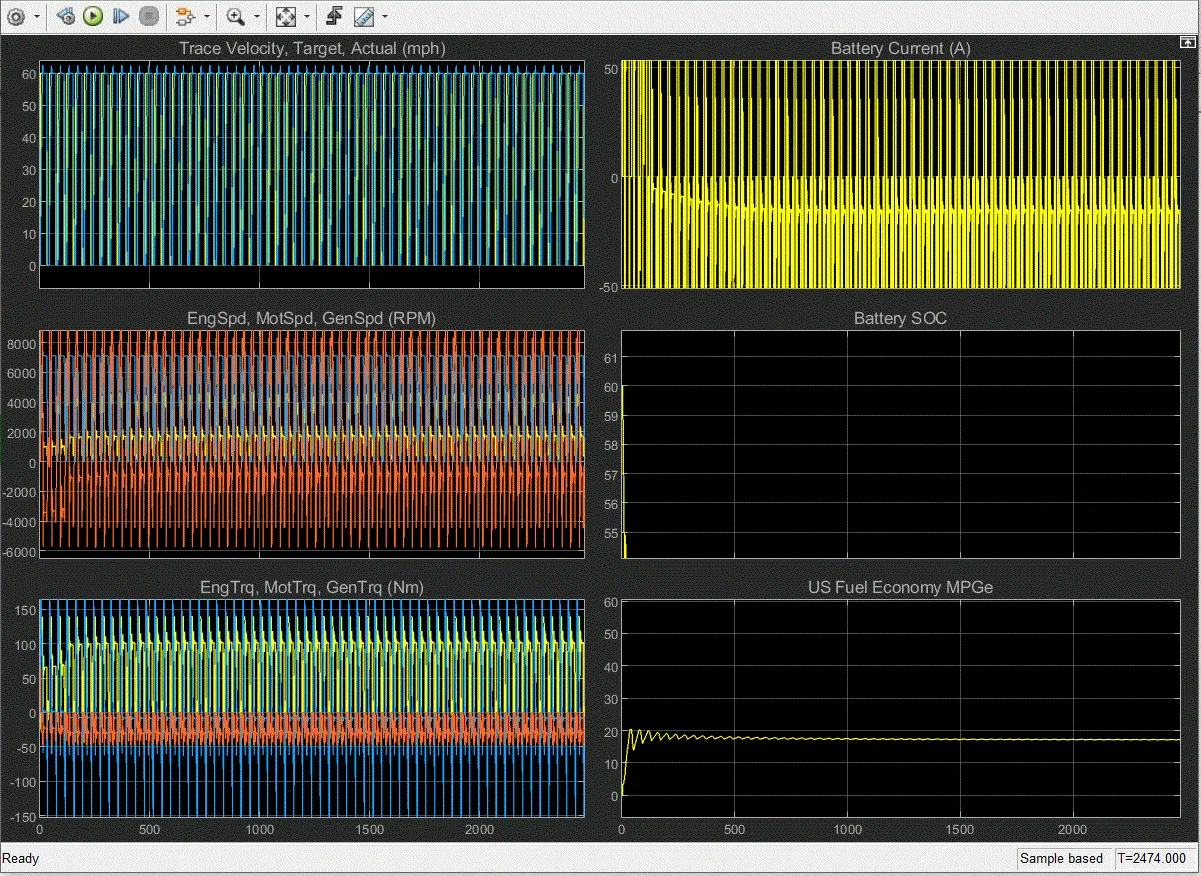
As it is a Wide Open Throttle(WOT) cycle the fuel(battery/fossil fuels) consumption will be very high, but this can be utilized when there is a need for full throttle or to attain maximum speeds.
- In this WOT cycle, we can observe that vehicle is drawing huge amounts of current but at a constant rate from the battery which depleted the SOC of the battery to a great extent i.e., 10-20sec of the full cycle.
- The economy of the vehicle was also very very less which denotes the less efficiency of the vehicle.
After changing the parameters to wind=9,gradeability=11 the results are:
- Here the battery current is drawn much but at a higher rate which depletes the vehicle performance to a great extent.
- Here we can also observe a further reduction in fuel economy.
4.
Here we are going to compare simulated results of Hybrid & Full Electric vehicle
For hybrid vehicles, the SOC and battery current drawn are very high because there will be a discrete operation of the battery and IC engine throughout the driving cycle. Where in the vehicle operation time the battery discharge is high and later-on they are charged to some extent while on the IC engine.
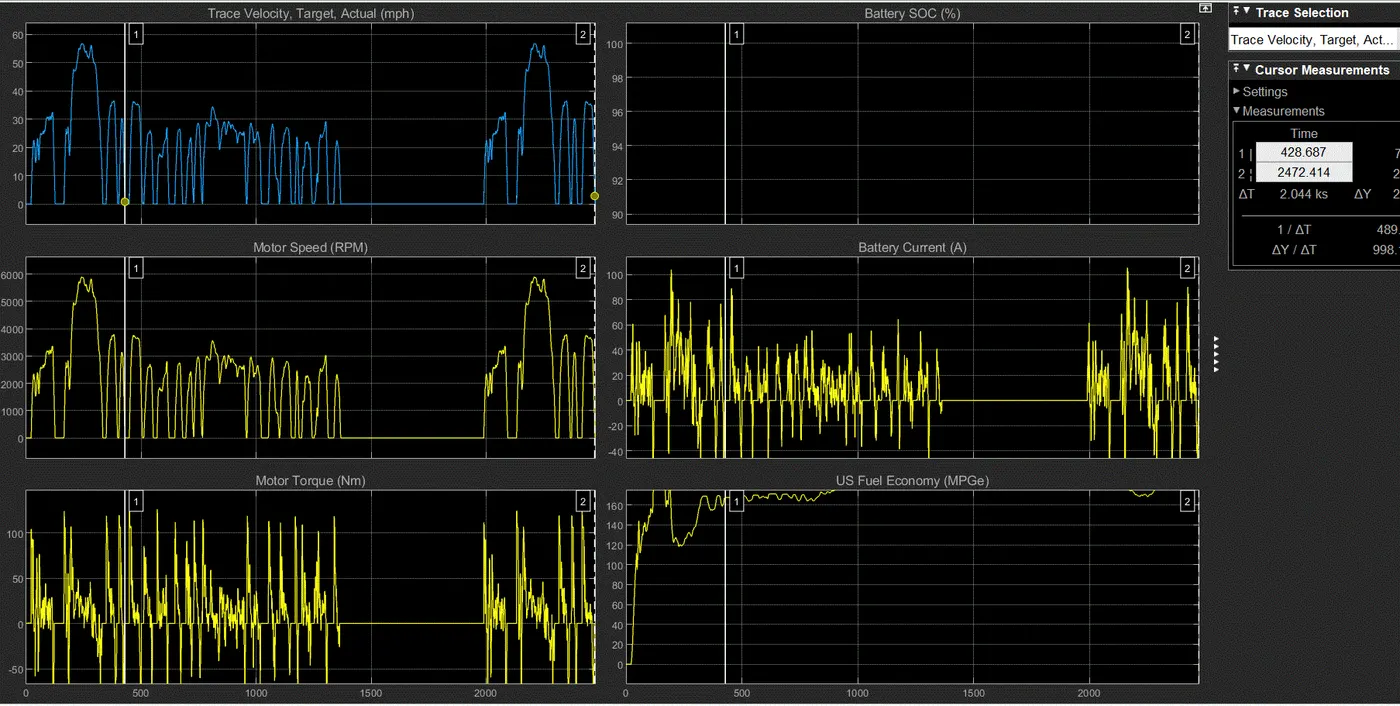
But here in a Full electric vehicle, the SOC is absent because the entire driving cycle is operated only by the electric battery and the charging is done only by regenerative braking(real-time) during vehicle operation.
Here we can observe a high fuel economy for this vehicle when compared to a hybrid electric vehicle.