Project 1 Mechanical design of battery pack
Aim: Battery pack capacity: 18 kWh
Cell: ANR26650M1-B
Prepare a detailed battery pack drawing along with its enclosure. State your assumptions.
Solution: Before designing the battery pack lets us know about battery pack.
Cell: A cell is a single unit device which converts chemical energy into electric energy.
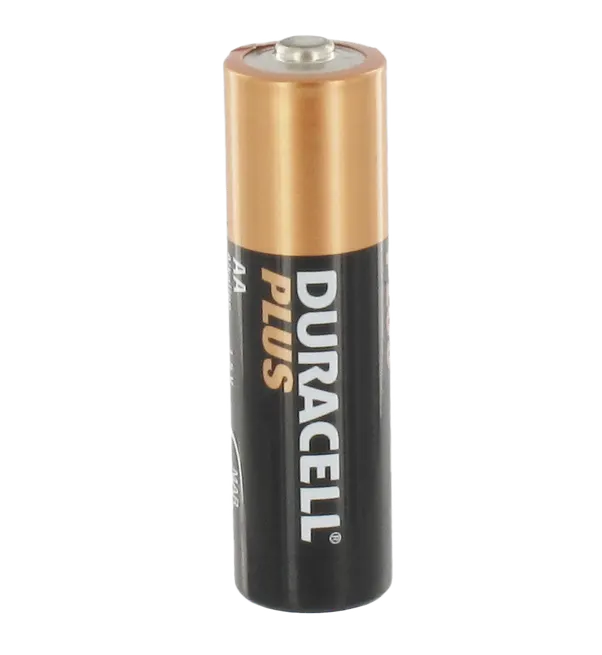
Battery: An electric battery is a source of electric power consisting of one or more electrochemical cell with external connections for powering electrical devices.
When a battery is supplying power, its positive terminal is the cathode and its negative terminal is the anode. The terminal marked negative is the source of electrons that will flow through an external electric circuit to the positive terminal. When a battery is connected to an external electric load, a redox reaction converts high-energy reactants to lower-energy products, and thefree energy difference is delivered to the external circuit as electrical energy.
Battery Pack: Battery pack is any number of battery connected in series and parallel to provide required power. Now a days the most common battery used to make battery pack is lithium ion battery due to ita high power density.
Now as we know what is battery pack, lets start the designing part.
To design the battery pack the cell that we have to use is ANR26650M1-B and the specification is shown below:
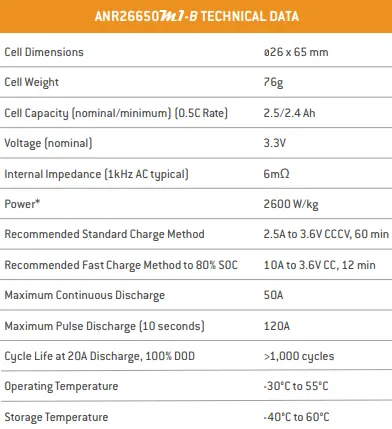
Step 1: First we need to calculate capacity provided by each cell from the data given in datasheet.
Capacity of each cell: Voltage(Nominal) * Current(Nominal)
: 3.3 V * 2.5 Ah
: 8.25 W
Step 2: Here we calculate the number of cells required to make this battery pack.
Number of cell: Total Capacity / Capacity of each cell
: 18000 / 8.25
: 2181 cells
Now for a safe side we will take few more cells than the calculated one.
Step 3: The EV in the market needs a voltage of 400 to 800 and few even more than it.
Assumption: The voltage required to run vehicle is 500 V.
Step 4: Calculating the number of cells connected in series.
In series connection the cell can get a higher voltage with same current capacity. The negative of one cell is connected to the positive of other cell.
Number of cells in series: Voltage to run vehicle / Voltage of each cell
: 500 / 3.3
: 152 cells
Step 5: Calculating the number of cells connected in parallel.
In parallel connection the cell can get a higher current with same voltage. The negative of one cell is connected to the negative of other cell.
Number of cells in parallel: Total number of cell / Number of cell in series
: 2181 / 152
: 15 cells
The battery pack configuration made is 152S15P
Step 6: Calculating the battery capacity
Battery capacity: Number of cell in parallel * Nominal current of each cell
: 15 * 2.5
: 37.5 Ah
Mechanical Design: The dimension of the cell is given below, from where we find the length, width, height of the battery pack.
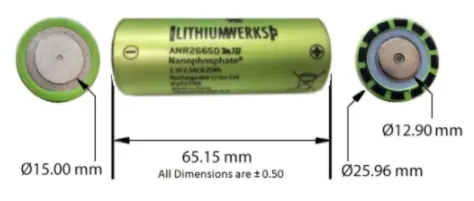
Length of Casing (L): Number of cells in series * (Cell diameter(26) + Cell margin at both side(4))+ clearance at side
: 152 * (26 + 4) + 60
: 4620 mm
Width of Casing (W): Number of cells in parallel * (Cell diameter(26) + cell margin at both side(4)) + clearance at side
: 15 * 30 + 60
: 510 mm
Height of Casing (H): Height of cell + wiring margin, holder margin
: 65 + 35
: 100 mm
Volume of casing: Length of casing * width of casing * height of casing
: 4.620 * 0.510 * 0.100
: 0.23562 m^3
Weight of battery pack:
Each cell weight: 76g
Number of cell used: 2280
Weight of battery pack: (Each cell weight * Number of cell used) + Weight of accessories
: ( 0.076 * 2280 ) + 10 Kg
: 183.28 Kg
Frame and holding the cell in battery pack:
Lego connector: This is a thing which helps to hold the cells together and thus form a battery pack of it. The figure below shows the image of lego connector. This connectorare so designed that the gap between two cell should be 1mm for cell vents.
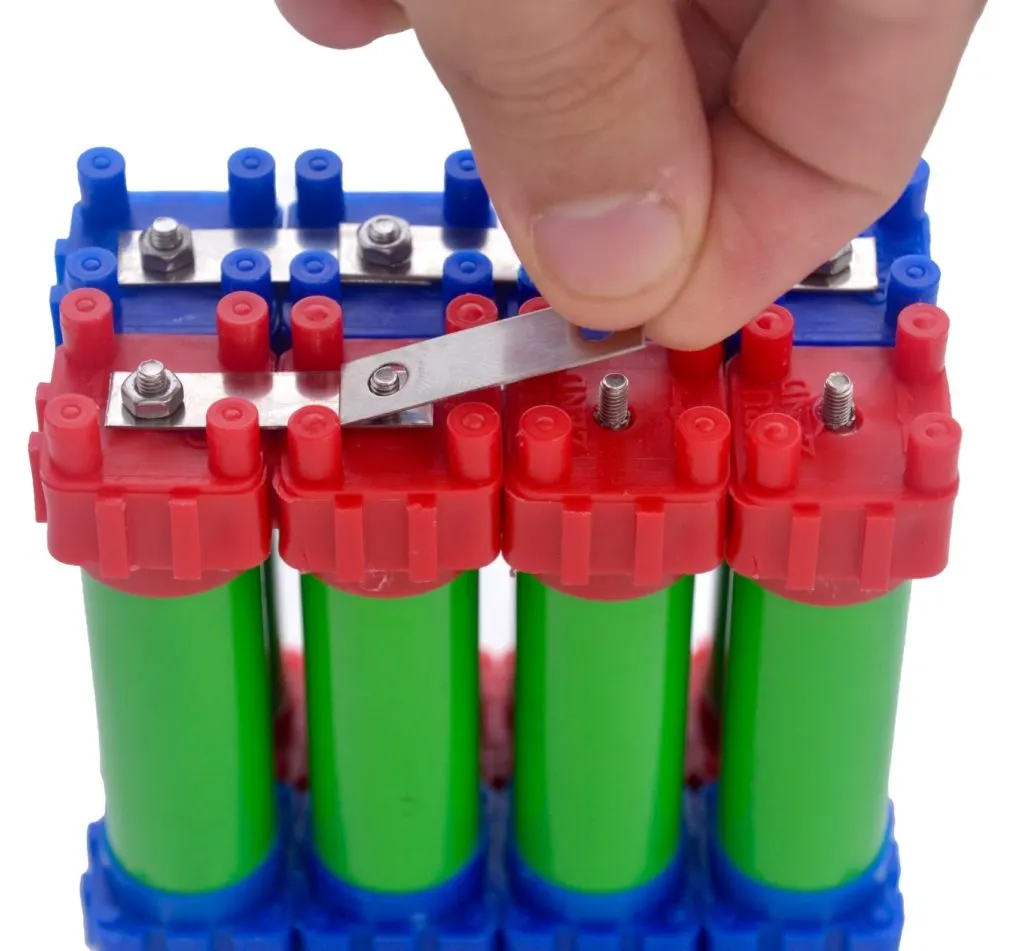
Nickel strip: Conductive metal strips are spot welded between all the cells of an electric bicycle battery pack. Nickel is the material of choice due to its low relative resistance and ease of spot welding. Steel is cheaper than nickel, which is why many vendors sell nickel coated steel strips. It brings the cost down, but at the expense of pack health. Because steel has higher resistance, the same size strips will heat up more, wasting energy from your pack. This not only cuts down on your range but also damages your battery by cooking it slowly over time with extra heat.
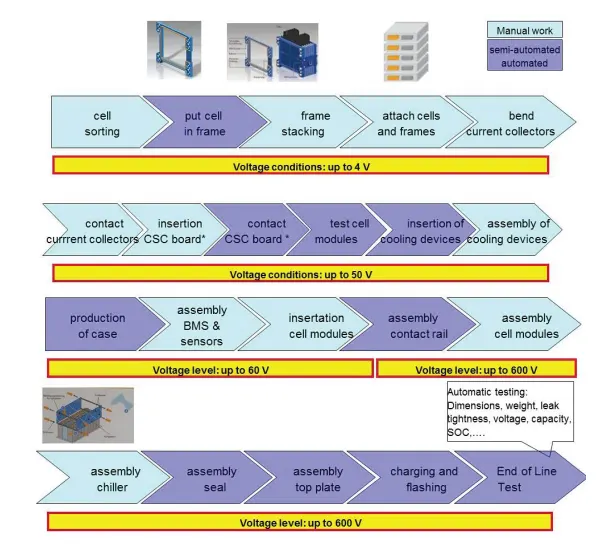
Below flow chart shows the complete design of battery pack:
Complete battery pack image: