Project 1 Mechanical design of battery pack
Q.Battery pack capacity: 18 kWh
Cell: ANR26650M1-B
Prepare a detailed battery pack drawing along with its enclosure. State your assumptions.
AIM:
To Battery pack capacity base on the required energy capacity.
OBJECTIVE:
To design a battery pack of capacity 18 kWh using cell: ANR26650M1-B
INTRODUCTION:
A battery pack is a set of batteries connected in series & parallel batteries.
To build a battery pack, cell configuration, battery pack structure, battery system control should be considered based on the application of the battery pack.
DESIGN CONSIDERATIONS:
The important factors to consider while building a battery pack are as follows:
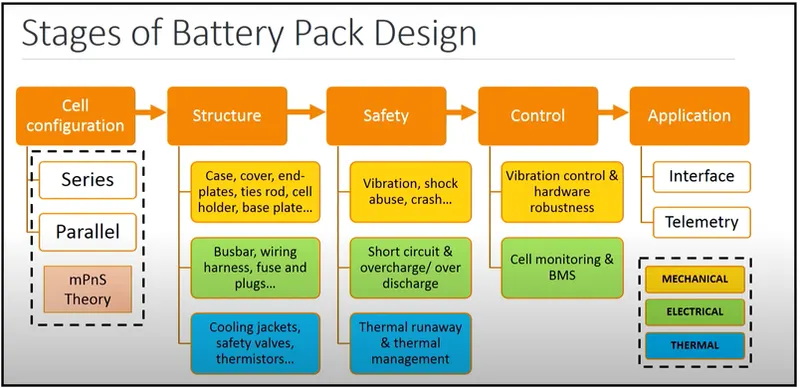
i.Electrical Design:
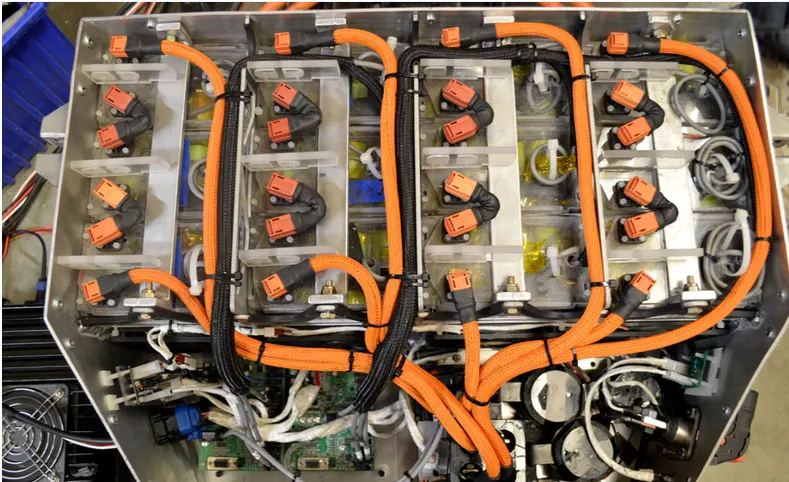
Electrical Design is done to achive the following:
*Calculate voltage & current based on the required capacity.
*Isolation of cells experiencing high voltage.
*Power delivered must be sufficient for the application making the battery efficient.
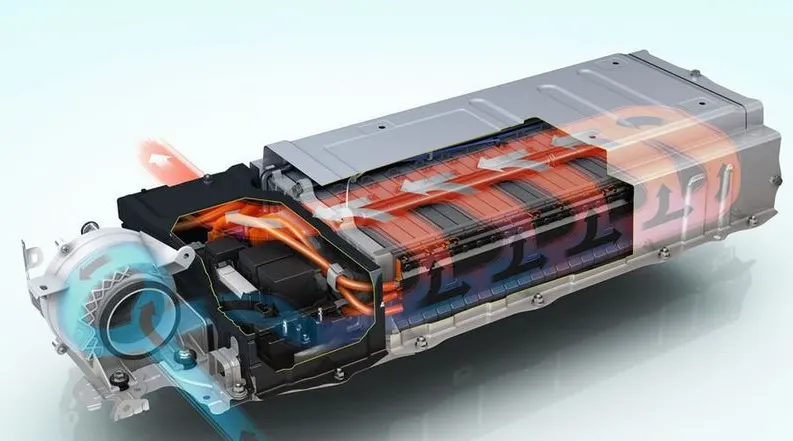
ii.Thermal Design:
Thermal Design is done to reduce thermal runaway which helps in improving the following:
* Pack efficiency
*Reduce thermal accidents
*Increase pack life
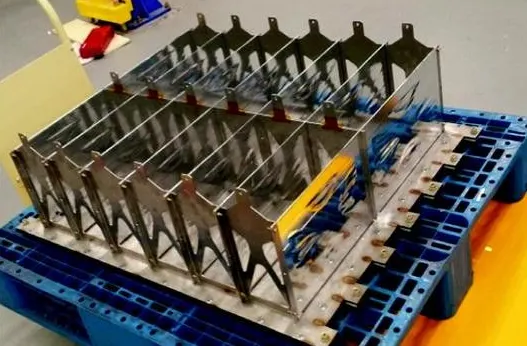
iii.Mechanical design:
Mechanical design is done to establish the following:
*Design safe structure to withstand extreme conditions
*Increase reliability, production & reduce cost
*Easness to assemble & service the pack
*Compactness, lightness of weight & aesthetic should be improved.
iv.Battery Management System(BMS):
BMS is used to control the following:
*Safe operating limits of battery pack is maintained using electronic control hardware & software.
*BMS is used o record analyse & predict the data.
BATTER PACK CONSTRUCTION:
Battery pack is constructed considering the following:
A.Capacity & Voltage Requirement:
The voltage of the battery is the voltage of single cell multiplied to the number of cells connected in series in a branch.
The number of cells in series connection doesn’t influence in changing the capacity of the battery.
The current rating of the battery is the ampere hour rating of a single cell multiplied to the number of branches connected in parallel in a pack.
The number of cells in parallel connection doesn’t influence in changing the voltage of the battery.
The power capacity (Wh) of the battery pack is determined by multiplying he total voltage (V) and current capacity (Ah)
Cell of same cell chemistry & capacity should be used
B.CELL CONFIGURATION
A cell configuration is done by using “N1-A1-A2-A3-N2-N3-N4” naming
N1 is the number of cells used in series.
A1 shows the negative terminal of the battery
A2 shows the positive terminal of the battery
A3 shows the shape of the battery
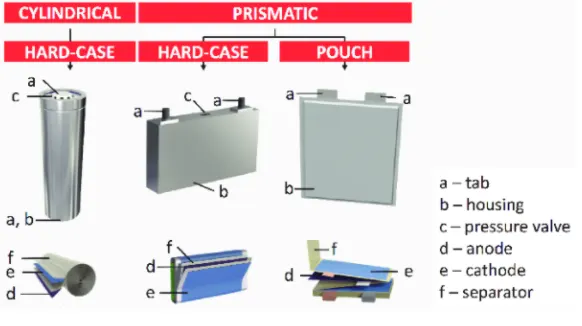
Generally cylindrical (C) & prism (P) shaped batteries are used. Cylindrical cells are preferred as they provide simple cooling option for high capacity batteries.
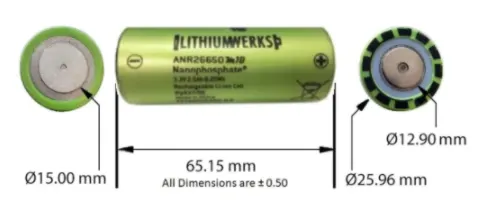
N2 shows the diameter of the battery
N3 shows the width of the battery
N4 shows the height of the battery
The orientation of the cell is made in such a way that the interconnections of the cells is reduced.
C.BATTERY ELECTRONICS:
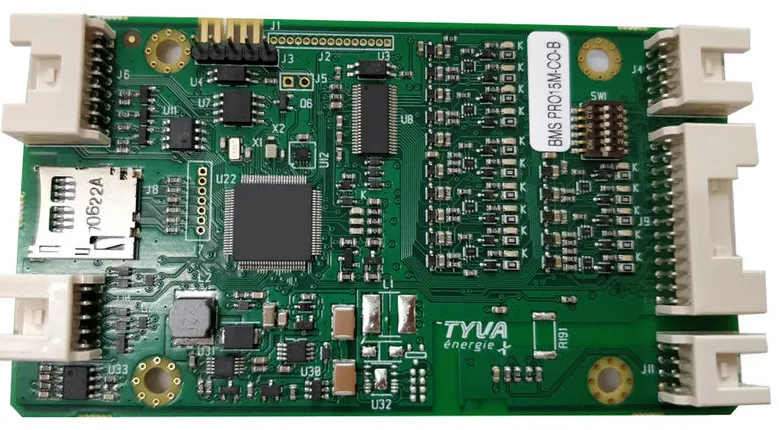
Electronics in a battery pack are implemented to maintain cell balance & communicate function of the cell.
Monitoring circuits, protection devices & circuits, indication lights & fuel gauges are involved.
Battery pack is designed with space for Electrical distribution system.
In this softwares are used for setting protection limits, determine SOC of battery, communicate the battery status.
D.INTERNAL CONNECTIONS:
Inter-connecting strips, generally Nickel strips are used to make series & parallel connections. Modern computer controlled resistor welders are used weld these nickel strips between the cells. They provide stronger joints with low resistance.
Copper bus straps are used in the case of high power cells.
Flexible PCBs are also can used which are cost effective.
E.EXTERNAL CONNECTIONS:
Current to be carried out of the circuits and its frequency are considered for choosing the material for external connection.
Gold plated contacts or flying leads are used for low power circuits, as they don’t oxidize & have low contact resistance.
Metal tabs are used for high power circuits as they are highly reliable.
F.BATTERY CASING:
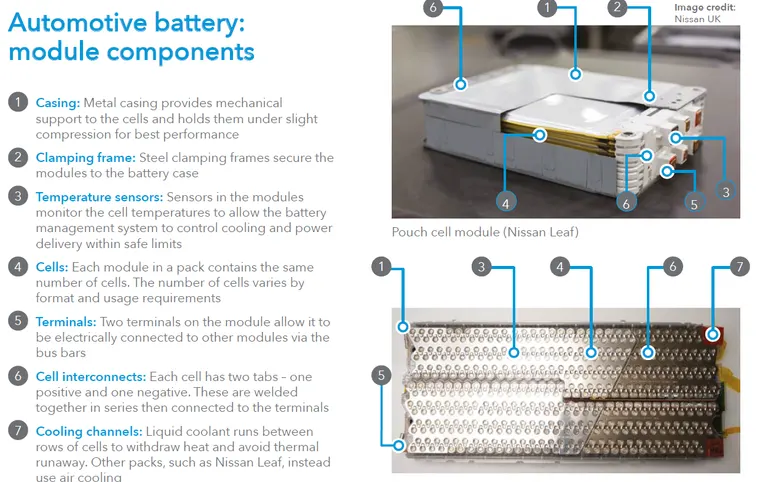
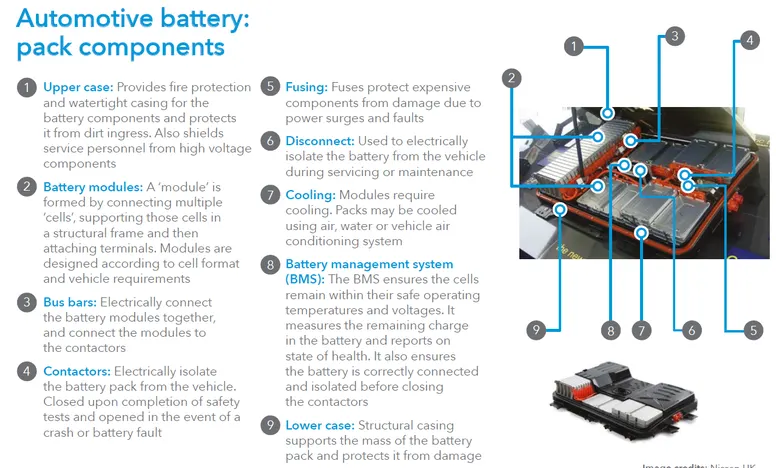
Battery casing is designed in such a way to accommodate the battery pack configuration and Electrical distribution system and interface both mechanical & electrical components.
For small batteries, vacuum formed or shrink wrap are used they are simple & cost effective.
Injection moulded plastics are used for more precision packs.
Weight, size & cost are also main considerations.
Overmoulding can be used to encapsulate small component.
Acrylonitrile butadiene styrene (ABS) thermoplastic when high precision & tolerance major requirements.
Battery casing must withstand vibration, thermal conditions, physical forces & accidental damages
It must also protect he electronics from extreme temperatures, water ingress & humidity.
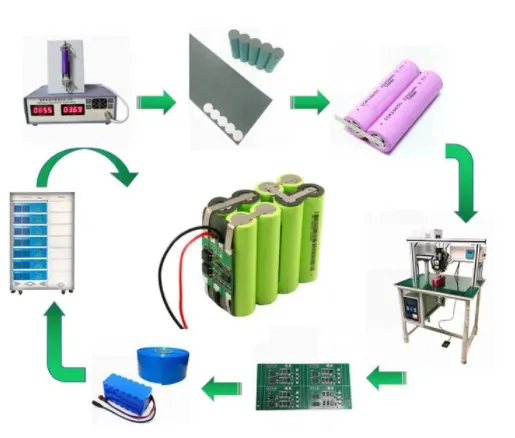
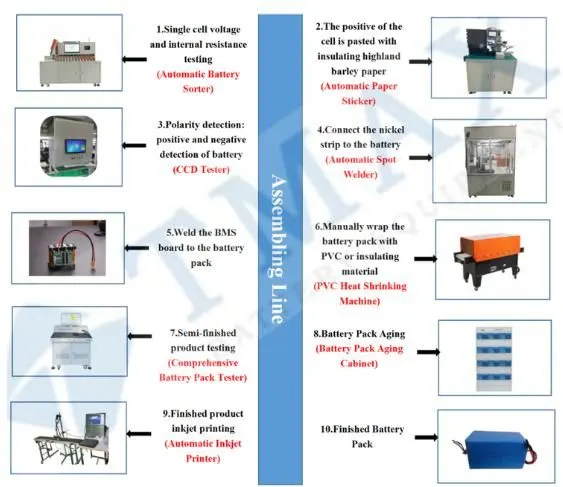
Battery assembly line is shown in the picture below:
MECHANICAL DESIGN:
Required capacity = 18 kW
Required cell specification = ANR26660M1B
Considering the data from below datasheet (also attached)
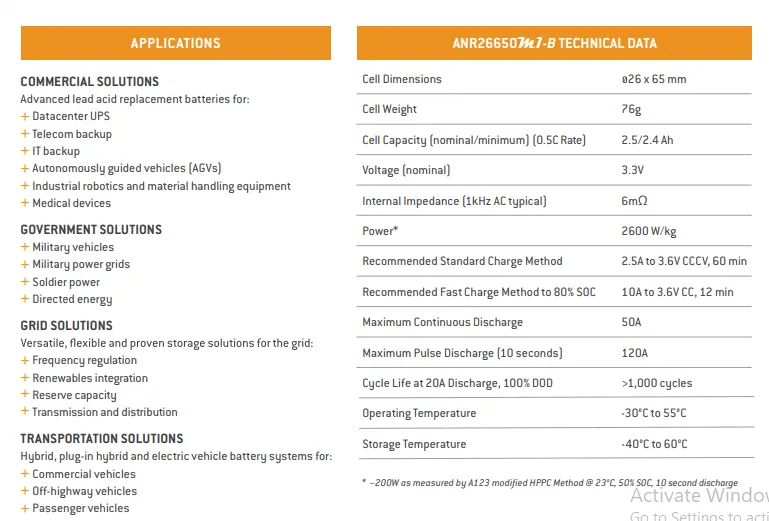
*Nominal cell voltage - 3.3 V
*Nominal cell capacity – 2.5 Ah
*Weight of the cell = 76 g
*Diameter of the cell = 26 mm
*Height of the cell = 65 mm
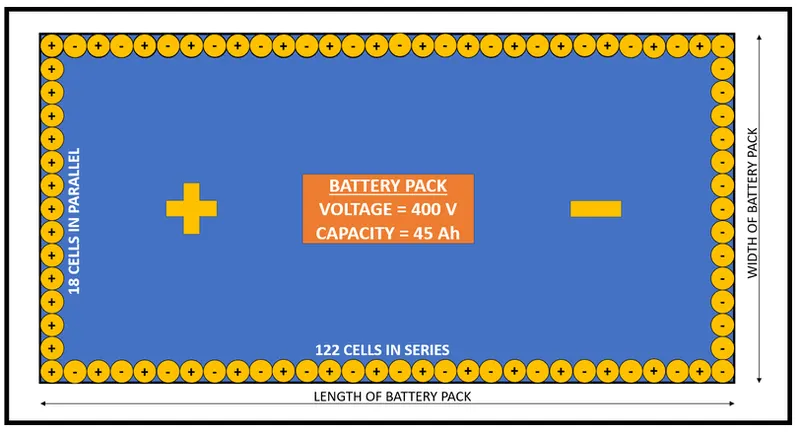
>>Considering a battery pack of 400 V
>>We know that P=IV
>>Therefore Battery pack capacity (Ah) = Battery pack energy capacity (Wh) / pack voltage
= 18000 / 400 = 45 Ah
>>No of cells in series = Battery pack voltage / Per cell voltage = 400 / 3.3 = 122 cells in series
>>No of branches in parallel = Battery pack capacity (Ah) / Per cell capacity = 45 / 2.5 = 18 branches in parallel
>>Total number of cell = No of cells in series * No of branches in parallel = 122 * 18 = 2196 cells
>>Weight of Battery pack = Total number of cell * Weight of single cell = (2196 * 76 )/1000 =167Kg
>>Length of battery pack = No of cells in series * Cell diameter = 122 * 0.026 = 3.172 m
>> Width of battery pack = No of branches in parallel * Cell diameter = 18 * 0.026 = 0.468 m
>>Area of battery pack = Length of battery * Width of battery pack = 3.172 * 0.468 = 1.485 m2
>>Volume of battery pack = Area of battery pack * cell height = 1.485 * 0.065 = 0.0965 m3 = 96L
>>Specific energy density = Battery pack capacity (Ah) / Weight of Battery pack = 18000/167 = = =107.78 Wh/Kg
>> Volumetric energy density = Battery pack capacity (Ah) / Volume of Battery pack =18000 / 96.5 = 186.53 Wh/L
CONCLUSION:
Thus designed a battery pack of capacity 18 kWh using cell: ANR26650M1-B.