Project 1 Mechanical design of battery pack
AIM: Mechanical Design of Battery Pack
OBJECTIVES:
- Design a battery pack with capacity of 18 kWh by considering the ANR26650M1-B model cell
- Explain the assembly process of battery pack
Battery pack capacity: 18 kWh
Cell: ANR26650M1-B
Prepare a detailed battery pack drawing along with its enclosure. State your assumptions.
Vehicle design is a very complex domain since it involves a lot of attributes, like: interior space, dynamic performance, active and passive safety, connectivity, etc. The same principles apply to either electric vehicles or conventional vehicles (with internal combustion engines) design.
Pure electric vehicles, also called battery electric vehicles (BEV), are the long-term solution for mobility. Compared with internal combustion engine (ICE) powered vehicles, battery electric vehicles have a series of advantages.
A battery consists of one or more electrochemical cells (battery cells) which are converting chemical energy into electrical energy (during discharging) and electrical energy into chemical energy (during charging). The type of elements contained within a battery and the chemical reactions during discharging-charging events define the chemistry of a battery. The high voltage battery it is one of the most important components of a battery electric vehicle (BEV)
A battery cell consists of five major components: electrodes (anode and cathode), separators, terminals, electrolyte and a case or enclosure.
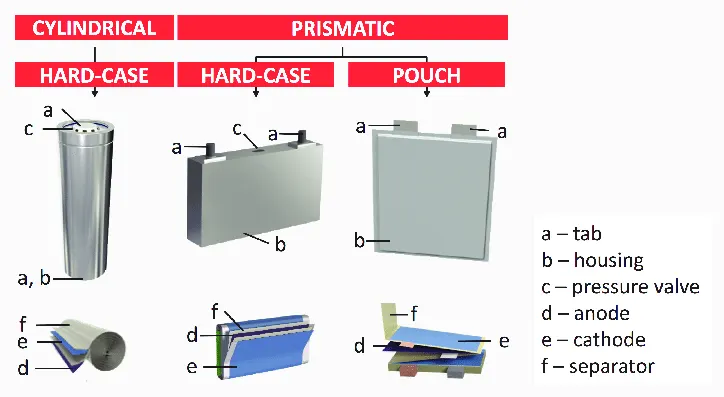
Individual battery cells are grouped together into a single mechanical and electrical unit called a battery module. The modules are electrically connected to form a battery pack.
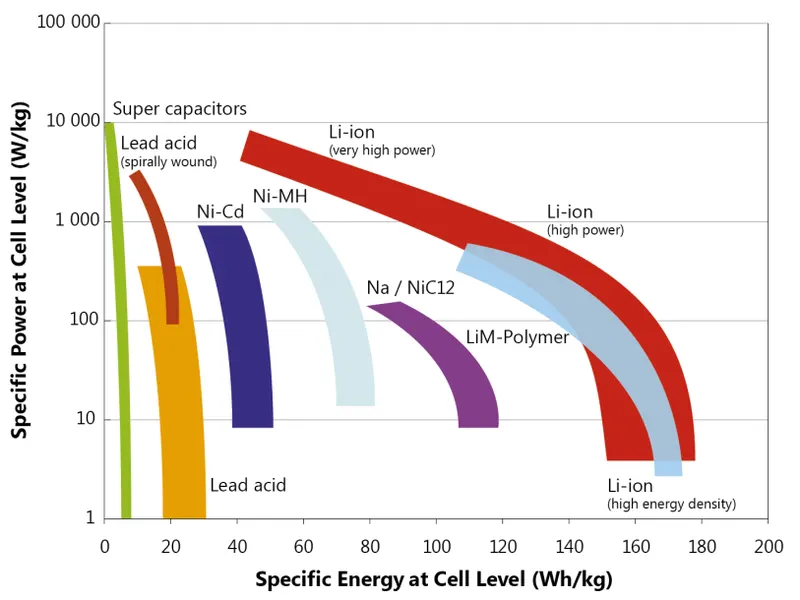
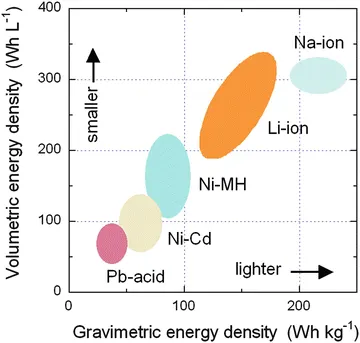
There are several types of batteries (chemistry) used in hybrid and electric vehicle propulsion systems but we are going to consider only Lithium-ion cells. The main reason is that Li-ion batteries have higher specific energy [Wh/kg] and specific power [W/kg] compared with other types of batteries.
Specific Power Vs Specific Energy
Volumetric energy density Vs Gravimetric energy density
Battery Pack Architecture
All high voltage battery packs are made up from battery cells arranged in strings and modules. A battery cell can be regarded as the smallest division of the voltage. Individual battery cells may be grouped in parallel and series as modules. Further, battery modules can be connected in parallel and series to create a battery pack. Depending on the battery parameters, there may be several levels of modularity.
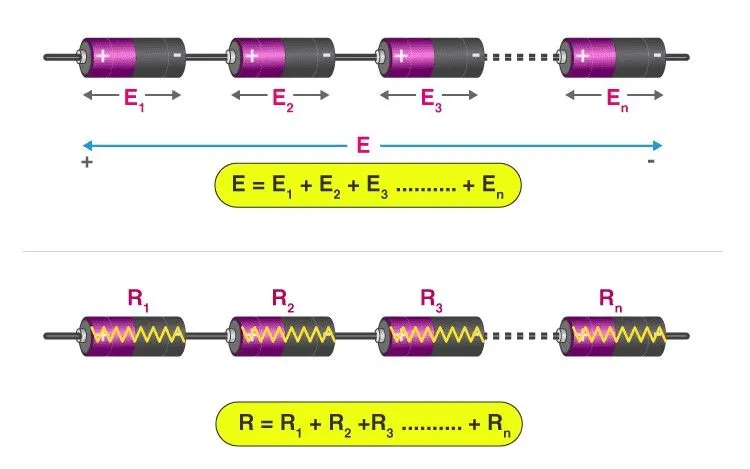
Total battery pack voltage is determined by the number of cells connected in series. For example, the total (string) voltage of 4 cells connected in series will be the sum of their individual voltage. In series connection current in the cells will be constant.
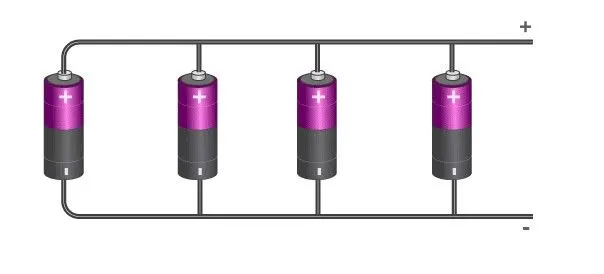
In order to increase the current capability, the battery capacity, more strings have to be connected in parallel. For example, 4 cells are connected in parallel will increase the capacity and current capability of the battery pack 4 times. In parallel connection voltage in the cells will be constant.
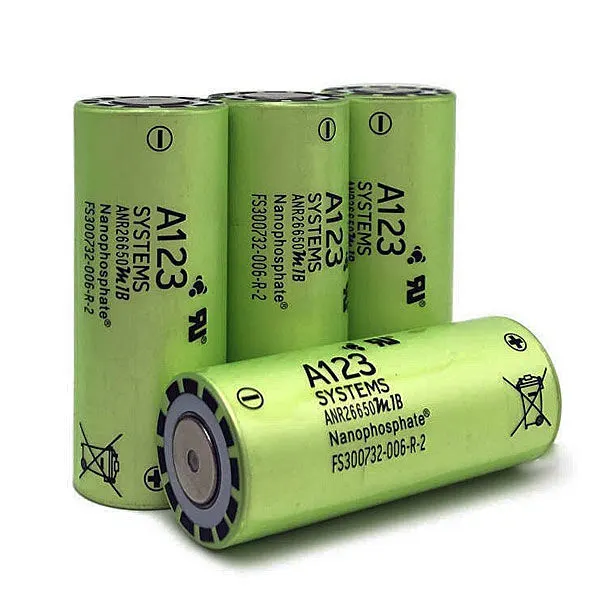
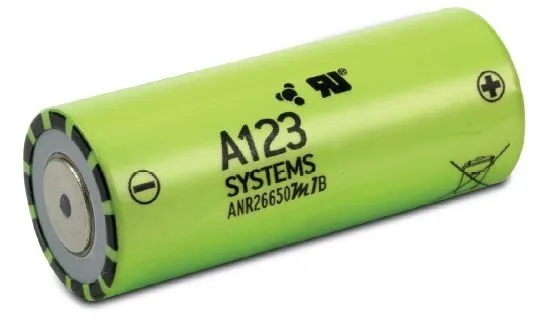
ANR26650M1-B (Nano-phosphate high power Li-ion cell)
A123’s high-performance Nano-phosphate® lithium iron phosphate (LiFePO4) battery technology delivers high power and energy density combined with excellent safety performance and extensive life cycling in a lighter weight, more compact package. These cells have low-capacity loss and impedance growth over time as well as high usable energy over a wide state of charge (SOC) range, allowing the systems to meet end-of-life power and energy requirements with minimal pack oversizing.
Technical Data
Cell Dimensions : 26 x 65 mm
Cell Weight : 76g
Cell Capacity (nominal/minimum) (0.5C Rate) : 2.5/2.4 Ah
Voltage (nominal) : 3.3V
Internal Impedance (1kHz AC typical) : 6m-ohm
Power : 2600 W/kg
Recommended Standard Charge Method : 2.5A to 3.6V CCCV, 60 min
Recommended Fast Charge Method to 80% SOC : 10A to 3.6V CC, 12 min
Maximum Continuous Discharge : 50A
Maximum Pulse Discharge (10 seconds) : 120A
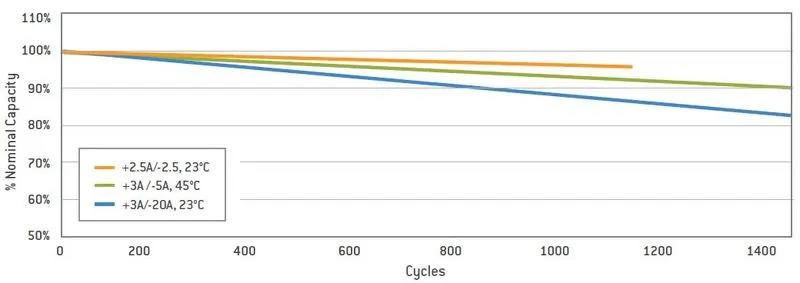
Cycle Life at 20A Discharge, 100% DOD : >1,000 cycles
Operating Temperature : -30°C to 55°C
Storage Temperature : -40°C to 60°C
Constant Power Discharge Characteristics at 23°C
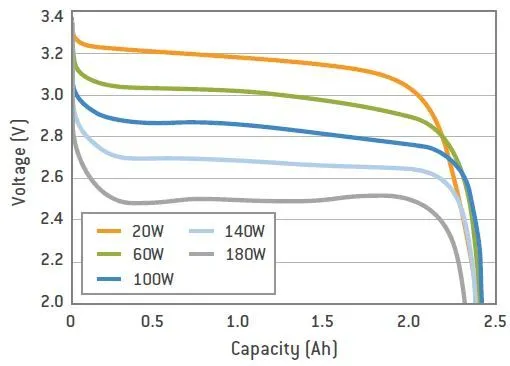
When the constant power increases while discharging, cell voltage and capacity is decreasing.
2.5C Constant Current Discharge at Various Temperatures
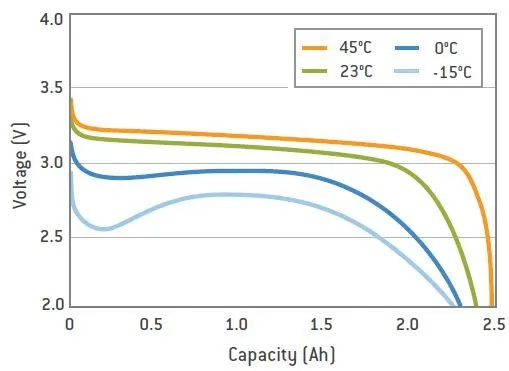
The cell should be maintained at moderate temperatures for better functioning. When we discharge the cell at constant current from temperature 450C to -150C, performance of the cell is decaying.
Cycle Life Performance, 100% DOD, Various Temperatures and Discharge Rates
Applications of ANR26650M1-B model cell
COMMERCIAL SOLUTIONS
Advanced lead acid replacement batteries for:
- Datacentre UPS
- Telecom backup
- IT backup
- Autonomously guided vehicles (AGVs)
- Industrial robotics and material handling equipment
GOVERNMENT SOLUTIONS
- Military vehicles
- Military power grids
- Soldier power
- Directed energy
GRID SOLUTIONS
- Frequency regulation
- Renewable’s integration
- Reserve capacity
- Transmission and distribution
TRANSPORTATION SOLUTIONS
Hybrid, plug-in hybrid and electric vehicle battery systems for:
- Commercial vehicles
- Off-highway vehicles
- Passenger vehicles
Battery Pack Calculations (Electrical)
Based on the cell parameters provided by the manufacturers, we can calculate the energy content, volume, gravimetric density and volumetric density, Number of cell in series, Energy content in the string, Battery pack capacity, Number of cells in parallel, Battery pack energy, Total number of cell in the battery pack, String (Parallel) peak current, Battery pack peak current, Battery pack peak power, String (parallel) continuous current, Battery pack continuous current, Battery pack continuous power, Actual Battery Pack Total Energy.
Battery Pack Total Energy (Ebp) = 18KWh
Nominal Battery Pack Voltage (Vbp) = 240V
Volume of Cylindrical Cells (Vcc) - m3
Vcc=(πD2bc) *Lbc / 4
where:
Dbc - battery cell diameter [m]
Lbc – battery cell length [m]
Vcc = (π*0.0262) *0.065 / 4
Vcc = 3.451*10-5 m3
Energy of battery cell (Ebc) - Wh
Ebc = Cbc*Vbc
where:
Cbc – battery cell capacity [Ah]
Vbc – battery cell voltage [V]
Ebc = 2.5*3.3
Ebc = 8.25 Wh
Battery cell energy density (Volumetric and Gravimetric)
Volumetric energy density (Uv) - Wh/m3
Uv = Ebc / Vcc
Uv = 8.25 / 3.451*10-5
Uv = 239061.1417 Wh/m3
Gravimetric energy density (Ug) - Wh/kg
Ug=Ebc / Mbc
where:
Mbc – battery cell mass [kg]
Ug = 8.25 / 0.076
Ug = 108.55 Wh/kg
Number of battery cells connected in series (Ncs)
Ncs = Vbp / Vbc
where:
Vbp - nominal battery pack voltage [V]
Vbc - voltage of each battery cell [V]
Ncs = 240 / 3.3
Ncs = 72.72
We can consider 73 cells are connected in series.
Energy content of a string (Series) (Ebs) – Wh
Ebs = Ncs*Ebc
where:
Ncs - battery cells connected in series
Ebc - energy of a battery cell [Wh]
Ebs = 73*8.25
Ebs = 602.25 Wh
Battery Pack Capacity (Cbp) – Ah
Cbp = Ebp / Vbp
Where:
Ebp - Battery Pack Total Energy [Wh]
Vbp - Nominal Battery Pack Voltage [V]
Cbp = 18000 / 240
Cbp = 75 Ah
Number of battery cells connected in Parallel (Ncp)
Ncp = Cbp / Cbc
Where:
Cbp - Battery Pack Capacity [Ah]
Cbc – battery cell capacity [Ah]
Ncp = 75 / 2.5
Ncp = 30 cells
Battery pack total energy (Ebp) - Wh
Ebp = Vbp*Cbp
Where:
Vbp – Nominal Voltage of battery pack [V]
Cbp – Battery pack capacity [Ah]
Ebp = 240*75
Ebp = 18000 Wh
Total number of cells of the battery pack (Ncbp)
Ncbp = Ncs*Ncp
Where:
Ncs - Number of battery cells connected in series
Ncp - Number of battery cells connected in Parallel
Ncbp = 73*30
Ncbp = 2190 Cells
String (Parallel) peak current (Ispc) - A
Ispc = C-ratebcp*Cbc
Where:
C-ratebcp - peak C-rate of the battery cell [h-1]
Peak Current / Capacity of Cell = 120/5 = 24 C
Cbc - battery cell capacity [Ah]
Ispc = 24*2.5
Ispc = 60A
Battery pack peak current (Ibpp) - A
Ibpp = Ispc*Ncp
where:
Ispc - string peak current [A]
Ncp - number of strings (Parallel) of the battery pack
Ibpp = 60*30
Ibpp = 1800A
Battery pack peak power (Pbpp) - W
Pbpp=Ibpp*Vbp
Where:
Ibpp - battery pack peak current [A]
Vbp - battery pack voltage [V]
Pbpp = 1800*240
Pbpp = 432000W = 432KW
String (parallel) continuous current (Iscc) - A
Iscc=C-ratebcc*Cbc
Where:
C-ratebcc - continuous C-rate of the battery cell [h-1]
Continuous cell current / Capacity of Cell = 50 / 5 = 10 C
Cbc - battery cell capacity [Ah]
Iscc = 10*2.5
Iscc = 25A
Battery pack continuous current (Ibpc) - A
Ibpc=Iscc*Ncp
Where:
Iscc – string (parallel) continuous current [A]
Ncp - number of strings (Parallel) of the battery pack
Ibpc = 25*30
Ibpc = 750A
Battery pack continuous power (Pbpc) - W
Pbpc=Ibpc*Vbp
Where:
Ibpc - battery pack continuous current [A]
Vbp - battery pack voltage [V]
Pbpc = 750*240
Pbpc = 180000 W = 180 KW
Actual Battery Pack Total Energy (Eabp) – Wh
Eabp = Ncp*Ebs
Where:
Ncp - number of strings (Parallel) of the battery pack
Ebs - Energy content of a string (Series) [Wh]
Eabp = 30*602.25
Eabp = 18067.5 Wh = 18.0675 Kw
Battery Pack Calculations (Mechanical)
The mass and size of the high voltage battery are very important parameter to consider when designing a battery electric vehicle (BEV). Now we are going to calculate the total mass of the battery pack including with the additional attachments.
Battery pack mass (cells only) (Mbp) - kg
Mbp=Ncbp*Mbc
where:
Ncbp - total number of cells
Mbc - mass of each battery cell [kg]
Mbp = 2190*0.076
Mbp = 166.44 Kg
Calculating the overall weight of the battery system which includes Battery Cells, Cooling system, housing, Cell connectors, Passive components and BMS. In this battery system 65% of the weight belongs to the battery cells remaining weight of 35% will be shared by the other components.
Battery system weight (Mbs) – Kg
Mbs = Mbp + (Mbp*0.35)
Where:
Mbp - Battery pack mass (cells only) – kg
Mbs = 166.44+(166.44*0.35)
Mbs = 166.44+58.254
Mbs = 224.694 Kg
Now we are going to calculate the volume of the battery pack considering only the battery cells.
Volume of the battery pack (cells only) Vbp - m3
Vbp=Ncbp*Vcc
Where:
Ncbp - total number of cells
Vcc - mass of each battery cell [m3]
Vbp = 2190*3.451*10-5
Vbp = 0.07553 m3
Actual Volume of the battery pack
The volume occupied by a cylindrical cell must take into account of air gap between cells, clearance at sides and number of cells.
Volume = Length*Breadth*Height
Length of Casing (Lc)
Length = Number of cells connected in series * (Cell diameter + Margin at both sides of the cell) + Clearance at Sides of the casing.
Lc = 73 * (26+4) + 50
Lc = 2240 mm = 2.24m
Breadth of Casing (Bc)
Breadth = Number of cells connected in parallel * (Cell diameter + Margin at both sides of the cell) + Clearance at Sides of the casing.
Bc = 30 * (26+4) + 50
Bc = 950 mm = 0.95 m
Height of casing (Hc)
Height = Height of cell + Margin for wiring
Hc = 65 + 35
Hc = 100 mm = 0.1 m
Actual Volume of the battery pack (Vabp) - m3
Vabp = Lc*Bc*Hc
Where:
Lc – Length of casing [m3]
Bc – Breadth of casing [m3]
Hc – Height of casing [m3]
Vabp = 2.24*0.95*0.1
Vabp = 0.2128 m3
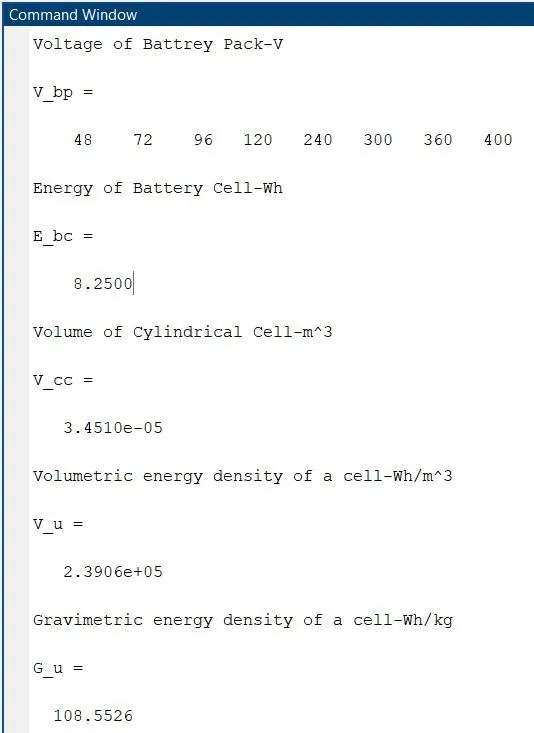
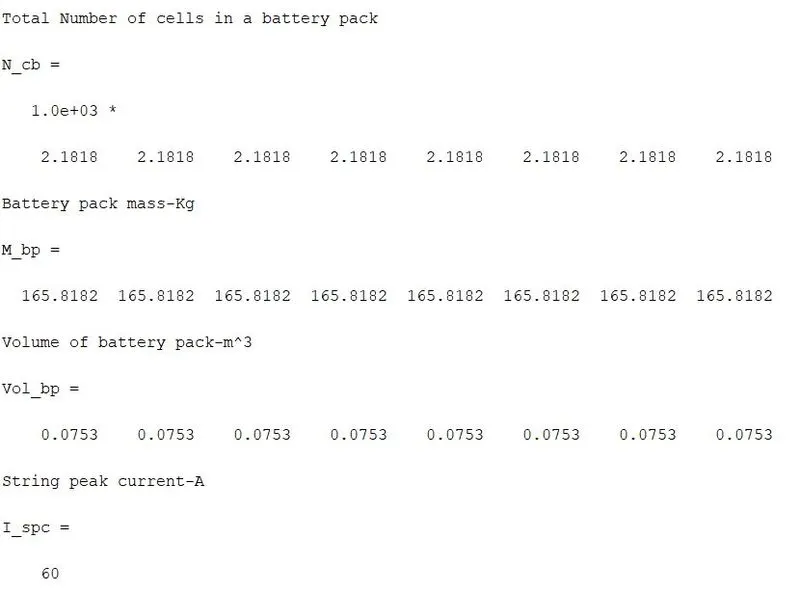
Implemented all the above formulas in MATLAB script file
clear all
close all
clc

Wc=0.076;   % Cell Weight - Kg
Cc=2.5;     % Cell Capacity-Ah
Vc=3.3;     % Cell Voltage-V
Pc=2600;    % Cell Power-wh/kg
Dc=0.026;   % Cell Diameter-m
Lc=0.065;   % Cell Length-m
Crate_bcp=24;  % Peak C-rate of battery cell
Crate_bcc=10;  % Continuous C-rate of battery cell

disp('Voltage of Battrey Pack-V')
V_bp=[48,72,96,120,240,300,360,400]  % Voltage of Battrey Pack-V

disp('Energy of Battery Cell-Wh')
E_bc = Vc*Cc        % Energy of Battery Cell-Wh

disp('Volume of Cylindrical Cell-m^3')
V_cc = (3.141592/4)*(0.026)^2*0.065  % Volume of Cylindrical Cell-m^3

disp('Volumetric energy density of a cell-Wh/m^3')
V_u = E_bc/V_cc     % Volumetric energy density of a cell-Wh/m^3

disp('Gravimetric energy density of a cell-Wh/kg')
G_u = E_bc/Wc       % Gravimetric energy density of a cell-Wh/kg

disp('Total Battery pack energy-Wh')
E_bp = 18000        % Total Battery pack energy-Wh

disp('Number of cells connected in series')
N_cs = V_bp/Vc      % Number of cells connected in series

disp('Energy content of a string-Wh')
E_bs = N_cs*E_bc    % Energy content of a string-Wh

disp('Number of string of the Battery pack(Parallel)')
N_sb = E_bp./E_bs    % Number of string of the Battery pack(Parallel)

disp('Battery pack Capacity-Ah')
C_bp = N_sb*Cc      % Battery pack Capacity-Ah

disp('Total Number of cells in a battery pack')
N_cb = N_sb.*N_cs    % Total Number of cells in a battery pack

disp('Battery pack mass-Kg')
M_bp = N_cb*Wc      % Battery pack mass-Kg

disp('Volume of battery pack-m^3')
Vol_bp = N_cb*V_cc  % Volume of battery pack-m^3

disp('String peak current-A')
I_spc = Crate_bcp*Cc % String peak current-A

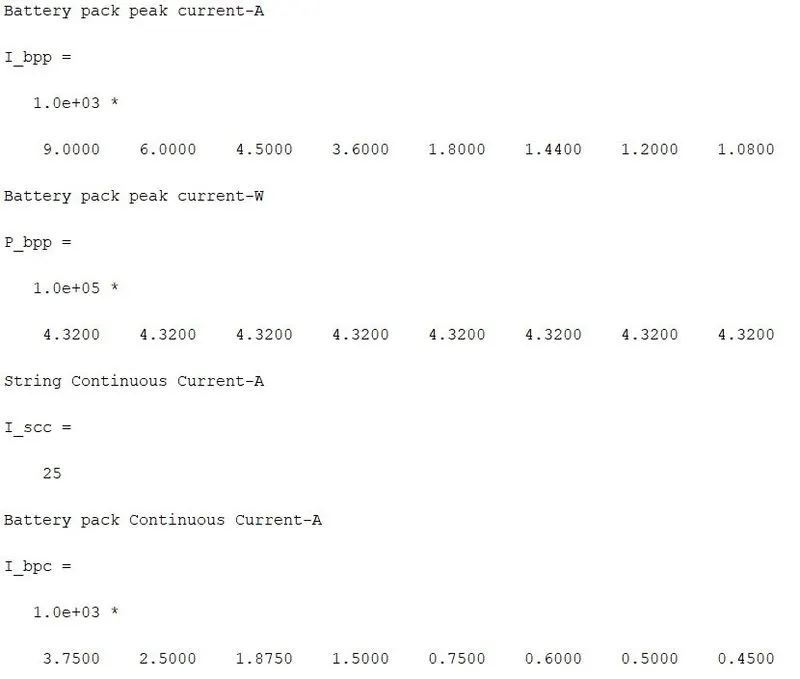
disp('Battery pack peak current-A')
I_bpp = I_spc*N_sb  % Battery pack peak current-A

disp('Battery pack peak current-W')
P_bpp = I_bpp.*V_bp  % Battery pack peak current-W

disp('String Continuous Current-A')
I_scc = Crate_bcc*Cc % String Continuous Current-A

disp('Battery pack Continuous Current-A')
I_bpc = I_scc*N_sb  %Battery pack Continuous Current-A

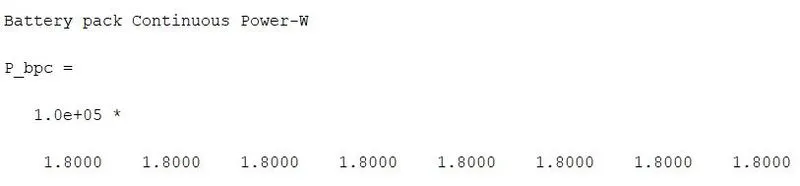
disp('Battery pack Continuous Power-W')
P_bpc = I_bpc.*V_bp  % Battery pack Continuous Power-W
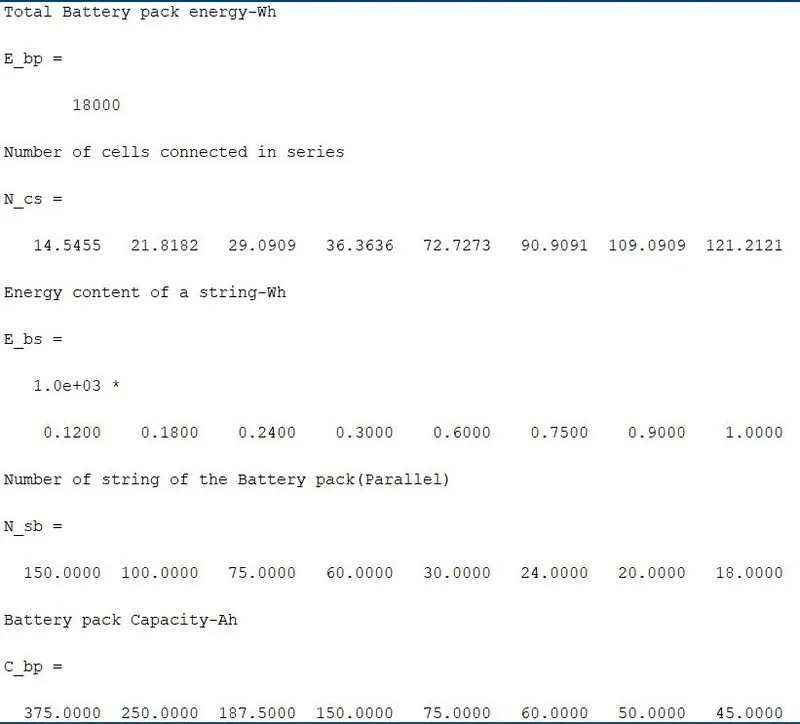
Results
Battery Pack Design
With all these calculated parameters we can construct a battery pack
Technical Specification of the Battery Pack (73S/30P)
Battery Pack Dimensions : 2240*950*100 mm
Battery Pack Weight : 166.44 Kg
Number of cells connected in Series : 73
Number of cells connected in Parallel : 30
Total number of cells : 2190
Battery Pack Capacity : 75 Ah
Nominal Voltage of Battery Pack : 240 V
Battery pack total energy : 18 Kw
Battery pack peak current : 1800 A
Battery pack peak power : 432 Kw
Battery pack continuous current : 750 A
Battery pack continuous power : 180 Kw
Actual Battery Pack Total Energy : 180.0675 Kw
Li-ion battery packs assembling process
- Cell Sorting (Design of Holder and Strip)
- Welding
- BMS Connection Module level
- BMS Connection Pack level
- Design of Casing or Encloser
- Final Battey Pack
- Testing (Cell and Pack level)
Cell Sorting
Before cell sorting, we have to design the cell holder for proper fixing of the cells.
- Design of Cell Holder
A battery holder or a battery mount is an integrated or separate cavity to hold cells. If it is a separate compartment, it can be attached to a cell-powered device. It is used to hold the cells securely and power the device it is attached to. The primary function of a battery holder is to facilitate the power supply to the device it is attached to. External connections can be made to the cells in the battery holder through lugs soldered to the cell-powered device, wire leads, snap terminals, or it can be mounted on PCBs via pins.
Cell holders will decrease the mechanical vibrations and most of the cell holders are made of polypropylene or nylon bodies rated for 80-1000C.
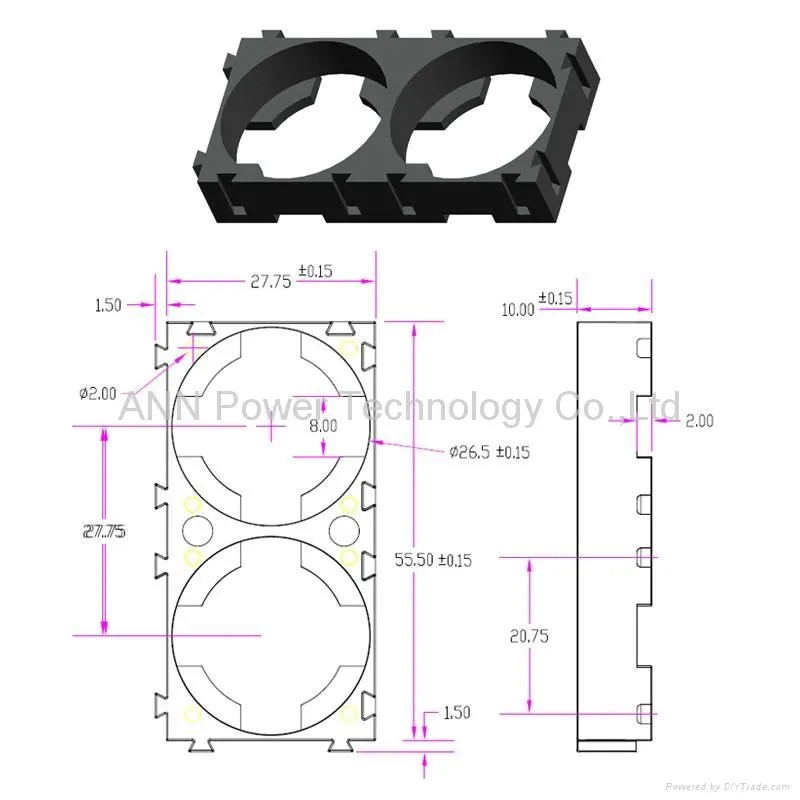
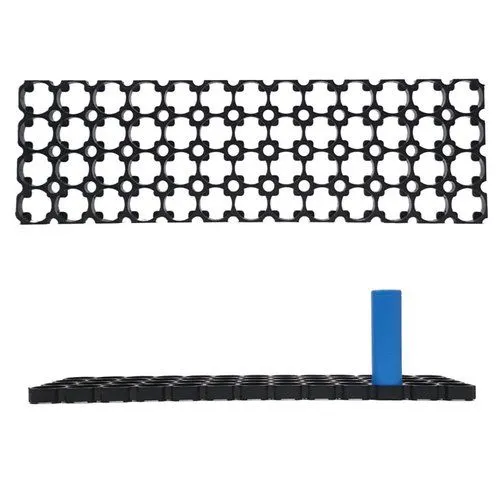
Now, the cells are placed in the holder matrix to form a module and follow the same procedure to make another module as shown below
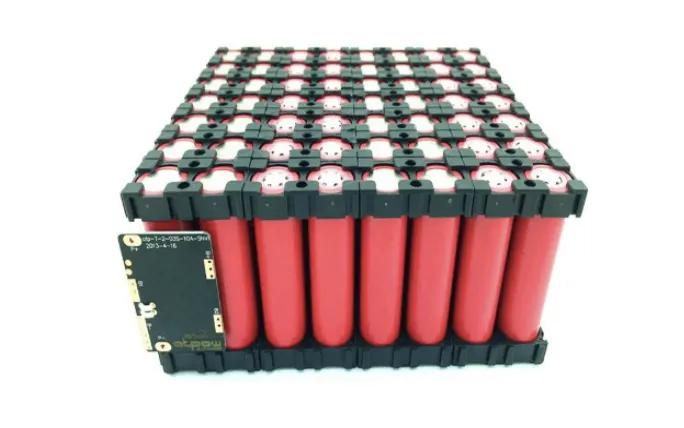
Now we need to design the Nickel strips to connect each cell according to their polarisation.
- Design of strips
Nickel strip is generally used in battery building. Its due to its efficiency of usage in spot welding and soldering as well its high corrosion resistance over time. It has good properties and excellent resistance to many corrosive environments. The pure nickel will never get rust after it applied to battery packs. It won’t affect the current transfer between batteries.
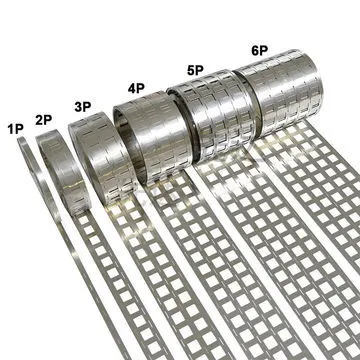
Nickel strip is placed on the cells, connecting ports as shown below. In series connection positive terminal of the cell is connected to the negative terminal of the cell and in Parallel connection each cell terminals are connected to the same terminal.
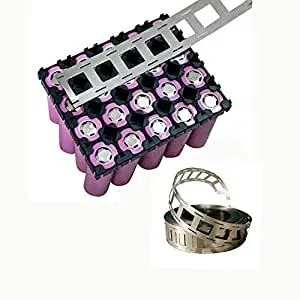
Welding
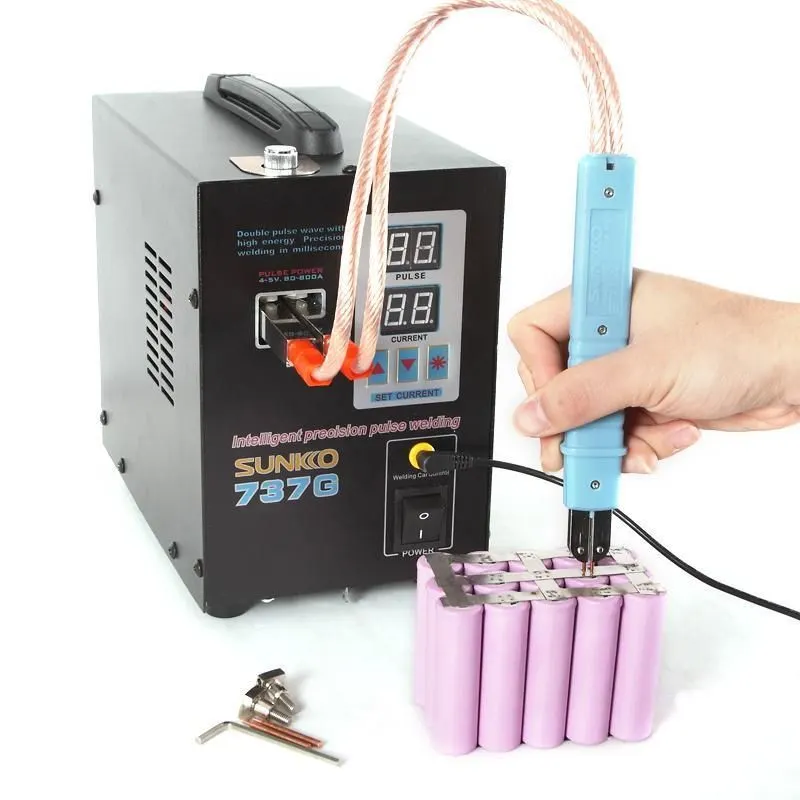
After placing the Nickel strip on the cells joining is done with the help of Spot Welding or Soldering machines as shown below
Now, we need to solder the battery wire as shown below,
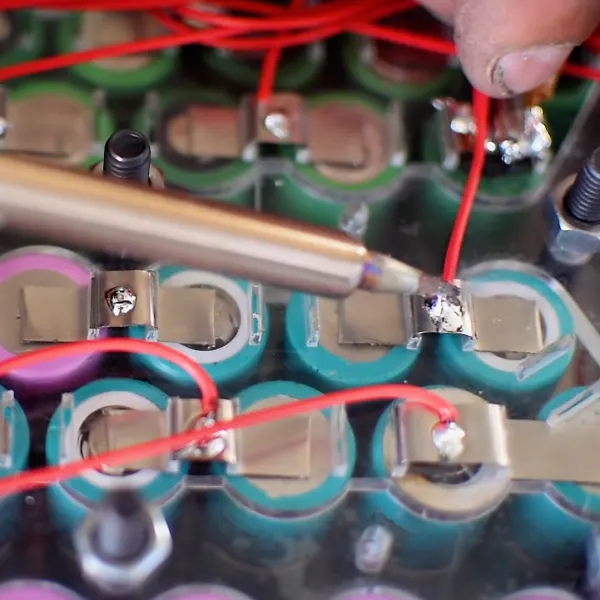
We can say that the internal connection of the battery pack is assembled and all the terminals are connected as per their connections.
BMS Connection Module level
Now connect the balancing wire to the Battery Management System (BMS) to complete the connection process.
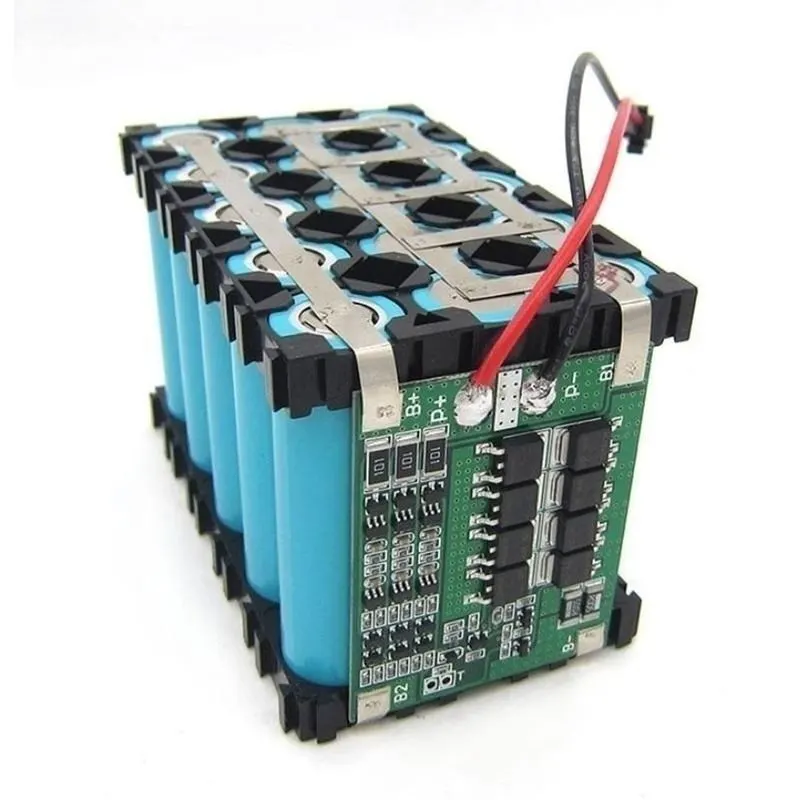
This completes the module level connection and follow the same process to connect the required number of modules. Finally connect the module level BMS to pack level master BMS which completed the overall connection.
BMS Connection Pack level
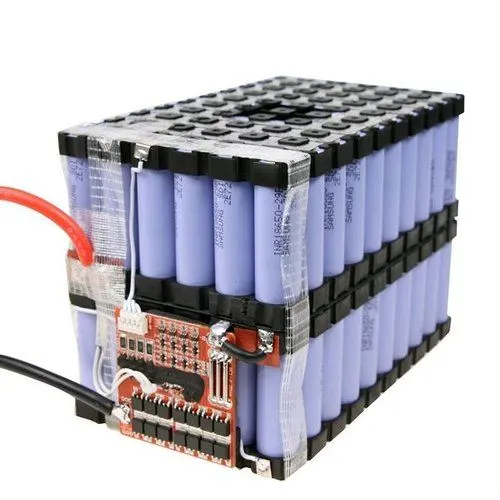
Final step is to protect the battery pack from outer environment so, we need to design an Encloser to protect the battery pack.
Design of Casing and Encloser
Ni-coated steels are used as a casing material for lithium-ion batteries due to the excellent chemical resistance and corrosion protection provided by nickel to the steel. It covers all the battery cells from the outside environment.
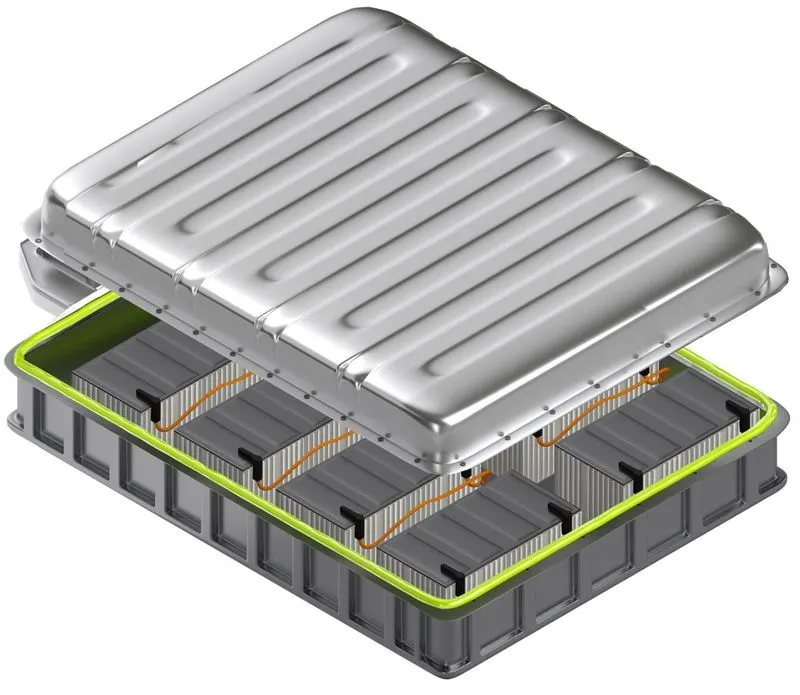
Final Battey Pack
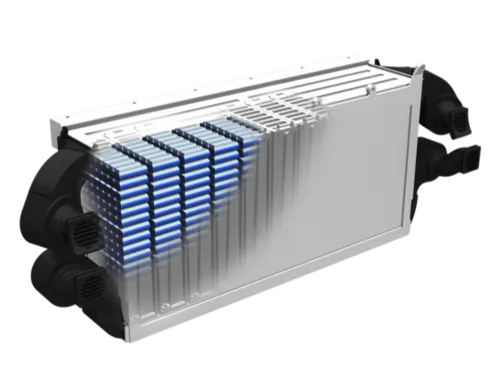
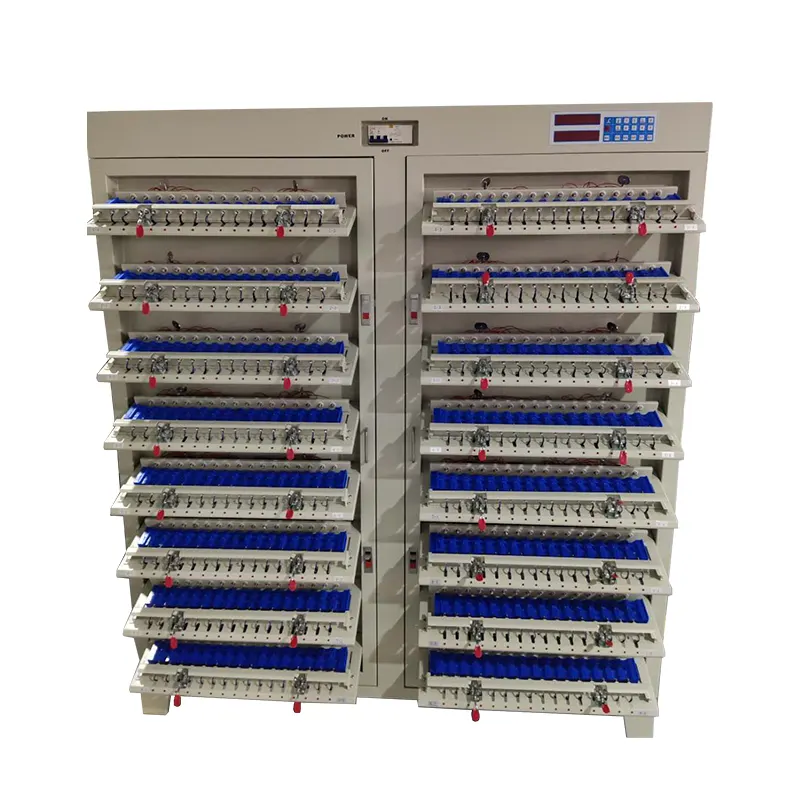
Cell Level Testing
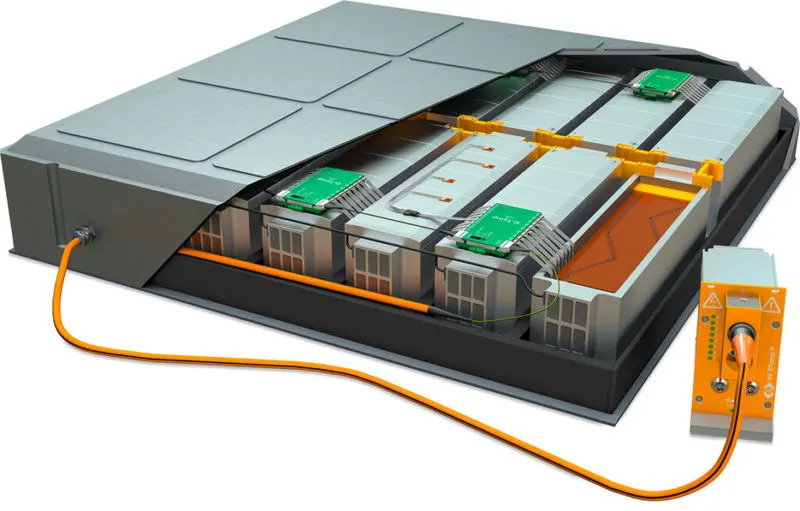
Pack Level Testing
Challenges in Battery Pack Assembly Process
Challenges for Assembling Industry A battery pack is a hierarchical and repetitive assembly of individual cells. The challenges in battery pack assembly process are:
a) Different Battery Cell Types: Due to different cell size, shape, form factor, and capacity the assembly process needs to be setup for each type of battery cell type. This adds to the investment cost if the decision is to make packs with different battery cell types.
b) Varying Pack Configurations: The pack design changes with the application requirements which in turn changes the number of cells in the pack. Thus, varying pack configuration makes it’s difficult to fully automate the assembly process if the target is to cater to several different markets. The assembly lines need to be flexible to accommodate different battery pack designs and their varying rates and capacity.
c) Shock and Fire Hazards: The packs are assembled with cells at 40-50% state of charge. As the pack size increases the voltage and current through the pack increases. This increases the shock and fire hazard in the assembly process. Overview of Lithium-ion Battery & Pack Assembling There are different types of energy storage available in the industry at present like electro chemical (battery, flow battery and hydrogen), mechanical (flywheels and compressed air), electrical (capacitors, super capacitors and superconductive magnetic) and thermal (hot water storage, thermal fluid storage and ceramic thermal storage). Each type has its own advantages and disadvantages.
d) Auxiliary Components: Modules and packs need to have a battery management system installed for better operational control. Also, the pack may need a cooling system component. All such and other auxiliary structural, mechanical and electrical components add to the complexity of the assembly process.
CONCLUSION:
Hence, we have considered the cell technical data from 123System of ANR26650M1-B (Nano-phosphate high power Li-ion cell) and designed an 18.0675 Kwh battery pack. Designed the 18Kwh battery pack with 73 cells connected in series and 30 cells connected in parallel.
Calculated other parameters like energy content, volume, gravimetric density and volumetric density, Energy content in the string, Battery pack capacity, Battery pack energy, Total number of cells in the battery pack, String (Parallel) peak current, Battery pack peak current, Battery pack peak power, String (parallel) continuous current, Battery pack continuous current, Battery pack continuous power and Actual Battery Pack Total Energy.
Clearly explained the assembly process of a Battery Pack with relevant figures and stated the challenges in battery pack assembly.
Comparing the parameters with change in Nominal voltage of the Battery pack
|
Parameters / Nominal Voltage of Battery Pack |
48V |
72V |
96V |
120V |
240V |
300V |
360V |
400V |
|
Cell Voltage (V) |
3.3 |
3.3 |
3.3 |
3.3 |
3.3 |
3.3 |
3.3 |
3.3 |
|
Cell capacity (Ah) |
2.5 |
2.5 |
2.5 |
2.5 |
2.5 |
2.5 |
2.5 |
2.5 |
|
Battery Energy (KWh) |
18 |
18 |
18 |
18 |
18 |
18 |
18 |
18 |
|
Number of cells connected in Series |
15 |
22 |
29 |
36 |
73 |
91 |
109 |
121 |
|
Number of cells connected in Parallel |
150 |
100 |
75 |
60 |
30 |
24 |
20 |
18 |
|
Battery Capacity (Ah) |
375 |
250 |
187 |
150 |
75 |
60 |
50 |
45 |
|
Total number of Cells |
2190 |
2190 |
2190 |
2190 |
2190 |
2190 |
2190 |
2190 |
REFERENCES:
https://x-engineer.org/ev-design-battery-calculation/
https://indiaesa.info/media/downloadfiles/whitepaper_final_lowres._993448987.pdf
DRIVE LINK (MATLAB file)
https://drive.google.com/drive/folders/1B8E_4WLJX9uMaT9wYTA6ZjETvZ5ESR9r?usp=sharing