Project 1 - Device Master File
DEVICE MASTER FILE :-
A Device Master File (DMF) is a document that contains detailed information about a medical device that is submitted to the regulatory authorities, to support the clearance or approval of the device for sale. The DMF is used to demonstrate that the device is safe and effective for its intended use.
The information contained in a DMF includes details about the device's design, materials, production processes, and test results. It also includes information about the device's intended use, labeling, packaging and sterilization, as well as any clinical data or other relevant information.
DMF is typically submitted by the device manufacturer or by an authorized representative on their behalf. It is not publicly available and is kept confidential by the regulatory authority.
1. Product name: Disposable Syringe
A disposable syringe is a medical device that is used for the administration of liquid medications, vaccines, and other medical solutions. The syringe typically consists of a cylindrical barrel, a plunger that seals one end of the barrel, and a needle that is attached to the other end of the barrel. The plunger is used to draw liquid into the barrel and to inject the liquid through the needle.
The barrel of a disposable syringe is typically made of plastic and is transparent, allowing the user to see the amount of liquid inside. The plunger is usually made of rubber or plastic and is designed to fit snugly inside the barrel. The needle is typically made of stainless steel and is attached to the barrel with a Luer lock or Luer slip connector.
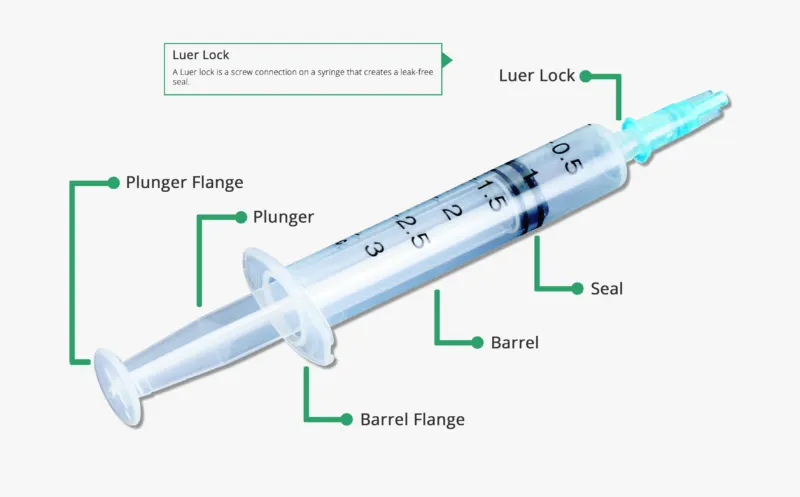
Disposable syringes are available in various sizes and designs. Some common syringe sizes include 1 mL, 3 mL, 5 mL, and 10 mL. Some syringes are designed for single use, while others are designed for multiple uses. Its function is mechanical and it is intended to inject fluids into or withdraw fluids out of the body. The syringe is sterile, single use only, non-toxic, non-pyrogenic and sterilized by Gamma radiation. They are packaged in a sterile blister pack or in a sealed pouch to maintain their sterility until used.
Disposable syringes are used in a wide variety of medical settings, such as hospitals, clinics, and doctor's offices. They are also commonly used in the administration of vaccines and other injectable medications. They are used in many medical procedures such as subcutaneous, intramuscular, and intravenous injections.
The use of disposable syringes is an important aspect of infection control as it helps to prevent the spread of disease and infection. They are designed to be easy to use, and they are an efficient and cost-effective way to administer medication.
2. Product description and specification
Product Description:
This disposable syringe is a single-use, sterile, medical device intended for the administration of liquid medications. It consists of a cylindrical barrel with graduated markings, a plunger, and a needle.
Product Specification:
- Volume Capacity: 1 mL, 2 mL, 5 mL
- Needle Gauge: 18G, 20G, 21G, 22G, 25G
- Needle Length: 12.7 mm, 25.4 mm
- Barrel Material: Polypropylene
- Plunger Material: Latex-free rubber
- Needle Material: Stainless steel
- Packaging: Individually packaged in a peel-open blister package
- Sterility: Sterilized by Ethylene Oxide (EO)
- Shelf Life: 3 years
Variants:
- Insulin syringe with ultra-fine needle
- Tuberculin syringe with ultra-short needle
- Safety syringe with in-built safety shield
- Syringes with different sizes of barrels, such as 1ml, 3ml, 5ml, 10ml, etc.
- Syringes with different needle gauges, such as 20G, 22G, 25G, etc.
- Syringes with different needle lengths, such as 12mm, 16mm, 25mm, etc.
- Syringes with different plunger rod designs, such as Luer Lock, Luer Slip, etc.
Accessories:
- Syringe needles
- Syringe safety shields
- Syringe disposal containers
- Syringe filters
- Syringe pumps
- Syringe adapters
- Syringe holders
3. Intended use of the product
- The intended use of a disposable syringe is to administer liquid medications and to draw blood for laboratory testing.
- It is intended for use by healthcare professionals in medical facilities, clinics, and other settings.
- The disposable syringe is intended for single use only, and is intended for use in adults, pediatrics and geriatrics patients.
- This device is intended to be used for administering medications such as insulin, heparin, or other liquid medications, as well as drawing blood for laboratory testing.
4. Design and Manufacturing information
Design Information of the product:
-
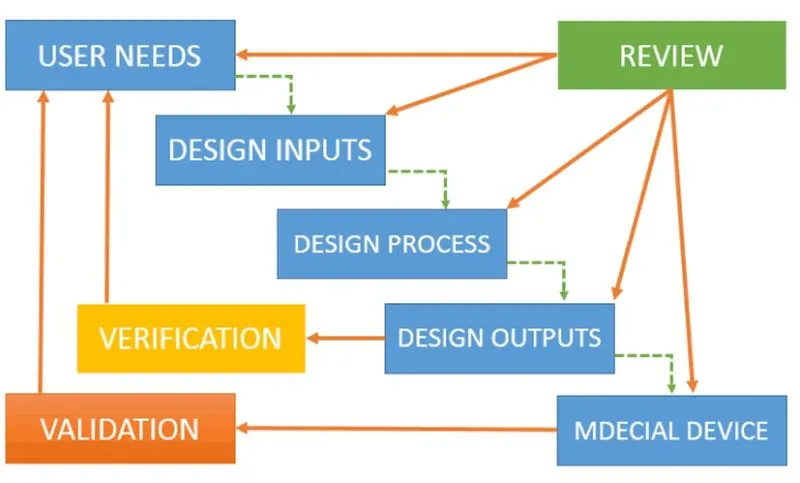
Design Plan: A plan for the design process, including timelines, resources, and design specifications, is created. The design plan is aligned with the user needs and regulatory requirements.
-
Design Review: Regular design is conducted to assess the progress of the design process, identified potential issues, and done the necessary modifications.
-
User Needs: A detailed understanding of the user needs and requirements is obtained. This ensures that the design meets the end-user expectations and requirements.
-
Design Input: The design input includes all relevant information, such as user needs, regulatory requirements, and design specifications, that will drive the design process.
-
Design Process: The design process involves the conceptualization, prototyping, and refinement of the design. The design iteratively refined until it meets all design specifications and user requirements.
-
Design Output: The design output is a detailed description of the product design, including technical drawings, specifications, and manufacturing processes.
-
Verification: The design is verified through testing and analysis to ensure that it meets the design specifications and regulatory requirements.
-
Final Product: The final product is manufactured to the design specifications, ensuring that it meets the user needs and regulatory requirements.
-
Validation: The final product is validated through testing and analysis to ensure that it meets the user needs and regulatory requirements. The validation process confirms that the product is safe, effective, and suitable for its intended use.
Manufacturing Procedure:
-
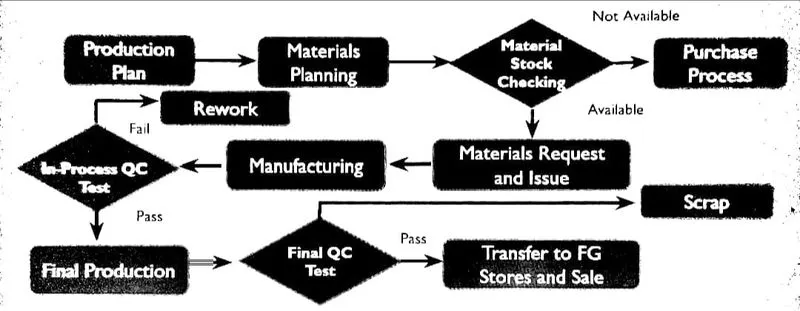
Raw material preparation: The necessary raw materials, such as polypropylene for the barrel, latex-free rubber for the plunger, and stainless steel for the needle, are prepared and sourced.
-
Molding: The polypropylene is molded into the shape of the syringe barrel.
-
Assembly: The molded barrel, latex-free rubber plunger, and stainless steel needle are assembled to form the disposable syringe.
-
Testing: The assembled syringe undergoes a series of tests to ensure that it meets the desired specifications, such as volume capacity, needle gauge, and needle length.
-
Sterilization: The syringes are sterilized using Ethylene Oxide (EO) sterilization to ensure that they are free from microorganisms and safe for use.
-
Packaging: The sterilized syringes are packaged individually in a peel-open blister package, providing protection and ease of use.
-
Inspection: The packaged syringes undergo a final inspection to ensure that they meet the desired specifications and are free from defects.
-
Storage: The packaged syringes are stored in a controlled environment until they are ready for distribution.
-
Distribution: The packaged and inspected syringes are distributed to the market with a shelf life of 3 years.
5. Essential principle checklist
| Essential Requirements | Relevant Applicable (Yes/No) | Standard/Reference Method | Complies (Yes/No) | Document Reference |
|---|---|---|---|---|
| Design control | Yes | ISO 13485 | Yes | Design Control Procedure |
| Material selection | Yes | ISO 13485 | Yes | Material Selection Procedure |
| Process control | Yes | ISO 13485 | Yes | Process Control Procedure |
| Inspection and testing | Yes | ISO 13485 | Yes | Inspection and Testing Procedure |
| Sterilization control | Yes | ISO 13485 | Yes | Sterilization Control Procedure |
| Packaging control | Yes | ISO 13485 | Yes | Packaging Control Procedure |
| Documentation control | Yes | ISO 13485 | Yes | Documentation Control Procedure |
| Corrective and preventive action | Yes | ISO 13485 | Yes | Corrective and Preventive Action Procedure |
| Training | Yes | ISO 13485 | Yes | Training Procedure |
| Quality management system | Yes | ISO 13485 | Yes | Quality Management System Procedure |
6. Risk and device classification
In India, the risk classification of medical devices is based on the Medical Device Rules (MDR) 2017, which is implemented by the Central Drugs Standard Control Organization (CDSCO).
Risk Classification:
According to Indian MDR-2017, disposable syringe is classified as Class B medical device. This classification is based on the risk associated with the use of the device, which is considered to be low to medium.
Device Classification:
According to Indian MDR-2017, the disposable syringe falls under the category of "Surgical instruments and devices for general use" under class B.
7. Risk analysis and control measures
Hazards associated with the product:
The hazards associated with a disposable syringe, likelihood and severity of the hazards, control and mitigation measures are:
-
Needle stick injury: The sharp needle of the syringe can cause injury if not handled properly. The likelihood of this hazard is high, and the severity can range from mild to severe depending on the location and extent of the injury. Control measures include proper handling and disposal of the syringe and the use of safety needles. Mitigation measures include providing training on proper syringe handling and use of safety needles.
-
Medication errors: Incorrect dosage or administration of medication can result in harm to the patient. The likelihood of this hazard is moderate, and the severity can range from mild to severe depending on the medication and the extent of the error. Control measures include proper labeling, packaging and instructions for use, as well as providing training on medication administration. Mitigation measures include double-checking medication and dosage before administering.
-
Contamination: The syringe can become contaminated with bacteria or other microorganisms, which can lead to infection in the patient. The likelihood of this hazard is low, and the severity can range from mild to severe depending on the microorganism and the patient's overall health. Control measures include proper sterilization and packaging of the syringe, as well as providing training on proper handling and use. Mitigation measures include discarding the syringe if it is found to be contaminated.
-
Biological safety: The product is intended for single use and must be sterilized before and after packaging.
-
Physical and Mechanical safety: The product must not show any visible defects, cracks, leaks and must be leak proof. The product must also be able to withstand the forces applied during the usage and storage.
-
Electrical safety: The product is not electrically powered so, this hazard does not apply.
-
Chemical safety: The product is not chemically treated so, this hazard does not apply.
-
Radiation safety: The product is not irradiated so, this hazard does not apply.
Residual risks associated with the product:
-
Residual risk of needle stick injuries: Despite the use of safety syringes and proper training, there is still a risk of needle stick injuries occurring. Additional testing and evaluation of the safety syringes and training programs can be conducted to further reduce this risk.
-
Residual risk of medication errors: Despite the use of barcode scanning and double checking, there is still a risk of medication errors occurring. Additional testing and evaluation of the medication administration process and the use of automated dispensing systems can be conducted to further reduce this risk.
-
Residual risk of air embolism: Despite the use of air elimination devices and proper administration technique and training, there is still a risk of air embolism occurring. Additional testing and evaluation of the administration technique and the use of pressure monitoring devices can be conducted to further reduce this risk.
-
Residual risk of injection site reactions: Despite the use of appropriate needle size, there is still a risk of injection site reactions occurring. Additional testing and evaluation of the injection technique, the use of appropriate medication and dosage can be conducted to further reduce this risk.
-
Residual risk of quality issues: Despite the use of quality control measures during manufacturing and packaging, there is still a risk of quality issues occurring. Additional testing and evaluation of the manufacturing and packaging process, and regular testing and inspections, can be conducted to further reduce this risk.
-
Residual risk of non-sterility: Despite the use of proper sterilization techniques, there is still a risk of non-sterility. Additional testing and evaluation of the sterilization process, regular testing and inspection of sterilization equipment can be conducted to further reduce this risk.
-
Residual risk of recycling or reuse of disposable syringe: Despite the use of proper disposal techniques and laws and regulations to prevent reuse and recycling, there is still a risk of syringe being recycled or reused. Additional testing and evaluation of the disposal process, and regular monitoring of the adherence to laws and regulations, can be conducted to further reduce this risk.
The additional testing and evaluations should be regularly conducted to identify any residual risks and to ensure that the controls and mitigation measures are effective.
8. Regulatory status and product registration in other countries
The regulatory requirements and product registration for disposable syringes vary from country to country. In general, most countries have their own regulatory bodies that oversee the safety and efficacy of medical devices, including disposable syringes.
In the United States, disposable syringes are regulated by the Food and Drug Administration (FDA) under the Medical Device Amendments of 1976. The FDA classifies disposable syringes as Class I medical devices, which are considered to be low-risk devices and are subject to the least regulatory controls.
In Europe, disposable syringes are regulated by the European Medicines Agency (EMA) under the Medical Devices Regulation (MDR). The EMA classifies disposable syringes as Class I medical devices, which are considered to be low-risk devices and are subject to the least regulatory controls.
In Canada, disposable syringes are regulated by Health Canada under the Medical Devices Regulations. The classification of disposable syringes will depend on the intended use, design and other factors.
In Australia, disposable syringes are regulated by the Therapeutic Goods Administration (TGA) under the Therapeutic Goods Act 1989. The TGA classifies medical devices based on their intended use and the level of risk associated with the device.
The registration process for disposable syringes in these countries typically involves submitting technical and quality information about the device to the regulatory authorities for review and approval. This process may take several months and must be done by a local authorized representative if the manufacturer is not based in the country. It's important for the manufacturers to comply with the regulations of the country they want to sell their products in order to ensure the safety and efficacy of the device to the end user.
9. Similar products in India
There are several similar products to disposable syringes available in India, such as:
-
Auto-disable syringes: These are syringes that have a mechanism that prevents them from being reused.
-
Reusable syringes: These are syringes that can be sterilized and used multiple times.
-
Insulin pens: These are devices that are used to inject insulin and look similar to a pen. They are pre-filled with insulin and have a built-in needle.
-
Safety syringes: These are syringes that have a safety mechanism to prevent needle stick injuries.
-
Pre-filled syringes: These are syringes that are pre-filled with a specific medication, reducing the risk of contamination and errors.
-
Disposable insulin syringe: These are syringes that are specifically designed for insulin injection and is disposed after single use.
10. Verification and validation
Verification: The verification process involves testing and evaluating the product design to ensure that it meets the design specifications and regulatory requirements. This process can include testing prototypes, simulations, and other forms of evaluation to ensure that the design is correct and meets the desired performance criteria.
Validation: The validation process involves testing the final product to ensure that it meets the user needs and regulatory requirements. This process includes tests that demonstrate the product's safety, efficacy, and performance. The validation process should be performed on representative samples of the final product, and the results should be documented and reviewed to ensure that the product meets the desired quality standards.
Biocompatibility testing for disposable syringe includes evaluating the potential biological reactions of the components in contact with human body, such as polypropylene for the barrel, latex-free rubber for the plunger and stainless steel for the needle.
A typical biocompatibility test on the product would include:
-
Cytotoxicity test: This test evaluates the potential of the materials to cause cell death or toxicity in vitro.
-
Irritation and sensitization test: This test determines the potential of the materials to cause irritation or allergic reactions in human skin or tissues.
-
Systemic toxicity test: This test evaluates the potential of the materials to cause systemic toxicity when introduced into the body.
-
Intracutaneous reactivity test: This test determines the potential of the materials to cause adverse reactions when injected into the skin.
-
Hemocompatibility test: This test evaluates the potential of the materials to cause adverse effects on the blood coagulation system.
Sterilization:
-
Method of sterilization: Ethylene Oxide (EO).
-
Sterilization conditions: Temperature- 50-60°C, Pressure- 2-3 psi, and Duration of sterilizatio- 3-6 hours.
-
Biological indicators: Geobacillus stearothermophilus and Bacillus subtilis spores.
-
Physical indicators: Bowie-Dick Test used to assess the air removal efficiency of a sterilization cycle, as air pockets can affect the distribution of the sterilizing agent.
-
Conclusion: The conclusion of the sterilization of the product is the assurance that the product has been successfully sterilized to meet the required specifications and standards. The sterilization process is validated using biological and/or physical indicators to confirm that the conditions used for sterilization are adequate and effective in achieving sterilization. The results of the indicators is recorded and reviewed to ensure that the sterilization process has met the established criteria for sterilization. The product is safe and free of viable microorganisms and ready for use.
Animal studies are conducted on the device to evaluate their safety and effectiveness before they are approved for human use. These studies include toxicity testing, implantation studies, and performance tests to assess product attributes such as accuracy, reliability, and durability. The results of these studies are used to determine the safety and efficacy of the product and support its approval for marketing. The studies are usually conducted according to good laboratory practices (GLP) guidelines and are reviewed by regulatory agencies before approval.
Disposal of the device is a crucial aspect of patient safety and environmental responsibility. The following steps should be taken to ensure proper disposal of the product:
- Used syringes should never be re-used or shared.
- Syringes should be placed in a puncture-resistant, leak-proof container specifically designated for sharps disposal.
- The container should be closed before disposal to prevent injury to waste handlers or the public.
- The container should be labelled with the words "Biohazard - Used Sharps" to clearly indicate the contents and potential hazard.
- Check with local regulations to determine the appropriate disposal method in your area, which may include household hazardous waste disposal, medical waste disposal, or syringe take-back programs.
- Do not dispose of syringes in the regular household trash or recycling, as this is illegal and poses a serious health risk to waste handlers and the public.
- Proper disposal of medical devices helps to reduce the risk of injury, disease transmission, and environmental contamination.
11. Labelling
Label:
Disposable Syringe
Manufacturer: XYZ Medical Devices
Lot Number: 12345
Expiration Date: MM/DD/YYYY
Sterilized by Ethylene Oxide (EO)
Store at room temperature (15-30°C)
Instructions for Use:
Preparation:
a. Wash your hands thoroughly with soap and water.
b. Open the packaging and inspect the syringe for any visible damage or defects.
c. If the packaging is damaged or the syringe appears to be damaged, do not use the device.
d. Confirm that the lot number and expiration date on the packaging match the information on the label.
Attaching the Needle:
a. Choose the appropriate needle size for your intended use.
b. Grasp the needle and gently twist it onto the syringe tip until it is securely fastened. Do not reuse or recap the needle after use.
Filling the Syringe:
a. Fill the syringe with the desired medication, following the instructions provided by your healthcare provider.
b. If air bubbles are present in the syringe, gently tap the syringe to release the air bubbles to the top and push the plunger to expel the air.
Administering the Injection:
a. Clean the injection site with an alcohol swab.
b. Hold the syringe like a pencil and insert the needle into the injection site, following your healthcare provider's instructions.
c. Slowly push the plunger to inject the medication.
d. Remove the needle from the injection site and gently apply pressure to the site with a sterile gauze pad or cotton swab.
Disposal:
a. Remove the needle from the syringe by twisting it off. Do not reuse or recap the needle.
b. Place the used needle in a puncture-resistant sharps container for disposal.
c. Place the used syringe in a puncture-resistant container for disposal.
Warning:
Do not reuse or recap the needle after use.
Do not use the syringe if the packaging is damaged or the syringe appears to be damaged.
If you experience any adverse reactions, contact your healthcare provider immediately.
12. Post market surveillance
Post-marketing surveillance for a disposable syringe:
Adverse Event Reporting:
a. The manufacturer establishes a reporting system for healthcare providers, patients, and other stakeholders to report any adverse events related to the use of the syringe.
b. The manufacturer reviews each report to determine the nature and severity of the adverse event, and assesses whether the event was related to the device.
c. If the adverse event is found to be related to the device, the manufacturer takes appropriate action, such as conducting further investigation, modifying the device design or labeling, or recalling the device.
Literature Review:
a. The manufacturer regularly reviews the scientific and clinical literature to identify any new safety or performance concerns related to the device.
b. If any new information is identified, the manufacturer assesses the implications for the device and takes appropriate action, such as modifying the device design or labeling, or recalling the device.
Device Performance Data Analysis:
a. The manufacturer collects performance data from various sources, including customer feedback and device performance records from healthcare facilities.
b. The manufacturer analyzes the performance data to identify any trends or issues related to the device.
c. If any issues are identified, the manufacturer takes appropriate action, such as modifying the device design or labeling, or recalling the device.
Manufacturing Facility Inspection:
a. The manufacturer periodically inspects its manufacturing facilities to assess the quality control processes and ensure that the devices are being manufactured in accordance with regulatory requirements.
b. If any issues are identified during the inspection, the manufacturer takes appropriate action to address the issues and improve the quality control processes.
Device Design Review:
a. The manufacturer regularly reviews the device design to ensure that it continues to meet the safety and performance requirements for the intended use.
b. If any issues are identified with the device design, the manufacturer takes appropriate action, such as modifying the device design or recalling the device.
Thank you!