Project - Design and Develop a IOT based Wireless Wearable Health Monitoring System or a Home Healthcare System to monitor the physiological parameters of ECG, Heart Rate, Pulse Oximetry, Cuffless Blood Pressure and Body Temperature.
Design and Development of an IOT based Wireless Wearable Health Monitoring System or a Home Healthcare System to monitor the physiological parameters of ECG, Heart Rate, Pulse Oximetry, Cuffless Blood Pressure and Body Temperature.
INTRODUCTION :-
Traditional healthcare systems involve autonomous medical devices providing specific healthcare facilities. These systems are generally installed at either healthcare centers or at the hospitals. Patients have to visit these medical centers to avail healthcare services.
However, over the past decade, there has been a focused approach to design and develop low-cost sensors that can provide similar functionality. When these sensors are integrated on hardware platform and co-ordinate with backend processing systems, it results in an end-to-end, low cost, multi-sensor based healthcare system that is affordable and widely installable across geographies.
IoT enabled devices have made remote monitoring in the healthcare sector possible unleashing the potential to keep patient safe and healthy. It has applications in healthcare that benefits the patients, families, physicians, hospitals and insurance companies.
IOT ARCHITECTURE FOR HEALTHCARE SYSTEMS
IoT has an excellent capability to create high-quality results with the help of innovative technologies. In medical, it becomes a new reality of an innovative concept that provides the best service to COVID-19 patients and performs precise surgery. Complicated cases are easily handled and controlled digitally during ongoing Pandemic. IoT takes new challenges in the medical field to create excellent support systems for doctors, surgeons, and patients. The different process steps are identified systematically for effective IoT implementation. The below figure shows the process chart of IoT in the medical field.
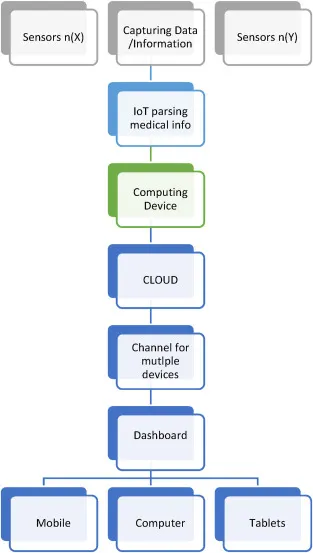
Process chart of IoT implementation
IoT technologies have a high impact on high-quality medical devices, which help meet the personalised solution. These technologies can capture, store, and analyse the data digitally. All clinical records are maintained digitally, and with the help of internet facilities, patient data and information is easily shared in emergency cases and make doctors job efficiently. By using smart sensors, we achieve an excellent capability to monitor and control all the essential requirements of medical temperature, blood pressure, and information regarding patient's health. Software plays an essential role in the best way of communication and monitoring. All records are stored confidentially for the best treatment in the future. Artificial intelligence enhances doctors’ and surgeons’ performance to achieve accuracy, efficiency, and reliability in treatment. Different actuators are introducing the motion and control of the physical object. The virtual reality is the best technology of IoT to improve the quality of planning and real-time information.
BLOCK DIAGRAM :-
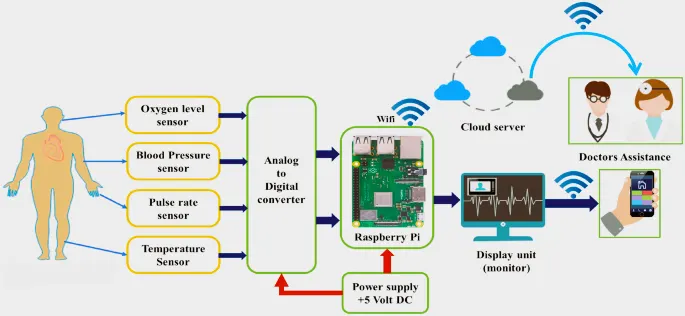
The ECG (Electrocardiogram) sensor records the electrical signal from the heart to check the heart conditions. Electrodes are placed on the chest to record heart's electrical signals, which cause the heart to beat. The Pulse sensor is fixed to the patient's hand. It counts the number of pulses occurring per minute. The temperature sensor measures the temperature. The readings are send through a wire which is connected to Raspberry Pi through ADC. All these sensors are connected to ADC and the to Raspberry Pi which contains a wi-fi module, which send the data to cloud server via internet. So we can monitor the patient condition from far away by evaluating the readings from pulse rate, blood pressure, temperature and ECG monitor which is displayed on the mobile screen.
SYSTEM DESIGN FOR HEALTHCARE SYSTEMS
Electrocardigram heart monitoring system :
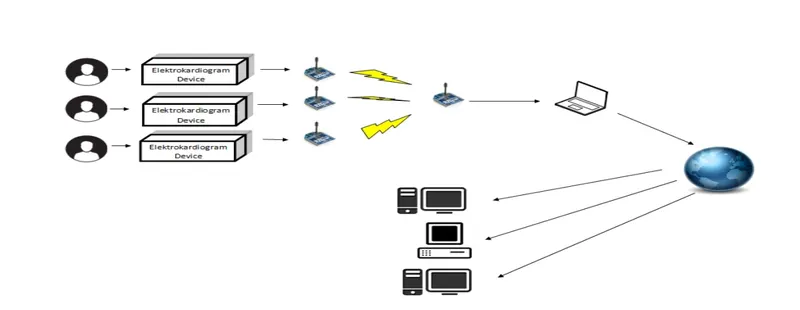
One of a vital signal in health is the ECG signal which can provide heart health information. An Electrocardiogram (ECG) measures the electrical activities of the heart to determine the functioning of heart. IoT has found extensive use in ECG monitoring as well. Traditional ECG systems are expensive and are generally installed in hospitals. Over the years there has been a need felt to have a low cost ECG system. In this system the ECG sensor merely acts as a data collection unit. ECG signals are sourced from a number of users acquired by the sensor nodes. By MCU, the signal is digitizing and then sent serially to the server computer using ZigBee as a medium of communication. The server is responsible for computing the ECG results. Since all users share a single computation server the cost involved in the entire process is reduced significantly. A wearable ECG device is developed to detect Arrhythmia (irregular beating of heart). The sensor captures the ECG data and transmits the data to a mobile device over Bluetooth. The system uses IOIO-OTG, an open source platform to measure the ECG and convert the analog ECG signals to digital signal. The digital data is then sent to the cloud and accessed by doctors via Android based smartphones.
ECG Hardware - An ECG hardware is used for ECG signal acquisition process. The disposable electrode is attached to the skin surface to convert ion current in the body to electron current in the bio- potential circuit. We use Einthoven’s triangle for electrodes placement. Meanwhile, the biopotential amplifier circuit is shown in the figure.
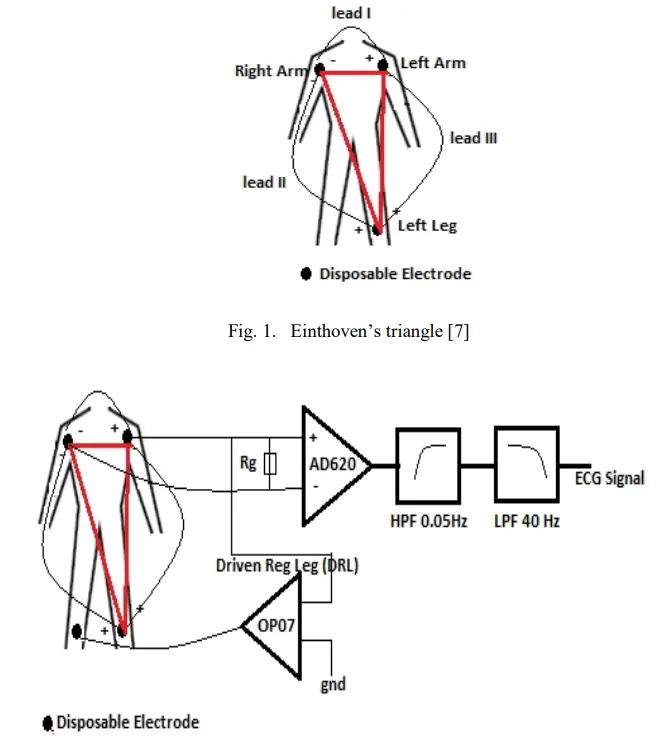
In this project, I use first-order High-Pass Filter (HPF) with a cut-off frequency 0.05 Hz to reduce motion artifact noise. To reduce high-frequency noise then I made 3rd-order Butterworth LPF with a cutoff frequency of 40 Hz. At this frequency range, the ECG signal can be analyzed without
damaging the signal information.
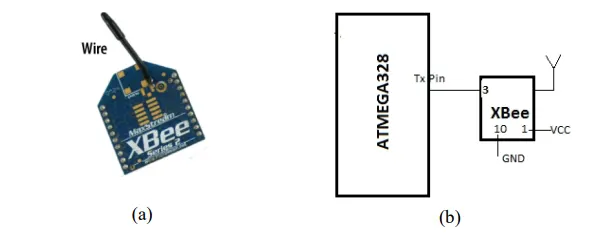
Microcontroller - The ATmega328 is used as a processing unit for converting analog signals into digital data and then transmit 10-bit serial data to the server with ZigBee as transmission media. Each ECG machine has a unique code that is sent along with the data raw ECG to differentiate patients with one another. The illustration can be seen in Figure :
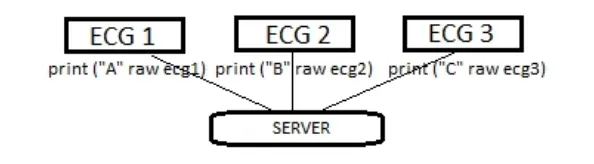
void loop()
adc_data = analogRead(0)’; //read ADC channel 0
Serial.print(“A”); //Sign Header from Node 1
Serial.print(adc_data); //Send serial data
delay(10); //delay 10 ms
}
Monitoring of body temperature for patients is essential and any abnormality needs to be reported to the doctors. A communication protocol is defined to measure, transfer and monitor the temperature of a patient.
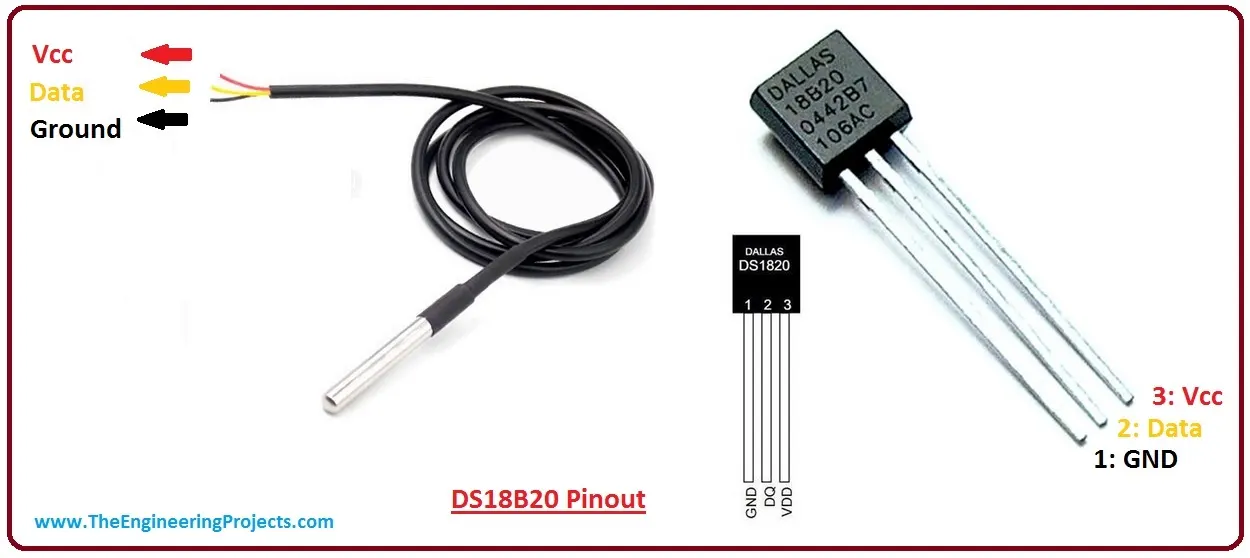
The DS18B20 digital thermometer provides 9-bit to 12-bit Celsius temperature measurements and has an alarm function with nonvolatile user- programmable upper and lower trigger points. The DS18B20 communicates over a 1- Wire bus that by definition requires only one data line (and ground) for communication with central a microprocessor. In addition, the DS18B20 can derive power directly from the data line ("parasite power"), eliminating the need for an external power supply. Each DS18B20 has a unique 64-bit serial code, which allows multiple DS18B20s to function on the same 1-Wire bus. Thus, it is simple to use one microprocessor to control many DS18B20s distributed over a large area. Applications that can benefit from this feature include HVAC environmental controls, temperature monitoring systems inside buildings, equipment, or machinery, and process monitoring and control systems.
Heart Rate Monitoring :
Monitoring heart rate of patients is an important part of healthcare ecosystem. Heart rate monitoring could be needed in a hospital environment for critical patients. It may be needed even for patients recovering at home, post surgeries. Heart rate monitoring has also gained importance in recreational activities like athletics, intensive physical training etc. Devices like Fitbit, Garmin have gained mass market acceptability and provide instant heart rate monitoring facility.
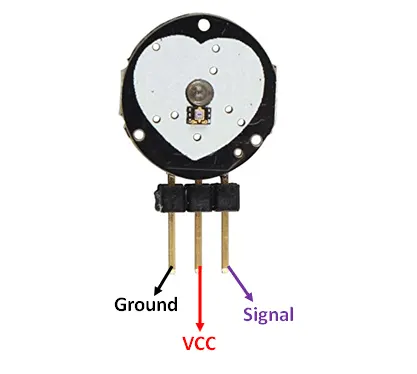
Pulse/Heart beat sensor
The working of the Pulse/Heart beat sensor is very simple. The sensor has one side the LED is placed along with an ambient light sensor and on the other side we have some circuitry. This circuitry is responsible for the amplification and noise cancellation work. The LED on the front side of the sensor is placed over a vein in our human body. This can either be your Finger tip or you ear tips, but it should be placed directly on top of a vein. Now the LED emits light which will fall on the vein directly. The veins will have blood flow inside them only when the heart is pumping, so if we monitor the flow of blood we can monitor the heart beats as well. If the flow of blood is detected then the ambient light sensor will pick up more light since they will be reflect ted by the blood, this minor change in received light is analysed over time to determine our heart beats.
Blood Pressure Sensor :
The BP sensor is wrapped around the arm and it gives three different values or data to the microcontroller. In these values, first one is systolic, second is diastolic and third value is pulse rate and are fed to the Raspberry Pi. Sensor BP0001 is board mount blood-pressure sensor which is used for this project work, having pressure range of 0–300 mg and an accuracy of about ± 1%. The schematic of BP sensor is shown in Figure.

Blood-pressure sensor BP0001
Analog to Digital Converter (ADC) :
An Analog to Digital Converter is a type of device which helps us to process the chaotic real-world data in a digital standpoint. To understand real-world data like temperature, humidity, pressure, position, we need transducers, all of those measure certain parameters and give us an electrical signal back in the form of voltage and current. Since the majority of our devices nowadays are digital, it becomes necessary to convert those signals into digital signals.
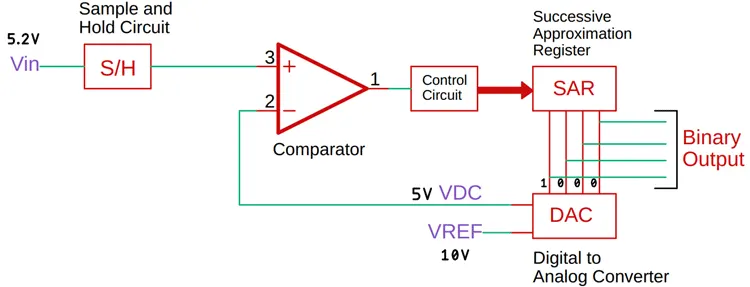
The Successive Approximation ADC is the ADC of choice for low-cost medium to high-resolution applications, the resolution for SAR ADCs ranges from 8 - 18 bits, with sample speeds up to 5 mega-samples per second (Msps). Also, it can be constructed in a small form factor with low power consumption, which is why this type of ADC is used for portable battery-powered instruments.
Raspberry Pi :
This device works well as a multi-processor. It has a graphics card, a volatile memory, RAM, device interfaces and other external wireless device interfaces. This raspberry Pi is consuming very less power, but it is still cheap and powerful. It requires a keyboard to provide commands, display unit and power supplies as a standard PC. Here, Raspberry Pi used the SD card as a hard disk. Raspberry Piable to connect via a LAN / Ethernet or via a USB modem or via wireless. Raspberry Pi is supposed to support for various home and business applications.
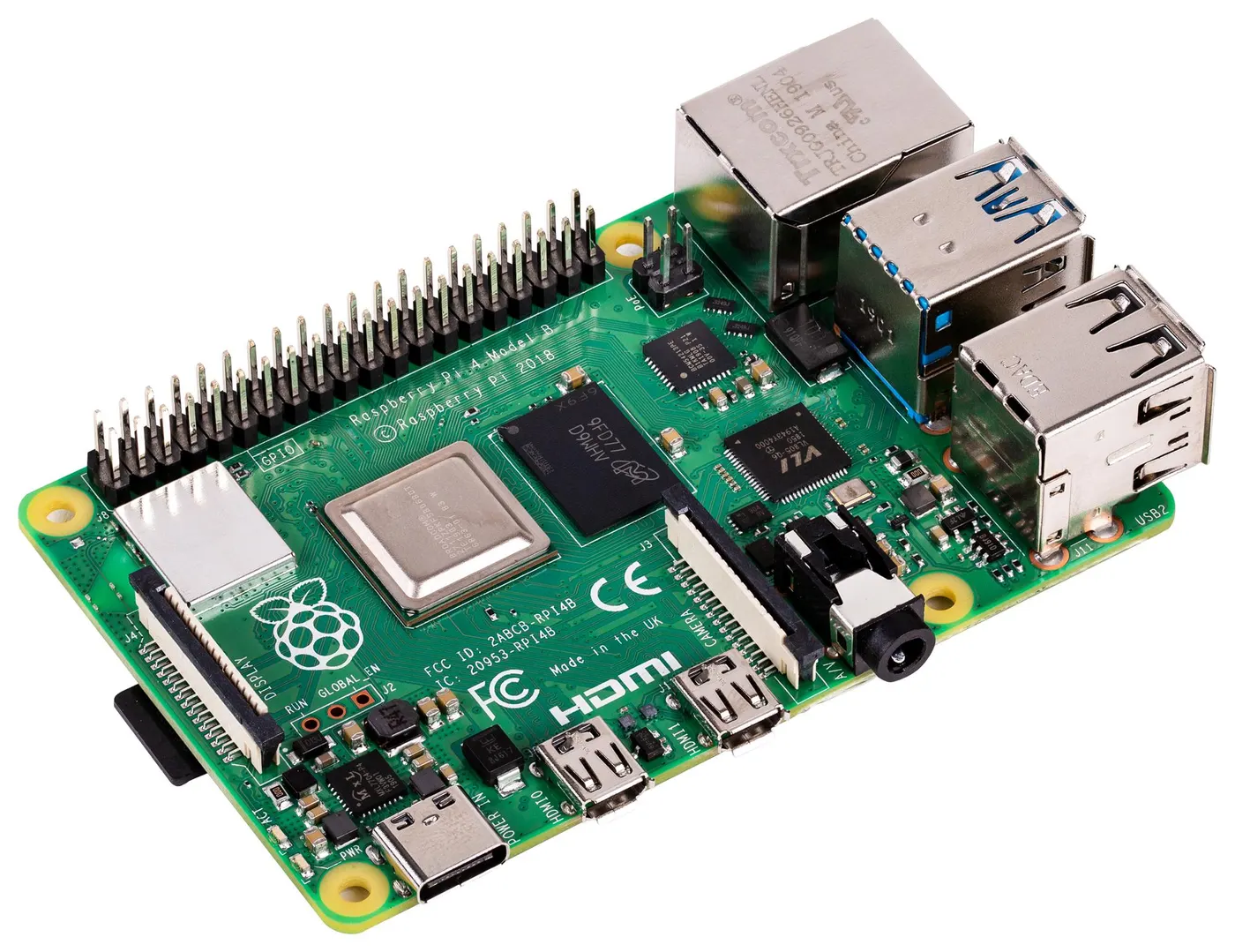
Raspberry Pi runs on a Linux-based OS and which operated by the Raspbian OS. Python is a programming language used to implement the Raspberry-Pi. It is capable of communicating with other external devices using wireless communication technology WiFi. It can be used for a wide range of applications. Making Raspberry Pi into a retro arcade machine, using it as a web server, or using it as the brain for a robot, security system, IoT device, or dedicated Android device are all popular uses. The Raspberry Pi 4 is the best Raspberry Pi, the best single-board computer and one of the best values you can get in tech. RPi 4 B has a dual-band 802.11acn wireless that can run on 2.4GHz or 5GHz.
16x2 LCD Display :
It is used to display data and the message. It includes 16 Columns & 2 Rows so it can display 32 characters (16×2=32) in total & every character will be made with 5×8 (40) Pixel Dots.
Flow Chart for for data acquisition and transmission :
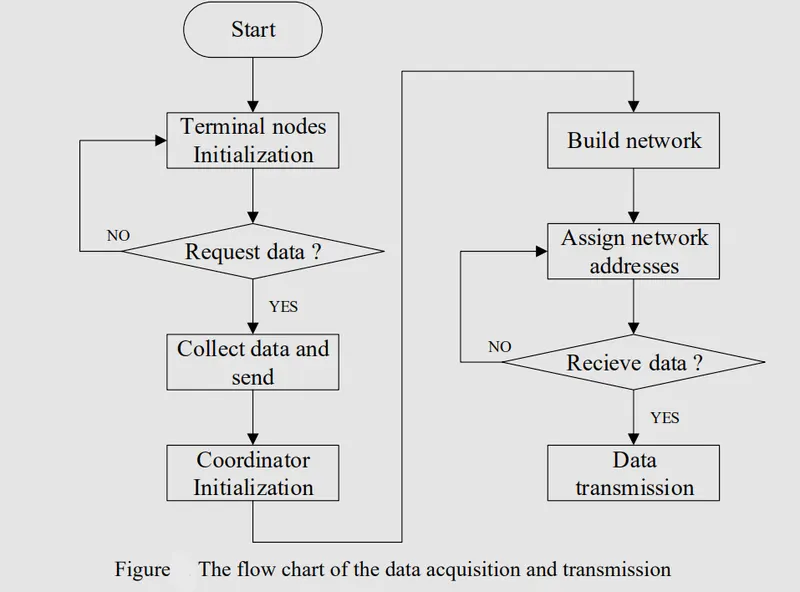
Terminal nodes are mainly responsible for data acquisition in wireless sensor networks. It sends a network access request to the coordinator after the initialization is sent. If the request is correct, the user can access the network success. As the center of the whole sensor network, the coordinator is mainly responsible for the network of remote wireless data transmission. After initialization the coordinator node first and then enter the state of network, network monitoring. The access request from the sensor node is received after the network is received. It assigns the address to the child node and sends the network confirmation information to establish the connection. The flowchart of the data acquisition
and transmission is shown in figure:
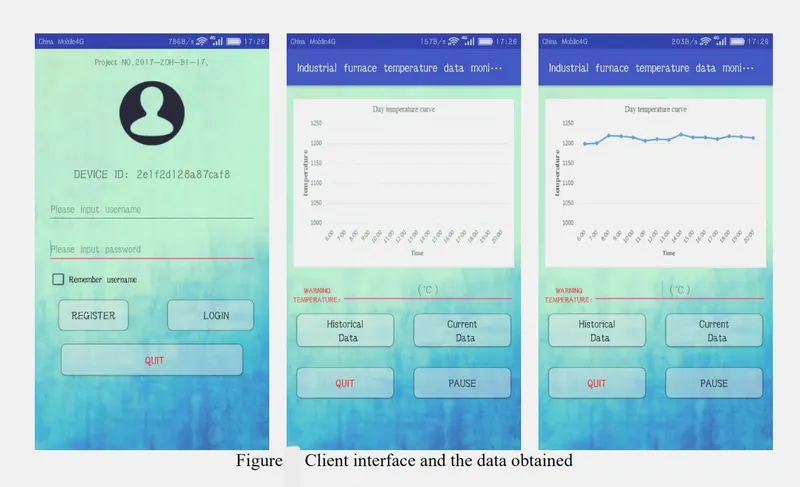
Android applications are real-time monitoring, system settings and historical data of the three modules, the program uses SQLite database as a data storage tool. SQLite is an open source lightweight embedded relational database, occupy very little space, efficient and reliable operation, portability, and provide zero configuration mode of operation, so more suitable than the traditional database for embedded systems. Figure below shows the login, data acquisition and historical data curve interface of data monitoring software based on Android system designed in this project:
Algorithms for automatic detection of abnormal conditions
If any abnormal parameters are detected automatically LED will turn on indicating caution and also a SMS is sent to the victim’s relatives or doctor on the mobile phone. And also, the observed parameters are graphically seen in the proposed monitor unit. All the collected information regarding health is stored in the database. Thus, the proposed work based on the Internet of Things effectively monitors the patient health parameter status every second to second and saves the life of a patient by taking suitable steps when their health parameters are in an abnormal/emergency conditions.
The Wearable IoT-cloud-baSed hEalth monitoring system (WISE)
The overall design of the WISE system is illustrated in Figure, The WISE system contains three fundamental components which are the WISE body area network (W-BAN), the WISE cloud (W-Cloud), and the WISE Users.
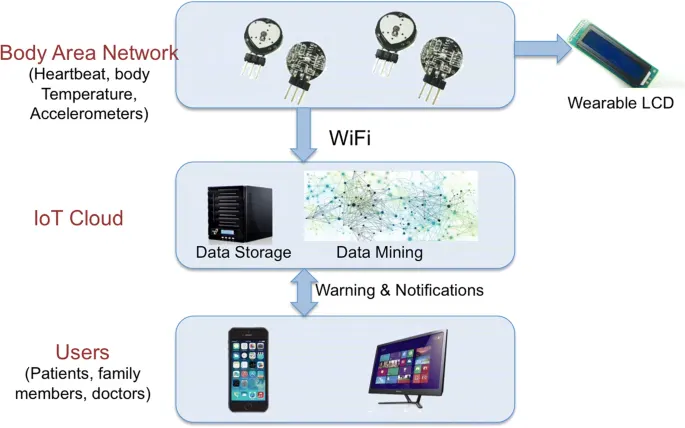
Data storage and processing: A series of sensor signals can be gathered via the WISE-BAN, including the blood pressure, heartbeat, and body temperature. Significant features can be retrieved to detect and identify potential heart disease; however, noise often existed during the data transmission, which will affect the diagnosis of the potential disease. Therefore, a data-filtering mechanism is adopted to avoid the invalid data. Moreover, the identification and accurate diagnoses of a potential disease often require a certain amount of historical data; therefore, a cloud database is established within the WISE-Cloud to store the sensor data from the WISE-BAN for the user.
Data visualisation: A web-based data visualisation scheme is implemented for authorised users to access the data.
Disease identification and notification: A sudden heart attack often seriously threatens someone’s life, who suffers from cardiac diseases. WISE aims at protecting patients from such injury, and it is important that the patients’ health condition can be monitored and understand. Moreover, any suspicious and abnormal sensor reading can be identified and notifications can be sent to identified users, such as the family members and doctors.
The implementation of the WISE-Cloud is based upon a HTTP server and a storage server that of the MySQL database. A web-based GUI is developed; an example of the interface that displays the real-time heartbeat and body temperature data is depicted in Figure.
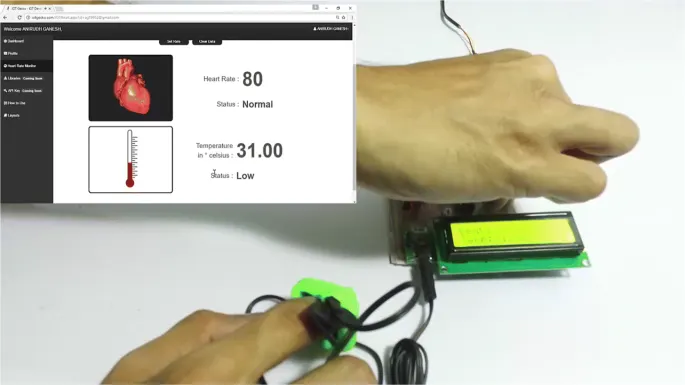
Once the power supply is given, the temperature from the thermistor and heart rate from the pulse metre sensor are determined. Same information is uploaded to the WISE-Cloud database server, and then displayed on the webpage in real time. A similar mechanism is also applied to the blood pressure sensor and data. Such information is fundamental for users to self-monitor their health condition, and for doctors to diagnose potential diseases. If any abnormal condition is detected, an alert will be generated to a certain stakeholder, which include a text message to the doctors or family members, and an alert is displayed on the LCD for the users themselves.
Data mining module is the key component for diagnosis of heart disease. After extracting valuable features from the heartbeat and body temperature data, machine learning-based approaches are applied, such as SVM and neural network, to establish the decision models.
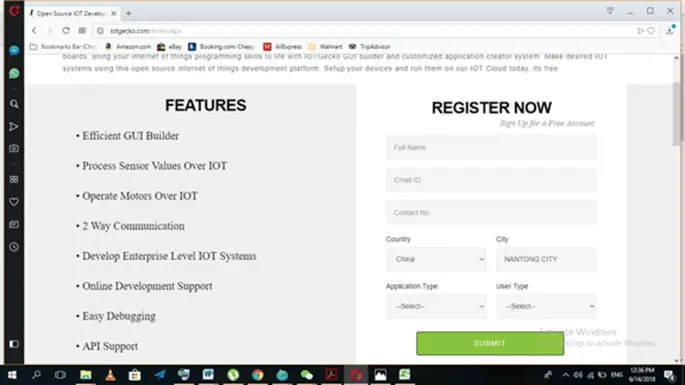
The user component aims at providing a convenient interface for users to access the data. Authorised users can log in to the cloud server to visualised the data from the web. There are three categories of user groups within the WISE system, the patients (or the monitored subjects), the doctors or nurses, and the family members or associated caregivers. All users must register with WISE via the GUI displayed in Figure, before accessing the data.
Data encyption and Security method for the IoT :
The security needs for IoT and the best practices to help address these needs point to a clear solution: Public Key Infrastructure (PKI).
PKI is a trust framework composed of hardware, software, policies, and procedures needed to manage trusted digital certificates and public-key encryption. It helps verify digital identities and secure data, which meets critical IoT security needs around authentication, encryption, and code signing. Importantly, it’s also scalable to accommodate millions of device identities with only a minimal footprint on each device.
PKI offers several critical advantages when it comes to strengthening IoT security, including:
- Unique Identities: PKI enables IoT device manufacturers to embed a cryptographically verifiable identity through a digital certificate into each device to ensure secure access and software delivery over time. Importantly, manufacturers can also update or revoke these certificates on individual devices as needed.
- Flexibility: PKI is a highly flexible approach that allows manufacturers to use a variety of options (including REST API, SCEP and EST) for trusted roots, revocations and certificate enrollment and deployment.
- Scalability: Manufacturers can issue digital certificates from a single, trusted Certificate Authority, which allows IoT devices to securely authenticate one another without any kind of centralized server.
- Robust Security: Assuming the PKI is well-managed, digital certificates provide significantly higher security than other authentication methods, including default passwords and symmetric cryptography.
- Minimal Footprint: The asymmetric keys used for PKI have a minimal footprint, which means it’s not a burden for connected devices with low computational power to house the necessary information.
- Proven Approach: PKI has long been used to provide a secure method for digital authentication and data communication and is recognized as a practical and scalable solution to protect against device hijacking and data theft.
Device certification plan :
While the combination of multiple technologies in a compact, wearable platform can offer users advanced capabilities, it can also expose them to
a number of potential safety hazards. In most instances, the degree of risk is greater than comparable, non-wearable devices since wearable technology products are intended to be worn or placed in close proximity to the human head or body. Specific safety risks related to wearable technology products are also included.
Evaluating the safety of wearable technology products involves a variety of different tests to demonstrate compliance with the regulatory requirements. In addition to safety considerations, the testing of wireless technology products also typically includes a number of performance assessments to evaluate the quality of the integration of multiple technologies to assess whether a given device will perform as promised. When
combined, the testing and assessment of wearable technology products can result in a lengthy and complex process. Depending on the construction or intended use of a particular device, the assessment of wearable technology products can include some or all of the following tests:
- Product Safety
- Electromagnetic Compatibility
- Specific Absorption Rate
- Wireless Interoperability
- Privacy and Data Security
- Energy Efficiency
- Biocompatibility
- Environmental and Sustainaibility Considerations
The U.S. Food and Drug Administration (FDA), by many accounts, has the most rigorous regulations for medical, health and wellness devices. In cases where mandatory regulations addressing certain risks have not yet been implemented, compliance with industry standards may impose de facto requirements on manufacturers of wearable technology products. This is certainly the case regarding wireless interoperability and co existence with other wireless devices and, to a lesser extent, data privacy and security. While the same standards requirements may be applicable
in many target markets, standards are subject to revision over time to reflect new technologies as well as the emergence of previously unidentified risks. Even within a given target market, regulatory approval authority can be dispersed among a number of different government authorities. In the U.S. for example, EMC and other spectrum-related issues fall under the jurisdiction of the U.S. Federal Communications Commission (FCC). Energy usage is addressed in the voluntary ENERGY STAR program administered by the U.S. Department of Energy. For wearable technology products categorized as medical devices, the U.S. FDA is the responsible authority.
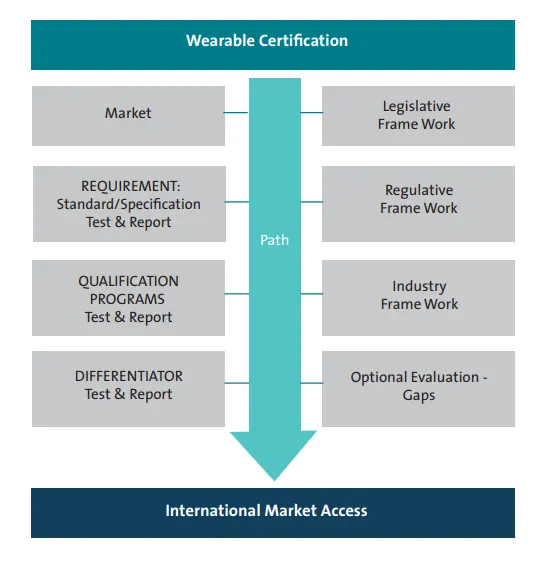
Finally, regulations and standards often fail to keep pace with advances in technology. This gap becomes a challenge for manufacturers of products
that incorporate a number of different technologies into a single package. And, the challenge can become even greater for manufacturers of wearable technology products, who are likely to introduce product innovations more rapidly in an effort to gain user acceptance.
The working of a concept if there are 10 number of users connected to a hospital :
A portable RFID reader is connected to the Raspberry Pi unit, which facilitates the identification of different users, thus a RFID tag should be amounted to each individual user. A lightweight LCD is included as an alternative option for the user to access the data. Furthermore, WISE is also empowered with a WiFi module, which enables the transmission of the data to the cloud and then allows the authorised users to access the real-time data from anywhere at anytime.
REFERENCES :-
1. V. Muneeswaran, P. Nagaraj, M. P. Rajasekaran, S. U. Reddy, N. S. Chaithanya and S. Babajan, "IoT based Multiple Vital Health Parameter Detection and Analyzer System," 2022 7th International Conference on Communication and Electronics Systems (ICCES), 2022, pp. 473-478, doi: 10.1109/ICCES54183.2022.9835814.
2. Furnace temperature intelligent monitoring system based on zigbee and android - Scientific Figure on ResearchGate. Available from: https://www.researchgate.net/figure/The-flow-chart-of-the-data-acquisition-and-transmission_fig1_326365522 [accessed 5 Oct, 2022]
3. Mohd Javaid, Ibrahim Haleem Khan, Internet of Things (IoT) enabled healthcare helps to take the challenges of COVID-19 Pandemic, Journal of Oral Biology and Craniofacial Research, Volume 11, Issue 2, 2021, Pages 209-214, ISSN 2212-4268,
https://doi.org/10.1016/j.jobcr.2021.01.015.
(https://www.sciencedirect.com/science/article/pii/S2212426821000154)
4. Bhardwaj, V., Joshi, R. & Gaur, A.M. IoT-Based Smart Health Monitoring System for COVID-19. SN COMPUT. SCI. 3, 137 (2022). https://doi.org/10.1007/s42979-022-01015-1
5. https://cdn.shopify.com/s/files/1/0559/1970/6265/products/[email protected]?v=1622574031
6. https://www.theengineeringprojects.com/wp-content/uploads/2019/01/Introduction-to-DS18B20.jpg
8. https://cdn.afterdawn.fi/v3/news/original/raspberry-pi-4-board.jpg