Project 1 - COVID-19 Vaccinations Trend Analysis
Project 1 - COVID-19 Vaccinations Trend Analysis
Aim: The primary objective of this analysis is to analyze the trends in COVID-19 vaccination data, with the goal of monitoring vaccine distribution and identifying opportunities to enhance vaccination strategies. By doing so, we aim to effectively combat the COVID-19 pandemic and safeguard global public health.
Introduction: The COVID-19 pandemic, caused by the novel coronavirus SARS-CoV-2, emerged in late 2019 in the city of Wuhan, Hubei Province, China. It quickly spread globally, leading to an unprecedented global health crisis. The World Health Organization (WHO) declared COVID-19 as a pandemic on March 11, 2020, acknowledging the rapid and extensive transmission of the virus across multiple countries and continents.
The virus primarily spreads through respiratory droplets when an infected person coughs, sneezes, talks, or breathes, making it highly contagious. Common symptoms of COVID-19 include fever, cough, shortness of breath, fatigue, muscle aches, loss of taste or smell, and in severe cases, it can lead to pneumonia, acute respiratory distress syndrome (ARDS), organ failure, and death.
Vaccination efforts against COVID-19 have become a crucial pillar in the fight against the pandemic. Vaccines play a pivotal role in controlling infectious diseases by providing immunity to individuals, reducing the likelihood of severe illness, hospitalization, and death.
Problem statement: Vaccination efforts are critical to controlling the spread of the virus, reducing severe illness, and restoring normalcy. The problem is to analyze the trends and patterns of COVID-19 vaccinations across countries, assess the effectiveness of vaccination strategies, and understand the underlying factors contributing to disparities in vaccine distribution and access.
Methodology:
- Data Importing: In Power BI Desktop, navigated to the Home tab, selected the 'Get Data' option, chose the CSV file type, and selected the desired file. Finally, clicked on 'Transform Data' to proceed with data transformation.
- Data Cleaning: After loading the data, I encountered numerous null values, which could potentially lead to erroneous results. To address this issue, I replaced the null values with zero. Additionally, I reviewed the column names and converted the date column from the text data type to the appropriate date format.
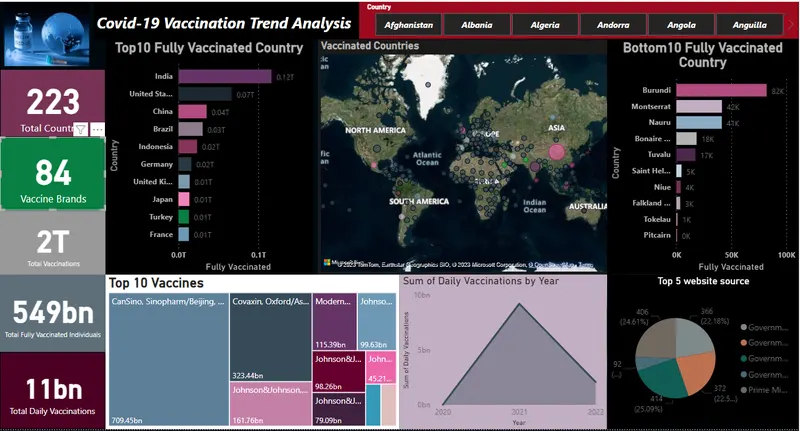
- Visualization: To comprehensively analyze and grasp the COVID-19 vaccination trend, a diverse range of visualizations, including bar graphs, world maps, cards, pie charts and donut charts, were employed.
Analysis: We have utilized a variety of visualization tools listed below to analyze the COVID-19 vaccination trend.
- Map: Employing map visualization to gain insights into the distribution and status of vaccinated populations across various countries.
- Cards: Utilizing cards to present key values, including the total number of countries and the overall count of vaccinations, in a concise and visually appealing manner.
- Slicer: Implemented as a filtering tool to refine and interactively control the displayed data.
- Tree Map: Employed for analyzing the distribution and prominence of the top 10 vaccines utilized worldwide.
- Table: Utilized to compile a comprehensive list of vaccine brands used in countries, along with the corresponding count of vaccines administered.
- Clustered Bar Chart: Leveraged to identify the top and bottom 10 countries in terms of fully vaccinated populations.
- Pie Chart: Utilized to visualize the distribution of daily vaccinations per year, providing an overview of the cumulative totals.
Insights:
- The above analysis revealed the top countries with the highest percentage of fully vaccinated populations, indicating successful vaccination campaigns in those regions.
- By examining the data year-wise, we obtained valuable insights into the progress of vaccination efforts over time, highlighting trends and patterns in vaccine distribution.
- The analysis also identified the top 10 vaccines widely used across the world, providing valuable information on the most prevalent vaccine brands.
- Additionally, I have identified countries where vaccination coverage is still inadequate, suggesting areas that require further attention and targeted intervention to ensure equitable vaccine distribution.
Recommendations: Based on the insights gained from the analysis, the following recommendations are proposed:
- Focus on Vaccine Equity: To address the disparities in vaccine distribution, prioritize efforts to ensure equitable access to vaccines in countries where vaccination rates are low. Collaborate with international organizations and vaccine manufacturers to increase the availability and distribution of vaccines to underserved regions.
- Strengthen Vaccine Awareness Campaigns: Implement robust and targeted public awareness campaigns to increase vaccine acceptance and uptake. Address misinformation and vaccine hesitancy by providing accurate and transparent information about the safety and efficacy of vaccines.
- Monitor Progress and Targeted Interventions: Continuously monitor vaccination rates and progress in different regions. Identify countries and communities with low vaccination coverage and deploy targeted interventions to increase vaccination rates in those areas.
- Support Healthcare Infrastructure: Strengthen healthcare infrastructure and supply chains to facilitate efficient vaccine distribution and administration. Ensure that healthcare facilities have the necessary resources and personnel to manage vaccination campaigns effectively.
- Encourage Research and Development: Invest in ongoing research and development of vaccines to address emerging variants and improve vaccine efficacy. Support the production of booster shots and updated vaccines to maintain long-term protection against COVID-19.
By implementing these recommendations, policymakers, healthcare authorities, and international organizations can work together to enhance vaccination efforts, reduce disparities, and mitigate the impact of COVID-19 on a global scale.
Conclusions: The analysis underscores the significance of ongoing monitoring and optimization of vaccination efforts. By leveraging data insights, policymakers and healthcare authorities can enhance vaccination strategies, address challenges, and work collaboratively to combat the COVID-19 pandemic effectively. A concerted global effort is crucial to achieving widespread vaccination coverage and protecting global public health.
Dashboard:
Attached the both report docx as well as Pbix file below for reference.