Week- 5 - Solid meshing
AIM: To perfom the geometry clean up and solid meshing to the given rear view mirror.
PROCEDURE:
Step1: To Import the rear view mirror model into the Ansa .
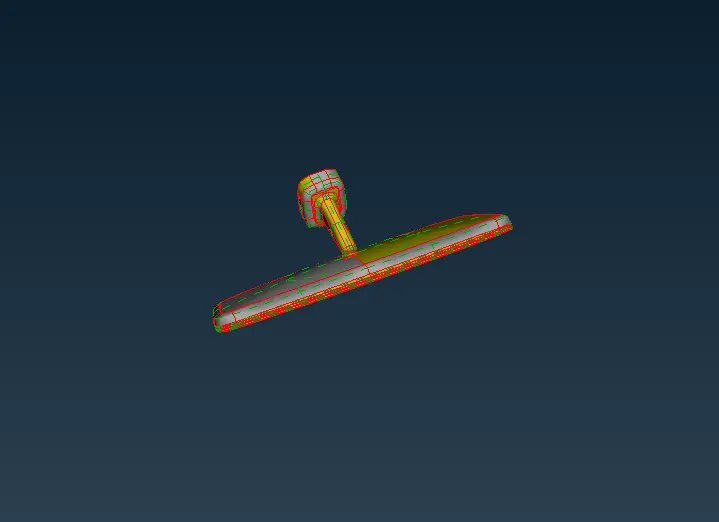
Step2: Performing topo and the changing the orientation of the model after importing the model
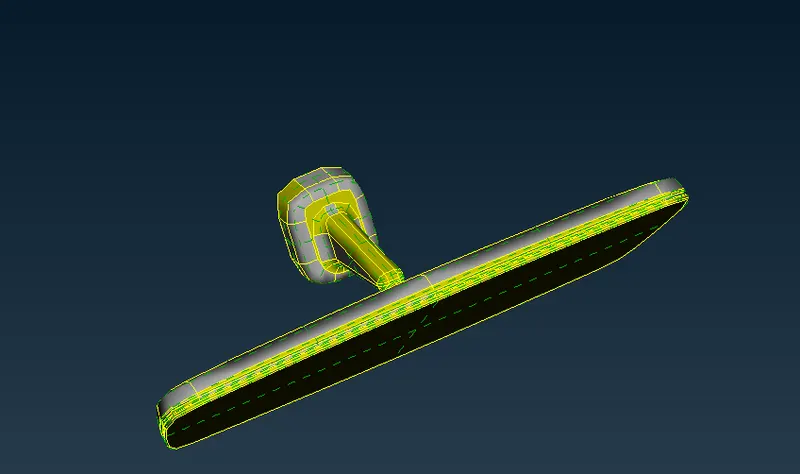
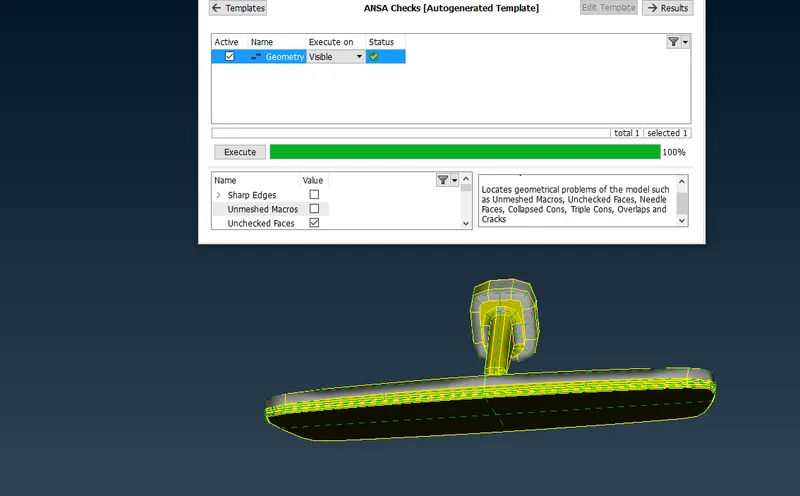
Step3: To check the geometry and fix the geometrical errors for the given model
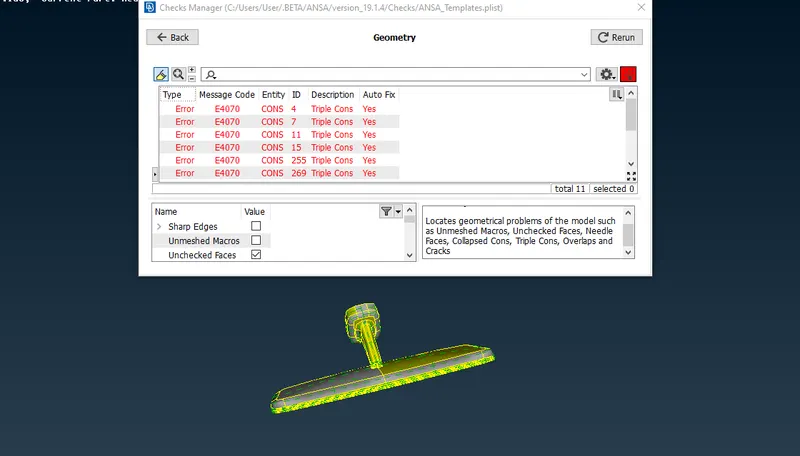
i) To fix the needle face of the model by deleting the surface and applying topo.
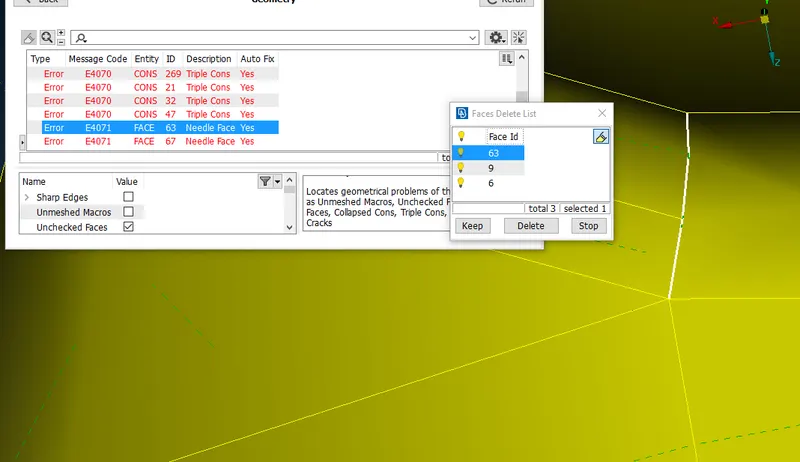
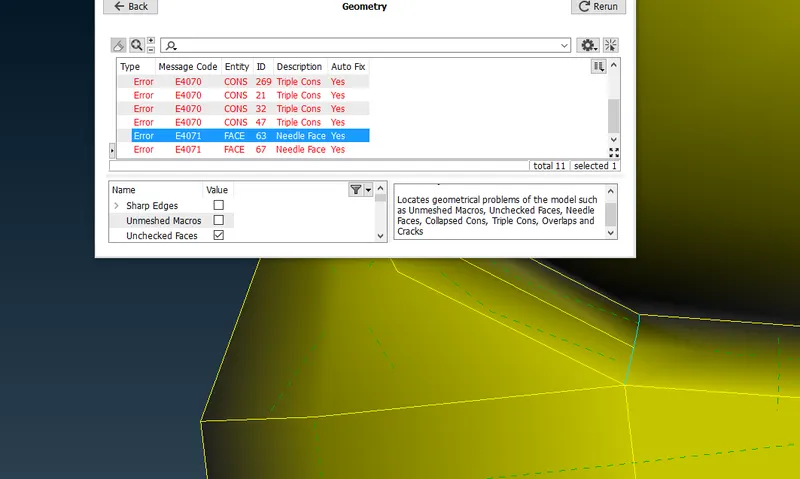
ii) To fix the triple cons error by releasing the con and appying topo to the adjoining surface by carefully examining the neigbouring surface.
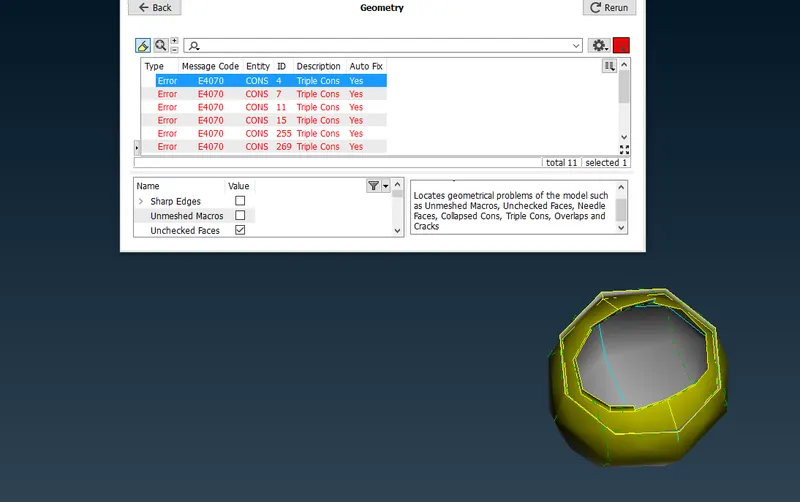
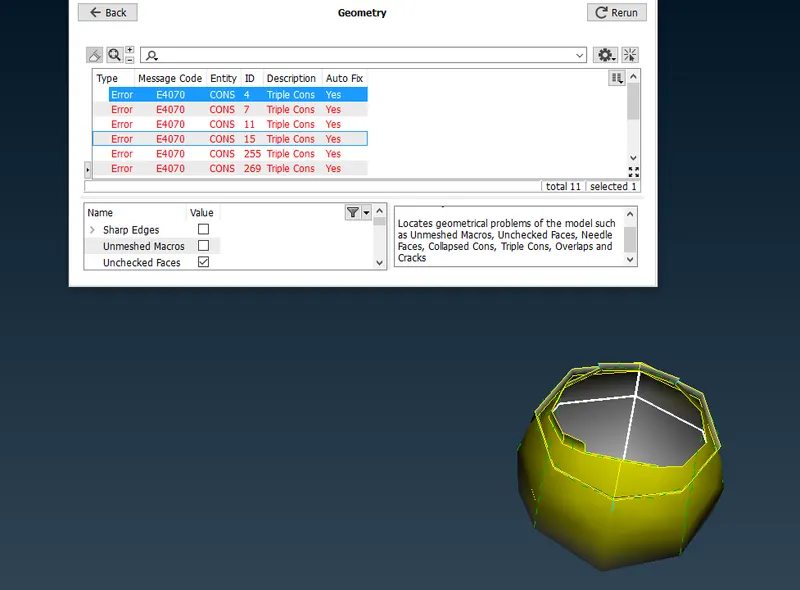
iii) The geometry error are fixed as shown below.
Step4: Assigning the quality criteria to the given model and the target length.
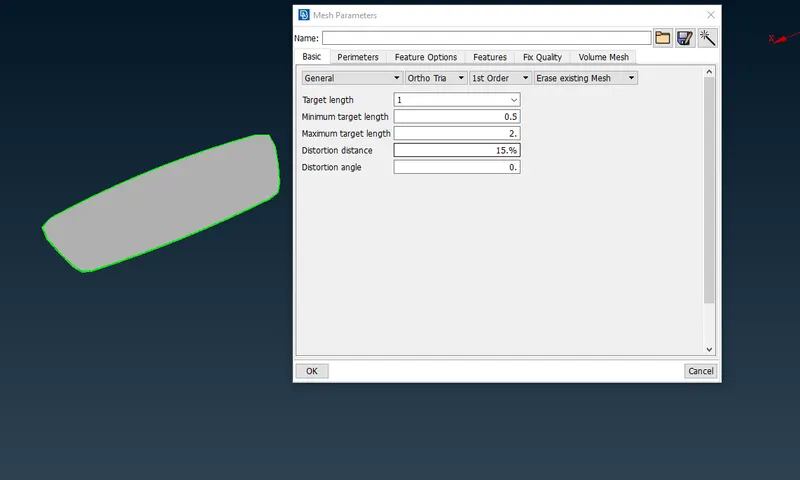
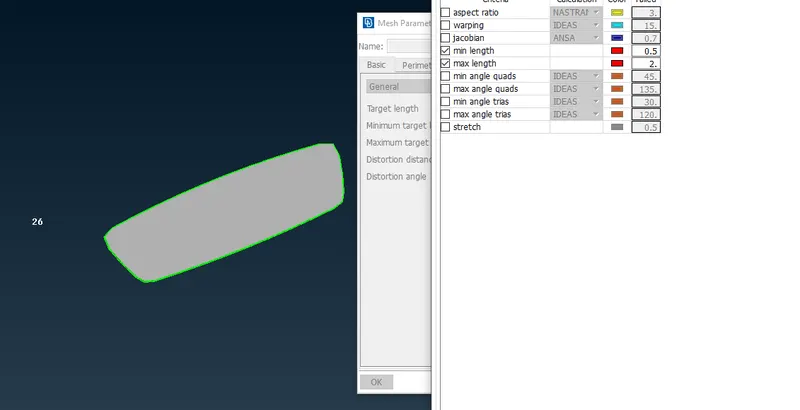
Step5: To mesh the given model by a skin mesh or surface meshing and genrating the volume mesh by tetra element which is also known as unstructred mesh.
i) Firstly creating the 2D meshing for a given different PIDS
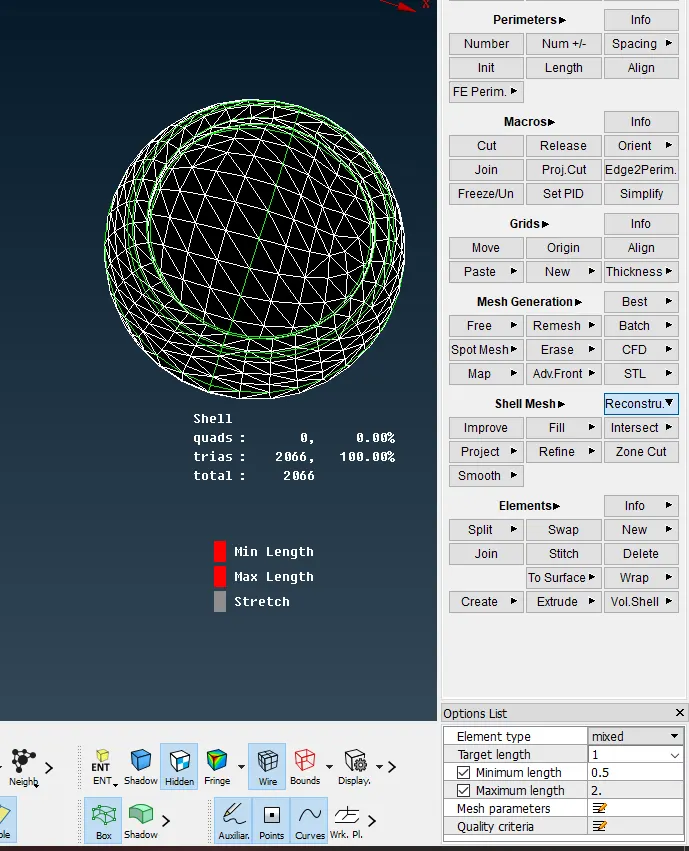
a) Applying ortho tria because of the curved surface in order to capture the surface better.
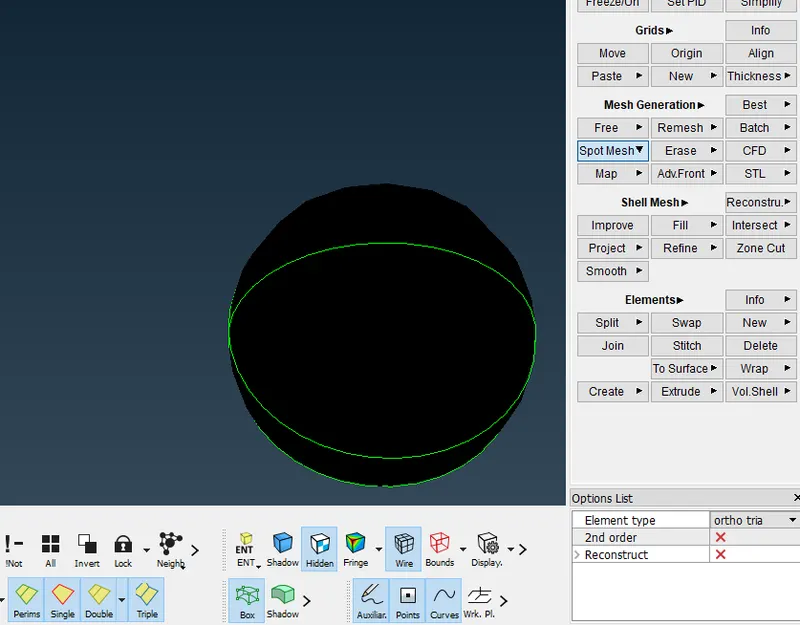
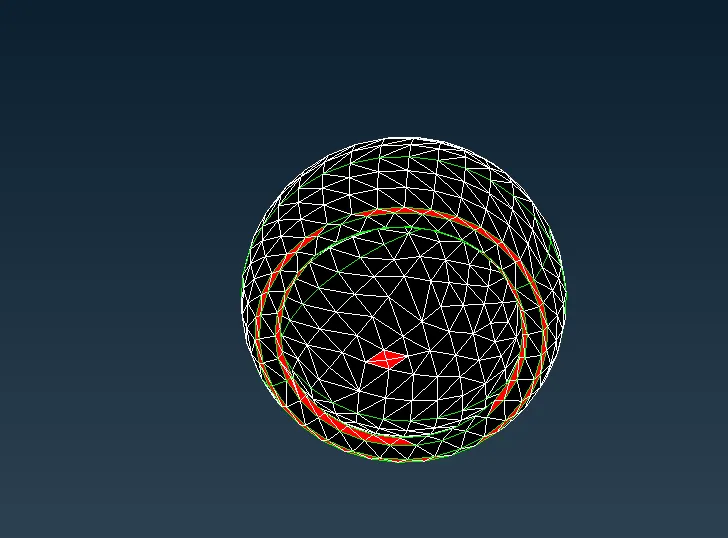
- in order to fix the off element applying reconstruction.
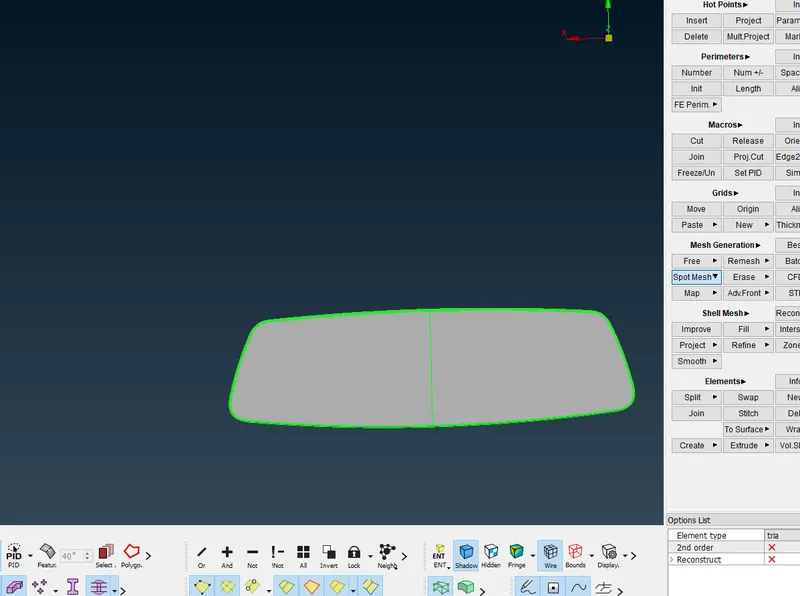
b) Meshing the mirror by tria element since it has flat surface.
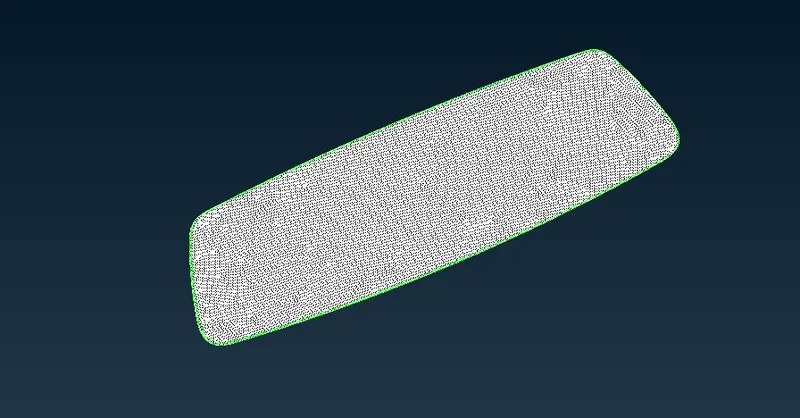
C) Meshing the mirror housing with the combination of tria and ortha tria since there are flat surface and curve edges for better feature capturing.
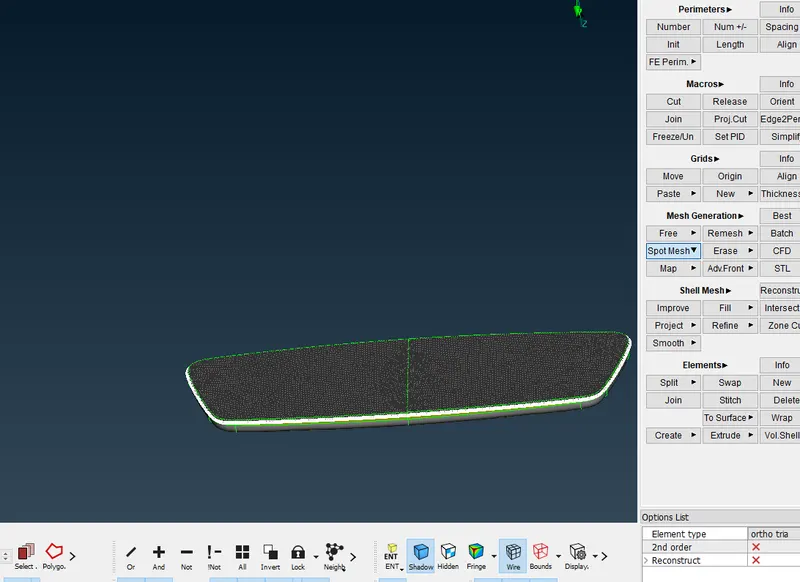
- Applying ortho mesh to the roller housing and tria element to the neighbouring surface or flat surface in order to capture the surface better.
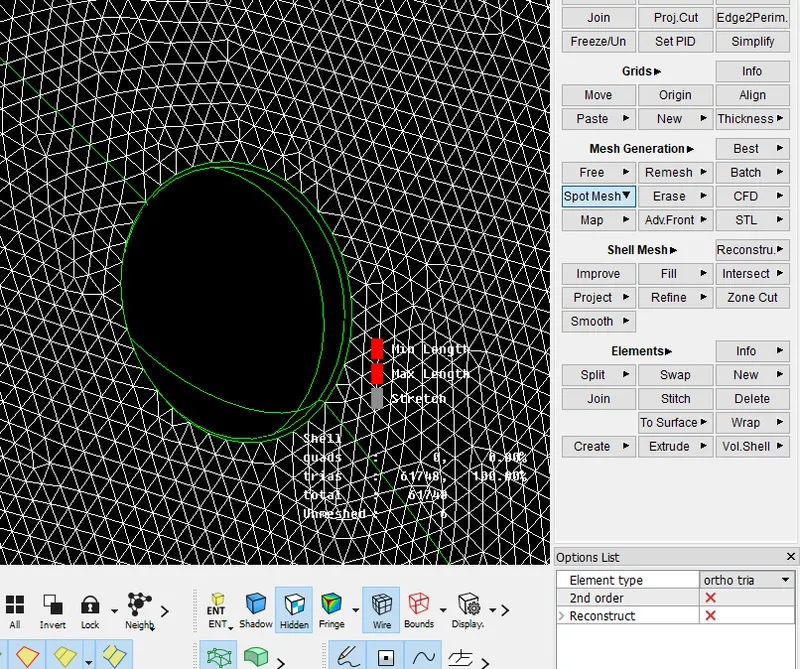
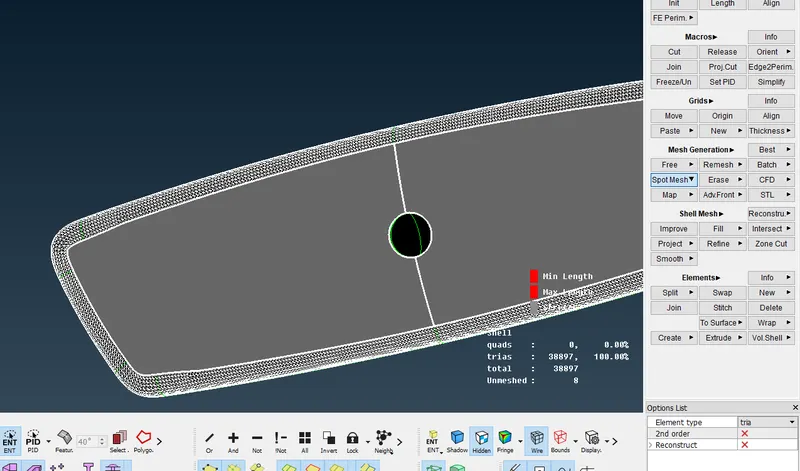
- Eliminating the off element by using reconstrution.
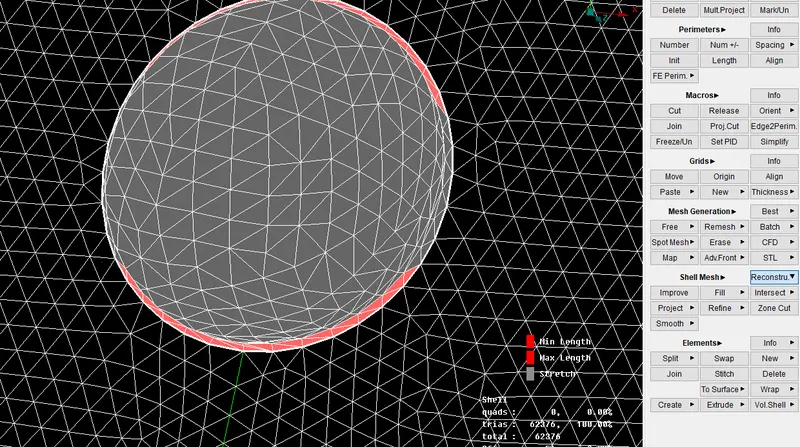
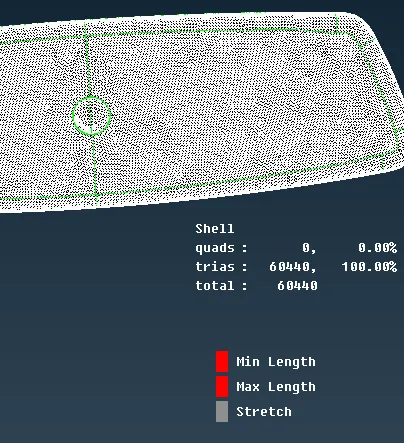
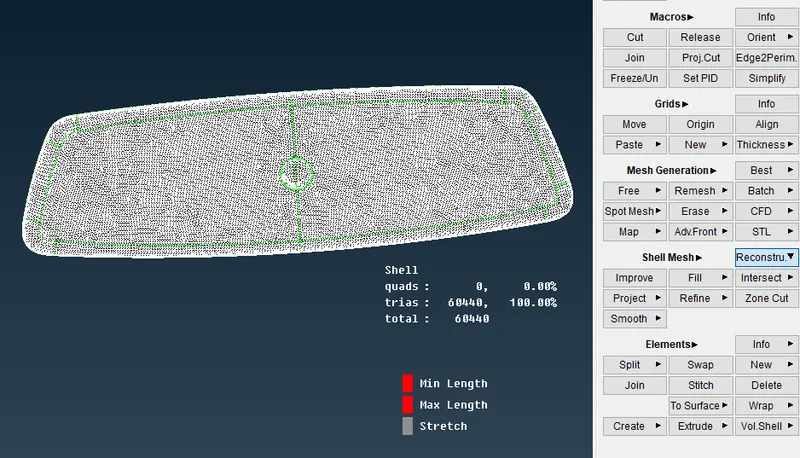
d) Meshing the body of the mirror mounting the combination of tria and ortha tria.
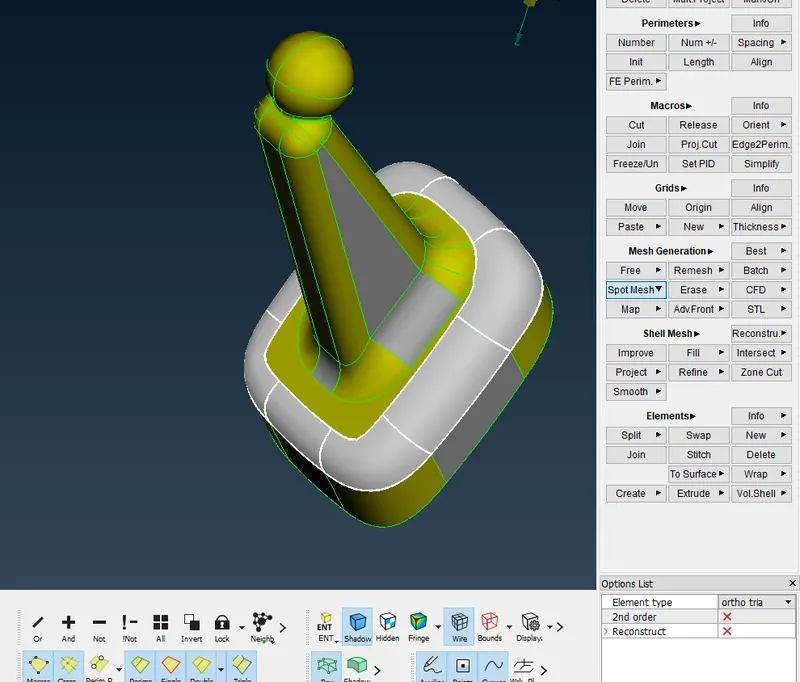
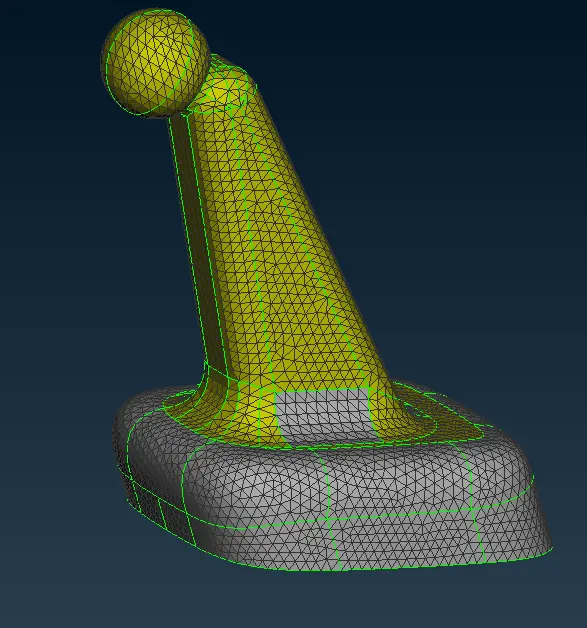
e) Meshed all the components and removed all the off elements as per given quality criteria.
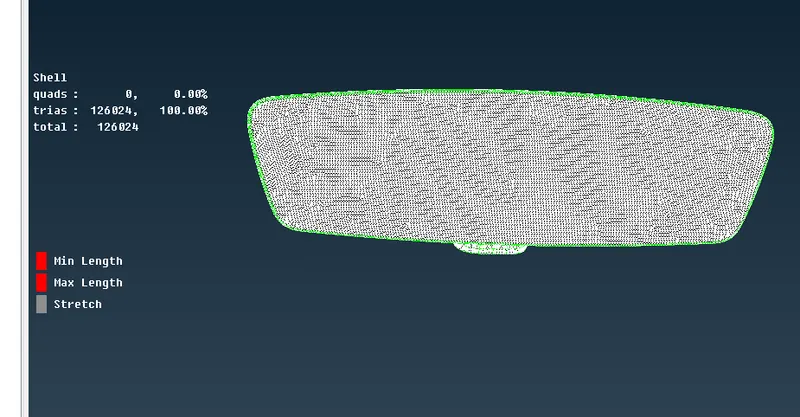
- Sectional view of the skin meshing before the assiging the volume or generating the volume mesh.
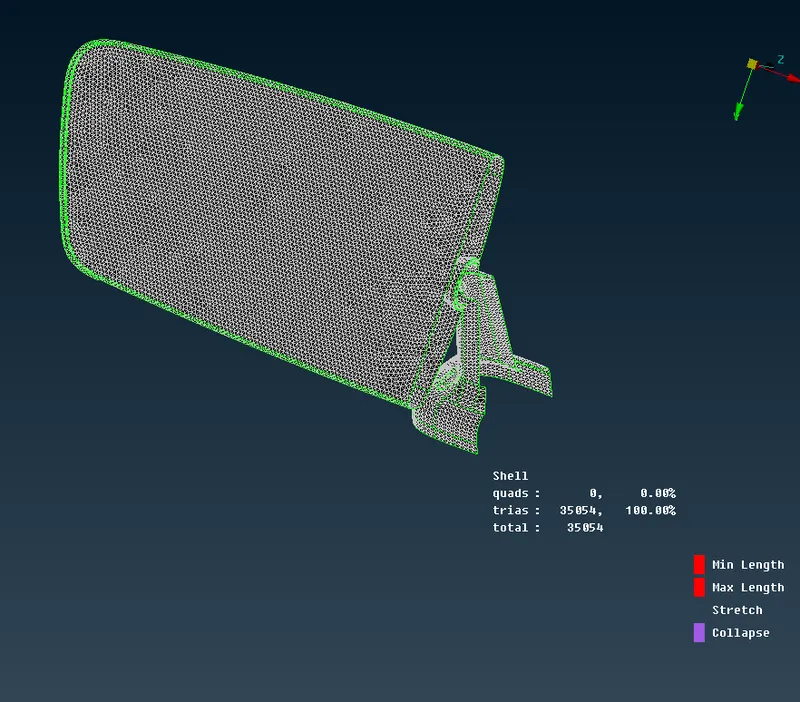
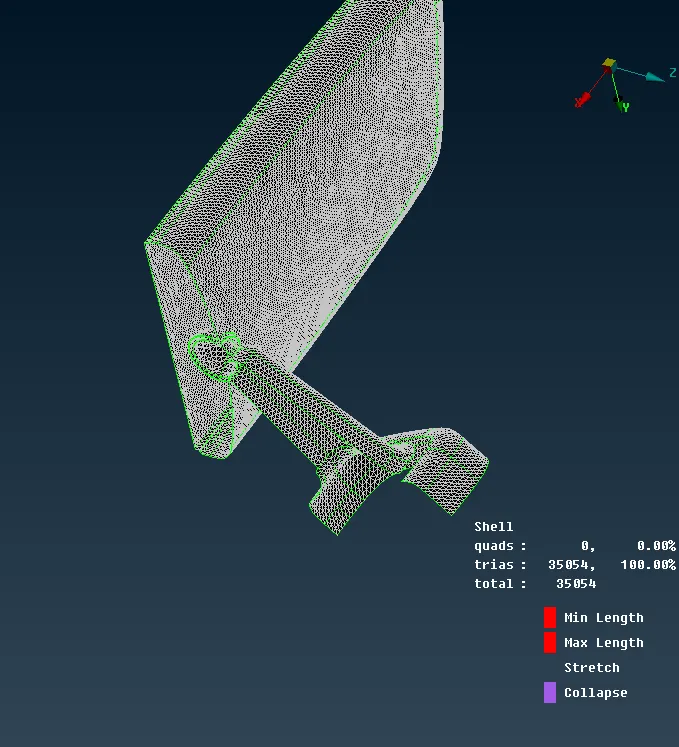
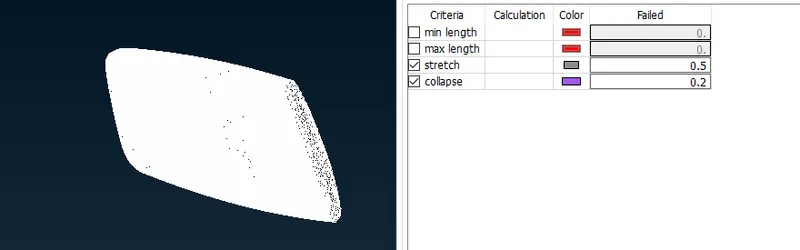
ii) Generating the volume for 2D meshing and also adding Tet collapse to the quality critera.
a) Defining the volume
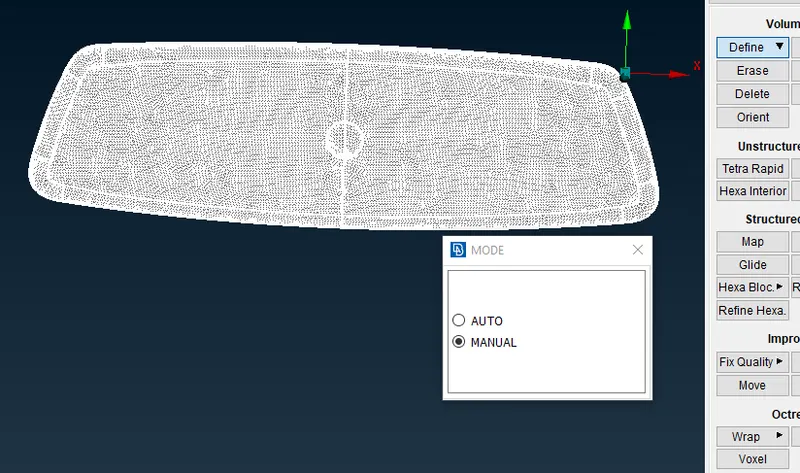
b) Assigning Psolid for the given model and generating the volume mesh for the model ( Tetra FEM>voume>Box selecting the model) and making sure that model doen't fail for Tet collapse, following the same procedure for all the components.
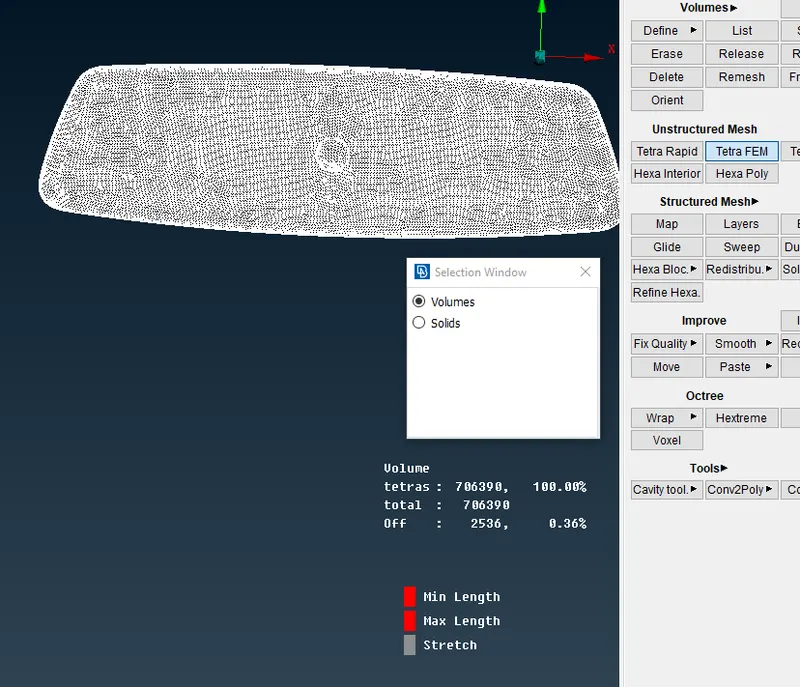
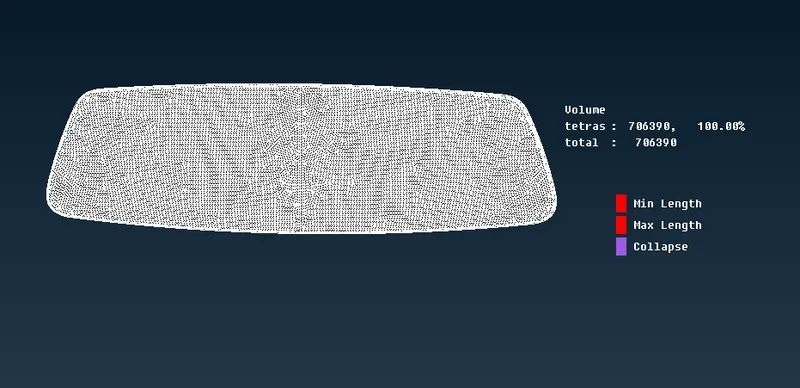
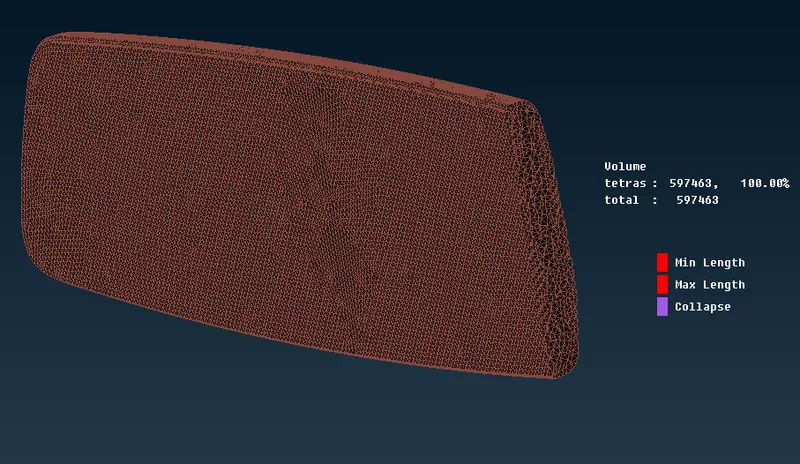
- Sectional view of the mesh volume for the given model.
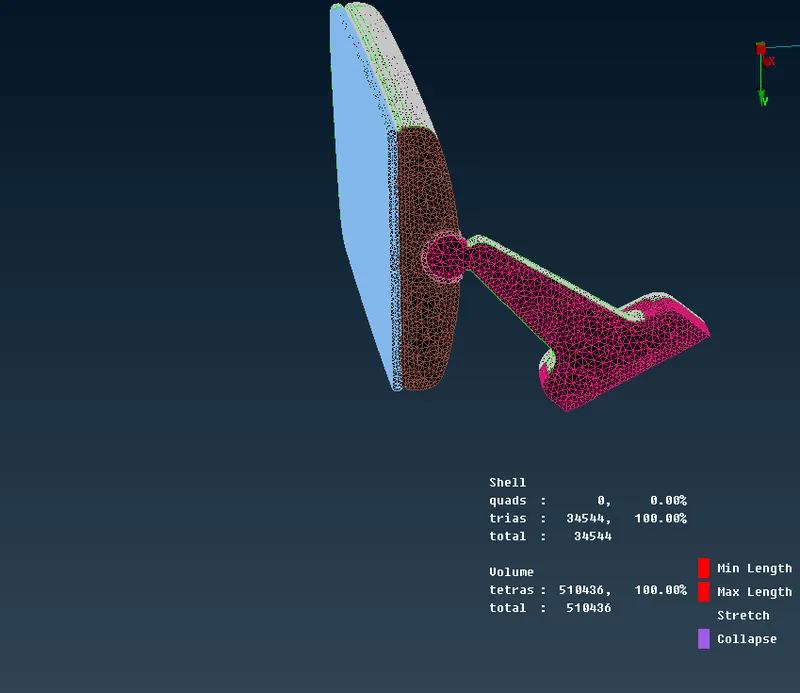
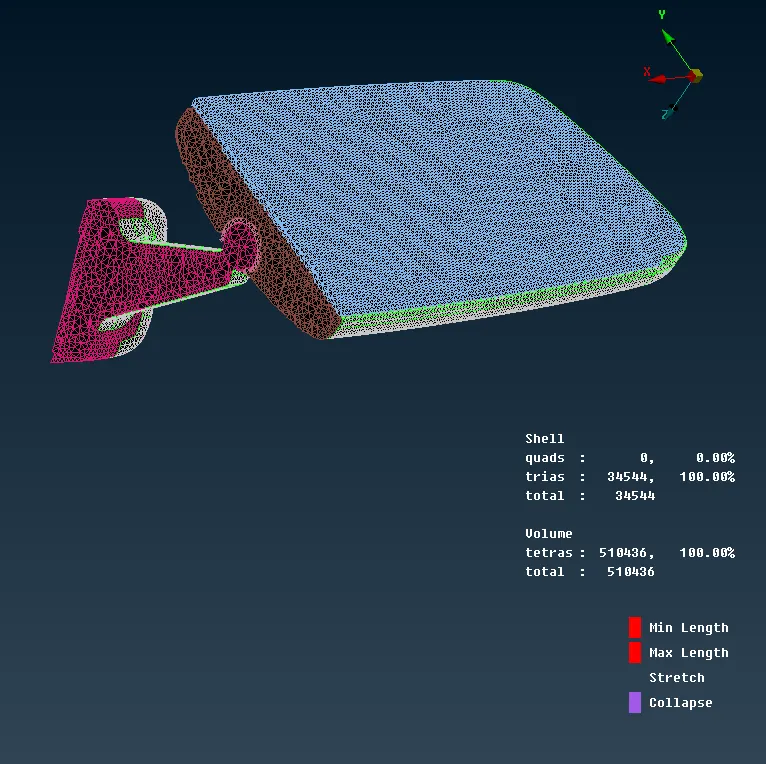
- Made sure that there are no kinks and raised surfaces.
LEARNING OUTCOMES:
- Fixing the geometrical errors.
- Learned tetramesh or unstructured mesh.
- Learned using ortho tria and tria mesh for different surface or feature in order to capture the model better.
- Learned to obtain smooth mesh flow.
CONCLUSION:
- From this project I have learned how to mesh the plastic component by tetra mesh or unstructured mesh.
- Meshed the given Rear view mirror model successfully with given quality criteria.