Project 1_Comparative study of different storey buildings for Seismic forces
Aim:
To Model, Analyze and compare different Storey Building for Seismic Forces in terms of Time Period of the Structure.
Introduction:
- The Natural Time Period influences the overall stability of the structure or the building.
- The Time period influences the Seismic forces produced in the Building.
- This Time period decides the Intensity of Base Shear produced.
- The Torsional and Shear Intensities produced are all based on the Time Period.
- As the Time Period influences the entire design of the structure we need to have an clear understanding on how it actually is influenced based on the Structural Configuration of the Building.
- In this Exercise we will see how different configuration of the Structural elements and height of the Structure Influence the Time Period.
Procedure:
The procedure for Modelling and Analyzing is same as an Conventional Procedure done for any Seismic Design for a Structure.
- Draft the Grid Layout and the Storey Heights required.
- Go to the Material Properties and add the various Material Properties required.
- Add the Frame sections and Shell Thickness as per the requirement.
- Model the Columns first and then the Beams.
- Add the Slabs to the structure.
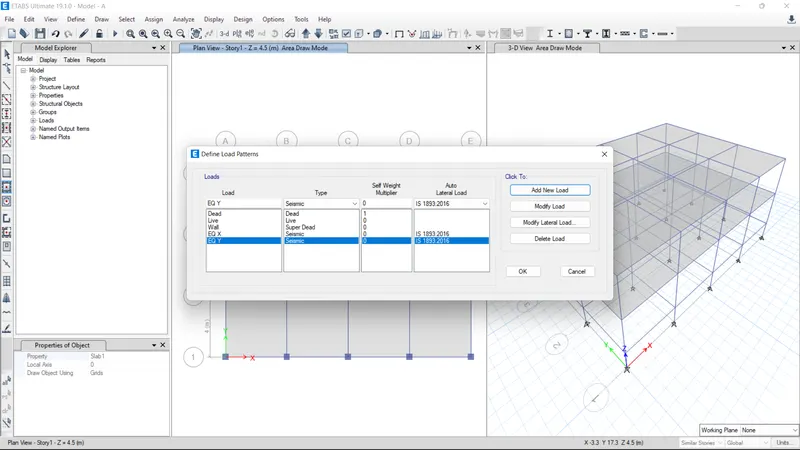
- Add the Load details and Load patterns.
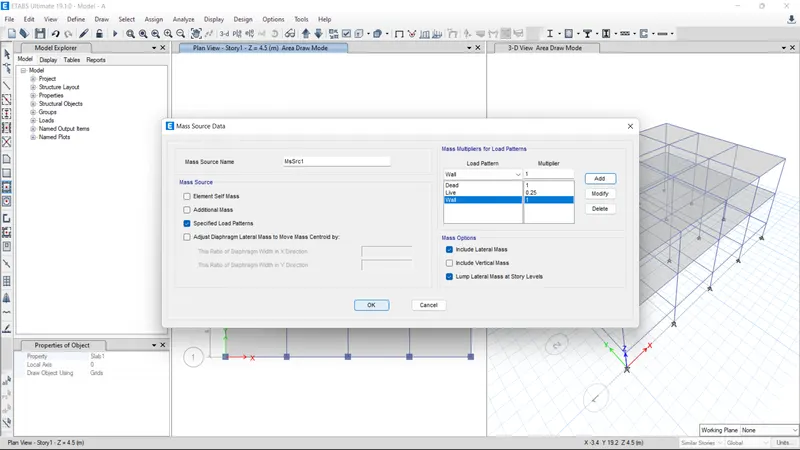
- Add the Source Weight to the structure.
- Add the loading to the Structure to the respective elements.
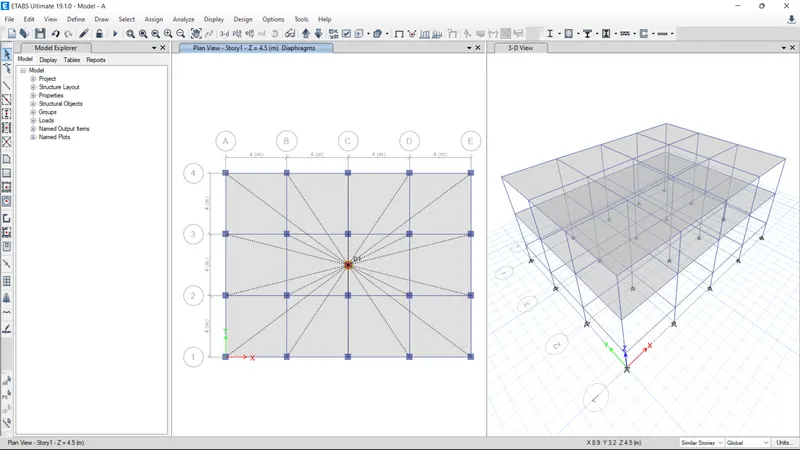
- Select the Slab elements and assign the Diaphragm to the respective floors.
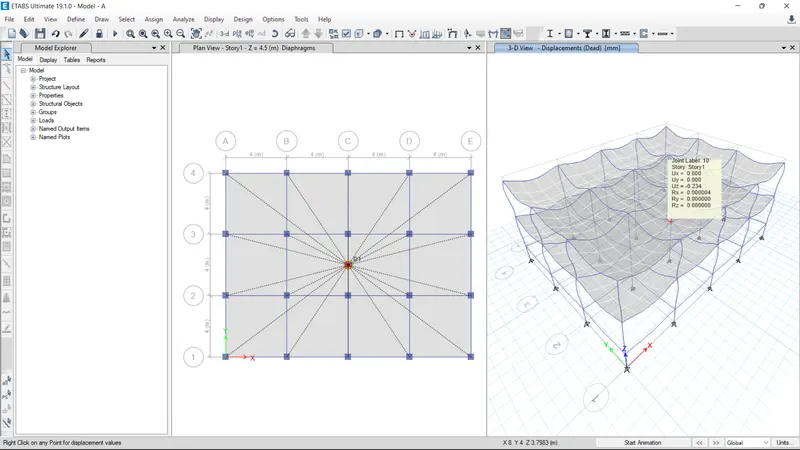
- Run the analysis and go through the results.
The same procedure is followed in Modelling all the structures mentioned in the Question
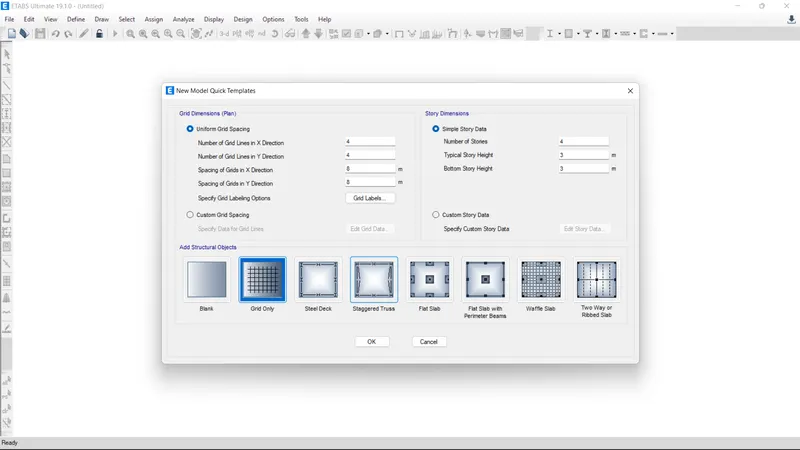
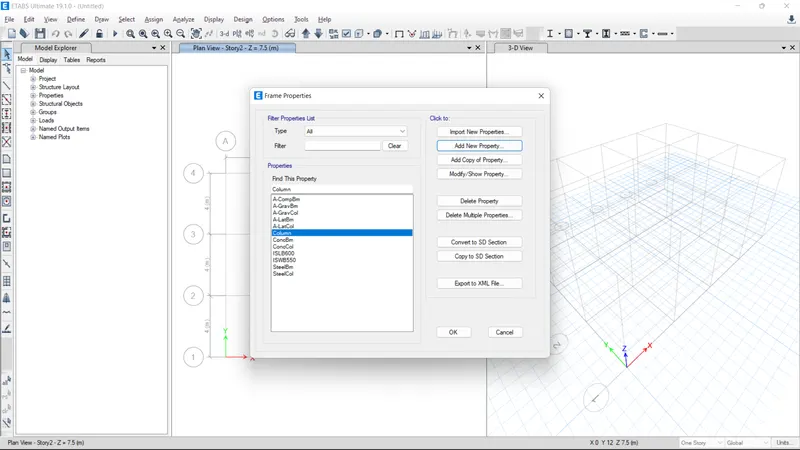
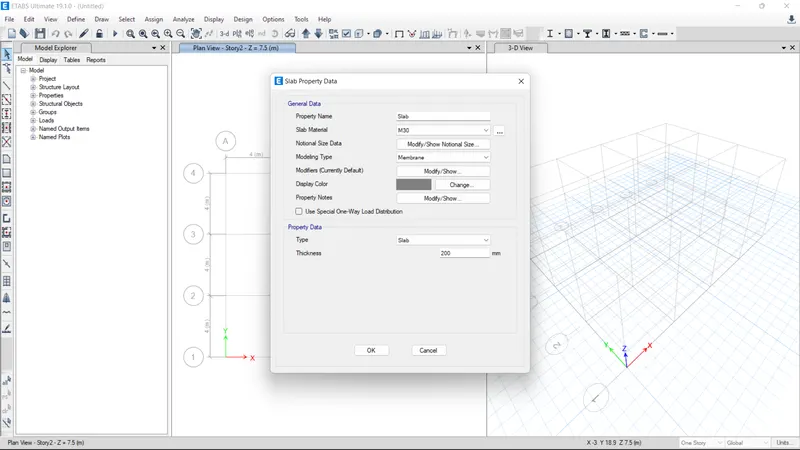
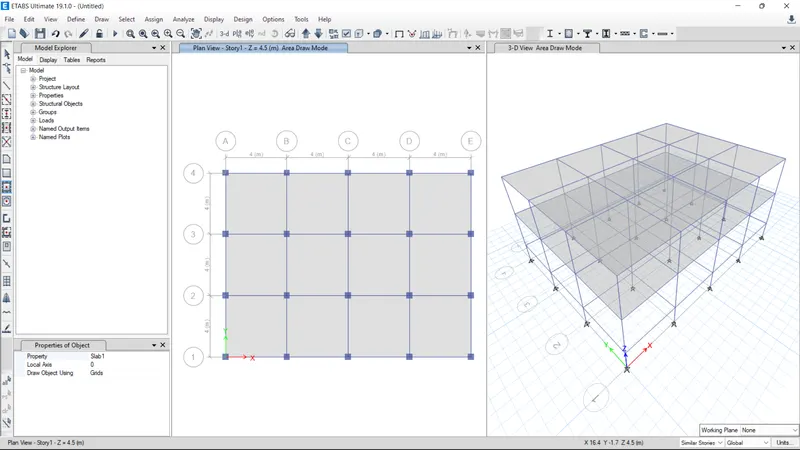
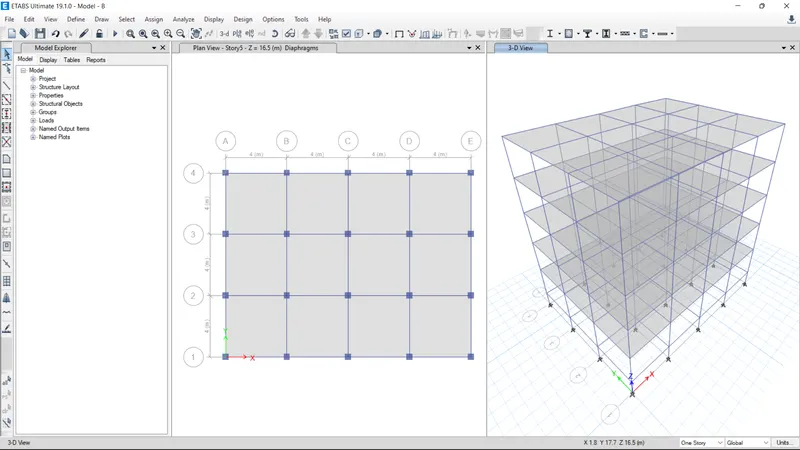
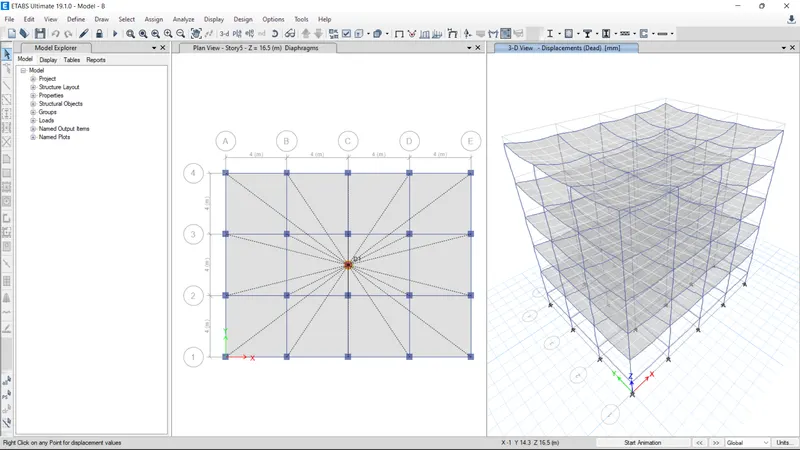
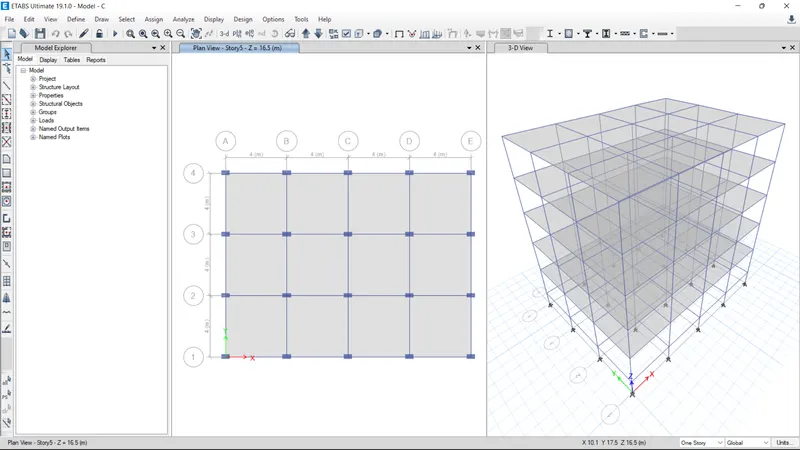
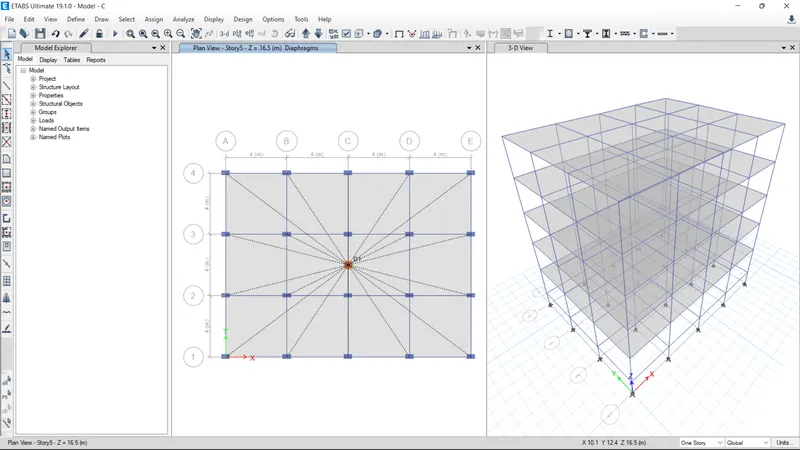
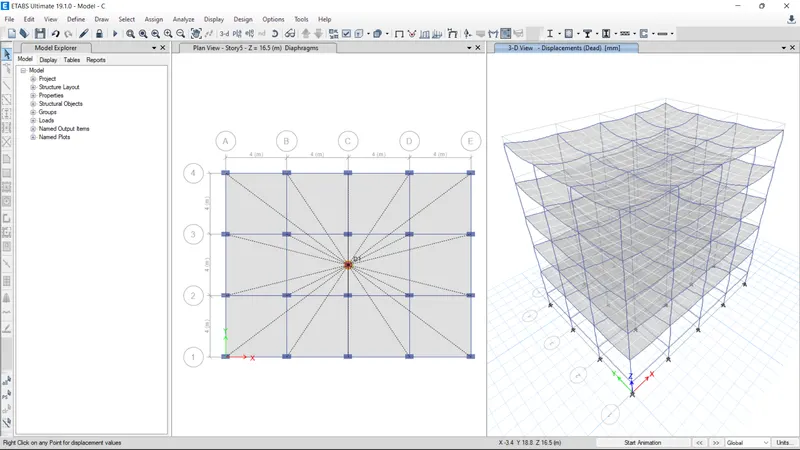
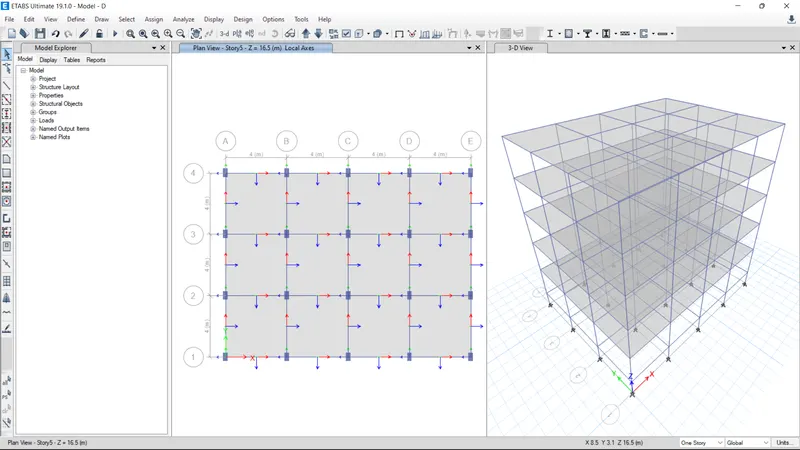
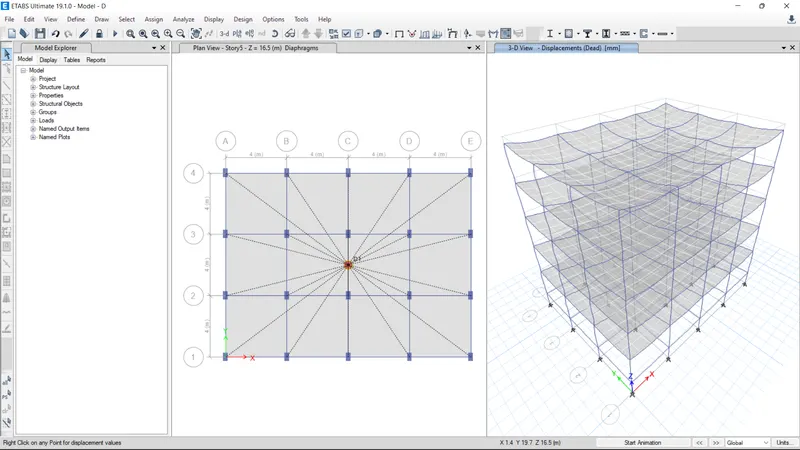
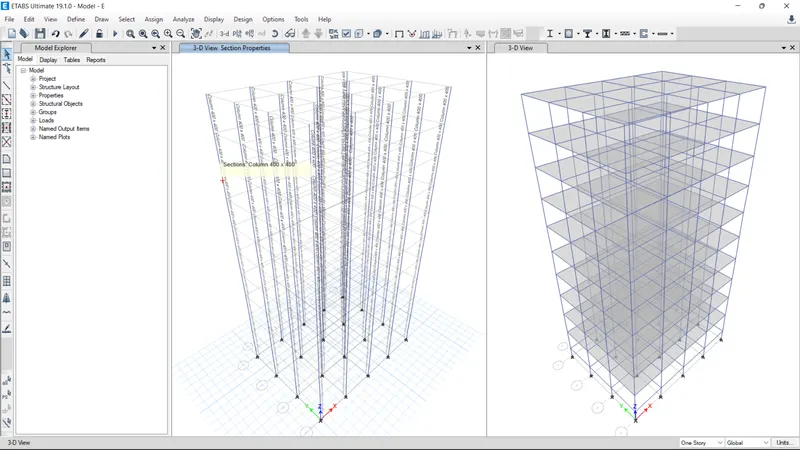
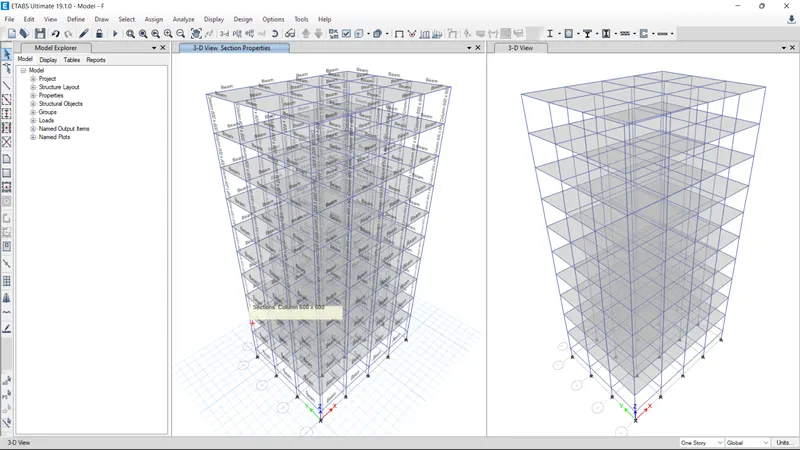
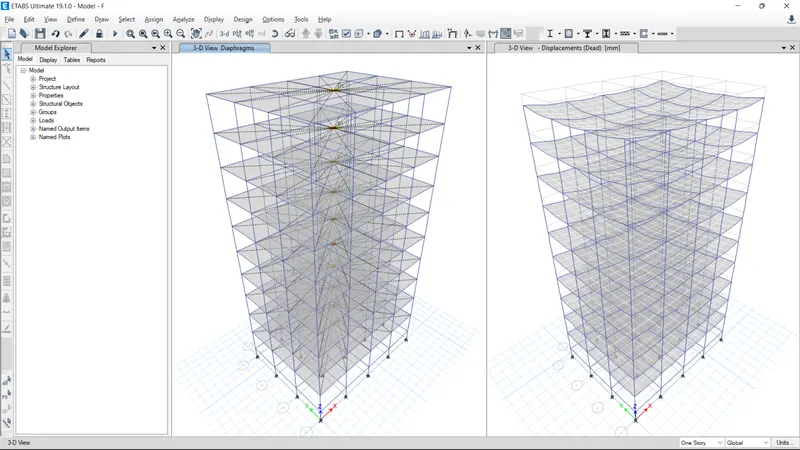
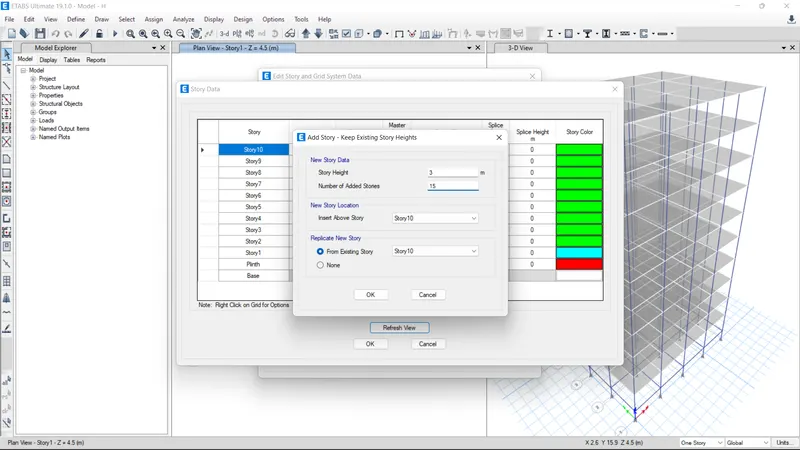
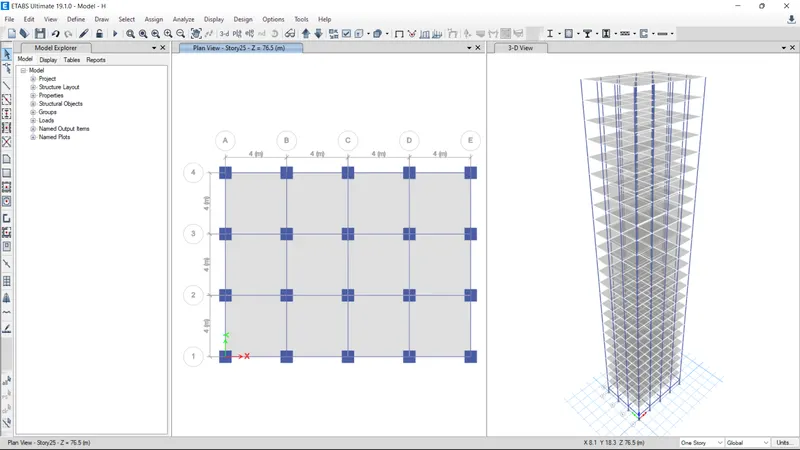
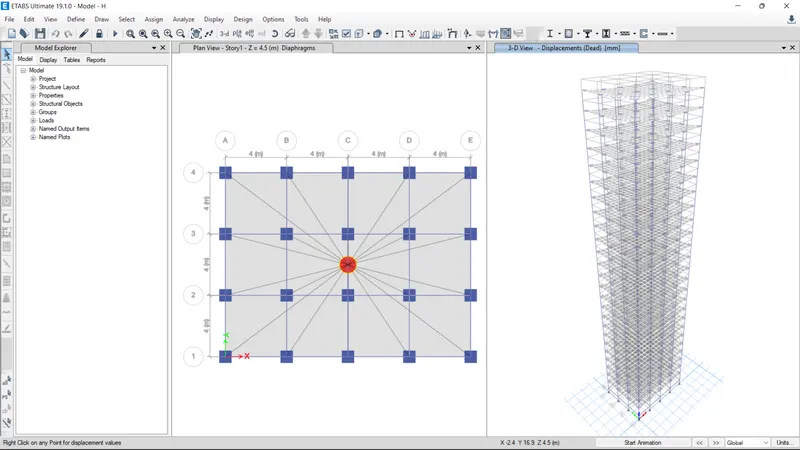
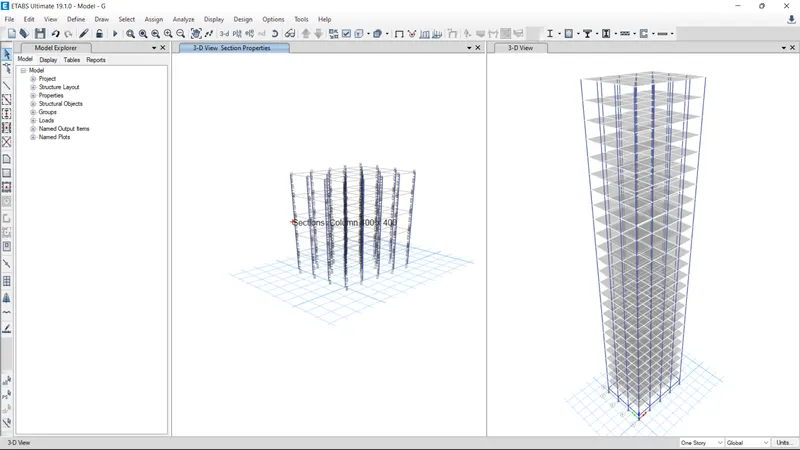
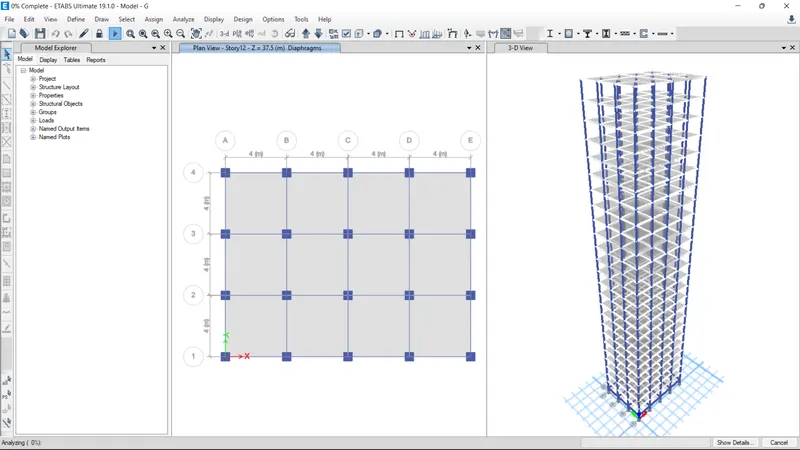
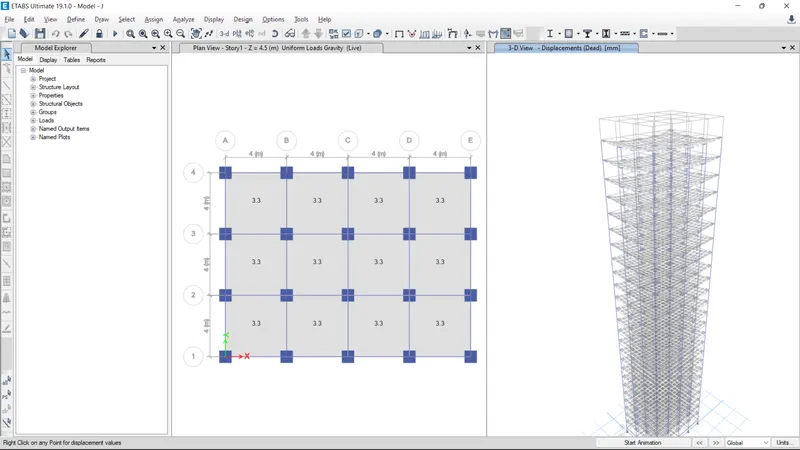
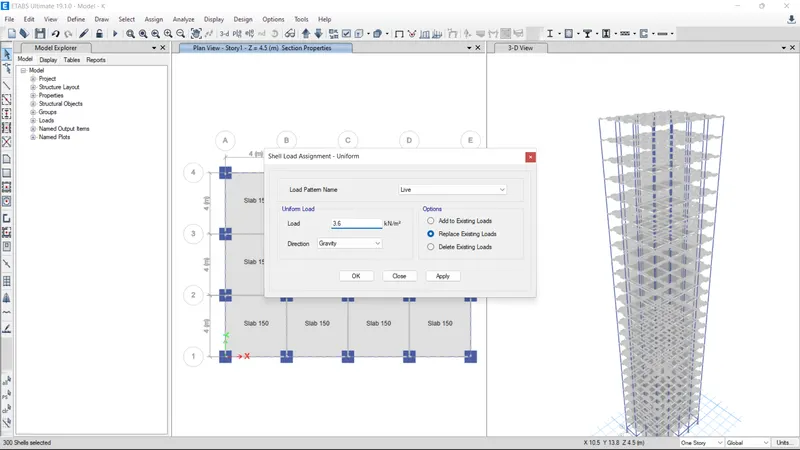
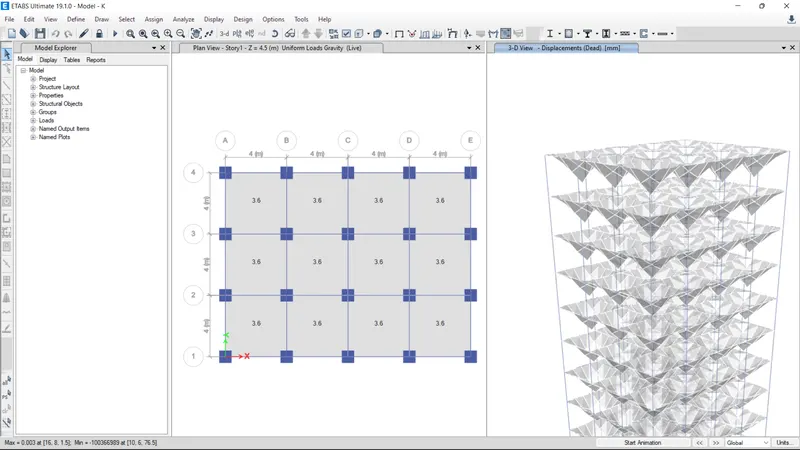
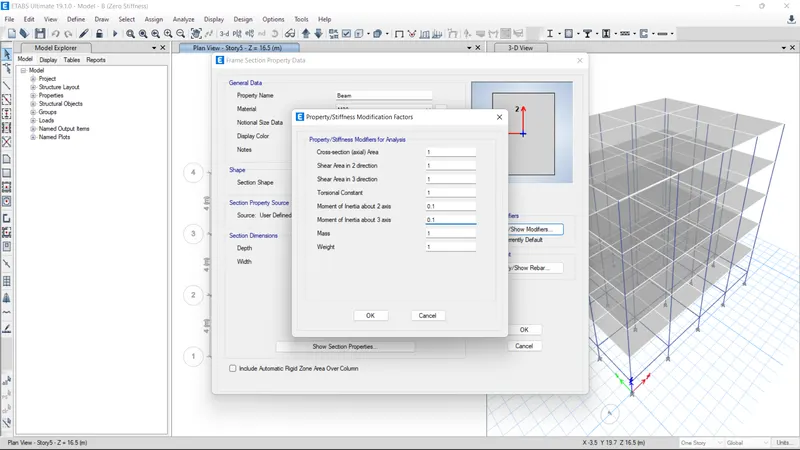
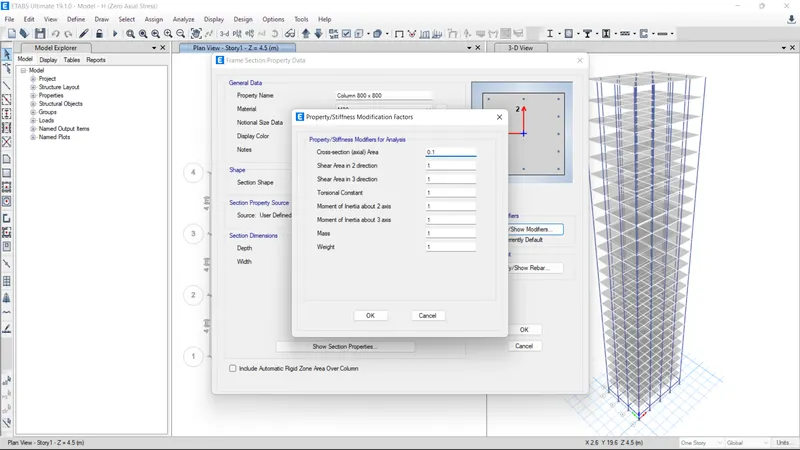
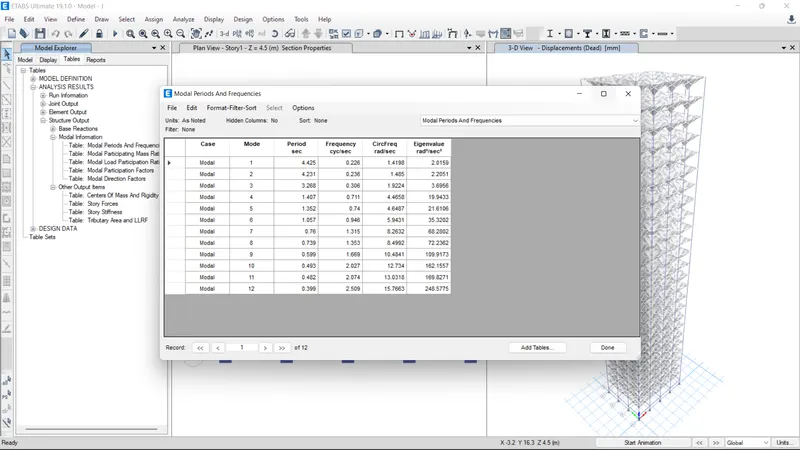
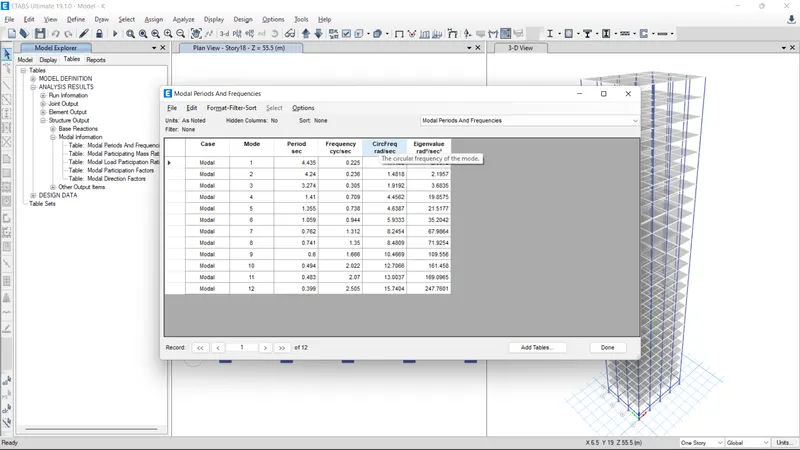
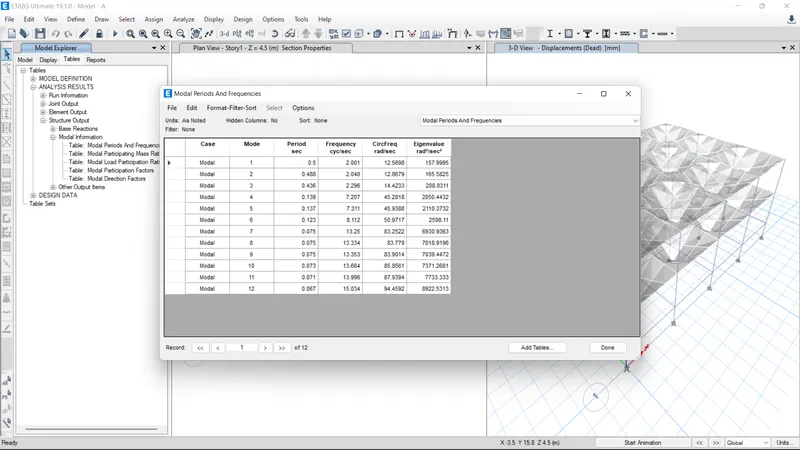
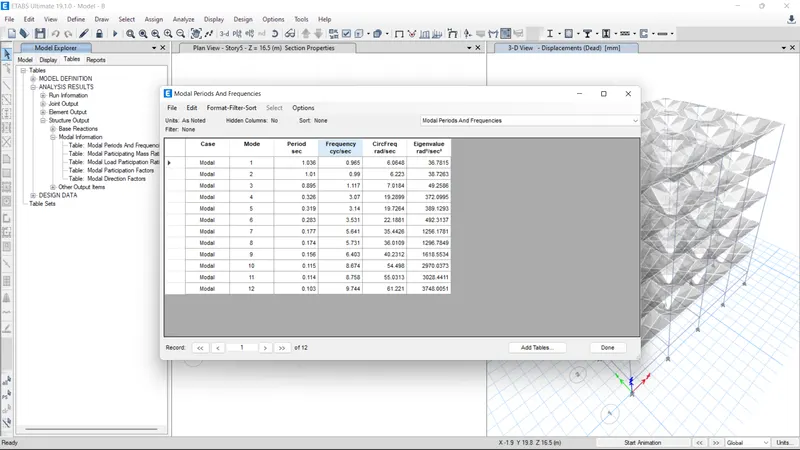
The RESULTS FOR EVERY MODEL IS AS BELOW:
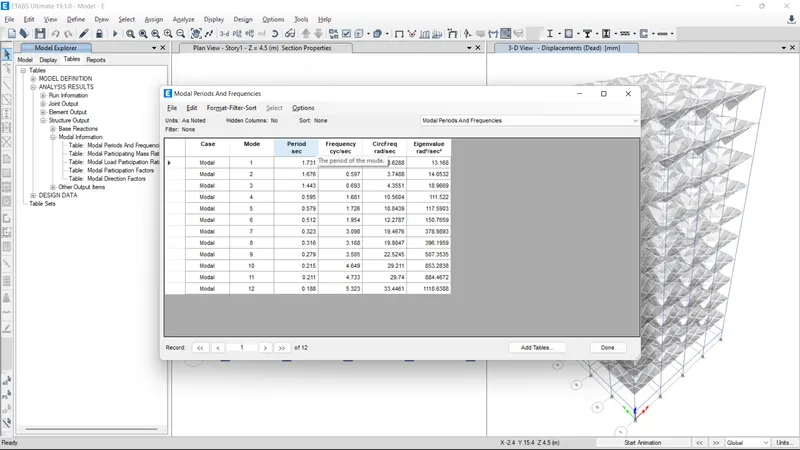
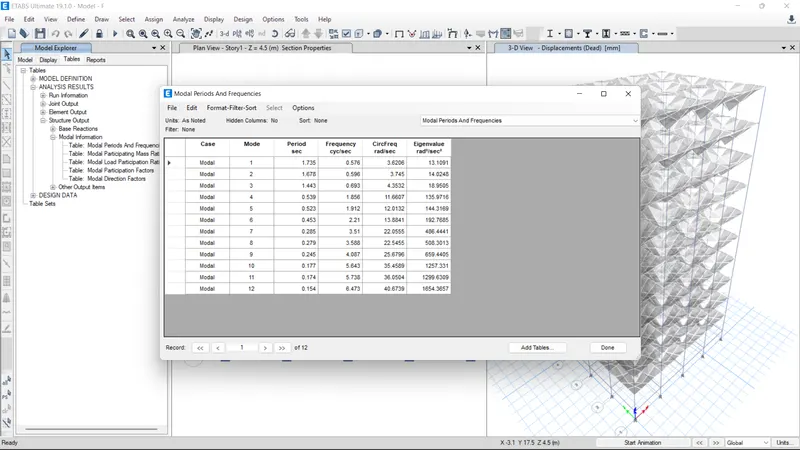
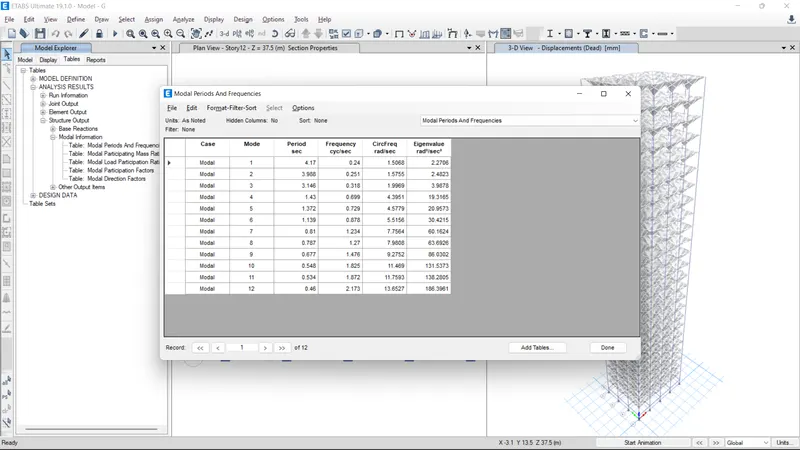
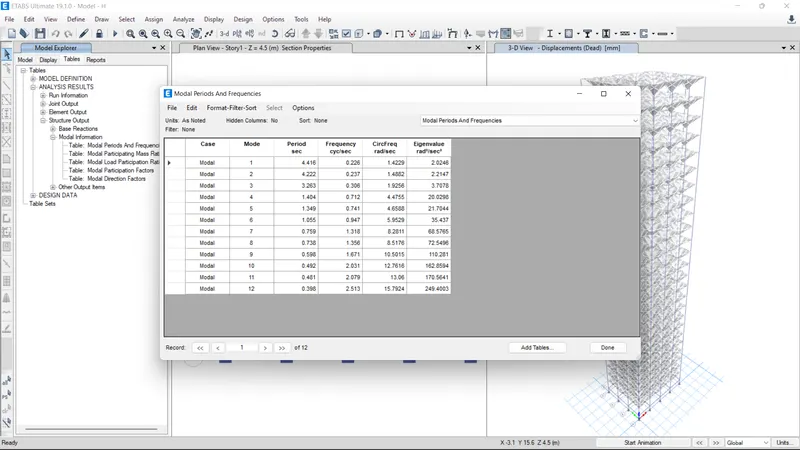
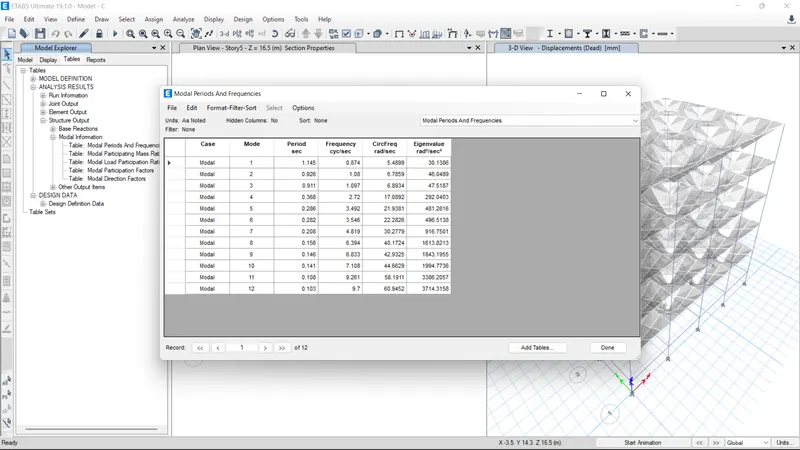
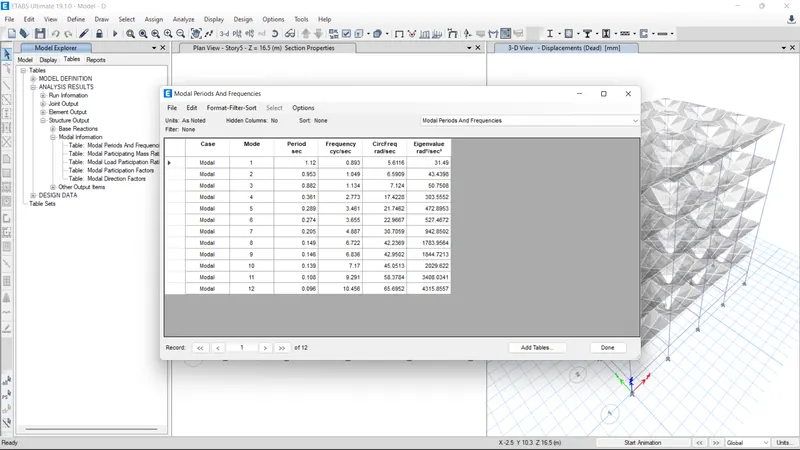
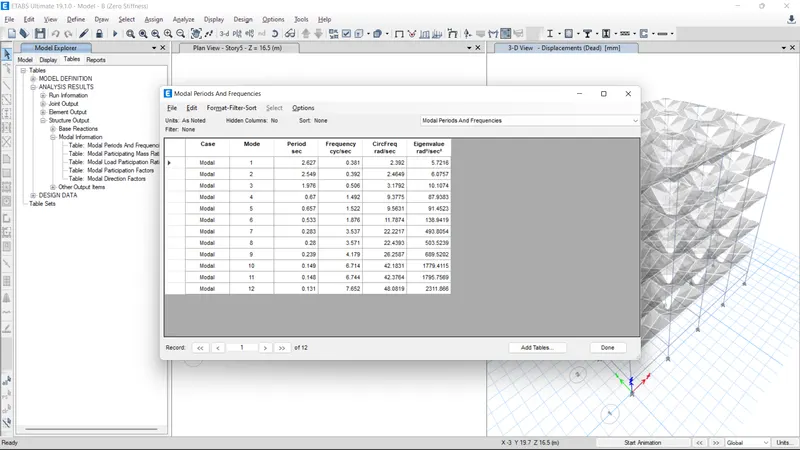
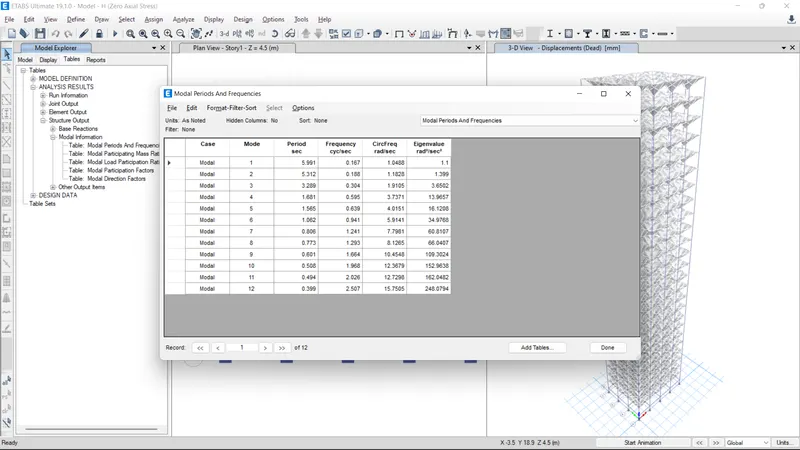
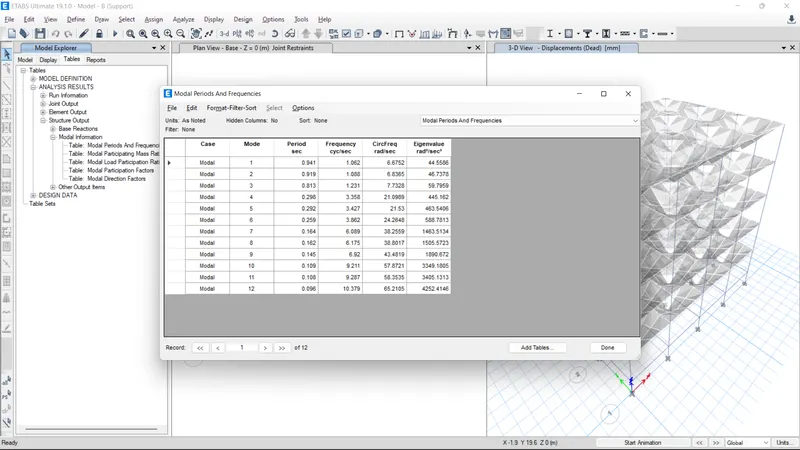
Result:
The Result of the Question along with the Conclusion is written in the Table Below
|
Criteria |
Model |
Analysis Result |
Conclusion |
|
Effect of Mass on Time Period |
Building – H |
4.41 sec |
The variation of mass has a very small influence on the Time period for the same structural configuration |
|
Building – J |
4.42 sec |
||
|
Building – K |
4.43 sec |
||
|
Effect of Stiffness on Time Period |
Building – E |
1.73 sec |
As we can see there is not much variation in Time Period. |
|
Building – F |
1.73 sec |
||
|
Effect of Stiffness on Time Period |
Building – G |
4.17 sec |
As the column sizes decreases the dead weight decreases and decreases the Time period of the building. |
|
Building - H |
4.41 sec |
||
|
Effect of Column Orientation on Time Period |
Building – B |
1.03 sec |
The column orientation influences the Time period, we can see that if the column width is more along some direction then the Time period along that direction is very less |
|
Building - C |
1.145 sec |
||
|
Building - D |
1.12 sec |
|
Criteria |
Model |
Case |
Analysis Result |
Conclusion |
|
Effect of Flexural stiffness of Structural elements on Mode shapes |
Building - B |
Flexural Stiffness of Beams closer to Nil |
2.62 sec |
As the Flexural Stiffness decreases the Time period increases |
|
Full Flexural Stiffness of Beams |
1.03 sec |
|||
|
Effect of Axial stiffness of Vertical members on Mode Shapes |
Building - H |
Axial Cross section for columns is closer to Nil |
5.99 sec |
As the Axial Cross Section of the columns decrease the Time period increases |
|
Full Axial Cross Section of Columns |
4.41 sec |
|||
|
Effect of Degree of fixity at column base on mode shape |
Building - B |
Column Support Pinned |
1.03 sec |
The support condition influences the Time period slightly. The time period for Fixed supports is slightly less than that of Pinned Supports |
|
Column Support Fixed |
0.941 sec |