Project 1_Comparative study of different storey buildings for Seismic forces
Project 1
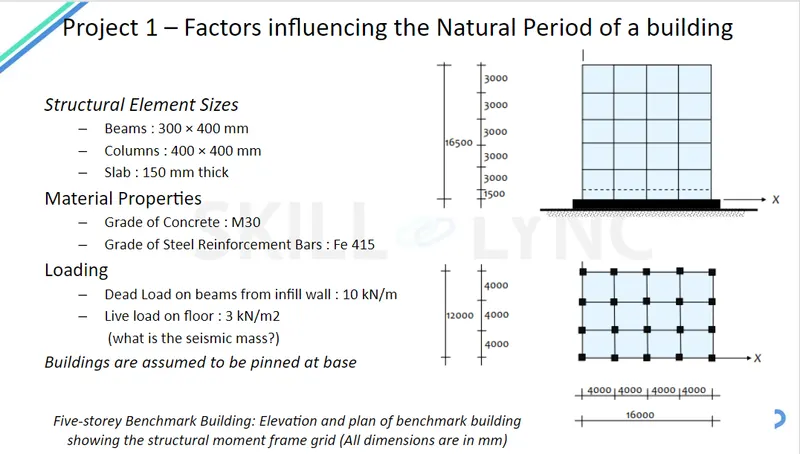
Model A
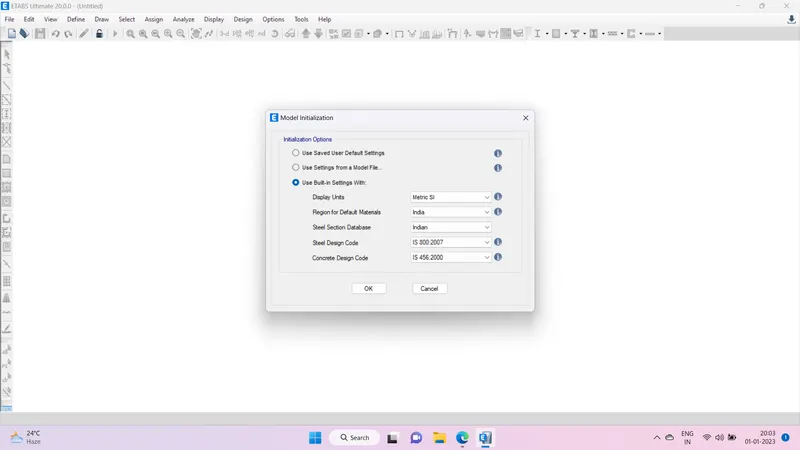
Step 1- Open E-tabs and set to Indian standard data
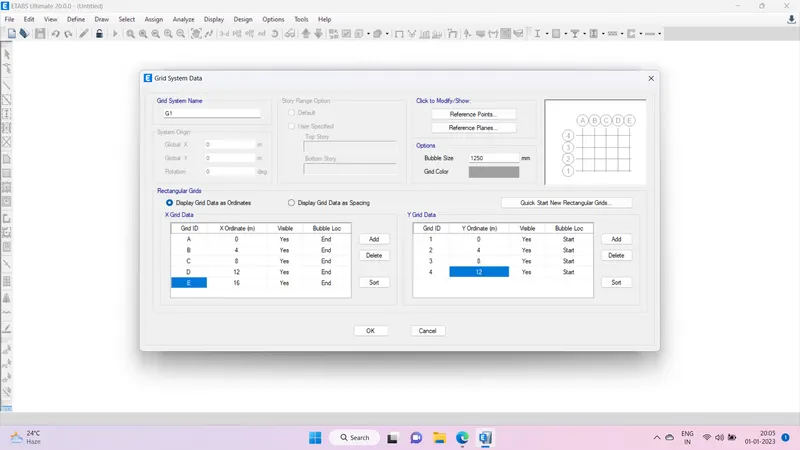
Step 2: Enter grids aas per given
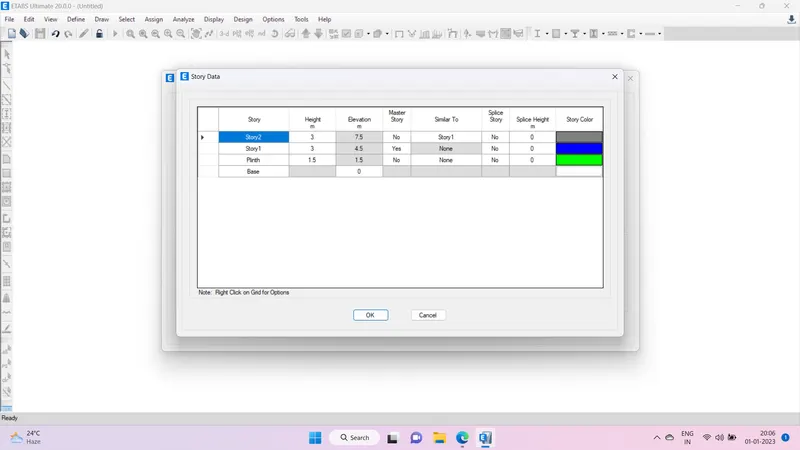
Step 3- Adding story data
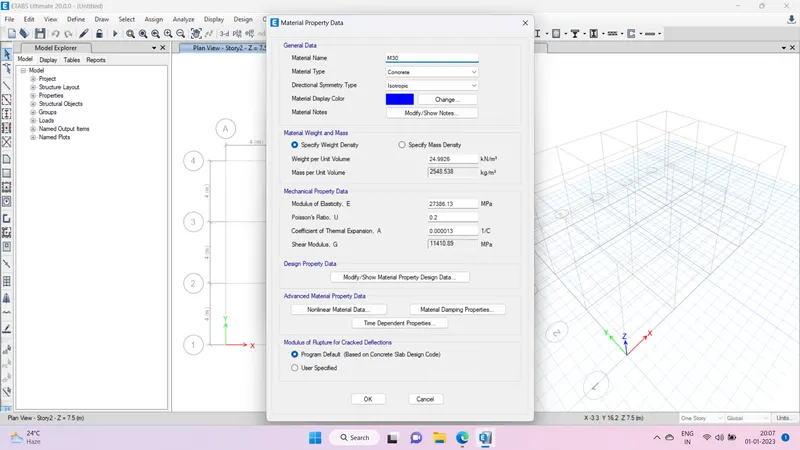
Step 4- Adding concrete material
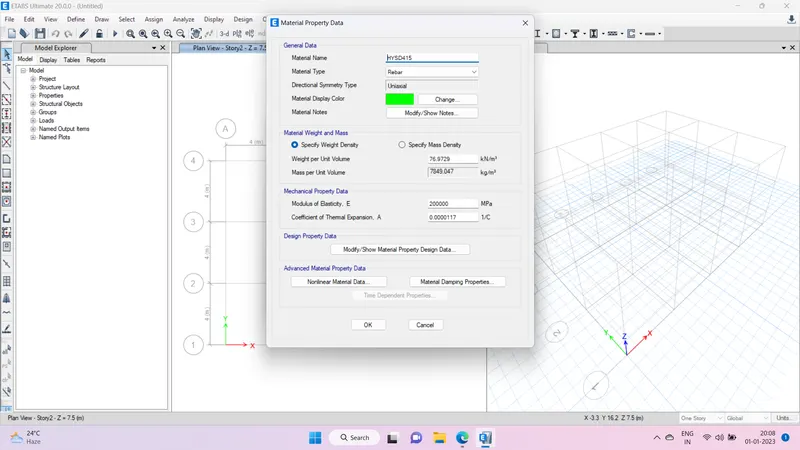
Step 5- Adding Steel material data
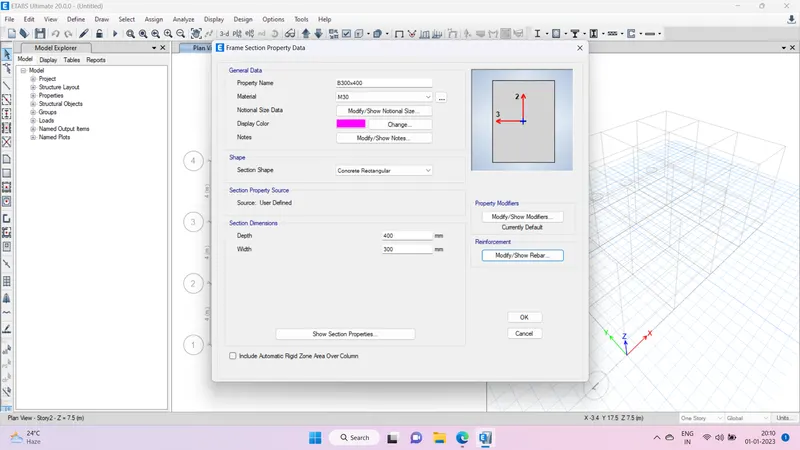
Step 6- Adding beam data
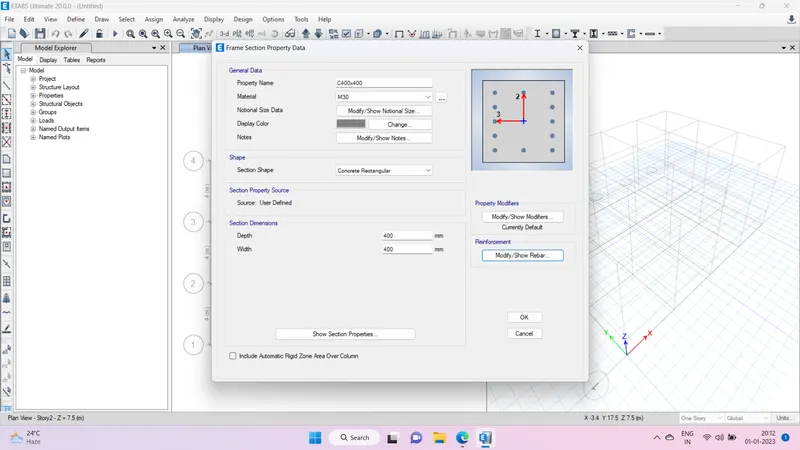
Step 7- Adding column data
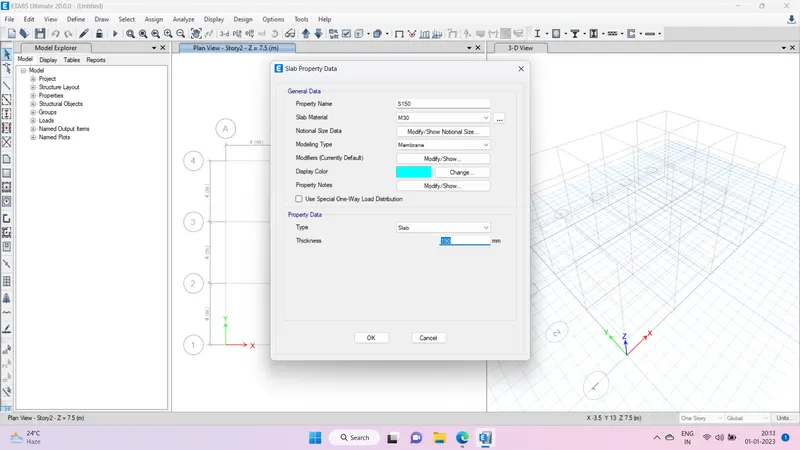
Step 8- Adding slab data
Step 9- Adding Load patterns
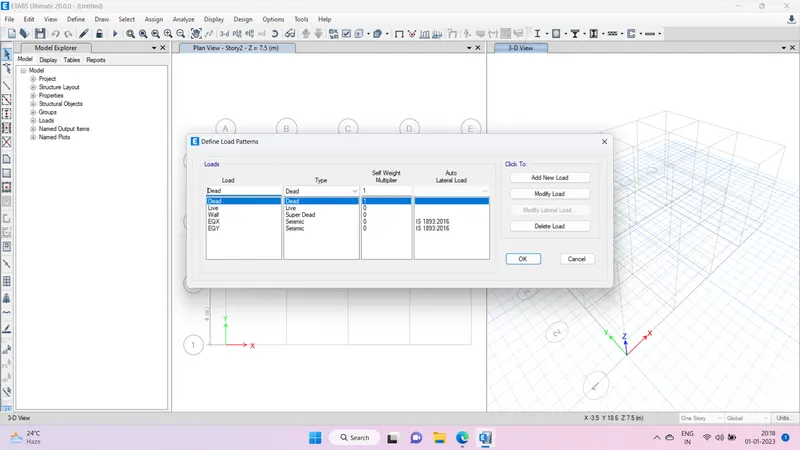
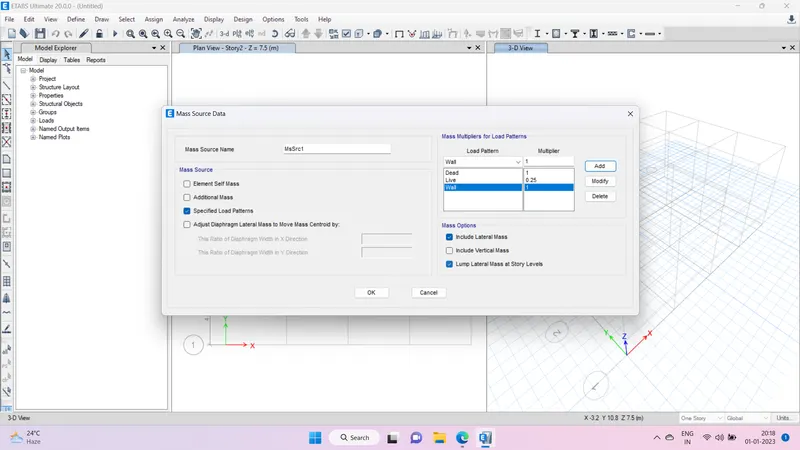
Step 10- Adding mass data
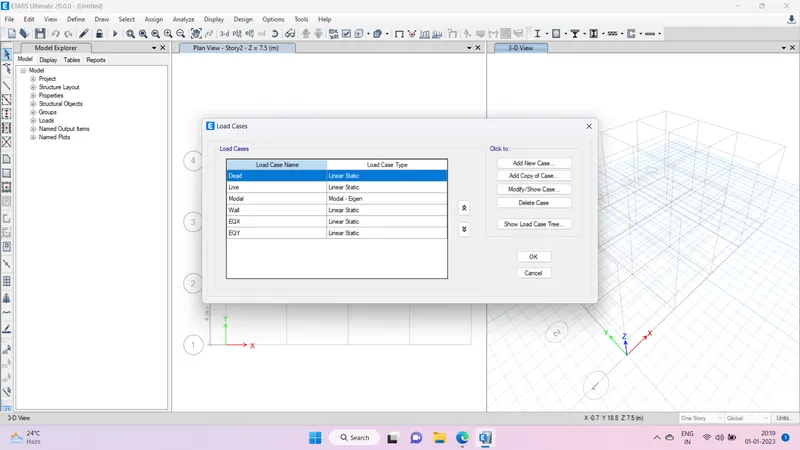
Step 11- Checking load cases from define option
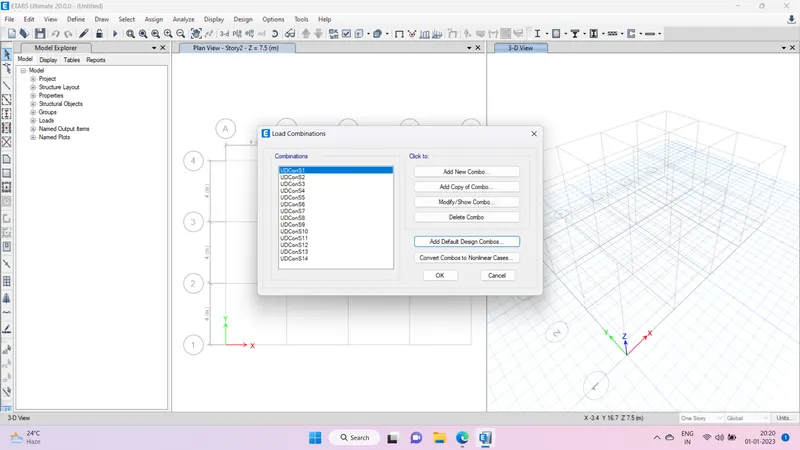
Step 12- Load combination
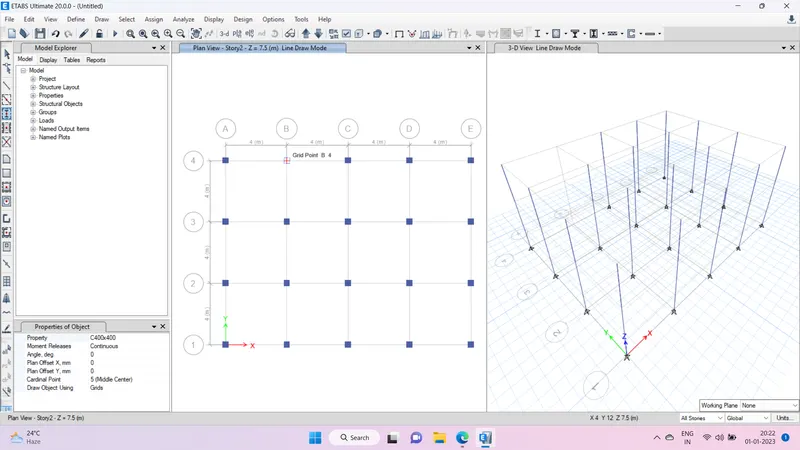
Step 13- Adding columns to the grids
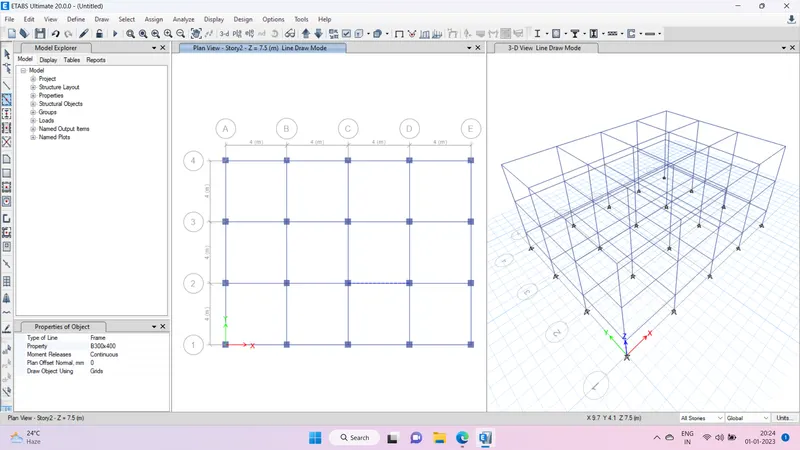
Step 14- Adding beams
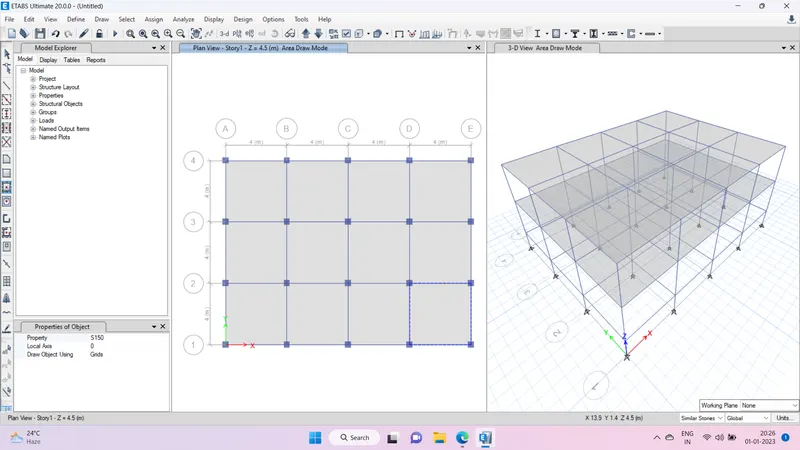
Step 15- Adding slab to all stories
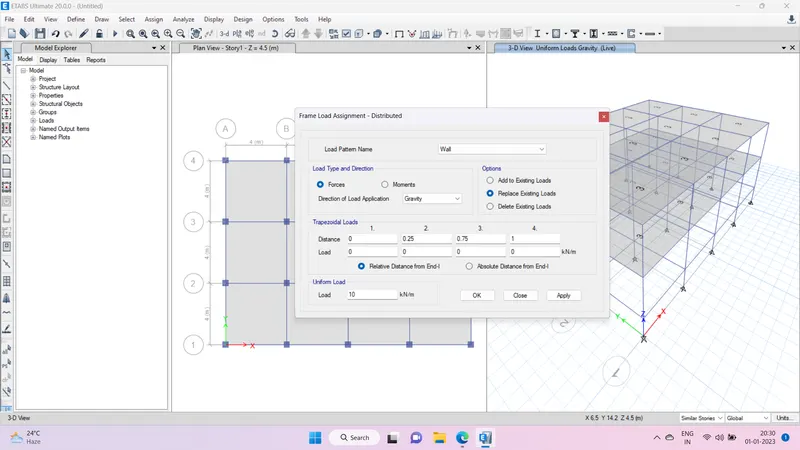
Step 16-Aassigning wall load
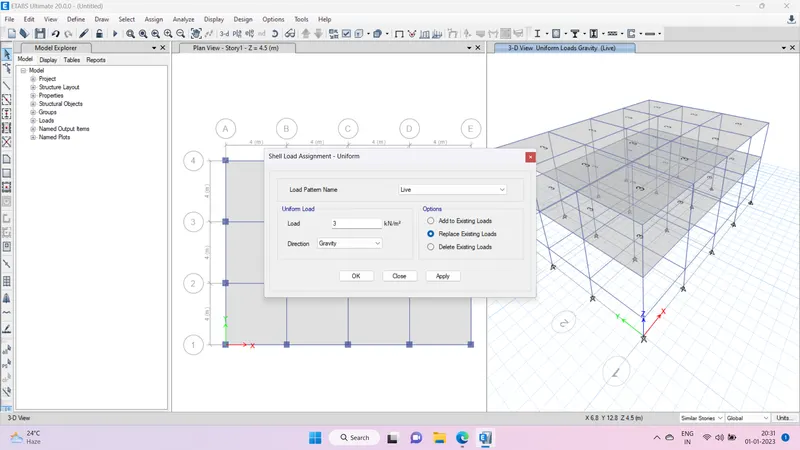
Step 17- Assigning slab load
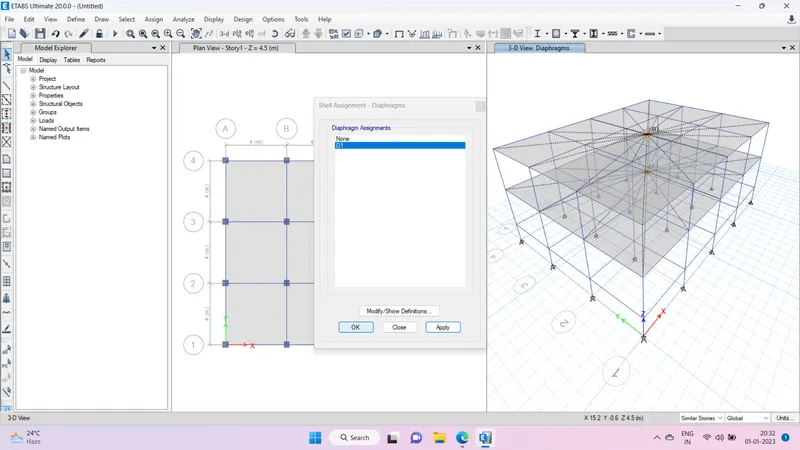
Step 18- Assign diapragm properties
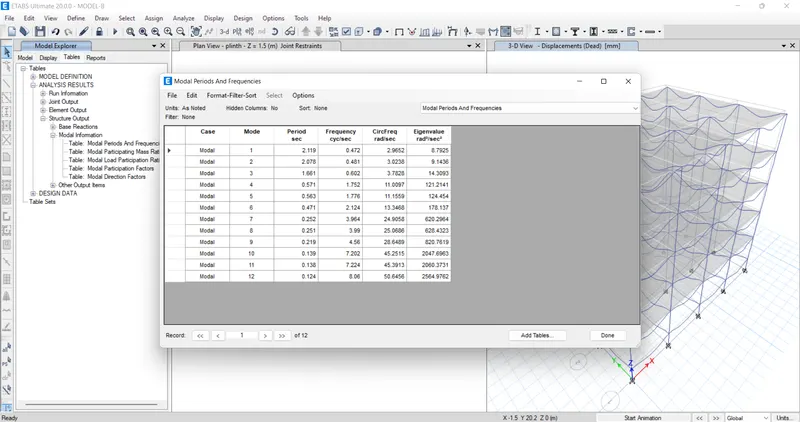
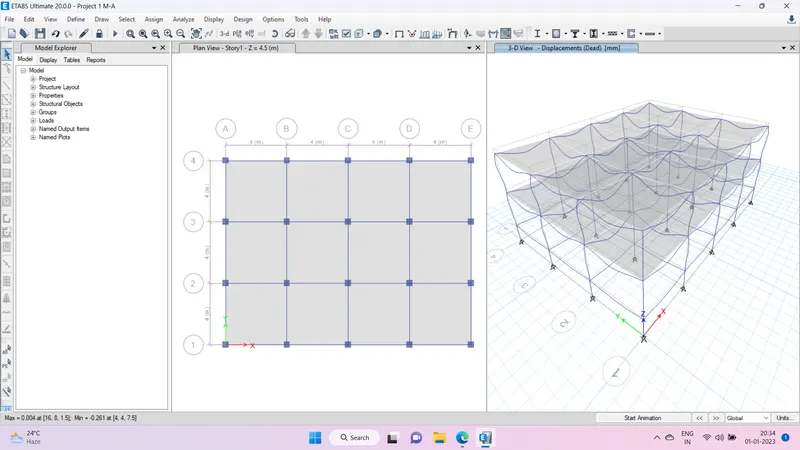
Step 19- Run analysis
Model B
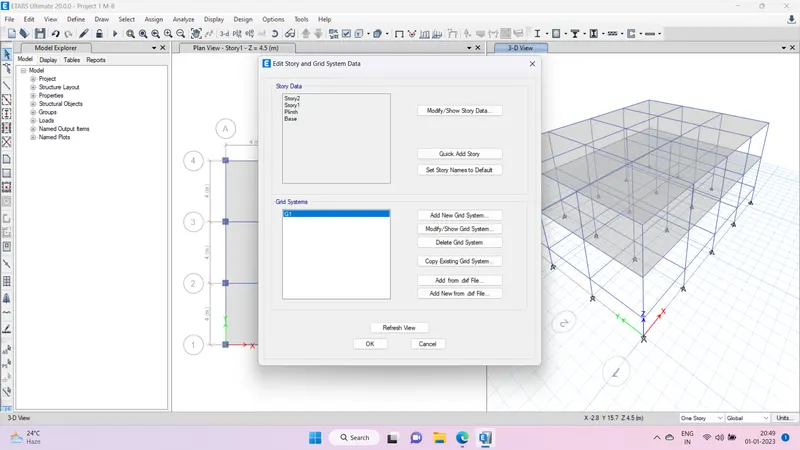
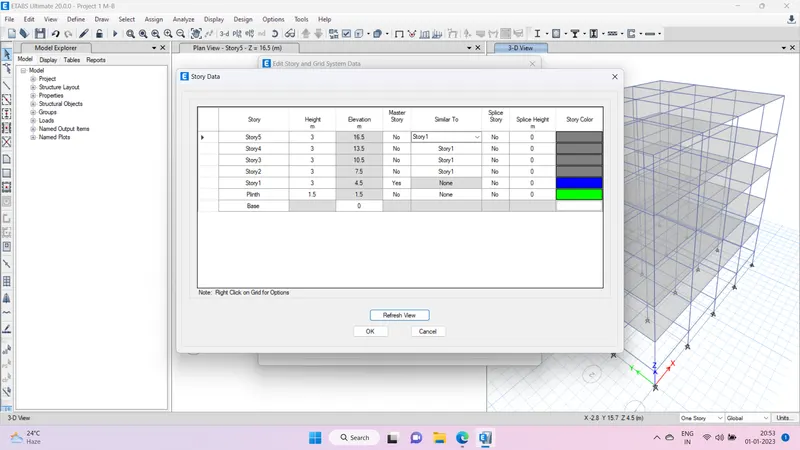
Step 1- Saving the model into different file using save as option and edting the floors
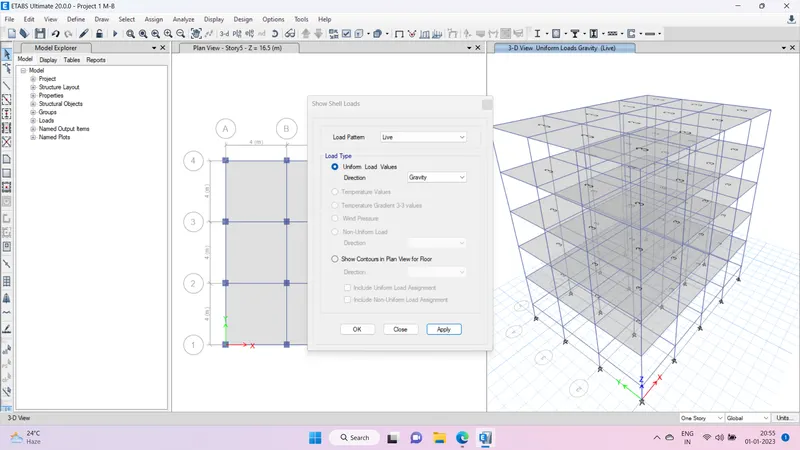
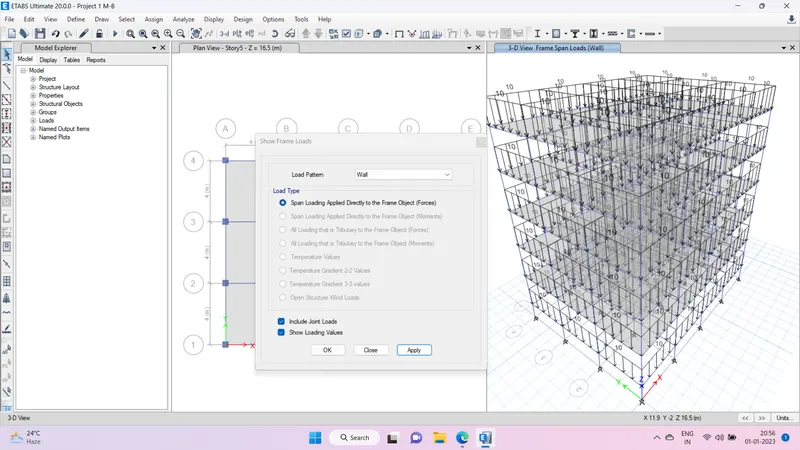
Step 2- To check shell loads and frame loads are applied
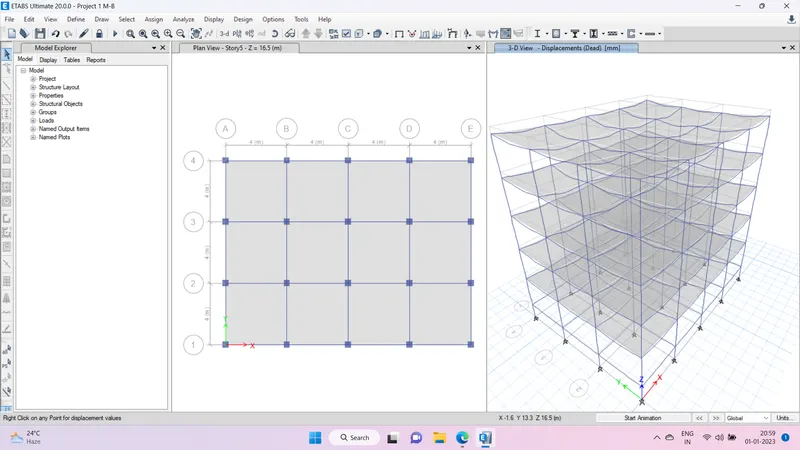
Step 3- Run the analysis
Model C
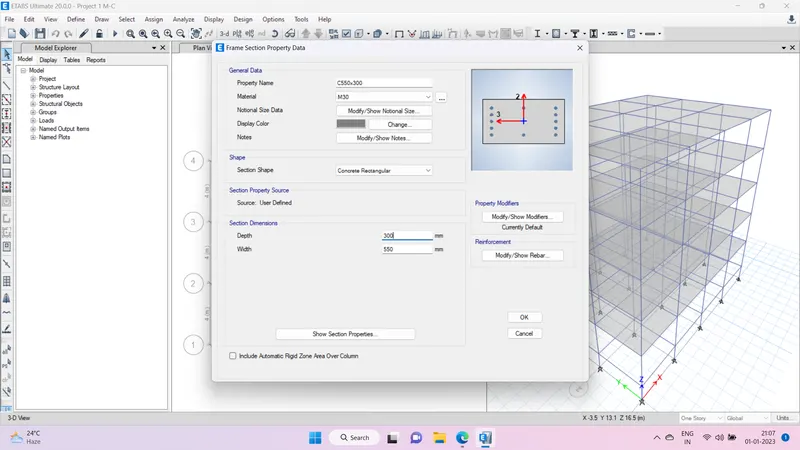
Step 1- Saving the model as Model C and adding the columns data as per given.
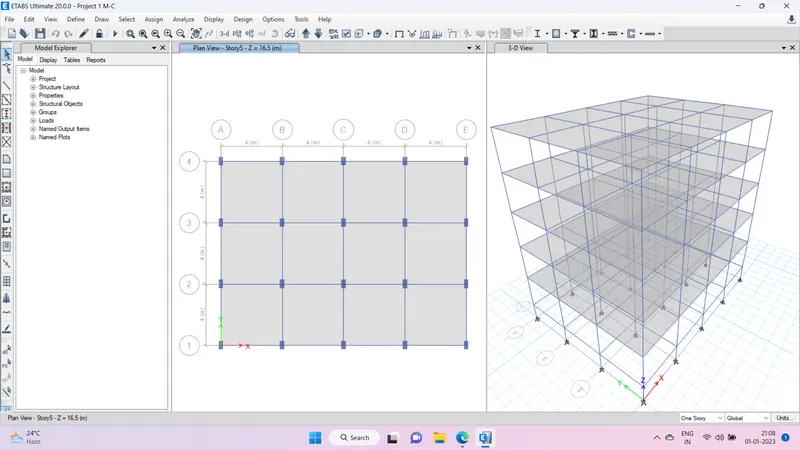
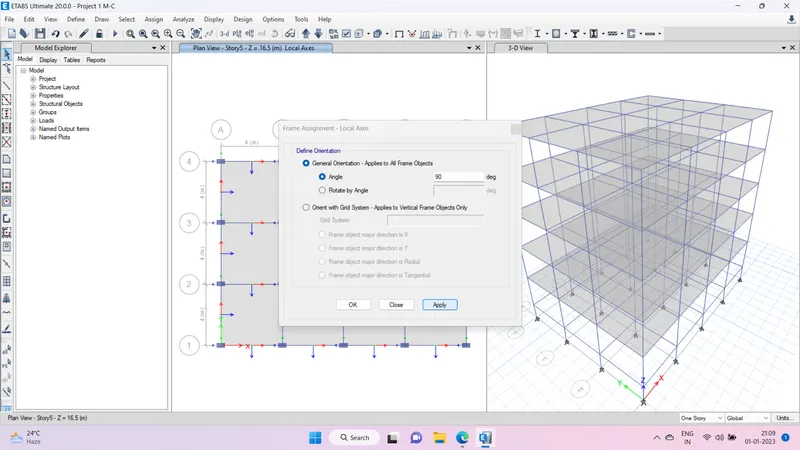
Step 2-Alligning columns in X direction by selecting all the columns by select option and using Assign menu bar - frame-Local Axis and rotating it to 90 degree.
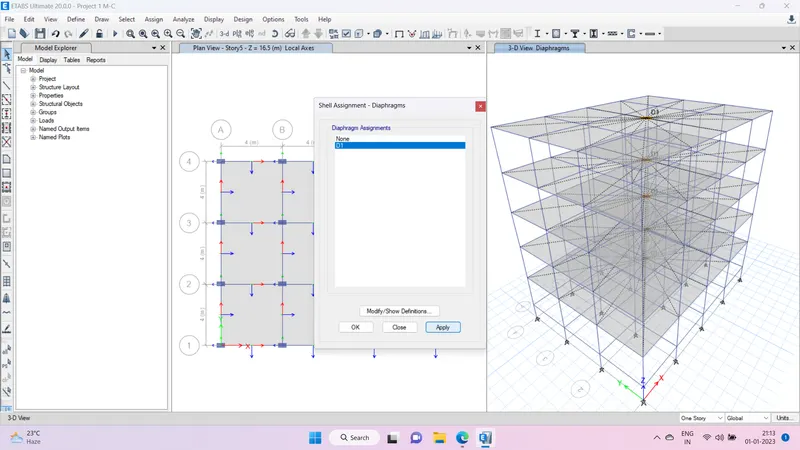
Step 3- Setting the Diapragm
Step 4- Run analysis
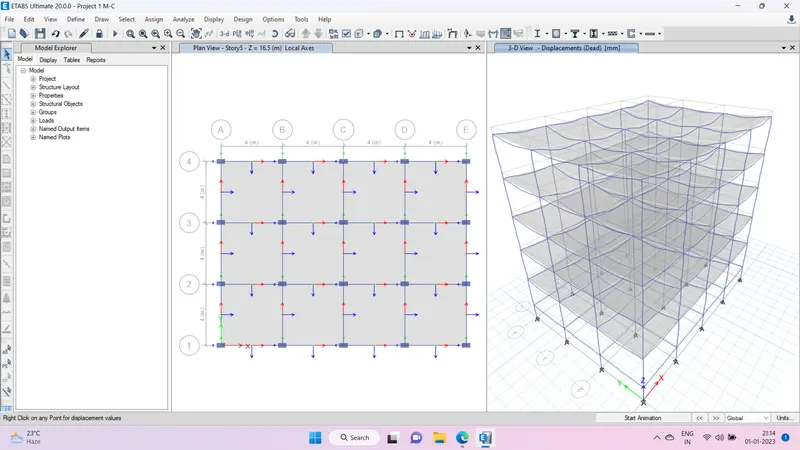
Model D
Step 1- saving it into model D Rotate the column
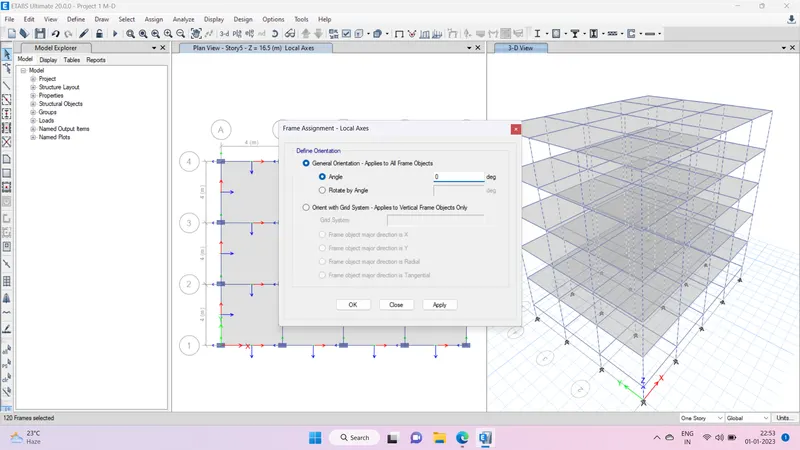
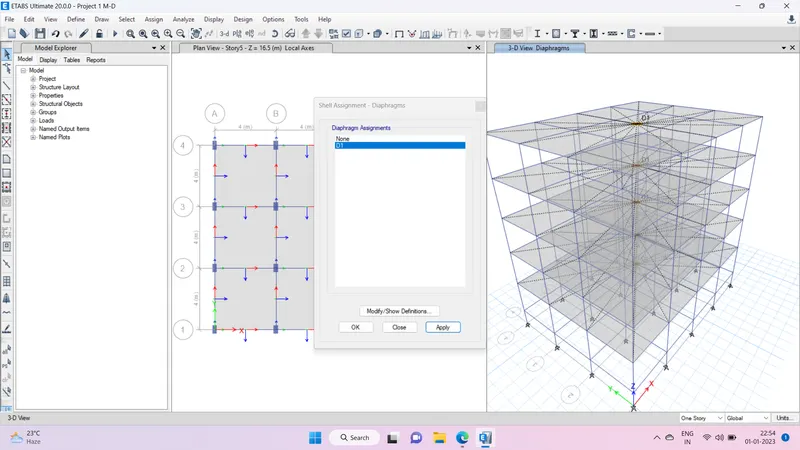
Step 2- Diapragm
Step 3- run analysis
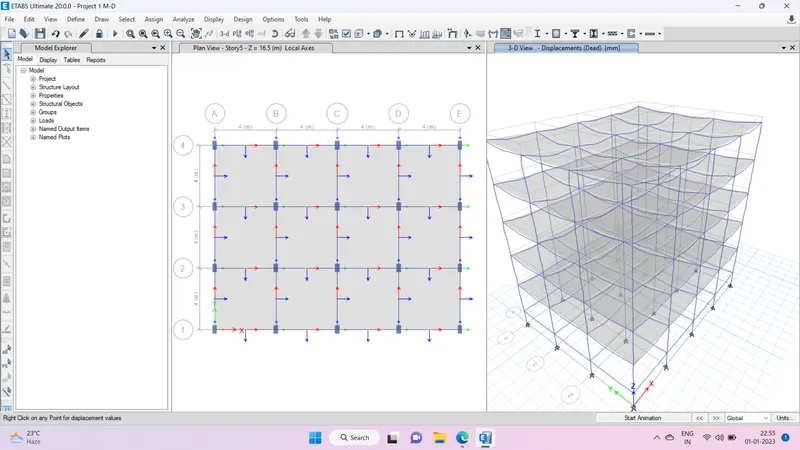
Model E-
Step 1- Saving the Model as Model E and adding the stories as per given.
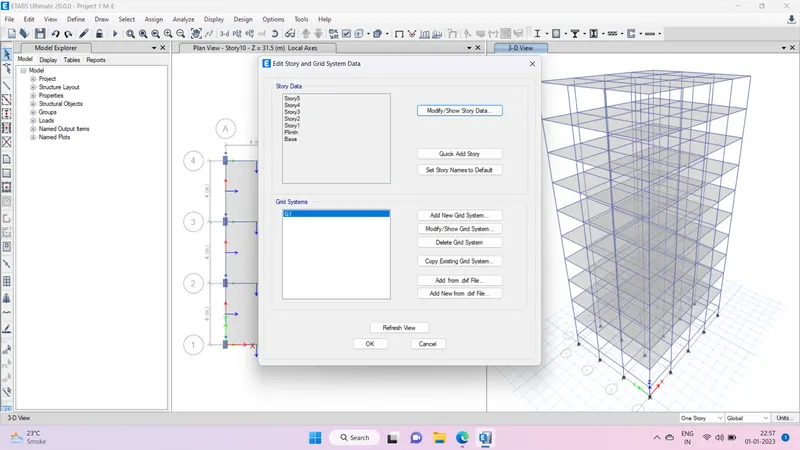
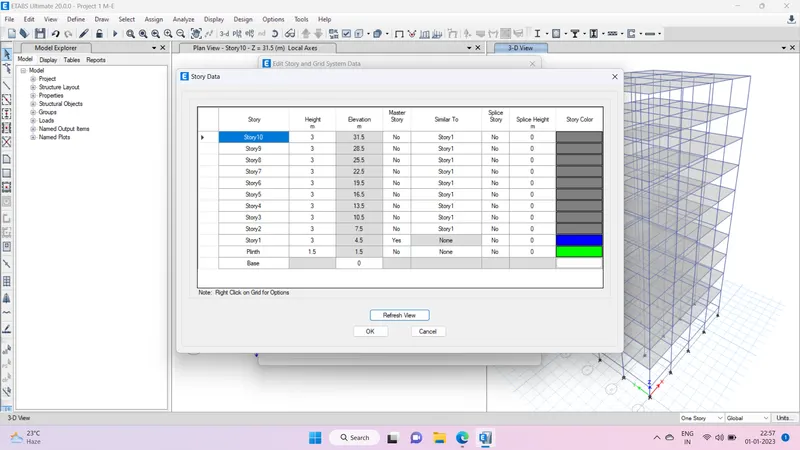
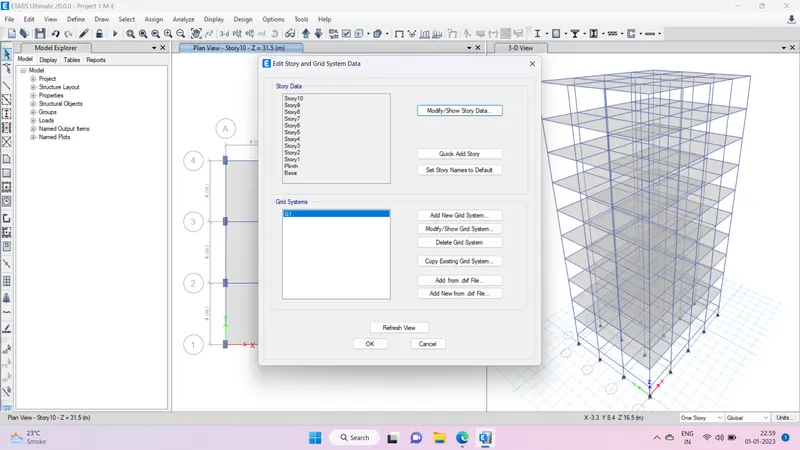
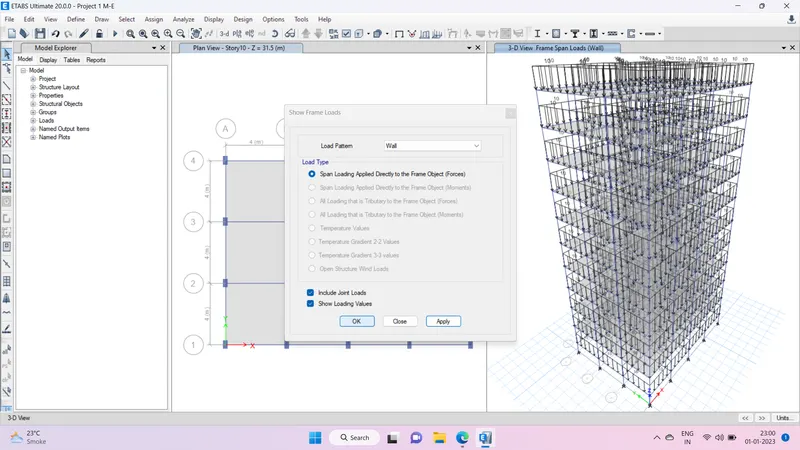
Step 2- checking the loads
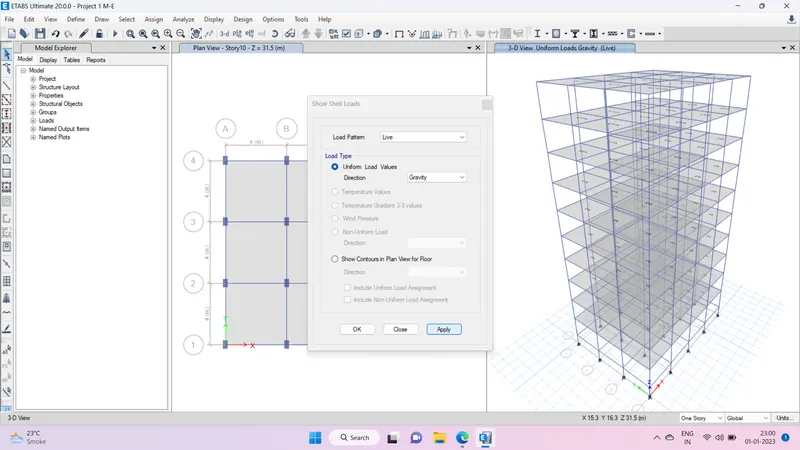
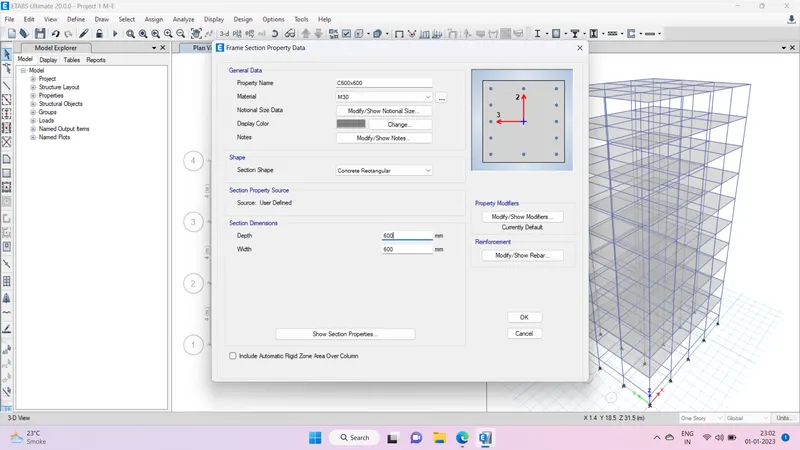
Step 3- Changing the column properties to 600x600mm
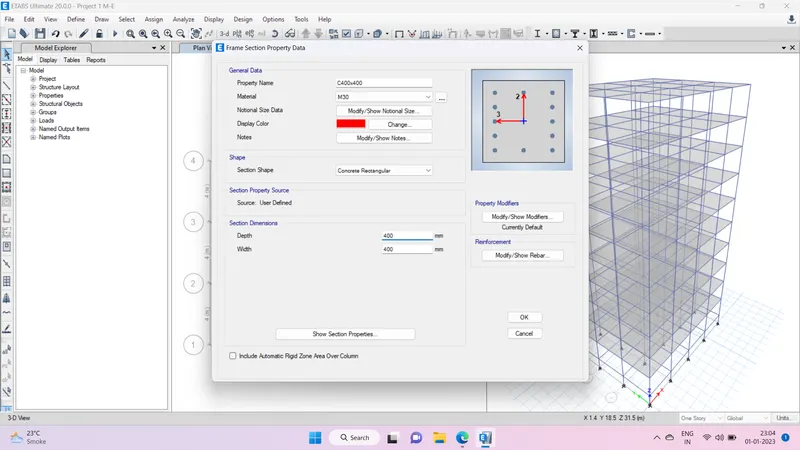
Step 4- Adding different column 400x400mm
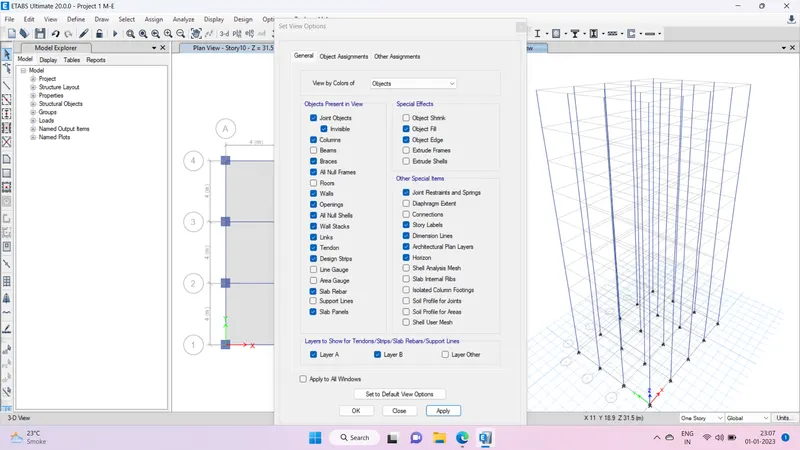
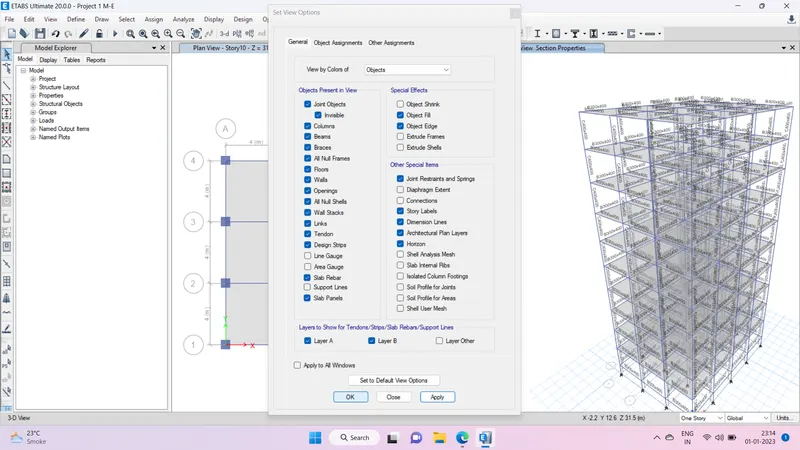
Step 5- Hiding beams and slab from set display options bar
Step 6- Set building view from floor 10 to 6
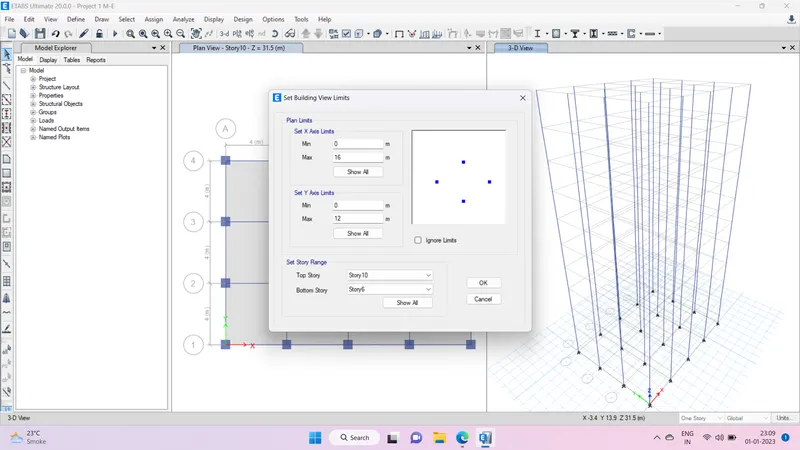
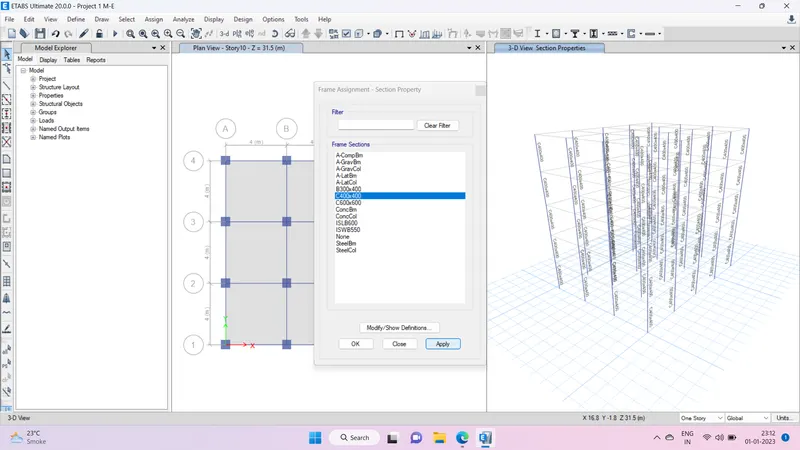
Step 7- Select all the columns from 10 to 6 and assign material properties of column 400x400
Step 8- Make everything visible again all the below columns and all the beams and slabs
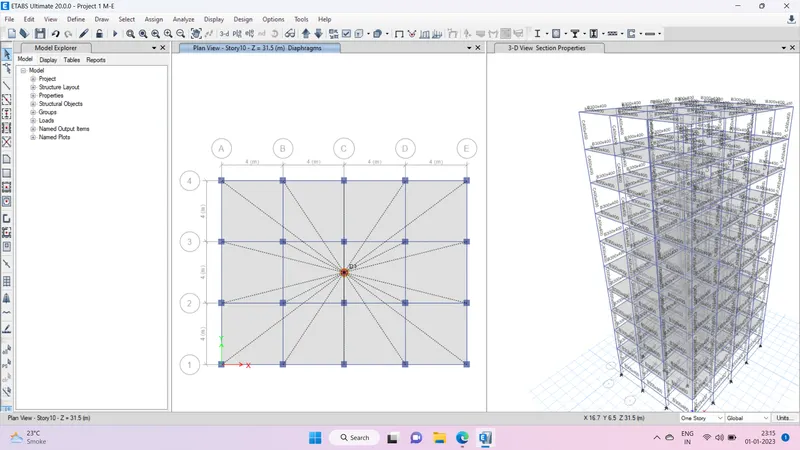
Step 9- Diapragm
Step 10- Run analysis
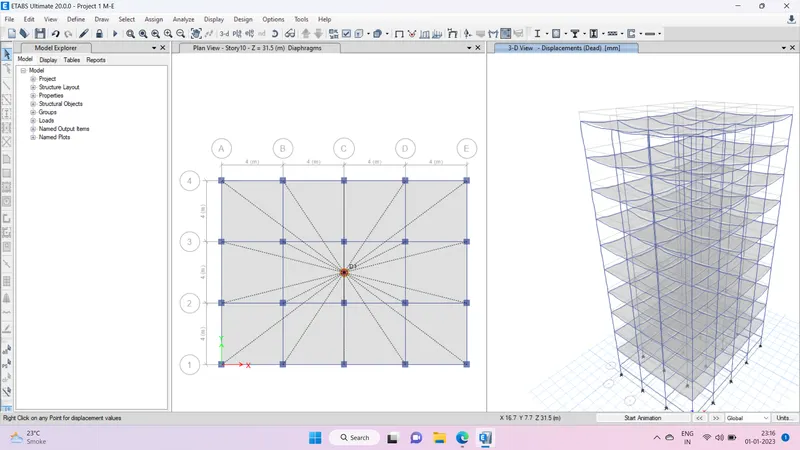
Model F
Step 1- save as Model F
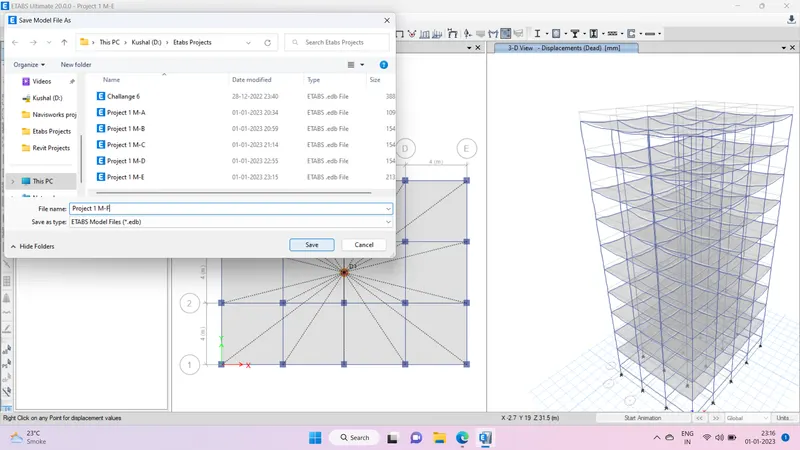
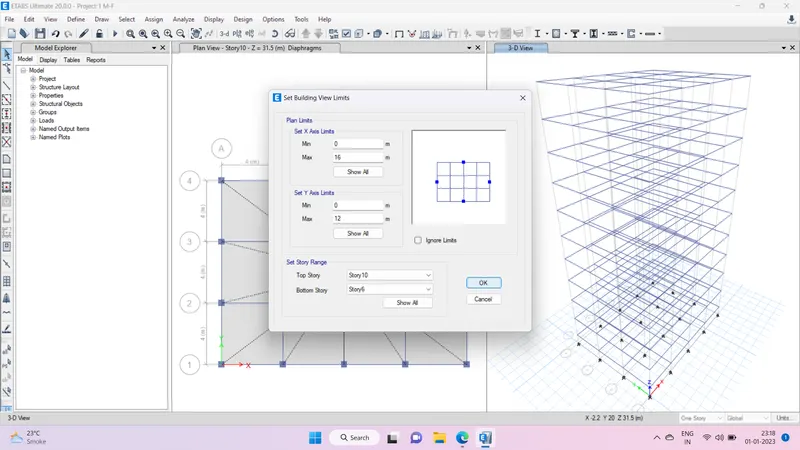
Step 2- View from 10 to 6
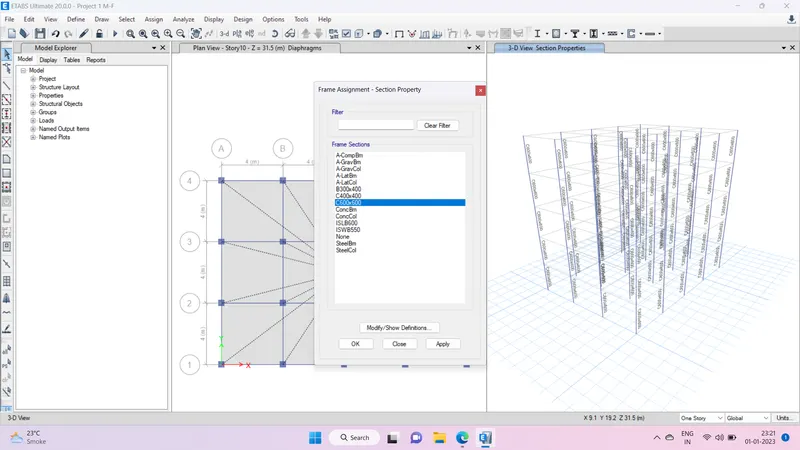
Step 3- Assign - select all the columns from 10 to 6th and go to Frame menu bar - Section properties and select 600x600 column
Step 4- Diapragm
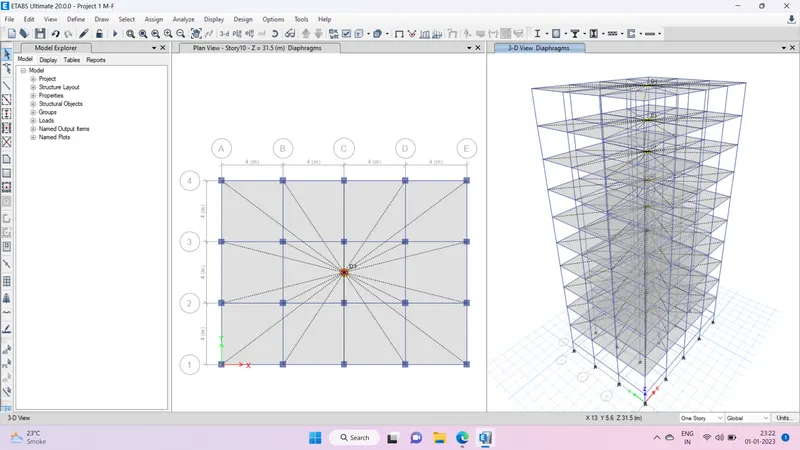
Step 5- Run analysis
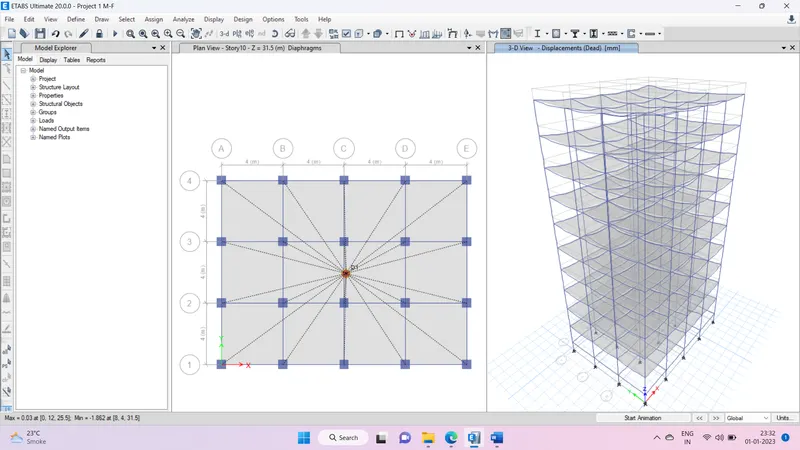
Model G
Step 1- Create total 25 story
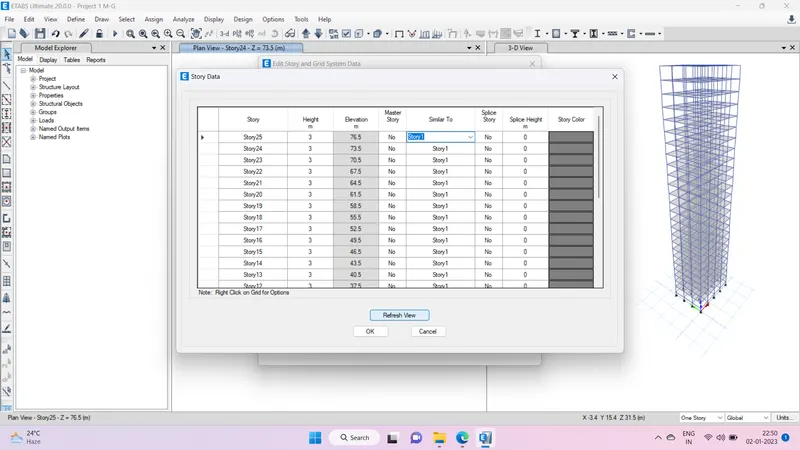
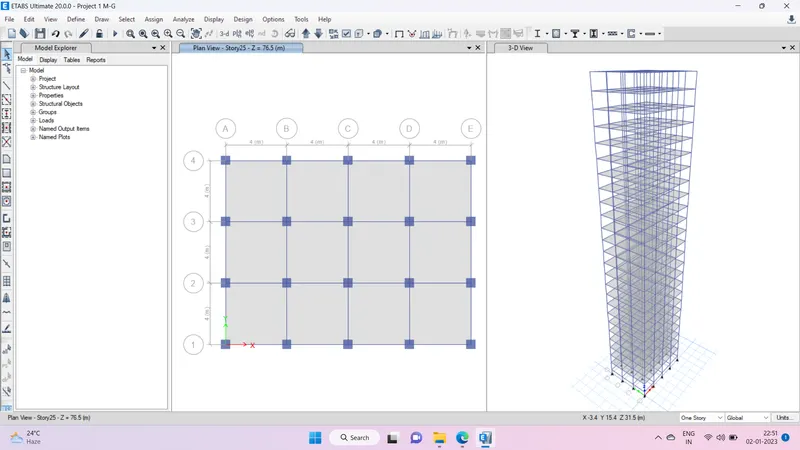
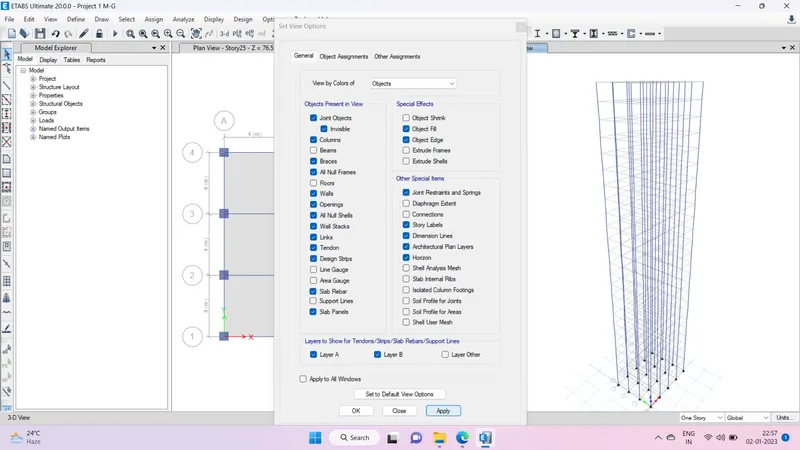
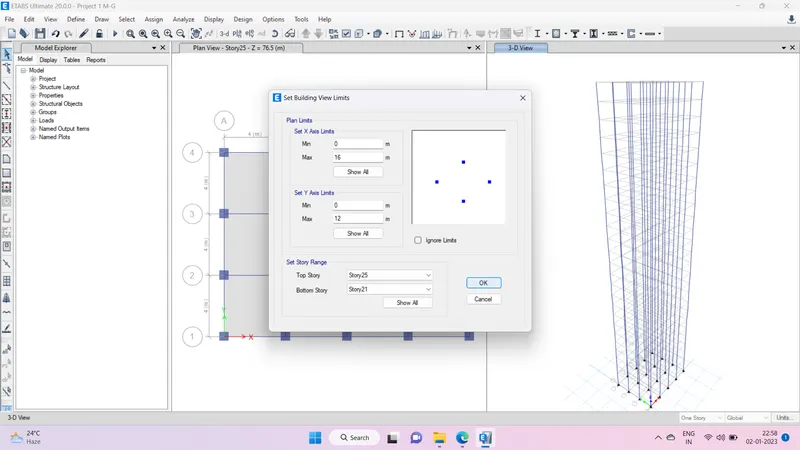
Step 2- Assign c400x400 column to floors 21 to 25
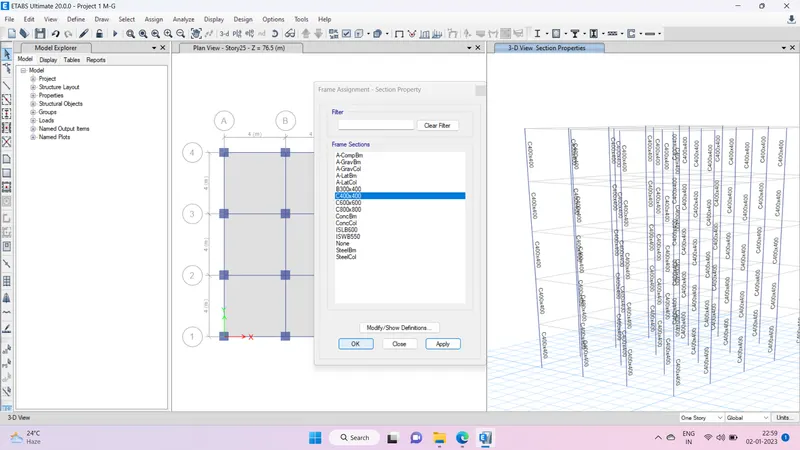
Step 2- Assign 600x600 to floor 20 to 11
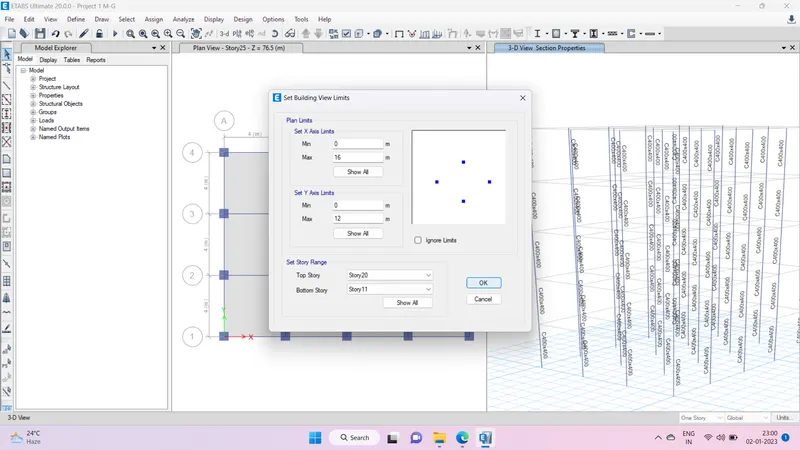
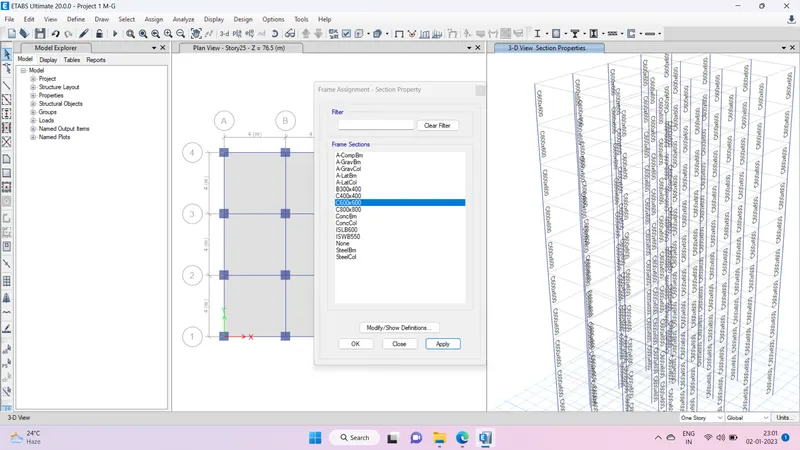
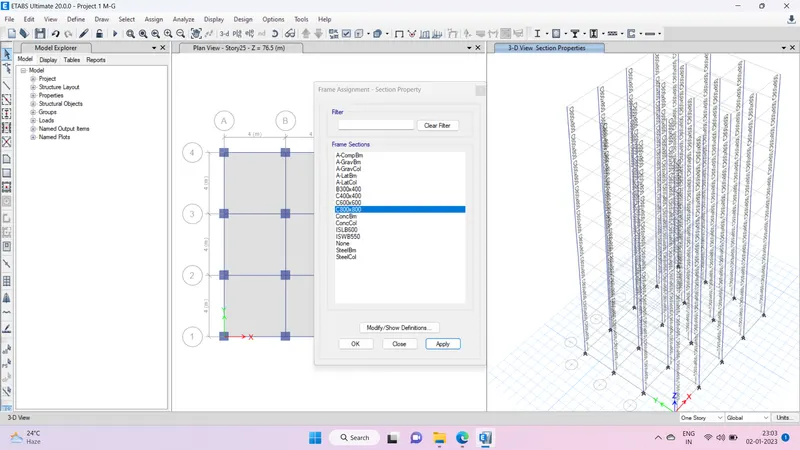
Step 3- Assign c800x800 to floors 10 to base
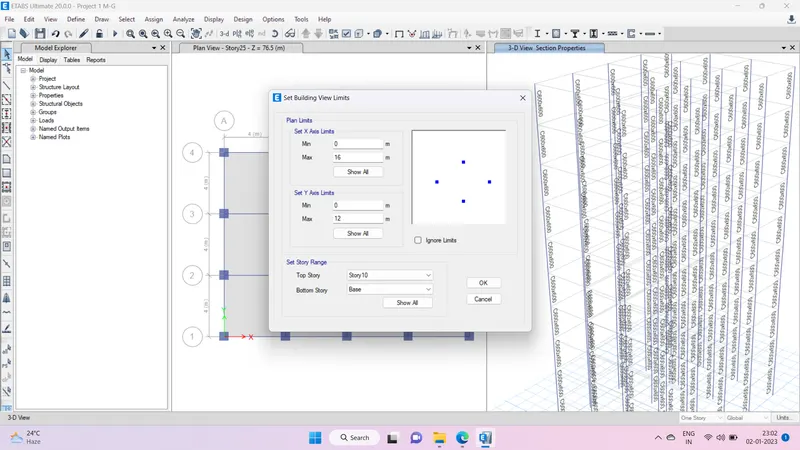
Step
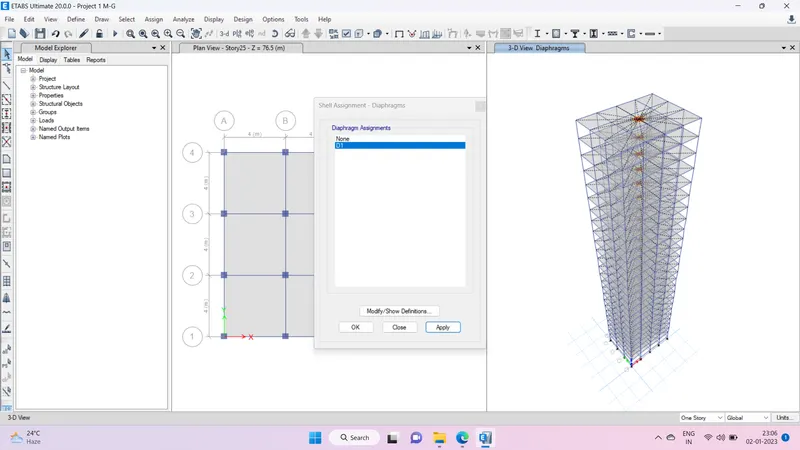
Step 4- Adding Diapragm
Step 5- Run analysis
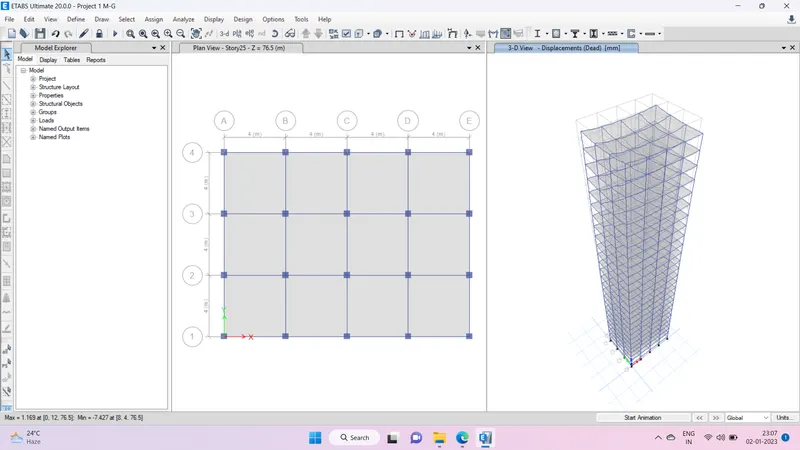
Model H
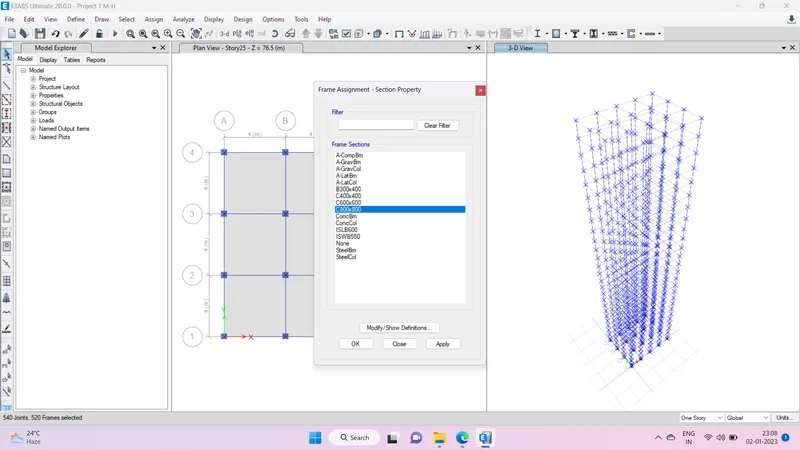
Step- setting all columns to 800x800
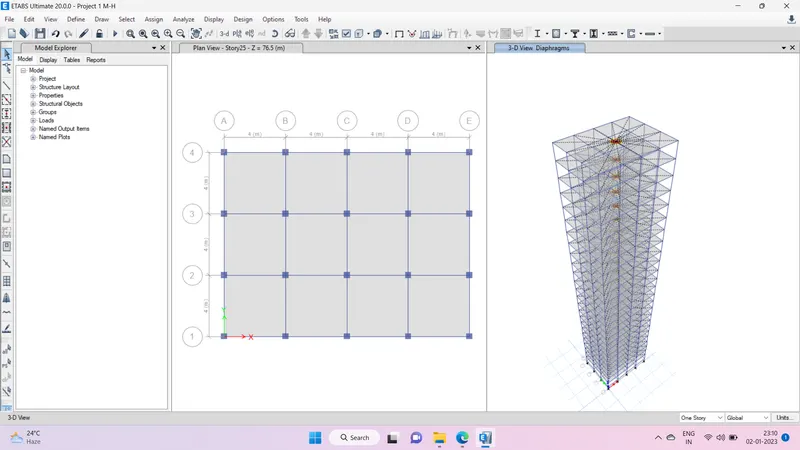
Step 2- Diapragm
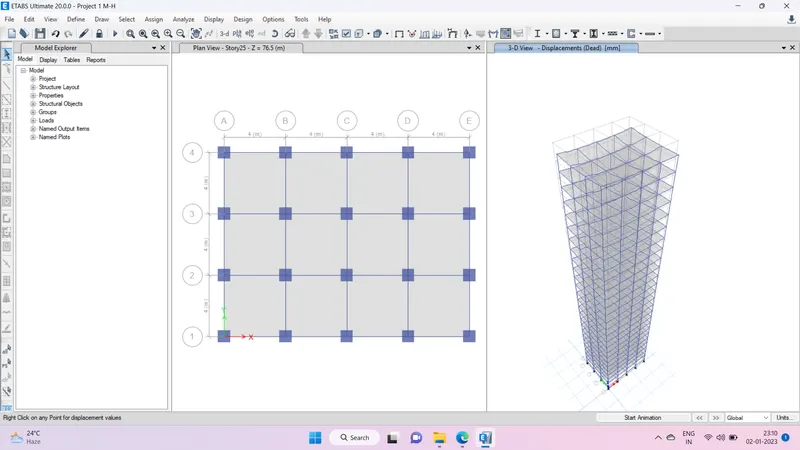
Step 3- Run analysis
Model J
Step 1- Save as Model J
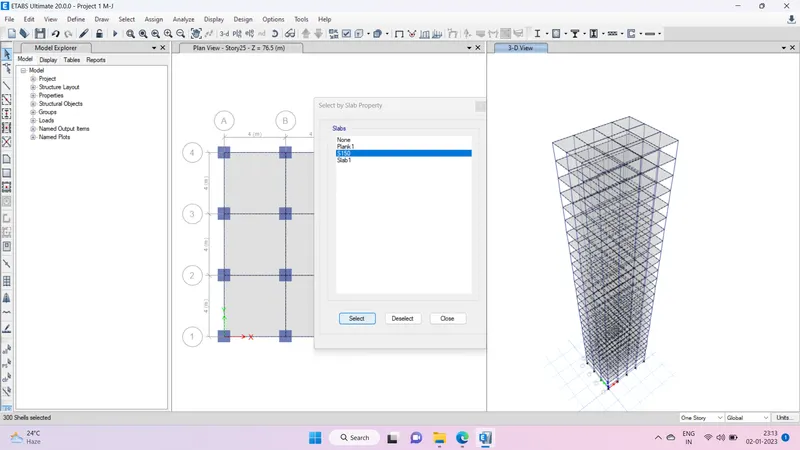
Step 2- Adding load by 10 percentage
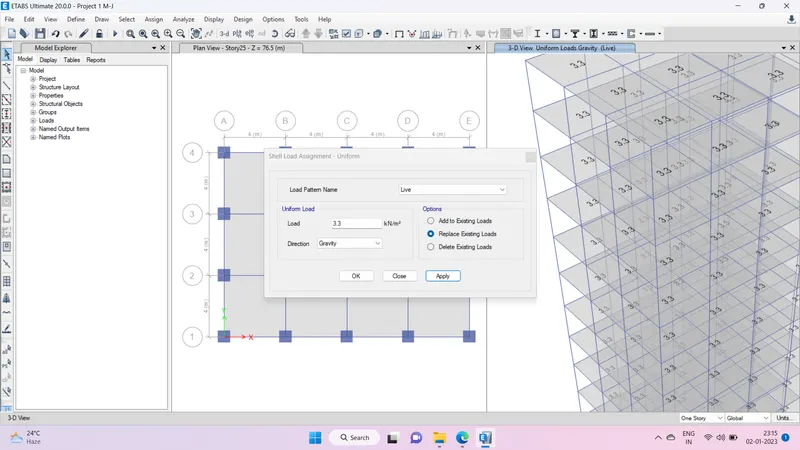
Step 3- Run analysis
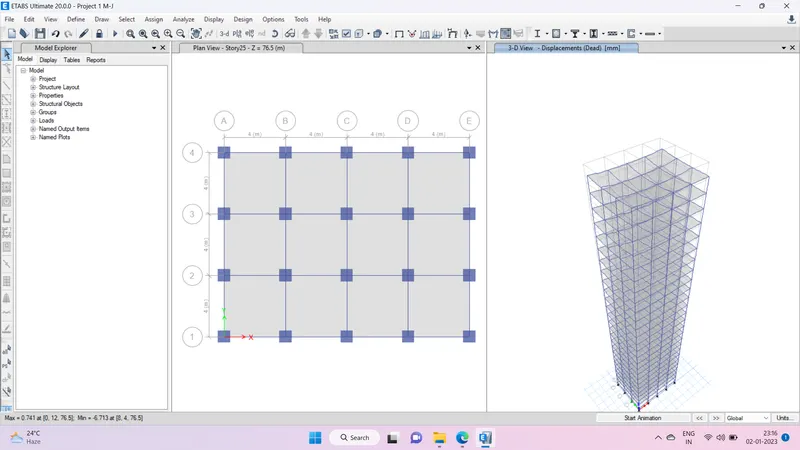
Model K
Step 1 Save as model K
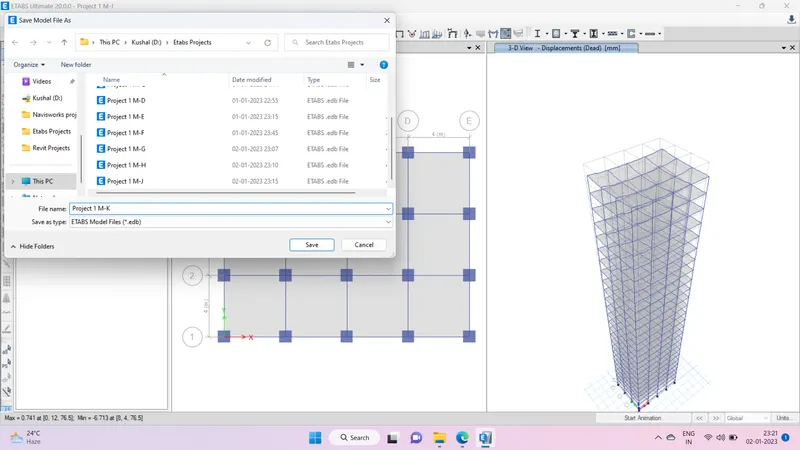
Step 2- Incresing the load by 20%
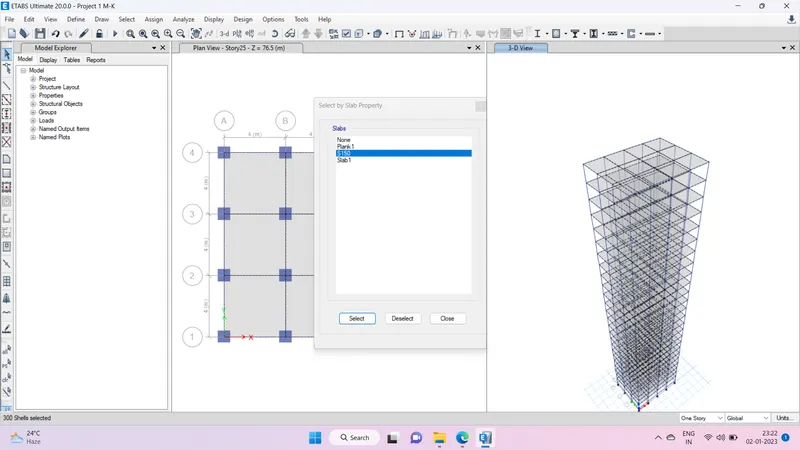
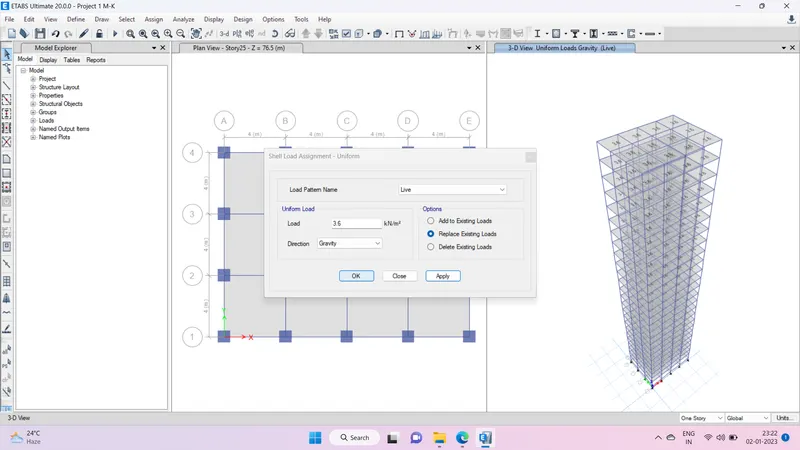
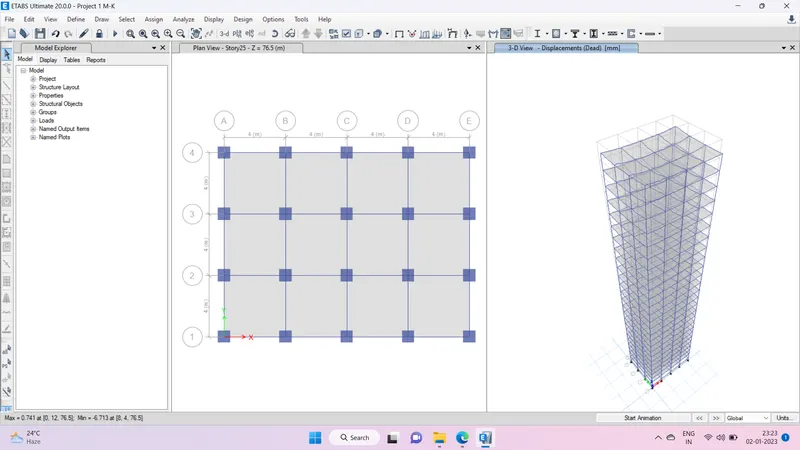
Step 3- Run analysis
Results:
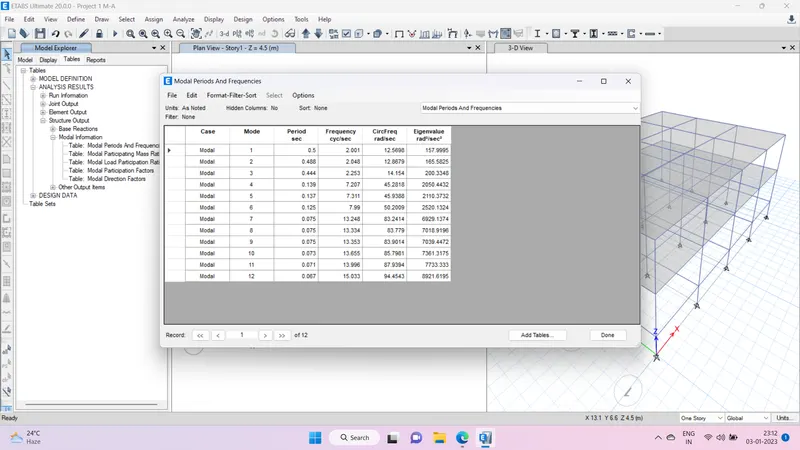
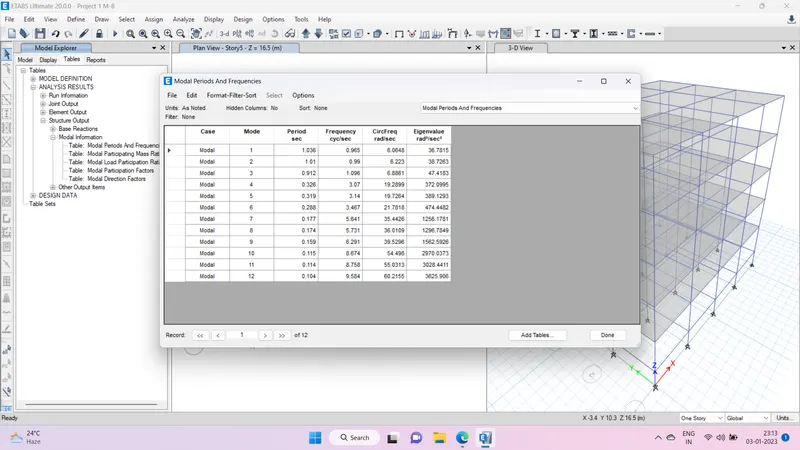
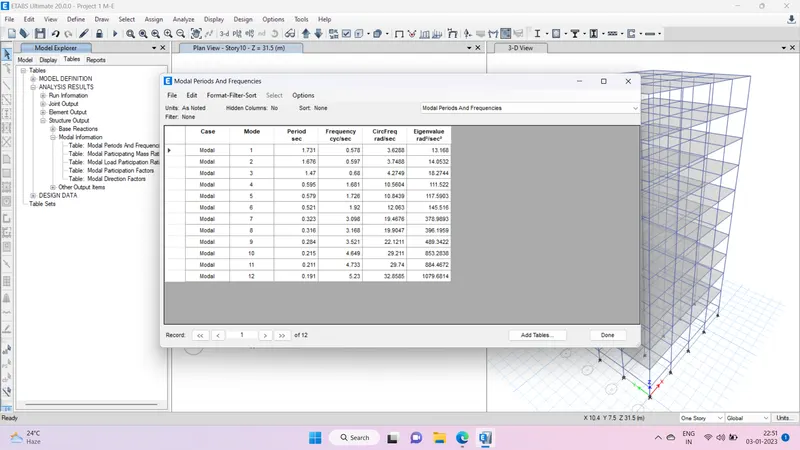
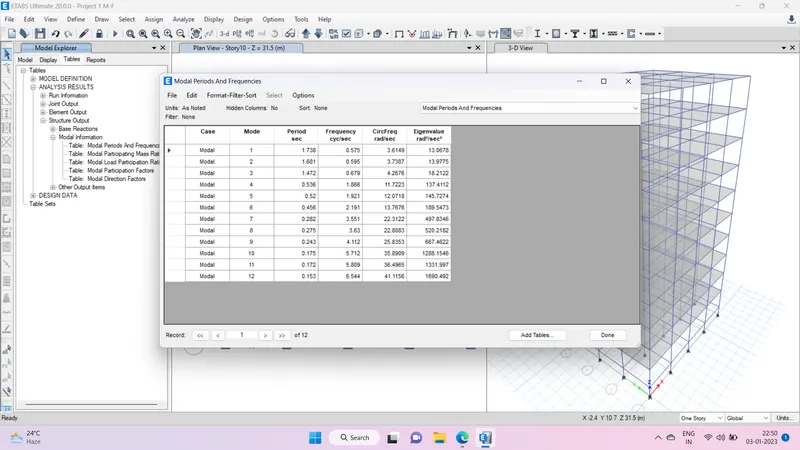
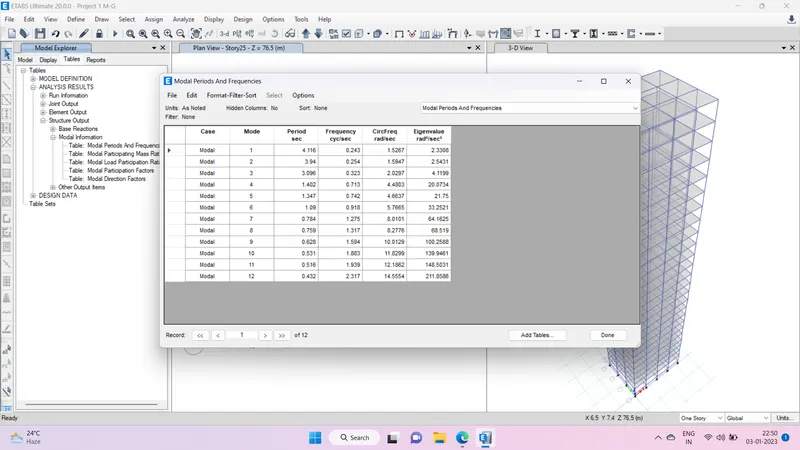
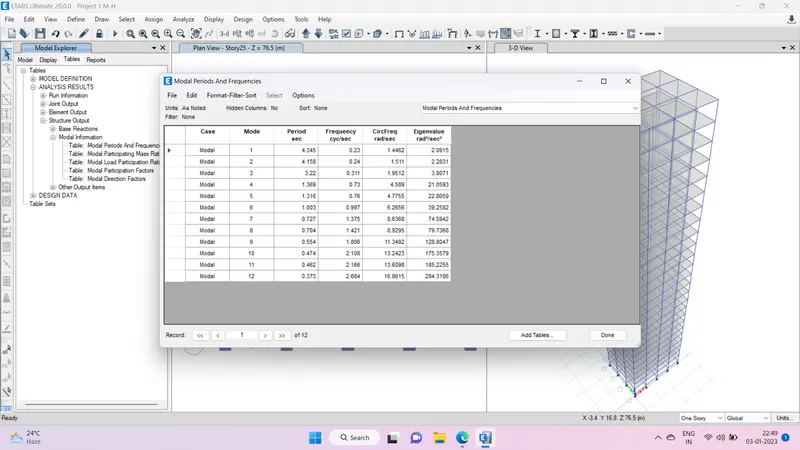
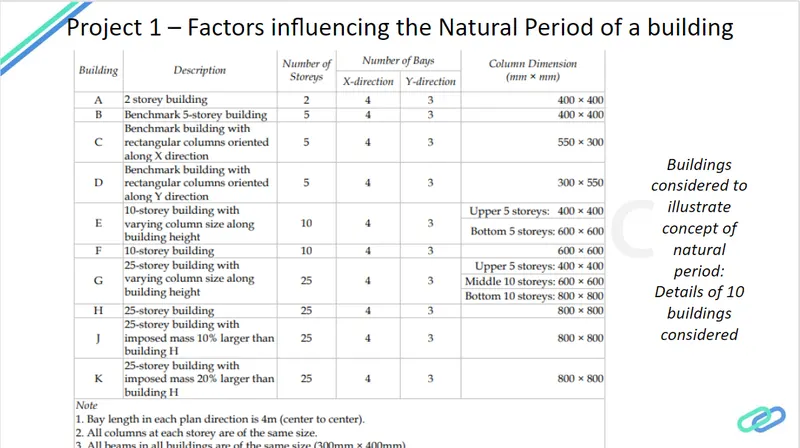
1) Effect of stiffness on Time period: Compare fundamental natural periods of buildings E & F as well as G & H. Why is there a marginal or significant difference in the fundamental natural periods
| Building E | 1.731 s |
| Building F | 1.738 s |
| Building G | 4.116 s |
| Building H | 4.345 |
Conclusion-If the building height are low the varying size of the column does not make any difference & in G & H case the structure is more stable because of column reduction factor.
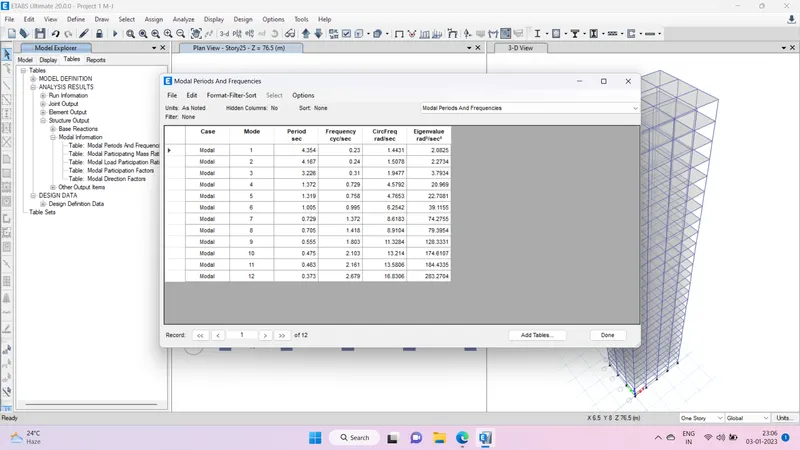
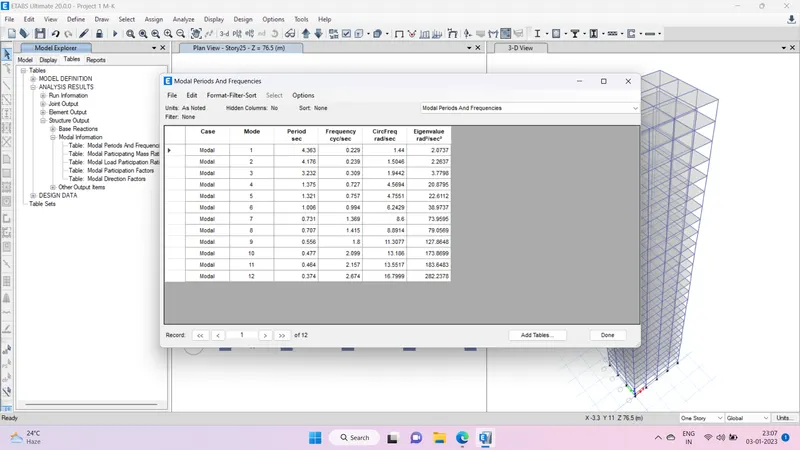
2) Effect of mass on T: Compare fundamental natural periods of buildings H, J and K. Have the buildings become more flexible or stiff due to change in mass?
| Building H | 4.345 s |
| Building J | 4.354 s |
| Building K | 4.363 s |
Conclusion: On comparing the fundamental natural periods of buildings H, J and K we can see a no change in time period of H comparing to J and K, as well as the time period is constant in J and K. these small changes happened because of bit increment in live load. From this we can say that, as the stiffness, mass, storeys of building increases natural period increases. Also the weight of building is directly proportional to the flexibility of the structure.
3) Effect of Building Height on T: How does the fundamental natural periods of Buildings A, B, F and H change with change in building height?
| Building A | 0.5 s |
| Building F | 1.738 s |
| Building B | 1.036 s |
| Building H | 4.345 |
Conclusion- On comparing A, B, F. & H: we can say that as the height of the building gets increased, the time period of the building also increases. So, time period is directly proportional to Height of building
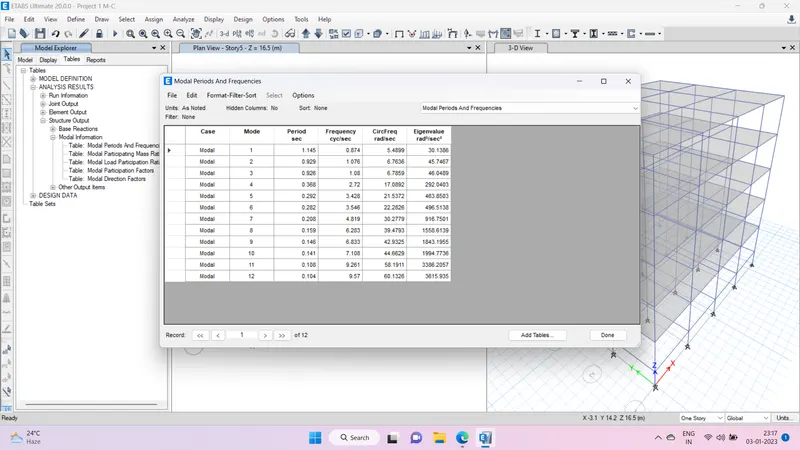
4) Effect of Column Orientation on T: How does the fundamental natural periods of Buildings B, C and D change with change in column orientation
| Building B | 1.036 s |
| Building C | 1.145 s |
| Building D | 4.363 s |
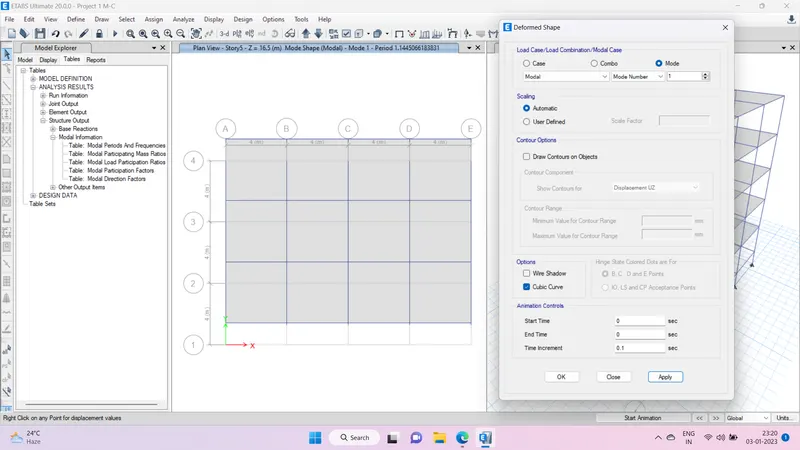 Conclusion: On comparing B, C, & D: we can see that the time period of C is equal to D which Intern is more than B. So, the stiffness of building is more if the columns are oriented in longer length direction.
5) Effect of Flexural Stiffness of Structural Elements on mode shapes: Compare fundamental mode shape of Building B in two situations when flexural stiffness of beams relative to that of adjoining columns is very small versus when it is large.
Conclusion- On Comparing fundamental mode shape of Building B in two situations when flexural stiffness of beams relative to that of adjoining columns is very small versus when it is large. For situation when flexural stiffness of beams is smaller than adjoining column.
6) Effect of Axial Stiffness of Vertical Members on mode shapes: Compare fundamental mode shape of Building H in two situations when axial cross-sectional area of columns is very small versus when it is large.
Conclusion- On Comparing fundamental mode shape of Building H in two situations when axial cross-sectional area of columns is very small versus when it is large. For situation when axial cross-sectional area of columns is very small
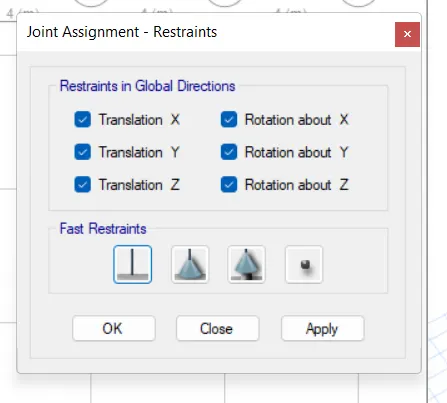
7) Effect of Degree of Fixity at column bases on mode shape: Compare fundamental mode shape of Building B in two situations when base of columns is pinned versus when it is fixed.
Conclusion- It is evident that pinned support offers fewer restraints compared to the fixed one which leads to more movement and thus increased natural period. As a result, it can be concluded that the fixed support will give you better control over the fundamental natural period of buildings.