Project 1 : CFD Meshing for Tesla Cyber Truck
Objective: Check and resolve any geometry errors and assign appropriate PIDs to a specific Tesla Cybertruck model. Perform a mesh with appropriate target length and element quality criteria.
Steps:-
TOPOCLEANUP
PID determination
Create a 2D mesh with different mesh lengths for different PIDs
Create a wind tunnel
Volume meshing
Initial geometry:-
This is our raw geometry, if we activate single opposites, we will see the whole geometry covered with single opposites. To avoid doing single minuses for the entire geometry, this solves the single minuses problem.
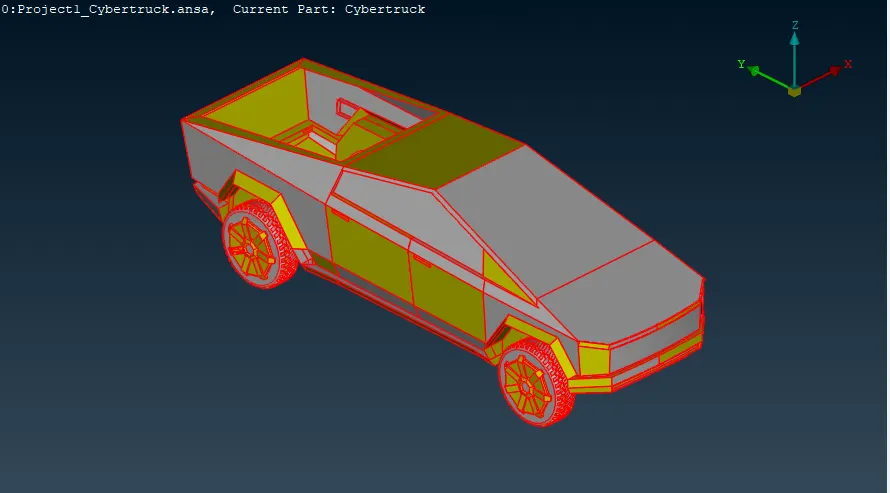
Geometry after applying TOPO tool
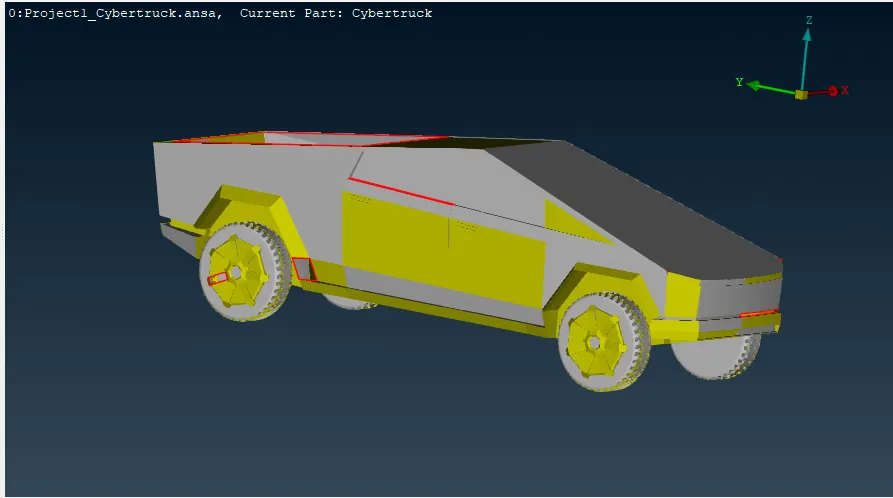
All single cons are converetd to double cons
Geometry Check done
Geometry is ready to go for meshing
PID's Assigned
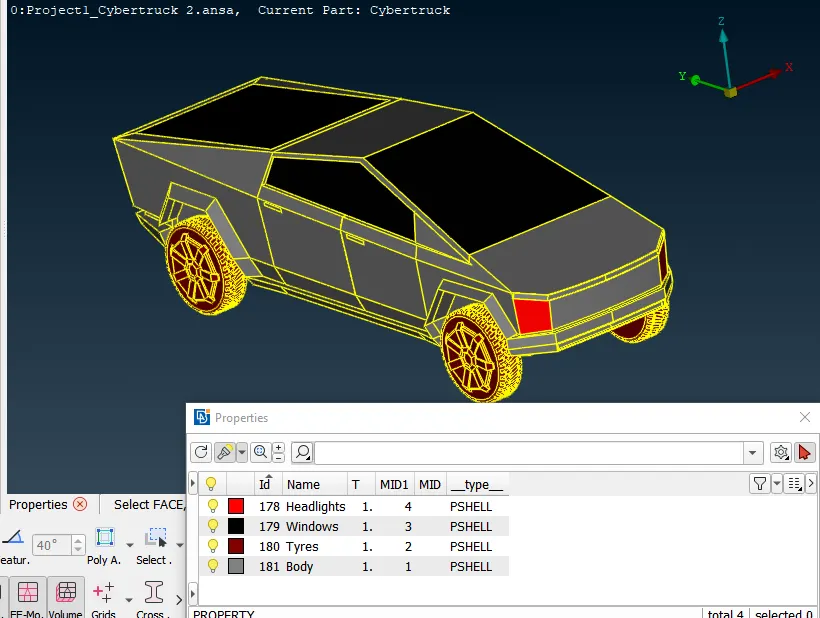
2D MESHING
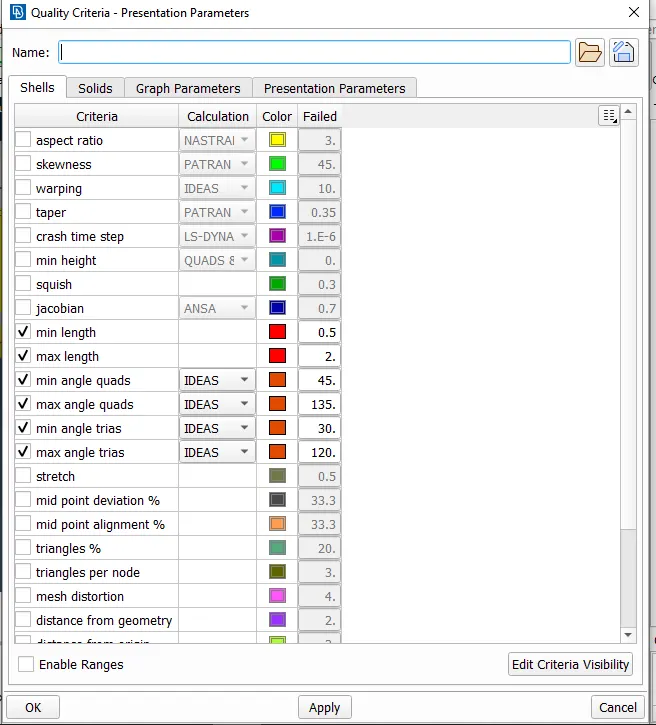
Mesh length for different PID's
Lights - 2mm
Tyres - 4mm
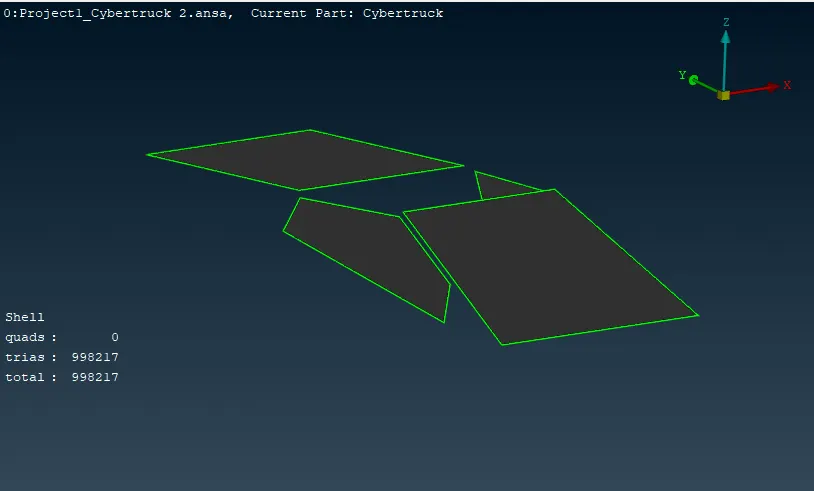
Windows -4mm
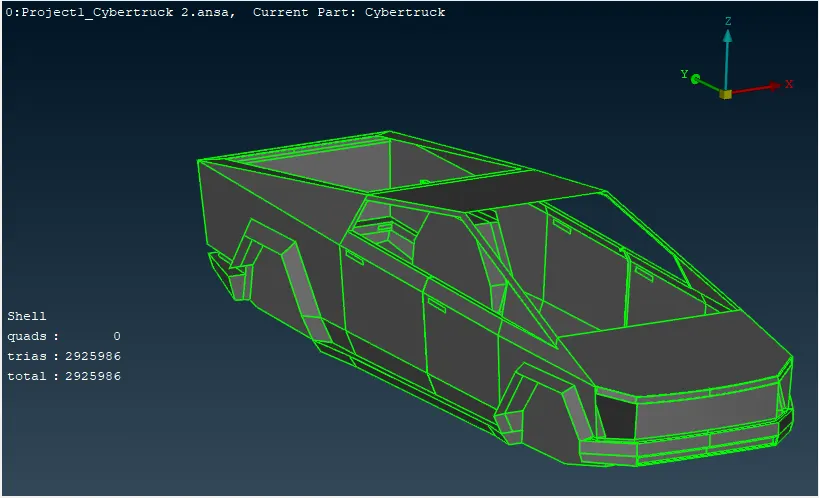
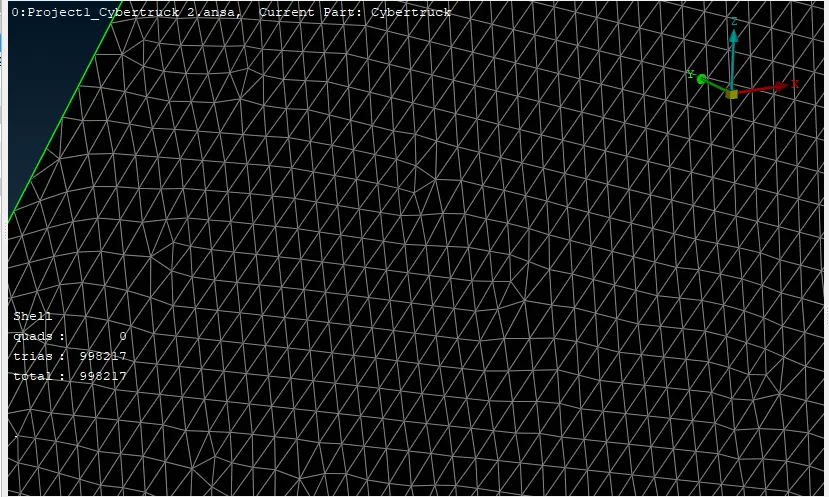
Body- 5mm
Quality criteria and mesh parameters:
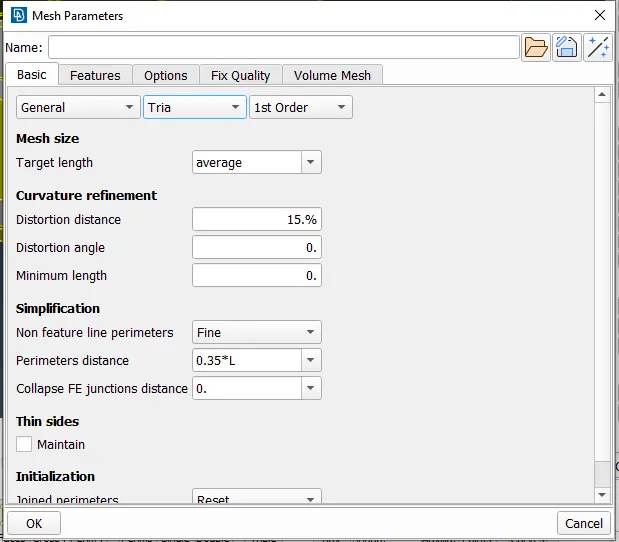
Mesh results:
Body:
Windows:
Tyres:
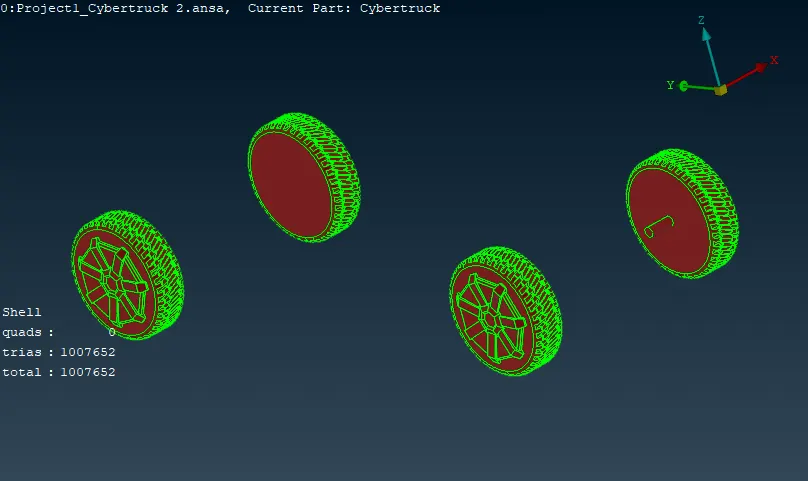
Headlights:
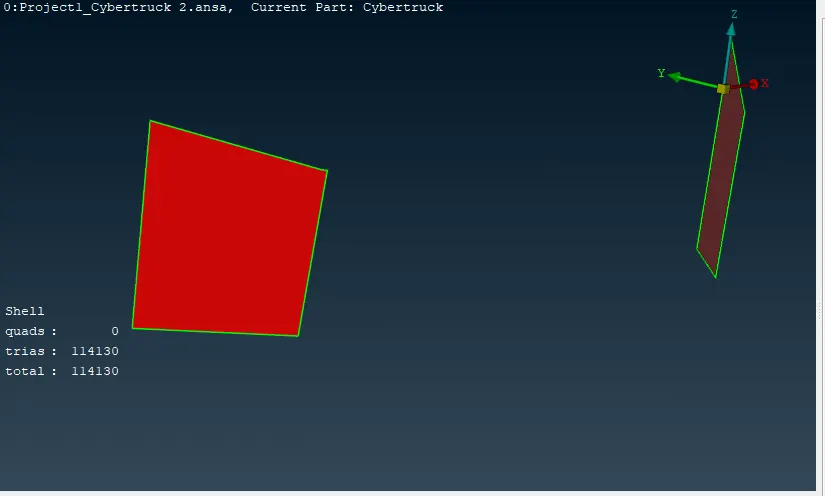
Overall:
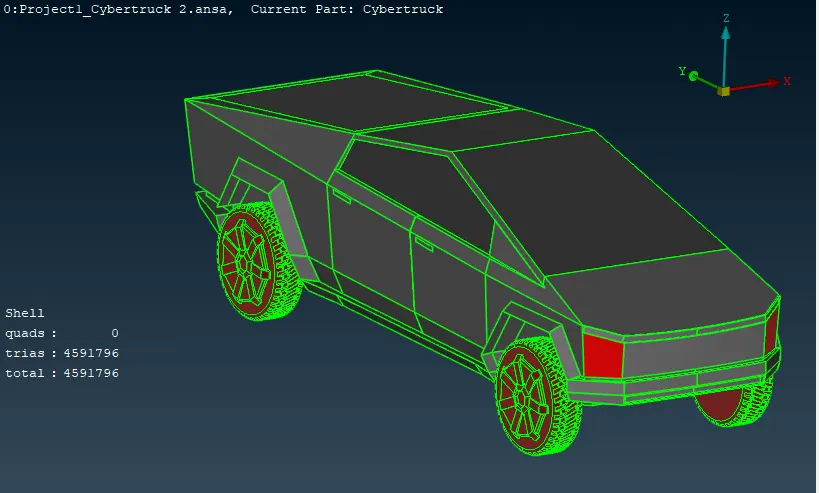
Creating a wind tunnel:
We're going to build a wind tunnel for the car.
For wind tunnels, measurements are:
Think of the car's length as X.
Maintain the wind tunnel 75 mm from the vehicle's bottom.
The length of the wind tunnel in front of the car should be 4X; the overall length of the tunnel is equal to half the length of the car plus 4X.
The length of the wind tunnel behind the car should be 6X, and the overall length of the tunnel from the back is equal to half the length of the car plus 6X.
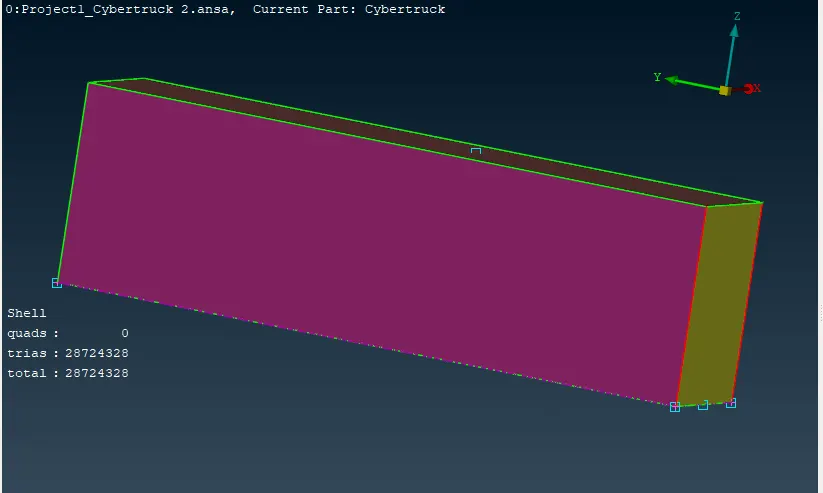
Wind tunnel height should be three times the car's dimension.
Vehicle length: 5760
From the middle of the automobile to the front is 2570
Midway between the car's front and rear: 3180
Steps Complicated:
Length of car: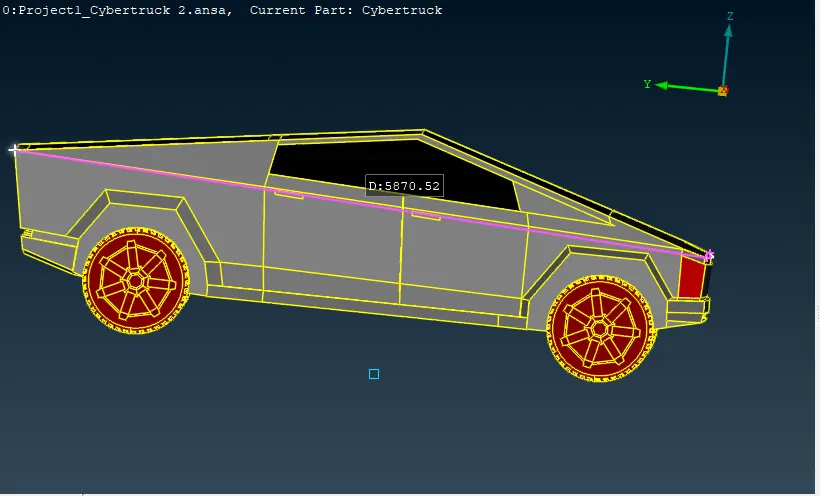
CONCLUSION-
- Working on the Tesla model inspired ideas for the various ANSA meshing tools.
learned geometry cleanup and surface meshing in great depth. Overcoming obstacles improved one's understanding of tools.
learned how to use the curve tool and how to utilise curves and points to make a win tunnel.
discovered the wind tunnel's dimensions and what measurements to use depending on the size of the model
learned how to utilise the rebuild and move tools, worked on fixing off elements, and learned how to demesh when distinct PIDs with varying mesh lengths are in contact with one another.
Prior to topo-cleaning